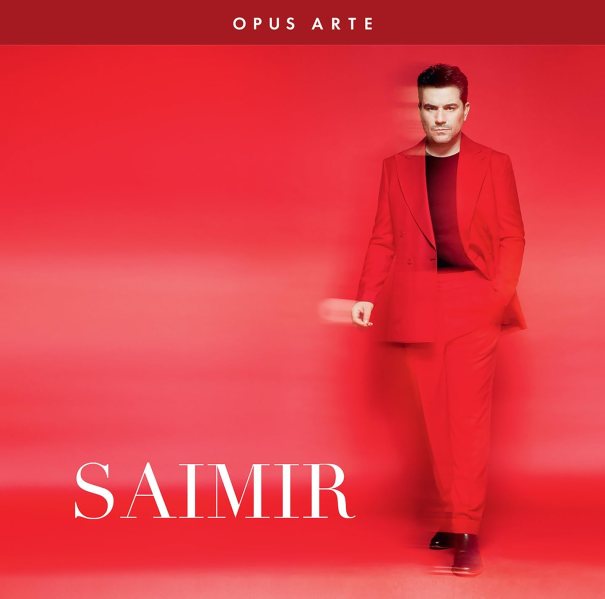
Saimir Pirgu sings operatic arias

Ten years ago I saw Saimir Pirgu as the Duke in the Royal Opera House’s David McVicar production of Rigoletto. Though he looked splendid and dashing, he was utterly charmless and I found his singing stiff and monochromatic. Since then, he seems to have ventured into more dramatic repertoire, and this recital of mostly verismo arias comes as a follow-up to a 2015 album of more lyrical fare, which I haven’t heard.

The present recital was very well received by my colleague, Göran Forsling in October of last year (review) but I’m afraid I can’t join in with his praise. For a start, Pirgu’s basic production is terribly ingolata, so much so that his singing was giving me a sore throat. There is no freedom to the sound and, when I compare him to the greats of the past, from Caruso to Björling to Pavarotti, all I hear is his struggle to get the sound out. There is no ring at the top and the middle voice is forced, resulting in a distressing vibrato. Indeed, he sounds a good deal older than his forty-two years.

Added to that, he doesn’t really do anything with the music and here his conductor, Antonio Fogliani, must take some of the blame, for his conducting is dull and prosaic. Most of the arias on the disc are well known but, with so many other versions out there, this just isn’t competitive.

I tried listening to the recital several times, thinking that maybe it had something to do with my mood, but, no, each time my reactions were the same. I just couldn’t get past Pirgu’s basic vocal production and I found it difficult to relax and enjoy the music. I hate to be so negative, but this is a disc for fans of Pirgu only, if indeed they exist.

Contents.

  1. Puccini: Manon Lescaut – “Indietro!… Guardate, pazzo son” 
    2. Puccini: Tosca – “E lucevan le stelle”
    3. Leoncavallo: Chatterton – “Non saria meglio… Tu sola a me” 
    4. Giordano: Andrea Chénier – “Colpito qui m’avete… Un dì all’azzurro spazio” 
    5. Puccini: Le villi – “Ecco la casa… Torna ai felici dì”
    6. Puccini: Manon Lescaut – “Donna non vidi mai” 
    7. Cilea: Adriana Lecouvreur – “L’anima ho stanca”
    8. Wagner: Lohengrin – “In fernem Land”
    9. Berlioz: La Damnation de Faust – “Nature immense”
    10. Tchaikovsky: Eugene Onegin – “Introduction”
    11. Tchaikovsky: Eugene Onegin – “Kuda, kuda, kuda vi udalilis”
    12. Puccini: Il tabarro –  “Hai ben ragione” 
    13. Bizet: Carmen – “La fleur que tu m’avais jetée”
    14. Puccini: Turandot – “Non piangere, Liù”
    15. Jakova: Skenderbeu – “Kjo zemra ime”
    16. Puccini: Tosca – “Recondita armonia” (with Vito Maria Brunetti (bass))
    17. Giordano: Andrea Chénier – “Come un bel dì di maggio” 
    18. Puccini: Madama Butterfly – “Addio, fiorito asil” 
    19. Giordano: Fedora – “Amor ti vieta”
    20. Sorozábal: La taberna del puerto – “No puede ser”
    21. Puccini: Turandot – “Nessun dorma!”
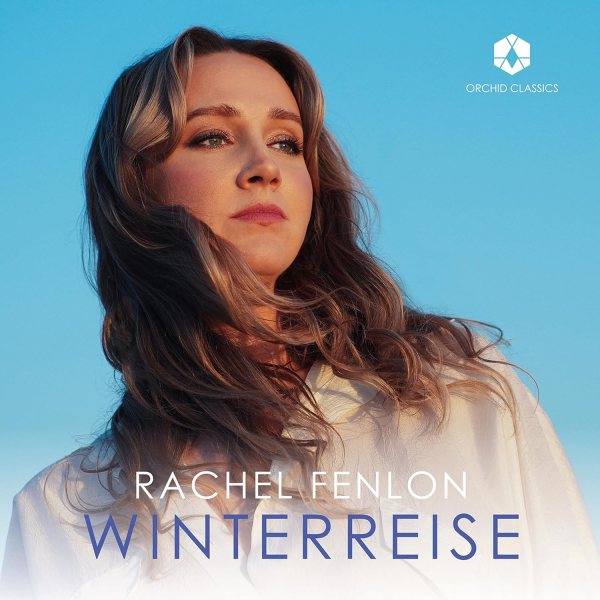
 

Rachel Fenlon sings and plays Schubert’s Winterreise

81ngosghckl._ac_sl1500_

Now here is an extraordinary recording debut. Recordings by female singers of Schubert’s most haunting cycle have been few and far between, those by Lotte Lehmann, Christa Ludwig and Brigitte Fassbaender being the most noteworthy. However, what sets this performance apart from all others is that Rachel Fenlon accompanies herself on the piano in what is surely the first self-accompanied version ever to be recorded.  

According to the notes accompanying this disc, Fenlon bought her first score of Winterreise in the Winter of 2020, when she was living alone in a house at the foot of a large forest outside of Berlin. This was during the dark days of lockdown. She  would often go days and weeks without seeing anyone and over the next two years she learned the work methodically, but also allowing its loneliness, solitude, passionate love and grief to permeate her very soul; and indeed what emerges is a very personal journey, a single-minded vision of the work, if you like, which is not strictly comparable to any other I’ve heard.

Initially, I felt the tempo of the opening Gute Nacht was a little fast (though at 5.38 it clocks in at exactly the same tempo as Fischer-Dieskau’s with Jörg Demus), but thereafter her tempi seemed just right to me. At 74’ Fenman’s is one of the slower recordings out there, though certainly not the slowest. In any case, I was little concerned with questions of tempo, as I became involved in her singular vision of the piece.

It is hard to pin down what makes it so different from any of the many two-handed performances available, but different it undoubtedly is. It is a young person’s interpretation, reminding me that the protagonist is indeed young, and that the pain and disillusionment at the heart of the cycle are those of a young man. Certainly, Fenlon piles on the intensity as the cycle progresses with a performance that is entirely compelling.

I can hear you asking, “Yes, but how does she sing? How does she play?” Well, the answer to that is very well indeed. The voice is naturally a light, bright soprano, but she is not afraid to darken the colour, with occasional plunges into a rasping chest voice and her playing is well up to the task, though it is difficult to separate the playing from the singing, the two being so intrinsically intertwined. I am not saying this is how I would always like to hear the cycle, but this is an impressive recording debut and much more than a gimmick.

What a great work this is and how fascinating it is that it can take such a wealth of different interpretations. In February last year I reviewed a very interesting version in an arrangement for baritone, choir and two accordions, and I recently reacquainted myself with Jonas Kaufmann’s harrowing version with Helmut Deutsch. Rachel Fenlon’s equally harrowing version is quite a different experience, but she is clearly someone to watch.

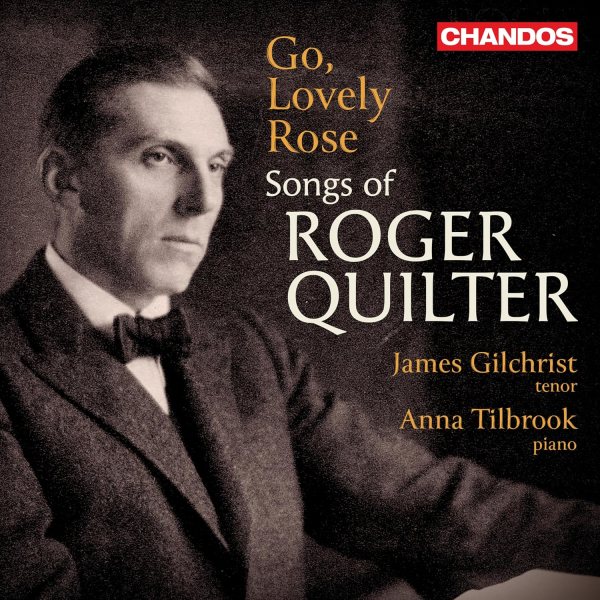
Go Lovely Rose – The songs of Roger Quilter

91aupp0ckgl._ac_sl1500_

James Gilchrist (tenor) Anna Tilbrook (piano)

The songs of Roger Quilter are not performed as often these days as they once were, which is a shame, because they are beautifully crafted and, though perhaps they don’t probe as deeply into the texts as those of Finzi, Delius and Warlock, they are very rewarding for performers and listeners alike. Quilter had a wonderful gift for melody, but it was always melody put at the service of the poetry and the text is sung more or less as if it were spoken. Having performed many of the songs myself in my youth, I can attest to the fact that they are a gift to the performer.

Rather than give us whole opus numbers, Gilchrist and Tilbrook have chosen songs from his complete oeuvre, with the songs grouped into themes. Thus, we have six Shakespeare songs, drawn from the Op. 6, Op. 23 and Op. 32 sets of Shakespeare settings, five songs associated with flowers (A Floral Tribute), four Folk Song settings (all taken from The Arnold Book of Old Songs), four songs associated with the graveside, and four Songs of Love. The only songs performed as a set are the early German songs, written when Quilter was studying in Frankfurt. These are charming, but slight and give little indication of Quilter’s later, more mature style.

Initially alienated by the rather gruff sound of Gilchrist’s voice in the opening robust Blow, blow, thou winter wind (we are at once aware that this is not the voice of a young man, and indeed Gilchrist was approaching sixty at the time of the recording), I was drawn in by his elegiac delivery of Come away, death, and thereafter, I was less aware of any failing resources. Indeed, in the more gently reflective songs, with which the disc proliferates, Gilchrist is often spellbindingly beautiful, spinning out some lovely pianissimi in such songs as Fear no more the heat of the sun, the famous Now sleeps the crimson petal and the song which gives the collection its name, Go lovely rose. He is admirably supported by Anna Tilbrook, who is an excellent accompanist.

I would not be doing my job as a reviewer if I didn’t point out that there is another similar collection of songs available on the Hyperion label. This was recorded in 1996 by the then much younger John Mark Ainsley with Malcolm Martineau at the piano. Some may prefer Ainsley’s much more forthright manner and fresher timbre, as indeed I occasionally do, especially in songs like Blow, blow, thou winter wind and the ebullient Love’s philosophy, but Gilchrist’s more reflective style has its own rewards, and this is a welcome addition to the Quilter discography

Contents
Shakespeare Songs
Blow, blow, though winter wind, from Three Shakespeare Songs (First Set) Op 6, No 3 (1905)
Come away, death, Op 6 No 1 from Three Shakespeare Songs (First Set) (1905, rev 1906)

Fear no more the heat o’ the sun. from Five Shakespeare Songs (Second Set) Op.23 No 1
Orpheus with his lute. from Two Shakespeare Songs (Fourth Set) Op.32 No 1(1919-20)
O mistress mine, from Three Shakespeare Songs (First Set) Op 6 No 2 (1905, rev 1906)

Under the greenwood tree, from Five Shakespeare Songs (Second Set) (1919)
A Floral Tribute
The Fuchsia Tree, Op.25 No.2 (1923)
Go, Lovely Rose, from Five English Love Lyrics Op.24 No.3 (1922)
A last year’s rose, Op 14 No.3 (1909-10)
Now sleeps the Crimson Petal, Op 3 No 2 91897)
To Daisies from To Julia, Op.8 No 3 (1905)
Folksongs
From The Arnold Book of Old Songs
Barbara Allen, No 13 (c 1921)
Drink to me only with thine eyes, No 1 (c 1921)
My Lady’s Garden, No 10 (c 1942)
The Ash Grove, No 16 (c 1942)
At the Graveside
Autumn Evening Op.14 No.1 (1909-10)
Dream Valley, from Three Songs of William Blake, Op.20 No.1 (1917)
Drooping Wings (1943)
Music, when soft voices die, from Six Songs, Op 25 No.5 (1926)
German Songs
Four Songs of Mirza Schaffy, Op 2 (bef. 1903, rev. 1911)
Songs of Love
Love’s Philosophy, from Three Songs, Op 3 No 1 (1905)
Julia’s Hair from To Julia Op 8, No 5 (1905)
The Maiden Blush from To Julia Op 8, No 2 (1905)
It was a lover and his lass, from Five Shakespeare Songs (Second Set), Op

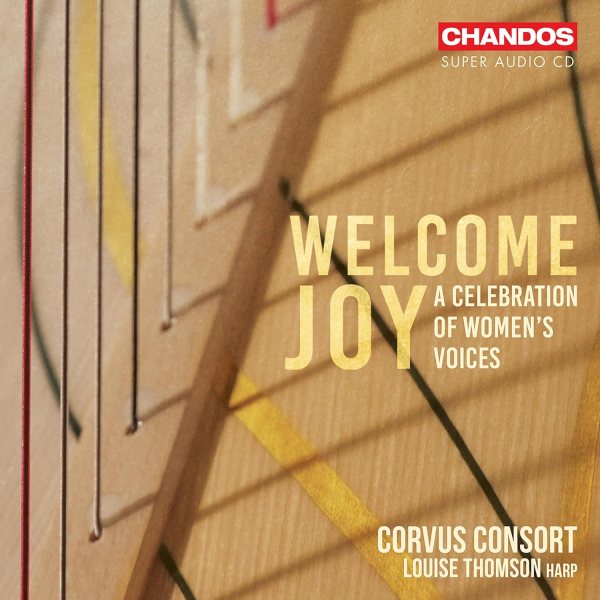
Welcome Joy – The Corvus Consort

81lspxvxnl._ac_sl1500_

The subtitle of this disc is A Celebration of Women’s Voices and a celebration it undoubtedly is, not just of the women’s voices who sing on the record, but of the voices of the women composers who make up the lion’s share of the music. Room is found for Gustav Holst, who was a champion of women’s voices and taught at several girls’ schools, most famously at St Paul’s Girls School, where he taught for almost thirty years.

Its centrepiece, and the longest work on the disc, is Elizabeth Poston’s An English Day-Book, which here receives its première recording of this edition. If it is reminiscent of Britten’s A Ceremony of Carols, then that is because it was conceived to complement it by providing a work suitable for use throughout the year. The Day-Book was unpublished at he time of Poston’s death in 1987, but has since been published by the Arts and Education charity, Multitude of Voyces, which specialises in publishing and promoting works by communities historically or currently underrepresented or marginalised. The charity also published the works here by Hilary Campbell, Olivia Sparkhall, Judith Weir and Gemma McGregor. I was particularly taken by Sparkhall’s Lux Aeterna, which is for two choruses, solo soprano and harp and McGregor’s Love was his meaning with its lovely falling harp introduction.

“Welcome Joy”, sing the Corvus Consort at the beginning of this recital and indeed what a joy it is. Imogen Holst’s commission for the 1951 Aldeburgh Festival is a setting of six poems by John Keats, described by Britten as ‘six little treasures’ when he first received them, and, in this joyful performance, it is easy to see why.

This piece, like most of the music on this CD was completely new to me, but I did know Gustav Holst’s Choral Hymns from the Rig Veda (Third Group) from Imogen Holst’s 1968 recording with the Purcell Singers and Ossian Ellis. I am bound to say that I found that recording a mite more atmospheric, especially in the opening Hymn to the Dawn, which has a mystery and magic that is not quite captured in the clearer, more analytical Chandos digital recording.

Nevertheless, I enjoyed this disc of choral music for women’s voices. The work of the Corvus Consort under their conductor, Freddie Crowley can hardly be faulted, with a superb contribution from harpist, Louise Thomson.

Full texts are provided, and the exemplary notes are extensive. A thoroughly enjoyable disc.

Contents

Imogen Holst (1907 – 1984)  Welcome Joy and Welcome Sorrow (1950)

Gustav Holst (1874 – 1934) Two Eastern Pictures (1911)

Choral Hymns from the Rig Veda (Third Group) (1910)

Dirge and Hymneal (1915)

Judith Weir (b.1954) We sekyn here rest (2019)

Hilary Campbell (b. 1983) Our Endless Day (2017)

Elizabeth Poston (1905 – 1987) An English Day-Book  (1966 – 67)

Olivia M. Sparkhall (b. 1976) Lux Aeterna (2018)

Gemma McGregor (b. 1965) Love was his meaning (2018)

Shruti Rajasekar (b. 1996) Ushãs – Goddess of Dawn (2024)

Priestess (2024)


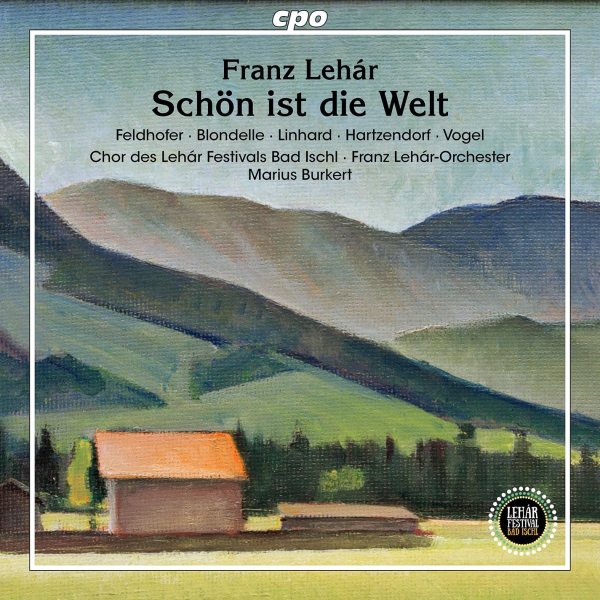
Schön ist die Welt on CPO

813sjdal._ac_sl1425_

Schön ist die Welt was the last in a series of Lehár’s operettas that were premiered in Berlin. Paganini, had met with a somewhat lukewarm reception in Vienna, but had triumphed in Berlin in 1926 , due to the participation of Richard Tauber, and thereafter Lehár wrote the majority of his operettas for Berlin with Tauber in mind for the leading role. Not that Shön ist die Welt, which premiered in 1930, was an entirely new work, it being a re-working of an earlier operetta, Endlich allein, originally performed twelve years earlier, the second act of which Lehár had been particularly proud, as it was more or less through composed with minimal dialogue. This second act, with the addition of a Tauber-lied, is pretty much lifted from the earlier operetta, but the outer acts underwent substantial revisions.

The action takes place in the Swiss Alps, where Crown Prince Georg arrives at an Alpine resort to meet for the first time his fiancée, Princess Elisabeth. However, on the way he stopped to help a girl, whose name he did not discover, mend a puncture and fell madly in love with her. He announces to his father that he will not marry Elisabeth because he loves another. All turns out well when our unwitting hero and heroine go on a hike and get trapped by an avalanche at an Alpine hut and have to spend the night together. Returning the hotel the next morning, Georg discovers that the girl he helped with the puncture is in fact Princess Elisabeth. There is also a sub plot involving Count Sascha and a Brazilian dancer, called Mercedes della Rossa, which gives Lehár the excuse for some Latin American influenced music in the first and third acts. It’s all pretty insubstantial, but it does give rise to some gloriously lyrical music, especially in the second act, which involves just the two leads.The present recording would seem to derive form stage performances as we hear occasional stage noise, though there is precious little sign of any audience. There was a previous recording, also on CPO, (review), which I see is still available as a download. That was on a single CD, but included none of the dialogue, whereas here we get quite a lot of it, which could prove tedious for all but fluent German speakers, and even they could find it a little too much for repeated listening.That said, the sound is excellent and the playing of the Franz Lehár Orchestra under Marius Burkert most stylish. I also enjoyed the contributions of Katharina Linhard and Jonathan  Hartzendorf as the secondary couple, and of Jospeh Terterian as the Jazz Singer. Where I had a problem was with the contributions of the two leads. Thomas Blondelle as Crown Prince Georg has a pleasing light tenor, but he is no Richard Tauber and he is not really up to the operatic demands of Act II. Nor is Sieglinde Feldhofer as the Princess Elisabeth. She has rather too much vibrato for my taste and tends to lunge at her high notes. I couldn’t help thinking what a difference a Schwarzkopf or a Rothenberger would have made.  Elena Mosuc and Zoran Todorovich who sing the roles of Elisabeth and Georg on the other CPO recording I mentioned above, improve on the present two, but they, rather confusingly, sing the secondary couple as well, so there is no doubt that this present recoding is more cohesive.

Nor would I like to give the impression that I didn’t enjoy the set. I did. Very much indeed, despite the less than stellar contributions of the two main leads. Lehár was such a prolific tunesmith, some of the songs were rattling around in my head for days afterwards. It gets a qualified recommendation from me.

Prinzessin Elisabeth – Sieglinde Feldhofer (soprano)

Kronprinz Georg – Thomas Blondelle (tenor)

Der König – Gerd Vogel (baritone)

Mercedes della Rizza – Katharina Linhard (soprano)

Graf Sascha Karlowitz – Jonathan Hartzendorf (tenor)

Herzogin Maria Brankenhorst – Klára Vincze (soprano)

Ein Jazzsinger – Jospeh Terterian (tenor)

Hoteldirektor – Johannes Hubmeir (tenor)

Chor des Lehár Festivals Bad Ischil

Franz Lehár Orchestra/ Marius Burkert

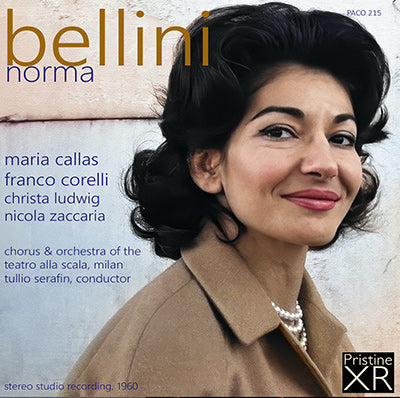
A reappraisal of Callas’s second studio Norma

paco215_530x

The Pristine XR remaster gives us the chance to reappraise a set which is slightly controversial in that it captures Callas in late career with occasional flaps on top notes. Nonetheless it was Ralph Moore’s overall top choice in his opera survey and he had no problem recommending it when he reviewed this Pristine issue in July of this year (review).

For my part, I’ve known the set for over sixty years now. It was actually the first opera set I ever owned, and, for quite a few months, the only opera set I owned, so I got to know it pretty well. Since then of course, I have heard a fair amount of other Normas, Sutherland, Caballé, Scotto, Sills, Eaglen, Bartoli (please, never again), Sass live at Covent Garden (disastrous) and plenty more by Callas herself; the live 1952 Covent Garden, the 1954 studio, the 1955 Rome broadcast and, best of all, the live 1955 La Scala, as well as excerpts from many others, right up to her final performances in the role in Paris in 1964.

So how does it hold up? Well, pretty well actually. Sonically, it was always pretty good, and, if I’m honest, I can’t hear that much difference between the most recent Warner version and the Pristine version. Perhaps there is a bit more space around the voices in the Pristine version, but it is the difference is slight.

As for Callas’s voice, it is true, notes above the stave have taken on a metallic edge, and they don’t always fall easily on the ear, but the middle and lower timbres have a newfound beauty, and a characterisation that was always complex and multi-faceted has taken on an even greater depth, parts of it voiced more movingly here than anywhere else.

There are other gains too. The cast here is a vast improvement on the earlier studio one, Corelli in particular being a shining presence. Fillipeschi was a liability on the earlier set, but, whilst not quite a paragon, and chary of some of the coloratura in his role (Serafin making a further cut in the great In mia man duet to accommodate his lack of flexibility), Corelli’s is a notable presence, and his clarion voice is ample compensation. Zaccaria may be less authoritative than the woolly voiced Rossi-Lemeni, but his tones are distinctly more buttery. Ludwig is an unexpected piece of casting, but she too is an improvement on Stignani, who, great singer though she was, was beginning to sound a bit over the hill by the time of the first Callas recording (she was 50 to Callas’s 30). Ludwig sounds, as she should, like the younger woman. Her coloratura isn’t always as accurate as one would like, certainly no match for Callas, but she sings most sympathetically in duet with her older colleague, and Mira o Norma is, for me, one of the greatest performances on disc. After Ludwig states the main theme, Callas comes in quietly almost imperceptibly and at a slightly slower tempo with an unbearably moving Ah perche, perche, her voice taking on a disembodied pathetic beauty. When Ludwig joins her for the section in thirds, she perfectly matches Callas’s tone on her first note, before Callas joins her in harmony, a real example of artists listening to each other in a sense of true collaboration.

One should I suppose mention the losses from the earlier recording. Yes, some of Callas’s top notes are shrill, and we lose some of the barnstorming heroics that were a part of Callas’s Norma right up to 1955. This Norma is more feminine, more vulnerable, if you like. How much this had to do with interpretive development, and how much with declining vocal resources is a moot point, but there is no doubt Callas is still a great singer, doing the best she can with what she has. Some sections are more moving here than in any of her other performances. I’ve already singled out Mira o Norma but the earlier duet is its equal, with Callas wistfully recalling her own awakening to first love.

The beginning of Act II always brought out the best in her, and here she is sublime. Dormono entrambi is an unusual piece which alternates passages of recitative with arioso, rather like Rigoletto’s Pari siamo. Callas draws on all the colours in her palette to express Norma’s contrasting emotions. You can almost feel the chill that comes over her at un gel me prende e in fronte si solleva il crin followed by the choked emotion of I figli uccidi! The arioso of Teneri figli is couched in a tone of infinite, poignant sadness, but then her tone hardens with her resolve at Di Pollion son figli, before, with a cry she drops the knife (and we can almost hear the precise moment), crying out Ah no, son miei figli! Operatic singing and acting on the highest level.

Serafin’s conducting is much as it was in the first set. He has the virtue of not conducting the opera as if it were Verdi, as so many do. Sometimes I’d like him to get a move on a bit, but his pacing of the final two duets (one in public, one in private) is superb, and he perfectly judges the climaxes in the Grand Finale, one of the greatest in all opera.

I wouldn’t want to be without Callas’s 1955 live La Scala account (also available from Pristine) with Del Monaco and Simionato, which is where voice and art find their greatest equilibrium, but for a studio set, this is now clearly the one to go for. One thing is for sure, Callas remains the quintessential Norma. No singer has yet challenged her hegemony in the role.


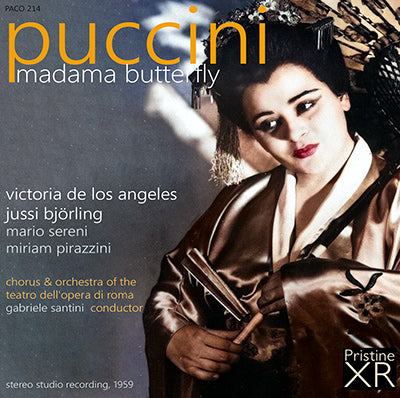
De Los Angeles and Björling in Madama Butterfly

paco214_530x

This Pristine XR Remastering of De Los Angeles’ second 1959 recording of Madama Butterfly has already been favourably reviewed twice before on MusicWeb International, once by Ralph Moore (review) and once by Morgan Burroughs (review), and I can add little to what they have said. We have De Los Angeles in one of her best and most conducive roles and Björling singing with golden tone. In Pristine’s newly re-mastered transfer of the stereo original, surely this is self-recommending, and who am I to disagree? However, I should mention that there is an earlier 1955 De Los Angeles recording, in mono sound, with Di Stefano as Pinkerton, Gobbi as Sharpless and conducted by Gianandrea Gavazzeni, which, in some ways, surpasses the performance we have here. It is available at super bargain price from the Regis label and was favourably reviewed by Christopher Howell here.

That earlier recording’s chief asset is the conductor, Gavazzeni, who makes far more of the score than the rather dull and prosaic Santini, and it makes me realise how important the role of the conductor is in Puccini. Indeed, all the best sets have benefited from a great conductor; Karajan, for both Callas and Freni, Serafin for Tebaldi, Barbirolli for Scotto and Pappano for Gheorghiu. And, if Santini has at his disposal an excellent cast, Gavazzeni’s is just as good, and in some respects even better. Björling, for Santini, sings with golden tone, but is just a trifle stiff. This was to be Björling’s last recording, and the heart condition, which would end his life at the early age of 49, was already apparent. Indeed, he collapsed during one recording session of the Act I love duet and needed several days to recover before he was able to continue. This could account for his relative stiffness. Di Stefano, on the other hand creates a real character. Carelessly charming in his exchanges with Sharpless and genuinely seductive in the love duet, he is suitably devastated by what he has done in the last act. I don’t see Pinkerton as a villain or an out and out cad. He is just an impulsive young man, who gives little thought to his actions at the beginning of the opera. Young men like him are ten a penny on any American college campus and Di Stefano portrays him to the life.

Sereni is a sympathetic Sharpless for Santini, but Gobbi, for Gavazzeni, surpasses him in verbal acuity and De Los Angeles is in slightly fresher voice in the earlier recording, though the difference is marginal.

What is not in doubt is the improved sound picture in the later stereo recording, especially in Pristine’s remastering, which opens up the sound quite a bit. I should also mention that Pristine as usual provide downloads of the full score and libretto, whereas the Regis issue of the earlier recording just comes with notes and a synopsis. Whichever version you go for, you will get one of the most touching Butterflies on disc.


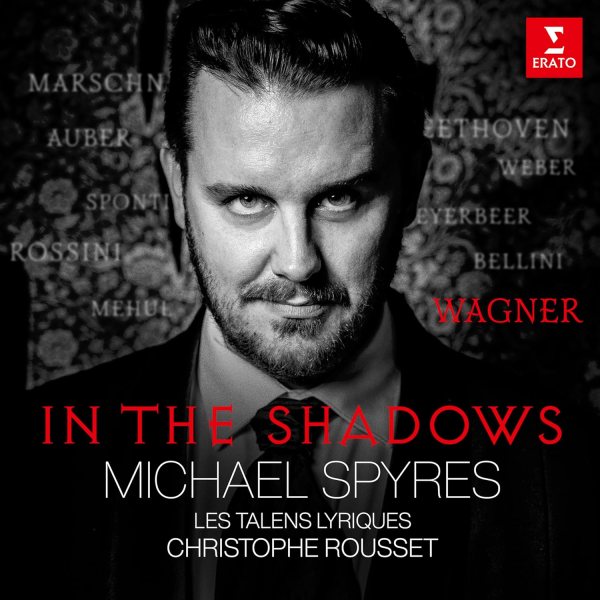
Michael Spyres – In The Shadows

81cea-b2zrl._ac_sl1500_

This is a luxury recital indeed. Over 84 minutes, we are presented with twelve operatic scenes, performed complete with chorus when required and another soloist (in the shape of tenor Julien Henric) who plays Flavio in the scene for Pollione from Norma. Furthermore, we are vouchsafed sung texts and translations into English, French and German, which is important as many of the scenes are not exactly familiar. Clearly all concerned have taken their task seriously.

In the accompanying notes, Spyres talks of his journey towards Wagner and states that the album “endeavours to illuminate the composers who languish in Wagner’s shadow: those who formed the foundation of the compositional aesthetic and sculpted the framework of vocal writing that would become the Wagnerian tenor.”

Thus, we start with Joseph Méhul (1763-1817) and work our way forward roughly chronologically via Beethoven, Rossini, Meyerbeer, Weber, Spontini, Bellini and Marschner to Wagner himself in the shape of arias from his early Die Feen and Rienzi, finishing up with Lohengrin. Of the arias chosen, only those from Fidelio, Norma and Lohengrin could be called in any way familiar, so the recital is certainly valuable for introducing us to some little heard music.

The disc has been reviewed in these pages by Göran Forsling (review) and was even a recording of the month back in April, and I largely agree with that review with one or two caveats.

I actually heard Spyres live at a Prom in 2017, in a performance of Berlioz’s La damnation de Faust with the Orchestrre Révolutionnaire et Romantique under Sir John Eliot Gardiner and, whilst impressed with his interpretation and musicality, I didn’t think the voice was particularly large. Now of course this was seven years ago, and there is a good chance that the voice has grown since then, but I’m not so taken with his singing in those roles that require a bit more dramatic thrust, like Florestan and Pollione. I hear a somewhat artificial darkening of the timbre, which results in a rather throaty sound. He sounds as if he is forcing his lyrical voice, and his tone lacks squillo. Comparisons with Vickers in the former and Corelli in the latter find Vickers singing with a deal more intensity and Corelli, whom I had just recently been listening to in the second Callas recording, much freer on top.

When we get to Wagner himself, Mein Lieber Schwann from Lohengrin is sensitively sung, but there is no ring to his tone when he opens out in the more dramatic parts. GF makes comparison with Gedda, who sang Lohengrin a couple of times in his native Sweden. Ultimately Gedda thought it an unsuccessful experiment, and he never sang the role again, evidently thinking the role too heavy for his essentially lyrical voice. However, as can be heard in his recording of the aria, Gedda’s tone had a good deal more squillo. That said, I heard Gedda live in the Verdi Requiem towards the end of his career and his voice had a great deal more cutting power than Spyres.

With his three albums, Batitenor, Contra-Tenor and now In The Shadows, Spyres is showcasing his versatility, but I just wonder how much of that versatility is a product of the gramophone. Given the encomiums he has been receiving of late, I hate to be the one dissenting opinion, but I do wonder if his voice is being forced into places it shouldn’t necessarily go.

Contents
Etienne-Nicolas Méhul (1763 -1817)
1. Joseph en Égypte, « Vainement Pharaon… Champs paternels
Ludwig van Beethoven (1770 – 1827)
2. Fidelio, « Gott! Welch Dunkel hier!… In des Lebens
Gioacchino Rossini (1792 – 1868)
3. Elisabetta, regina d’Inghilterra, « Della cieca fortuna… Sposa amata… Saziati, o sorte ingrata ?
Giacomo Meyerbeer (1791 – 1864)
4. Il crociato in Egitto – « Suona funerea
Carl Maria von Weber (1786 – 1824)
5. Der Freischütz – « Nein, Länger Trag Ich Nicht
Daniel François Esprit Auber (1782 -1871)
6. La muette de Portici- « Spectacle affreux …
Gaspare Spontini (1774 – 1851)
7. Agnes von Hohenstaufen, « Der Strom wälzt ruhig seine dunklen Wogen
Vincenzo Bellini (1801 – 1835)
8. Norma – « Meco all’altar di Venere…Me protegge, me difende (with Julien Henric (tenor))
Heinrich Marschner 1795 – 1861)
9. Hans Heiling op. 80 – “Gonne mir ein wort der Liebe” 
Richard Wagner (1813 – 1883)
10. Die Feen WWV 32 – « Wo find ich dich, wo wird mir Trost?
Richard Wagner
11. Rienzi, der letzte der Tribunen WWV 49, « Allmächt’ger Vater, blick herab
Richard Wagner
12. Lohengrin WWV 75, « Mein lieber Schwan


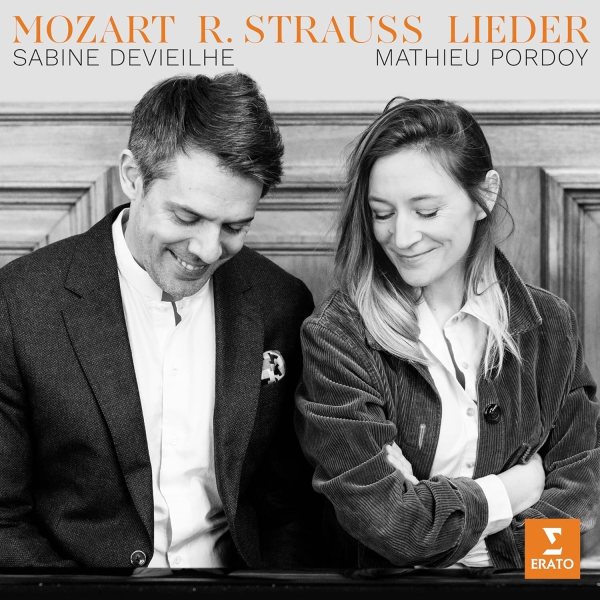
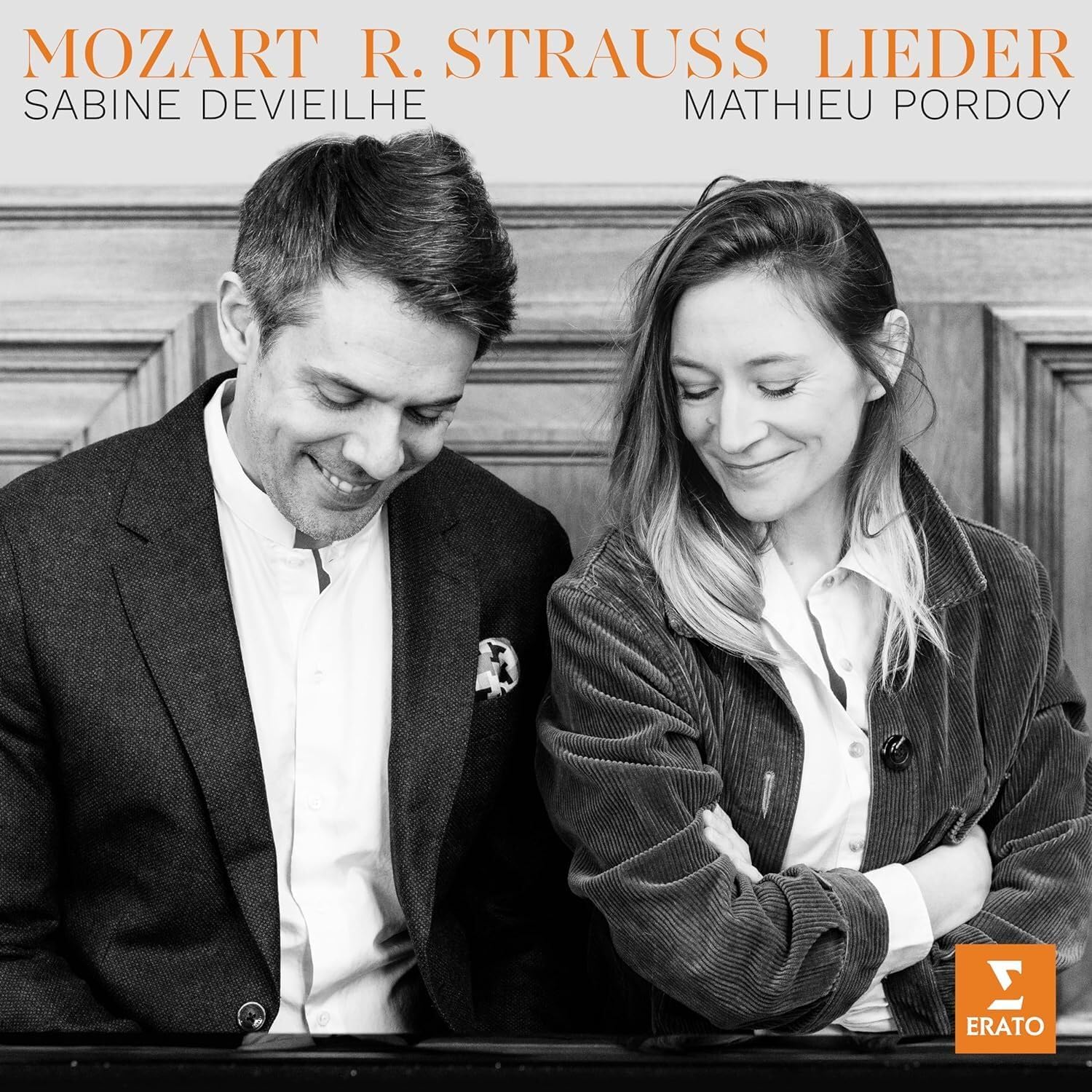
Sabine Devieilhe sings Mozart and Strauss Lieder

81rjnmb3ukl._ac_sl1500_

I listened to this recital quite a few times before setting down my thoughts, and, on each occasion, I reacted differently to it. I was looking forward to hearing it having hugely enjoyed Sabine Devieilhe in the theatre, as a wonderfully tomboyish Marie in Donizetti’s La fille du Régiment, but the recording made me aware of a problem with Devieilh’s vocal production, which I hadn’t noticed in the theatre, namely her tendency to use what I can only describe as a squeeze-box method of production which impedes a natural legato. It is particularly noticeable in songs like Strauss’s Die Nacht and Morgen, but once noticed, I found it hard to ignore. I listened to the recital several times and my impressions changed from one listening to the next. I am sure that there are those who will not be bothered by it at all, but, once noticed, it began to grate.

Which is a pity, because this is a well put together programme and for the most part well executed by Devieilh and her brilliant accompanist, Mathieu Pordoy.

For once we get no catchy title for this disc of Mozart and Strauss Lieder, and Devieilhe tells us in the notes that their two instruments are “pared back and at the service of illuminating the lieder of Mozart and Strauss.” So far so good, and it was a nice idea to intersperse the songs with each other rather than giving us a group of Mozart songs, followed by a group of Strauss. For the most part, the juxtapositions work well, but I did wonder why, at the beginning of the recital, Strauss’s Die Nacht was placed rather uncomfortably between Mozart’s Komm, Zither, komm and his Das Kinderspiel, on which Devieilhe’s son charmingly contributes a few lines in his boy soprano. If the Strauss exposes Devieilhe’s weakness, in the Mozart songs one notes the bright, forwardly placed tone and her communicative way with the text.

The next Strauss group plays to her strengths and weaknesses with both Nichts and Ständchen nicely done, but the following three songs require the kind of seamless legato she appears not to be capable of and where the squeeze is most noticeable.

We return to Mozart with a heartfelt performance of An die Einsamkeit. The voice is lovely, but, yet again, it needs a better legato, which we hear in performances by Barbara Hendricks and Elly Ameling. Still, she has bags of charm in Mozart’s Oiseaux, si tous les ans and bags of personality for Strauss’s Schlagendes Herzen, as well as being well up to the Zerbinetta-like demands of Strauss’s Amor, though her tone becomes a little pinched at the very top. I note that I am noticing less and less the peculiarities of her vocal production and concentrating more on the music. Maybe I am just getting used to it, or maybe it is becoming less pronounced.

Whatever the reason, I was able to relax and enjoy the music making more in the second part of the recital, whilst noting that Allerseelen really needs a richer tone than Devieilhe can muster and that there was a return to the squeeze-box in Das Velichen.

I should also commend the excellent pianist, Mathieu Pordoy, whose playing is pellucidly clear and who supports his soloist brilliantly in a true collaboration. If I have equivocal feelings about some of the singing, I am sure that others will find otherwise and will find this a thoroughly enjoyable and rewarding disc.

Mariss Jansons conducts the Mozart Requiem

71sy8aru8il._ac_sl1500_

Mariss Jansons was chief conductor of the Bavarian Radio Symphony Orchestra until his untimely death in 2019, a post he had held since 2003. He had a long and fruitful association with the orchestra and BR Klassik have released many of his live concerts on disc. Indeed, they have recently brought many of these together in a seventy-disc set.

This performance of the Mozart Requiem was recorded at concerts in May of 2017. Jansons uses the famous Süssmayr completion, and the performance is unashamedly in the Romantic tradition. There is nothing controversial about it, speeds for the most part judiciously chosen, and yet, for me, it never quite catches fire, comparing unfavourably with another live Jansons performance with the Concertgebouw from 2011, which was very favourably reviewed on Musicweb International by Simon Thompson (review). Two of the soloists on the present recording, soprano, Genia Kühmeier and tenor, Mark Padmore sing on that performance too. Kühmeier is lovely in both performances, but Padmore sounds marginally fresher and sweeter in the earlier one, which also has a superb Gerard Finley singing the bass role and Bernarda Fink in the alto part. Elisabeth Kulman and Adam Plachetka, on this issue, are fine, but not quite in the same league.

I listened three times, comparing this one to the earlier one, as well as listening to a similarly big-boned interpretation in the form of Karajan’s 1987 performance, both of which I found much more intensely dramatic. The Karajan, which dates from his final years with the Vienna Philharmonic Orchestra is, I think, his finest of the three he has recorded for DG, and has a reverence and spirituality that I found lacking here. It was hard to put my finger on what was missing in the Jansons, but there are times, like the startling opening to the Confutatis, which jolted me out of my seat, when it felt as if Jansons himself knew something was amiss and was trying to inject some drama or extra energy into the performance. The final lux aeterna, on the other hand, rather trundles towards its conclusion and is greeted by a tepidly polite round of applause, making me wonder why this broadcast was considered for release, especially given the competition from Jansons himself in the much finer Concertgebouw performance, which is also better recorded. Even with the volume turned up quite high, the recording of the Bavarian broadcast is a little distant, a little muddy, and I wondered if this too contributed to my muted impressions.

Well worth considering, if you are wanting the Süssmayer version, is John Butt’s superb reconstruction of the first performance, released by Linn in 2014, which of course uses original instruments. (review) Though the forces are much smaller, it is incisively dramatic and brilliantly recorded, though I personally would prefer any of Jansons’ soloists in either of his two recordings. The bass on the Butt recording is particularly weak and tends to growl in the lower register, no match for Finley, nor even for Plachetka.

If you do want Jansons in this work, then I would suggest you stick to the Concertgebouw performance, which can certainly hold its head up amongst the best of the many recordings on modern instruments.