Callas sings Medea – Dallas, November 1958

dcc86eb552dbd96c4f07fbc85f0df3b2

This is another of those Callas performances that has acquired legendary status and so first a few details to set it in context. In the weeks prior to her appearance in Dallas Callas had been in dispute with Bing over the scheduled programme for her next Metropolitan Opera season. Though they had agreed the operas (Macbeth and La Traviata) they had not agreed the schedule and it transpired that Rudolf Bing had programmed the two operas to alternate with each other. Callas argued that this would be too hard on her voice, as the requirements for each were so different, asking that all the performances for one should be over before she embarked on the other. Bing avered that he was giving her ample time to rest inbetween operas and that he wasn’t prepared to change the schedule. His complete lack of understanding of the different needs of the tw roles was further exemplified by his suggestion that they replace La Traviata with Lucia di Lammermoor, an opera even further away from the demands of Macbeth. The wrangling continued for some time until Bing very publicly “fired Callas”, issuing a statement to the press in which he was photographed tearing up her contract. This on the eve of her first performance of Medea in Dallas.

Callas was incensed, granting a press conference to give her side of the story in her dressing room as she prepared for the prima, in which, as can be heard on this recording, she sings with a security and power that had recently eluded her. It was as if she was determined to show Bing and New York just what they were missing. The result is a performance of incredible fire and attack and, along with live performances from Florence and La Scala in 1953, one of her greatest recorded performances of the opera.

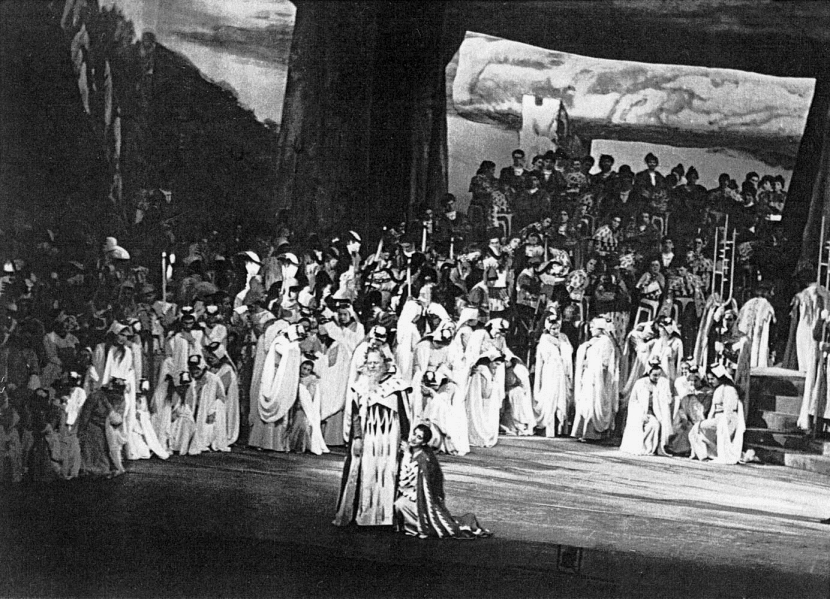
Dallas was certainly in a high state of excitement and the audience as heard on this recording can be noisy, applauding the sets at the opening of each act and granting Callas an ovation on her entrance that almost stops the show completely. She had opened the season with a beautiful new production of La Traviata directed by Zeffirelli. For Medea a completely Greek team had been assembled. The opera was to be directed by the eminent theatre director, Alexis Minotis (husband of acclaimed classical actress Katina Paxinou) with designs by Yannis Tsarouchis. Minotis, who was famous for his productions of Greek tragedies, in which he sought to recapture the style of expression and gesture used in the time of Aeschylus, was startled one day in rehearsal to see Callas do a movement he and Paxinou had been discussing for future use. Callas was kneeling in a frenzy, beating the floor to summon the gods. Minotis asked her why she had done it. “I felt it would be the right thing to do for this moment in the drama,” she replied. How she felt this, Minotis could not explain but he felt that certain things just flowed in her blood. Certainly one gets a sense of the sheer physicality of the performance from photographs and snippets of film from this and subsequent productions of the opera Callas did with Minotis in London, Epidaurus and at La Scala.

hqdefault

Nicola Rescigno, who prepared his own edition of the score, conducts a tautly dramatic performance, less classically inclined than Gui and Serafin, more akin to Bernstein at La Scala, and his cast is arguably the best ever assembled for a Callas Medea. Jon Vickers, who sang Giasone to her Medea not only here in Dallas, but in London, Epidaurus and at La Scala, easily outclasses the tenors in any of her other recordings and one senses the deep rapport that existed between them. Nicola Zaccaria is a firm, sonorous Creon and Elizabeth Carron, with her clear, bright soprano characterises well as Glauce. One also notes the presence of Judith Raskin, the soprano soloist in George Szell’s famous recording of Mahler’s 4th, as the First Handmaiden, making sure the performance gets off to a fine start. As Neris, the young Teresa Berganza (she was only 25 at the time) was making her US debut, singing her aria with a grave beauty. In later years, she related how Callas took her under her wing and how generous she was in making her acknowledge the applause after her aria. So much for the capricious, unreasonable prima donna, sacked by Rudolf Bing.

Callas herself is in blazing form, her entrance carrying with it a threat of menace that makes not only the people of Corinthrecoil in fear , but the listener too. However in her exchanges with Giasone (Ricordi il giorno tu la prima volta quando m’hai veduta?, which was always a special moment in Callas’s performances, wreathed in melting sounds) and in her plaintive singing of Dei tuoi figli we are made aware that it is love, not vengeance that brings Medea to Corinth.

As usual with Callas, her performance is cumulative and she will give  as much attention to a line of recitative as to the evident high spots. As John Steane says in The Grand Tradition,

She will seize the moment, say of noble or tragic decision, summoning all the dramatic force of what has gone before, evoking our knowledge of what the consequences are to be and focusing precisely upon the moment on which all depends.

He was talking generally, but a superb example of this is in the two Act II duets with Creon and Giasone. In the duet with Creon, when she sings Che mai vi posso far, se il duol mi frange il cor? Come mai rifiutar un giorno al mio dolor, un sol dì al mio dolor? you know that she is formulating a plan, and then subsequently the duet with Giasone is a masterstroke of dramatic timing. Having got Giasone to demonstrate his love for his children, she sings the aside Oh gioia! Ei li ama ancor! Or so che far dovrò! with suppressed joy, before she launches into Figli miei, miei tesor in the most beseeching tones imaginable.

The last act is a lesson of contrasts. Momentarily weakening in the scene with her children, her cries of O figli miei, io v’amo tanto lke those of a wounded soul are silenced by the triumphal viciousness of La uccida, o Numi, l’empio giubilo. From there to the end of the opera, she is a cauldron of evil and revenge, the like of which you will never hear from any other singer.

hqdefault-1

The only alarming thing about this performance is that it is the last time we hear her sing with such power and confidence. There are still some wonderful performances to come, but nowhere does she display the kind of vocal security she does here, which makes it doubly fortunate that the performance has been preserved in sound.
Callas’s Norma – 7 December 1955

dvn017_l

1955 had been a spectacular year for Callas, though its beginning was inauspicious. She had been scheduled to start the year singing one of her speciality roles, Leonora in Il Trovatore, at La Scala, but Del Monaco, who was to have sung Manrico pleaded indisposition, though oddly he felt well enough to sing Andrea Chénier (who knows the vicissitudes of tenors), so La Scala made a substitution. Callas could have stepped down, but learned the role of Maddalena in a few days. The opera, a La Scala favourite, had a big success, but the role was hardly one in which her rarified gifts could shine, and is something of a curiosity in the Callas cannon. Thereafter she went from one major success to another. She sang Medea in Rome and followed it with three productions at La Scala, which have entered the realms of legend, the Visconti productions of La Sonnambula and La Traviata, and, by way of contrast, Zeffirelli’s production of Il Turco in Italia. During the summer she recorded Aida, Madama Butterfly and Rigoletto then in September she had a massive success in Karajan’s La Scala production of Lucia di Lammermoor, when the opera toured to Berlin. The autumn saw her back in Chicago for her second season, where she sang Elvira in I Puritani, Leonora in Il Trovatore (perfection according to her co-star Jussi Bjoerling) and her only stage performances of Madama Butterfly. Truly 1955 had been her annus mirabilis and she closed it with what, by common consent, is the greatest recorded performance of her signature role, Norma.

First a word about the differences between this Divina transfer and most others you will hear. Divina’s remaster is from a first generation master tape and the sound is very good, certainly the best I’ve heard. As the first fifteen minutes were not recorded, like other companies Divina have included music from another performance, but whereas other labels do not credit it, Divina tells us they used a 1965 performance under Gavazzeni for the overture and Oroveso’s first aria, and the Rome broadcast of 1955 under Serafin for part of the recitative before Pollione’s Act I aria. There was some radio interference in Norma’s long solo at the beginning of Act II, and most issues substituted the same scene from the Rome broadcast of the same year, but Divina have left it as it stands to retain the integrity of the La Scala performance, and so as not to lose some of Callas’s most moving singing. It lasts only a few seconds and is easy to live with.

The La Scala season starts every year on December 7th, and for the fourth time in five years, Callas had been given the honour of a new production to open the season. The last time she had sung Norma there was in 1952, the year she first became a permanent member of the La Scala company. The La Scala years saw a period of incredible artistic achievement and there is no doubt that by this time Callas had become the reigning queen of La Scala. The new production was by Margherita Wallman, with designs by Nicola Benois and the starry cast included Mario Del Monaco as Pollione, Giulietta Simionato as Adalgisa and Nicola Zaccaria as Oroveso.

Callas is in fabulous form from the outset, stamping her authority on the performance, and the Druids, in her opening recitatives, her voice taking on a veiled, mysterious quality when she sings about reading the secret books of heaven, before singing a mesmeric Casta diva. The repeated As up to B harden slightly in the first verse, but that hardness has dissipated by the second verse and therafter the voice seems to be responding to her every whim. The linking recitative between cavatina and cabaletta was always a high point of her performances, with that wondrous change of colour at Ma punirlo il cor non sa, leading her into the cabaletta. It’s a jaunty tune with plenty of opportunity for display, but Callas somehow invests it with a private melancholy available to few others. I find it impossible to think of the words Ah riedi ancora, qual eri allora without hearing Callas’s peculiarly plaintive voice in my mind’s ear.

The duets with Simionato are also high points of the performance. The two singers first appeared together in Mexico in 1950 and became life long friends. Before these La Scala performances, they had sung together in the opera in Mexico, Catania, London (in 1953) and Chicago. Though the pairing of Callas with Stignani had become a famous one, Simionato was a better fit for the role than Stignani, who both looked and sounded too mature, and no downward transpositions had to be made to accomodate her. Furthermore their voices blended well, and you can sense the deep rapport that existed between them after so many performances together. It is great cause for regret that Simionato was contracted to Decca and therefore never appeared on any of Callas’s studio recordings.

94d0fb8748ccd64a399db3a0835b913f

There are so many things to cherish in this first duet, particularly the wistful way Callas’s Norma recollects the dawning of her love for Pollione and then the fullness of heart with which she consoles Adalgisa at Ah tergi il pianto. However the most arresting moment is in the cabaletta to the duet when she hits a top C forte, then makes a diminuendo on the note before cascading down a perfect ‘string of pearls’ scale, eliciting audible gasps of disbelief from the audience.

Having been all warmth in the duet, her voice flashes out in anger in the trio, the coloratura flourishes hurled out with terrific force, the top Cs like scalpel attacks. The act comes to an exciting end as Callas takes a thrilling, rock solid top D, which she holds ringingly for several bars.

The opening of Act II, a mixture of recitative and arioso akin in some ways to Rigoletto’s Pari siamo, always provoked some of Callas’s most moving singing. What other singer matches her range of tone colour in this scene? I’m thinking of the hard tone at schiavi d’una matrigna when she contemplates the fate of her children at the hands of a stepmother, and the way she drains the tone of colour at un gel mi prende e in fronte mi si solleva il crin so that it becomes a literal expression of her hair standing up on end. This leads to wonderfully tender singing as she looks at her sleeping children, and of course ultimately she cannot bring herself to kill them, her voice drenched with maternal love at son i miei figli.

The following duet, one of the most famous in the bel canto repertoire is, even more than the Act I duet, a perfect example of two artists at one with each other, their voices intertwining and their timing perfect. Not unsurprisingly it provokes rapturous applause from the audience.

740

Callas’s performances were always cumulative and the final scene is almost unbearably moving as Callas takes us through the gamut of emotions, from the almost youthful joy with which she sings Ei tornera spinning out the melisma on come del primo amor ai di felici, through suppressed anger and barely contained rage to ultimate peace and magnanimity, heart-wringinly moving in her final plea for her children. But what we should always remember is how musically her effects are made, her phrasing and the way she shapes the musical line, her sense of rubato unparalleled. Another moment that has entered the history books is her singing of the words son io when Norma confesses her guilt. Apparently she would simply take the wreath from her head and you can almost hear the moment she does it. The audience respond with a sort of corporate moan. Was Ponselle ever as moving as this? Was Pasta? We will never know, but at least with Callas we have recorded evidence. So much is Callas’s way with the role imprinted on my subconscious that inevitably I find all others wanting. Her Norma is so complete, so all enveloping that it remains unchallenged to this day and we are fortunate indeed that this performance, which captures that moment in her career when art and technique reached their truest equilibrium, was captured in sound.

For the rest, Simionato is arguably the best Adalgisa Callas ever sang with and is in terrific form here. Zaccaria is a sympathetic and sonorous Oroveso. Del Monaco makes up for his lack of coloratura with a voice of heroic, clarion splendour and Votto, though he pales next to Serafin, is the perfect accompanist, which, with such a cast, is perhaps all he needed to be.

Great Normas have always been thin on the ground, though all sorts of unsuitable singers appear to be attempting it these days, but let no one think they have truly heard the opera until they have heard a performance with a great protagonist. The studio recordings have their value in enjoying better sound, but I have no hesitation giving this one the prize as the best of all Callas’s recorded Normas.

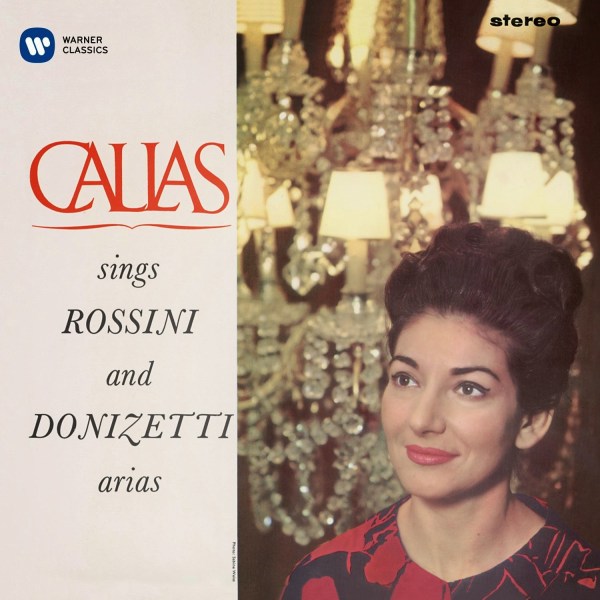
Callas sings Rossini & Donizetti – Revisited

81mslzncryl-_sl1500_

I confess that when it comes to some of these late Callas recitals I have equivocal feelings and my reactions to them can vary from one listen to another.

On the one hand it cannot be denied that this is a voice under stress. Notes above the stave often emerge stridently, or she will tread so carefully that they seem just touched in rather than sung with confidence. This diffidence is more evident here than in the contemporaneous Verdi recital I reviewed a couple of months ago, possibly because Rossini’s and Donizetti’s orchestra offers her less solid support than Verdi’s. Whatever the reason there is a pervading air of caution throughout this short disc. She is more comfortable in her middle and lower range, though even here vowels are sometimes discoloured. There is a world of difference between her defiantly triumphant singing of Rossini’s Armida in 1952 and what we hear in these discs, though only thirteen years separates them.

Taking all these problems into consideration, what is left? Well, her superb musicality, her unparalled sense of style and her ability to get to the heart of all these various arias, not least the way she finds a different voice character for each one, though she never sang any of these roles on stage.

The recital starts with Cenerentola’s final aria, which suits her quite well, the tessitura being a little bit lower. Aside from a couple of strident top notes at the end, it is also vocally quite fine, the scale passages sung smoothly and accurately (no sign of an aspirate here). Though the aria is the summation of the subtitle of the opera (la bonta in trionfo), Callas does not let us forget she was born to “sorrow and weeping”. Is is just my imagination that I hear in her figlia, sorella, amica, tutto trovate in me a reproof to her sisters at the way they treated her.? Those who like their Cenerentolas to be more charming and coquettish might find her wanting, but there is sound dramatic justification for Callas’s more serious interpretation.

There are more pronounced vocal problems in Matilde’s Selva opaca, which follows (what a pity she didn’t sing it in French), but the recitative is brillianty done and she captures a sort of sighing loneliness that is most attractive. I can’t really imagine Callas as the tomboyish Marie in La Fille du Régiment (again I wish she had sung this in French), but convien partir has a lovely, gentle sadness about it. The tessitura bothers her more here, but again her phrasing is exemplary.

Semiramide is a role Callas should probably have sung when she was in her prime and she is suitably imperious and grand from the start of Bel raggio. What is lacking here is the dazzling freedom we hear from Sutherland (especially in her version from The Art of the Prima Donna album) and indeed from Callas herself when she sang Armida. Ornamentaion is altogether too chastely applied and one misses the addition of a cadenza between the two verses of dolce pensiero.

Lucrezia is another role that would have suited her well a few years earlier and, yet again she can’t hide the strain in high lying passages, but the aria has a poignancy and poetry heard in few others. According to Max Loppert in Opera on Record 3, despite her vocal difficulties,

she manages to explore, in the lingering, legato shaping of the semiquaver tracery, a vein of expression, a range of timbres, unknown to other recorded Lucrezias.

The final piece is Adina’s Prendi, per me sei libero from L’Elisir d’Amore,an aria she sings without artifice, her manner direct, simple and charming.

Ultimately, I feel, I am prepared to put up with the parlous state of the voice at this time in her career for the undimmed musical immagination and interpretive detail, but I accept that this will not be true for many and I would advise those people to steer clear.

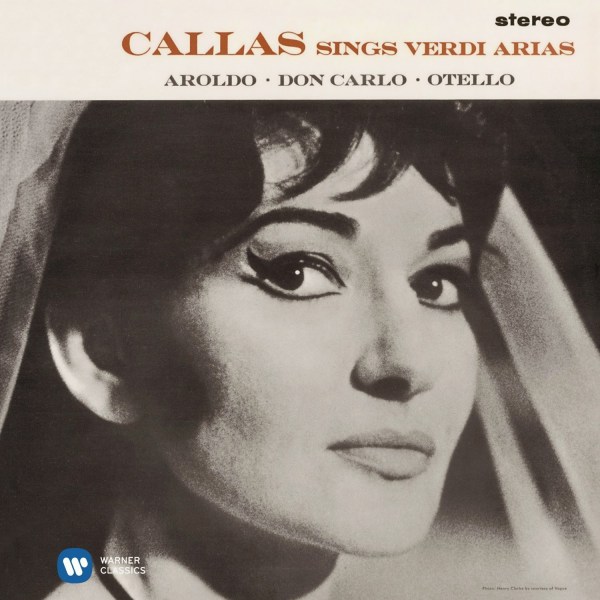
Callas sings Verdi Arias (Revisited)


By 1964 Callas had all but retired from musical life. In 1961 she recorded her first disc of French arias, sang in performances of Medea at Epidaurus in Greece and at La Scala and made a single concert appearance in London. In 1962, she did even less; a short concert tour, taking in London and cities in Germany, plus a couple of arias for a BBC TV appearance. 1963 saw more concerts in Berlin, Dusseldorf, Stuttgart, London, Copenhagen and Paris, plus more recording sessions of French arias at the beginning of the year. At the end of the year and at the beginning of 1964 she embarked on more intensive recording activity, possibly in preparation for her upcoming return to the operatic stage in Tosca and Norma. Three discs were issued in 1964, one of classical arias by Mozart, Beethoven and Weber, one of arias by Rossini and Donizetti, and one of Verdi arias, with more of the Verdi sessions being released in 1972, shortly after she emerged from self-imposed exile to teach a series of masterclasses at the Juilliard School in New York. Though more of these sessions, plus some made in 1969, were eventually released after her death, these were the only ones she agreed to.

Though all three of the discs issued in 1964 revealed some pronounced vocal problems, the Verdi disc is by far the most successful. She seems less preoccupied with her vocal problems, more engaged with the material and consequently the singing has a freedom that is lacking in the other two discs, though this does mean we also get quite a few squally notes above the stave.

Desdemona’s Willow Song and Ave Maria might be considered an uncharacteristic piece for Callas, but she is alive to every shift of mood. As it rarely strays above the stave it also presents her with the least problems vocally. It is a great pity EMI didn’t think to employ someone to sing Emilia’s lines, but Callas skillfully uses a different tone for the comments to Emilia from the one she uses for Barbara’s song. Throughout one feels Desdemona’s anxiety, which erupts with a sudden passionate outburst when she bids Emilia goodbye. The Ave Maria profits from her deep legato, the final Ab spun out in the best tradition.

Both of the Aroldo arias are thrilling, especially Mina’s Act III solo, a superb piece which Callas fills with drama and significance, bringing the cabaletta to a rousing conclusion.

Elisabetta’s Non pianger mia compagna from Don Carlo doesn’t really come off. Though her legato is still excellent, she sounds strained here and she can’t float the climactic phrases as she should. Eboli’s O don fatale, though, is another matter entirely. The whole aria brims with contrast and drama, and one registers each change of expression. She vehemently launches into the opening section, spitting out the words ti maledico, but then moulds rather than sings the o mia regina section, her legato line superb, her rich lower register digging deep into its melancholy. Finally as she realises she still has time to save Carlo, she brings the aria to an ecstatic close. OK, so there are a couple of off centre high notes, but they fade into insignifance next to the thrilling commitment of the singing.

When I reviewed all three of these 1963 recitals here back in January 2017, I mentioned that my wobble tolerance could vary from listen to listen. Sometimes I find the acidulous tone and stridency hard to take; on others I barely notice them as I get wrapped up in the musical imagination. It’s safe to say that on this occasion the latter reaction was in play.

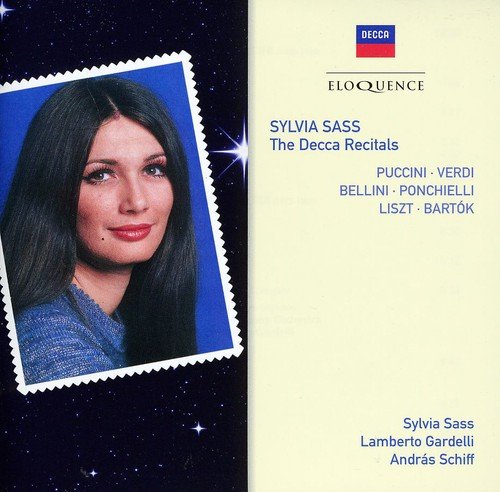
Sylvia Sass – The Decca Recitals


Sylvia Sass shot to stardom at the age of 25 after singing the role of Griselda in a 1975 Covent Garden production of Verdi’s I Lombardi which also starred José Carreras. Decca were quick to sign her up and her first recital LP (one side of Puccini, one of Verdi) followed in 1977. A further opera recital followed in 1979 and finally in 1981 a recital of songs by Liszt and Bartók, in which she got to sing in her native Hungarian. She also appeared on Solti’s recordings of Don Giovanni (as Donna Elvira) and Bluebeard’s Castle and on the Philips recording of Stiffelio. She was hailed as the new Callas and, like others saddled with the epithet before her, her international stardom was short-lived, though she continued to sing in opera (though mostly in Hungary) until 1995 and made many records for Hungaraton.

From the very first notes of Turandot’s In questa reggia it is clear that this is a singer with a personality, always aware of the dramatic possibilities of the music. The voice can caress, but equally it has bite and power and the top can glare when singing at full tilt. The four Puccini heroines given here (Turandot, Tosca, Manon and Butterfly) emerge as distintinctively different characters, which isn’t always the case in a Puccini recital. There is also much that is fine in the Verdi items, the Sleepwalking Scene from Macbeth being particularly good, but here we notice a tendency, also evident in the Puccini items, for there to be too great a gap between her loud and soft singing, where the loud singing can take on a strident, squally edge that contrasts too greatly with the almost disembodied purity of her soft singing.

By the time of the second recital this tendency to veer from ultra soft to ultra loud has become more pronounced, even more noticeable when singing live. I remember seeing her as Norma at Covent Garden in 1980 and you could hardly hear her when she was singing quietly. Not that the second recital doesn’t have its attractions. Lady Macbeth continues to be impressive, and there are some lovely moments in the Il Trovatore aria, with its spectacularly floated high D.

The 1981recital of Liszt and Bartók songs, with András Schiff at the piano, is rather impressive. Sass brings vivid personality to and drama to a song like Liszt’s Die Loreley, as well as a beautiful, comforting quality to Kling leise, mein Lied. She also makes musical sense of Bartók’s sometimes angular vocal lines, brilliantly supported by Schiff’s superb playing of the difficult piano accompaniments.

It is a great shame Sass never really fulfilled the promise of her early successes, but these discs serve to remind us why people found her so exciting when she first burst onto the scene and receive a qualified recommendation from me.

Maria Callas- Soprano Assoluta

bjr143_l

This is a superb compendium of recordings taken from live concerts given by Callas between 1949 and 1959. It is being offered as a FREE download (yes, you read that right, free) from Divina Records, so surely there can be no reason not to snap it up while you still can. The sound, while hardly state of the art, is not bad for the period, all of the performances having been taken from radio broadcasts. Taken from BJR LPs, transfers are up to Divina’s usual high standards and the download comes with an excellent pdf of the booklet which accompanied the original release.

The first track is actually her first 78 recording, made for Cetra in 1949, a beautiful performance of Casta diva and Ah bello a me ritorna, though without the opening and linking recitatives in which Callas always excelled. The aria is ideally floated, the scales and coloratura in the cabaletta stunning in their accuracy. We next turn to a radio concert recorded for Turin radio in 1952, with Oliviero de Fabritiis conducting. Callas was obviously out to demonstrate her versatility, and was also trying out for size a couple of roles she would sing later that year, Lady Macbeth and Lucia. To Lady Macbeth’s Letter Scene and the first part of Lucia’s Mad Scene, she adds Abigaille’s Ben io t’invenne from Nabucco and the Bell Song from Lakmé. She is in stupendous voice in all, the high E in the Bell Song ringing out here much more freely than it does in the 1954 recording. Not only is the singing technically stunning, but the contrasts she affords as she switches from the powerfully ambtious Lady Macbeth, to the sweet and maidenly Lucia, from the demonically triumphal Abigaille to the improvisatory story-telling of Lakmé are simply out of this world. You really don’t hear singing like this nowadays.

Next we move to a 1954 Milan concert, starting with her justly famous and technically brilliant recording of Constanze’s Martern aller Arten from Die Entführung aus dem Serail (sung here in Italian as Tutte le torture), her one Mozart stage role. Not only does she execute the difficulties with ease, she sounds properly defiant. It is a thrilling performance. Louise’s Depuis le jour (sung in French) suits her less well, and the performance is marred by occasional unsteadiness. Nonetheless it is hard to resist the quiet intensity of her intent. Armida’s D’amore al dolce impero from Rossini’s opera is, like the Mozart, stunningly accomplished, even if some of the more daring variations from the Florence complete performances have been trimmed down. The bravura of the singing is still unparalleled. The last item from this concert is Ombra leggiera from Meyerbeer’s Dinorah, a rather empty piece, which is hardy worth her trouble, though it improves on the studio recording with the addition of the opening recitative and the contribution of a chorus. Her singing is wonderfully accomplished, the echo effects brilliantly done, but it is not a piece I enjoy.

Another Milan concert, this time from 1956, brings us her best ever performance of Bel raggio lusinghier from Semiramide, though she adds little in the way of embellishment and the effect is less thrilling than her singing of the Armida aria. We get her first version of Ophélie’s Mad Scene from Hamlet (sung here in Italian rather than the original French of the studio recording), which is superb, it’s disparate elements brilliantly bound together. We also have a beautiful performance of Giulia’s Tu che invoco from La Vestale, which seques into a rousing performance of the cabaletta, and she revisits the role of Elvira in I Puritani with a lovely performance, with chorus and soloists, of Vieni al tempio.

From Athens in 1957, there is a dramatically exciting performance of Leonora’s Pace, Pace from La Forza del Destino, in which she manages the pitfalls of the piano top B on invan la pace better than you would expect for post diet Callas. Her performance of Isolde’s Liebestod (again in Italian) is very similar to the Cetra recording, warm and feminine, passionately yearning.

From the 1958 Paris Gala we have her minxish Una voce poco fa from Il Barbiere di Siviglia, with its explosive ma, as Rosina warns us she is not to be messed with. She sings in the mezzo key with added higher embellishments. This is followed by a couple of lesser known performances from a UK TV special, conducted by Sir Malcolm Sargent. Mimi’s Si mi chiamano Mimi is similar to the performance on the complete recording, charming and disarming, whilst Margarita’s L’altra notte from Mefistofele is a touch more vivid, a little less subtle than the studio recording.

Just one item from the 1957 rehearsal for the Dallas Opera inaugural concert, the Mad Scene from I Puritani. Though, by this time, Callas’s voice had been showing signs of deterioration, Bellini’s music still suits her admirably, and she sounds in easy, secure voice here up to a ringing top Eb at its close. The scale work is as supple as ever, and she executes its intricacies with ease even when singing at half voice.

To finish off we have the Mad Scene from the 1959 Carnegie Hall concert performance of Il Pirata. It had been a variable evening, with Callas’s colleagues hardly in her class, but here, left alone on the stage, Callas responds to the challenges of the final scene superbly, the cavatina, in which she spins out the cantilena to incredible lengths, becomes a moving lament to her son, and the dramatic cabaletta is then thrillingly flung out into the auditorium. The audience unsurprisingly go berserk.

How lucky we are to have these wonderful live performances preserved in sound, and how grateful we are to Divina Records for offering them to us free of charge. Nobody need hesitate.


Callas as Tosca – Royal Opera House, Covent Garden 1964

812ZMsD1g5L._SL1500_

I’d forgotten that I hadn’t reviewed the final opera in Warner’s Callas Live Remastered, so, rather belatedly, here it is.

This Tosca marked Callas’s triumphant return to the stage after an almost two year hiatus. She had been lured out of semi-retiremet by Zeffirelli who was also to stage Norma for her in Paris, with the two opera houses sharing the two productions, though, in the event, the Paris Norma never made it to London. Paris did however get to see the Covent Garden Tosca. It was also the vehicle for her last ever stage appearance the following year when she agreed to sing, against doctor’s orders, for a Royal Gala. A couple of months before she had collapsed on stage and was unable to complete a performance of Norma.

At this performance, though the voice is not what it was when she made the famous De Sabata recording eleven years earlier , she is in remarkably good form, and her interpretation has deepened even further, no doubt the product of weeks of intensive rehearsal and her deep rapport with Tito Gobbi. John Copley, who was Zeffirelli’s assistant on the production, once told me he had never before or since come across such complete actor/singers. At rehearsals, Callas and Gobbi would improvise their scenes and then discuss what had worked, what hadn’t, before returning to the scene to incorporate any new ideas, just as straight actors do on stage. According to Gobbi, so close was their connection that they were even able to do this during a performance, so that if anything unusual happened, as it did one night when Callas’s hairpiece caught fire in one of the candles, they could incorporate it into their stage business.

The production has gone down in history as one of the greatest opera productions of all time, and those who were alive to see it still talk about it today. Act II has been preserved on film and goes some way to revealing the Callas magic on stage, but why oh why didn’t they record the whole thing? What a missed opportunity. The fame of the Zeffirelli staging, the iconic photos taken from it and the 1953 recording are no doubt the reason Callas is so much associated with the role, though it was not a favourite of hers, and, truth to tell, she rarely sang it after making the recording, and never at La Scala during her glory days there.

The first thing to be said for this release is that Warner have discovered a new sound source for the performance, and it is a lot better than anything we have heard before. There is a good deal of stage noise to be sure, but both voices and orchestra come across very clearly. It almost sounds like stereo, so clear is the acoustic.

The performance largely justifies its reputation, and is absolutely gripping from start to finish. Cioni is its weakest link, the voice a little thin and reedy, and, possibly intimidated by appearing alongside two such dramatic giants, with a tendency for empty overacting. He is certainly no replacement for Di Stefano in the 1953 recording, or Bergonzi in the 1964 studio recording, on which Callas is in less secure voice than she is here. He’s not at all bad, just not outstanding.

As for Callas, the voice lacks the beauty and velvet of her 1953 self, but, histrionically she is more inside the role than ever. Her Tosca is more feminine, more vulnerable, even more volatile, but somehow more endearing, and her singing is peppered throughout with wonderful little details. She is particularly charming (not a word one usually associates with Callas) in the Act III duet with Cavaradossi, girlishly happy in the way she looks forward to her future, which contrasts brilliantly with her utter despair when that future is cruelly snatched away from her.

Gobbi’s voice has also lost some of its velvet since 1953, but he too is wonderfully inside the role, his vocal acting so vivid you can almost taste the words. Actually one of the pleasures of the set is being able to hear the words so clearly, not only from the three principals, but also from all the excellent comprimarii. Cillario conducts an exciting performance, if without the many subtleties and revelations of De Sabata in the studio, which remains a first choice for the opera. That said, this one is highly enjoyable and I would place it above Callas’s second studio performance. It may not be not the essential listening of some of the other operas in Warner’s live box set are, but it is certainly worth hearing, and nicely rounds off the set, which thus covers almost all of her international stage career, from Nabucco in 1949, just two years after her Italian debut in Verona, to this Tosca, recorded the year before she sang for the last time on the operatic stage.


Maria Callas – Icon

Maria_Callas Icon

This is a slightly edited version of an article I wrote on gay icons for an online gay magazine, so I thought I’d include it in my blog. Please remember to take into account its intended audience.

There may have been divas before Maria Callas, but there is no doubt that the modern idea of what is a diva owes a great deal to the legendary opera singer, who, without ever singing a note of popular music, was as famous during her lifetime as a movie star. Even today, 41 years after her death and over 50 years after she last appeared on stage, her records outsell those of any other female opera singer.

Callas was born in 1923 in a New York hospital to Greek immigrant parents. Her mother, bitterly disappointed not to have had a son, wouldn’t even look at Maria for the first few days after she was born. Maria was an awkward, bespectacled, dumpy child with, in her mother’s eyes, one redeeming feature. She could sing. And, from an early age, Evangelia, Maria’s mother, decided Maria would become a star. No doubt here began the seeds of Callas’s burning desire to succeed, and also, what her record producer Walter Legge called, her superhuman inferiority complex. It was only by singing that she could get approval from her mother. It was a tempestuous relationship, and later they had a very public quarrel, leaving them estranged for the rest of Maria’s life.

41184a04e04b90de3653ed67d1d508c1--maria-callas-opera-singers              12cd6e4320697afc12d98c7e5ccd5bdc

Callas started out as everyone’s idea of the fat lady who sings, but shed 80lbs to become the svelte, elegant, iconic figure we know today, modelling her look on that of Audrey Hepburn. Some say this weight loss was also the reason for her relatively early vocal decline. Paradoxically, the more famous she became, the more her voice let her down, and her brilliance was relatively short, its peak lasting barely ten years, though as American opera star Beverly Sills once said, “Better 10 years like Callas, than twenty like anybody else.” She created a revolution in the staging of opera too, for Callas didn’t just sing, she could act, and it was her burning desire to fulfil all the dramatic demands of her roles, which was behind her decision to lose weight. To her way of thinking, it was crazy to have a fat, healthy looking soprano supposedly dying of consumption.

From the very beginning she caused controversy. Her voice was not conventionally beautiful, but it was better than that. It was a voice like no other, instantly recognisable with an extraordinarily wide expressive range, which she exploited to searingly dramatic ends. It was a large, dramatic voice too, and yet she had the technique to sing roles usually associated with much lighter voices. Those who just wanted to close their eyes and listen to beautiful sounds were jolted out of their complacency, and they didn’t like it. In her early days she enjoyed showing off her versatility, and within a week she alternated one of the heaviest roles in the repertory (Brünnhilde in Wagner’s Die Walküre) with one of the lightest (Elvira in Bellini’s I Puritani). It was a feat unheard of at that time, and she began to be known as the soprano who could sing anything. The traditionalists didn’t like it and battle lines were drawn.

From 1951 until 1958 she was the reigning queen of La Scala, Milan and Luchino Visconti, lured into opera by the prospect of working with her, here mounted some of the greatest opera productions ever in operatic history. It was also at La Scala that she worked with Franco Zeffirelli for the first time, and with conductors such as Victor De Sabata, Carlo Maria Giulini, Herbert von Karajan and Leonard Bernstein. It was a period of amazing artistic achievement, and tenor Jon Vickers, often referred to Callas as one of the people most responsible for the revolution that occurred in opera after the second world war, rescuing it from the fustian stand and deliver concert in costume it had become, and creating living, breathing theatre. The La Scala audience was never an easy one, and she often had to deal with hostility from it, but, such was her genius, she could usually win a hostile audience over by the end of the evening. She was definitely a fighter.

8aec16d6efb7ee6115c2f30e90a2351a

The Callas myth is very much one made by the media. Her musical genius is often lost amongst the details of her private life and the scandals attached to it. The media concentrates on the occasional cancellations, the rows with opera managements, and often forgets the genius which made her a star. They build a picture of the capricious, temperamental, demanding opera singer, which, though partially true, tends to ignore the fact that she was intensely professional, dedicated and respected by most of the musicians she worked with. Her outbursts were usually brought about by what she saw as unprofessionalism. Unlike many divas who flounce in, do their bit and flounce out, Callas was often the first to arrive at rehearsal and the last to leave. She lived for her art. That is, until Aristotle Onassis arrived on the scene. Callas stupidly, blindly, fell in love and from that moment the media hardly ever left her alone.

When she met Onassis, she was still married to a man 51 years older than her, Gian Battista Meneghini. She married him shortly after she arrived in Italy in 1947, still only 23, overweight and gauche, and he had provided inestimable support in the early days of her career. By the time she met Onassis she was a very different person, svelte and elegant, and used to mixing with the artistic elite. Onassis, still married himself, was as taken by her fame as by her beauty and determined to make her his own. Callas, the ugly duckling who became a swan, was flattered by his attention, and became his mistress. She practically gave up her career for him, believing that one day they would marry, until, devastatingly, he married Jackie Kennedy instead. After the affair, Callas did try to pick up the threads of her career, but, along with the growing problems she was having with her voice, much of the fire had gone. During the Onassis years, she severely curtailed her engagements, attempting a comeback in 1964, after Onassis’s marriage. She agreed to appear in two new Zeffirelli productions to be shared with Covent Garden and the Paris Opéra, Tosca and Norma. Though the London performances of Tosca scored her an enormous personal success, the Normas in Paris went less well, and when she returned to the role there in 1965, the final performance of the run was abandoned, as Callas was simply too exhausted and unwell to continue. Later that year she made her final ever appearance in opera at a royal gala performance of Zeffirelli’s Tosca at Covent Garden, the only performance of the scheduled run she felt well enough to sing. She was singing against doctor’s orders, and even then only on condition that she sing only that one performance.

After that she lived as a recluse in Paris, occasionally attempting to revive her career. She played the role of Medea in Pasolini’s non-operatic film. Though her performance was enthusiastically greeted by the critics, the movie was not a commercial success, and she made no further pursuits in the direction of a movie career. She also gave a series of public master classes at the Juilliard in New York (the basis of Terrence McNally’s play Masterclass), and had an unsuccessful attempt at directing, with tenor Giuseppe di Stefano, at the Turin Opera. She was, by this time, in a relationship with Di Stefano, and, probably unwisely, agreed to embark on a world concert tour with him, at which they would sing duets and arias, accompanied by piano only. She had only just turned 50, but her voice was a pale shadow of itself. Only too aware of her shortcomings, she wryly noted how the critics were being much kinder to her then, than they were years ago when she was singing brilliantly. Audiences, though, went mad, screaming for more, besieging the stage with floral tributes, as if finally acknowledging now, in her ruin, the great star that she was.

When the tour came to an end, she holed herself up in her Paris apartment. She never stopped loving Onassis, for all that he treated her so badly. They secretly revived their friendship, though, according to her secretary, Nadia Stancioff, she flatly refused to have any kind of physical relationship with him after he married Jackie. After he died, it was as if all the fight was knocked out of her. Conductor Jeffrey Tate, who was working with her at this time (she never completely gave up the idea of a comeback), felt that she simply gave up living.

She died in 1977 at the age of 53 in circumstances that are still unexplained. Officially she died of a heart attack, but she was on so many uppers and downers by then, that some think it may have been an accidental overdose. Whatever it was, dying young certainly contributed to her legendary status.

Nowadays she continues to enthral and inspire, and her influence goes far beyond the opera house. Aside from the aforementioned Masterclass, Terrence McNally also wrote a play The Lisbon Traviata (taking its title from an at that time unavailable live recording of Callas singing La Traviata in Lisbon), which focuses on two of McNally’s pet subjects; gay relationships and the gay man’s love of opera. During her lifetime she was something of a fashion icon, having fabulous gowns designed for her by Milanese designer Biki, by Pucci, Fendi and Yves St Laurent. Not so very long ago Dolce and Gabbana produced t-shirts with her image on them for their 2009 collection, and recently American designer Zac Posen based an entire collection on costumes Callas wore in Argentina in her early years, and a couple of years ago, Mark Jacobs incorporated  images of Callas onto his designs of capes, t-shirts and bags.

In the world of film her records are frequently used on film soundtracks. Most recently it is the voice of Callas we hear singing Casta Diva in The Iron Lady.  Marvel’s Bruce Banner (the Hulk) listens to her version of the same aria in The Avengers movies and Gus van Sant used her recording of Tosca as a backdrop for much of his brilliant Milk. And who could possibly forget that scene in Philadelphia, in which Andrew Beckett (played by Oscar winner Tom Hanks) attempts to explain to his lawyer, Joe Miller (Denzel Washington), what opera means to him? As Maria Callas’s recording of La mamma morta from Giordano’s Andrea Chénier begins softly in the background and then swells to fill the theatre, Andrew translates the words and conveys the passions and emotional meanings behind this operatic excerpt.

“I am divine, I am oblivion, I am love. “

No wonder the Italians called her La Divina. After her death, baritone and colleague Tito Gobbi, said

“I always thought she was immortal, and she is.”

Callas and Corelli in Poliuto _ La Scala, Milan 1960

81cwoavsenl-_sy355_

Paolina in Donizetti’s Poliuto was Callas’s final new role. The opera opened the 1960/1961 season at La Scala, an honour granted to Callas five times since her official debut in I Vespri Siciliani in 1951. It also marked her return to the house since her last performances of Imogene in Il Pirata in 1958. The opera was to have been directed by Luchino Visconti, but he had withdrawn from the project in protest after his film Rocco e suoi fratelli had been censored by the Italian authorities. The sumptuous designs were by Nicola Benois, and Herbert Graf took over from Visconti as director.

The opening gala was attended by Prince Rainier and Princess Grace of Monaco, the Begum Aga Khan, Onassis and what one might call the worldwide glitterati, all of whom had come not for Donizetti, but to see the most famous woman in opera, Maria Callas. Callas herself had had only two other engagements in 1960, singing Norma at the ancient amphitheatre in Epidaurus in Greece (the first time opera had ever been staged there) and making her second recording of the same opera for EMI. Nor did these performances signal a return to her erstwhile busy schedule. Her 1961 schedule was not much busier. She made her first disc of French arias, sang some arias with Sir Malcolm Sargent at the piano at a concert at St James’s Palace in London, and appeared in a new productions of Medea in Epidaurus and at La Scala. After a couple more performances of Medea at La Scala in 1962, she didn’t return to the stage until 1964 for the Covent Garden Tosca and the Paris Norma.

Paolina may seem a strange choice for Callas, considering that she is something of a secondary character to that of her husband, Poliuto, but publicity accompanying her every move was now at such a feverish level, that she no doubt thought it would take some of the pressure off her comeback at La Scala. An example of the hysteria which now surrounded her every move is the prolonged ovation which greets her first entrance, so loud and long that Votto has to stop the introduction to her aria and re-start after the hullabaloo has died down.

The reason I mention all this is that it helps place this performance in context, giving us an insight into Callas’s state of mind and the condition of her voice, and there is no doubting she seems nervous and uncharacteristically tentative at her first entrance. It is evident she is treading with caution, though, characteristically, her phrasing is as eloquent as ever. In Act II she appears to have gained in confidence, and the duet with Severo goes quite well. However she is still cautious in the upper reaches and an attempt at a top D at the end of the act is soon abandoned.

Her most eloquent singing comes in the Act III duet with Poliuto, and though the top of the voice is no more secure here than elsewhere, her singing is reminiscent of some of her best work. I remember a recording of this duet sung by Montserrat Caballé and her husband Bernabé Marti, but, though Caballé’s tone may be more ingratiating, her handling of the music is clumsy in comparison to Callas’s, nor does she make anything of the descending scale passages in Un fulgido lume, which Callas imbues with such significance.

Corelli is a splendid Poliuto, his voice burnished and golden, and less likely to indulge in those annoying sobs he often introduces into his singing of verismo, and the opera is cast from strength, with superb performances from Bastianini and Zaccaria. Votto, though he makes some swathing cuts to the score, is a reliable, if not particularly inspired, leader.

Being from 1960, the sound on this recording has always been quite good, and this new Warner master would appear to be a new transfer of the EMI one, which was also reasonably acceptable. A qualified success then. Not Callas at her best certainly, but definitely worth a listen.


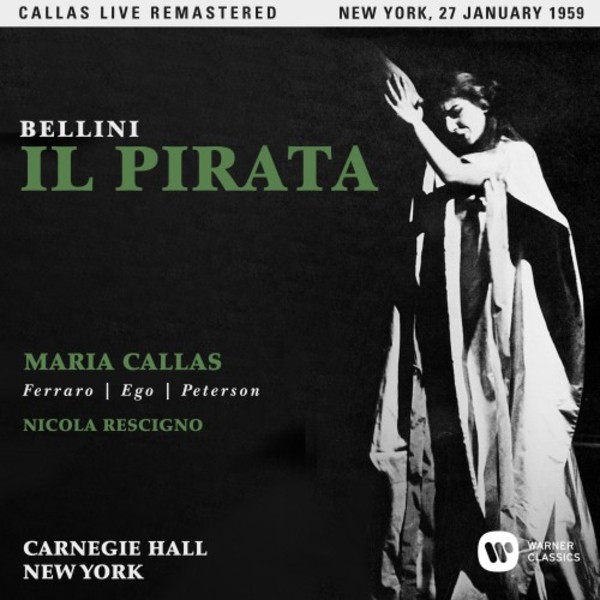
Callas in Il Pirata – Carnegie Hall 1959

1502882448_9029584466

Callas first sang the role of Imogene in Il Pirata in May 1958 at La Scala, Milan, her last appearance there until she returned to the house for Poliuto, the opening opera of the 1960 to 1961 season. It was not a particular happy time for her. Ghiringhelli, the intendant of La Scala, had been increasingly cold to her since the Rome walk out on January 2nd earlier that year. Relations had already cooled after her appearance in La Sonnambula in Edinburgh, after Ghiringhelli announced an extra performance without first getting Callas’s agreement. Ghiringhelli was playing a dangerous game, as he did not tell the Edinburgh Festival management that Callas was only contracted for four performances and let them sell a fifth using her name, presumably thinking that, once it had gone on sale, Callas would cave in and agree to the extra performance. Already unwell, and having fulfilled her contractual duties, she refused to sing the extra performance and left Edinburgh for warmer climes, a much needed rest, and, unwisely as it turned out, a party given by Elsa Maxwell in her honour. The press were merciless, painting Callas as the capricious prima donna, who had cancelled a performance in order to go to a party.

Though she had redeemed herself in the eyes of the La Scala audience the previous month  in a revival of Visconti’s production of Anna Bolena, Ghiringhelli did nothing to squelch rumours that Il Pirata would mark Callas’s last appearance at La Scala, and Callas seized a moment to point out the reason for her departure at her last performance. The word palco in Italian has a dual meaning. In the opera it means scaffold, but it also means theatre box, and when Callas came to sing La! Vedete! Il palco funesto! she strode to the front of the stage and gestured towards Ghiringhelli’s box in the theatre. Her meaning was not lost on the audience and it went wild, but Ghiringhelli had the last word, demanding that the fire curtain be lowered before Callas had been able to accept the ovations raining down on her.

It is a huge cause for regret that none of the La Scala performances appear to have been recorded, for there she was singing with first class support in Franco Corelli and Ettore Bastianini. Pier Miranda Ferraro, who sings Enzo on her second recording of La Gioconda, and Constantin Ego are not in the same class. Callas herself is in variable form, top notes occasionally afflicted with hardness and unsteadiness, but she is still a great Bellinian stylist, and the way she caresses and moulds the phrases shows up the provincial attempts of her colleagues. In the absence of a La Scala recording, we are fortunate that this concert performance was recorded.

There was an enormous amount of excitement attending her arrival in New York, fans having been deprived of seeing her at the Met after Rudolf Bing sacked her for not agreeing to the performance schedule he set out. Callas’s relationship with the Met had always been a tense one, but Bing’s boorish unwillingness to understand that a voice cannot switch to and fro between roles as differing in their vocal demands as Lady Macbeth and Violetta would suggest that the fault lay with his intransigence. His only concession was to offer a substitution of Lucia di Lammermoor for La Traviata, a role even further away from the demands of Lady Macbeth.

Understandably then, a certain amount of tension marks out her singing in her opening scene. Nevertheless, she stamps a Norma-like authority on her first recitative, and the whole scene, which she later recorded in the studio with Antonio Tonini, is a perfect example of how to express conflicting emotions, of carefully differentiating between public and private utterances. However she doesn’t really relax and get into her stride until the first duet with Gualtiero. Throughout this duet she gives a masterclass, unfortunately unheeded by Ferraro,  in how to shape and mould phrases, ensuring that the arc of the melody remains paramount.

Worth noting in the Act I finale is a dazzling four bars of rapid scales, which Callas executes with incredible virtuosity. Rescigno recalls that at the rehearsal, she muffed the scales at the fast speed with which he launched the stretta. He told her he would put the breaks on before her entry, but Callas responded,

“No, don’t do that, I like the tempo very much; it is valid and I don’t want you to help me.” “Well,” I said, “what if you don’t make it in the performance?” “That’s my business, not yours,” she countered. However out of her fantastic will came this superb, astonishing thing at the performance, all in order.”

In the second act duets she achieves marvels of elegance and grace, given the inadequacy of both Ego and Ferraro, neither of whom are in the least bit comfortable with any rapid passagework, and both of whom alter the vocal line to accommodate their weaknesses.

However it is when left alone in the final scene, a scene which she programmed regularly into her concert programmes, that she makes the greatest effect. Apparently at the performance, all the lights were lowered leaving just a spot on Callas. According to Louis Biancolli,

“An eerie glow fell on her face. At this ghostly juncture Miss Callas made the most of her strange and haunting timbres. It was something to be left in the dark with the voice of Maria Meneghini Callas.”

As ever the recitative is a lesson in how to weight and measure phrases, and the cavatina benefits from her deep legato, the filigree drawn out to heavenly lengths, but Rescigno takes it at a slightly faster tempo than both the studio recording of the previous year, and concerts later that year in Hamburg and Amsterdam, where she spins out the phrases to even greater length. The cabaletta too is more propulsive, but this only adds to the excitement, and the audience go wild at its close. As reported in the New York Times

Hundreds debouched down the aisles to the footlights. They applauded and yelled and screamed “Bravo Maria!” Miss Callas returned again and again for curtain calls. Finally a man came out and turned off the lights, and the worshippers departed.

Away from all the attendant excitement, the listener will no doubt realise that the performance, as a whole, is a little lacking in polish, but Callas’s greatness remains, regardless of the fact that she is not in her best voice. I may regret the absence of a recording of the La Scala production, but, as the only example of Callas’s Imogene, this recording is definitely worth having. None of the commercial recordings of the opera quite matches its fire and excitement.

The sound on this Warner issue is a good deal better than that of the old EMI issue, which would suggest that it comes from a different source.