A fascinating arrangement of Schubert’s Winterreise for soloist, chorus and two accordions.

81r0f4d0yfl._ac_sl1425_

Now here’s something a little different. Rearrangements and re-imaginings of Schubert’s Song Cycles are not exactly unusual, but I think Meyer might be the only person to use a chorus and this is actually Gregor Meyer’s second arrangement of Schubert’s popular song cycle. The first was for baritone, chorus and piano and was recorded in 2017 by baritone Daniel Ochoa with Gregor Meyer conducting the Leipzig Vocalconsort and with Christian Peix on the piano. This one unusually substitutes two accordions for the piano. Given that the accordion wasn’t invented until around 1822 in Berlin, it is unlikely that Schubert ever got to see or hear one. However, it does not sound anachronistic and indeed captures the sound of the hurdy-gurdy in the final song even more atmospherically than the piano. The accordions can also add a jaunty, folk-like colour to songs like Frülingstraum. Interestingly, Meyer is not the only person to rearrange the cycle for an accordion. Oboist Normand Forget made a chamber version for accordion and wind quintet (including bass clarinet, oboe d’amore and baroque horn) and this has been recorded by tenor Christoph Prégardien, accordionist Joseph Petric and the Montréal ensemble Pentaèdre.

Meyer’s chorus first appears in the second stanza of the first song, Gute Nacht, almost imperceptibly creeping in on a wordless vocalise, which wonderfully conjures up a bleak, wintry scene. Thereafter they are a constant presence, sometimes joining in with the soloist, sometimes taking over the vocal lead or responding to him, sometimes still in wordless commentary, and sometimes, as in Der stürmische Morgen, taking over the whole song whilst the soloist remains silent. You might think the effect would be to distance us from the solitary traveller’s loneliness, but in fact it reinforces his utter desolation, the voices seeming part of an interior dialogue as the soloist struggles with his own inner demons.

In an arrangement such as this, the soloist’s function is perhaps somewhat different from normal, and Tobias Berndt fulfils his task admirably, knowing when the focus is on him, but realising when he needs to pull back and blend with the choir. He has a light, pleasing baritone which blends beautifully in the total sound picture. He may not make any startling revelations (those tend to come from the chorus and accordions) but nor is he bland or inexpressive.

The GewandhausChor under Gregor Meyer are absolutely splendid, and the two accordion players, Heidi and Uwe Steger, are superb accompanists.

Of course, this arrangement cannot replace the original version for voice and piano, and most people will have their favourites (mine are Fischer-Dieskau and Demus and Kaufmann and Deutsch) but this is a fascinating and rewarding re-thinking of Schubert’s great song cycle. I really enjoyed it and one listening quickly became two and then three. I know it’s only January, but this is very likely to be one of my discs of the year. Highly recommended.
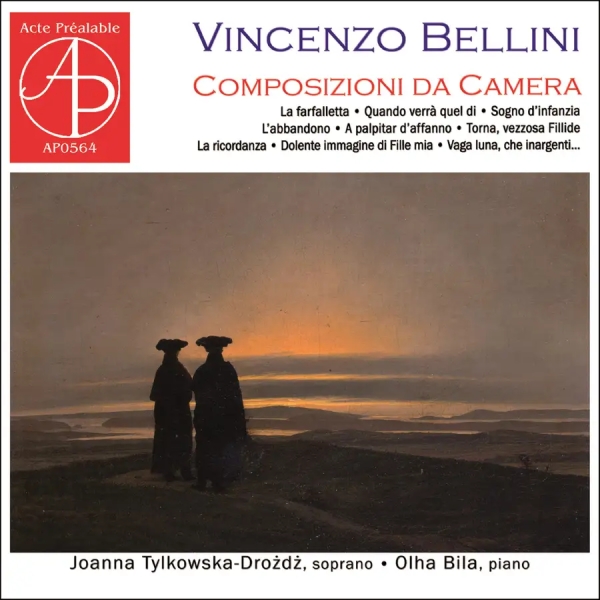
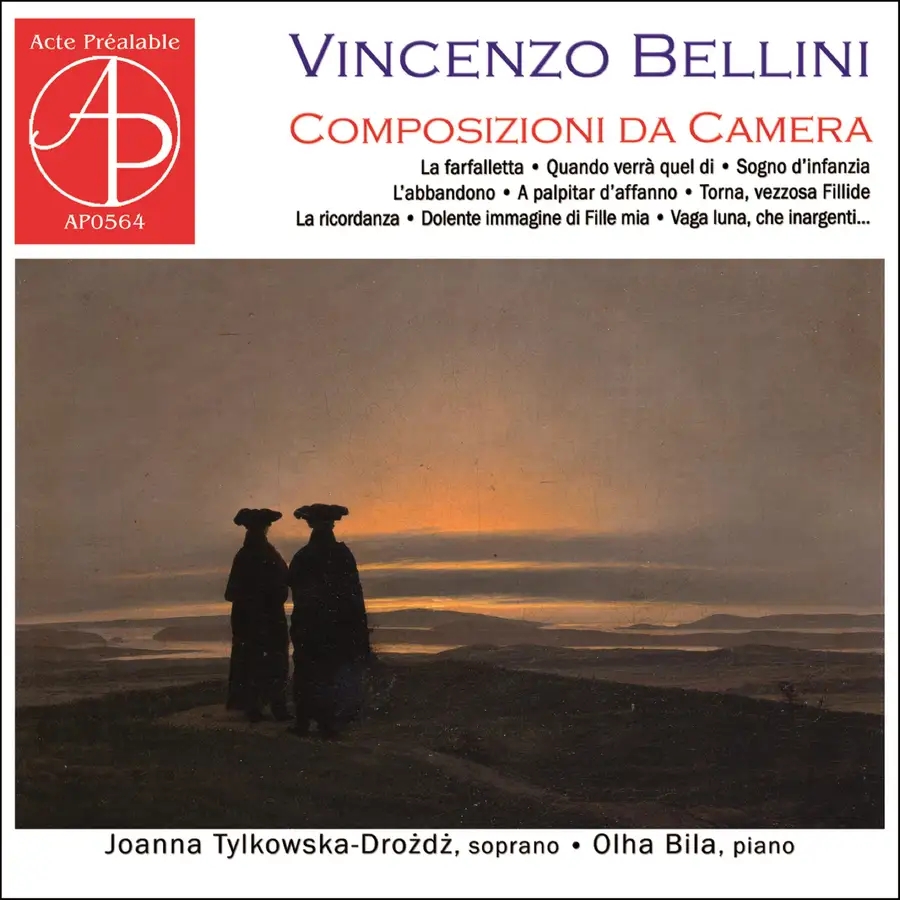
Bellini – Composizione da Camera

An enterprising collection of Bellini songs is unfortunately let down by less than ideal performances.

BelliniSongs

Bellini’s songs are not performed that often and indeed this is only the second recording of his Composizioni da Camera I’ve come across. Veronica Kincses recorded the complete set for Hungaroton back in 1982, though a few of the songs have appeared on various recital discs over the years.

They were probably written some time in the 1820s and it is unlikely that Bellini intended them all to be performed together; in fact, they were not published as a set until 1935, by the Milan publisher Ricordi. The Kincses disc includes all the songs in the Ricordi edition, in the order in which they appear in the score, whereas the present issue substitutes one or two other songs from a different source, such as La ricordanza, which turns out to be the tune of Qui la voce from I Puritani. Texts and translations are provided, some being by Metastasio, but the majority are anonymous.

Most of the songs are quite short, though the longest Torna, vezzosa Fillide,runs to almost eight minutes and is in the style of a mini operatic scena. It is the most complex of the songs and closer in style to the music of Bellini’s operas. However , for the most part, the songs are tuneful and undemanding, and it is not surprising that a few of them have made it into recital programmes of more famous singers, like Pavarotti, Bartoli, Tebaldi and even David Daniels, all of whom have made recordings of the most famous song, Vaga luna, che inargenti, the tune of which kept reminding me of the English folk song, The foggy, foggy dew. 

Any of the above singers would be preferable to the Polish soprano, Joanna Tylkowska-Drożdż, who has a rather hard, bright voice and tends to sing at an unrelenting mezzo-forte throughout, any refinement or tonal nuance only being offered by the pianist Ohla Bila. Nor is she particularly imaginative in her phrasing or her response to the poetry. Listening to the disc in one sitting proved something of a trial. The somewhat reverberant acoustic also tends to exaggerate the hardness of Tylkowska-Drożdż’s timbre.

As it happens, Veronica Kinkses’ Hungaroton recording of the fifteen songs in the 1935 Ricordi edition is still available to stream or as a download and is infinitely preferable if you are looking for a single disc of Bellini’s songs. However, I have a feeling most of us would be content to find the odd song on a mixed recital by a favourite artist. It should be noted that five of the songs appear on a 1997 disc by Cecilia Bartoli, called An Italian Songbook, on which she sings songs by Donizetti, Bellini and Rossini.

Contents

Vincenzo Bellini (1801-1835)

  • La farfaletta (anonymous)
  • 2. Quando verrà quell di (anonymous)
  • Sogno d’infanzia (anonymous)
  • L’abbandono (anonymous)
  • A palpitar d’affanno (anonymous)
  • Torna, vezzosa Fillide (anonymous)
  • La ricordanza (Carlo Pepoli, Conte)
  • Dolente imagine di Fille mia (anonymous)
  • Vaga luna, che inargenti (anonymous)
  • Malinconia, Ninfa gentile (Ippolito Pindemonte)
  • Vanne, o rosa fortunate (Pietro Antonio Domenico Bonaventura Trapassi as Metastasio)
  • Bella nice, che d’amore (anonymous)
  • Alme se non poss’io (Pietro Antonio Domenico Bonaventura Trapassi as Metastasio)
  • Per pietà, bell’ idol mio (Pietro Antonio Domenico Bonaventura Trapassi as Metastasio)
  • Ma rendi pur content (Pietro Antonio Domenico Bonaventura Trapassi as Metastasio)

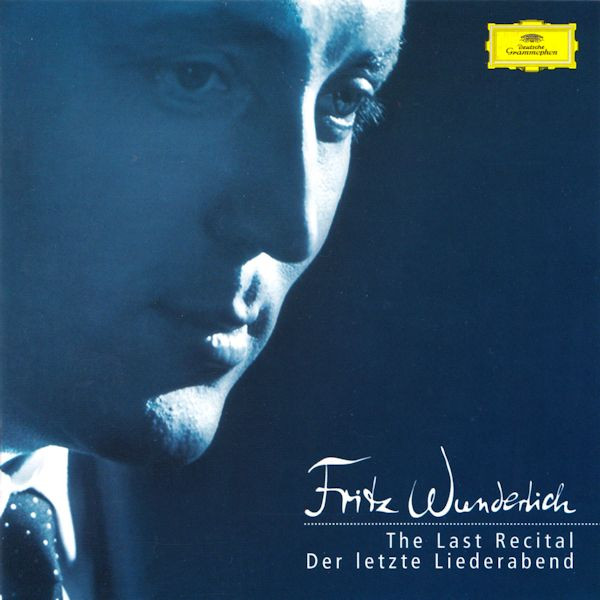
Fritz Wunderlich – The Last Recital

ns04mtk3lmpwzwc

This CD was released in 2003 and was, I think, the first time this Edinburgh recital was being released in toto. The only known extant recording of it was a BBC recording, a second or third generation mono copy and DG have attempted to correct the pitch which, in previous issues of parts of the concert, was too slow and fluctuated substantially. They were not able to eliminate wow and flutter, which was probably introduced in the first copying process. Nevertheless this is an important document of the last ime Wunderlich ever sang in public and, for anybody used to listening to historical live recordings, the sound won’t be an impediment to enjoyment.

We should of course be careful of attaching too much valedictory significance to this recital. We listen to the final recordings of such as Ferrier and Hunt Lieberson, with the added knowledge that they were aware of their mortality and knew that their time was limited. Wunderlich, on the other hand, was at the height of his powers and his international career was just taking off. He was a few months away from his Met debut as Don Ottavio, and he was finding the performance of Lieder recitals so fulfilling that he wanted to do more in that area. In fact, after this concert, he told Hubert Giesen that they should start working on Winterreise. He had absolutely no reason to think that his life would be prematurely cut short.

Wunderlich was apparently very happy with how the recital went, and Giesen told him after the concert that he thought he had achieved perfection. He had only recently turned to Lieder, making his first studio recordings of Lieder by Beethoven, Schubert and Schumann the previous year for DG, performances that have sometimes been criticised for lacking emotional depth. He evidently took these criticisms to heart for this recording of Dichterliebe is profoundly moving and in a different world of interpretation from his studio recording. It is now my preferred recording of the cycle.

The programme is similar to the one he sang in Sazlburg the previous year, but he is now a much more experienced Lieder singer and his singing now has much more significance and specificity. The first half of the recital consists of Lieder by Beethoven and Schubert, with Adelaide and Nachtstück showing of his superb legato line. His diction is well-nigh perfect throughout, showing that you don’t need to sacrifice verbal clarity to achieve a smoothly lyrical line. The second half, as in his Sazlburg recital of 1965, is taken up with the complete Dichterliebe. This is an extremely intense reading, with the young man  seeming much akin to Goethe’s Werther. True, we as listeners, knowing that he was only to live a couple more weeks, no doubt give some of he lyrics a significance that Wunderlich could not have intended. Nevertheless it adds to the appreciation of this performance.

The encores, as so often at a live recital, are when the performer relaxes most. Thus we get an ebulliently joyful Ungdeduld and a gorgeously sustained Ich trage meine Minne by Richard Strauss, which would surely have changed Strauss’s attitude towards the tenor  voice, though unfortuantely the BBC recording fades out just before the end of the song.

Finally, after a charming bit of banter with the audience, Wunderlich sings his heartfelt tribute An die Musik. Call me sentimental, but I find it impossible to listen to it without tears in the eyes. Though he didn’t know it and his audience didn’t know it, this was the last time the golden voice would  ever be heard in public.

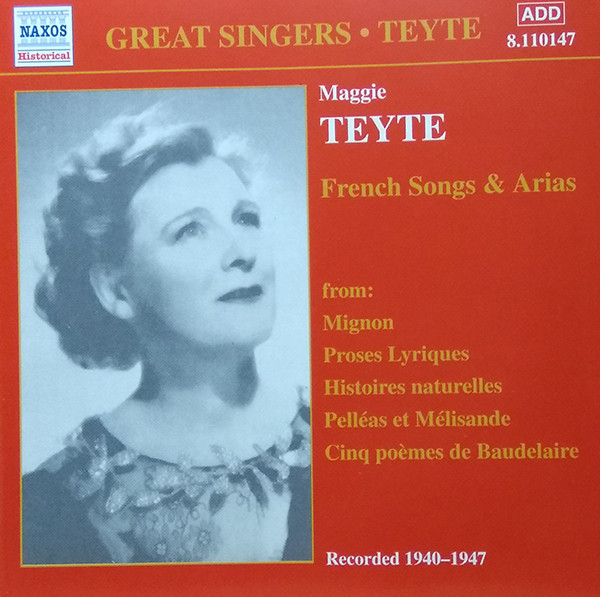
Maggie Teyte sings French Songs and Arias

ni00mzuxlmpwzwc

This compilation is of recordings made bewteen 1940 and 1947, when Teyte was approaching 60. Three tracks (Mignon’s Connais-tu le pays?, one of two versions of Duparc’s L’invitation au voyage and the bonus track, Cherubino’s Voi lo sapete) are from a 1947 radio broadcast with the San Francisco Symphony Orchestra under Pierre Monteux, and the rest are of studio recordings made for EMI, some of which were unpublished at the time. Most are with Gerald Moore on the piano, but the second recording of L’invitation au voyage is with the London Philharmonic Orchestra under Leslie Heward. I’d suggest that this is the better of the two recordings. By the time of the second one with Monteux she has to take more breaths, though the tempi are virtually identical. Even so, even in 1947 the voice remains incredibly firm and totally free of wobble or excessive vibrato. Her singing throughout in fact is wonderfully clean and precise and her intonation is perfect.

So too, of course is her French, though we shouldn’t be surprised when we remember that she spent a good deal of her early career in Paris, was coached by Debussy himself for her début as Mélisande and worked with Chausson, Duparc and Reynaldo Hahn, who evidently had a great deal of affection for her. When she said to Hahn once about the tempo of one of his songs. ‘ You play it quicker than I thought,’ he replied, ‘ma chère, any way you sing it will always be right.’

This is a valuable collection and includes recordings that were either not published or had only a limited circulation in their 78 format, though some of them also appear on EMI’s two disc set entitled, Mélodies françaises . The excerpts from Hahn’s Mozart and Ciboulette are absolutely charming, and we get to hear her speak in perfectly accented French too. The other songs are by Debussy, Chausson and Duparc. Debussy was always a particualr speciality and she somehow makes the three songs she sings here from Debussy’s rather obscure Proses lyriques (she had already recorded the fourth with Cortot) come across as quite simple and direct. She also sings a couple of extracts from Pelléas et Mélisande with piano, which gives us a direct link to Debussy himself.

Teyte should be better known than she is these days. She was one of the greatest ever interpreters of the French song repertoire.

To My Friends – Elisabeth Schwarzkopf

odktndm3nc5qcgvn

So now I come to the end, the very last recording Schwarzkopf made, not, as it happens, for EMI, but for Decca. Walter Legge’s rift with EMI was now complete and Ray Minshull of Decca approached Legge, saying he would like at least one Schwarzkopf recording in their catalogue. It was recorded at sessions in London and Vienna in 1977 and 1979, by which time, Schwarzkopf would have been 63.

It was called simply, To my friends., and Schwarzkopf had this to say about it, “In that there is already the excuse that it’s only for you who like me. Others may find great fault in it and rightly so, but maybe you like me enough to have it.”

Well I do like Mme Schwarzkopf and, having listened almost exclusively to her for the last month, I can safely say the overused description of her singing as ‘mannered’ has never been so far off the mark. What I do hear is a superior intelligence and musicality, allied to an attention to detail, which brings music alive in a way that other more penny plain interpretations do not. Very occasionallly, the intellect gets in the way of the song. One misses, for instance, the natural simplcity of, say, Elisabeth Schumann, but in Lieder, and in Wolf in particular. her quest to find just the right inflections is what makes me keep coiming back. It’s also interesting to note how her interpretations can vary from one performance to another.

The voice on this last record is certainly not the voice of a young woman, but it remains within its slightly reduced range and dynamic, a voice mercifully free of wobble or excessive vibrato. It may not be the disc I would choose to demonstrate Schwarzkopf at her greatest, but I can safely say I am very pleased to have it in my collection as a fitting end to a great career on disc. In songs by Wolf, Loewe, Grieg and Brahms, she still demonstrates her ability to embrace and convey a wide range of emotions.

The record was completed in January 1979 and she gave her last performance at a recital in Zurich the following March. Three days later, Legge died and she abruptly cancelled all further engagements. The voice fell silent without Legge’s constant encouragement. ‘”You can do it, meine Schwatz, you can do it, you sing that – you’ll do it better.” He was wrong there, I wouldn’t have been better than people in full bloom of the voice. He thought there would be some moments which would be more memorable. But if you don’t have the voice you cannot put over what you would like to – you make ways round it technically, and by that time it has already vanished.’ Schwarzkopf was nothing if not pragmatic.

It was often said of her, disparagingly, that she was ‘her master’s voice.’ Maybe, in some ways she was. It was an extraordinary partnership and it is no wonder that the performance side of her life also ended with Legge’s death.

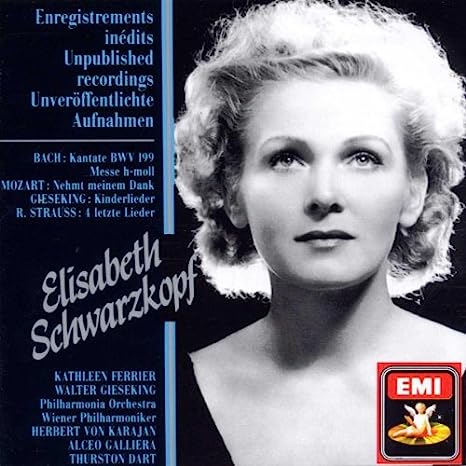
Elisabeth Schwarzkopf – Unpublished Recordings


51zdj0yf6wl._ac_sx466_

An interesting release of material discovered in the EMI vaults and released in 1990.

We start with a really lovely performance of Bach’s Cantata, Mein Herze schwimmt im Blut, which is followed by surviving excerpts from a rehearsal for a performance of Bach’s Mass in B Minor under Karajan, with Ferrier partnering Schwarzkopf in the Christe eleison and Et in unum Dominum. Schwarzkopf sings the Laudamus te.

A charming performance of Mozart’s Nehmt meinen Dank comes next, recorded in 1955 with the Philharmonia under Alceo Galliera.

The Gieseking Kinderlieder were recorded as a favour to the great pianist, recorded at the same time they made their album of Mozart Lieder. Undemanding music perhaps, but Schwarzkopf characterises them brilliantly. I’m sure Gieseking was delighted.

Finally we have a live performance of Strauss’s Vier lerzte Lieder with the Philharmonia under Karajan at the Royal Festival Hall in 1956. It is certainly interesting to hear Schwarzkopf singing them live, but I wouldn’t place this above either of her two studio recordings under Ackermann and Szell. Inexplicably, Karajan places September last, which makes a less satifactory end, especially given the rather fast tempo he takes it at, though it has slowed down a bit by the end. (I assume the wonderful horn playing is by Dennis Brain.) Im Abendrot also starts out rather fast, but again has slowed down towards the end of the song. Schwarzkopf is in wonderful voice and has no trouble riding the orchestra, but it doesn’t replace the recording she made ten years later with George Szell. For me it catches the autumnal glow of these songs like no other. The prize of this version would be Frühling, with Schwarzkopf’s voice soaring out over the orchestra with a bit more ease than it does in 1965.


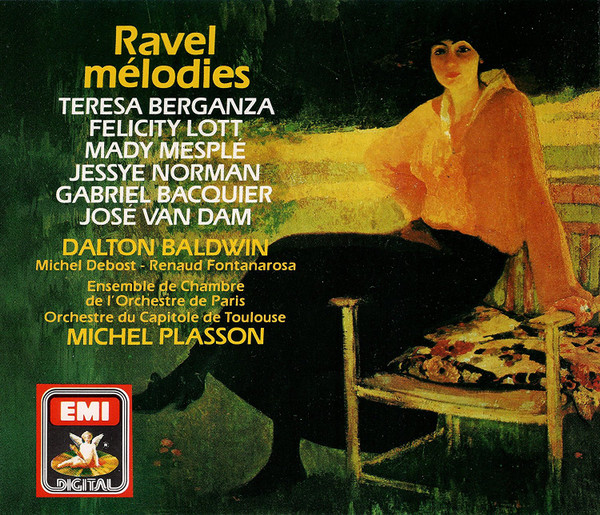
Ravel’s complete Mélodies

oc00odm5lmpwzwc

This set was originally issued on three LPs back in 1984, and later condensed into two very well filled CDs and is still available as a download. As such, it is an excellent way of collecting all Ravel’s song settings, the singers all being well chosen for the songs they are allocated. It also has Michel Plasson in charge of the orchestral and chamber accompanied songs and that master accompanist, Dalton Baldwin, at the piano.

We start with Teresa Berganza singing Shéhérazade, orchestrally fine and well sung, but Berganza is just a little anonymous and the performance doesn’t stay in the memory as do those by, say, Crespin, Hendricks or Baker, all of whom are more vivid storytellers. The orchestral contribution by Plasson and his Toulouse orchestra is splendid. This is followed by the Vocalise en forme de Habanera and Chanson espagnole, ideal performances in which Berganza finds the erotic sensuality that had eluded her in Shéhérazade.

Next up is Gabriel Bacquier, who is entrusted with Histoires naturelles, Sur l’herbe and Chanson française. These are superb performances, Bacquier finding just the right sense of ironic derachment for the Renard settings, his enunciation of the text so clear you can all but taste the words.

Mady Mesplé’s clear, bright, very French soprano with its characteristic flutter vibrato is not to everyone’s taste, but I like her, and she is absolutey charming in the Greek songs, including the less regularly performed Tripatos. She also gives us lovely performances of three rarities, Ballade de la reine morte d’aimer, Manteau de fleurs and Rêves. José Van Dam gets the Hebrew settings, Don Quichotte à Dulcinée and five more songs, of which Les grands vents venus d’outre-mer is especially notable. To all he contributes the sterling virtues of his beautiful, firm bass-baritone, coupled to sensitive treatment of the text.

Felicity Lott, charming in the Noël des jouets and Chanson écossaise, also has the Mallarmé poems, in which she is suitably languid, if a little diffident. She is also good in the two Clément Marot settings, but Maggie Teyte gets more out of the words on her recording. Jessye Norman brings the collection to a close with the Chansons madécasses, as well as Chanson du rouet and Si morne. As usual, Norman is never less than involved, but as so often I find she sings with an all-purpose generosity, and I’d have welcomed a little more of Janet Baker specificity. Still this is nitpicking, and hers are still among the best versions of these wonderful songs. Throughout the piano accompanied songs Dalton Baldwin provides superbly idiomatic playing, with the Ensemble de Chambre de l’orchestre de Paris providing the accompaniment for the Mallarmé settings and Michel Debost on flute and Renaud Fontanarosa on cello in the Madegascan songs.

Altogether, this is a wonderfully rewarding set and, if individual performances have been bettered elsewhere, all are more than adequate and many a great deal more than that, though, on this occasion, it is the gentlemen who take the palm. Warmly recommended.

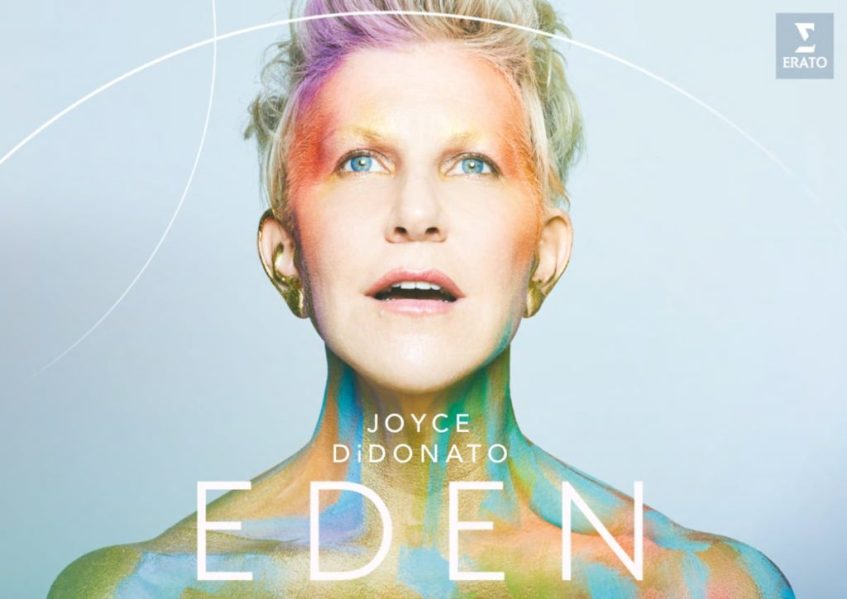
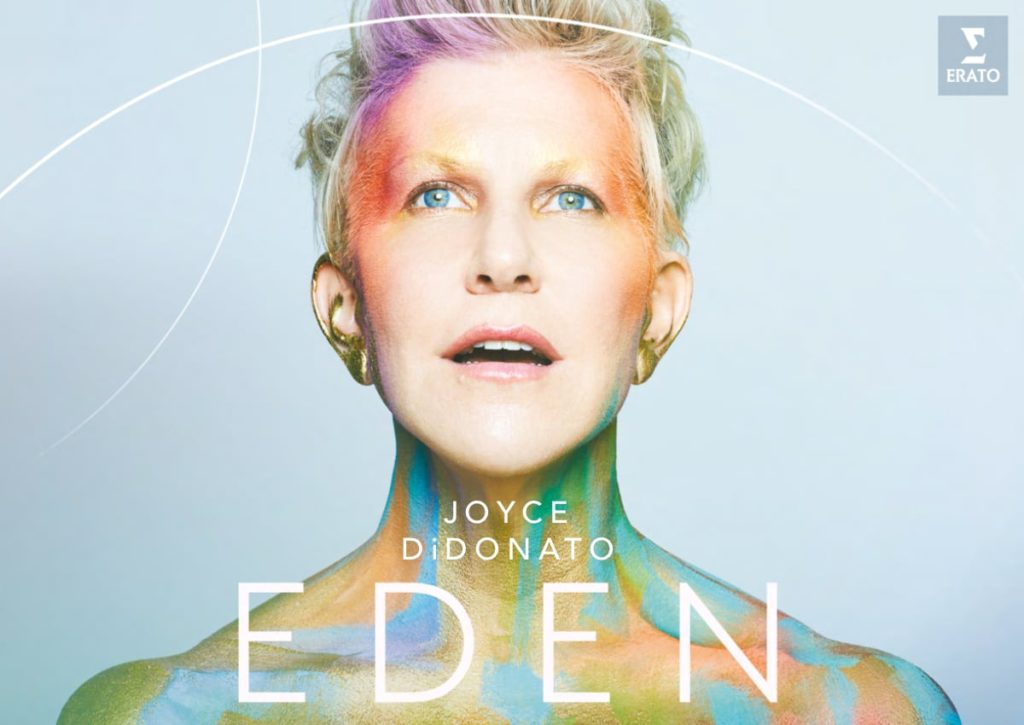
Joyce DiDonato – Eden

joyce-didonato-eden-1200-850-1024x725-1

TRACKLIST – EDEN

Charles Ives 1874-1954
The Unanswered Question

Rachel Portman b.1960
The First Morning of the World*

Gustav Mahler 1860-1911
Rückert-Lieder
“Ich atmet’ einen linden Duft!”

Biagio Marini 1594-1663
Scherzi e canzone Op.5
“Con le stelle in ciel che mai”

Josef Mysliveček 1737–1781
Oratorio Adamo ed Eva (Part II)
Aria: “Toglierò le sponde al mare” (Angelo di giustizia)

Aaron Copland 1900-1990
8 Poems of Emily Dickinson for voice and chamber orchestra
Nature, the gentlest mother

Giovanni Valentini c.1582–1649
Sonata enharmonica

Francesco Cavalli 1602–1676
Opera La Calisto (Act I, Scene 14)
Aria: “Piante ombrose” (Calisto)

Christoph Willibald Gluck 1714–1787
Opera Orfeo ed Euridice Wq. 30
Danza degli spettri e delle furie. Allegro non troppo

Christoph Willibald Gluck 1714–1787
Scena ed aria Misera, dove son! From Ezio Wq. 15 (Fulvia)
Scena: “Misera, dove son!… ”
Aria: “Ah! non son io che parlo…”

George Frideric Handel 1685–1759
Dramatic oratorio Theodora HWV 68 (Part I)
Aria: “As with Rosy steps the morn” (Irene)

Gustav Mahler
Rückert-Lieder
“Ich bin der Welt abhanden gekommen”

Richard Wagner 1813–1883
5 Gedichte für eine Frauenstimme WWV 91 (Wesendonck Lieder)
“Schmerzen”

George Frideric Handel
Opera Serse HWV 40 (Act I, Scene 1)
Recitativo: “Frondi tenere e belle”
Aria: “Ombra mai fù” (Serse)

*World-premiere recording

Joyce DiDonato’s new album could probably best be described as a concept album and, despite one or two less than smooth transitions, is best listened to in one sitting and in the order she has set out.

At present DiDonato is in the middle of a twelve city tour, taking in both Europe and the USA and I am very much looking forward to seeing her perform at the Barbican in April. Looking at the photographs from some of the concerts she has already done, DiDonato is using to redefine the the recital format. Apparently every audience member is to receive a seed to plant as they’re asked: ‘In this time of upheaval, which seed will you plant today?’

“With each passing day,” writes DiDonato, “I trust more and more in the perfect balance, astonishing mystery and guiding force of the natural world around us, how much Mother Nature has to teach us. EDEN is an invitation to return to our roots and to explore whether or not we are connecting as profoundly as we can to the pure essence of our being, to create a new EDEN from within and plant seeds of hope for the future.”

As on the album, she is accompanied by her regular collaborators Il Pomo d’Oro under Maxim Emelyanchev.

The programme ranges wide, from the 17th to the 21st century and at least one change, when we go from the 21st century to the 17th strikes me as a little jarring, but for the most part the choices are sensible and the journey well thought out.

The album starts with an absolutely haunting performance of Ives’ The Unanswered Question, in which DiDonato wordlessly sings the trumpet part. This segues into a commission from the Academy Award winning composer Rachel Portman, entitled The First Morning of the World, to a text by American writer Gene Scheer. This is a wonderfully evocative piece, full of sweeping lyricsm and gorgeous harmonies. Portman surely could not have hoped for a more beautiful performance. This is followed by a lovely performance of Mahler’s Ich atmet einen Linden Duft, though we miss the richness of Mahler’s original orchestra in this chamber re-orchestration.

The first slightly incongruous transition happens here with Biagio Marini’s Con le stelle in ciel che mai, though there is nothing wrong with its execution and, once I’d got used to being plunged into an entirely different sound world I enjoyed it and the Mysliveček aria from his orotorio, Adamo ed Eva, which follows.

This first part of the recital finishes with a masterful performance of Nature, the Gentlest Mother from Aaron Copland’s 8 Poems of Emily Dickinson, beautifully played by Il Pomo d’Oro and in which DiDonato sings with excellent diction without compromising her legato line.

It is followed by one of two purely orchestral tracks, the Sonata enharmonica by Giuseppe Valentini. The other is Gluck’s Dance of the Spirits and Furies from Orfeo ed Euridice.

DoDonato is known to us as a great Handel singer and one of the highlights of the album is Irene’s As with rosy steps the morn from Theodora, which is deeply felt, even if ultimately for me it doesn’t quite erase memories of Lorraine Hunt Lieberson in the same music. Handel is also reserved for the final piece, which comes after Mahler and Wagner, leaving us to bask in the peace and calm of his Ombra mai fu.

DiDonato is in fine voice throughout, her fast flicker vibrato, which can sometimes be intrusive, hardly in evidence at all. I must say that I rather like this “concept” and I have no hesitation recommending this album, and I would urge you to listen to it in one sitting. If I have sometimes had reservations about DiDonato’s ability to convey personality and individuality in the studio, I have no such reservations here and would recommend this album unreservedly.

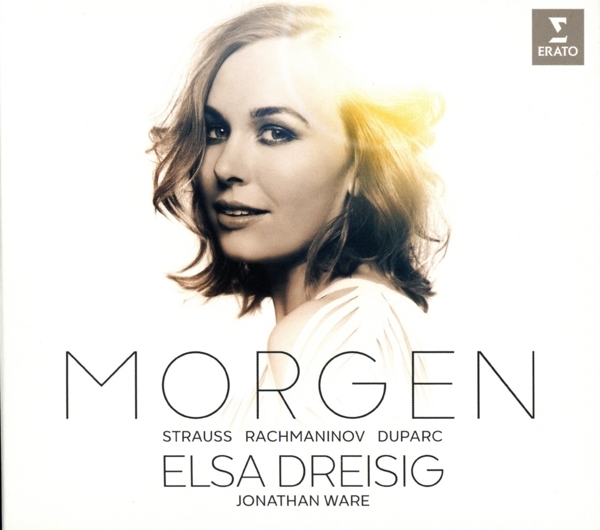
Elsa Dreisig’s Morgen

morgen

Now this is rather special. The young French/Danish soprano Elsa Dreisig follows up her excellent debut album of operatic excerpts with this beautifully compiled recital of songs for voice and piano, showing that she is equally at home in the more intimate surroundings of the recital room. The programme is an interesting one with the piano accompanied versions of Strauss’s Vier letzte Lieder (plus his final ever song Malven) split up and inserted into different points of the recital. The songs weren’t orginally planned as a cycle in any case, and this makes for some fascinating juxtapositions. The rest of the programme is made up of songs by Rachmaninov and Duparc and leads us on a most satisfying journey, “an inner journey across the seasons of the soul,” as Dreisig writes in the accompanying notes.

The North Star, our guide, is Strauss with these Four Last Songs (or five if we count Malven, his final song), in conversation with Duparc and Rachmaninov. Starting at the dawn of Spring and of youth, we visit Summer and its passions then, by way of Autumn nights and the dreamlike world of sleep, we come face to face with the unknown and with passing time. A journey of initiation, one that allows us to contemplate loss and death, thinking all the while of tomorrow: morgen.

Save for Rachmaninov’s The Pied Piper the mood is generally dreamy and Dresig and her accompanist, the superb Jonathan Ware, create spell bindng magic, drawing us in to their carefully crafted programme. Dreisig’s voice is a lovely, lyric soprano with a pearly, opalescent radiance that suits all these songs perfectly, but she is much more than a lovely voice. What is unusual is her rare gift for communication, her innate musicality and the specificity of her response to all these songs.

The highlights for me are her languidly dreamy and erotic rendition of Duparc’s Phidylé and Extase, Rachmaninov’s At Night In My Garden, and all the Strauss items gorgeously sung, yet with due attention to the text. I do hope Dresig will soon get to record the orchestral version of his Vier letzte Lieder. Ware plays magnificently, probably the best version of the piano accompaniment I have ever heard, but I do miss Strauss’s glorious orchestration. A total contrast is afforded  when she follows it with her superbly suggestive singing of Rachmaninov’s The Pied Piper, which shows off admirably her brilliant gift for characterisation, but really there isn’t a dud in the whole recitial

This is a wonderful disc and one of the best soprano song recitals I have heard in a very long time. Start the disc from the beginning and allow these artists to take you along on their journey. One listen quickly became two. Dreisig turns thirty this year. Let us hope that the pandemic has not stimmied a career that was just starting to get going. Warmly recommended.

Two Contrasting Vocal Recitals

71mojlgie4l._ac_sl1073_

Dame Maggie Teyte in concert, at the age of sixty no less! Teyte, a famous Mélisande who studied the role with Debussy himself, sings extended excerpts from the opera with piano accompaniment, singing all the roles. It shouldn’t work, but somehow it does. It takes her the first song in the recital (Grétry’s Rose chérie) to warm up, but thereafter you would never believe this was the voice of a sixty year old woman. The disc also includes privately recorded excerpts from Strauss’s Salome also with piano, from when Teyte was preparing the role for Covent Garden about fifteen years earlier, a project that unofrtunately never came to fruition. Her bright, slivery soprano might just have been the voice Strauss imagined.

She also sings Britten’s Les Illuminations in a version for piano, making me wish she had recorded the orchestral version, although preferably a few years earlier. Just occasionally there is a flicker of frailty in the middle voice, although the top register remains firm and clear as a bell. The encores include a lovely performance of Hahn’s popular Si mes vers avaient des ailes.

r-2563085-1290611066.jpeg

Another enterprising disc from Dawn Upshaw, who seems to have disappeared from the scene now. The centrepiece is Earl Kim’s Where grief slumbers written in 1982 for voice, harp and string orchestra, but here presented in a 1990 arrangement for voice, double string quartet and harp, and Upshaw is an ideal interpreter. She is equally at home in the rest of the programme; Falla’s Psyché, Ravel’s Trois poèmes de Stéphane Mallarmé, Stravinsky’s Two poems of Konstantin Bel’mont and Three Japanese Lyrics and Delage’s Quatre poèmes hindous, though here I slightly prefer the warmer tones of Dame Janet Baker, who is much more languidly erotic in the worldess vocalise of Lahore. Nevertheless a thoroughly absorbing disc.

As with so many of these Nonsuch discs, documentation is slight, and, though we do get lyrics and translations, the layout is confusing and a little more information about the provenance of these songs, especially the less famous Kim cycle, would have been much appreciated.