Callas’s Covent Garden Traviata

51wr-jbwwjl

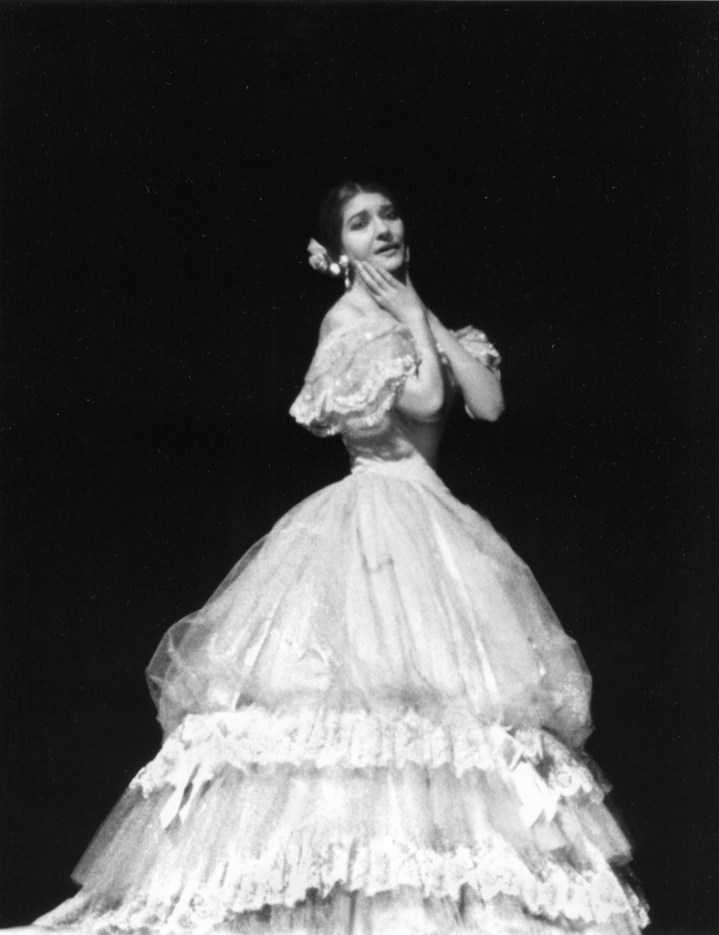
Violetta is one of Callas’s most famous, most exacting characterisations, and a role she sang more than any other except Norma. She first sang it in Florence in January 1951 and finally in Dallas in October 1958 (in a new Zeffirelli production) just a few months after this performance at Covent Garden. In between she had sung it all over Italy, in South America, in Chicago and at the Met, in Lisbon (just a few months before the Covent Garden ones) and of course there was the famous Visconti La Scala production, which changed for all times perceptions of Italian opera production.

Of all the roles in her repertoire, it was Violetta which underwent the greatest refinement, and it is a great shame that her only studio recording of it is the somewhat provincially supported Cetra performance of 1952, made before Visconti’s 1955 production, which substantially changed Callas’s views on performing the role. As you would expect, Callas still makes a profound impression in the set, but from Visconti onwards, her interpretations became ever more subtly inflected, more deeply felt, and her Violetta, especially as heard here at Covent Garden, has never been surpassed, let alone equaled.

It is often said that the role of Violetta requires three different sopranos; a coloratura for Act I, a lyric for Act II and a dramatic for Act III. A soprano comfortable with the demands of Act II and III, will struggle with the coloratura and high tessitura of Sempre libera, and, conversely a soprano happy with Act I’s pyrotechnics, won’t have the necessary weight of voice for the final Act. With Callas, no such provisos needed to be made, and, though earlier in her career, Sempre libera may have had more dash, ease and security on high, she could still, though slightly strained by its demands, sing it with dazzling accuracy in 1958. Furthermore, she invested the scales and runs with a hectic, nervous energy that made them much more than mere display.
78

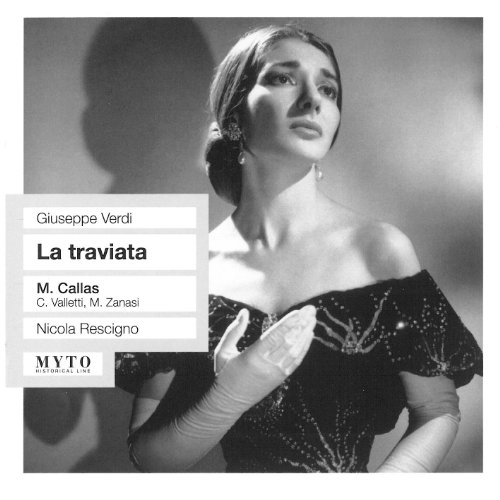
The orchestral prelude of the Covent Garden performance starts with a small piece of operatic history. The microphone manages to pick up Callas quietly singing a couple of notes during the orchestral introduction. No doubt they were inaudible in the auditorium but their presence is one of the ways we Callas fans identify the performance from those first few bars. Indeed Terrence McNally’s play The Lisbon Traviata opens with the character of Mendy listening to the opening bars of this Covent Garden performance, then exploding, “No, no, no! That’s not Lisbon! It’s London 1958!” (I had the same reaction when I saw the play, until I realised it was intentional). Curiously, though, the notes are missing from ICA’s “first official” release. When I contacted ICA about it, they could offer no explanation, and their transfer is, in any case, somewhat muddy, so, for now, I would recommend the Myto transfer pictured above.

Whole tomes could be written about Callas’s interpretive insights in this performance, so inevitably right is her every utterance, so, in the interest of brevity, I will try to restrict myself to a few key points in each Act.
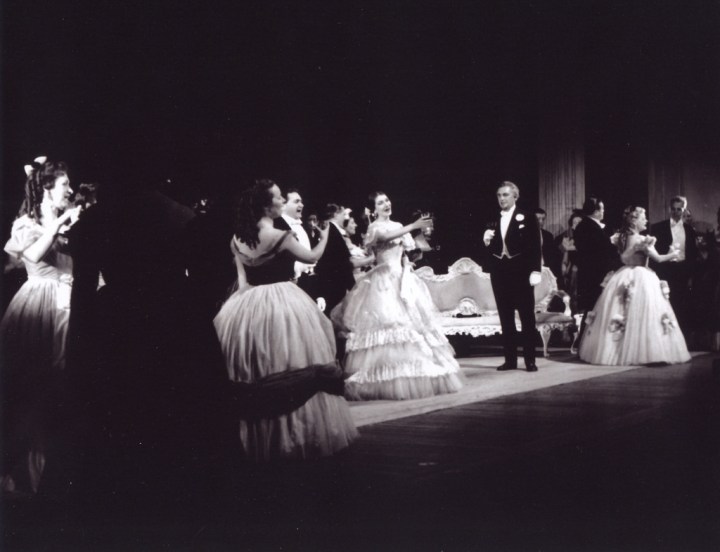
london-trav-1958

She starts forthrightly as if trying to convince everyone, including herself, that Violetta is over her recent illness, and her exchanges with Alfredo and the Baron have a delicious playfulness about them. Note in the Brindisi how accurately she executes those little grace notes and turns, usually blurred or ignored by other singers. Valletti, who is for the most part a model of elegance and style, misses them completely.

The brief moment when she almost faints, and then privately acknowledges her frailty is masterfully done, though she quickly regains her composure for the duet with Alfredo. Stunningly accurate is her singing Ah, se cio ver, fuggitemi, the coloratura flourishes invested with a carefree insouciance, that somehow also manages to express that she is already falling for Alfredo.

Left alone, the recitative takes us on a journey of conflicting emotions, until, wistfully and reflectively, she sings Ah fors’ e lui, her voice scarcely rising above a mezzo forte that draws the audience in, her legato as usual impeccable, the top notes floated in a gentle pianissimo that never obtrudes on the mood she has created.  She herself tosses such thoughts aside in the Follie! Follie! section, pouring forth cascades of notes as she tries to convince herself that any ideas of love are pure whimsy.

Admittedly, top notes here and in the following cabaletta Sempre libera are a little tight and tense, but her coloratura is still brilliantly precise, and we note how she can make us hear the difference between simple scale passages and those separated into duple quavers. Alfredo’s interjection momentarily catches her off guard, and she launches into the reprise with even more gusto as she tries to block out his protestations. The unwritten final Eb is not exactly a pretty note (though no worse than Cotrubas’s on the Kleiber studio set), and it always seems a pity to me that she felt constrained to sing it at all, given that so many others, before and since, opt for the lower option. Nevertheless it rounds off an almost perfect rendition of this final scene.
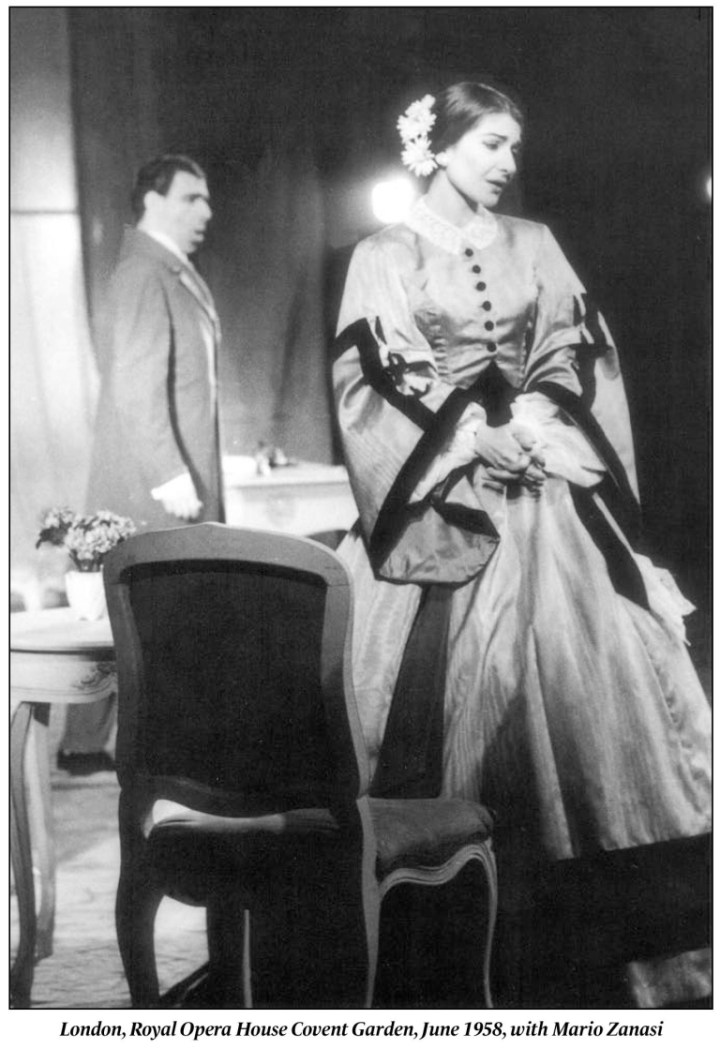
m56-page-021-2

Callas’s range of tone colour and her ability to express different thoughts and attitudes in a very short space of time are amply demonstrated in the first few exchanges of Act II. The single word Alfredo, when she asks as to his whereabouts is suffused with happiness. This quickly gives way to dignified outrage at Germont’s boorish outburst (Donna son io, signore, ed in mia casa) which in turn quickly softens when she realises that, as Alfredo’s father, the man deserves her respect (Ch’io vi lasci assentite, piu per voi, che per me). Later, when Germont questions her past, she responds with a voice of blazing affirmation, Piu non esiste. Or amo Alfredo, e Dio lo cancello col pentiemento mio. Oh come dolce mi suona il vostro accento is sung with a sweet, sadly misplaced, trust, which is quickly replaced with a touch of panic at Ah no! Tacete! Terribil cosa chiedereste certo. This whole scene, the recitatives and the duets, is a locus classicus of Callas’s art and a perfect example of her ability to invest a seemingly unimportant line, or even just a word, with significance.

Non sapete quale affetto is sung with mounting panic, like a butterfly caught indoors beating desperately against a windowpane,  Gran Dio!, when Germont brutally suggests that she will age and Alfredo will not always remain faithful to her, in a tone of blank, pale despair. However the moment of true resignation, the moment Violetta accepts her fate, is enshrined in the one sustained note that leads into Dite alla giovine. Peter Heyworth saw this performance and reviewed it for The Observer. He describes the moment absolutely perfectly in his review.

But perhaps the most marvellous moment of the evening was the long sustained B flat before Violetta descends to the opening phrase of “Dite alla giovine”. This is the moment of decision on which the whole opera turns. By some miracle, Callas makes that note hang suspended in mid air; unadorned and unsupported she fills it with all the conflicting emotions that besiege her. As she descends to the aria, which she opened with a sweet, distant mezza voce of extraordinary poignancy, the die is cast.

One rarely comes across such brilliantly descriptive perception these days, and music criticism is much worse for it.

Imponete is uttered in a tone of total dejection, before the outpouring of emotion in which she begs Germont to embrace her like a daughter, and the scene in which she begs Alfredo to love her whatever happens is palpably, upsettingly real, Amami, Alfredo delivered with an intensity that makes you wonder how Alfredo could have doubted her for one second.
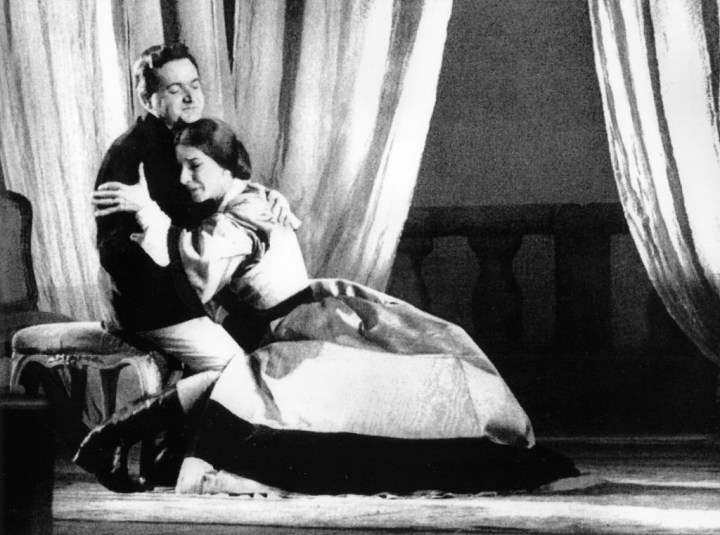
london-21-2

The scene at Flora’s party finds her almost sleep-walking, as she attempts to hide her heartbreak. When Alfredo forces out of her a confession that she loves the Baron, we can feel what it costs her, and the thread of sound with which she sings Alfredo, Alfredo, di questa core, after Alfredo has denounced her, is heart-wrenchingly moving.
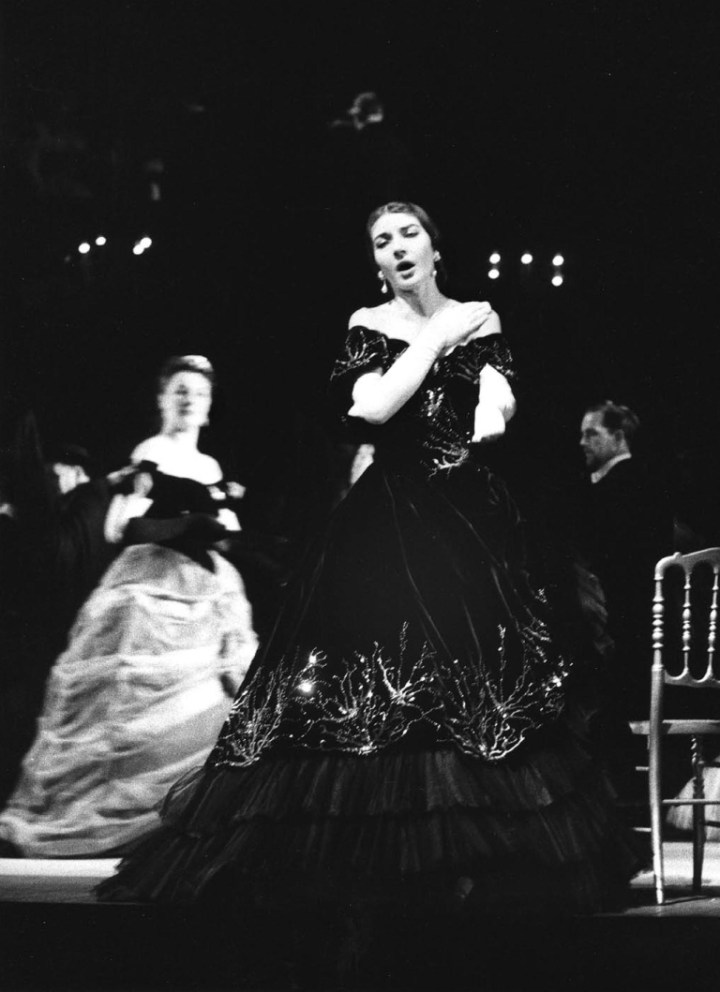
0068-2

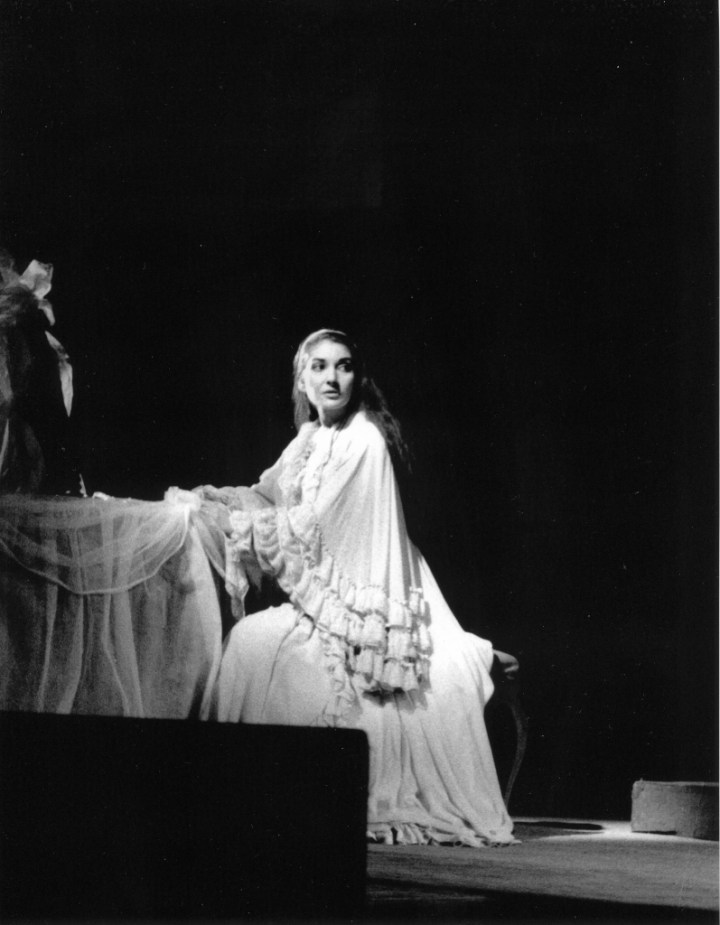
The last act is almost too much to bear, and even just thinking about it brings tears to my eyes. What other Violetta makes us feel so deeply her tragedy, her voice drained of all energy in the exchanges with Anina and the doctor? The tragedy really hits home with E tardi! after the reading of the letter; Addio del passato is delivered in a half tone of wondrous expressivity, its final A evaporating in the air. Rescigno recounts that the note kept cracking, and he would tell her to sing it with a little more power in order to sustain it, but she wouldn’t compromise. A firmer top A might have sounded prettier, but it did not reveal so well Violetta’s emotional and physical collapse.
london-36-2

The adrenalin rush of Alfredo’s entrance provokes more energetic attack, and she seems momentarily to recover, but the recovery is short-lived and the realisation that not even Alfredo can stop her from dying provokes an outburst of passionate intensity at Ah! Gran Dio morir si giovine. That intensity is short-lived though and the final section of the opera is delivered in a half-voice of ineffably sweet sadness. According to reports, as Callas’s Violetta rose to greet what she thought was new life, she literally became a standing corpse, her eyes staring sightlessly into the audience. We cannot of course see this on the recording, but the way she simply shuts the breath off on her final  O gioia is an aural equivalent.

I wouldn’t want anyone to think though that spontaneity gets lost in the detail. The miracle of Callas is that not only does she achieve her effects with utmost musicality whilst closely adhering to what is in the printed score, but that she also does so as though the notes were coming newly minted from her mouth. Throughout she maintains her superb legato, never forgetting that, in Italian opera especially, it is the arc of the melody that is paramount. This surely is the art that conceals art.
london-trav-valletti-1958

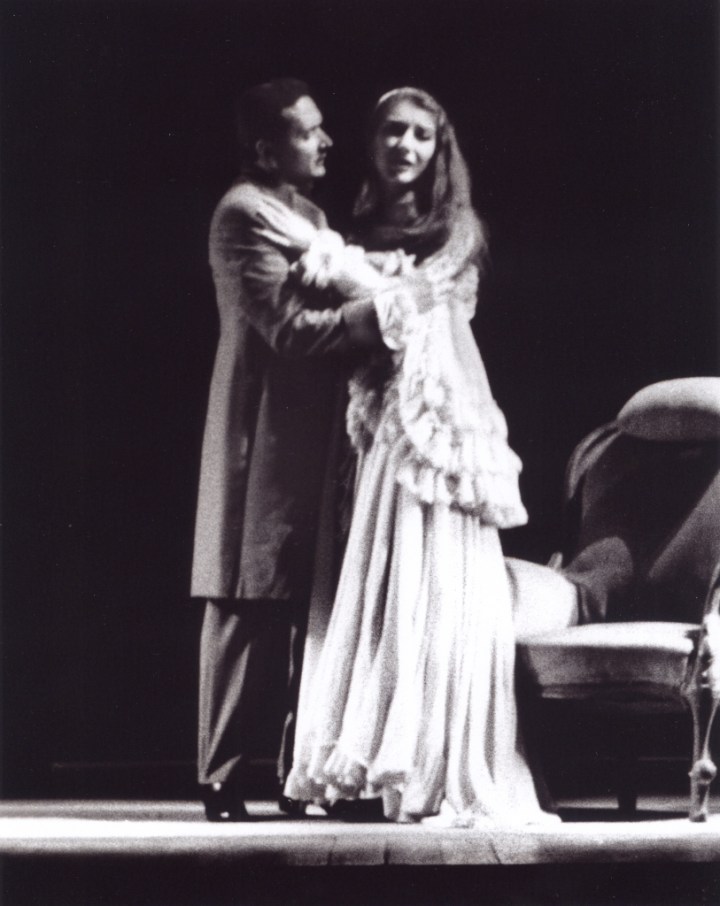
There are other reasons to treasure this set. Valletti, a Schipa pupil, sings with something of his master’s grace and elegance, though his tone is not as sappy as Di Stefano at La Scala or the young Kraus in Lisbon. Nonetheless he is a worthy partner, as is Mario Zanasi, who is my favourite of all the Germonts Callas sang with. His light baritone might sound a little young, but he is a most sympathetic partner in the long Act II duet, and a welcome relief from the four-square, over loud Germont of Bastianini at La Scala, however magnificent his actual voice.

Rescigno, as so often when accompanying Callas, is inspired to give of his very best, and the opera was cast with strength from the Covent Garden resident team, with Marie Collier as Flora and Forbes Robinson as the Baron.

Were I to be vouchsafed but one recording of La Traviata (I actually own six – four with Callas) on that proverbial desert island, then this would assuredly be it. In a performance such as this one forgets opera is artifice and what we are presented with is real life.
Il Trovatore from the Met with Price and Corelli

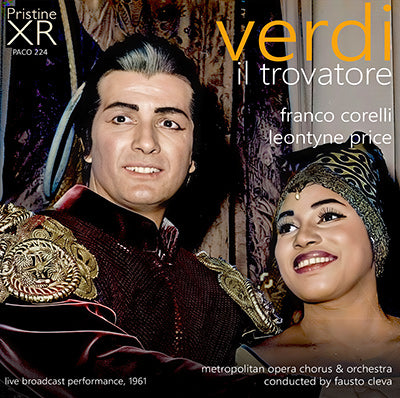
If I were to use one word to describe this performance of Il Trovatore from the Met, it would be aggressive. The house was in a high state of excitement as, a few days earlier, Price and Corelli had made their extremely successful house debuts in these same roles to fantastic acclaim, and the audience is ready with its applause from the get-go. The pace is fast and furious, especially in the choruses, which results in them occasionally becoming unstuck.

The singing too is extremely competitive, with little room for subtlety. I don’t know whether it is the recording, or the transfer but the soloists seem to be closely miked, which picks up a vibrato in Price’s voice I hadn’t been aware of before, and for much of the performance she sounds to me as if she is forcing her essentially lyric instrument. Corelli was never the most subtle of artists, but the general air of competitiveness encourages him to belt out his high notes for all he is worth and, it has to be said, the audience go wild for him.

This generally aggressive atmosphere extends to the other soloists too, who, in any case, are less vocally entitled than Price and Corelli. Irene Dalis is perfectly acceptable, and you’d go a long way to hear her like today, but she is honestly second rung, as is Mario Sereni. They are no match for Giulietta Simionato and Ettore Bastianini, who appear on another live recording from the following year, which also features Price and Corelli. This was from the 1962 summer Salzburg Festival, and is no less exciting, but is conducted much more stylishly by Herbert von Karajan. It was enthusiastically reviewed by Simon Thompson, when first issued and is still available from DG as a download, though the CDs have been withdrawn. If you want Price and Corelli in this opera, then it is definitely the one to go for, and Price sounds glorious here and much more relaxed than she was at the Met. With Simionato, arguably the greatest Azucena of her age and Bastianini in fantastic form, this is a set that should be in every Verdi lovers collection.

No doubt others will just get caught up in the excitement of the performance under review from the Met, but I’m afraid I found it rather vulgar, for which the blame should be left squarely on the shoulders of Fausto Cleva, who, time and again, mistakes speed for excitement.

My preference for the opera would still be Karajan’s first studio recording with Callas a non pareil of a Leonora, but the live Salzburg recording is almost as good, if without the precision of the studio one, with all the principals, including Price and Corelli, in fabulous voice. Truly that one was the night to remember.

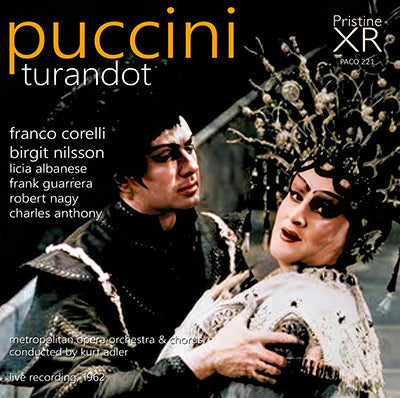
Turandot from the Met with Nilsson and Corelli

La principessa Turandot – Birgit Nilsson (soprano)
Calaf – Franco Corelli (tenor)
Liù – Licia Albanese (soprano)
Ping – Frank Guarrera (baritone)
Pang – Robert Nagy (tenor)
Pong – Charles Anthony (tenor)
Timur: Ezio Flagello (bass)
L’imperatore Altoum – Alessio De Paolis (tenor)
Un mandarino – Calvin Marsh (baritone)
Chorus and Orchestra of the Metropolitan Opera/Kurt Adler
rec. live radio broadcast, 24 February 1962, Metropolitan Opera House, New York City, USA

Well, let’s get this straight. This is an exciting performance of Puccini’s last opera, which puts you in a good seat at the old Metropolitan Opera House on a night when two of its greatest stars were singing two of their greatest roles. You can sense the excitement in the house from the moment the radio announcer, Milton Cross, introduces the opera with the words, “We’ll have the loud, crashing chords, then the curtain will open on the walls of the oriental Imperial palace of Peking.” Indeed the set is loudly applauded by the audience.

After the excitement of those opening chords and the chorus which follows, it is something of a disappointment to be confronted with the Liu of Licia Albanese, who was approaching 53, but quite frankly sounds even older. She compensates by loudly over-singing and over-emoting, and I derived very little pleasure from her performance. Her days at the Met were evidently numbered and she left the company in 1966, following a dispute with Sir Rudolf Bing.

For the rest, we have a sonorous Timur from Ezio Flagello, but the Ping, Pang and Pong tend to over-characterise their music and consequently I found their scenes irritating, as I often do.

However, the main reason for hearing this set remains the splendid singing of Nilsson and, especially Corelli. I am not one of those who think Corelli can do no wrong, but in the right role, and Calaf is undoubtedly the right role for him, he is unbeatable. First of all, there is the sheer splendour of that sound, the thrill of his top notes, which he can fine down to almost a whisper in places. He is absolutely thrilling and the audience go wild after Nessun dorma, with Adler abruptly stopping the orchestral postlude until the pandemonium has died down.

So too, of course, is Nilsson, throwing out those top notes like laser beams. The punishing tessitura holds no terrors for her at all and it is all very exciting, if not particularly subtle. Nor is the conducting of Kurt Adler, for that matter, but he certainly knows how to whip up the excitement.

According to Lee Denham in his exhaustive survey of the opera, there are, or have been, available seven other recordings featuring Nilsson, three of them with Corelli, so how necessary is this particular recording? I’m pleased to have heard it, but I’m not sure I’d want it as my one representation of Nilsson and Corelli in the opera. For that, I’d probably stick with the EMI recording under Molinari-Pradelli, which also has the benefit of including the Act III aria Del primo pianto, which is omitted from all Nilsson’s live accounts. It also has the benefit of the young Renata Scotto as Liu.

I would also not want to be without the Mehta recording with Sutherland, Pavarotti and Caballé, nor the Serafin with Callas, Fernandi and Schwarzkopf, but this one is a great reminder of a thrilling afternoon at the old Met.

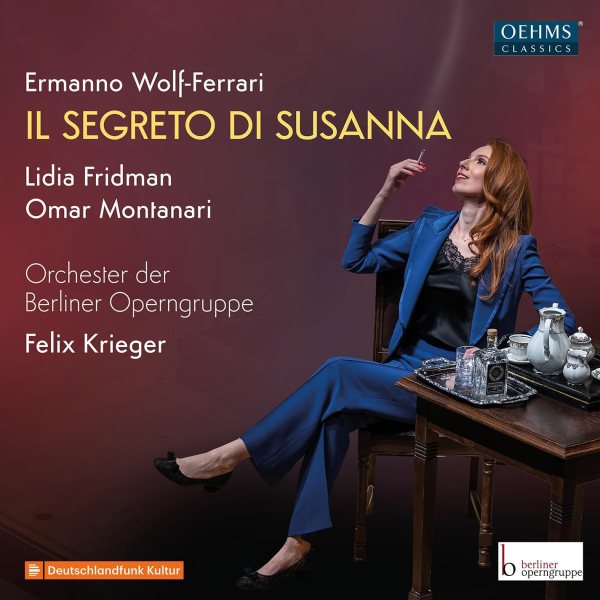
Wolf-Ferrari’s Il segreto di Susanna

I see from Wolf-Ferrari’s Wikpedia page that he composed no less than fifteen operas, though they have been rarely performed, and only one of them, Il segreto di Susanna, has been recorded with any frequency. Indeed, this live performance is one of five recordings at present listed on the Presto website, whilst a sixth, and perhaps most famous recording, featuring Renata Scotto and Renato Bruson under Sir John Pritchard, is no longer available.

The plot is slight and concerns the Count Gil, who suspects his wife, the Countess Susanna of having an affair, when in fact she is simply a secret smoker. All ends happily when he finally discovers the truth, and he joins his wife in enjoying a cigarette. I suppose you would say that it is not particularly politically correct these days, but it is harmless enough and the music is enjoyably tuneful, in fact in places gloriously, swirlingly lyrical and romantic. I enjoyed it immensely.

The present performance, which credits even the silent character of the servant, Sante, evidently stems from a live performance in June 2022, and there is occasional stage noise and laughter from the audience, who are otherwise remarkably well-behaved. The sound is excellent, and Felix Krieger sets the scene brilliantly with the beautifully played short Sinfonia. The first voice we hear is that of the baritone, Omar Montanari. He has a nice, lyrical instrument and characterises well as the Count, who vacillates between suspicion and devotion to his young wife. She is played by Lidia Fridman, a Russian soprano active in Italy, with an attractive, soft-grained voice. Between them, under Krieger’s expert baton, they present a nicely paced and vividly characterised performance of the piece.

However, curiosity led me to stream a 1976 Decca recording under Lamberto Gardelli, featuring Bernd Weikl and Maria Chiara as the Count and Countess, which is available as a download, and which turns out to be more vivid still. I then turned to a Scotto recital I have, which included a couple of excerpts from the Pritchard set on Sony, which were even better, and would suggest that it is definitely due a re-issue.

In its absence, if you want the opera on CD, then the present issue will do very nicely. Unfortunately, as is the general practice these days, no libretto is included, though we do get a brief synopsis of the plot.

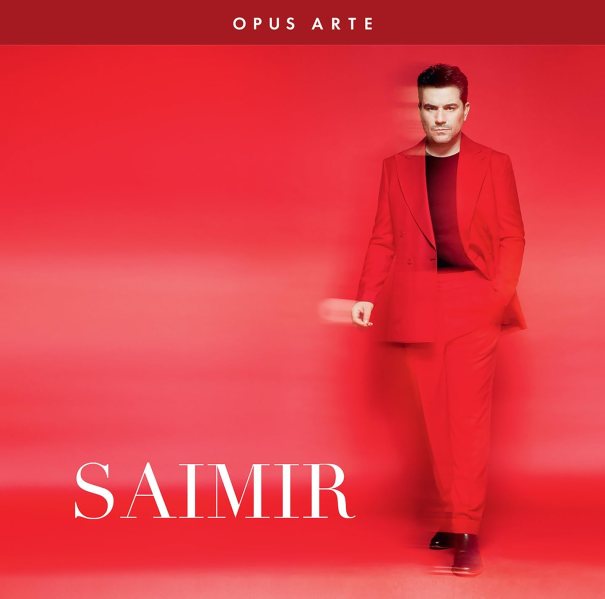
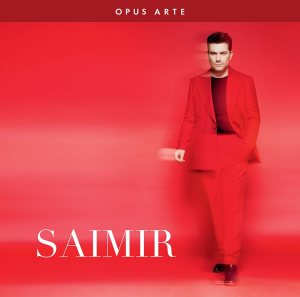
Saimir Pirgu sings operatic arias

Ten years ago I saw Saimir Pirgu as the Duke in the Royal Opera House’s David McVicar production of Rigoletto. Though he looked splendid and dashing, he was utterly charmless and I found his singing stiff and monochromatic. Since then, he seems to have ventured into more dramatic repertoire, and this recital of mostly verismo arias comes as a follow-up to a 2015 album of more lyrical fare, which I haven’t heard.

The present recital was very well received by my colleague, Göran Forsling in October of last year (review) but I’m afraid I can’t join in with his praise. For a start, Pirgu’s basic production is terribly ingolata, so much so that his singing was giving me a sore throat. There is no freedom to the sound and, when I compare him to the greats of the past, from Caruso to Björling to Pavarotti, all I hear is his struggle to get the sound out. There is no ring at the top and the middle voice is forced, resulting in a distressing vibrato. Indeed, he sounds a good deal older than his forty-two years.

Added to that, he doesn’t really do anything with the music and here his conductor, Antonio Fogliani, must take some of the blame, for his conducting is dull and prosaic. Most of the arias on the disc are well known but, with so many other versions out there, this just isn’t competitive.

I tried listening to the recital several times, thinking that maybe it had something to do with my mood, but, no, each time my reactions were the same. I just couldn’t get past Pirgu’s basic vocal production and I found it difficult to relax and enjoy the music. I hate to be so negative, but this is a disc for fans of Pirgu only, if indeed they exist.

Contents.

  1. Puccini: Manon Lescaut – “Indietro!… Guardate, pazzo son” 
    2. Puccini: Tosca – “E lucevan le stelle”
    3. Leoncavallo: Chatterton – “Non saria meglio… Tu sola a me” 
    4. Giordano: Andrea Chénier – “Colpito qui m’avete… Un dì all’azzurro spazio” 
    5. Puccini: Le villi – “Ecco la casa… Torna ai felici dì”
    6. Puccini: Manon Lescaut – “Donna non vidi mai” 
    7. Cilea: Adriana Lecouvreur – “L’anima ho stanca”
    8. Wagner: Lohengrin – “In fernem Land”
    9. Berlioz: La Damnation de Faust – “Nature immense”
    10. Tchaikovsky: Eugene Onegin – “Introduction”
    11. Tchaikovsky: Eugene Onegin – “Kuda, kuda, kuda vi udalilis”
    12. Puccini: Il tabarro –  “Hai ben ragione” 
    13. Bizet: Carmen – “La fleur que tu m’avais jetée”
    14. Puccini: Turandot – “Non piangere, Liù”
    15. Jakova: Skenderbeu – “Kjo zemra ime”
    16. Puccini: Tosca – “Recondita armonia” (with Vito Maria Brunetti (bass))
    17. Giordano: Andrea Chénier – “Come un bel dì di maggio” 
    18. Puccini: Madama Butterfly – “Addio, fiorito asil” 
    19. Giordano: Fedora – “Amor ti vieta”
    20. Sorozábal: La taberna del puerto – “No puede ser”
    21. Puccini: Turandot – “Nessun dorma!”


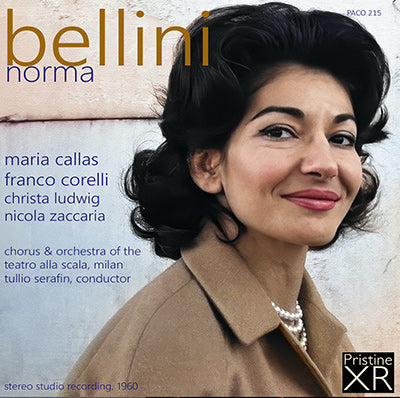
A reappraisal of Callas’s second studio Norma

paco215_530x

The Pristine XR remaster gives us the chance to reappraise a set which is slightly controversial in that it captures Callas in late career with occasional flaps on top notes. Nonetheless it was Ralph Moore’s overall top choice in his opera survey and he had no problem recommending it when he reviewed this Pristine issue in July of this year (review).

For my part, I’ve known the set for over sixty years now. It was actually the first opera set I ever owned, and, for quite a few months, the only opera set I owned, so I got to know it pretty well. Since then of course, I have heard a fair amount of other Normas, Sutherland, Caballé, Scotto, Sills, Eaglen, Bartoli (please, never again), Sass live at Covent Garden (disastrous) and plenty more by Callas herself; the live 1952 Covent Garden, the 1954 studio, the 1955 Rome broadcast and, best of all, the live 1955 La Scala, as well as excerpts from many others, right up to her final performances in the role in Paris in 1964.

So how does it hold up? Well, pretty well actually. Sonically, it was always pretty good, and, if I’m honest, I can’t hear that much difference between the most recent Warner version and the Pristine version. Perhaps there is a bit more space around the voices in the Pristine version, but it is the difference is slight.

As for Callas’s voice, it is true, notes above the stave have taken on a metallic edge, and they don’t always fall easily on the ear, but the middle and lower timbres have a newfound beauty, and a characterisation that was always complex and multi-faceted has taken on an even greater depth, parts of it voiced more movingly here than anywhere else.

There are other gains too. The cast here is a vast improvement on the earlier studio one, Corelli in particular being a shining presence. Fillipeschi was a liability on the earlier set, but, whilst not quite a paragon, and chary of some of the coloratura in his role (Serafin making a further cut in the great In mia man duet to accommodate his lack of flexibility), Corelli’s is a notable presence, and his clarion voice is ample compensation. Zaccaria may be less authoritative than the woolly voiced Rossi-Lemeni, but his tones are distinctly more buttery. Ludwig is an unexpected piece of casting, but she too is an improvement on Stignani, who, great singer though she was, was beginning to sound a bit over the hill by the time of the first Callas recording (she was 50 to Callas’s 30). Ludwig sounds, as she should, like the younger woman. Her coloratura isn’t always as accurate as one would like, certainly no match for Callas, but she sings most sympathetically in duet with her older colleague, and Mira o Norma is, for me, one of the greatest performances on disc. After Ludwig states the main theme, Callas comes in quietly almost imperceptibly and at a slightly slower tempo with an unbearably moving Ah perche, perche, her voice taking on a disembodied pathetic beauty. When Ludwig joins her for the section in thirds, she perfectly matches Callas’s tone on her first note, before Callas joins her in harmony, a real example of artists listening to each other in a sense of true collaboration.

One should I suppose mention the losses from the earlier recording. Yes, some of Callas’s top notes are shrill, and we lose some of the barnstorming heroics that were a part of Callas’s Norma right up to 1955. This Norma is more feminine, more vulnerable, if you like. How much this had to do with interpretive development, and how much with declining vocal resources is a moot point, but there is no doubt Callas is still a great singer, doing the best she can with what she has. Some sections are more moving here than in any of her other performances. I’ve already singled out Mira o Norma but the earlier duet is its equal, with Callas wistfully recalling her own awakening to first love.

The beginning of Act II always brought out the best in her, and here she is sublime. Dormono entrambi is an unusual piece which alternates passages of recitative with arioso, rather like Rigoletto’s Pari siamo. Callas draws on all the colours in her palette to express Norma’s contrasting emotions. You can almost feel the chill that comes over her at un gel me prende e in fronte si solleva il crin followed by the choked emotion of I figli uccidi! The arioso of Teneri figli is couched in a tone of infinite, poignant sadness, but then her tone hardens with her resolve at Di Pollion son figli, before, with a cry she drops the knife (and we can almost hear the precise moment), crying out Ah no, son miei figli! Operatic singing and acting on the highest level.

Serafin’s conducting is much as it was in the first set. He has the virtue of not conducting the opera as if it were Verdi, as so many do. Sometimes I’d like him to get a move on a bit, but his pacing of the final two duets (one in public, one in private) is superb, and he perfectly judges the climaxes in the Grand Finale, one of the greatest in all opera.

I wouldn’t want to be without Callas’s 1955 live La Scala account (also available from Pristine) with Del Monaco and Simionato, which is where voice and art find their greatest equilibrium, but for a studio set, this is now clearly the one to go for. One thing is for sure, Callas remains the quintessential Norma. No singer has yet challenged her hegemony in the role.


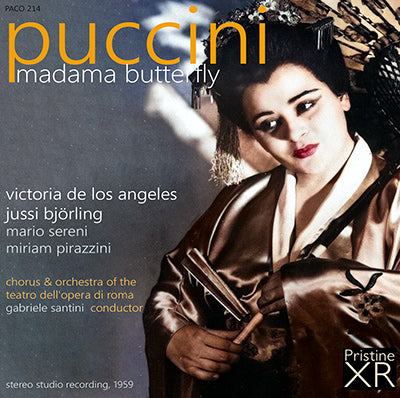
De Los Angeles and Björling in Madama Butterfly

paco214_530x

This Pristine XR Remastering of De Los Angeles’ second 1959 recording of Madama Butterfly has already been favourably reviewed twice before on MusicWeb International, once by Ralph Moore (review) and once by Morgan Burroughs (review), and I can add little to what they have said. We have De Los Angeles in one of her best and most conducive roles and Björling singing with golden tone. In Pristine’s newly re-mastered transfer of the stereo original, surely this is self-recommending, and who am I to disagree? However, I should mention that there is an earlier 1955 De Los Angeles recording, in mono sound, with Di Stefano as Pinkerton, Gobbi as Sharpless and conducted by Gianandrea Gavazzeni, which, in some ways, surpasses the performance we have here. It is available at super bargain price from the Regis label and was favourably reviewed by Christopher Howell here.

That earlier recording’s chief asset is the conductor, Gavazzeni, who makes far more of the score than the rather dull and prosaic Santini, and it makes me realise how important the role of the conductor is in Puccini. Indeed, all the best sets have benefited from a great conductor; Karajan, for both Callas and Freni, Serafin for Tebaldi, Barbirolli for Scotto and Pappano for Gheorghiu. And, if Santini has at his disposal an excellent cast, Gavazzeni’s is just as good, and in some respects even better. Björling, for Santini, sings with golden tone, but is just a trifle stiff. This was to be Björling’s last recording, and the heart condition, which would end his life at the early age of 49, was already apparent. Indeed, he collapsed during one recording session of the Act I love duet and needed several days to recover before he was able to continue. This could account for his relative stiffness. Di Stefano, on the other hand creates a real character. Carelessly charming in his exchanges with Sharpless and genuinely seductive in the love duet, he is suitably devastated by what he has done in the last act. I don’t see Pinkerton as a villain or an out and out cad. He is just an impulsive young man, who gives little thought to his actions at the beginning of the opera. Young men like him are ten a penny on any American college campus and Di Stefano portrays him to the life.

Sereni is a sympathetic Sharpless for Santini, but Gobbi, for Gavazzeni, surpasses him in verbal acuity and De Los Angeles is in slightly fresher voice in the earlier recording, though the difference is marginal.

What is not in doubt is the improved sound picture in the later stereo recording, especially in Pristine’s remastering, which opens up the sound quite a bit. I should also mention that Pristine as usual provide downloads of the full score and libretto, whereas the Regis issue of the earlier recording just comes with notes and a synopsis. Whichever version you go for, you will get one of the most touching Butterflies on disc.


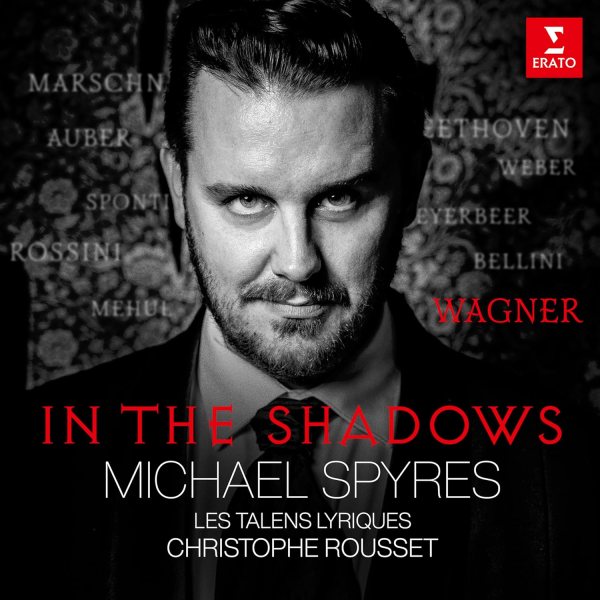
Michael Spyres – In The Shadows

81cea-b2zrl._ac_sl1500_

This is a luxury recital indeed. Over 84 minutes, we are presented with twelve operatic scenes, performed complete with chorus when required and another soloist (in the shape of tenor Julien Henric) who plays Flavio in the scene for Pollione from Norma. Furthermore, we are vouchsafed sung texts and translations into English, French and German, which is important as many of the scenes are not exactly familiar. Clearly all concerned have taken their task seriously.

In the accompanying notes, Spyres talks of his journey towards Wagner and states that the album “endeavours to illuminate the composers who languish in Wagner’s shadow: those who formed the foundation of the compositional aesthetic and sculpted the framework of vocal writing that would become the Wagnerian tenor.”

Thus, we start with Joseph Méhul (1763-1817) and work our way forward roughly chronologically via Beethoven, Rossini, Meyerbeer, Weber, Spontini, Bellini and Marschner to Wagner himself in the shape of arias from his early Die Feen and Rienzi, finishing up with Lohengrin. Of the arias chosen, only those from Fidelio, Norma and Lohengrin could be called in any way familiar, so the recital is certainly valuable for introducing us to some little heard music.

The disc has been reviewed in these pages by Göran Forsling (review) and was even a recording of the month back in April, and I largely agree with that review with one or two caveats.

I actually heard Spyres live at a Prom in 2017, in a performance of Berlioz’s La damnation de Faust with the Orchestrre Révolutionnaire et Romantique under Sir John Eliot Gardiner and, whilst impressed with his interpretation and musicality, I didn’t think the voice was particularly large. Now of course this was seven years ago, and there is a good chance that the voice has grown since then, but I’m not so taken with his singing in those roles that require a bit more dramatic thrust, like Florestan and Pollione. I hear a somewhat artificial darkening of the timbre, which results in a rather throaty sound. He sounds as if he is forcing his lyrical voice, and his tone lacks squillo. Comparisons with Vickers in the former and Corelli in the latter find Vickers singing with a deal more intensity and Corelli, whom I had just recently been listening to in the second Callas recording, much freer on top.

When we get to Wagner himself, Mein Lieber Schwann from Lohengrin is sensitively sung, but there is no ring to his tone when he opens out in the more dramatic parts. GF makes comparison with Gedda, who sang Lohengrin a couple of times in his native Sweden. Ultimately Gedda thought it an unsuccessful experiment, and he never sang the role again, evidently thinking the role too heavy for his essentially lyrical voice. However, as can be heard in his recording of the aria, Gedda’s tone had a good deal more squillo. That said, I heard Gedda live in the Verdi Requiem towards the end of his career and his voice had a great deal more cutting power than Spyres.

With his three albums, Batitenor, Contra-Tenor and now In The Shadows, Spyres is showcasing his versatility, but I just wonder how much of that versatility is a product of the gramophone. Given the encomiums he has been receiving of late, I hate to be the one dissenting opinion, but I do wonder if his voice is being forced into places it shouldn’t necessarily go.

Contents
Etienne-Nicolas Méhul (1763 -1817)
1. Joseph en Égypte, « Vainement Pharaon… Champs paternels
Ludwig van Beethoven (1770 – 1827)
2. Fidelio, « Gott! Welch Dunkel hier!… In des Lebens
Gioacchino Rossini (1792 – 1868)
3. Elisabetta, regina d’Inghilterra, « Della cieca fortuna… Sposa amata… Saziati, o sorte ingrata ?
Giacomo Meyerbeer (1791 – 1864)
4. Il crociato in Egitto – « Suona funerea
Carl Maria von Weber (1786 – 1824)
5. Der Freischütz – « Nein, Länger Trag Ich Nicht
Daniel François Esprit Auber (1782 -1871)
6. La muette de Portici- « Spectacle affreux …
Gaspare Spontini (1774 – 1851)
7. Agnes von Hohenstaufen, « Der Strom wälzt ruhig seine dunklen Wogen
Vincenzo Bellini (1801 – 1835)
8. Norma – « Meco all’altar di Venere…Me protegge, me difende (with Julien Henric (tenor))
Heinrich Marschner 1795 – 1861)
9. Hans Heiling op. 80 – “Gonne mir ein wort der Liebe” 
Richard Wagner (1813 – 1883)
10. Die Feen WWV 32 – « Wo find ich dich, wo wird mir Trost?
Richard Wagner
11. Rienzi, der letzte der Tribunen WWV 49, « Allmächt’ger Vater, blick herab
Richard Wagner
12. Lohengrin WWV 75, « Mein lieber Schwan


Pristine’s Re-master of Björling’s Cav and Pag.

paco209_fdbcae84-e953-4879-bd72-570e6effee64_530x

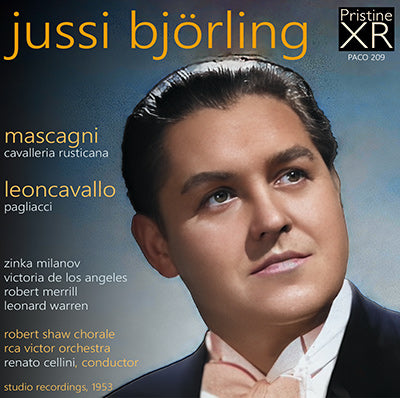
A photo of Jussi Björling graces the cover of this Pristine issue, and he is without doubt the main reason to hear these recordings. It is always a pleasure to hear his beautiful voice, musical phrasing and ringing top notes, though I’m not sure he would ever have been perfectly cast in either role. But before coming to Björling himself, it might be instructive to consider other elements of the recordings.

Both operas were recorded in 1953 in New York with the RCA Victor Orchestra and the Robert Shaw Chorale under Renato Cellini and sound remarkably good in these Pristine transfers, so good, I almost thought they were in stereo. I hadn’t heard either performance before, so I have nothing to compare the Pristine transfers to, but they are admirably clear and spacious and a good deal better than the contemporaneous Serafin recordings with Di Stefano and Callas. The Serafin Pagliacci is in reasonable mono sound, but unfortunately the Cavalleria Rusticana suffers from overload and distortion, which no amount of re-mastering would seem to be able to overcome. Still, I wish that these Cellini performances were half as exciting.

Cellini’s conducting is at least idiomatic, his tempi well chosen, but neither opera really catches fire and they both remain somewhat studio bound. The professional Robert Shaw Chorale sing in both operas. They are faultless in execution, but I couldn’t help picturing them all in prim white shirts and blouses, standing, score in hand, in choir banks. They don’t for one second conjure up the sound of lusty Sicilian peasants or excited Italian village folk. The La Scala Chorus on the Serafin set, may not be so polished, but they have this music in their blood and are much more convincing.

I suppose I should preface my discussion of the solo singers with a confession that I have never much liked Zinka Milanov, or at least not on any of the recordings I have heard, which were all made quite late in her career. From the outset she sounds far too mature, almost indistinguishable from Mamma Lucia in her initial exchanges and completely uninvolved in poor Santuzza’s plight. Björling, who could sometimes be accused of being a little cool, is at his most impassioned in their duet, but she remains phlegmatic and stolid. She is no better in the duet with Robert Merrill’s Alfio, who, in any case, is a bit too jovial and avuncular. Björling’s Turiddu is beautifully sung and, as I mentioned, he does try to inject some passion into his exchanges with Santuzza, but there is something about the inherent nobility in his tone that makes him not quite right for the caddish Turiddu. As always, his singing gives great pleasure, but I can’t quite believe in him.

That said, I find his Turiddu more convincing than his Canio. Yet again, the role is beautifully sung, Vesti la giubba heart-breaking and deeply felt, but can anyone really believe that this is a man who would be driven to double murder? I certainly can’t. I have much the same problem with the Nedda of Victoria De Los Angeles. She is in her best voice, warm and feminine and, like Björling, has the virtue of always being supremely musical. She sings quite beautifully, especially in her Ballatella, but, as with her Carmen, she sounds altogether too ladylike. I don’t necessarily want Nedda to be portrayed as a heartless minx, as was often the case in days gone by, but I need to believe that she has the mettle to defy a bully of a husband and have an affair behind his back.

Nor is there any menace in the Tonio of Leonard Warren, who, in the prologue, could be singing about anything at all really. Gobbi, on the Serafin set, does not have such a beautiful voice, nor such easy top notes, but he makes every word tell. Merrill has here been given the secondary role of Silvio, but his Silvio doesn’t sound much different from his Alfio. Compare Panerai, who sings both roles on the Serafin recordings, utterly menacing as Alfio and ardently seductive as Silvio.

Jussi Björling was, without doubt, one of the greatest tenors of the last century and I always take pleasure in the sheer beauty of his voice, his musical phrasing and his wonderfully free and ringing top notes, so it was a pleasure to hear him here, even if these two roles are not ones to which I think he was really suited. For the rest I derived the most pleasure from De Los Angeles’s beautiful and musical singing as Nedda, even if she too is caught in a role that was not particularly suited to her gifts.

Not a top choice for either of these two operas then. For all that they are in better sound than Serafin’s recordings of the two operas, I would still place the Serafin performances ahead of them. Di Stefano can be a bit wayward, but he is better at expressing the caddish side to Turiddu and the unhinged side of Canio that turns him into a killer. Callas is, as usual, hors concours, both as a wonderfully impassioned Santuzza and a free-spirited and mettlesome Nedda, and she is in fine voice on both recordings. Gobbi is equally brilliant as Tonio and their confrontation bristles with drama. There are also better choices amongst more recent recordings, such as Karajan’s sumptuously recorded La Scala set for DG, which no doubt remains a first choice for many.

As always, Pristine should be commended for including with the CDs a package of downloadable items, which includes a copy of the same recording as an MP3 download, together with full scores, both piano and orchestral, and a full libretto in PDF format. Most major companies these days don’t even include an online link to a libretto.

Pietro Mascagni (1863-1945)
Cavalleria Rusticana (1890)
Turiddu: Jussi Björling (tenor)
Santuzza: Zinka Milanov (soprano)
Alfio: Robert Merrill
Mamma Lucia: Margaret Roggero (mezzo)
Lola: Carol Smith (mezzo)

Ruggero Leoncavallo (1857-1919)
Pagliacci (1892)
Canio: Jussi Björling (tenor)
Nedda: Victoria De Los Angeles (soprano)
Tonio: Leonard Warren (baritone)
Silvio: Robert Merrill (baritone)
Beppe: Paul Franke (tenor

Robert Shaw Chorale
RCA Victor Orchestra/Renato Cellini
Rec. 1953, Manhattan Centre, New York
Full scores and libretto included as downloads
Pristine Audio PACO209 (2 CDs 141)


Rossini’s Elisabetta Regina d’Inghilterra in Wildbad

818f5oblspl._ac_sl1500_

Premiered in 1815, Elisabetta, Regina d’Inghilterra was the first of nine operas Rossini wrote for the San Carlo, Naples. It is based on a play by Carlo Federice, which in turn had been based on a novel by Sophia Lee, called The Recess. Dealing with Elisabeth’s leniency in forgiving Leicester and his secret wife Matilde, it is highly probable that its subject was also meant to celebrate Ferdinand IV, who had recently returned from exile and his ‘leniency’ in not carrying out reprisals against his renegade subjects. At the premiere the roles of Elisabetta and Leicester were sung by Isabella Colbran and Andrea Nozzari, with the role of the villainous Norfolc (sic) going to Manuel Garcia, who would later go on to create the role of Lindoro in Il Barbiere di Siviglia. As is usual with Rossini, there were a lot of self-borrowings in the score. Much of it is from Sigismondo and some from Aureliano in Palmira, including the overture, which would eventually find it’s permanent home as the overture to Il Barbiere di Siviglia. Rosina’s Una voce poco fa in that opera is also a re-working of Elisabetta’s entrance aria.

The opera was a huge success at the time, but, like most of Rossini’s serious operas, fell out of the repertoire until the bel canto revival of the second half of the last century precipitated a spate of revivals.  The present set derives from performances in 2021 in Kraków, Poland and at the Wildbad Rossini festival in Bad Wildbad. However much a rarity on stage, the opera is well represented in the catalogue. We have a 1976 Philips recording, featuring Montserrat Caballé and José Carreras, which was based on performances at the Aix-en-Provence festival and there is also a recording on Opera Rara, with Jennifer Larmore and Bruce Ford, a performance which is absolutely note-complete, though in fact only runs a few minutes longer than the Philips. I haven’t heard the Opera Rara set, nor a live one featuring Leyla Gencer, but I used to own the Philips set on LP and re-listened to some of it on Spotify before writing this review.

Unfortunately, this Naxos set is nothing to write home about. The Kraków Philharmonic Orchestra & Chorus can’t compare to the Ambrosian Singers and the London Symphony Orchestra and Antonio Fogliani whizzes through the score, as if he can’t wait to get it over with. Given what we hear on stage, one can hardly blame him. There is very little of tonal beauty or real vocal accomplishment to be heard. At no point do any of the soloists rival those on the Philips set, where Caballé is in fine voice and has all the grandeur the role of Elisabetta requires. She is in a completely different class from the efficient, but dull Serena Farnocchia, who plays Elisabetta on Naxos. Then on Philips we have the young Carreras. He may not get round the notes quite as easily as Patrick Kabongo, but there is the compensation of the sheer beauty of his voice at that time. Kabongo’s voice becomes thin and wiry as he goes above the stave. That said, Kabongo’s Leicester is at least acceptable but Mert Süngü’s  Norfolc is not. I know the character is extremely unpleasant, but I’m not sure he needs to sound so awful. Ugo Benelli on Philips is much better.

 As Matilde, Philips have the lovely Valerie Masterson, who had played the role in Aix, her bright, light, lyric soprano contrasting well with Caballé’s richer more refulgent tones. You could never mistake one for the other, whereas the voices of Farnocchia and Veronica Marini, who plays Matilde on the Naxos set, aren’t particularly dissimilar.

The tepid applause, which occasionally reminds us that this is a live performance, sounds more dutiful than enthusiastic. One wonders why Naxos decided to issue it unless it were just to complete the Rossini Wildbad series. Unless you absolutely must have CDs, then the old Philips recording, now available as a download and warmly reviewed by Ralph Moore in his Rossini survey, is far preferable.