Callas in La Vestale – La Scala 1954

1498830306858

7 December, the feast of St Ambrose, the patron saint of Milan, is the official opening date of the La Scala season, and for the third time in four years, Callas was granted the privilege of opening the new season with a new production. This was also the first time she worked with Luchino Visconti, who was lured into directing opera by the prospect of working with Callas. He had first fallen under her spell when he saw her as Kundry in Rome in 1949; from that day onwards he tried to catch as many of her performances as he could . Between 1954 and 1957 he directed Callas in some of La Scala’s most iconic productions, La SonnambulaLa TraviataAnna Bolena and Ifigenia in Tauride. He was also to have directed her return to the theatre in 1960 in Poliuto, but he withdrew in protest after his film Rocco e suoi fratelli was censored by the Italian authorities.

This was Callas’s first appearance in Italy after the spectacular success of her first season in Chicago, which was her US debut. Her hair was now blonde (a short lived effect) and the transformation from everyone’s idea of an overweight prima donna to a svelte, elegant picture of glamour was complete.

With designs by Pietro Zuffi and sets by Nicola Benois, the production certainly looked stunning, and was cast from strength, with Franco Corelli as Licinio, Ebe Stignani as La Gran Vestale and Nicola Rossi-Lemeni as Il Sommo Sacerdote, but, for all the splendour of the staging and the excellence of the singing the opera failed to ignite the imagination the way Medea (even more unknown) had the previous year, and there the fault must lie with Spontini. whose music resists even Callas’s attempts to bring it to life. Though the opera is often dubbed a “junior” Norma, the character of Giulia has none of Norma’s private anguish, nor her transfiguring public self sacrifice. She spends the whole opera languishing over Licinio or praying to Vesta. There is very little dramatic weight to the character.

Callas does what she can, filling the music with her customary passion and wide palette of tone colour, and she moulds the phrases beautifully, her legato in such sections as O nume tutelar well nigh impeccable. Thrilling too is her propulsive singing of the cabaletta to Tu che invoco, but Spontini’s music never allows her to make the impression she does as Norma or Medea, or even Alceste.

The cause of the opera is not helped by Votto’s stodgy, soggy conducting. Maybe it needs a John Eliot Gardiner to bring it to life, as it rather resists even Riccardo Muti’s efforts in his recording.

For the rest, we have Corelli, compensating for some less than stylish singing with the clarion brilliance of his voice, Stignani a matronly Gran Vestale, which is apt enough for the character, I suppose, and Rossi-Lemeni dramatically committed, if woolly toned.

The sound here is no better nor worse than any of the other transfers I’ve heard, and distortion and overloading is, as it was in Alceste, pretty bad. I am happy that we have this document of a key production in Callas’s career, but, truth to tell, it is not an opera I turn to often, finding that the best of Giulia is to be heard in the three arias Callas later recorded in the studio with Serafin for the Callas at La Scala recital disc.

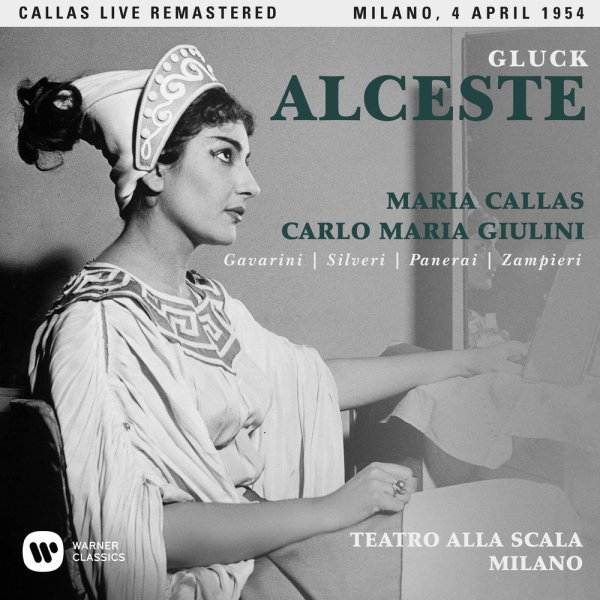
Callas in Alceste – La Scala 1954

1498831094098

First a word of warning about the sound on this recording. This has always been one of the worst Callas La Scala broadcasts, and Warner can’t do much about that. It overloads and distorts badly in orchestral tutti and in the choruses, though solo voices fare slightly better. I was hoping for a marked improvement, but I guess there is not a lot one can do with such severely compromised source material.

It is a great pity, as I feel sure that if this recording had enjoyed better sound, then Callas’s Alceste would be a lot better known. By April 1954 she had considerably slimmed down, but her voice is still firm and powerful.

As with Orphée et Eurydice, Gluck considerably revised Alceste for Paris in 1776, and it is this version, translated into Italian and in an edition by Giulini, that was performed at La Scala in 1954. It was, as were most of her appearances at La Scala, a new production, directed by Margherita Wallmann with designs by Piero Zuffi and conducted by Carlo Maria Giulini. Surprisingly this was also La Scala’s first ever production of the opera.

It is a great shame Callas didn’t sing the role of Alceste again for she is, in Max Loppert’s words,

a Gluck soprano of the highest order…. (who) answers every demand the role has to make

She will return to Alceste’s great apostrophe to the Gods, Divinités du Styx, on her French recital of 1961, but, though infinitely subtle as a performance, it will lack the clarion security of her top Bs here. In a sense she sculpts the music, portamenti much more chastely applied than they are when she sings operas of the bel canto. Though neither she nor Giulini add appoggiaturas, her sense of the classic style is spot on.

Every musical phrase, word and gesture was developed with the logic indicated in Gluck’s score,

according to Giulini, who thought Callas a musical genius.

There are many extant photos from the production, and you can see that the new svelte figure has given Callas a new found confidence in movement. For those who think that her amazing weight loss resulted in the loss of her voice, Giulini had this to say,

She became another woman and a new world of expression opened to her. Potentials held in the shadows emerged. In every sense, she had been transformed.

Giulini is a major asset in the pit, and it is a great pity that the recording obscures so much of the orchestral detail.

None of the male singers is in Callas’s class, and, as a representation of the opera, one would really have to look elsewhere, probably to John Eliot Gardiner with Anne Sofie von Otter, who conducts a vital, dramatic version of the score, with von Otter a wonderfully committed and sensitive Alceste, but even she can’t quite match Callas’s range of colour and intensity. On the other hand, the present recording is essential in expanding our knowledge and appreciation of Callas’s art, and, if you can get past the vagaries of the actual sound, and the inadequacy of most of the other singers, patience will definitely be rewarded.


Callas sings Medea at La Scala 1953

1498838510831

It is actually somewhat down to happenstance that La Scala staged Medea in December 1953. Callas was originally to have appeared in a new production of Scarlatti’s Mitridate Eupatore but the success of her appearances in Cherubuni’s Medea in Florence at the Maggio Musicale Fiorentino made La Scala change their plans and stage the Cherubini opera instead. Nor was Bernstein slated to conduct, but Victor De Sabata, La Scala’s original choice fell ill just before rehearsals started, leaving them without a conductor. As luck would have it Bernstein was winding up a series of concerts in Italy, one of which Callas happened to hear, and she suggested they approach him, and fortunately he was free.

Unlike many of the operas Callas sang, there was absolutely no performing tradition with Cherubini’s Medea, and consequently each conductor she performed it with prepared their own, slightly differing, version, their interpretations of the score often markedly different. Where Vittorio Gui, who conducted the opera in Florence, brought out its classical dimension, Bernstein seems to see it as reaching forward into the Romantic era, his conducting more in line with his fiery interpretations of Beethoven. After the turbulent overture, the opera opens in gentle, pastoral vein, and, though I might wish that Gui (and later Serafin in the studio recording) would get a move on a bit, Bernstein seems too much in a hurry to get to the crux of the drama and his speeds are often so fast the orchestra and chorus can hardly keep up with him. However after the entrance of Medea, he really gets into his stride, and conducts a blisteringly intense realisation of the score, to match Callas’s blisteringly intense singing.

Io, Medea, are her very first words,, and, though the notes look simple enough on the page, the tone she uses carries a threat that completely dispels the pastoral calm of the previous scene.  Ah, quale voce! indeed, as Giasone comments. The crowd disperse in terror, but, left alone with Giasone, Callas is quick to make us realise that it is love alone that brings her to Corinth, particularly when she sings the words, Ricordi il giorno tu, la prima volta quando mai veduta? The aria Dei tuoi figli is sung in melting tones and, though in later years she would find even more insinuating colours, she manages its wide leaps and high tessitura with staggering ease. Unfortunately Bernstein cuts its final Crudel! and robs the aria of its true climax.

That said, his conducting of the ensuing duet is superb, especially when he suddenly slows down what had been a propulsive tempo at the lines O fatal velo d’or, with a reduction in volume from both singers and orchestra, which creates a chilling effect not duplicated in any of her other performances. Elsewhere in the duet, there is a touch too much vehemence from Callas here, and I feel she overplays her hand, as she does later in the duet with Creon, which lacks the play of light and shade found in her performance in Dallas in 1958.

Indeed throughout this performance, we get more of the sorceress and less of the woman, which makes her traversal of the role in Dallas so much more fascinating. Nevertheless, it is very exciting and, by the time of the closing scene, we are confronted with a voice of blackest evil. Bernstein also cuts a large section of the lament for her children, possibly to remove some of Medea’s human dimension in her final inexorable revenge. This solution has a justification of sorts, I suppose, but I prefer the dichotomy of woman and sorceress we get in Dallas, and, to a lesser extent, in Florence, where Gui lets us hear the closing scene in its entirety.

On the plus side, Callas’s voice is in fabulous form at La Scala and she rides the music’s climaxes with ease. The effect is undeniably thrilling, and you can hear from the audience’s reception that they gained a spectacular success.

Barbieri, is, as she was in Florence, an excellent Neris, this time singing her aria with bassoon obligato, rather than the cello substituted in Florence. I prefer Guichandut in Florence to Penno at La Scala, but nether challenges Vickers, who sings the role of Giasone in Dallas in 1958, Covent Garden in 1959, and at La Scala in 1961. Giuseppe Modesti, who also sings the role of Creon on her studio recording of the opera, is fine as Creon, though I slightly prefer Zaccaria in Dallas and Maria Luisa Nache is a sweet-toned Glauce. However it is surely for the contributions of Callas and Bernstein that we are most likely to turn to this recording , and here they are absolutely as one in their conception of the piece.

As far as the actual recording goes, again the source material is not great, so we cannot expect too much. This Warner issue is a lot clearer and cleaner than EMI’s usually shoddy presentation, but I couldn’t hear that much difference between this and the one issued by Ars Vocalis. Eventually I decided on a slight preference for the Warner, but there is not much in it, and either would be a good choice.

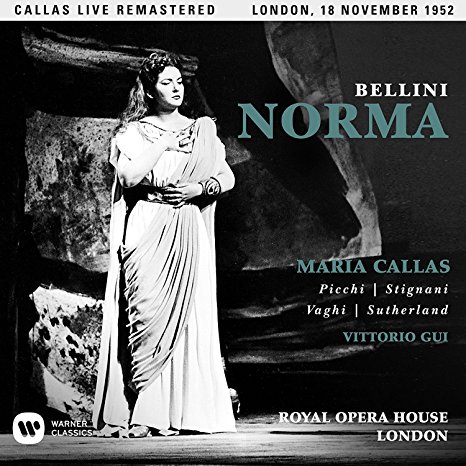
Callas sings Norma at Covent Garden 1952

81vXfqdoUFL._SX466_

This recording captures Callas’s debut before one of her most loyal audiences. She returned the following Coronation season, reprising the role of Norma and adding Aida and Leonora in Il Trovatore. She was back for Norma in 1957, then La Traviata in 1958,  Medea in 1959, and finally the legendary Zeffirelli production of Tosca in 1964 and 1965, her last ever performance on stage.

Callas sang Norma more than any other role, and is particularly associated with it and there are quite a few extant recordings of her singing it.. Aside from the studio recordings of 1954 and 1960, we have live performances from Mexico in 1950, Covent Garden in 1952, Trieste in 1953, Rome and La Scala 1955, Rome in 1958 (the infamous walk out), and also of her final performances in the role in Paris in 1965.

Though this Covent Garden performance is very good, I would have preferred it if Warner had chosen the La Scala performance of 1955 with Simionato and Del Monaco, a performance in which art and voice find their truest equilibrium, and without doubt the greatest performance of the opera I have ever heard. In its Divina incarnation it is also, apart from some radio interference during the opening of Act II, in much clearer sound than this Covent Garden performance. It is the recording  I turn to most often when I want to hear Norma.

That said, it is a long time since I heard this 1952 set, and I certainly enjoyed listening to it. The sound is not too bad, but not great, and a bit boomy in places, though the solo voices come across reasonably well. The chorus sound a bit muffled. I don’t have any other version I can compare it to though, so can’t tell you if it’s any worse or better than others.

To deal with elements other than Callas first, Vittorio Gui has an excellent grasp of the score, and has the merit of not conducting it as if it were Verdi. His tempi are, for the most part, judicially chosen, and he supports his singers admirably, though very occasionally I felt he hurried things along a little too much.  There are one or two lapses between stage and pit, but, in general, the performance is well prepared and executed.

Giacomo Vaghi is a sonorous, firm voiced Oroveso, and Mirto Picchi, who sings Giasone on Callas’s studio recording of Medea a welcome surprise as Pollione. He doesn’t have Del Monaco’s or Corelli’s heroic sound, nor their clarion top Cs, but he is a good deal more stylish than Mario Filippeschi, the Pollione of Callas’s 1954 studio recording.

The Adalgisa is Ebe Stignani, one of the most acclaimed mezzos of her age, who was much praised at the time. She has a voice that is seamless from top to bottom, firm and beautifully produced, but she was twenty years Callas’s senior, and to my ears at least, doesn’t sound in the least the giovinetta Norma refers to. We should remember that, though Adalgisa takes the lower line in the duets, the role was originally created by the soprano Giulia Grisi, who, by all accounts, had a lighter voice than Giuditta Pasta, who created the role of Norma. Also, though reasonably flexible, she doesn’t execute the florid music with quite Callas’s accuracy. In the duets (both sung down a tone) it is only when Callas sings that you can hear when Bellini separates descending scales into duplets. Stignani also ducks some of her high notes. The downward transpositions were presumably made to accommodate her, as they are not used when Simionato plays Adalgisa to Callas’s Norma. Apparently it used to annoy Callas that critics never noticed that Simionato sang them in the right keys.

Clotilde is sung by a young Joan Sutherland, and it is interesting to hear what she had to say about what it was like to appear alongside Callas in these performances.

[Hearing Callas in Norma in 1952] was a shock, a wonderful shock. You just got shivers up and down the spine. It was a bigger sound in those earlier performances, before she lost weight … It was thrilling. I don’t think that anyone who heard Callas after 1955 really heard the Callas voice.

Callas’s voice does indeed sound huge in these performances (“colossal” Sutherland referred to it elsewhere), but, maybe because of that, her Norma here is more the warrior, whereas at La Scala 1955, her singing is more subtle, with more of the woman emerging. What is remarkable is how this large voice gets round the notes, the fastest of coloratura passages holding no terrors for her whatsoever. The top of the voice is also absolutely solid and the top D that ends Act I, held ringingly and freely for several bars, is an absolute stunner.

Her Norma here is vocally stunning, her voice flashing out in anger with scalpel-like attack in the Act I finale, powerful and commanding in her public scenes with the Druids, but in 1955 at La Scala she is infinitely more moving in the private scenes and in the finale. Furthermore in 1955 her voice still had power and security at the top.

This Covent Garden performance is a great memento of her London debut, but it is still the 1955 La Scala performance I will listen to most often. The cast (Simionato, Del Monaco and Zaccaria) is just about as good as you could get at the time. Votto, who conducts, is not Gui’s equal, but he does at least understand the score and knows how to support his singers. I’d say it’s one of those rare occasions in the opera house where everything went right.


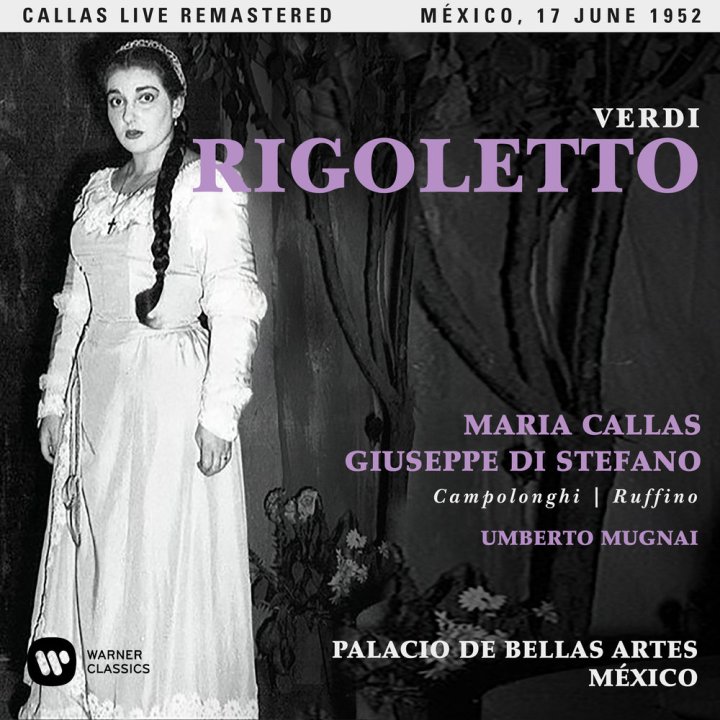
Callas sings Gilda in Rigoletto – Mexico 1952

1498838629118

This is actually the first time I’d heard this performance complete. Previously I’d only heard excerpts in wretched sound, which hadn’t encouraged me to investigate further, especially given the excellence of Callas’s studio recording with Gobbi and Di Stefano and Serafin at the podium.

Well the first thing to say is that the sound is actually quite good, the voices well caught and much clearer than anything I’d heard before. Unfortunately the performance itself, save for Callas’s miraculous Gilda, is something of a mess, and I wonder why Warner decided to include it, especially as they omitted the superb live La Scala Un Ballo in Maschera of 1957.

One should also note that the prompter is a palpable presence, shouting rather than whispering the lines to the soloists. Oddly enough he disappears completely at the beginning of Tutte le feste and Callas muffs her first lines.

So let’s get the problems, and there are plenty of them, out of the way first. Umberto Mugnai doesn’t appear to have any control over his resources whatsoever, and frequently coordination between pit and stage falls apart completely. The score is also cut to ribbons, far more than was traditional at the time. It is notable that when things go awry, it is usually Callas, who presumably couldn’t even see the conductor, who brings things back on track. Even in such chaotic surroundings, her innate musicality shines through.

The last act is the biggest mess of all, and all the singers go out of sync with the orchestra in the storm ensemble, despite Callas’s best efforts to bring everything back under control. The quartet isn’t much better, and ends with all the singers, save Callas, out of tune, not that it bothers the audience who give it a rapturous reception. Nor does it concern them that just before that Di Stefano had ended La donna e mobile seriously flat. Forced to encore the aria, his second attempt isn’t much better.

Piero Campolonghi, who plays Rigoletto, has a fine enough voice, but, oh dear, what a ham! He delights in holding onto notes longer than he has to, adding extraneous sobs whilst others are singing and shamelessly playing up to the audience, who, it has to be said, lap it all up with enthusiasm. He has absolutely no idea who or what Rigoletto is. Oh how I missed Gobbi.

Di Stefano does at least have the measure of the Duke. He has charm in abundance, and we can understand why Gilda could be taken in by such a man, but, without a strong hand at the helm, he can be careless of note values and rhythm, and he too plays shamelessly to the gallery. The rest of the cast is decidedly provincial.

That Callas’s Gilda, a role she was singing for the first time, should emerge virtually unscathed from this shambles of a performance is a miracle indeed. She makes a couple of decisions she would later regret, such as taking an upward ending in Caro nome, which allows her to finish on a secure, but unpoetic top Eb in alt, rather than Verdi’s written rapturous trill on the lower E  (something she does to brilliant effect in the studio recording). She also ends the Quartet on a powerful (and unwritten) top Db (but then, with all the singers belting out their lines, the written quiet ending would have been out of the question).

Aside from these miscalculations, made to appease the Mexican audience’s love for high notes, her Gilda is one of her most exacting characterisations, and it is a great pity that she was never tempted to sing the role on stage again. Had she done so, we might well have completely rethought the role, much as we did that of Lucia.

Her voice is in superb condition, infinitely responsive and wonderfully limpid, the tone wondrously lightened to dispel any associations with Abigaille, Kundry, Elena, Aida and Armida, the roles we have heard her sing so far in this live set. Furthermore her Gilda is a character of real flesh and blood, with a fullness of heart in her duets with her father that prepares us for the sacrifice she makes later; a closeted romantic dreamer suddenly propelled into a world far beyond anything in her experience. Not only is her characterisation of the role a revelation, but her singing qua singing is exquisitely realised, her musical instincts unfailingly right, and ultimately her Gilda rises like a phoenix from the ashes of its crude surroundings.

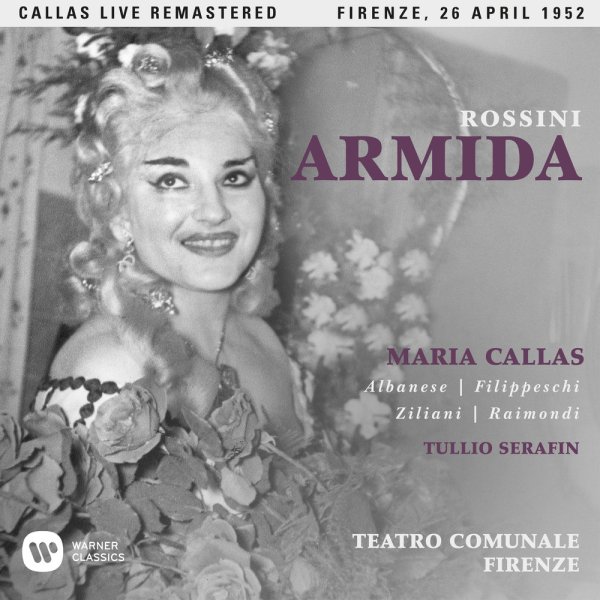
Callas in Armida – Florence 1952

1498830639973

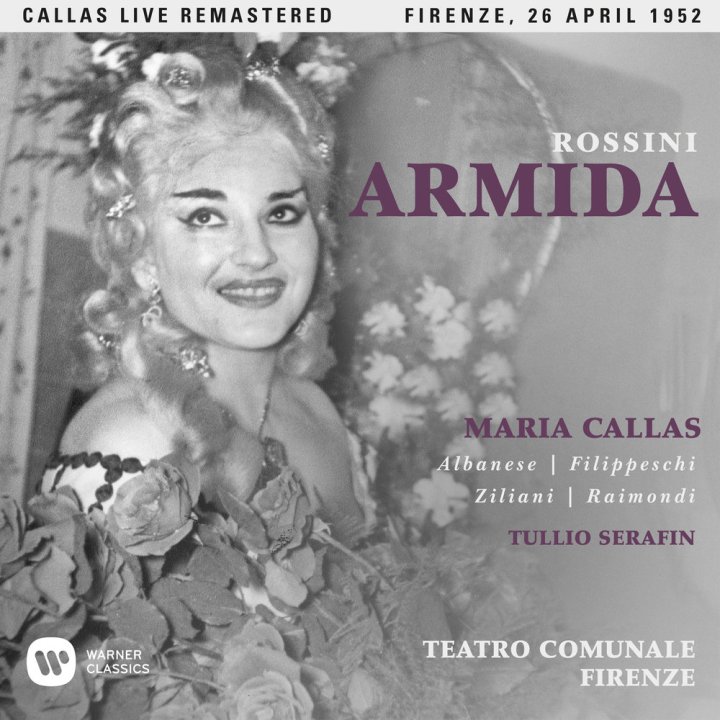
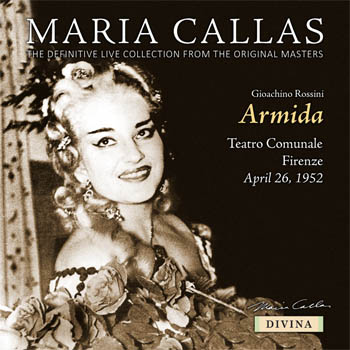
With this set, I was able to make a direct comparison between the new Warner transfer and that by Divina Records, and have to say I prefer Divina. Neither version can eliminate the overloading and distortion at tutti climaxes, but to my ears the voices are much more clearly captured in the Divina version. The Warner isn’t bad, but possibly in an attempt to provide a more comfortable listening experience, they have removed some of the presence of the voices. Other ears and other equipment may have a different reaction of course, but I quickly abandoned Warner and continued listening on Divina. Furthermore Divina includes about 12 minutes of music, omitted by Warner, where you can hear a speaking male voice overlaid onto the music. Though admittedly irritating, it means we lose some of Callas’s singing. Divina also includes fuller notes, fuller documentation, photos and a libretto. I suppose you might see it as the luxury compliment to Warner’s cheaper offering. Personally I prefer Divina’s warts and all approach. Divina is of course more expensive, and others may have different priorities, so choice will reside with the individual listener.

But choice must be made, for this has to be some of the most astonishing dramatic coloratura singing ever committed to disc, and it is a great shame that Callas never sang the role again, nor felt able to take on any more of the roles written specifically with Isabella Colbran in mind.

In 1952 Callas undertook a punishing schedule. In January she sang her final performance of Elena in I Vespri Siciliani in Milan, followed it with I Puritani in Florence, then her first Normas at La Scala. February saw more performances of Norma at La Scala, with a few concerts sandwiched between. In March she gave three performances of Violetta in Catania, whilst rehearsing for a new production of Il Ratto del Seraglio (the first ever at La Scala). This opened at the beginning of April, and this production of Armida on April 26th after a further performance of Norma at La Scala. Incredibly, though you’d never guess it from her confident delivery, she learned the role of Armida in 5 days!

Astonishing though the vocal pyrotechnics are, Callas not only sings the role with consummate ease, but makes musical sense of its difficulties, so it becomes much more than a vocal showcase. She is by turns, imperious, commanding, sensuous, elegant and powerful, cascading up and down two-octave chromatic scales with fluent ease. A critic of the Giornale delle Due Sicilie described Colbran’s singing of the aria D’amore al dolce impero thus.

She proves herself superior to any other singer in some variations in which she embellishes a delightful tune of Rossini’s with all the graces of the art of song, now running through chains of triplets of extraordinary and …insuperable difficulty, now giving a vocal imitation of the most difficult arpeggios of stringed instruments, and finally, with superb nonchalance, executing a formidable ascending and descending scale of two octaves.

The critic might well be talking of Callas’s performance, which is absolutely electrifying, as it is throughout the opera.

Unfortunately, none of the other singers is anywhere near her achievement and Serafin heavily cuts the opera, presumably to accommodate their deficiencies. All of the tenors have trouble with the florid writing, aspirating the runs in what’s left of it, and their singing is clumsy and effortful.

Essential listening, none the less, for Callas’s superbly commanding singing of the title role. There are of course more modern recordings out there, more textually accurate and more complete, but nowhere else will you hear such a thrilling portrayal of the title role, nor one so brilliantly sung. The cumulative power of the finale is simply staggering, where, with a voice of massive power, Callas peals forth vengeful coloratura flourishes with insouciant ease, capping it with a top Eb of huge proportions. You have to hear it to believe it, indeed, were it not for recorded evidence, you would not believe it possible.

dvn016_l

Callas in Aida – Mexico City 1951

1498817188915

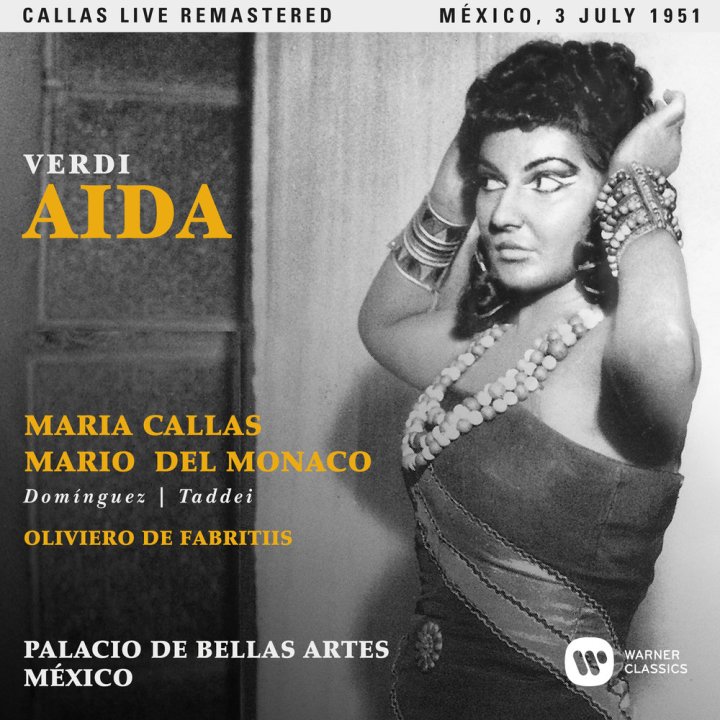
A few months ago, I reviewed this performance HERE as part of a comparative review of five different Aida recordings, so I don’t propose to go into too much detail, as you can read that review by clicking on the above link.

As for the sound, this Warner re-master is a good deal better than the old Virtuoso version I owned before, which was almost unlistenable, but, yet again, in conversation with other Callas fans on the net, I am told that there are better versions than Warner out there, not least Ars Vocalis. The problem with this is that these can be difficult to come by (only available for a short time on ebay) and the Warners are readily and cheaply available from Amazon and the like. As such, this Warner re-master is not at all bad, and easily more listenable than what I had before, the voices coming through much more clearly.

To reiterate what I said back in March, this is a performance in primary colours, which befits its surroundings. The audience is a palpable presence, and when Callas hurls out that magnificent top Eb in the Triumphal Scene, they almost tear the place apart. Subtlety, from any of the singers, is not to be expected, though Callas of course sings with her customary musical intelligence. She is in superb voice throughout, though the top C climax to O patria mia, a firm but not exactly dolce note, is not ideal. She recovers quickly to sing a seethingly dramatic Nile Scene with Giuseppe Taddei’s excellent, implacable and forceful Amonasro. My yardstick for this duet has always been the Callas/Gobbi confrontation on the studio set, but this one is almost its equal. What it lacks is Serafin’s superbly sympathetic conducting (I know of no other conductor who makes the violins weep the way he does in those repeated figures as Aida sings about how much her country costs her). In any case, no other soprano digs as deeply into the words as she does at O patria, patria, quanto mi costi. On this occasion, unusually for her, she adds some extraneous sobs, which she will eschew in both the performance under Barbirolli at Covent Garden in 1953, and for the studio recording of 1955 (the last time she sang the role).

Del Monaco tends to sing everything forte, but the voice itself is in spendid shape. The local girl, Oralia Dominguez, in her role debut, and Giuseppe Taddei both display voices in full bloom and are thoroughly involved in the drama. All in all it isn’t the most subtle of performances you will hear but it is full of thrills and undenyably exciting and I can only imagine what it would have been like in the audience.

Back in March, when I reviewed this alongside the live Barbirolli from Covent Garden, the studio recording, Karajan’s second recording of the opera and the latest one from Pappano, I ultimately came down in favour if the 1955 Callas studio recording, and, though in somewhat leaner voice, there are still moments I prefer the greater subtlety she brings to her performance there. However, by 1955 Aida was no longer in her repertoire. This one gives us a better idea of how thrilling her Aida must have been in the theatre. A character who can sometimes seem no more than a cypher, the archetype of the woman torn between love and duty, becomes a real, passionate flesh and blood woman. Even taking into consideration the distinctly lo-fi sound, this would be my favourite performance of the opera.


Callas in I Vespri Siciliani – Florence 1951

1498830100011

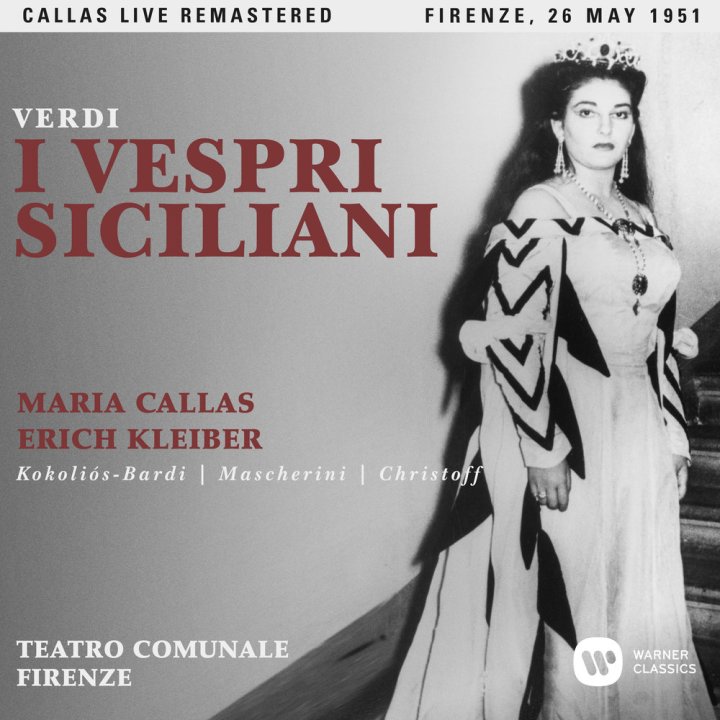
Florence and the Maggio Musicale, Fiorentino played a great part in Callas’s early career. It was at Florence’s Teatro Comunale that she debuted Norma, Violetta and Medea all of which were to become quintessential Callas roles. Other roles she sang there were Elvira in I PuritaniArmida (in which she had a spectacular success, though she never sang the role again), Lucia di Lammermoor (around the time of her first complete recording, which also used Florence resources),  and her first Elena in I Vespri Siciliani, under Erich Kleiber. That year she also undertook the role of Euridice in Haydn’s Orfeo ed Euridice (its first ever performance, given at the tiny Teatro della Pergola, also under Kleieber).

The success of this production of I Vespri Siciliani finally made Antonio Ghiringhelli, the Sovrintendete of La Scala, Milan, who had for some reason taken an instant dislike to Callas, offer her her first season at La Scala. Later that year she would open the La Scala season in the same opera, I Vespri Siciliani, though this time under the baton of Victor De Sabata. For that same season she was also engaged for Norma and the role of Costanze in Die Entführung aus dem Serail, its first ever performance at La Scala. The opera was sung in Italian, and this was to be the only Mozart opera Callas ever sang. La Scala became her artistic, and geographical, home for the next seven years, and it became a period of extrordinary artistic achievement, allowing Callas to work with directors like Luchino Visconti, Franco Zeffirelli, Margarita Wallmann, Carl Ebert and Herbert Graf; conductors like Herbert von Karajan, Leonard Bernstein, Victor De Sabata and Carlo Maria Giulini. Most of her recordings were also made under the imprimatur of La Scala too, and she is to this day indelibly associated with the theatre.

No recording exists of the La Scala I Vespri Siciliani, so we are fortunate indeed that we have this recording from Florence. Like most of her live recordings from Florence, the sound has never been good, though in 2007 Testament issued a clearer transfer from tapes made for Walter Legge, who was using them to audition Callas. This Warner issue would appear to be a clone of the Testament transfer, with the overture, which wasn’t recorded for Legge, tacked on from another source. As such, I found it no better nor worse than the Testament issue, but, though the sound distorts and overloads quite a bit, it is worth persevering for Callas is in superb voice, in a wide-ranging role that takes her from a low F# in Arrigo, ah parli a un core to a top E in the Siciliana in Act V.

Lord Harewood was in the audience for one of the rehearsals of the Florence production  and recalls precisely the effect of her entrance aria,

Act I of Vespri begins slowly; rival parties of occupying French and downtrodden Sicilians take up their positions on either side of the stage and glare at each other. The French have been boasting for some time of the privileges which belong by right to an army of occupation, when a female figure – the Sicilian Duchess Elena – is seen slowly crossing the square. Doubtless the music and the production helped to spotlight Elena, but, though Callas had not yet sung and was not even wearing her costume, one was straight away impressed by the natural dignity of her carriage, the air of quiet, innate authority which went with every movement. The French order her to sing for their entertainment, and mezza voce she starts a song, a slow cantabile melody; there is as complete control over the music as there had been over the stage. The song is a ballad, but it ends with the words “Il vostro fato è in vostra man” (Your fate is in your hand), delivered with concentrated meaning. The phrase is repeated with even more intensity, and suddenly the music becomes a cabaletta of electrifying force, the singer peals forth arpeggios and top notes and the French only wake up to the fact that they have permitted a patriotic demonstration under their very noses once it is under way. It was a completely convincing operatic moment, and Callas held the listeners in the palm of her hand to produce a tension that was almost unbearable until exhilaratingly released in the cabaletta.

Though we cannot see the impression she made, her very first words, Si canteró exude calm authority, with an undercurrent that suggests that, though she has agreed to sing, the French will not necessarily like what they hear. She starts almost mystically, gradually as Harewood describes, suffusing her tone with more pointed meaning at the words Il vostro fato è in vostro man. She then launches the cabaletta, Coraggio, su coraggio, almost sotto voce, building the tension as she starts to sing out with more force, her command of the wide leaps and coloratura staggering in its ease, the top of her voice gleaming and powerful. It is, as Lord Harewood suggests, a masterclass in how to use music to dramatic ends.

There is a good deal more to her Elena than that, though. She can be meltingly lyrical in the love music, such as in the beautiful mini aria Arrigo, ah parli a un core (though she only touches the low F# in its cadenza) and blithely suave and elegent in the Act V Siciliana, Merce, dilette amiche, notable for its light, breezy runs and an interpolated high E at its close. Few singers before or since can have so easily encompassed its vocal demands, whilst creating a character both sympathetic and imposing. There is never any doubt, from first note to last, that this Elena is an aristocrat; there are parallels here with Callas’s superb Leonora in Il Trovatore.

Of the supporting cast, Christoff, who also played the role at La Scala is a vocally resplendent and authoratative Procida, Mascherini a not particularly interesting Monforte. Giorgio Kokolios-Bardi, who sings the role of Arrigo, was a Greek tenor, whom Callas no doubt knew from her Athens Opera days. Occasionaly he phrases with a real sense of line, but just as often his singing lacks distinction. He was replaced by Eugene Conley at La Scala.

Erich Kleiber makes quite a few cuts in the sprawling score, but has a sure sense of its dramatic shape. There is a story that, at one point in rehearsals, he shouted out to Callas, “Maria, watch me,” to which she replied, “No, maestro, your eye sight is better than mine. You watch me.” Whatever the truth of this, they seem entirely at one in the performance, though I did wonder if Kleiber took the aforementioned Arrigo, ah parli a un core a tad to fast.

As I mentioned earlier in this review, I didn’t detect much improvement in the sound from the Testament issue of the performance, which in turn was quite a bit better than any heard before it was released. Nevertheless, this is essential Callas, and I wouldn’t want to be without it.


Callas in Parsifal – Rome 1950

callas_live_parsifalsq

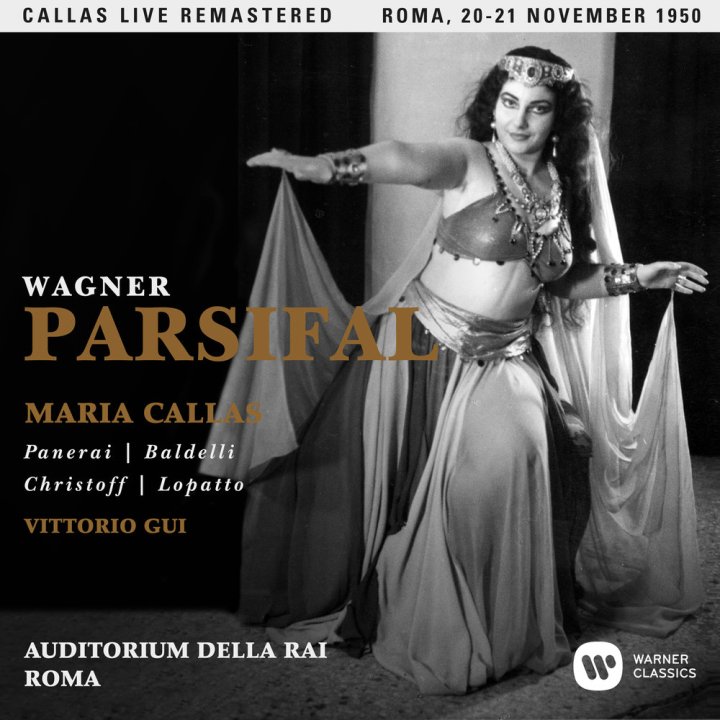
Chronologically the second recording in the Warner box set is Parsifal, which many no doubt will find an oddity. However one should remember that in the early part f her career, Callas sang quite a bit of Wagner. The next role after her Italian debut, was Isolde, which she sang in Venice, and then the following year in Genoa (with Max Lorenz as Tristan), and in Rome in 1950. She added the Walküre Brünnhilde in 1949, singing the role in Venice (when she famously deputised for an ailing Marherita Carosio in I Puritani, learning the role of Elvira whilst still singing Brünnhilde). She first sang the role of Kundry in 1949 in Rome, but this RAI concert performance heralded her farewell to Wagner, though she was supposed to sing Kundry again at La Scala in 1956 under Erich Kleiber, a project that was abandoned when the maestro died. It was rather surprisingly replaced by Fedora. Like all Italian Wagner productions in those days, the opera was sung in Italian.

Wagnerites will no doubt be put off by the language. They will no doubt be further bothered by the poor recording of the orchestra, though the singers are well caught. I can’t in all honesty say  that this Warner issue is a marked improvement on the Verona transfer I had before, and, though there are some fine singers amongst the cast (Boris Christoff, no less, as Gurnemanz, Rolando Panerai as Amfortas), I found enjoyment of much of the opera seriously compromised by the dim orchestral sound.

However, it is wonderful to have this one example of Callas in a complete Wagner role, and Act II, where Kundry has the lion’s share of her music, had me gripped. Admittedly it is strange to hear the libretto in Italian, but the language does enable Callas to sing a more sensuously silken line than we often hear in the role and her Kundry is a true siren. She uses her superb legato to display the music’s beauty, a million miles from the barking Sprechgesang we often hear.

Despite the cuts to the score, Gui displays a firm understanding of the score, and, aside from Callas, has some excellent singers at his disposal; Boris Christoff as Gurnemanz, Rolando Panerai as Amfortas and Giuseppe Modesti as Klingsor. We even get Lina Pagliughi as the First Flower Maiden. Africo Baldelli’s Parsifal is adequate, no more no less.

The dimly recorded orchestral sound is a problem, especially in Wagner, and this recording could never be considered a contender for that reason. However it is much more than a curiosity, and Callas’s superbly sung Kundry certainly deserves to be heard.

Callas in Nabucco – Naples 1949

51ek3ptyfil-_ss500

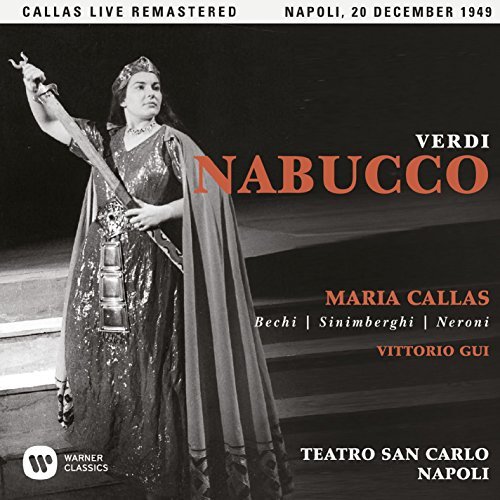
One might think Abigaille a Callas role par excellence, but in fact she only ever sang the role at this series of performance in Naples in 1949, though she often programmed Anch’io dischiuso into her concert programmes. She is on record as calling the role a voice wrecker and advised Caballé against singing it. “It would be like putting a precious Baccarat glass in a box and shaking it. It would shatter,” she told her. Caballé heeded the advice and never sang the role. Callas’s words may seem a surprising statement, given Callas’s astounding assurance and brilliant execution of the role’s difficulties, but maybe she was right. After all, Giusppina Strepponi, the role’s creator and eventually Verdi’s second wife, retired practically voiceless at the age of 31, only a couple of years after she had such a success in it. Elena Souliotis forged her career in the role and had burned herself out in less than five years.

In terms of sound, this is one of the worst extant Callas broadcasts, and no amount of tweaking by the engineers is going to disguise that. It is at its worst in the last act, but, as Abigaille has so little to do in the last act, this affects Callas the least. That said, the Warner issue is clearer than any I’d heard before, though I’m told the one on Ars Vocalis is even better, if you can get your hands on it.

It is worth persevering with the sound, though, for this is the most thrilling performance of the role of Abigaille you are ever likely to hear. The young Callas ( she was 26 at the time) is in full command of the role’s many difficulties, tossing off the coloratura with demonic force as if it were the easiest thing in the world, the top of her voice rock solid and gleaming. She even exacerbates the role’s difficulties by interpolating a free and ringing high Eb in the Act III duet with Nabucco.

However there is much more than just power and ferocity to Callas’s Abigaille, and it is full of lovely details often overlooked by other singers. Note, after her barnstorming entrance, the way she softens her tone at the words Io t’amava, with a suggestion that she loves Ismaele still. The recitative Ben io t’invenni is thrillingly powerful, but she spins out the ensuing aria Anch’io dischiuso with Bellinian grace, tracing its filigree to heavenly lengths. In the duet with Nabucco she is exultantly triumphant, but this gives way to her most meltingly moving tones in the death scene, which unfortunately loses some of its effect due to the crackly recording. All in all, Callas’s Abigaille is a considerable achievement, and it is incredible that she can sing with such power, but with such needle fine accuracy in the coloratura.

Vittorio Gui conducts a tautly dramatic performance, but something strange happens during the chorus Va, pensiero, the end of which is drowned out by a cacophony of boos. He reprises the chorus and this time the audience go berserk cheering. This is presumably what going to the opera in Italy in those days was like.

Gino Bechi, a well-known baritone at the time, is an effective Nabucco, but not in Callas’s class, and no match for such as Gobbi, who recorded the role for Decca late in his career. The rest of the cast is perfectly adequate without being outstanding, but the recording, dreadful sound or not, is a must for Callas’s superb, vocally resplendent Abigaille.