Most Callas fans have known of the existence of these live recordings for some times, and they have proliferated on many different labels over the years, with variable results. On the one hand there are companies like Divina Records and Ars Vocalis meticulously transferring these recordings in the best possible sound, and others with a more slapdash approach. Regrettably EMI generally adopted the latter approach, often just copying what were bad sources in the first place, in their attempt to cash in on the pirate market.
So how does the new Warner set measure up? I have yet to hear the whole set, but it would at least seem that they have adopted a more serious approach. Though they have not always found the best sources (there will often be more than one source tape for a single performance), they have at least done what they could with often intransigent sound. Though these transfers may ultimately not turn out to be the last word in Callas Live, at the price they are good value, and, with this release, Warner is at least making some amazing performances available to a wider audience. That said, the set should come with a warning for first timers that most of these recordings are not even up to the standard of reasonable mono studio recordings of the time. Perseverance is rewarded, though you do have to learn to listen through the sound, as it were. If you can , you will discover some truly remarkable singing.
In many ways this set gives a truer reflection of Callas’s stage career than the studio set, which includes operas she never sang on stage, as well as some that were only peripheral to her success. Of the operas represented here, twelve of them (Nabucco, Parsifal, I Vespri Siciliani, Armida, Macbeth, Alceste, La Vestale, Andrea Chenier, Anna Bolena, Ifigenia in Tauride, Il Pirata and Poliuto) were never recorded in the studio. Of these Andrea Chenier is an oddity. Callas sang the role of Maddalena only once at La Scala in 1955. She had been scheduled to sing Leonora in Il Trovatore, one of her greatest roles, but Del Monaco, who was to be the Manrico, suddenly professed himself not well enough to sing the role and offered Andrea Chenier instead! Maybe, as Callas didn’t know the role, he expected her to stand down, but, typically for her, she learned the role in a couple of days and was a very effective Maddalena. It’s very much the tenor’s opera though, and one wonders why she bothered. The production followed Visconti’s superb production of La Vestale, which opened the La Scala season, and she would go on to have spectacular successes at the house that same season in Visconti’s La Sonnambula and La Traviata and in a Zeffirelli production of Il Turco in Italia. The role of Maddalena hardly offered her the kind of challenge she was used to.
One might think Parsifal (sung in Italian as all Wagner was in Italy in those days) an oddity too, but we forget that Callas sang a good deal of Wagner in her early days. Aside from Kundry, she also sang Isolde and the Walküre Brünhilde, famously deputising for an ailing Margherita Carosio in I Puritani whilst still performing the role, a feat that dramatically changed the direction of her career. Her Kundry is much more than a curiosity, her singing sensuously beautiful as it should be, though the orchestra is muddily recorded in this 1950 broadcast.
I have a few gripes about some of the performances chosen. Rather than Covent Garden 1952, I’d have gone for the La Scala Norma of 1955, with Simionato and Del Monaco, arguably the greatest of all her recorded Normas, recorded on a night when her voice was responding to her every whim. For me it is the one where voice and art find their greatest equilibrium. It also sounds pretty good, at least in Divina Records’ transfer. For Medea I tend to turn to Florence 1953 or Dallas 1958, though it’s a close run thing, and for La Sonnambula I prefer the 1957 Cologne performance, which also enjoys better sound. The Lisbon Traviata is also a justly renowned performance, but Covent Garden from the same year is even better, and also in better sound.
I wonder about the inclusion of the Mexico Rigoletto, which is a bit of a mess of a performance, especially when the studio recording with Gobbi remains one of the greatest in the catalogue. Why not the 1957 La Scala Un Ballo in Maschera under Gavazzeni, which is a superb performance, in much better sound? On the other hand the inclusion of the Covent Garden Tosca, despite the existence of the classic De Sabata studio performance, is warranted by its fame and it being the last of her great successes.
Warner have also included BluRay discs of all the concert material, including the complete Act II of Tosca from Covent Garden, though I haven’t yet sampled these to find if they are any better than the DVD copies I already own.
Presentation is, mostly, exemplary, each opera enclosed in a hard cardboard gatefold sleeve, the cover graced with a photo from the production (though it should be noted that the photo on the cover of the Lisbon Traviata is actually from Covent Garden the same year). Inside the cover is a note on the recording itself, though Warner doesn’t go into much detail about sources or methods of transfer, the booklet that comes with each opera, restricts itself to a track listing, opera synopsis and essay on the opera in English, French, German and Italian.
The accompanying book would have benefited from a hard cover. I have a feeling its thin paper cover will become tattered in all too short a time. The book itself includes an essay on each performance and its history, and I was very pleased to see the name of the late John Steane amongst the contributors. However I regret the absence of a CD-Rom with libretti and translations, such as was offered with the Warner Studio set.
I intend to review each opera individually later in my blog, when I will discuss both sound and performance.
This live recording captures a great moment in operatic history, a moment when bel canto opera was finally taken seriously. As Montserrat Caballé once stated,
She opened a new door for us, for all the singers in the world, a door that had been closed. Behind it was sleeping not only great music but great ideas of interpretation. She has given us the chance, those who follow her, to do things that were hardly possible before her.
Sutherland, Caballé, Sills, Gencer, Scotto, even today’s DiDonato and Radvanovsky should all give thanks to Callas, for without this one production, their careers might have taken very different paths. True, Callas had by this time made people re-evaluate operas such as Lucia di Lammermoor and La Sonnambula, and she had had an enormous personal success as Rossini’s Armida in Florence in 1952, but it was La Scala’s spectacular production of this one opera, Anna Bolena which paved the way for the bel canto revival, and for the next few decades, long forgotten operas by Rossini, Donizetti and Bellini would be revived all over the world.
Such was the anticipation and excitement surrounding the production that it was covered in the international press, the UK’s Opera Magazine dedicating seven pages of its June 1957 issue to Desmond Shawe Taylor’s review.
There is no doubt that La Scala wanted to make a splash, and there is ample photographic evidence of Nicola Benois’ stunning sets, and the superb costumes. It was also the apogee of Callas’s collaboration with Visconti, though unfortunately, after the production of Gluck’s Iphigenie en Tauride, which followed they never worked together again. Visconti recalls.
It was rather beautiful, if I do say so myself. But not sublime as everyone else has said. It had atmosphere. Benois and I used only black, white and grey – like the grey of London – for the sets. The castle interiors, such as the broad staircase down which Callas made her entrance, were filled with enormous portraits. The colours of the costumes – Jane Seymour, the king’s new love, wore red, for example, and the guards scarlet and yellow – played off these sombre sets. But for Anna Bolena, you need more than sets and costumes. You need Callas. Each day I went with her to the tailor to watch over every detail of her gowns, which were in all shades and nuances of blue. Her jewels were huge. They had to be to go with everything about her – her eyes, head features, her stature. And believe me, onstage, Callas had stature.
The opera was heavily cut, so if you are looking for some ur-text version, you would have to go to studio recordings featuring Sutherland, Sills, Souliotis or Gruberova, but you would be missing out on the greatest Anna on disc, who, according to Richard Fairman in Opera on Record III, “alone, of latter-day artists, has the power to grasp the emotional crux of every line and put it across.”
First off I should mention that this Divina Records transfer is in a different world of clarity from the murky EMI version, which unfortunately is also the source for the recent Warner transfer. Available as a download, I recommend it unreservedly.
Callas’s conception of the character of Anna is absolutely right from the word go. When asked by Rescigno, who conducted her in several concert performances of the final scene, why she phrased something in a certain way, she replied simply, “Because she is a Queen,” and it is this simple statement of fact that informs and shapes her portrayal. Callas’s Anna, though she suffers like any other woman, never forgets that she is a queen. In Callas’s own words.
Now history has its Anna Bolena, which is quite different from Donizetti’s. Donizetti made her a sublime woman, a victim of circumstance, nearly a heroine. I couldn’t bother with history’s story; it really ruined my insight. I had to go by the music, by the libretto. The music itself justifies it, so the main thing is not the libretto, though I give enormous attention to the words. I try to find truth in the music.
Contemporary reviews (and photographs) attest to the nobility of Callas’s bearing, and her first entrance vocally reflects that. Her first words have a natural authority and regal reserve, which gives way to deep private melancholy in the aria Come innocente giovane, which she sings in a gentle, perfectly focused half voice, her command of line and legato as usual superb. In the cabaletta, which is addressed to the court, she uses more voice, but the voice remains supple and she never loses for a moment that sense of regal composure.
In the following scene, where she unexpectedly meets Percy for the first time, she publicly retains her composure, though the conflicting emotions running through her heart are exposed in the many asides, and she starts the ensemble Io seniti sulla mia mano in a movingly intimate tone of infinite sadness.
These first scenes have introduced us to the character of Anna, regal, melancholy, troubled and noble, but the next scene is the one that will seal her fate and the one in which Anna will show her mettle. Alternately tender, then anxious, then truly terrified with Percy (who, it has to be said, behaves like a lovesick schoolboy throughout the opera), she is found in compromising circumstances by Enrico. Overcome with emotion she faints, but wakes to plead in melting tones her innocence in the superb ensemble In quegli sguardi impresso. Deaf to her pleas, Enrico asserts that the judges will decide her fate, and this is where Callas’s Anna really rises to her full stature, bringing to bear her queenly outrage in the words Giudice ad Anna! Guidice ad Anna! Ad Anna! Guidice! before launching the final stretta with an intensity that has to be heard to be believed. Singing with all the force at her command, she caps the ensemble with a free and secure high D, held ringingly for several bars.
The first scene of Act II (or Act III in this performance) contains the magnificent duet for Anna and Giovanna, prototype for so many of those female voice duets that pepper the operas of Donizetti and Bellini. In it Giovanna confesses her guilt, is at first repulsed by Anna, and then magnanimously forgiven. No doubt Bellini had this duet in mind when he penned the first duet for Norma and Adalgisa in Norma. Simionato, superb throughout the opera, is a worthy foil here, but Callas again transcends the music. Her interjections into Giovanna’s confession run the gamut of emotions from shock and revulsion to resignation and acceptance, until, in one of the most moving moments in the opera, she forgives Giovanna in a voice quivering with emotion. Always notable is the way Callas achieves her effects without once disturbing the musical line. She recognises that in bel canto opera it is the arc of the melody which carries the emotional impact, her sense of line and rubato always instinctively right.
The final scene in the tower is one she programmed into recitals on several occasions and recorded (in its entirety) for EMI on what is arguably her most successful recital disc Mad Scenes. Many have since recorded it, so it has become relatively familiar, but one should remember that it was practically unknown at the time of this performance. In Al dolce guidami Callas’s voice takes on an unearthly, eerie beauty, the music seeming to emerge from the very depths of her soul. Though closely adhering to the score, she sounds almost as if she is extemporising on the spot, and the audience listens in rapt silence, hanging on her every note, until it erupts in a corporate outpouring of applause and cheers at its quiet close. Her delivery of the recitatives in the scene is again a lesson in how to weight and measure the proportions of each line. The final Coppia iniqua is sung with massive force, the famous rising set of trills, either ignored or sketchily sung by others, sung with both accuracy and intensity, her voice rising with power to the top Cs. This is Callas at her best.
She is ably, and brilliantly, supported by Gianandrea Gavazzeni, who gives her ample rein to play with the music in the quiet, reflective moments and urges the ensemble to absolutely thrilling heights in the big finales. Rossi-Lemeni’s Enrico is authoritative but woolly-toned and Raimondi’s Percy pleasingly Italianate without being particularly individual. Simionato, inspired to give of her very best, is the only other singer who comes close to Callas’s achievement, singing with glorious tone and dramatic involvement, but even she is less specific, more generalised, in her responses than Callas.
Anyone who has any interest in bel canto opera has to hear this set, which puts you in the stalls on one of the greatest nights in Callas’s career. At the end of his review Desmond Shawe-Taylor, asked if Anna Bolena could enter the international repertory.
With Callas, yes; without her, or some comparable soprano of whom as yet there is no sign, no. Many people think it a flaw in these old operas that they depend on the availability of great singer; but what would be the fate of the standard violin and piano concertos if there were scarcely a player who could get his fingers round the notes, let alone fill them with a lulling charm or a passionate intensity?
Well, eventually other sopranos did take it on, with varying degrees of success, and the opera is still performed occasionally today, but none of these other sopranos has quite matched the genius of Maria Callas, who was, without any doubt, not only a great singer and actress, but also one of the greatest musicians of the twentieth century.
Having discussed Callas’s live Macbeth from La Scala a few posts ago, I thought I would start reviewing some of the many live Callas performances that exist. I do not propose to go into which are the best versions of these live recordings, as it can be quite a minefield, but I would just mention that, in any cases where they are available, Divina Records will be your best bet. In September Warner will be issuing a deluxe box set of many of Callas’s live performances, and, until it is, we will not know what the sound will be like. If they just re-hash the EMI versions, which should be avoided, by the way, then the news is not quite as exciting as it might have been. It remains to be seen.
This Medea was recorded in house from a single microphone at the front of the stage, which means that voices can disappear when at the back. However I found this Ars Vocalis transfer from Cetra LPs not at all bad, and so intense is the performance that it draws you in and the ear readily adjusts.
Unbelievably, considering Callas’s total mastery of the role’s difficulties, this was the first time she ever sang Medea. So successful was her assumption that La Scala ditched plans to stage Scarlatti’s Mitridate Eupatore with her later that year and replaced it with Cherubini’s Medea. Subsequently the opera was revived for her in productions at La Scala (twice), in Venice, Rome, Dallas, London and at the ancient theatre of Epidaurus in Greece. So much associated was she with the role, that when she came to make her non singing cinematic debut, it was in the role of Medea in the movie directed by Pasolini.
Cherubini’s Medée is actually a French language opéra comique with spoken dialogue, and was much admired by Beethoven and Schubert. It premiered in Paris in 1797, the first performance in Italian translation being given in Vienna in 1802. In 1855 Franz Lachner prepared a German version, for which he wrote his own recitatives. This Lachner version was first performed, in an Italian translation by Carlo Zangarini, in 1909, and it is essentially this version which Callas sang, though each of the conductors she performed the work with (Gui, Bernstein, Santini, Serafin, Rescigno and Schippers) prepared their own version of the work, making different cuts in the score. Apart from the studio recording with Serafin, we can hear live performances from Florence with Gui, La Scala with Bernstein, Dallas and London with Rescigno and La Scala again with Schippers.
Gui’s view of the work is essentially Classical, closest in conception to Serafin, who was to conduct the studio recording, though more propulsive in the work’s many exciting climaxes. His cuts are less extensive than the other conductors’, and this is the only time we get to hear Medea’s last scene complete. However, there are times where some judicious snipping might have helped. He leaves in the orchestral bars before Medea’s final Pieta in her aria Dei tuoi figli, which makes the ending of the aria anticlimactic, and leaves the audience uncertain when to applaud. Still, I prefer this to Bernstein’s solution of cutting the final Pieta as well. All the others cut just the orchestral bars, which seems to me the better solution. There are also times, particularly in the scenes before Medea’s first entrance, where Gui’s speeds are just too slow. The overture is dramatic and exciting, but the long first scene which sets the idyllic atmosphere that Medea bursts into, drags on interminably. There are times later on too, notably the duet between Medea and Creon, where his speeds are on the slow side, but the ends of each act and the finale itself are absolutely thrilling.
Callas herself is in superb voice, the top rock solid and gleaming, managing the treacherous demands of the role (it was said that Mme Scio, its creator, died singing it) with consummate ease. She sings with a wide range of colour, though her conception of the role is a deal more subtle by the time she sings it in Dallas in 1958. No complaints about her entrance, though, which is sheer brilliance, the veiled sound of her middle voice carrying with it a threat of menace which gives way to beguilingly feminine pleading in her first aria Dei tuoi figli. The aria itself is magnificently sung, its wide leaps and high tessitura expertly managed, and it provokes a spontaneous burst of applause from the audience, unfortunately cut short when they realise the aria isn’t quite over.
In the ensuing duet with Giasone I feel she slightly overplays her hand, and this scene is not as effective as it was to become in later performances. Nor does the duet with Creon have quite the subtle play of light and shade it will have on the studio recording and in Dallas, but the final scene is mind blowingly, blazingly terrifying, her voice cutting through the orchestra with coruscating force, and there is a great deal to be gained from hearing this scene in its entirety. Gui, too, supports her brilliantly at this point. Not surprisingly the audience go wild.
Barbieri is a superb Neris, Gui making of her aria, that still, calm centre of the score, a beautiful duet between voice and cello, which Gui substitutes for the more usual bassoon. Guichandut, an Argentinian tenor I’ve never heard of before or since, is good, but no match for Vickers, who would sing the role with Callas in all productions from 1958 onwards. Gabriela Tucci is a lovely Glauce, though she is a little taxed by Gui’s slow tempo in the ensemble before Medea’s entrance and gets a slittle shireky in the upper reaches. Mario Petri is perfectly acceptable as Creon, but the great moments are all with Callas. That she is so much associated with the role (even in this hybrid version of the score, which misrepresents what Cherubini actually wrote) is hardly surprising, for no other singer, before or since has made Cherubini’s score live and breathe as she has done. There have been occasional revivals, both of the Lachner version Callas sang, and the original opera comique, but none have caught the imagination the way that Callas’s performances did, and it seems likely that the opera is again to become the museum piece it once was.
This is an expanded version of something I wrote a few years ago.
Back in 2011, John Steane, an expert on voices and an eminent critic, died at the age of 83. He had his favourites of course (who doesn’t?), but I learned a lot from JBS over the years, and I do miss his wonderfully constructive musical criticism. When he was still active at Gramophone Magazine, the editor asked him to write an article detailing the twelve singers who had changed his life, the one injunction being that one of them should still be active as a singer. For someone who knew his writing, his choices didn’t come as much of a surprise. I recently re-read this article and it got me to thinking of who mine would be. I’ve stuck to just ten, but these are all singers, who have said something personal to me, the voices that have spoken to me down the years, from when I first started to enjoy opera and lieder as an impressionable teenager, up until now.
Callas as Norma
Anyone who knows me won’t be in the least surprised by my first choice. I first heard the voice of Maria Callas on an LP reissue of her first recordings, originally issued on 78s. The Mad Scene from Bellini’s I Puritani was coupled with the Liebestod (in Italian) from Wagner’s Tristan und Isolde and excerpts from her early Cetra recordings of La Traviata and La Gioconda. This was a voice like none I’d ever heard. It was a large voice, with dazzling flexibility, a rarity in itself, but what struck me most was the way that voice penetrated your very soul. It was a voice bursting with emotion. I may not have appreciated then her amazing musicality, but I certainly recognised the work of a genius. Callas made you feel that the music sprang from her throat newly minted, that she meant every word, every note. More than that, it was the way the voice could change from the sweet innocent Elvra to the womanly Isolde, from the passion of the courtesan Violetta, to the almost primeval sounds of her Gioconda. It hardly seems believable now, given that Callas’s recordings have formed the backbone of EMI’s (now Warner’s) Italian opera catalogue for years, but most of them were unavailable at the time. I slowly built up my collection by scouring second hand shops and pouncing on any imported issues that made their way into specialist record shops. As I slowly built up my collection, it was Callas who introduced me to the world of Italian opera. Nowadays I can be aware of some of the vocal failings, especially in the later recordings, but nobody has ever come within a mile of her fantastic musicality, and up until at least the mid 1950s, the voice was an amazingly responsive instrument. For evidence of her musical skills, no better example could exist than her Leonora in Il Trovatore, full of aristocratic phrasing and almost Mozartian delicacy. Though a little strained by some of the high lying passages on the Karajan recording of 1956, she still phrases like a master violinist, her sense of line and rubato unparalleled, the trills and cadenzas beautifully bound into the musical fabric of the whole.
She was also an amazing vocal actor, and though she has a voice that is instantly recognisable, she continually changes the weight of that voice to suit the character she is portraying. The woman who sings Lady Macbeth and Medea with such demonic force is hardly recognisable from the one who sings such a virginal and innocent Gilda, and though she may use the same lightness of touch for Amina in La Sonnambula as she does for, say, Rosina in Il Barbiere di Siviglia, they are still two completely different voice characters, and she can make us see that happiness is quite a different thing for Amina from what it is for Rosina.
Callas is still my touchstone for all the roles she sang (I can almost hear her in my mind’s ear in some of the ones she didn’t), and, though I recognise that some have made prettier sounds, there will always be a moment, maybe a single word, where Callas’s unique colouration will suddenly do something to nail the character as no other singer does. I regret that Walter Legge, excellent producer though he was, did not have the foresight to record her in much of the repertoire for which she was famous, and though I treasure all her studio recordings, it is a great pity that she didn’t get to record some of her greatest stage creations, like Lady Macbeth, Anna Bolena, Armida, Imogene in Il Pirata, and perhaps even Alceste and Ifigenia. Legge wouldn’t even touch Medea and Callas only got to record the opera by exercising a get out in her contract with EMI, though EMI did eventually release the recording, which had been made for Ricordi. I might also regret that Legge was so chary of stereo and that Callas was not accorded the kind of good stereo sound Tebaldi was accorded in her early 1950s recordings.
There is no doubt that Callas’s glamour and tempestuous personal life has done much to maintain her popularity, but she has been dead for 40 years now, the dust has settled, and it is surely her musical gifts for which she should be remembered; for Callas was not only a great singer, she was also one of the greatest musicians of the twentieth century. The great conductor Victor De Sabata once said to Walter Legge, her recording producer, “If the public could understand, as we do, how deeply and utterly musical Callas is, they would be stunned.” I have known her recordings now for the best part of fifty years and I continue to be newly stunned each time I listen.
Schwarzkopf as the Marschallin
My next choice might seem a little more surprising, a singer as far away from Callas as it would seem possible to be, though I often think of them as flip sides of the same coin. Elisabeth Schwarzkopf is the singer who introduced me to Mozart, Richard Strauss and lieder. Her recordings of the Marschallin in Der Rosenkavalier, and of the Vier letzte Lieder were my first exposure to these works, and have remained in my collection ever since. Hers was a voice shot through with laughter, and she also made many great recordings of lighter works. Her album of Operetta Arias can lighten the spirits like no other. She and Callas admired each other enormously (their repertoires were very different of course), and though they only made one recording together (Puccini’s Turandot), they met often, as Schwarzkopf was the wife of Callas’s record producer, Walter Legge, on one occasion Schwarzkopf giving Callas an impromptu singing lesson in the middle of the restaurant at Biffi Scala. Schwarzkopf was a good person to ask. She rarely put a foot wrong, and it is this attention to detail, that some find gets in the way of the music. There can be a lack of spontaneity, it is true, and, where Callas is able to conceal the huge amount of work that goes into each of her musical recreations, Schwarzkopf can occasionally be accused of artifice. Her Liu in the above mentioned Turandot may not sound for one moment like a slave girl, but I love her singing of the role, so beautiful and so richly nuanced.
Still, when it comes to opera, I treasure her most in Mozart (an incomparable Donna Elvira, Countess and Fiordiligi) and Strauss (an unbeatable Marschallin and Countess Madeleine) and (in recital) in Agathe’s arias from Weber’s Der Freischütz, though I also prize her delightfully high spirited Alice in Karajan’s recording of Verdi’s Falstaff. In Lieder some find her singing too detailed, and she is often accused of being mannered. Well, I’d aver that all great singers have their mannerisms. It’s one of the things that makes them instantly recognisable, and I prefer to think of them as idiosyncrasies. Warner recently reissued all her EMI recital records in their original programmes, and though it means each disc is rather short for CD, it shows the care that would go into creating these recitals, the same care that would go into her programming of material for her recital programmes. Each of them makes eminently satisfying listening.
I remember many years ago attending one of Schwarzkopf’s Master Classes at the Wigmore Hall with my singing teacher, the late Ian Adam, who adored her incidentally. She was a very hard task master, rarely letting a student sing more than a few bars before stopping them, and watching the classes was a peculiarly frustrating experience. It must have been even more so for the students. But that was the way she studied and rehearsed herself. She was actually severely self critical, as is shown in the book Elisabeth Schwarzkopf: A Career on Record, in which she listens to some of her recorded performances with John Steane. On many occasions she dismisses performances of her own that Steane admires, pointing out faults that none of us can hear. Though Schwarzkopf herself had refrained from singing at the classes, at one point she did sing out for just a few bars, in an attempt to show the student how to bring moonlight into the sound of their voice. Well, as Ian said, to me “You can’t teach that. Either you can do it, or you can’t.”
Janet Baker as Vitellia
Unfortunately I never got to hear Callas or Schwarzkopf live, but I did hear Dame Janet Baker quite a few times, though only in concert, never on the operatic stage, where she was equally at home. The first time was in a performance of Mahler’s Das Lied von der Erde at the Royal Festival Hall, whilst I was at college, a performance that has remained in my memory ever since. In a very different repertoire, she had an almost Callas like intensity and an ability to sing pianissimi that somehow reached the furthest recesses of the hall. Dame Janet introduced me to the music of Monteverdi and Handel, Bach and of course Elgar’s Sea Pictures (memorably coupled to Jacqueline Du Pre’s seminal recording of the Cello Concerto). She was also a great Berlioz singer. I actually prefer her Barbirolli recording of Les Nuits d’Ete (and a live one under Giulini) to Crespin’s famous one, and I doubt her recording of the closing scenes of Les Troyens has ever been bettered.
She recorded extensively for EMI, then Philips and, towards the end of her career, for such independents as Hyperion, Collins Classics and Virgin Classics, singing a vast range of repertoire that took her from the music of Monteverdi and Cavalli to Respighi, Britten and even Schoenberg, taking in Donizetti, Verdi, Schubert, Schumann, Liszt, Wagner and Mahler along the way. Some of her greatest recordings are those she made with Sir John Barbirolli, with whom she had a great rapport, The Dream of Gerontius, Sea Pictures, Les Nuits d’Eté, Shéhérazade and, maybe the greatest of them all, the orchestral Lieder of Mahler, particularly her wonderfully sensitive and inward performance of Ich bin der Welt abhanden gekommen. She was also world renowned for her singing of the lower part in Mahler’s Das Lied von der Erde, which I twice heard her sing live. She recorded it in the studio with Haitink, and there are at least three live recordings knocking around. Best of all of these is a Bavarian Radio broadcast under Rafael Kubelik, in which her singing of the final song, has a quiet intensity , which is almost too much to bear. So palpable is her emotional commitment to the music that I save this performance for rare occasions. Like Callas’s shattering performance of Violetta at Covent Garden in 1958, it reduces me to a quivering wreck.
Domingo as Otello
Placido Domingo’s was a voice I first heard on record in an early recital of arias, but I will never forget the thrill of first hearing him live at the Royal Opera House, in La Fanciulla del West, if memory serves me rightly. Domingo certainly had presence and a glamorous voice to go with it. A real singing actor, he seemed to improve as a performer every time I saw him. Incredibly, he is still singing today, though he has moved over to the baritone repertoire recently, taking on such roles as Simon Boccanegra and Rigoletto. True, it is remarkable that a singer, and a tenor at that, can continue to sing into his seventies, but, great stage performer though he is, I am not sure that his excursions into the baritone repertoire have been entirely successful, and I prefer to remember him in the great days of his tenor glory.
In his early days, beautiful though his singing was, he could be accused of a somewhat generalised attitude to characterisation, but, over the years, he became more and more of a committed performer. Some of his roles he recorded several times, and one can hear how he progressed. The voice always had a dark, burnished quality, and the very top of the voice was never as easy as some, but, paradoxically, it sounds freer to me in his middle period than when he was young. Still, he wasn’t ashamed to admit that his top Cs were hard won, and I actually applauded his decision to omit the unwritten ones, in Il Trovatore at Covent Garden, rather than doing what so many do and attempting to trick the audience by transposing Di quella pira down. His Otello is a towering achievement, and, for many years, there was no one around who could challenge his hegemony in the role. He made three recordings of the role at different stages of his career, and there are quite a lot of visual documents of his portrayal, including the controversial Zeffirelli film.
Wunderlich as Tamino
Free, ringing top Cs were never a problem for Fritz Wunderlich, who had a voice of overwhelming heady beauty. He died just before his 36th birthday, at a time when his interpretative artistry would have been reaching its maturity, his final concert in Edinburgh being testament to that. However if you ever want to hear someone just revelling in the sheer joy of singing, then listen to his DG performance of Lara’s Granada. Admittedly it is in German and the splashy arrangement is pretty vulgar, but he sings with a freedom and passion that would be the envy of any Latin tenor. For me, Wunderlich’s singing always conveys a sheer joy in the act of singing itself. Though he died young, he made many recordings, and it is this sense of joy that I most prize.
Interpretively, his recordings of Lieder don’t probe as deeply as some no doubt, but he was still young when he made them and unfortunately hadn’t reached his interpretive maturity before he died. For instance, the Dichteriebe he sings at his final concert in Edinburgh is a great deal more interesting than the recording he made for DG a year or so earlier. He did leave us arguably the greatest Tamino on disc, on Böhm’s Die Zauberflöte, which for once has a truly heroic dimension, a superb rendition of the tenor songs in Mahler’s Das Lied von der Erde (both in the studio under Klemperer and live under Krips), and of the tenor arias in Karajan’s recording of Die Schöpfung. Most of his Italian and French repertoire was sung in German, but still has a golden, Italianate warmth, and we do have at least one recording of him singing Verdi in Italian, a live performance of La Traviata from Munich with the young Teresa Stratas as Violetta. His early death was a tragedy beyond reckoning, as one wonders what he might have gone on to achieve. His Steersman on the Konwitschny recording of Der fliegende Holländer gives notice that he could have gone on to sing Lohengrin at least, and, in Verdi, what a wonderful Duke, Don Carlo or Riccardo he would have made.
Vickers as Giasone with Callas as Medea
Staying with tenors for the moment, I turn to Jon Vickers, who had a voice and manner of startling individuality, and an intensity of performance that could almost be too painful to listen to. Though well known for his Tristan, his Siegmund, his Florestan and his Grimes, he first came to prominence singing in Italian opera. In 1958 he sang Giasone to Callas’s Medea in Dallas, and then also in London, at La Scala and at the ancient Greek theatre at Epidaurus. He had enormous respect for Callas and named her as one of the two people to have the most profound effect on opera in the post World War II period (the other being Wieland Wagner). He was also Don Carlo in Covent Garden’s legendary Visconti production of Don Carlo, conducted by Giulini, which also had Gobbi and Christoff in the cast. With a voice of such power and penetration he naturally progressed to Wagner, singing towering performances of Tristan and Siegmund. His Otello suffered like no other and his Peter Grimes, mercifully preserved on film, is one of the greatest creations of all time. Like all the singers in this survey, his voice is instantly recognisable, his style somewhat idiosyncratic, but intensely musical. There is always something monumental about a Vickers performance. On disc, I find his Aeneas (in Berlioz’s Les Troyens), his Florestan, his Tristan and his Otello unequalled by any who have followed, and his Grimes, so totally different from Pears, utterly convincing.
Teyte as Melisande
Next on my list are two more sopranos, one from well before my time and one who died only recently. I first heard the voice of Maggie Teyte in a performance of Duparc’s Chanson Triste and was totally captivated. Her performance of the song remains my yardstick to this day. Born in 1888, she was cast in the role of Mélisande by Debussy himself, replacing the creator of the role, Mary Garden. She prepared the role by studying with Debussy, and is the only singer ever to be accompanied in public by the composer (in a performance of his song Beau soir). She married twice and went into semi-retirement after her second marriage in 1921. Like her first marriage, this ended in divorce and Teyte had some difficulty reviving her career afterwards. For some time she appeared in music hall and variety, which explains much of the lighter repertoire she sang and recorded. However the recordings of Debussy songs she made with Alfred Cortot in 1936 attracted a lot of attention, helping her to gain a reputation as one of the leading interpreters of French song, The voice remained pure, without a hint of excessive vibrato even into her sixties, and she made her final concert appearance at the Royal Festival Hall at the age of 68.
I would recommend any and all of her recordings of French song, as well as her wondrous rendering of ‘Tu n’es pas beau’ from La Périchole, which shows off to advantage her gloriously individual chest tones, and a twinkle in the eye. A private recording of her singing bits of Salome (to a piano accompaniment) show that she might even have been an ideal Salome, the silvery purity of the voice being close to Strauss’s ideal, and it is a great pity that plans for her to sing the role at Covent Garden never came to fruition.
De Los Angeles as Manon
Truth to tell, I hadn’t much liked Victoria De Los Angeleswhen I first heard her (as a rather insecure and out of sorts Hoffmann Antonia) and I think it was probably her record of the Canteloube Chants d’Auvergne that first led me to investigate further. She had a particularly wide song repertoire, which took in early and late Spanish composers, as well as Lieder by Schubert, Schumann and Brahms and French song. One of her greatest quality was her charm and that quality the Italians refer to as morbidezza, meaning that, on the operatic stage, she was most at home playing gentler heroines. That Antonia was misleading and later I discovered she could be the perfect Marguerite (Faust), Butterfly, Rosina and Mimi displaying a golden voice allied to a winning personality. Best of all perhaps is her Manon in Massenet’s opera. Where some make the character too knowing, De Los Angeles emphasises the childlike innocence and delight in pleasure that is at the heart of Manon’s downfall. She was also a superb Desdemona (in a live broadcast from the Met) and it’s a great pity she never got to record the role commercially.
Her Carmen on the Beecham recording has been much praised, but here I find her less convincing, though, as usual, her singing is unfailingly musical. I just can’t imagine De Los Angeles’s Carmen pulling a knife on a fellow worker. She is altogether far too ladylike. She is on record as saying that she based her Carmen on the Andalusian gypsies, who were known for their charm, a quality De Los Angeles had in abundance, but my Carmen is dangereuse est belle (Micaela’s description) and De Los Angeles, charming and adorable as she was, never sounds dangerous to me.
Gobbi as Scarpia with Callas as Tosca
So far the list is rather top heavy with high voices, so I am happy to include as my next choice a baritone, colleague of Callas’s and one who encompassed many of her qualities. Like Callas, Tito Gobbi had an immediately recognisable voice and always sang with a wealth of colour and understanding. I can still remember the shattering effect of my first listen through Rigoletto, actually the first ever time I’d heard the opera. His cries of “Gilda” at the end of Act 2 after she has been abducted went straight to the heart. He may not have had the most beautiful baritone voice in the world, but, like Callas’s, it had a myriad of different colours. And like her, though always recognizably himself, he was always able to change his timbre to suit the role he was playing.
We are fortunate indeed that, though they sang rarely on stage together (most famously in Zeffirelli’s renowned Covent Garden production of Tosca), they made many recordings together; two recordings of Tosca, Lucia di Lammermoor, Aida, Un Ballo in Maschera and Il Barbiere di Siviglia, their collaboration possibly reaching its apogee in Rigoletto, with its long series of duets for father and daughter. Again, like Callas, he could put more meaning into a line of recitative, even into a word, than bars of singing by less dramatically attuned singers. The way he utters the single word Amelia in Verdi’s Un Ballo in Maschera, when he discovers the identity of Riccardo’s midnight tryst, resonates in my mind’s ear even now. Some would aver that he didn’t have a true Verdi baritone voice, but, as I think now of the parade of Verdi roles he sang – Rigoletto, Amonasro, Posa, Simon Boccanegra, Renato, Iago, Germont, Falstaff, Nabucco – they all emerge as distinct and different characters. Of how many other singers can you say that? Scarpia in Puccini’s Tosca might be his most famous creation (a repulsively reptilian character, who is both a gentleman and a thug) but it is in Verdi that his musical skill is most evident. What a tragedy that Walter Legge never had the foresight to record Macbeth with him and Callas as the murderous couple.
David Daniels as Caesar with Natalie Dessay as Cleopatra
Looking back at this list of singers, I realise that they all have certain things in common; the individuality of their voices (you only have to hear a few notes to know who it is) and their ability to make the listener see as well as hear. This is no less true of countertenor, David Daniels, a singer still very much before the public today. Some years ago, I was more or less dragged to a concert of Vivaldi sung by Daniels and accompanied by Europa Galante conducted by Fabio Biondi. Till then, apart from the Four Seasons and the Gloria, I had had little enthusiasm for Vivaldi’s music and had a total antipathy for countertenors in general. Daniels changed all that. Here was a voice of surpassing beauty, coupled to a marvellously natural personality. It was a total conversion and Daniels has now opened the door on a whole world of music I had previously ignored, which shows it is never too late to expand one’s horizons. I have hardly missed any of his appearances in this country, and, like all the singers on this list, he has a gift for communication vouchsafed to just a few.
He has also expanded the repertoire for countertenors, embracing American song, Lieder, French song and even Broadway. Sometimes the experiments don’t quite work. For instance, though his singing is, as ever, unfailingly musical and filled with meaning, the countertenor voice, even one as mellifluous and beautiful as his, just doesn’t have the range of colour required for a piece like Les Nuits d’Eté, and though I appreciate and enjoy his excursions into nineteenth century and modern repertoire, it is for the music of the baroque, and especially Handel, that I turn to him. In his early days his coloratura singing was sensational, but I treasure most his deeply felt singing of some of Handel’s slower arias. In an aria like Scherza infida he holds the line beautifully and firmly, but evinces a pain that is almost palpable. No other singer I have come across quite makes the same effect in this music. I am guessing that he will be coming towards the end of his career now, and I count myself fortunate indeed to have been able to experience his singing live whilst he was in his prime. I saw him so many times, that I swear he actually spotted me in the audience on several occasions, and acknowledged my applause with a nod in my direction.
Of course, apart from these singers, there have been many memorable performances. I recall the excitement of the first time I heard a really world class singer, Helga Dernesch in Fidelio and as the Marschallin (still the best I’ve seen live on stage); Agnes Baltsa’s Carmen with the no less memorable Don Jose of Jose Carreras; ditto Baltsa’s thrilling Eboli; the superb Dejanira of Joyce Di Donato;Angela Gheorgiu’s first Violetta, and Ileana Cotrubas‘s Violetta too; Roberto Alagna’s first Romeo (in the Gounod opera); Kiri Te Kanawa’s exquisitely, if placidly, sung Fiordiligi (with Baltsa again, as an adorably funny Dorabella); Renee Fleming in Previn’s A Streetcar Named Desire; Margaret Price and Lucia Popp in concert. I also regret never seeing live the wonderful Lorraine Hunt Lieberson, who was taken from us far too early and at the height of her artistic maturity, and whom I first remember in a Proms concert on TV, at which she was the radiant soloist in a performance of Elgar’s The Music Makers. These too will always stay in the memory, but I send my gratitude to the ten on my original list, for through them I have discovered a whole world of great music. They may not necessarily be the ten greatest singers of all time but they have enriched and enlightened and can truly be called singers who have changed my life.
As I reviewed this performance only recently, I thought I would just re-post with a word or two about the sound of the Warner edition.
Thankfully, Warner seem not to have used the awful EMI version, itself a clone of another release. EMI failed to notice that the version they used had spliced into the Act I finale a few bars of a performance with Gencer, done to cover what was thought a loss of tranmission. This new version, and the Myto detailed below, has found the missing bars and included them, though the sound here is more muffled than elsewhere in the ensemble. Comparing Warner to Myto, I eventually came down in favour of Warner, which sounds a little cleaner to me, though there is not a great deal in it. I haven’t heard the Ars Vocalis version, so can’t comment on it. The main thing to take into account is that both Warner and Myto are a substantial improvement on EMI, which was practically unlistenable.
*****
One of the yawning gaps in EMI’s catalogue of Callas recordings has always been a studio recording of Macbeth with Callas and Gobbi as the murderous pair. With Di Stefano as Macduff and Zaccaria as Banquo and Serafin, or even Karajan, at the helm, EMI would no doubt have had a winner, but Walter Legge deemed the opera not popular enough and so Callas got to record Mimi, Manon and Nedda instead, roles which she was never to sing on stage, but no doubt seemed more commercially viable. It is also easy to forget that back in the 1950s, Macbeth didn’t have the same high regard it has now. Ultimately, all Callas got to record of the role were Lady Macbeth’s three great solos for her Verdi Heroines recital of 1958. Nevertheless, so successful are her interpretations that they have become the standard for all Lady Macbeths who followed, and Callas has become indelibly associated with the role, though in fact these La Scala performances were the only occasion she ever sang it.
This performance, which opened the 1952 La Scala season, was certainly a starry affair. It was directed by Carl Ebert, with designs by Nicola Benois, and conducted by Victor De Sabata, and though the rest of the cast were hardly in Callas’s class (who was?) they are all a good deal better than adequate.
As can be heard in Myto’s most recent transfer of the performance, much clearer than any I have heard before (and a good deal better than EMI’s shoddy presentation), De Sabata has a terrific grip on the score, his conception symphonically conceived, and the La Scala orchestra play brilliantly for him, his tempi, with one glaring exception, which I will come to shortly, judiciously chosen. We are vouchsafed all of the ballet music, which is brilliantly played.
Mascherini’s Macbeth has been criticised for being a relatively muted presence, and he’s certainly no Gobbi, but I think his performance works in context. Macbeth, after all, is a weak character. It is Lady Macbeth who drives the narrative, both in Shakespeare and in Verdi. Sure, Mascherini is not particularly imaginative in his phrasing, but he makes an excellent foil to Callas in the duets, which she dominates, as she should.
The opera belongs to the protagonists and both tenor and bass roles are relatively minor. Whilst Penno as Macduff and Tajo as Banquo are not in the first rank, neither of them is bad, and both are much better than adequate.
But, certainly in this performance, the opera belongs to Lady Macbeth and Callas is astonishing. So complete is her mastery of the role’s complexities, that one would have thought that she had been singing it for years, whereas this was in fact the first time she was singing it in public. She doesn’t get off to the greatest of starts, with her peculiar voicing of the spoken letter before her first recitative, but once she launches into Ambizioso spirto, she never misses a trick. Her voice was in prime condition at the time, securely gleaming on high, dark and richly powerful down below. No other Lady Macbeth has so acutely observed Verdi’s meticulous markings; no other Lady Macbeth has sung with such power and force, and yet with such a range of colour and expression; no other Lady Macbeth has executed the fiendishly difficult fioriture with such uncanny accuracy. This is the stuff of genius, no doubt about it, and anyone who has ever doubted Callas’s pre-eminence in the field should listen to the performance, preferably with score in hand.
As usual with Callas, she is apt to make her mark in a line, a word of recitative, as in one of the big set pieces, and her portrayal, full of incidental details, is all of a piece. Amongst the many revelations, I would mention the way she sings Vergogna, Signor after Macbeth has broken down before the ghost of Banquo in the banquet scene. The peculiar inflection she gives it, somehow suggests the deep love that exists between the couple, for without it, how does one explain why Macbeth is so much in thrall to his wife.
When Callas came to record Lady Macbeth’s three big scenes for her Verdi Heroines recital disc, her voice had lost some of the power and security on top, and consequently, good though they are, both Vieni t’affretta and La luce langue reach their fullest expression in the live La Scala version. However I do have a problem with the very fast speed De Sabata adopts for the Sleepwalking Scene. At so fast a tempo, Callas is less able to make her points, and it has always seemed to me something of a miscalculation. By the end of the scene, he has slowed down a bit, so maybe he thought so too, and we don’t know what happened in subsequent performances.
By contrast, the version on the recital disc is one of the greatest examples on disc of Callas’s deep psychological penetration into the psyche of a character. In interview she retells how she had felt in pretty good voice on the day of the recording, and emerged from the studio feeling quite pleased with herself. However , she was a little taken aback when Legge said she would have to do it again. Once she listened to the playback, though, she knew exactly what he meant. She had done a great piece of singing, but had not done her job as an interpreter. She then goes into a detailed analysis of the scene, of Lady Macbeth’s fluctuating thoughts, her fractured mental state, and how this should be expressed through the voice. Though much of Callas’s art was instinctive, there was evidently much also that was intellectual.
Callas only sang Lady Macbeth for one series of performances, at La Scala in 1952, but her achievement in the role has never been bettered, and it is a great shame that the role did not remain part of her active repertoire.
The reason I ended up with two recordings of Verdi’s early, unsuccessful comedy, is that one day I was browsing in Gramex in Lower Marsh, Waterloo – a haven for those of us still attached to CDs. Amongst the stash of CDs I was buying that day was the RCA recording of Verdi’s I Vespri Siciliani, which led Roger, the owner to ask me if I was a Verdi fan. I answered that indeed I was, whereupon Roger thrust the Simonetto recording of Un Giorno di Regno at me, telling me I must have it. I said that I already had the Philips recording, but he insisted that I took it away and wouldn’t accept any payment.
Verdi’s second opera was not a success at its premiere at La Scala, though five years later (as Il Finto Stanislao) it was something of a triumph at the Teatro San Benedetto in Venice, a theatre with a strong tradition in comedy and opera buffa.
Whilst not according it the same merit as Donizetti’s great comedy L’Elisir d’Amore, which was clearly Verdi’s model, it is brim full of lively tunes and very enjoyable in its own right. It may never become a repertory opera, but it is definitely worth the occasional revival.
The Philips recording is of course in excellent 1970s stereo sound, has the Ambrosian Singers and the Royal Philharmonic Orchestra in splendid form under the experienced hand of Lamberto Gardelli, and a starry cast, and I must say I was very happy with it, but, after hearing the Simonetto, it now all sounds a bit dull and heavy, and the women at least are, I think, miscast.
Cossotto, a dramatic mezzo, doesn’t sound in the least bit comfortable with the light soprano role of the Marchesa. She tries to lighten her tone and style, but she doesn’t have the charm and clear voiced mastery of Lina Pagliughi, who is pure delight on the Cetra. Jessye Norman, who sings the mezzo role of Giovanna, also sounds a mite too heavy, and, though a soprano, her voice too sounds heavier than Laura Cozzi on the Cetra. The two buffo roles, sung here by Vincenzo Sardinero and Wladimiro Ganzarolli are also a trifle heavy handed when set beside the experienced buffos Sesto Bruscantini and Christiano Dalamangas on the Cetra. Renato Capecchi also sounds more naturally right as Belfiore than Ingvar Wixell.
The one role I prefer on the Philips is that of Edoardo, sung by the young Jose Carreras with honeyed tone and youthful charm, not that he totally eclipses Juan Oncina on the Cetra, but his tone is definitely more ingratiating.
Simonetto conducts with a sure sense of Italian opera buffa style, and the whole set comes to life in a way that the Philips doesn’t quite. The Cetra is a totally joyful experience , fizzing and popping like a good prosecco. His orchestra and chorus, the Orchestra Lirica e Coro di Milano della RAI, may not be as accomplished as their British counterparts, but they play with enthusiasm and dash at Simonetto’s more jaunty tempi.
Admittedly there are cuts, and the Cetra plays about 10 minutes shorter than the Gardelli. Well, this isn’t Falstaff, and losing a few notes doesn’t bother me that much, so I would have no hesitation in granting the palm to the 1951 Simonetto recording, despite ancient sound.
Don Carlo, or more properly Don Carlos, to use its French title, that great, sprawling, flawed masterpiece, is one of my favourite Verdi operas, maybe even my favourite. Admittedly it doesn’t have the coherence of Aida or Otello, or even Rigoletto, but enshrined in it is some of Verdi’s greatest music, and I believe that Act IV, Scene i is one of the greatest scenes in all Verdi. Starting with that mournful cello introduction to Philip’s despairing Elle ne m’aime pas, through the magnificent duet (more a duel )between the two bass voices of Philip and the Grand Inquisitor, on to the superb quartet for Philip, Rodrigue, Elisabeth and Eboli, to Eboli’s thrilling O don fatal, Verdi doesn’t put a foot wrong. As pure theatre and drama, it can hardly be bettered. It also enjoys some of the most complex characterisation in all Verdi. The tenor Carlos, is really an anti-hero, a rather pathetic character, desperate for the recognition of a cold, distant father, who wishes his son were more like his friend and confidant Rodrigue, the only really noble character in the opera. Philippe is also a weak character. He strives to be a strong leader, but mistakes intransigence for strength, and, ultimately, is putty in the hands of the church. He does not think for one moment about the effect of his decision to marry Elisabeth himself instead of Carlos, an act of pure selfishness. Elisabeth, disappointed in love, treated appallingly by Philippe, is both regal and compassionate, and Eboli is flighty, hot tempered, and ultimately remorseful.
Over the years I’ve seen the opera a few times and acquired three recordings, though what I actually have is recordings of three different operas. Giulini in 1971 goes for the five act version, in Italian translation, which restored the Fontainebleau Act, and puts Carlo’s Io la vidi back where it belongs in the Fontainebleau act; Karajan in 1979 chooses Verdi’s four Act version (also in Italian, in which Verdi deleted the whole of the first act, transferring Carlo’s Io la vidi to the Monastery Scene, which now becomes Act I, Scene i; Abbado in 1983 conducts the original five act version in French, and adds an appendix of music cut from the first performance, excised from the 1882-83 four act version, or recomposed in that revision. Yes, I know. Complicated, isn’t it?
Don Carlo(s) is a long opera, and I listened to my three recordings over a period of several days, starting with the Giulini, going on to Karajan and finishing with Abbado.
The Giulini has acquired something of a classic status, and though probably not quite on the level as the same conductor’s Don Giovanni, it does a great deal to justify its high regard. First of all, Giulini has just about the best cast that could have been assembled at the time. That said, Domingo is not yet the artist he was to become. His singing is never less than musical, and he sings with commitment, but there is something slightly generalised about his performance, with nothing much to distinguish Carlo from any other Verdi tenor hero. Milnes sings a noble, forthright Rodrigo, my favourite of the three on these recordings. Raimondi is a little light voiced as Fillipo, a role that really cries out for the dark, buttery tones of a Pinza or a Christoff, but he is suitably tortured and his voice contrasts well with the black voiced Inquisitor of Giovanni Foiani.
Caballé’s voice was at its most beautiful at this time, and, though she too can be a little generalised, she is never less than involved and involving. Her soft singing, as you might expect, is exquisite.
Verrett is, quite simply, magnificent, and without doubt one of the best Ebolis on disc. Recorded before she started moving up to the soprano repertoire, her voice is in thrillingly exciting shape.
Giulini had of course conducted the opera a few years previously at Covent Garden, in a production by Visconti which went a long way to restoring the opera to its rightful place in the Verdi canon, It starred Jon Vickers, Tito Gobbi, Boris Christoff, Gré Brouwenstijn and Fedora Barbieri, and it served Covent Garden very well over the years. I even saw Christoff myself in the opera in one of his last operatic appearances. Giulini’s credentials as a Verdian are never in doubt. His tempi can be on the spacious side, but he has a sure sense of the work’s structure. The 1971 analogue recording is wonderfully natural, the voices beautifully caught, and still sounds good on CD.
The first thing that strikes me, and annoys me, about the Karajan recording is the sound. In an acoustic that is impossibly wide ranging, the voices, lighter and more lyrical than was often the case, are so far recessed that it is often difficult to hear them. One of the worst instances of this is the beginning of the scene in the Queen’s Garden at night. With the sound turned up to a comfortable level for Karajan’s beautiful evocation of a heady summer night, Carreras is all but inaudible at his first entry. I turn up the sound in order to hear him better, only to be blasted out of my seat at the next orchestral tutti. This is but one example, but it happens all the time, and is, in my opinion, a serious blot on what is actually a rather good performance.
Karajan, who also had a great deal of experience in this opera, is also spacious, but the performance still bristles with drama. I just wish he didn’t constantly push the orchestra forward at the expense of the singers, who are often submerged in the orchestral textures.
I liked Carreras’s Carlo very much. His legato isn’t as good as Domingo’s, but he is better at suggesting the character’s unhinged nature. Cappuccilli is good, without being distinctive. He has a good legato, and superb breath control, but he is a little anonymous, and this performance is not generally at the same high standard of his Boccanegra and Macbeth for Abbado. Ghiaurov is Filippo, but his voice was already showing signs of wear by this time, and I find him less interesting than Raimondi in the same role, who is now the Inquisitor, and a mite too light of voice for that role.
This was Freni’s first excursion into heavier repertoire, and she makes a very appealing Elisabeth. As always her singing is unfailingly musical, but lacks the grandeur Caballé brings to Tu che le vanita. Baltsa is just as exciting as Verrett, her voice, at this time in her career, seamless from top to bottom. I saw her in the role at Covent Garden a few years after this recording was made and she brought the house down, generating the kind of excitement that is all too rare in the opera house today. I really couldn’t choose between her and Verrett. Both are fantastic.
And so on to Abbado, which I find operates on an altogether lower voltage.
Having taken the decision to perform the opera in French, it would seem somewhat perverse to use singers who have little or no (Domingo excepted) proficiency in the language, and it is Domingo who is the standout performance in this set. Paradoxically, ten years after making the Giulini recording, the top of his voice sounds much more free, and he is much more inside the character than he was before, a highly strung and nervous portrayal.
Nucci is a four-square, dry old stick of a Rodrigue. Raimondi is back to playing Philippe, but his voice has lost some of its bloom, and Ghiaurov is sounding increasingly grey voiced as the Inquisitor.
Ricciarelli I have equivocal feelings about. She is the definitely the most affecting of the three Elisabeths, but also the most fallible vocally. However it’s a performance I’ve come to admire more over the years. Valentini-Terrani is much too light voiced for Eboli, and O don fatal taxes her to, and beyond, her limits. She is definitely no match for either Verrett or Baltsa.
Though it is the newest, and digitally recorded, the sound is unaccountably murky, nowhere near as clear, or as natural, as the Giulini, and Abbado’s conducting lacks energy and authority. He doesn’t have the same structural control he evinces in his recordings of both Simon Boccanegra and Macbeth.
My conclusion is, then, that Giulini retains its place at the top of the field, though I will on occasion want to listen to Karajan and Abbado, for some of the individually excellent performances.
As a codicil to this, I would mention that my introduction to the opera was Callas’s magnificent recording of Tu che le vanita, an aria she obviously had a great deal of affection for, as she regularly programmed it into her concert repertoire. Callas only sang the role of Elisabeth once, at La Scala in 1954, and unfortunately none of the performances were recorded, but she makes more of the scene than anyone. It is grandly voiced, her breath control prodigious, but she effectively binds together its disparate elements. It is, in Lord Harewood’s words, a performance of utmost delicacy and beauty and I would recommend it to anyone who loves this opera.
Amelia is a role that should probably have figured more in Callas’s career. She sang excerpts as a student, almost got to sing it at La Scala under Toscanini, but actually didn’t tackle the whole role until the recording she made under Antonino Votto in 1956, and after singing it in a lavish new production at La Scala the following year, never sang it again, though she returned to Amelia’s two big solos in the studio in the mid to late 1960s.
We are fortunate that the La Scala live performance was captured in sound, and, though sonically it is not as clear as that on the studio recording, it is one of the best preserved La Scala broadcasts. Common to both the studio and live sets are the La Scala forces, Eugenia Ratti’s Oscar, Callas and Di Stefano. Everything else is different, so which is best?
First off we note that Gianandrea Gavazzeni on the live set is a much more positive presence than the somewhat prosaic Anotonino Votto. It is testament to his soloists that the Votto recording remains one of the most recommendable of studio sets 60 odd years after its release, but Gavazzeni’s performance is definitely more alive to the drama, and, from that point of view at least, the live performance is preferable. One should also note that the audience is a palpable (and vocal) presence, which some may find distracting. Personally I find it all part of the fun. Though one of the best of Callas’s La Scala broadcasts, it still tends to overload at climaxes. The studio set is in good mono sound.
Let’s now take the other differences. What I miss most on the live recording is Gobbi’s Renato. Bastianini on the live set was a fine singer, and probably had what we consider more of a Verdi baritone sound, but he is not nearly as imaginative as Gobbi. Bastianini has the more beautiful voice. Gobbi creates the more interesting character. When Gobbi sings the single word “Amelia” at the moment his wife is revealed to be the Duke’s paramour, he invests it with a wealth of conflicting emotions far beyond the scope of the more forthright Bastianini, so, in this respect at least the studio version is preferable. The conspirators on the studio set are also slightly better at vocal word painting than their live counterparts, but the difference is marginal.
Both the Ulricas are excellent, and if I prefer the magnificent Simionato on the live set, my preference is again only marginal. Barbieri is also excellent on the studio set. Eugenia Ratti is a trifle shrill for my liking on both the studio and live sets.
As for Callas and Di Stefano, I’d find it hard to choose between their performances, as they are both in terrific voice on both sets. Di Stefano is not the most aristocratic of Riccardos, but he has bags of personality. In the live set, he can be guilty of playing to the gallery somewhat, but the audience give him a rapturous reception, so who can blame him?
Callas is in magnificent form on both sets, her singing full of incidental details most singers miss, her command of the role’s difficulties staggering. I often wonder why her voice sounds so much fuller and richer in this role than it does on the studio Aida, which was recorded in 1955, the year before the studio set and two years before the live version. Possibly because Amelia is a transitional role, requiring a full compliment of trills and vocal graces of which Callas was a mistress. However it also requires quite a large voice, which is why the vocal niceties of the role are usually glossed over or ignored. Listen to Callas sing in her first scene the arching phrase Consentimi o signore with a pure legato and refulgent tone, whilst perfectly executing the little turn at the end of the phrase that signifies Amelia’s nervous state. Note also that when Amelia mirrors Oscar’s trills in the Oath Scene, it is Callas, not Ratti, who demonstrates perfect trills. It is moments such as these that make Callas stand out from all others.
A month after the La Scala prima, she was to sing Norma at the Rome Opera at a gala attended by the Italian president. She was unwell and tried to cancel, but, against her better instincts allowed herself to be persuaded by the management to do the performance, as, incredibly, they had not bothered to engage an understudy. During the performance, she felt her voice slipping away from her, and refused to carry on after Act I. This created one of the biggest scandals of her career. The Rome Opera refused to make any announcement on her behalf, and then compounded the problem by cancelling the rest of her contract, even though she had representations from doctors confirming her illness. The press had a field day, even fabricating footage of her supposedly rehearsing in good voice, though the footage was actually from a radio broadcast in 1955. She eventually sued the Rome Opera, a case that was settled entirely in her favour, but the case dragged on for years, and by the time she won the case, the damage done to her personally was irrevocable.
When she returned to La Scala later that year in a revival of Anna Bolena, the La Scala audience greeted her with icy silence, though, as was her wont, by the end of the first performance, she had scored a personal triumph even greater than at the prima the previous year. Unfortunately, when she returned to her villa with Meneghini, it was to find the walls and gates covered and daubed with dog excrement. Is it any wonder she began to doubt whether devoting her life to her art was really worth the trouble? Is it any wonder that the world of the glitterati, empty though it would turn out to be, should suddenly seem so attractive?
After the live La Scala Un Ballo in Maschera, there are of course some stupendous performances to come, the Dallas Medea, the London and Lisbon La Traviatas for instance, but we rarely hear her sing again with such security, and ease. Pure conjecture on my part of course, but I often wonder if that Rome cancellation, and the fall out from it, was when the pressure of performing, of always having to be the best really started to get to her.
I’m not quite sure how I’ve ended up with five different recordings of Verdi’s Aida. It’s not my favourite Verdi opera by a long chalk. Though it has magnificent music, the characters always seem more like human archetypes than flesh and blood people and I admire it rather than love it. Three of my recordings feature Callas, and, though I never think of Aida as a Callas role, she brings more meaning to it than most. Two of the Callas recordings (the ones that find her in the best voice) are live, but the sound on both is, at best tolerable, so the studio one is also a necessity, though the 1955 mono sound on that can’t hope to compare with the fabulous sound accorded the new Pappano set that was recorded in 2015.
Aida is of course the quintessential grand opera, famed throughout the world for extravagant stagings at the Arena di Verona, but actually, aside from the great Triumphal Scene, many of its scenes are played out in private, behind closed doors.
I started my journey with the famous live 1951 performance from Mexico, with Callas, Del Monaco, Dominguez and Taddei, conducted by Oliviero de Fabritiis.
Well let’s get over the caveats. The sound is pretty atrocious; it crumbles and distorts and the balances are all over the place. The voices come through reasonably well, but you do have to listen through the sound, as it were. But what a performance! And a memento of what was undoubtedly a thrilling evening in the theatre.
Callas is in superb voice throughout, and makes more of the somewhat placid character of Aida than any other singer I have come across. The power she was able to summon at this point in her career has to be heard to be believed, a power that goes right up to that unwritten, but absolutely stunning top Eb in alt in the Triumphal Scene, a phenomenal sound, that excites the Mexicans so much you can almost hear them rip the seats apart. Ritorna vincitor is absolutely thrilling, the duet with Dominguez’s Amneris also superb, but, as always with Callas, it is the Nile Scene that provokes her most moving singing.
O patria mia is not her best moment. She seems momentarily preoccupied with the exposed top C at the end, a solid if not exactly dolce as marked note, but once past the aria, she is on more congenial ground, and, with Taddei a worthy partner, alternately stentorian, implacable, insinuating and relentless, runs the gamut of emotions in an exciting Nile Scene. In the ensuing duet with Radames, she finds a wealth of colour as she seduces and cajoles him.
Del Monaco, as usual, is not particularly subtle, but there is the clarion compensation of the voice itself, and, like all the Radames Callas sings with in the three recordings, makes a better hero than lover.
Dominguez is very impressive. This was her debut in the role, and occasionally she overplays her hand, but her singing is very exciting and the Mexicans give her a rousing reception.
De Fabritiis conducts a dramatic, but not particularly subtle, version of the score. Nowhere does he find the delicacy of Karajan or Pappano, or even Serafin, but subtlety is not really what this performance is about.
I next moved onto another live Callas performance; this one from Covent Garden in 1953, with Kurt Baum, Giulietta Simionato and Jess Walters, conducted by Sir John Barbirolli.
Unfortunately Barbirolli turned out to be something of a disappointment. More subtle than De Fabritiis in Mexico admittedly, the performance lacks excitement and many of his tempi are unaccountably slow. Maybe his approach was more suited to the reserved Londoners than the excitable Mexicans, but the latter has a thrilling vitality completely missing in London.
There is no thrilling Eb in the Triumphal Scene, but Callas is still in superb voice. However Barbirolli’s slow tempi vitiate against some of her more dramatic moments. The I sacri numi section of Ritorna vincitor lacks the bite Callas usually brings to it, though she is able to spin out the final Numi pieta to even more heavenly lengths at Barbirolli’s slower tempo.
Baum is not quite as bad as his reputation, but he hardly ever phrases with distinction and he sobs and aspirates in what he evidently thought was the Italian manner. He also has a tendency to hold on to every top note as if his life depended on it, so that his duets, both with Callas and Simionato, become somewhat combative. That Callas manages to sing the final duet with the grace and delicacy she does is little short of miraculous, given Baum’s determination to bawl his way to his death.
Simionato, a more experienced Amneris than Dominguez, is magnificent and Barbirolli does finally wake up for her final scene, though you sense Simionato propelling the music forward and they almost become unstuck. Am I being picky, though, when I wonder if a little too much of Azucena creeps into Simionato’s interpretation? Amneris is after all a young princess, but more on that subject later.
Somewhat disappointed with Barbirolli, I moved on to the second Karajan recording, recorded in Vienna with Mirella Freni, Jose Carreras, Agnes Baltsa and Piero Cappuccilli.
Karajan’s speeds in this, his second recording, of the opera are also spacious but much more vital. I’ve always found his first effort, with Tebaldi and Bergonzi, a little too self-consciously beautiful. This one is far more alive to the drama. It goes without saying that the Vienna Philharmonic Orchestra play superbly and the sound is excellent analogue stereo, though the voices are a little too recessed for my liking, and are often submerged by the orchestra. Given that Karajan uses lighter, more lyrical voices than we have become used to, this does seem a somewhat perverse decision.
If singers of Radames tend to break down into the heroic and poetic, Carreras is more in the latter camp. His voice is doubtless a notch too small for the part, but it was still a beautiful instrument at that time, and his is the most attractive Celeste Aida we have heard so far, though he doesn’t manage the pianissimo top B at the end. He is at his best in the final duet, his piano singing a welcome relief from the overloud Del Monaco and Baum.
Freni is very attractive, if a little lacking in personality. Her voice might also be considered a little light for the role, but she never forces and sings within her means, phrasing sensitively and singing cleanly off the text. She does nothing wrong, but set next to Callas, she just isn’t that interesting.
The best of the soloists is, without doubt, Agnes Baltsa. Here at last we have a believably young, spoiled princess, a plausible rival for Aida. Seductively sexy and driven to distraction by jealousy, she is convincingly remorseful at the end of the opera, nor does she sound like an Azucena in disguise. She is superbly effective in her duets with Radames and Aida, and gorgeous in the first scene of Act II. She is my favourite of all the Amnerises.
Cappuccilli I find efficient rather than inspired. He doesn’t stamp his authority on the role of Amonasro the way Taddei and Gobbi do, though, as usual, his breath control is exemplary. In a star studded cast, both Ramfis and the King (Ruggero Raimondi and Jose Van Dam) are excellent and we even get the silken voiced Katia Ricciarelli in the role of the Priestess.
From Karajan I turned to the latest addition to the Aida discography. Recorded in the studio, a rarity for opera recordings these days, it is conducted by Antonio Pappano, and stars Anya Harteros, Jonas Kaufmann, Ekaterina Semenchuk and Ludovic Tezier with Orchestra and Chorus of the Saint Cecilia Academy.
As one might expect, the sound in this new digital recording is superb, much more naturally balanced than the Karajan, with the voices coming through beautifully. Pappano exerts a superb grip on the opera, and his might just be the best conducted version of the lot, in the best lyric Italian tradition of conductors like Serafin, more of whom below.
Best of the soloists is definitely Jonas Kaufmann, who might just be the best Radames ever to be recorded. He has both the heroics and the poetry (a deliciously ppp close to Celeste Aida) and is vocally the equal of all that Verdi throws at him. Throughout he phrases with sensitivity and imagination, and achieves miracles of grace in the final duet, with some genuine dolce singing. This is a great performance.
Harteros is in the Freni mould, vocally not quite as secure, but a little more interesting. She goes for a dolce top C in O patria mia, but it is a little shaky. She does not erase memories of Caballe (on the Muti recording) in the same music, but hers is nevertheless an attractive performance.
Semenchuk I don’t like at all. She has a typically vibrant Eastern European voice, with a tendency to be squally. She reminded me most of Elena Obrasztsova and sounds a good deal older than she looks in the photographs accompanying the recording. All the other Amnerises under consideration bring something more specific to the role, where she is more generalised, and consequently the big Act IV scene lacks tension.
If not quite in the Gobbi or Taddei class, when it comes to verbal acuity, Ludovic Tezier is a fine Amonasro and together he and Harteros, with Pappano’s inestimable help, deliver a fine Nile Duet. The basses are not quite in the same class as those on Karajan and Serafin.
Which brings me to Serafin and Callas’s studio recording of the opera.
By the time this recording was made in 1955, Callas had given up the role of Aida, singing her last performances in Verona just a few months after the 1953 Covent Garden performances under Barbirolli.
Callas’s voice has thinned out quite a bit, and she sings a much more refined performance of the role, perhaps more in line with conventional interpretations, except of course that Callas can never be conventional. When Tebaldi sings Numi pieta at the end of Ritorna vincitor, she sings a pure lyrical line and it’s very pretty, but Callas reminds us that she is asking the Gods to take pity on her suffering. Time and time again she will illuminate a phrase here, a word there. The duet with Amneris abounds with contrast as the two women play off against each other, but it is the duet with Amonasro in the Nile Scene that holds the heart of this performance, the scene where Aida must choose country before love. Gobbi is at his incisive best as Amonasro, and I doubt I will ever hear this duet done better. Note too how eloquently Serafin makes the strings weep when Aida finally gives in, first with the climbing phrase on the cellos and then in the way he accentuates those stabbing violin figures, when Callas sings O patria, patria quanto mi costi. This is the real stuff of drama.
Tucker isn’t in Callas and Gobbi’s class I’m afraid. He has the right sound for the role, virile and forthright, but for every phrase delivered with just the right degree of slancio, there is another ruined by his tendency to aspirate and sob.
Barbieri is very fine, in the Simionato mould, and, with Serafin letting go a veritable storm in the orchestra, produces a thrillingly dramatic Act IV scena.
Both basses (Giuseppe Modesti as Ramfis, and especially Nicola Zaccaria as the King) are splendid, and Serafin, as you might have gathered, conducts a wonderfully dramatic version of the score, in the best Italian tradition.
So conclusions then. No doubt there will be some wondering why I didn’t include Solti and Muti. Well, Solti I’ve never taken to. I just can’t stand his bombastic, un-Italianate, unlyrical conducting, good though his cast is (though I’ve never quite joined in the general enthusiasm for Gorr’s Amneris). I know the Muti but don’t own it. Until Pappano came along I usually used to recommend it as the safest bet, and Caballe gives one of her finest performances as Aida, and it is still, if memory serves me correctly, worth considering.
From the five under consideration then, I’d say De Fabritiis in Mexico is essential listening, if only as a memento of a historical occasion and a truly thrilling evening in the theatre. It could never be a library version though because of the intransigent sound. From the point of view of a library choice, then the new Pappano would probably be the safest bet, even though it has the weakest Amneris. Forced to choose but one recording, though, I’d go for Serafin, with a rather regretful glance over my shoulder towards Baltsa’s Amneris. The mono sound is sometimes a bit boxy and not a patch on either Karajan or Pappano, but its studio acoustic is a good deal better than either De Fabritiis or Barbirolli, who, in any case, surprisingly trails in last place in this survey, despite the presence of both Callas and Simionato.
Callas’s vocal splendour is best caught in Mexico in 1951, but, the sound is a problem, so it’s Serafin for me, if only for the Amonasro/Aida Nile duet, the most thrilling on all these sets.
Recorded 6-10 September 1952, Auditorium RAI, Turin
Producer & Balance Engineer unknown
Callas’s first ever complete studio recording was made for the Italian firm Cetra in 1952, before she had signed with EMI. The role of Gioconda had furnished her with her Italian debut in 1947, and was the occasion she met two of the most important men in her life, her mentor Tullio Serafin and her future husband Battista Meneghini. Paradoxically she would make her second recording of the opera at the time of her affair with Onassis, and when she was separating from Meneghini.
When Callas recorded La Gioconda for Cetra she was still a large lady and at her vocal peak. It was recorded just a couple of months before she made her spectacular debut at Covent Garden in Norma and shortly before her only series of performances as Lady Macbeth at La Scala, a role one wishes had figured more in her career. She then went on to sing Gioconda at La Scala, her last performances in the role until the EMI recording in 1959.
Given the sheer animal power and massive, freewheeling brilliance she could command at this stage in her career, you would think this Cetra recording would, in all but matters of sound, win hands down over the later one, recorded seven years after when her vocal powers were failing, but I’m not sure it’s that simple, and, whilst listening to this one, there were quite a few passages where I found myself hankering after the later recording. True, the singing is often magnificent, and it is easy to be swept away by the coruscating force of her delivery, but I find myself missing some of the refinements she has made by the time of the second recording. This may be a controversial opinion, but this one seems to me to be a series of thrilling highlights, whereas the characterisation on the EMI set feels more of a piece, with a cumulative power I don’t get here, for all the added security of her voice; and actually there are certain, purely vocal moments, she manages better on EMI than she does on Cetra (the pitfalls of Ah come t’amo, the E un di leggiadre section from Suicidio, the whole of the section after she gives Laura the sleeping draught, for instance).
As against that, I should also state that her performance of Suicidio here completely floored me when I first heard it. I had no idea a female voice, a soprano at that, could sing with such passion, could have such powerful chest notes. It was absolutely staggering and one of the things that first turned me on to the genius of Callas in the first place. If I later got to know the opera better from the EMI recording and place that at a slightly higher level of achievement, it is none the less a close-run thing.
The Warner engineers have done a great job of the re-mastering and it sounds much better than I remember it from my previous CDs, though obviously not so good as the stereo EMI set. One also misses the greater refinement of the La Scala orchestra and chorus.
As for her colleagues, it is largely a case of swings and roundabouts. Barbieri is a much more positive presence than the young Cossotto as Laura, but none of the men on either of the sets are particularly good. Ferraro on EMI isn’t very subtle, but he certainly makes a pleasanter sound than the awful Poggi. Honours are about equal between Silveri and Cappuccilli, Neri and Vinco. Votto’s conducting isn’t much different in the two sets, and remains some of his best work on disc.
One thing is for sure, Callas as Gioconda is an absolute must, and, regardless of any reservations surrounding her colleagues or recording quality, eclipses every other performance of the role on disc.


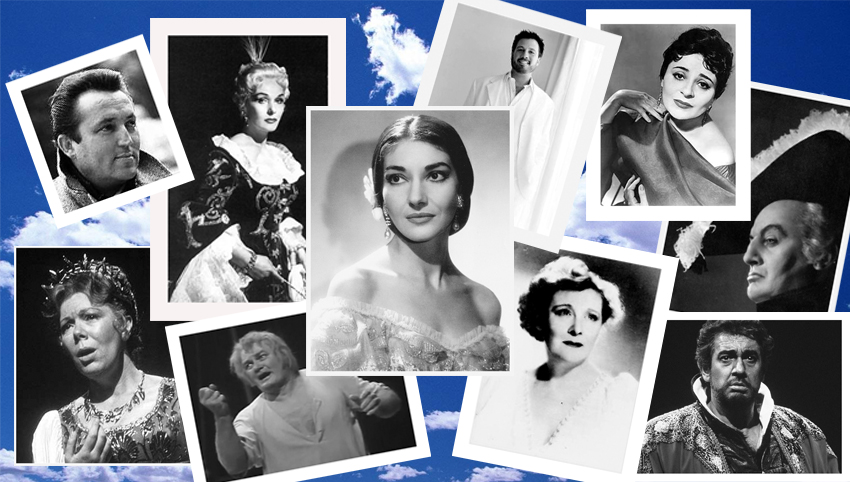
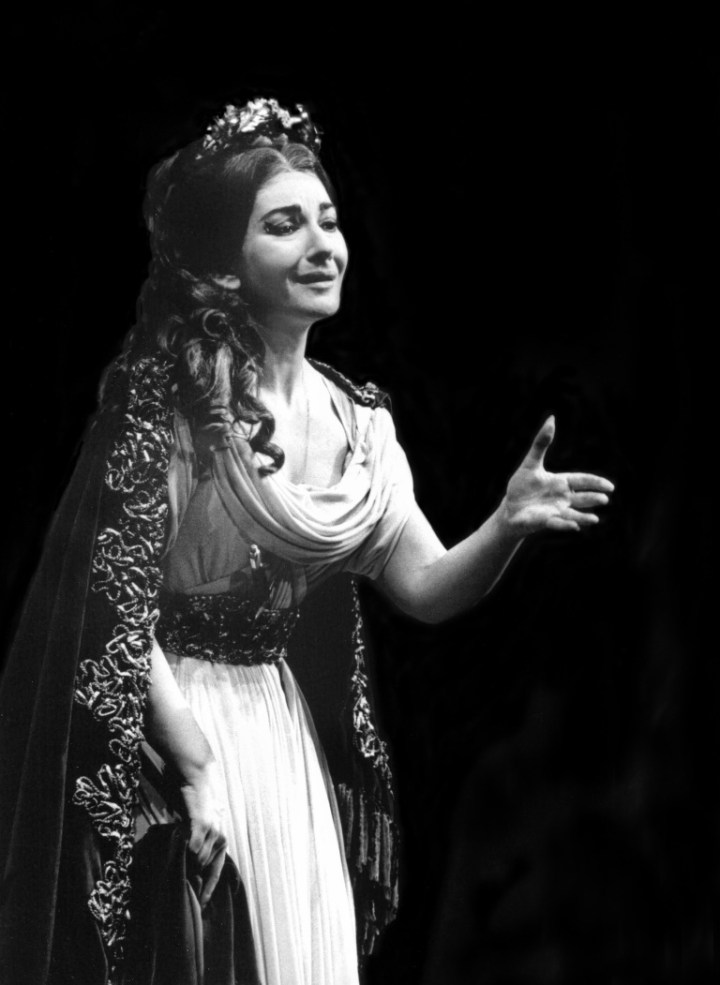
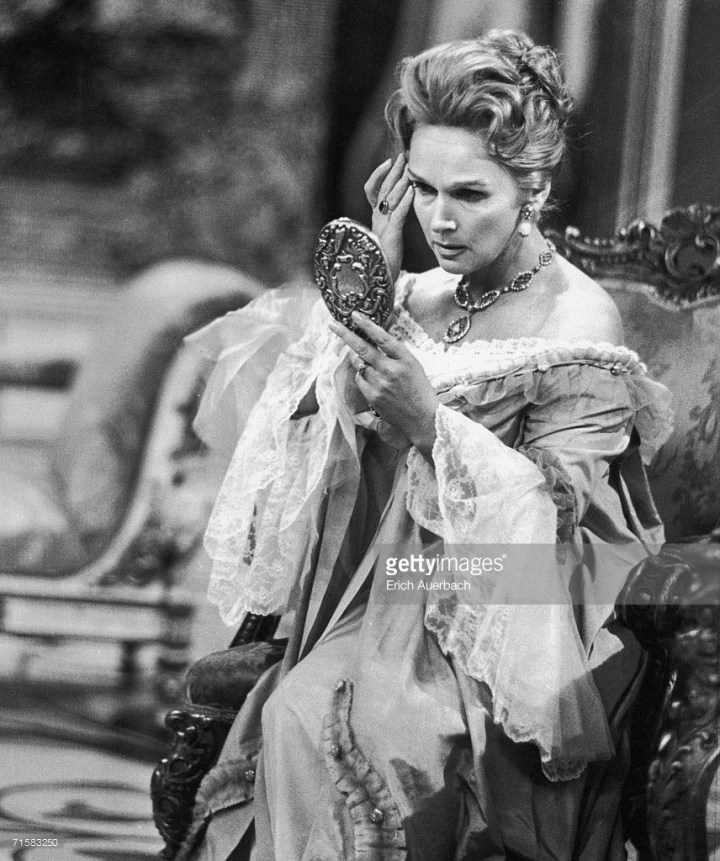
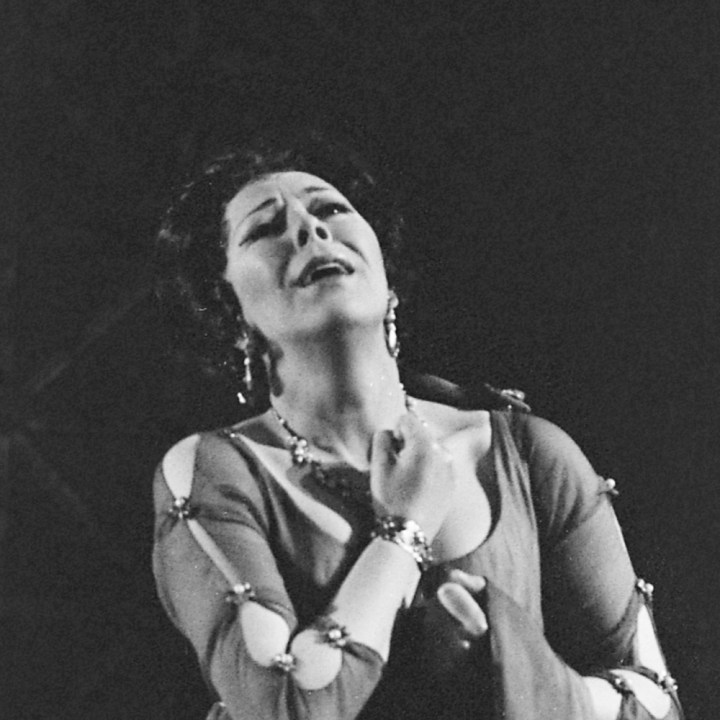
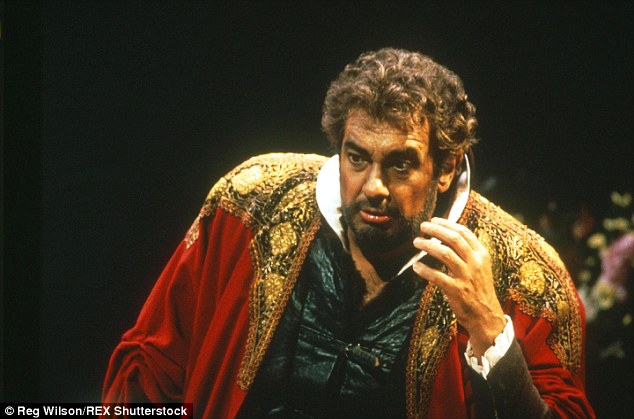
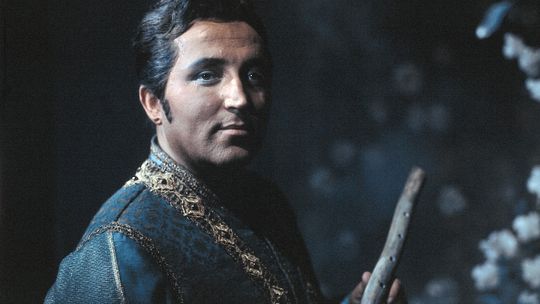
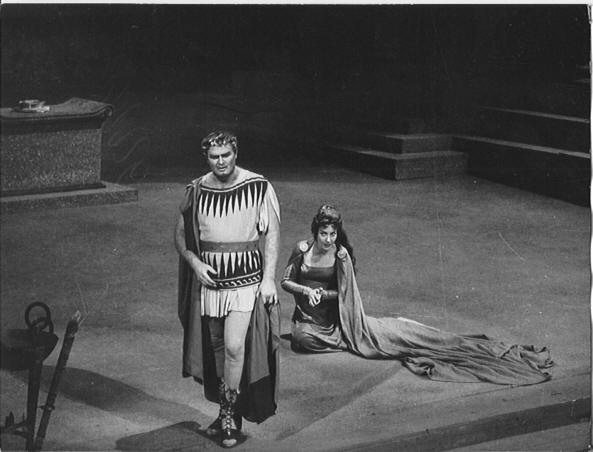
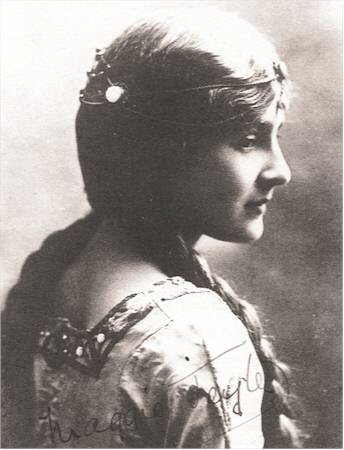
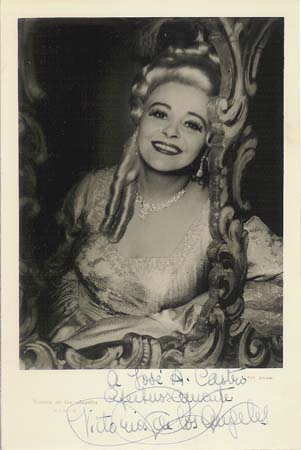
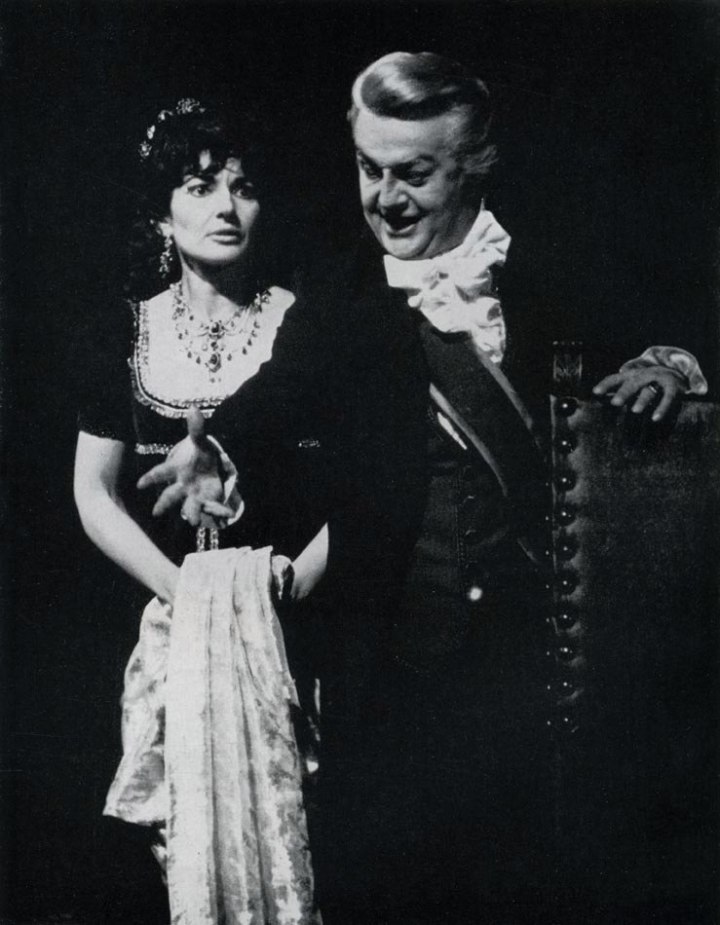
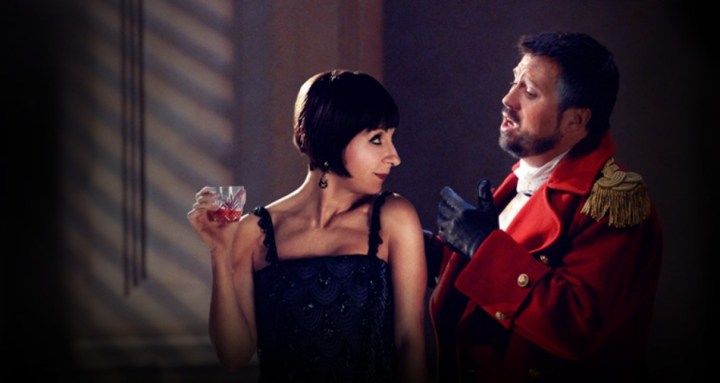

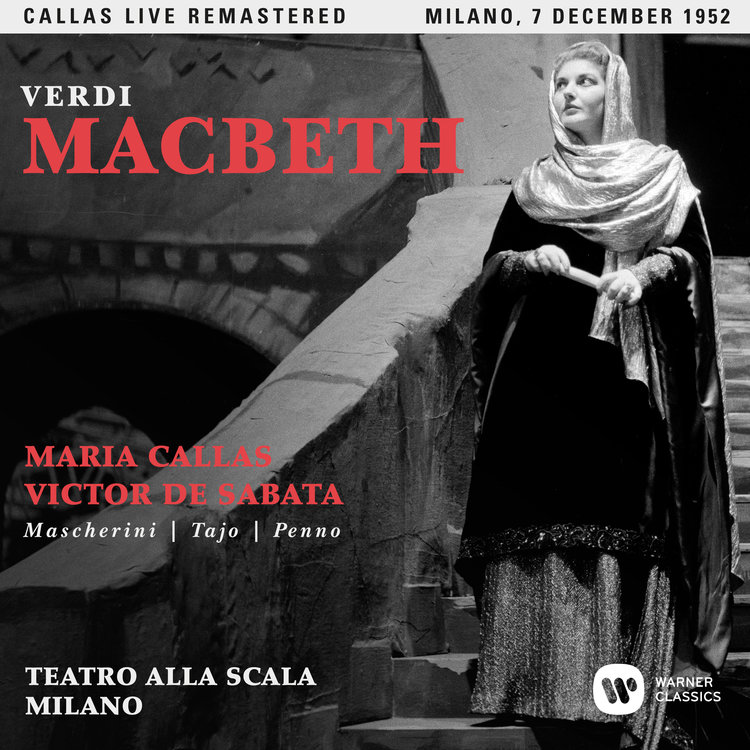
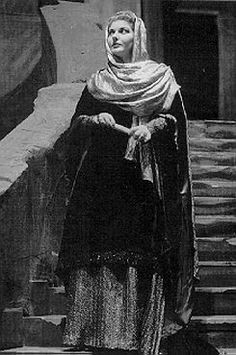
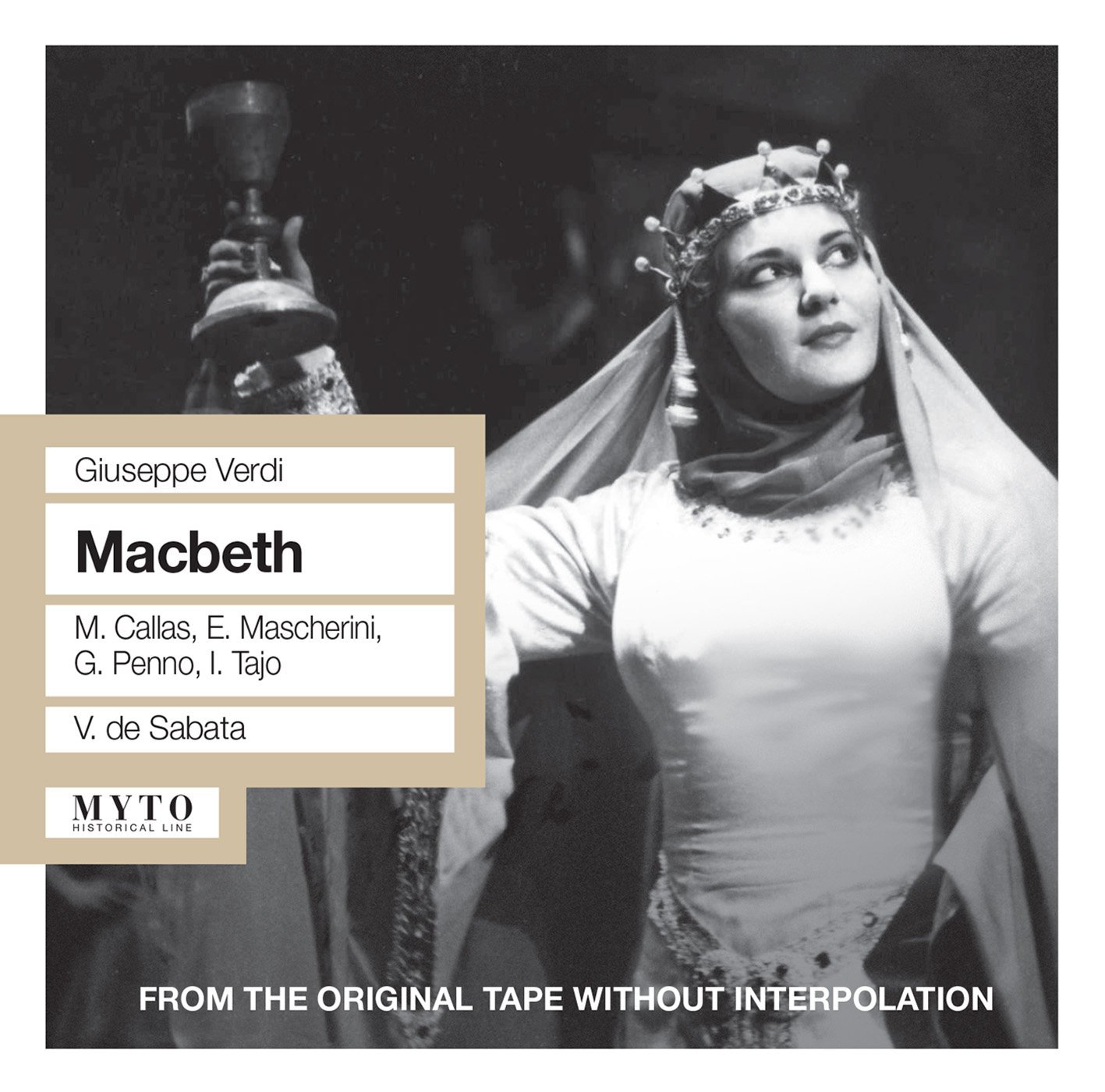
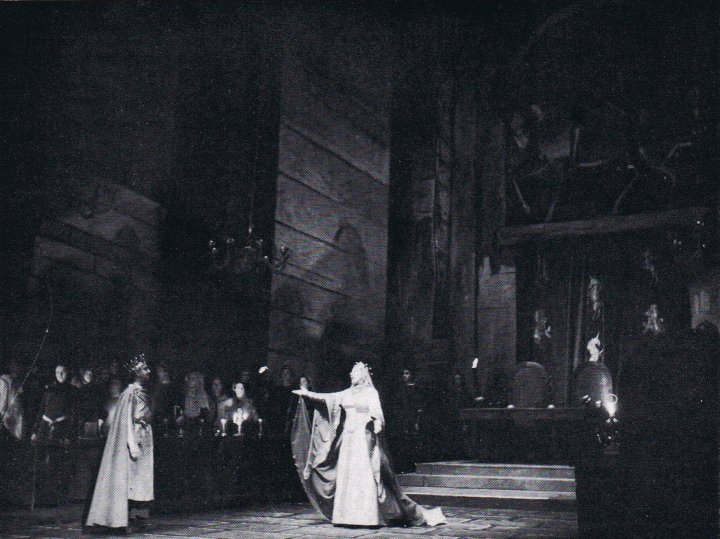
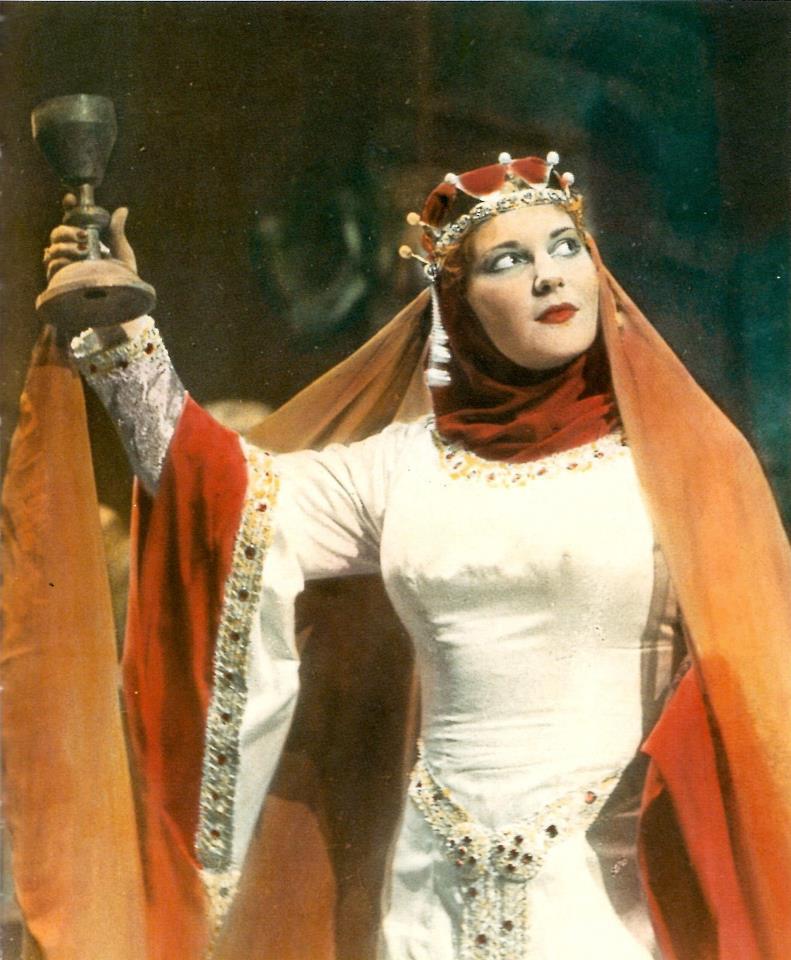
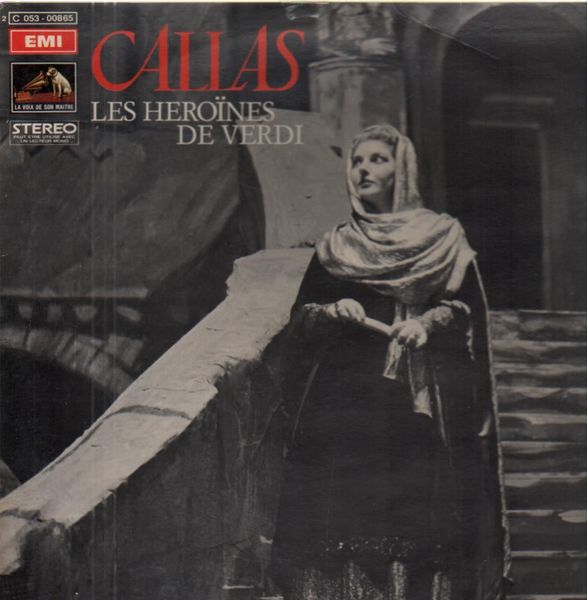

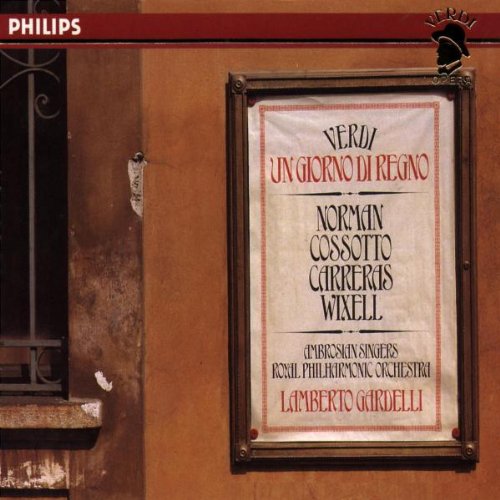
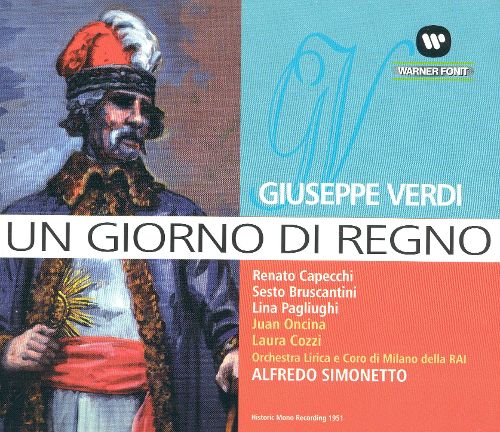
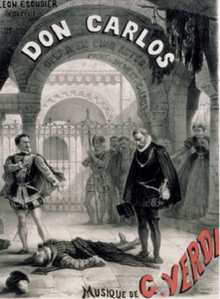


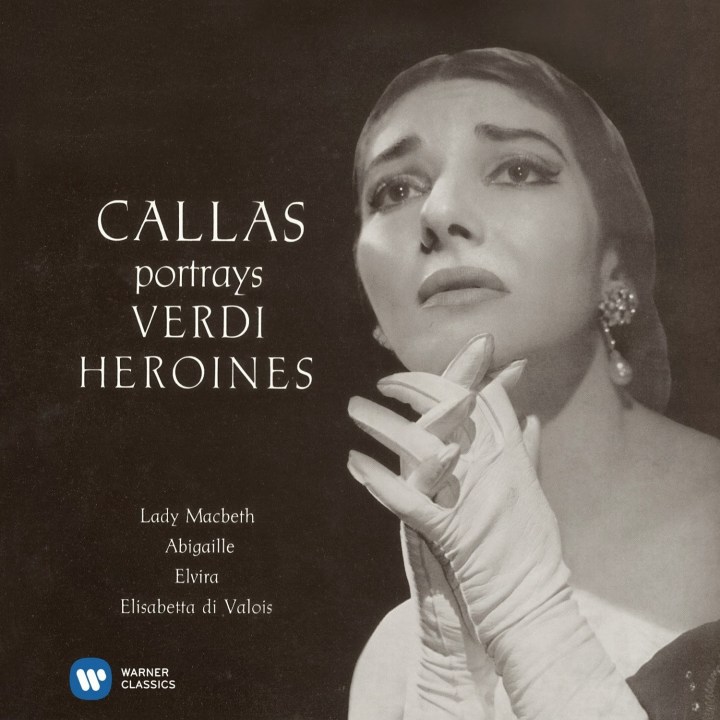
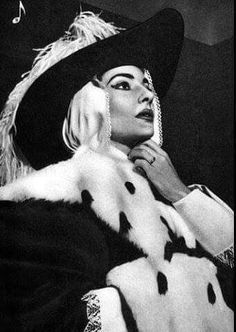


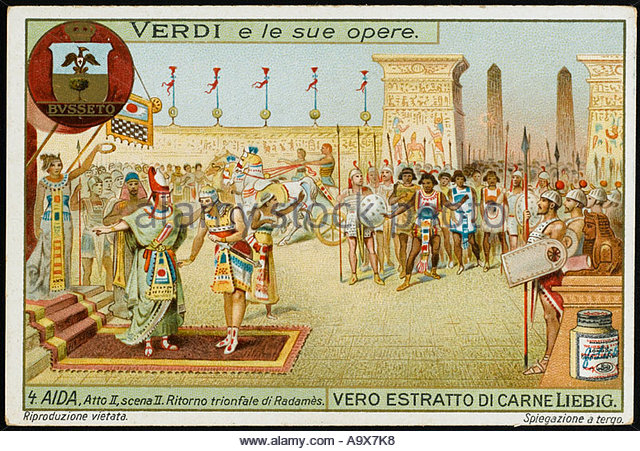
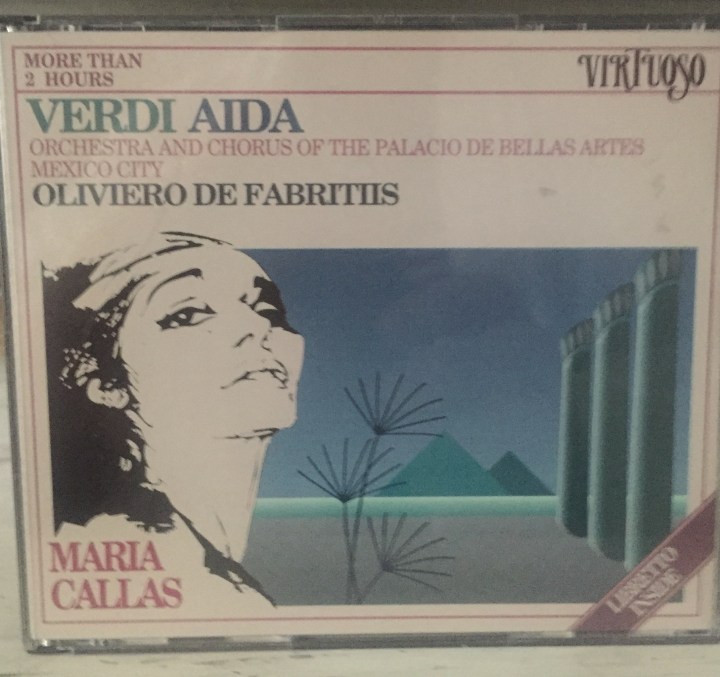
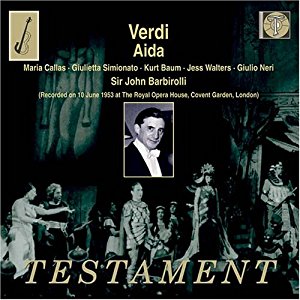
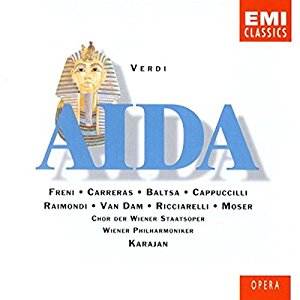
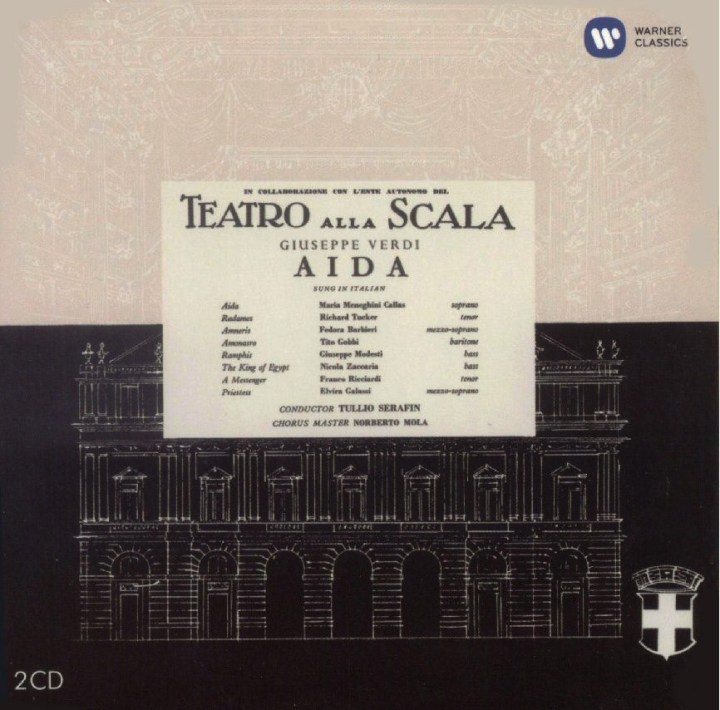

 Philip's Assortment Box