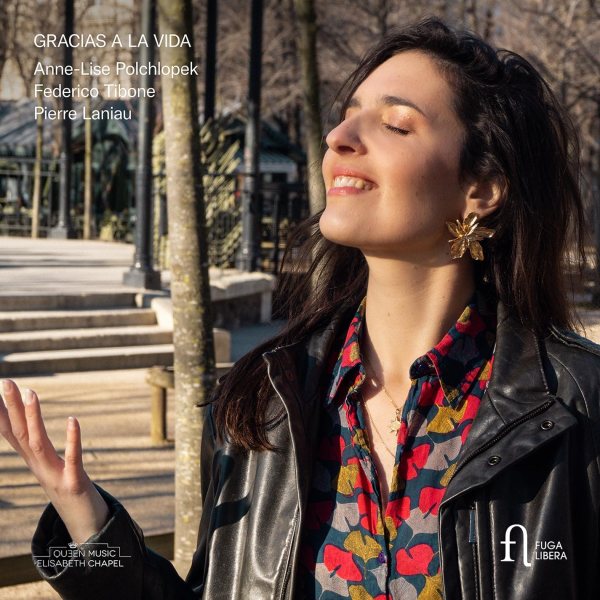
Gracias a la vida – Anne-Lise Polchlopek

It seems not a month goes by without a new recital record from a young artist making an impression. Recently I’ve welcomed recital records from Benjamin Appl, Fatma Said, Harriet Burns, Rachel Fenton and Eva Zalenga , and July saw a recommendation for Julieth Lozano-Rolong’s new disc from Dominy Clements. To this list can now be added the name of French mezzo-soprano, Anne-Lise Polchlopek, a winner of several song competitions, and now an associate artist of the Queen Elizabeth Music Chapel, where this recording was made.

This recital may at first glance appear to be a hotchpotch of different styles, embracing classical Lied, folk and popular music, but Polchlopek somehow integrates these different musical styles into a satisfying whole, and the recital benefits from being listened to at one sitting. It doesn’t get off to the best of starts with her somewhat over-articulated and over-acted singing of Bernstein’s Old Lady Tango (I am easily assimilated) from Candide, but she then sings a beautiful version of Strauss’s Wiegenlied, with a lovely legato line, her mellifluous mezzo wrapping the child in its warm embrace.

From Germany we travel to Spain and France, where we stay for the remainder of the recital. Toldrá is followed by Chaminade, then we switch to guitar accompaniment for Hubert Giraud’s La tendresse, staying with the guitar for an extremely effective performance of Falla’s Nana, from his Siete canciones populares españolas.

We go back to the piano for Fauré’s Les berceaux, in which she builds nicely to the climax, and then we have Messiaen’s early Trois melodies, where she captures to perfection the ecstasy of the writing, especially in the final song, la fiancée perdue.

 These are followed by three songs in a lighter vein by Chaminade, Pauline Viardot and Gerónimo Giménez, all wonderfully characterised. Perhaps incongruously (but somehow it works) Voi che sapete from Mozart’s Le nozze di Figaro acts as a bridge to Michel Polnareff’s Mes regrets, a beautiful song about lost love, which is followed by Fauré’s Toujours.

This in turn is followed by Gérard Jouannest’s La chanson des vieux aimants, with lyrics by Jacques Brel, a song I had previously only known in a version by Judy Collins. Suffice it to say that Polchlopek’s intensely moving performance put any thoughts of Collins out of my mind completely.

Throughout the piano accompaniments of Federico Tibone contribute wonderfully to the success of the disc, as do the guitar accompaniments of Pierre Laniau, who accompanies her on Tamás Méndez’s charming Cucurrucucu paloma, which I seem to remember was a favourite of Nana Mouskouri. He also accompanies her on the Habanera from Bizet’s Carmen and Satie’s La diva de l’empire, though I did feel the Bizet was slightly out of place here, coming, as it did, after the piano accompanied Poulenc Les métamorphoses and before the Satie.

We return to piano accompaniment for Montsalvatge’s Canto negro, which she sings with charm and spirit, relishing the yambambós, as Victoria De Los Angeles did before her.

All three participants come together for the final song, Violetta Parra’s Gracias a la vida, a fitting end to a journey on which Anne-Lise Polchlopek has proved to be a most musical guide. Throughout she clearly and meaningfully enunciates the text, and it is clear she has a rare gift for communication that makes her an ideal recitalist.

Unfortunately, though the notes accompanying the disc are in English, the online texts are only in the original language, French, Spanish, German, or in the case of the Bernstein, English, and translations would have helped for a total appreciation of Polchlopek’s art. However, I thoroughly enjoyed this disc, and I look forward to hearing more of Anne-Lise Polchlopek.
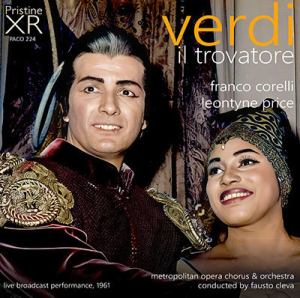
Il Trovatore from the Met with Price and Corelli

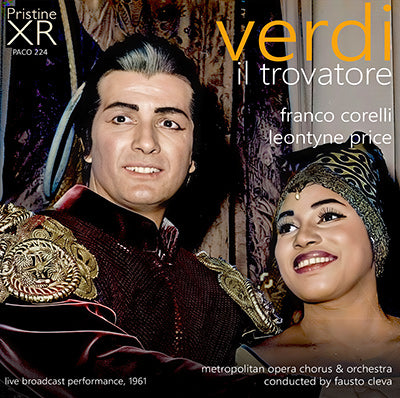
If I were to use one word to describe this performance of Il Trovatore from the Met, it would be aggressive. The house was in a high state of excitement as, a few days earlier, Price and Corelli had made their extremely successful house debuts in these same roles to fantastic acclaim, and the audience is ready with its applause from the get-go. The pace is fast and furious, especially in the choruses, which results in them occasionally becoming unstuck.

The singing too is extremely competitive, with little room for subtlety. I don’t know whether it is the recording, or the transfer but the soloists seem to be closely miked, which picks up a vibrato in Price’s voice I hadn’t been aware of before, and for much of the performance she sounds to me as if she is forcing her essentially lyric instrument. Corelli was never the most subtle of artists, but the general air of competitiveness encourages him to belt out his high notes for all he is worth and, it has to be said, the audience go wild for him.

This generally aggressive atmosphere extends to the other soloists too, who, in any case, are less vocally entitled than Price and Corelli. Irene Dalis is perfectly acceptable, and you’d go a long way to hear her like today, but she is honestly second rung, as is Mario Sereni. They are no match for Giulietta Simionato and Ettore Bastianini, who appear on another live recording from the following year, which also features Price and Corelli. This was from the 1962 summer Salzburg Festival, and is no less exciting, but is conducted much more stylishly by Herbert von Karajan. It was enthusiastically reviewed by Simon Thompson, when first issued and is still available from DG as a download, though the CDs have been withdrawn. If you want Price and Corelli in this opera, then it is definitely the one to go for, and Price sounds glorious here and much more relaxed than she was at the Met. With Simionato, arguably the greatest Azucena of her age and Bastianini in fantastic form, this is a set that should be in every Verdi lovers collection.

No doubt others will just get caught up in the excitement of the performance under review from the Met, but I’m afraid I found it rather vulgar, for which the blame should be left squarely on the shoulders of Fausto Cleva, who, time and again, mistakes speed for excitement.

My preference for the opera would still be Karajan’s first studio recording with Callas a non pareil of a Leonora, but the live Salzburg recording is almost as good, if without the precision of the studio one, with all the principals, including Price and Corelli, in fabulous voice. Truly that one was the night to remember.

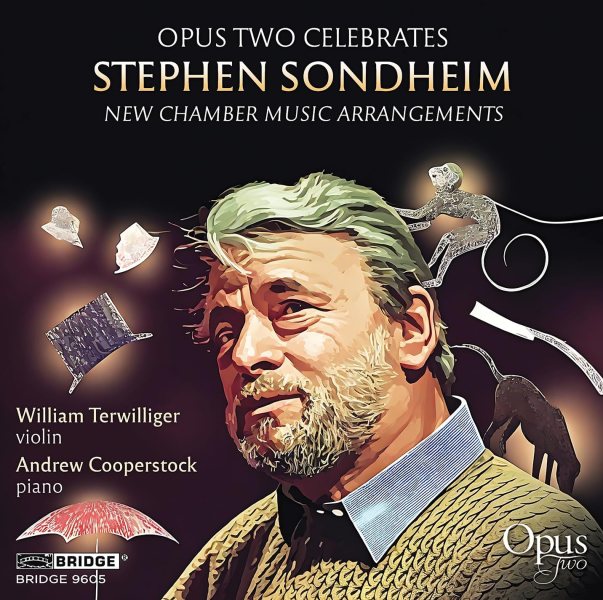
Opus Two celebrates Stephen Sondheim

I’ve loved the music of Stephen Sondheim ever since I was introduced to the LP of the Broadway recording of A Little Night Music by an old friend, my musical mentor, back when I was in my early twenties. Though Sondheim is known for his lyrics, it was the swirlingly Romantic score that I first responded to, and it is fitting that the first piece  on this disc is the Suite from that musical, in an arrangement, like the other pieces on this disc, by Eric Stern, who worked closely with Sondheim on the 1984 revival of Pacific Overtures. Since then, Stern has conducted the second year of Sunday in the Park with George, and also worked on Into the Woods, several productions of Follies, a revival of Merrily We Roll Along at the Kennedy Centre, and many more concerts and birthday celebrations around the world. His last conversation with Sondheim was about the Little Night Music suite, which Sondheim enthusiastically endorsed, though unfortunately the rest were written after his passing.

Opus Two are violin and piano duo, William Terwilliger on the violin and Andrew Cooperstock on the piano. They are joined by soprano Elena Shaddow for I remember, from the TV musical Evening Primrose, and by baritone Andrew Garland for Finishing the Hat, from Sunday in the Park with George, though, truth to tell, neither performance eclipsed memories of other performances of these songs, and I wondered at their inclusion. On the other hand, the addition of Beth Vandeborgh’s cello to the arrangement of Every Day a Little Death from A Little Night Music adds a certain expressive depth to the song. I found it one of the most successful pieces on the disc.

For those who know and love Sondheim’s scores, I would suggest that this disc is self-recommending. The arrangements are brilliantly done, though there is just the whiff of Palm Court about them. I could imagine them being played at the Waldorf Hotel, whilst enjoying tea, not that there is anything wrong with that, of course, and I found the disc hugely enjoyable. In some cases, I know the lyrics so well I could sing along in my mind’s ear, which no doubt added to my enjoyment of them.

It has often been said that Sondheim’s lyrics take precedence over the music, but here, I think, we get the chance to concentrate on Sondheim the composer, and we find how lyrical, in the musical sense, his music is. The only piece I didn’t know was the main title from Alain Resnais’s 1974 film, Stavisky, a short evocative piece, but it too has a tune which lingers in the memory for some time afterwards.

Terwilliger shines in Sorry/Grateful from Company, which is here arranged for solo violin, whilst Cooperstock is given the jazzy Now You Know from Merrily We Roll Along as a piano solo. Then they come together again for the final work, the Fleet Street Suite, which combines themes from Sweeney Todd and closes the recital with the beautifully poetic Johanna, which, in the show, is a moment of calm and pure beauty amidst the turbulence of the rest.

Contents:

Suite from A little Night Music

Not while I’m around (from Sweeney Todd)

Broadway Baby (from Follies)

I remember (from Evening Primrose)

Main Title from Stavisky

Every Day a Little Death (from A little Night Music)

Sorry/Grateful (from Company)

Finishing the Hat (from Sunday in the Park with George)

Now You Know (from Merrily We Roll Along)

Fleet Street Suite (from Sweeney Todd)

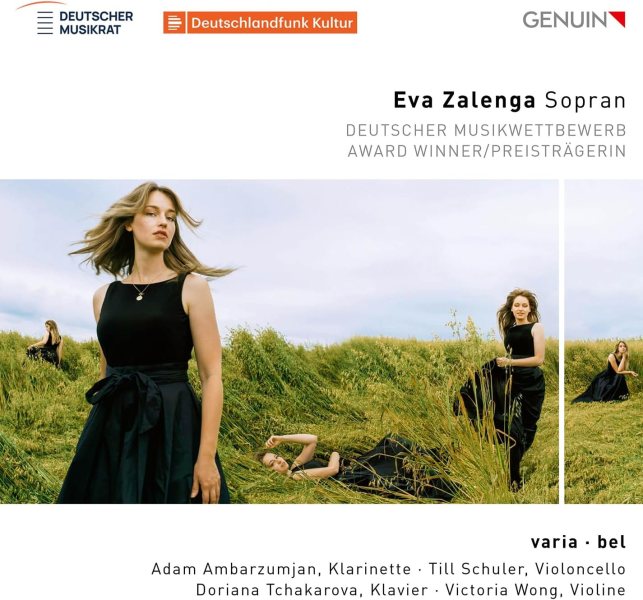
Eva Zalenga – Varia bel

Last month I was welcoming a disc of Lieder with various accompaniments by Fatma Said and here we have another for various forces, which, coincidentally, also includes Schubert’s Der Hirt auf dem Felsen.

In April 2024, I welcomed Zalenga’s debut recital on the Hänssler label, and this new recital on the Genuin label is, if anything, even more successful. Variety is the key note of the disc, in the variety of music (from the 18th to the 21st centuries), the variety of styles from the intimate to the more extrovert, and the variety of instruments accompanying the voice, that nonetheless add up to a convincing whole.

We start with a world premiere recording of Ignaz Lachner’s An die Entfernte (In die Ferne) for soprano, violoncello and piano, in which Zalenga charmingly intertwines with the cello of Till Schuler. We stay with the combination of cello and piano for Schubert’s Auf dem Strom. There is just the suspicion of strain in the upper reaches of the song here, a slight impurity that obtrudes on the silvery beauty of the sound, but it is fleeting, and soon evaporates during the next song, Meyerbeer’s haunting Des Schäfers Lied, in which the cello is swapped for Adam Ambarzumjan’s clarinet.

We stick with this combination for Schubert’s more famous Der Hirt auf dem Felsen, which, whilst not plumbing the deeper meanings of the text, as Said and Meyer do in their version, is nonetheless a delightful and charming performance.

In their earlier recital, Zalenga and Tchakarova championed women composers and it is good to see that they do so here too, first with a lovely song by Pauline Viardot-Garcia, in which we return to the combination of soprano, cello and piano, and then, jumping ahead around 100 years to Rebecca Clarke’s arrangement for soprano and violin of Three Irish Folk Songs. The tricky violin part is played by Victoria Wong. These are sung in English, and we stick with English for Arthur Bliss’s Two Nursery Rhymes, the first for soprano, clarinet and piano and the second for soprano and clarinet. Zalenga sings in perfectly accented English, and seems equally at home in French, which is the language of the next group of songs, four miniatures for soprano and violin by Darius Milhaud, Quatre Poèmes de Catulle.   

Finally all the forces come together for the last item, a new arrangement of contemporary composer Isabelle Aboulker’s Je t’aime, which Zalenga brings off with incredible wit, panache and style to bring this excellent recital to a riotous conclusion.

In all, Zalenga proves herself to be a most musical and intelligent singer and I look forward to seeing where her next enterprise will take us. Highly recommended.

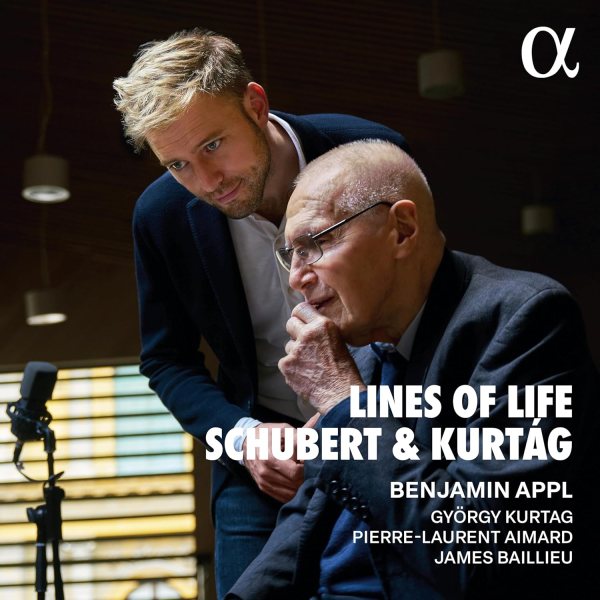
Lines of Life – Schubert and Kurtág


“I believe that Benjamin is currently the most authentic interpreter of my Hölderin Gesänge.” So writes György Kurtág in the notes accompanying this disc and, as he is also credited as recording producer, I think we can lay claim to their authenticity. Kurtág attended all the sessions, which took place in Budapest, apparently producing over 1,300 recording takes and countless repetitions.

The majority of the Kurtág songs on this disc are a capella. Their range, both vocal and emotional, is wide and they are brilliantly performed by Appl, whose range of expression and ability to meld the wide-ranging melismas in the vocal writing are superb. Indeed the very first song, Circumdederunt, which is in Latin and reminiscent of plainchant, homes in directly on the voice, a peculiarly expressive instrument, capable of harshness when required, as in the words et in trubulatione mea, returning to a beautiful, consoling richness for the remainder of the song. All but one of the Hölderin Gesänge are also unaccompanied and the one that isn’t, unusually has a sort of obligato accompaniment for trombone and tuba. The four Ulrike Schuster songs have an atonal piano accompaniment, which is played here by Pierre-Lauent Aimard.

As an interpreter of contemporary song, then, Appl proves himself to have few equals, but he is also a fine interpreter of Schubert and Brahms, as witness the beautiful versions of the Schubert and Brahms songs included on the disc. As befits a student of Fischer-Dieskau, expression is paramount, but never at the expense of a fine legato line and the beauty of the voce is well caught.

James Baillieu is the fine accompanist for most of the Schubert songs, but in the final two songs, Schubert’s Der Jüngling an der Quelle and Brahms’s Sonntag, Appl is touchingly accompanied by György Kurtág himself, though, it must be admitted, with rather too much pedal.

I found this disc an absorbing and challenging experience and would recommend it to anyone with an adventurous appetite.

The disc finishes with a fascinating eighteen-minute interview in German between Appl and Kurtág, for which an English translation is provided in the accompanying booklet.

.

Welcome Joy – The Corvus Consort

81lspxvxnl._ac_sl1500_

The subtitle of this disc is A Celebration of Women’s Voices and a celebration it undoubtedly is, not just of the women’s voices who sing on the record, but of the voices of the women composers who make up the lion’s share of the music. Room is found for Gustav Holst, who was a champion of women’s voices and taught at several girls’ schools, most famously at St Paul’s Girls School, where he taught for almost thirty years.

Its centrepiece, and the longest work on the disc, is Elizabeth Poston’s An English Day-Book, which here receives its première recording of this edition. If it is reminiscent of Britten’s A Ceremony of Carols, then that is because it was conceived to complement it by providing a work suitable for use throughout the year. The Day-Book was unpublished at he time of Poston’s death in 1987, but has since been published by the Arts and Education charity, Multitude of Voyces, which specialises in publishing and promoting works by communities historically or currently underrepresented or marginalised. The charity also published the works here by Hilary Campbell, Olivia Sparkhall, Judith Weir and Gemma McGregor. I was particularly taken by Sparkhall’s Lux Aeterna, which is for two choruses, solo soprano and harp and McGregor’s Love was his meaning with its lovely falling harp introduction.

“Welcome Joy”, sing the Corvus Consort at the beginning of this recital and indeed what a joy it is. Imogen Holst’s commission for the 1951 Aldeburgh Festival is a setting of six poems by John Keats, described by Britten as ‘six little treasures’ when he first received them, and, in this joyful performance, it is easy to see why.

This piece, like most of the music on this CD was completely new to me, but I did know Gustav Holst’s Choral Hymns from the Rig Veda (Third Group) from Imogen Holst’s 1968 recording with the Purcell Singers and Ossian Ellis. I am bound to say that I found that recording a mite more atmospheric, especially in the opening Hymn to the Dawn, which has a mystery and magic that is not quite captured in the clearer, more analytical Chandos digital recording.

Nevertheless, I enjoyed this disc of choral music for women’s voices. The work of the Corvus Consort under their conductor, Freddie Crowley can hardly be faulted, with a superb contribution from harpist, Louise Thomson.

Full texts are provided, and the exemplary notes are extensive. A thoroughly enjoyable disc.

Contents

Imogen Holst (1907 – 1984)  Welcome Joy and Welcome Sorrow (1950)

Gustav Holst (1874 – 1934) Two Eastern Pictures (1911)

Choral Hymns from the Rig Veda (Third Group) (1910)

Dirge and Hymneal (1915)

Judith Weir (b.1954) We sekyn here rest (2019)

Hilary Campbell (b. 1983) Our Endless Day (2017)

Elizabeth Poston (1905 – 1987) An English Day-Book  (1966 – 67)

Olivia M. Sparkhall (b. 1976) Lux Aeterna (2018)

Gemma McGregor (b. 1965) Love was his meaning (2018)

Shruti Rajasekar (b. 1996) Ushãs – Goddess of Dawn (2024)

Priestess (2024)


Schön ist die Welt on CPO

813sjdal._ac_sl1425_

Schön ist die Welt was the last in a series of Lehár’s operettas that were premiered in Berlin. Paganini, had met with a somewhat lukewarm reception in Vienna, but had triumphed in Berlin in 1926 , due to the participation of Richard Tauber, and thereafter Lehár wrote the majority of his operettas for Berlin with Tauber in mind for the leading role. Not that Shön ist die Welt, which premiered in 1930, was an entirely new work, it being a re-working of an earlier operetta, Endlich allein, originally performed twelve years earlier, the second act of which Lehár had been particularly proud, as it was more or less through composed with minimal dialogue. This second act, with the addition of a Tauber-lied, is pretty much lifted from the earlier operetta, but the outer acts underwent substantial revisions.

The action takes place in the Swiss Alps, where Crown Prince Georg arrives at an Alpine resort to meet for the first time his fiancée, Princess Elisabeth. However, on the way he stopped to help a girl, whose name he did not discover, mend a puncture and fell madly in love with her. He announces to his father that he will not marry Elisabeth because he loves another. All turns out well when our unwitting hero and heroine go on a hike and get trapped by an avalanche at an Alpine hut and have to spend the night together. Returning the hotel the next morning, Georg discovers that the girl he helped with the puncture is in fact Princess Elisabeth. There is also a sub plot involving Count Sascha and a Brazilian dancer, called Mercedes della Rossa, which gives Lehár the excuse for some Latin American influenced music in the first and third acts. It’s all pretty insubstantial, but it does give rise to some gloriously lyrical music, especially in the second act, which involves just the two leads.The present recording would seem to derive form stage performances as we hear occasional stage noise, though there is precious little sign of any audience. There was a previous recording, also on CPO, (review), which I see is still available as a download. That was on a single CD, but included none of the dialogue, whereas here we get quite a lot of it, which could prove tedious for all but fluent German speakers, and even they could find it a little too much for repeated listening.That said, the sound is excellent and the playing of the Franz Lehár Orchestra under Marius Burkert most stylish. I also enjoyed the contributions of Katharina Linhard and Jonathan  Hartzendorf as the secondary couple, and of Jospeh Terterian as the Jazz Singer. Where I had a problem was with the contributions of the two leads. Thomas Blondelle as Crown Prince Georg has a pleasing light tenor, but he is no Richard Tauber and he is not really up to the operatic demands of Act II. Nor is Sieglinde Feldhofer as the Princess Elisabeth. She has rather too much vibrato for my taste and tends to lunge at her high notes. I couldn’t help thinking what a difference a Schwarzkopf or a Rothenberger would have made.  Elena Mosuc and Zoran Todorovich who sing the roles of Elisabeth and Georg on the other CPO recording I mentioned above, improve on the present two, but they, rather confusingly, sing the secondary couple as well, so there is no doubt that this present recoding is more cohesive.

Nor would I like to give the impression that I didn’t enjoy the set. I did. Very much indeed, despite the less than stellar contributions of the two main leads. Lehár was such a prolific tunesmith, some of the songs were rattling around in my head for days afterwards. It gets a qualified recommendation from me.

Prinzessin Elisabeth – Sieglinde Feldhofer (soprano)

Kronprinz Georg – Thomas Blondelle (tenor)

Der König – Gerd Vogel (baritone)

Mercedes della Rizza – Katharina Linhard (soprano)

Graf Sascha Karlowitz – Jonathan Hartzendorf (tenor)

Herzogin Maria Brankenhorst – Klára Vincze (soprano)

Ein Jazzsinger – Jospeh Terterian (tenor)

Hoteldirektor – Johannes Hubmeir (tenor)

Chor des Lehár Festivals Bad Ischil

Franz Lehár Orchestra/ Marius Burkert

Pristine’s Re-master of Björling’s Cav and Pag.

paco209_fdbcae84-e953-4879-bd72-570e6effee64_530x

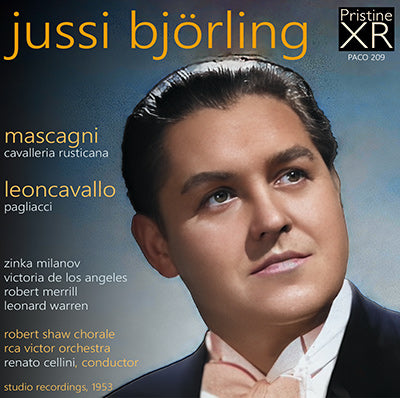
A photo of Jussi Björling graces the cover of this Pristine issue, and he is without doubt the main reason to hear these recordings. It is always a pleasure to hear his beautiful voice, musical phrasing and ringing top notes, though I’m not sure he would ever have been perfectly cast in either role. But before coming to Björling himself, it might be instructive to consider other elements of the recordings.

Both operas were recorded in 1953 in New York with the RCA Victor Orchestra and the Robert Shaw Chorale under Renato Cellini and sound remarkably good in these Pristine transfers, so good, I almost thought they were in stereo. I hadn’t heard either performance before, so I have nothing to compare the Pristine transfers to, but they are admirably clear and spacious and a good deal better than the contemporaneous Serafin recordings with Di Stefano and Callas. The Serafin Pagliacci is in reasonable mono sound, but unfortunately the Cavalleria Rusticana suffers from overload and distortion, which no amount of re-mastering would seem to be able to overcome. Still, I wish that these Cellini performances were half as exciting.

Cellini’s conducting is at least idiomatic, his tempi well chosen, but neither opera really catches fire and they both remain somewhat studio bound. The professional Robert Shaw Chorale sing in both operas. They are faultless in execution, but I couldn’t help picturing them all in prim white shirts and blouses, standing, score in hand, in choir banks. They don’t for one second conjure up the sound of lusty Sicilian peasants or excited Italian village folk. The La Scala Chorus on the Serafin set, may not be so polished, but they have this music in their blood and are much more convincing.

I suppose I should preface my discussion of the solo singers with a confession that I have never much liked Zinka Milanov, or at least not on any of the recordings I have heard, which were all made quite late in her career. From the outset she sounds far too mature, almost indistinguishable from Mamma Lucia in her initial exchanges and completely uninvolved in poor Santuzza’s plight. Björling, who could sometimes be accused of being a little cool, is at his most impassioned in their duet, but she remains phlegmatic and stolid. She is no better in the duet with Robert Merrill’s Alfio, who, in any case, is a bit too jovial and avuncular. Björling’s Turiddu is beautifully sung and, as I mentioned, he does try to inject some passion into his exchanges with Santuzza, but there is something about the inherent nobility in his tone that makes him not quite right for the caddish Turiddu. As always, his singing gives great pleasure, but I can’t quite believe in him.

That said, I find his Turiddu more convincing than his Canio. Yet again, the role is beautifully sung, Vesti la giubba heart-breaking and deeply felt, but can anyone really believe that this is a man who would be driven to double murder? I certainly can’t. I have much the same problem with the Nedda of Victoria De Los Angeles. She is in her best voice, warm and feminine and, like Björling, has the virtue of always being supremely musical. She sings quite beautifully, especially in her Ballatella, but, as with her Carmen, she sounds altogether too ladylike. I don’t necessarily want Nedda to be portrayed as a heartless minx, as was often the case in days gone by, but I need to believe that she has the mettle to defy a bully of a husband and have an affair behind his back.

Nor is there any menace in the Tonio of Leonard Warren, who, in the prologue, could be singing about anything at all really. Gobbi, on the Serafin set, does not have such a beautiful voice, nor such easy top notes, but he makes every word tell. Merrill has here been given the secondary role of Silvio, but his Silvio doesn’t sound much different from his Alfio. Compare Panerai, who sings both roles on the Serafin recordings, utterly menacing as Alfio and ardently seductive as Silvio.

Jussi Björling was, without doubt, one of the greatest tenors of the last century and I always take pleasure in the sheer beauty of his voice, his musical phrasing and his wonderfully free and ringing top notes, so it was a pleasure to hear him here, even if these two roles are not ones to which I think he was really suited. For the rest I derived the most pleasure from De Los Angeles’s beautiful and musical singing as Nedda, even if she too is caught in a role that was not particularly suited to her gifts.

Not a top choice for either of these two operas then. For all that they are in better sound than Serafin’s recordings of the two operas, I would still place the Serafin performances ahead of them. Di Stefano can be a bit wayward, but he is better at expressing the caddish side to Turiddu and the unhinged side of Canio that turns him into a killer. Callas is, as usual, hors concours, both as a wonderfully impassioned Santuzza and a free-spirited and mettlesome Nedda, and she is in fine voice on both recordings. Gobbi is equally brilliant as Tonio and their confrontation bristles with drama. There are also better choices amongst more recent recordings, such as Karajan’s sumptuously recorded La Scala set for DG, which no doubt remains a first choice for many.

As always, Pristine should be commended for including with the CDs a package of downloadable items, which includes a copy of the same recording as an MP3 download, together with full scores, both piano and orchestral, and a full libretto in PDF format. Most major companies these days don’t even include an online link to a libretto.

Pietro Mascagni (1863-1945)
Cavalleria Rusticana (1890)
Turiddu: Jussi Björling (tenor)
Santuzza: Zinka Milanov (soprano)
Alfio: Robert Merrill
Mamma Lucia: Margaret Roggero (mezzo)
Lola: Carol Smith (mezzo)

Ruggero Leoncavallo (1857-1919)
Pagliacci (1892)
Canio: Jussi Björling (tenor)
Nedda: Victoria De Los Angeles (soprano)
Tonio: Leonard Warren (baritone)
Silvio: Robert Merrill (baritone)
Beppe: Paul Franke (tenor

Robert Shaw Chorale
RCA Victor Orchestra/Renato Cellini
Rec. 1953, Manhattan Centre, New York
Full scores and libretto included as downloads
Pristine Audio PACO209 (2 CDs 141)


In Relations – Eva Zalenga and Doriana Tchakarova

0881488220506

The back page of the booklet that comes with this CD has a complicated diagram, which attempts to display and unravel the various connections between the composers and poets featured in this recital. We all know about the friendship that existed between Mendelssohn and Schumann, but did you know that Loewe, who also made music with Mendelssohn, taught the composer Emilie Mayer, who set poems by Heine, as of course did Loewe and Schumann? So did Meyerbeer, though his only connection with Mendelssohn and Schumann is that they both were vocal in disparaging his music.

The aim is evidently to bring some unity to what is essentially a recital of nineteenth century Romantic songs by both male and female composers, most of which are not exactly regular visitors to the concert platform. It’s a nice idea and it can be fun trying to trace the connections between the various personages represented in this recital, though certainly not necessary for the enjoyment of it.

We begin with Meyerbeer, who is better known for his large-scale operas, none of which have ever held much interest for me. The three songs we get here are rather charming and tuneful, though they don’t quite escape the epithet of parlour music. These are followed by a couple of songs by Loewe, the first a setting of Meine Ruh ist hin, a poem better known to us as Schubert’s Gretchen am Spinnrade. Loewe’s setting is less grippingly intense but it does tell the story well.. Loewe’s accompaniments are worth noting and they are brilliantly played by Doriana Tchakarova, who supports her soloist at every turn.

Mendelssohn’s Hexenlied is better known than the songs we have heard so far and it really calls for a little more variety of timbre than Zalenga has yet at her disposal.  On the other hand Zalenga’s bright, youthful soprano is perfectly apt for the Suleika songs that follow. The Schumann songs go well too, though I would have preferred a little more sense of breathless excitement in Aufträge, such as we hear in older versions by Elisabeth Schumann and Elisabeth Schwarzkopf.

For the rest we are given some rarities by women composers, both of whom were entirely new to me. Emilie Mayer, who died in 1883 (not 1833 as the booklet has it) was the first woman to have her symphonies performed all over Europe. The two songs included here no doubt had an eye on the popular publication market and, like the Meyerbeer, have more than a whiff of the salon about them. Nonetheless I was pleased to make their acquaintance. That said, I found the Heine settings of the English composer, Frances Illitsen, even more interesting. All three are worth investigating, in particular the setting of Heine’s Katherine, which is a glorious outpouring of lyrical melody.

This recital would appear to be the recording debut of the young soprano Eva Zalenga. She has a lovely, light soprano which faintly reminded me of the young Lucia Popp. I see from her website that her operatic roles are Papagena, Barbarina, Susanna, Ännchen, and also Sophie in Werther, all of which would seem right for her at the moment. I can also imagine her making an excellent Sophie in Der Rosenkavalier. As yet the voice doesn’t have a great range of colour at its disposal, but this does not mean she sings without feeling. Throughout she is a most musical singer and keenly responsive to the poetry. You really feel she connects with each of the songs

I wish Hänssler had vouchsafed us translations of the German texts, but, nonetheless, I thoroughly enjoyed this journey through some of the byways of nineteenth century Romantic song. An auspicious recording debut for Eva Zalenga.

Contents:

Giacomo Meyerbeer (1791-1864)

Komm

Meerestille

Suleika

Carl Loewe (1796 – 1869)

Meine Ruh’ ist hin, Op. 9, no. 2

Die verliebte Schläferin, Op. 9, no. 3

Ihr Spaziergang, Op. 9, no.4

Die Schneeflocke, Op. 63, no. 1

Felix Mendelssohn (1809-1847)

Hexenlied, Op 8, no. 8

Suleika, Op. 57, no.3

Suleika, Op. 34, no. 4

Die Nonne, Op. 9 no. 12

Robert Schumann (1810 – 1856)

Liebeslied, Op. 5, no. 5

Aufträge, Op. 77, no. 5

Viel Glück zur Reise, Schwalben! Op. 104, no. 2

Die letzten Blumen starben, Op. 104, no. 6

Aus den östlichen Rosen, Op. 25, no. 5

Singet nicht in Trauertönen, Op. 98a

Emilie Mayer (1812 – 1883)

Du bist wie eine Blume, Op. 71 no. 1

Das Schlüsselloch im Herzen

Frances Allitsen (1848 – 1912)

Katherine

Mag, da draußen Schnee sich thürmen

Die Botschaft

Sonic Alchemy – How do we measure time?

00a34add

YuEun Kim (violin), Mina Gajić (piano), Coleman Itzkoff (Cello)

How do we even measure time?

This is the question asked at the beginning of the booklet accompanying this absorbing disc. It supposes that time is a construct of man and that time, as we understand it, has not always been the same. To quote from the booklet again, “Our ideas on time have changed throughout the centuries and will probably continue to do so. The works on Sonic Alchemy are of composers who offer a new perspective on how we can perceive time, each in their own way.”

Mozart may seem a strange bedfellow for the two contemporary composers we have here, but there is an obvious link with Pärt’s Mozart-Adagio for piano trio, a re-working of the slow movement from Mozart’s Sonata in F major, K. 280, in which Pärt seeks to subtly blend the styles of the two composers into a single natural whole. It is framed by Mozart’s two Piano Fantasias K.397 and K. 480, which are both performed as written.  

The disc opens with Vasks’ Balta Ainava (White Scenery) for solo piano, an evocative piece which is written sensa misura. There is no tempo written into the score, the performer is instructed to play “very sweetly and softly”. Gajić responds with an unsentimental approach, which perfectly allows the music to speak for itself, her tone clear and pellucid. This is followed by Pärt’s Fratres in the version for piano and cello, in which the composer’s method is based on a fixed relation between two voices. This is where I noticed a tendency for Gajić to overuse the pedal, which somewhat muddies the textures of her part. This is a shame because Coleman Itzkoff is wonderfully lucid in his part. This overuse of the pedal also creeps into her playing of the Mozart Fantasias, which are a bit heavy and a little too rigid, lacking in, well, fantasy. No competition here for the likes of a Mozart spécialiste, like the wonderfully sensitive Maria João Pires. Still, they do not feel out of place in this programme, their juxtaposition with the other works on this disc bringing them forward out of their own time and into the twentieth century.

The other Vasks piece is Castillo Interior, a duet for violin and cello, which contrasts long hymn-like, somewhat devotional  phrases with rapid, almost aggressive sections, which perhaps remind us that the bustle and violence of the outside world is never far away. It is brilliantly performed here by YuEun Kim and Itzkoff.

Finally, we come to the most well-known piece on the disc, Pärt’s ubiquitous Spiegel im Spiegel, which, clocking in at 10:24, must be one of the slowest on record. Tamsin Little only takes 8:14 over it, but listening to it after this performance, Little seemed a little rushed to me. Kim’s tone here is ethereal, almost insubstantial and she and Gajić sustain the slow tempo brilliantly. I found myself hanging on to each note and just for these ten minutes it felt as if time really did stand still.

I should just mention that the recording quality is first rate. Despite my reservations about the performance of the Mozart Fantasias, I found this an absorbing disc, and one that I shall certainly return to from time to time.

Contents.

Peteris Vasks (b.1946) : Balta Ainava (White Scenery)

Arvo Pärt (b. 1935): Fratres

Wolfgang Amadeus Mozart (1756-1791): Fantasia in D Minor, K.397

Arvo Pärt: Mozart-Adagio (after Sonata K. 280)

Wolfgang Amadeus Mozart: Fantasia in C Minor, K. 475

Vasks: Castillo Interior (Interior Castle)

Pärt: Spiegel im Spiegel