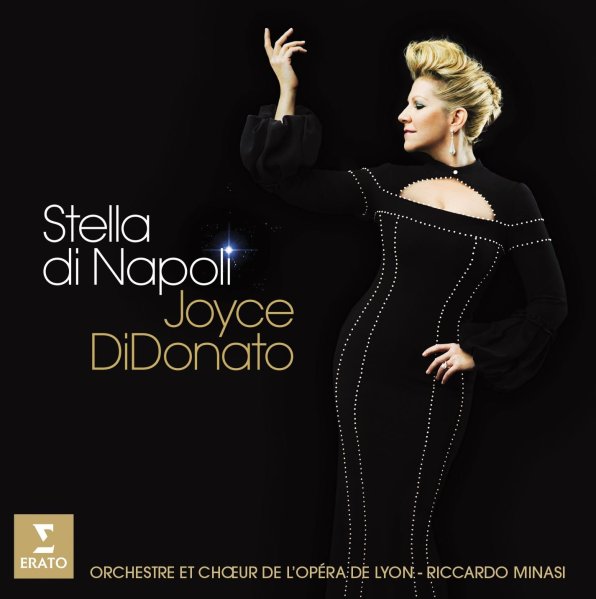
Joyce DiDonato – Stella di Napoli


Joyce DiDonato gives us here a collection of largely little known bel canto arias, some by composers such as Pacini, Mercadante, Valentini and Carafa who are hardly household names. It doesn’t get off to the best of starts as the heroine of Pacini’s Stella di Napoli sings a jolly little ditty, in which the heroine berates her lover for not being there to hear her dying breath. It is the sort of aria that gives bel canto opera a bad name and is exactly the thing Gilbert and Sullivan took such delight in parodying.

Happily we are on much stronger ground with the next item, a lovely elegiac piece from Bellini’s Adelson e Salvini, and thereafter things greatly improve, though it is safe to say the best items are those by the more well-known triumvirate of Rossini, Donizetti and Bellini, even if the final item, a fourteen minute excerpt from Pacini’s Saffo does much to exonerate him.

DiDonato’s singing is supremly accomplished with a mastery of coloratura, scales, trills and legato which is second to none. Added to her technical accomplishments, she has a wonderful grasp of the dramatic situations presented and there is no doubt that she is pre-eminent in the field today. If I were nit-picking, I would say that her singing doesn’t quite have the sheer personality of some of her predecessors in this music, and the preghiera from Maria Stuarda doesn’t quite erase memories of Montserrat Caballé or Janet Baker in the same piece. But, that would be unfair and we should be grateful for what we have, which is a great deal; a singer at the height of her powers with a beautiful voice, technically proficient, put at the service of the music.

She is excellently supported by the Orchestre ey Choer de l’Opéra de Lyon under Riccardo Minasi and the disc comes with notes, texts and translations, though a little more information about the dramatic situations would have been welcome. Warmly recommended.

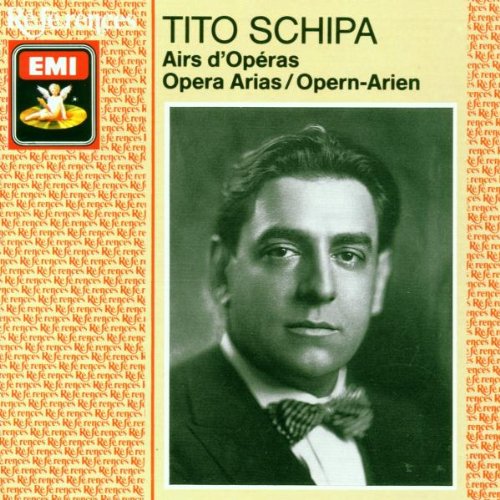
Tito Schipa – Opera Arias

61gglfv2dfl

This EMI disc collects together recordings from Tito Schipa’s first recording sessions in 1913, recordings made in the 1920s and 1930s and one (Werther’s O, nature) recorded in 1942, when Schipa was 54.

The name of Schipa is most associated with style, elegance and grace (not for him the over-emotional sobbing excesses of Gigli), though the first aria included on the disc (Che faro from Orfeo ed Euridice) is hardly a model in that respect. The unstylish playing of the orchestra is certainly no help, but Schipa too has some lapses in style, with occasional aspiarates marring his legato.

The 1913 recordings tell a different story and reveal a surprising amount of power and squillo, not qualities one normally associates with the singing of Tito Schipa. They also offer so much more in the elegance of the phrasing, the firm line and his wonderful legato, as well as a proper appreciation of character and the dramatic situation. The prizes here are the Duke’s Ella mi fu rapita…Parmi veder le lagrime, from Rigoletto, Tu che a dio spiegasti l’ali from Lucia di Lammermoor and the Siciliana from Cavalleria Rusticana.

There are treasures too amongst some of the later recordings, even the 1942 Werther aria, which is wonderfully poetic, but the 1934 aria from Manon is also superb.

However I think I derived the most pleasure from the duets. WIth Toti Dal Monti we get a lovely Prendi l’anel to dono from La Sonnambula, and, even better, a gorgeous Tornami a dir from Don Pasquale, which is just about ideal in every way, the two singers blending thier voices and playing with the musical line in perfect synchronicity. Then, probably best of all is the famous Cherry Duet from Mascagani’s L’Amico Fritz, with the charming Mafalda Favero. Throughout he caresses and moulds the line and there is a moment of pure magic when he sings the words sei pur bella on a delciate thread of sound which perfectly expresses Fritz’s shy awakening to love. It is moments such as these which make us turn to these old recordings.

Elena Souliotis Opera Recital

r-5556117-1396449633-1748.jpeg

In 1965 Elena Souliotis burst into the operatic firmament like a shooting star. The star’s trajectory was swift and by 1971 it had pretty much burned itself out. In fact the recordings she made for Decca pretty much sum up the path of Souliotis’s career. The best of them are the 1965 recording of Nabucco under Gardelli, made when she was only twenty-two, and this recital disc made the followiing year. By the time of the recording of Macbeth, made in 1971, she was sung out, and it is salutory to compare the recording of Lady Macbeth’s opening aria heard here to the one on the complete set. The problems hinted at in the recital (the occasionally unsupported middle voice, the chest voice and upper registers not properly integrated) have now become major issues. Her voice aged twenty years in five. Macbeth was the last major recording she made for Decca, though she did pop up again in 1991, singing the Zia Principessa to Mirella Freni’s Suor Angelica. Hearing the two singers together, you would never for a minute think that Freni was the older singer.

But back to the recital in question, and listening to it now, even with the benefit of hindsight, it is easy to understand why she created such a stir at the time. It was becoming obvious that Callas was leaving the stage (indeed she made her last ever stage appearance in 1965) and people were looking for a singer of comparable dramatic flair. Souliotis, spelled Suliotis back then, certainly seemed to fit the bill. It was not a plush voice, but had a penetrating thrust and power, good flexibility and she sang with real dramatic conviction.

The first item, and the first side of the orignal LP, is the closing scene from Anna Bolena, a Callas speciality, and one would have to admit that there are times that she sounds as if she is ghosting the performance by the older singer. On the debit side also is her lack of a trill. The cabaletta is famous for a rising series of trills, delivered with incredible accuracy and tremendous force by Callas, but Souliotis doesn’t even attempt them. Aside from these flaws, though, the performance is alive to the drama, the melismas in the cavatina beautifully spun out, and the cabaletta thrilling in its rhythmic thrust. Callas may still reign supreme, but I’d still rate this performance more highly than those by Sills, Sutherland, Caballé and Gruberova.

Next up is Lady Macbeth’s entrance aria, which is thrilling, if a little vulgar. Comparisons with Callas are again inevitable, and it has to be said that in Callas’s performance, particularly in the complete live recording under De Sabata, we get a greater sense of Lady Macbeth’s vaulting ambition. Her chest voice is also better integrated, whereas with Souliotis it tends to be a feature unto itself. I like the Luisa Miller aria, though a little too mich of Lady Macbeth creeps in and she tends again to overdo the chest voice. On the other hand, Morro, ma prima in grazia from Un Ballo in Maschera is feelingly sung and actually quite beautiful.

Still, there is the overriding sense that, though there is enormous potential here, this is a voice that is as yet unformed. Singing so many performances of Abigaille at the tender age of twenty-two can’t have been good for her. Callas sang the role only once, at the age of twenty-six, but never touched it again, calling it a voice-wrecker. Maybe she was right. The role’s creator, Giuseppina Strepponi, who became Verdi’s mistress and later his wife, also sang the role a great deal and she was also sung out by the time she was thirty-one.

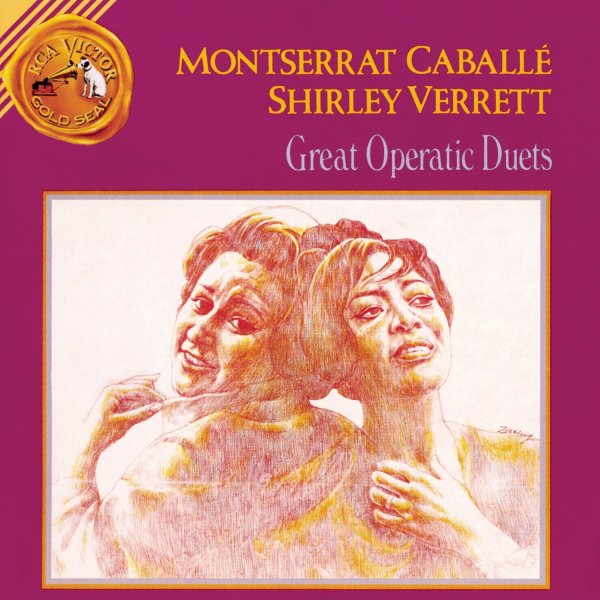
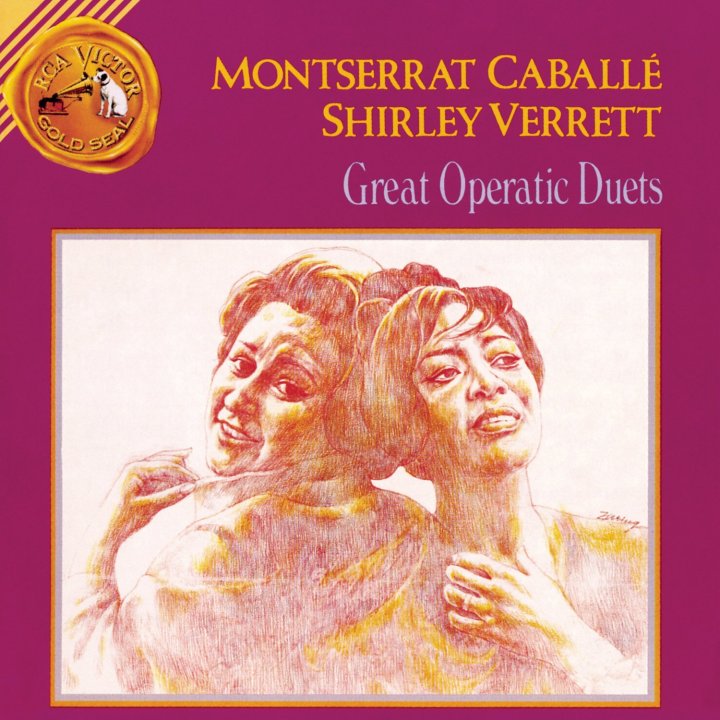
Montserrat Caballé & Shirley Verrett sing Great Operatic Duets

81uwtitniql._sl1500_

Duets from Semiramide (Rossini), Anna Bolena (Donizetti), Norma (Bellini), Les Contes d’Hoffmann (Offenbach), Aida (Verdi), Madama Butterfly (Puccini) and La Gioconda (Ponchielli).

The 1960s and 1970s were halcyon days for opera on disc. New recordings of both repertoire and rediscovered works appeared on an almost monthly basis, alongside recital records by major artists. Duet recitals, though not as frequent, were also a feature of this time, and could sometimes provide more variety in the juxtaposition of two different voices.

This 1969 duet recital finds both singers at the height of their vocal powers and provides a feast of great singing. It doesn’t quite get off to the best of starts however, with a performance of Serbami ognor from Rossini’s Semiramide in which Caballé’s scale passages are less than perfect, and which does not erase memories of Sutherland and Horne in the same music.

Vocally the duet from Anna Bolena is much better, and Caballé is here very touching in the section beginning Va, infelice where Anna forgives Giovanna; maybe not as moving as Callas with Simionato, but then, who is? Their voices blend well in the Norma duet too, and it is good to have the duet from Aida as Verrett never got to record Amneris in a complete recording, but, again neither duet is as thrilling as you’d want.

The principal pleasures of both the Barcarolle from Les Contes d’Hoffmann and the Flower Duet from Madama Butterfly are primarily vocal, and it is certainly wonderful to bask in the sheer beauty of two such gloriously rich voices in full bloom. The disc finishes with the great combative duet from La Gioconda, but yet again it’s a little underpowered and not a patch on Caballé’s recording of it with Baltsa in the complete set under Bartoletti.

This is a good memento of two singers, recorded before Caballé’s top notes started to harden and before she began to overindulge her penchant for floated pianissimi. This is also, to my mind, the best period for Verrett, when she was definitely a mezzo and before the move to soprano roles started to compromise the glorious individuality of that voice. A shame that it’s all a bit low key.

Edit: 24/03/2023

I listened to this duet recital again today and found it just a little dull. The voices are both beautiful, the singing itself accomplished, but somehow nothing really takes off and the emotional temperature is a bit tepid throughout. It got me wondering how much difference a conductor can make. Guadagno, a favourite of Caballé’s, is serviceable, no more. If you compare, say, the duet from Aida with the same duet from the Muti complete recording, where Caballé sings with Cossotto, it is to find that she is much more alive to the drama, much more emtotionally committed, and if you compare the conductng in the Anna Bolena duet to that of Gavazzeni for Callas and Simionato, to Serafin in the Norma, or even Bonynge in Semiramide, it is to find Guadagno rather lacklusre and faccid. He does best in the Barcarolle, where all he has to do is set a nicely flowing tempo and let the two gorgeous voices do their work. Even Verrett, who is usually an exciting and dramatically involved singer seems to be operating at a much lower voltage than usual. I am convinced this disc would have been a lot more satisfactory with a stronger hand at the helm.

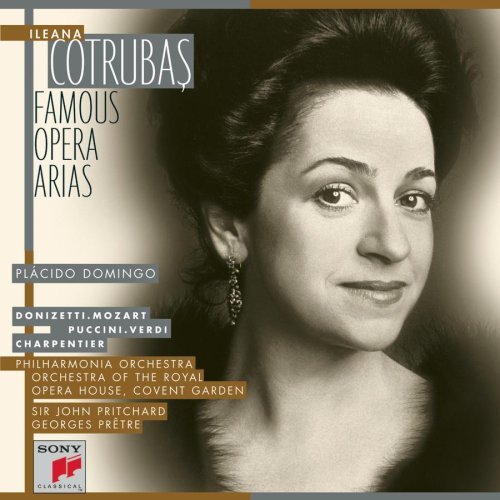
Cotrubas sings Famous Opera Arias

51wbqsfxw6l


Recorded in 1976, when she was already 35, this was Ileana Cotrubas’s first and only recital disc. The playing time of the original disc being somewhat short, Sony have here added excerpts from the excellent complete recording of L’Elisir d’Amore also under Sir John Pritchard, Depuis le jour, from the complete Prêtre recording of Louise and O mio babino caro from Maazel’s Gianni Schicchi.

As Cotrubas herself says in the notes, Leonora’s Pace, pace was somewhat unexpected, a role that Cotrubas was never likely to sing on stage, and it really does need a fuller tone. I’m not sure if she ever sang Liu or Magda, but she could well have done and the other arias are all from her active repertoire.

It opens with a charming performance of Norina’s Quel gaurdo il cavaliere from Don Pasquale, a role she sang at Covent Garden at around the same time. She was a highly successful Susanna at Glyndebourne in 1973 (alongside Te Kanawa’s beautiful Countess and Freredica Von Stade’s radiantly ebullient Cherubino, performances which catapulted all three to stardom) and she is quite delightful in her Deh vieni.

The other side of her personality is captured in a deeply felt Ach ich fühl’s, and the natural morbidezza (an Italian word without any direct translation) which suited her to roles like Mimi and Violetta, is here displayed in her singing of the Puccini arias (Si, mi chiamano Mimi, Liu’s Tu, che di gel sei cinto, and Ch’il bel sogno di Doretta from La Rondine.) Though there is a hint of strain in the upper reaches of Gilda’s Caro nome, the aria also suits her well, and it here emerges as a dreamy reverie rather than the coloratura showpiece it often is.

The L’Elisir d’Amore excerpts are lovely in every way, as is Lauretta’s O mio babino caro, and Depuis le jour well captures Louise’s quiet intensity and mounting rapture.

A lovely memento of a well-loved artist.

Joan Sutherland – Grandi Voci

51sshvna3-l

On 17 February 1959, Joan Sutherland sang her first Lucia di Lammermoor at Covent Garden. She had first been engaged at Covent Garden in 1952, singing small parts, such as Clotilde to Callas’s Norma. That same year she sang her first leading role there (Amelia in Un Ballo in Maschera), but the administration didn’t at first realise her potential and the roles she sang (Agathe, The Countess, Desdemona, Gilda, Eva, Pamina, Lady Rich in Gloriana and Jennifer in Tippett’s The Midsummer Marriage) gave no real indication of the direction her career would take. She herself had thought she would be a Wagnerian soprano, but Richard Bonynge, who married her in 1954, eventually convinced her otherwise, and in 1959 Covent Garden gave her the honour of a new production of Lucia di Lammermoor, directed by Franco Zeffirelli and conducted by Tullio Serafin. Sutherland proved a sensation, and, at the age of 35, she became a star, in demand all over the world for dramatic coloratura roles.

This disc adds to her debut recital, made shortly after the Covent Garden Lucia, two arias from one of her most successful sets The Art of the Prima Donna (Casta diva and the I Puritani Mad Scene), recorded in 1960 and Santo di patria, lifted from another set The Age of Bel Canto, recorded in 1963.

Those who know me will know I am not much of a Sutherland fan. The mannerisms (the mushy diction especially, the droopy portamenti, the weak lower register) that crept in as early as the 1960s irritate me so much I find it hard to listen, and the beauty of the voice is no compensation.

It is good to be reminded, then, that it was not always so, and she sounds quite different here, the voice much more forwardly produced, and, even if she rarely uses the words to suddenly bring a phrase into sharp relief, there is nothing much wrong with her diction in these discs. Maybe this has something to do with the conductors she was working with then, all Italians, Nello Santi for the debut recital, Francesco Molinari-Pradelli for The Art of the Prima Donna, Tullio Serafin at Covent Garden. Interestingly Serafin advised her to study the role of Lady Macbeth, but Bonynge obviously thought otherwise.

The main meat of the disc, however, is that first ever recital made with the Paris Conservatoire Orchestra under Nello Santi. Lucia’s two big solos were an obvious choice, to which are added Merce, dilette amiche from Verdi’s I Vespri Siciliani, Ernani! Ernani involami from Ernani and O luce di quest’anima from Donizetti’s Linda di Chamounix.

Throughout the technical command is stunning, as is the beauty of voice, the top notes, of which there are many, one of its greatest glories. Nor is she just a technical machine. Though there is little attempt at vocal characterisation (Norma doesn’t sound much different from Lucia), she is not an unfeeling singer. There is command in Norma’s Sediziose voce, poetic feeling in the recitative to the Ernani aria, breezy grace in the aria from I Vespri Siciliani.

Fresh from the success of the Covent Garden performances, the Lucia arias are predictably best of all. Here not only is the execution vocally stunning, but she is the very epitome of the young Romantic heroine, driven mad by despair. Like Callas, she is a far cry from the piping, doll-like sopranos who had made Lucia something of a laughing stock among opera cognoscenti. Unfortunately already by her first complete recording of the opera made in 1961, the tone has become more occluded, the diction less precise, the vowels begin to be rounded and dulled, and the vitality and immediacy heard here starts to droop.

Though vital and alive in the scene from Verdi’s Attila, conducted by Richard Bonynge, the diction is not as clear as it is on that frst recital, though the recording here does give some indication as to the size and fullness of the voice. Even with that small niggle about the diction, this is still a stunning performance, thrilliingly dramatic, and I’ve never heard it better sung. Deutekom on the Philips complete set is pallid by comparison.

This disc, along with The Art of the Prima Donna, is, I would suggest, essential Sutherland, and remain permanent parts of my collection. The rest, personally, I can live without.
José Carreras – My Barcelona

Well this is something of a hotch potch, no doubt explained by its provenance – music included in the 1991 documentary film made after his recovery from leukemia My Barcelona, a celebration of the unique relationship between the man and the city of his birth.

What we get is a mixture of operatic arias, popular song and excerpts from Ramirez’s Navidad Nuestra and Misa Criola, which, surprisingly perhaps, makes for a pleasantly varied disc.

No great revelations, I suppose. Carreras is at his honeyed best in Cavaradossi’s E lucevan le stelle from the 1976 Davis recording of Tosca, a performance of poetic beauty, made before some of the heavier repertoire he essayed took a toll on his essentially lyric tenor, but most of the selections give pleasure. I particularly enjoy his version with piano of Mompou’s haunting Damunt de tu només los flors and the Ramirez pieces are also great fun.

An undemanding but enjoyable disc.

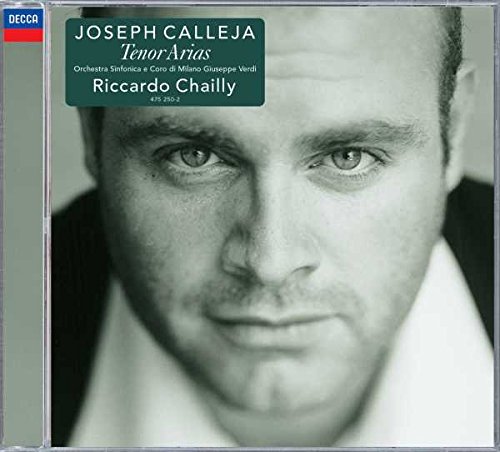
Joseph Calleja – Tenor Arias

51cklkxuoyl

This disc was recorded back in 2003, when Joseph Calleja was a virtually unknown twenty-six year old, and on the threshhold of his career. At that time, the voice was a light lyric tenor with a distinctive fast vibrato, more akin to the sound of tenors like De Lucia and Bonci than what we have become used to since.

Repertoire on the disc is judicially chosen, and I am very surprised to see that in his most recent disc of Verdi arias, he tackles music for Otello, Manrico and Radames (though I don’t think he has sung any of these roles on stage yet). Listening to the performances on this disc, one wouldn’t suspect for a moment that the voice would develop to embrace that repertoire. So far he has taken his career slowly and I do hope he doesn’t push himself too far.

But back to the recital disc in question, and I must say I find it very satisfying. Far from the can belto of so many tenors, there is lighness and grace to his singing, and he refreshingly brings as much attention to recitative as he does to an aria. Take the opening piece, the recitative to Alfredo’s Dei miei bollenti spiriti, which brims with joyful high spirits, softening with a touch of intimacy at Qui presso a lei. The aria itself is sung with a nice buoyancy and affectionate phrasing, switching to a more propulsive manner for the cabeltta.

The Macbeth aria is sung with a deep sense of melancholy, whilst the Duke is all charm and insouciance, though the top D he attempts is a little insecure. Nemorino’s Quanto e bella is delivered with a nice winsome charm, and Edgardo’s final scene is suitably tragic.

I’m not sure the aria from Adrianna Lecouvreur was a good choice for him, as it seems to cry out for a beefier sound. Nevertheless his restraint is most welcome, and it is good to be free of all those sobs and aspirates that used to pass for emotion in some Italian tenors of an earlier generation

In all Riccardo Chailly offers impeccable support, and it is good that scenes are given complete with chorus and interjections from other singers (Linda Easley as Annina and Giovanni Battista Parodi as Raimondo).

All in all a very successful debut recital, and it is good to know that Calleja is still active today, largely fulfilling the promise he showed in this one.

Montserrat Caballé sings Bellini and Donizetti

The lion’s share of this CD is a reissue of what, I believe, was Caballé’s first recital disc for RCA, recorded in 1965 when the voice was at its freshest, and at around the same time as her sensational international debut in Lucrezia Borgia at Carnegie Hall, when she was a last minute replacement for Marilyn Horne. Up until then her repertoire had focused on Mozart and Strauss, plus Massenet’s Manon, and in fact she made her Glyndeboure debut later the same year as the Marschallin. However it was as a bel canto specialist that she would eventually become known, and she was one of the sopranos (along with Sutherland and Sills) who spearheaded the bel canto revival, set in motion by the legendary La Scala Visconti production of Anna Bolena with Callas.

The voice itself was rich and velvety, even throughout its range, her breath control exemplary, with the ability to float the most incredible pianissimi, an effect she perhaps overused in later years. There were a few chinks in her armour, especially for a bel canto specialiste; her trills were somewhat ill defined, and though the voice had flexibility and negotiated florid music well, there was the occasional hint of an aspirate, never encountered in the singing of Callas or Sutherland.

The tendency to aspirate, noticeable in the very first phrase of Casta diva, mars the beauty of the performance and the aria is not as mesmerising as it can be, despite the gorgeous sound. But this is nit picking and hers is still one of the most ravishing performances of the piece you will hear. Better I think is the Mad Scene from Il Pirata, which is sung with deep feeling and a true appreciation of the dramatic situation. The cabaletta does not have the lacerating effect of Callas in the same music, but works well within Caballé’s gentler conception.

All three Donizetti roles which follow became Caballé staples in the next few years, and she fulfils all their demands for vocal gandeur and personality. Always evident is the sincerity of her art, but she is not one of the world’s character actors. It has to be admitted that all these Donizetti and Bellini heroines sound much the same, the characters pretty interchangeable. Does that matter? Well I suppose that depends on one’s personal preferences, and mine are well known. That said, I am grateful for what she has, and Caballé is certainly not unfeeling, in fact often most affecting. Where Sutherland’s dazzling performances often leave me cold, I find Caballé’s dramatic commitment, albeit rather generalised, satisfies me more. We would be privileged to hear singing of such beauty and accomplishment now.

RCA have here added a Mira o Norma recorded in 1972 (I assume this is from the complete set with Fiorenza Cossotto, though she is not credited) and the first part of the closing scene from Anna Bolena, recorded in a somewhat boomy acoustic in 1970. Already there is just a very occasional hint of the hardness that would later affict her loud high notes and result in the over-exploitation of those floated high pianissimi, but there is still much that is very beautiful. Befittingly, the disc ends with the quite close to the cavatina from Anna Bolena, the final phrase spun out and floated through the air on a pure thread of glorious sound. It is for moments such as these that the art of Montserrat Caballé will most be remembered.

Jussi Björling – A collection of Swedish 78s.

These two CDs gather together most of the 78s the young Björling made in his native Sweden between 1933 and 1949, the earliest made when he was a budding tenor of twenty-two.

Most are vocal gems, but one or two (the rather loud and penny plain Je crois entendre encore, and the unpoetic duet from La Boheme with Anna- Lisa Björling on the second disc, for instance) are less than great.

The voice itself was a magnificent one, no doubt about it, with a silvery purity throughout its range, the high notes free and easy; just listen to his joyfully ebullient 1938 performance of Offenbach’s Au mont Ida from La belle Hélène, sung in Swedish, but with terrific swagger, the top notes flying out like lasers. From a few years ealier we have a plaintively sensitive performance of Valdimir’s Cavatina from Borodin’s Prince Igor, the legato line beautifully held, his mezza voce finely spun out. Also from 1938 we have a thrilling performance of the Cujus animam from Rossini’s Stabat mater, with a free and easy top D flat at the end, and it is prinicpall for Italian and French opera that Bjørling will be remembered and there are plenty of examples here of his wonderfully musical performances in that genre.

We find him ideal in Verdi, Donizetti and Puccini alike, in Myerbeer, in Massenet and in Gounod (a glorious rendering of Faust’s Salut, demeure). Some regret the absence of a true Italianate tone in the Italian items, but he will never resort to sobs and aspirates to express emotion, and, personally, I find his comparative restraint very attractive. It is true, he is not always imaginative with his phrasing, and nowhere will you get the kind of psychological introspection you would hear in a performance by someone like Vickers, but his singing is always musical, and of course there is a great deal of pleasure to be had from the voice itself, which Italianate or not, is a thing of great beauty.

Some of the very best of these 78 recordings are included on Volume 1, stand out items for me being the aforementioned Faust aria, his wonderfully musical and sensitive Ah si, ben mio from Il Ttovatore, and his poetic, but thrilling version of Nessun dorma from Turandot.  There is also plenty to treasure in Volume 2, which includes the Offenbach and Borodin, but also a sensitvely prayerful  Ingemisco from the Verdi Requiem, Des Grieux’s lovely Dream from Manon sung with liquid, honeyed tone (his ardent Ah, fuyez is on the first disc), and his  poetic Cielo e mar, from La Gioconda.

The second disc finishes with a couple of unexpected examples of his work in Lieder, a gorgeously lyrical Beethoven Adelaide, and a beautifully restrained and rapt account of Strauss’s Morgen.

Anyone who loves the tenor voice and gloriously musical and sensitive singing (not always the same thing) should have these recordings in their collections.