Callas’s Studio La Sonnambula

91k3udjbejl-_sl1461_

Recorded 3-9 March 1957, Teatro alla Scala, Milan

Producer: Walter Legge, Balance Engineer: Robert Beckett

The role of Amina probably seemed a curious one for Callas until it was remembered that Bellini wrote it for the very same singer for whom he wrote Norma, Giuditta Pasta. Where Norma was eventually taken over by big voiced dramatic sopranos, who mostly couldn’t do justice to its coloratura demands, Amina became the province of light, soubrettish high coloratura sopranos, intent on showing off their high notes and flexibility. Callas returned a human dimension to the role that nobody had suspected was there.

She first sang the role at La Scala in 1955 in performances that were a total revelation. Visconti reproduced a picture-book village, a Romantic vision of a time that never was, Callas costumed to look like a reincarnation of the nineteenth century ballerina Maria Taglioni. At the end of the opera, when Callas sang Ah non giunge, the lights on the stage and in the auditorium rose to full intensity, whilst Callas, no longer Amina but the reigning queen of La Scala, came to the front of the stage singing directly into the audience. In a live recording that exists of the night, the audience go mad with applause before the music has even finished. With Leonard Bernstein in the pit and Cesare Valletti as a stylish Elvino, the production was a massive success.

However this recording is more a reflection of the revival in 1957, and was made at the same time. La Scala subsequently took the production, with substantially the same cast, to Cologne and Edinburgh. Votto is now the conductor, Nicola Monti the Elvino and Zaccaria replaces Modesti as Rodolfo.

When considering the role of Amina, it might be wise to take a look at the advice of its librettist Felice Romani:

The role of Amina, even though at first glance it may seem very easy to interpret, is perhaps more difficult than many others which are deemed more important. It requires an actress who is playful, ingenuous and innocent, and at the same time passionate, sensitive and amorous; who has a cry for joy and also a cry for sorrow, an accent for reproach and another for entreaty… This was the role created by Bellini’s intellect.

And this is exactly what we get from Callas. Her first lines of recitative, and the aria that follows, Come per me sereno, are imbued with a deep happiness that radiates from within, her voice taking on a pearly softness. In a single phrase, Il cor soltanto, when the notary asks her what she brings as dowry, she expresses Amina’s deep love and trust in Elvino. In the first sleepwalking scene, her voice seems to come from somewhere inside her, an aural depiction of Amina’s dreamlike state; her confusion when she wakes, and subsequent distress when Elvino rejects her palpably real. I doubt I will ever hear a more moving account of Amina’s Oh se un volta sola and the aria that follows, Ah non credea, than we get from Callas. Here we truly hear the cry for sorrow; Callas’s singing goes beyond the notes to create the stuff of real-life tragedy, with a depth that nobody had even suspected was there when the role was sung by light pale-voiced soubrettes.

Technically her singing is brilliant, her command of line, trills, gruppetti, scale passages peerless. At one point, in the cadenza between the two verses of Ah non giunge, she sweeps up to a fortissimo Eb in alt. Unbelievably she effects a diminuendo on this stratospheric note before cascading down a perfect two octave scale, phrasing onward in one breath through an upwardly rising chain of notes to cap the cadenza. This is no trick of the gramophone, because she does exactly the same thing when she sings the role live in Cologne a few weeks later.

As for the rest, Valletti is a sad loss from the earlier performances. Monti is taxed by the higher reaches of the role, and many cuts are made to accommodate him. He’s also on Sutherland’s first recording, which followed in five years. Presumably light lyric tenors were in short supply in the mid 1950s. I often wonder why Gedda, who sang Pinkerton to Callas’s Butterfly a couple of years before was not engaged. Zaccaria’s mellifluous bass gives us a worthy Cari luoghi. Ratti is a bitchy, minx-like Lisa. Cossotto sings beautifully as Teresa, but sounds too young (which of course she was).

Votto’s conducting, which comes alive in Cologne, is often dull and routine here, particularly in the choruses, which lack energy (compare Bernstein in 1955). When Callas is before the microphone, you feel that it is she who leads, her sense of line, rubato and pace absolutely spot on.

The sound in this Warner issue is admirably open, with plenty of space around Callas’s voice, which, as I mentioned earlier, has a pearly radiance absolutely right for the role of Amina. I may on occasion prefer to listen to the 1955 La Scala performance with Bernstein, a truly thrilling and exciting evening in the theatre, but I feel that by 1957, both here and in Cologne, Callas has captured more of the poetry of Bellini and Romani’s heroine. Her Amina is an achievement to set beside that of her Norma, as, according to contemporary commentators, was that of the creator of the two roles, Giuditta Pasta. There can be no higher praise
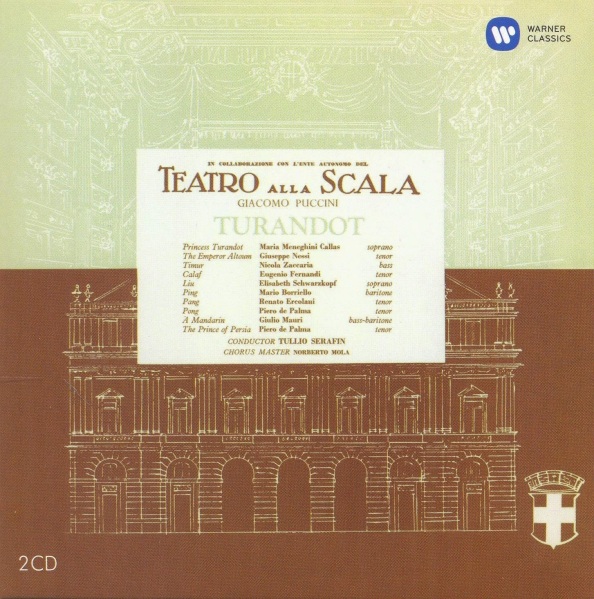
Callas as Turandot

9172j0czwml-_sl1467_

Recorded 9-13, 15 July 1957, Teatro alla Scala, Milan

Producers: Walter Legge and Walter Jellinek, Balance Engineer: Robert Beckett

1957 started well for Callas. She made two of her best recordings (Il Barbiere di Siviglia and La Sonnambula) and had a huge success as Anna in Anna Bolena at La Scala. The Iphigenie en Taurdie which followed may have been more of a succès d’estime but, though her colleagues were decidedly under par, she was superb and in good voice, as she was when La Scala took their production of La Sonnambula to Cologne in Germany.

She then records two operas far less suited to her gifts (Turandot and Manon Lescaut), goes on to sing a concert in Athens, when she is decidedly not in her best voice, sings Amina again with the La Scala company in Edinburgh, where she sounds thoroughly exhausted, and then  compounds the problem by recording Medea. The cracks are definitely beginning to show. After a few week’s rest, she is back on form for a Dallas Opera Inaugural concert (or appears to be on a recording of the rehearsal), and finishes the year well with a stupendous performance of Amelia in Un Ballo in Maschera at La Scala.

Turandot figured quite heavily in Callas’s early career. In 1948 and 1949 she sang it in Venice, Rome Caracalla, Genoa, Verona, Naples and Buenos Aires. She once said in interview that she dropped it as soon as she could, “because it’s not really good for the voice, you know.” All that exists from any of these performances are a couple of short extracts from the Buenos Aires performance, in which her voice is massive and free-wheeling, as far as one can tell through the execrable sound. By 1957 her voice has considerably pared down, and one might wish that she had recorded the role even a few years earlier when she sings a vocally secure and thoroughly commanding version of In questa reggia on the Puccini recital of 1954.

That said, I find the voice less wobbly and ill-supported than I do in the Manon Lescaut, which followed, on which, to my ears, she sounds exhausted, for all her customary musical imagination and insights. She is more secure in this Turandot but she doesn’t really disguise the effort it costs her. Where Nilsson and Sutherland, and Eva Turner before them, soar, Callas is more earth bound. That said, she makes a psychologically more complex heroine than any of them, her singing more subtly layered than we have come to expect from a Turandot. Hear how she vocally points the finger at Calaf in In questa reggia when she sings Un uomo come te, the almost mystical recounting of the story of Lou-u-ling. The first signs of Turandot’s vulnerability come in the Riddle Scene, anxiety creeping into her voice at Si la speranza che delude sempre, and her pleading to her father is almost in the voice of Butterfly, suddenly a daughter trying to get round her father. There are signs of her vulnerability too in the brief scene with Liu, when she asks,  Che posa tanta forza nel tuo core, mirroring Liu’s response with her repetition of the word L’amore. Even the last scene is less of an anti-climax than it usually is. When she sings Che e mai di me? Perduta, we know that she is conquered, and her final aria Del primo pianto is sung with a wealth of detail. For all the evident strain the role makes on her resources, it is a great performance, and she is far less stressed by its demands than Ricciarelli is on Karajan’s recording.

The rest of the cast is interesting. Many have opined that Schwarzkopf sounds as if she had wandered in from the wrong opera, but I like her finely nuanced and beautifully shaded Liu. She is particularly impressive in her exchanges with Turandot and in the mini aria Tanto amore, effecting a wonderful diminuendo on the line Ah come offerta suprema del mio amore. What a pity this is the only time the two most intelligent sopranos of the post war period ever sang together. Fernandi, a strange choice considering he was very little known at the time, and hardly at all since, is rather better than his lack of reputation suggests. Not as exciting as a Corelli (why on earth was he not engaged?) he nevertheless sings a valid Calaf, often phrasing with distinction. Not the best Calaf on record certainly, but not the worst either. Zaccaria is a sympathetic presence as Timur, Ping, Pang and Pong all characterful. There is also a connection with the first ever performance as Nessi, who sings the Emperor, created the role of Pang.

Serafin’s conducting is excellent, urgent and well-paced. What a pity that he doesn’t have the benefit of modern stereo sound, which this of all operas really cries out for. The sound here is, to my ears anyway, less boxy than the sound for Manon Lescaut, though it is not as open as, say, the De Sabata Tosca, which was recorded four years earlier. This Warner pressing sounds a good deal better than my 1997 Callas Edition, with Callas’s voice far less shrill in the upper reaches. It may never be anyone’s library choice for the opera, but I would not want to be without the insights Callas brings to the role. It is, in many respects, a more thoughtful rendering of the score than we often hear.

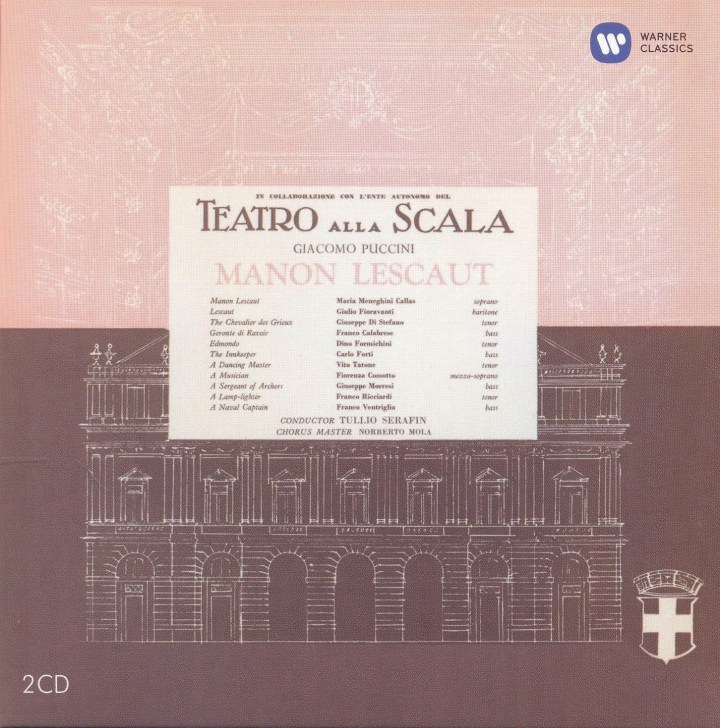
Callas in Manon Lescaut

91nkir4mq2bl-_sl1470_

Recorded 18-27 July 1957, Teatro alla Scala, Milan

Producer: Walter Legge, Balance Engineer: Robert Beckett

Manon Lescaut has never been a favourite opera of mine, and to my mind pales in comparison to Massenet’s work, which is a truer representation of L’Abbe Prevost’s novel, for all that he ends the opera in Le Havre rather than America; nor does this recording rank particularly high in my roll call of Callas recordings. Though recorded in 1957, it waited 3 years before it was released, so presumably Legge and Callas had their doubts too.

For much of the first two acts, the recording itself has a curiously flat sound to it, and though we hear a fair amount of orchestral detail, both strings and voices sound undernourished. I don’t know whether it was me becoming more involved, but things do seem to improve in the last two acts, where Callas also sounds more comfortable vocally.

To my ears, she has always sounded utterly exhausted in this set. It was recorded shortly after Turandot, which she really ought not to have been singing at that stage in her career anyway. She manages Turandot surprisingly well, but the effort it must have cost her shows in the parlous state of her top in much of this Manon Lescaut. She is actually in much better voice in the later complete recordings of La Gioconda, Lucia di Lammermoor and Norma, even the Medea, which followed it, but then in all those she was singing repertoire more suited to her gifts. I’m not sure it was ever the right voice for Puccini, for all her success in the role of Tosca. Not long after this, she sang Amina in Edinburgh and made the studio recording of Medea, neither of which find her in her best form, and it is not until the Dallas Inaugural Recital in November that she recovers form. She is also in stupendous voice for the live La Scala Un Ballo in Maschera in December, so presumably she had benefited from some rest. Even in the middle and lower registers here, much of the velvet is missing from the voice, and even in quieter passages she doesn’t seem to have sufficient energy to support the voice.

Of course, there are, as always, musical compensations aplenty. In the first act, Callas sings with a lightness and purity that mirrors Puccini’s con semplicita markings. Later, her In quelle trine morbide is even more finely nuanced than on the recital disc of 1954, sung more as a reflection to herself than to Lescaut; and the trills and grace notes in L’ora o Tirsi are sung with a lightness and accuracy that eludes most singers of the role; the duet with Des Grieux is full of restrained passion. In Act III she has less to do, but her few exchanges have a weariness and dull despair that is most affecting. However it is in the often anti-climactic final act, where vocally and dramatically she is at her best, with a harrowing Sola perduta and a chillingly moving death scene.

Di Stefano’s singing is variable, occasionally disturbingly tight on top and at other times admirably free, but he does bring personality and face to his singing. Full of youthful joie de vivre in Act I, he becomes a man consumed with love and literally at the end of his tether for Guardate, pazzo son. It’s an appreciable performance, if not the best sung Des Grieux you’ll ever here.

No complaints about the rest of the cast. Fioravanti I have never come across before or since, but he makes an excellent Lescaut and we also get a nice cameo from Fiorenza Cossotto as the madrigal singer.

Serafin, as so often, gets the pacing just right. So much about his conducting is just so unobtrusively right, and in Act III he builds the ensemble leading up to Des Grieux’s outpouring at Guardate, pazzo son in masterly fashion.

Not an opera or a recording that I want to listen to that often, (why oh why didn’t Legge record her in more of the repertoire for which she became famous?) but it certainly has its moments.

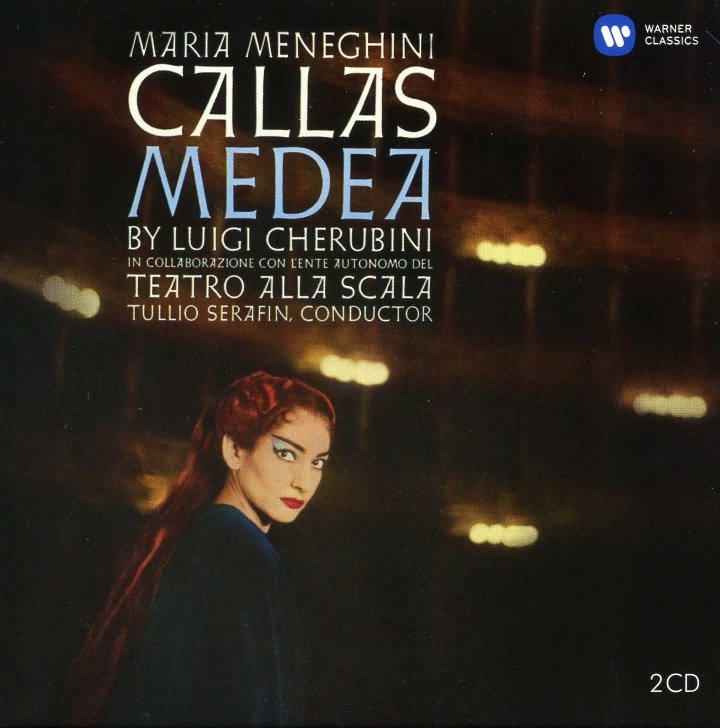
Callas’s Studio Medea

81xwlszwrml-_sl1456_

Recorded 12-19 September 1957, Teatro alla Scala, Milan

Producer: Wilma Cozart. Balance Engineer: Robert Fine

This recording of Medea has an unusual history. Medea had become a seminal Callas role, and she desperately wanted to record it. The opera was revived specially for her first in Florence in 1953, and she subsequently sang it in new productions in Milan (under Bernstein), Rome, Dallas, London, Epidaurus in Greece, and again at La Scala for the last time in 1961. Like much of her stage repertoire, Legge had little interest in it and agreed to release her from her contract, when Ricordi, who were launching a new label, approached her about recording it. EMI, no doubt finally realising its importance in the Callas canon, did eventually release it, but it has also been released by Mercury, Everest, and no doubt others.

However she was probably unwise to record it when she did, right after the Edinburgh performances of La Sonnambula when she was in ill health. Her voice isn’t exactly wobbly above the stave here, but it does lack power, a power that she recovers when she sings the role in Dallas the following year.

That said, when I first got to know this opera, and this recording, I had no other point of reference, and it seemed pretty good to me. It was only later, when I heard those barnstorming performances from Florence, La Scala and Dallas, that I found anything lacking, and it is only in comparison with herself that she fails. She is still a good deal better in the part than any other who attempted it, certainly a lot better than Gwyneth Jones and Sylvia Sass, who also made studio recordings of this Italian version. In other hands, Cherubini’s music can seem staid and formulaic. Callas breathes life into it like no other.

The version of Medea that Callas sang is actually a hybrid. Medée was originally an opera-comique in French with spoken dialogue. It was later translated into Italian, then recitatives were written by Franz Lachner for a German production. The version Callas performed was an Italian translation of the Lachner version, premiered at La Scala in 1909, over a hundred years after its first performance and 60 years after Cherubini’s death. Even so, each conductor Callas worked with (Gui, Bernstein, Rescigno, Serafin, Schippers) prepared their own version of the score, and made their own cuts. Consequently no two Callas performances are the same.

Serafin’s conception is essentially Classical, but his conducting varies from the somnolent to the dramatic. After a tautly conceived overture, the first scene up to Medea’s entrance drags on interminably. I understand the necessity to establish a pastoral air of peace and calm, into which the Colchian Medea bursts, but, quite frankly, at this pace it just becomes a bore. On LP I used to miss out the first side completely, and set the needle down part way through the second LP, when Medea makes her entrance.

Without foreknowledge of other performances by Callas, this is still a great performance of a difficult role. We lose some of the power and ferocity, but there are gains too. Ricordi il giorni tu la prima volta quando m’hai veduta? is couched in the most melting tones, her duplicity in the scene with Creon, and the following duet with Jason brilliantly charted, and her scene with the children movingly intense. Vocally, for all that she is not in her best voice, she manages its angular lines and wide leaps with consummate skill, her legato still wondrously intact. Note also how, in this Classical role, her use of portamento is more sparing.

When it comes to the supporting cast, Scotto is less of an advantage than you might expect, Pirazzini rather more (though not quite a match for Barbieri in Florence and at La Scala or Berganza in Dallas). Picchi, who sang Pollione to Callas’s Norma in London in 1952, is rather good, though Vickers is even better in Dallas. Modesti makes a good Creon too, though I would prefer Zaccaria in Dallas.

So, all in all, still probably the best studio Medea you’re likely to hear, and the sound (stereo, but still rather boxy) is a lot better than what you will hear in Florence, Milan or Dallas. Nevertheless all three of those performances are preferable, regardless of sound quality, for the white hot intensity Callas brings to the role.