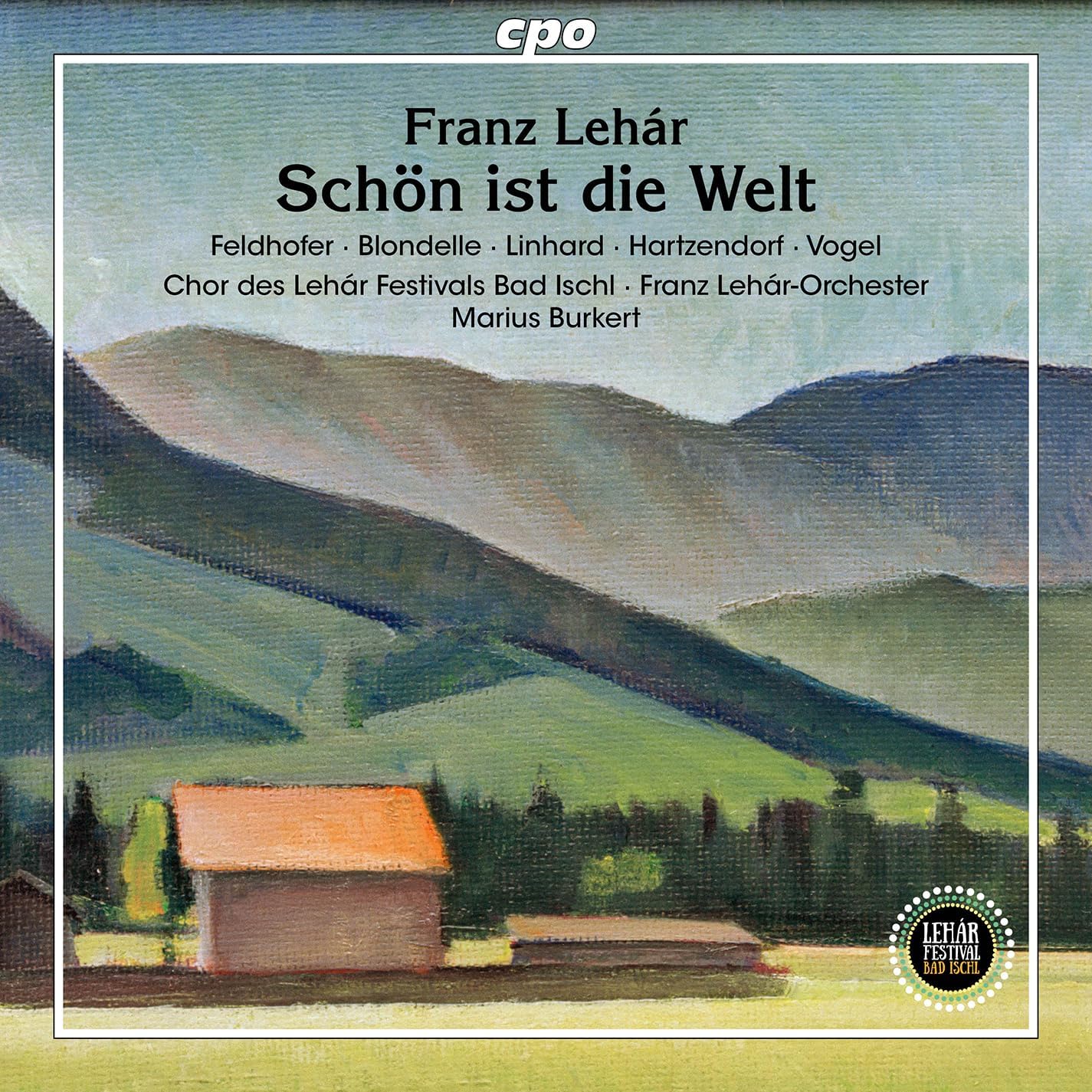
Schön ist die Welt on CPO

813sjdal._ac_sl1425_

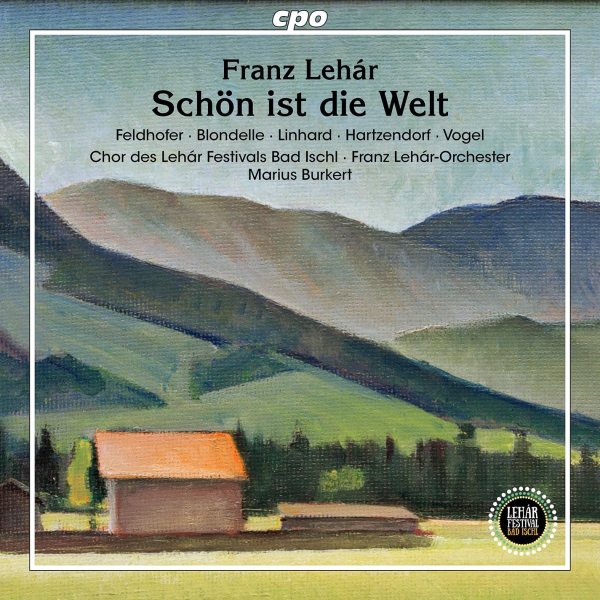
Schön ist die Welt was the last in a series of Lehár’s operettas that were premiered in Berlin. Paganini, had met with a somewhat lukewarm reception in Vienna, but had triumphed in Berlin in 1926 , due to the participation of Richard Tauber, and thereafter Lehár wrote the majority of his operettas for Berlin with Tauber in mind for the leading role. Not that Shön ist die Welt, which premiered in 1930, was an entirely new work, it being a re-working of an earlier operetta, Endlich allein, originally performed twelve years earlier, the second act of which Lehár had been particularly proud, as it was more or less through composed with minimal dialogue. This second act, with the addition of a Tauber-lied, is pretty much lifted from the earlier operetta, but the outer acts underwent substantial revisions.

The action takes place in the Swiss Alps, where Crown Prince Georg arrives at an Alpine resort to meet for the first time his fiancée, Princess Elisabeth. However, on the way he stopped to help a girl, whose name he did not discover, mend a puncture and fell madly in love with her. He announces to his father that he will not marry Elisabeth because he loves another. All turns out well when our unwitting hero and heroine go on a hike and get trapped by an avalanche at an Alpine hut and have to spend the night together. Returning the hotel the next morning, Georg discovers that the girl he helped with the puncture is in fact Princess Elisabeth. There is also a sub plot involving Count Sascha and a Brazilian dancer, called Mercedes della Rossa, which gives Lehár the excuse for some Latin American influenced music in the first and third acts. It’s all pretty insubstantial, but it does give rise to some gloriously lyrical music, especially in the second act, which involves just the two leads.The present recording would seem to derive form stage performances as we hear occasional stage noise, though there is precious little sign of any audience. There was a previous recording, also on CPO, (review), which I see is still available as a download. That was on a single CD, but included none of the dialogue, whereas here we get quite a lot of it, which could prove tedious for all but fluent German speakers, and even they could find it a little too much for repeated listening.That said, the sound is excellent and the playing of the Franz Lehár Orchestra under Marius Burkert most stylish. I also enjoyed the contributions of Katharina Linhard and Jonathan  Hartzendorf as the secondary couple, and of Jospeh Terterian as the Jazz Singer. Where I had a problem was with the contributions of the two leads. Thomas Blondelle as Crown Prince Georg has a pleasing light tenor, but he is no Richard Tauber and he is not really up to the operatic demands of Act II. Nor is Sieglinde Feldhofer as the Princess Elisabeth. She has rather too much vibrato for my taste and tends to lunge at her high notes. I couldn’t help thinking what a difference a Schwarzkopf or a Rothenberger would have made.  Elena Mosuc and Zoran Todorovich who sing the roles of Elisabeth and Georg on the other CPO recording I mentioned above, improve on the present two, but they, rather confusingly, sing the secondary couple as well, so there is no doubt that this present recoding is more cohesive.

Nor would I like to give the impression that I didn’t enjoy the set. I did. Very much indeed, despite the less than stellar contributions of the two main leads. Lehár was such a prolific tunesmith, some of the songs were rattling around in my head for days afterwards. It gets a qualified recommendation from me.

Prinzessin Elisabeth – Sieglinde Feldhofer (soprano)

Kronprinz Georg – Thomas Blondelle (tenor)

Der König – Gerd Vogel (baritone)

Mercedes della Rizza – Katharina Linhard (soprano)

Graf Sascha Karlowitz – Jonathan Hartzendorf (tenor)

Herzogin Maria Brankenhorst – Klára Vincze (soprano)

Ein Jazzsinger – Jospeh Terterian (tenor)

Hoteldirektor – Johannes Hubmeir (tenor)

Chor des Lehár Festivals Bad Ischil

Franz Lehár Orchestra/ Marius Burkert
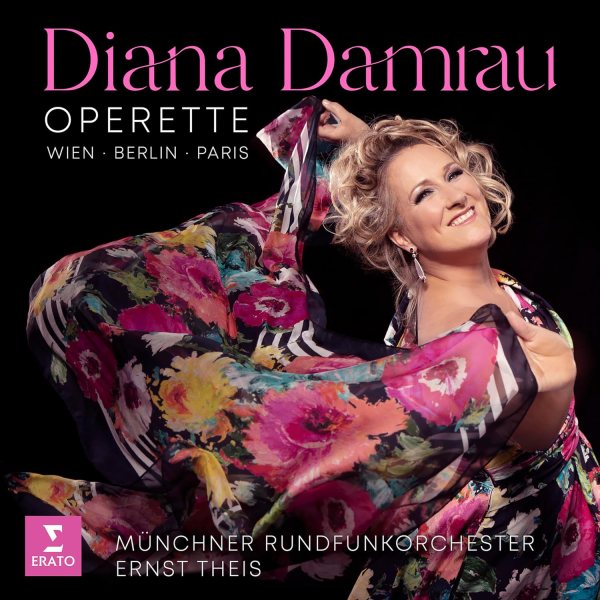
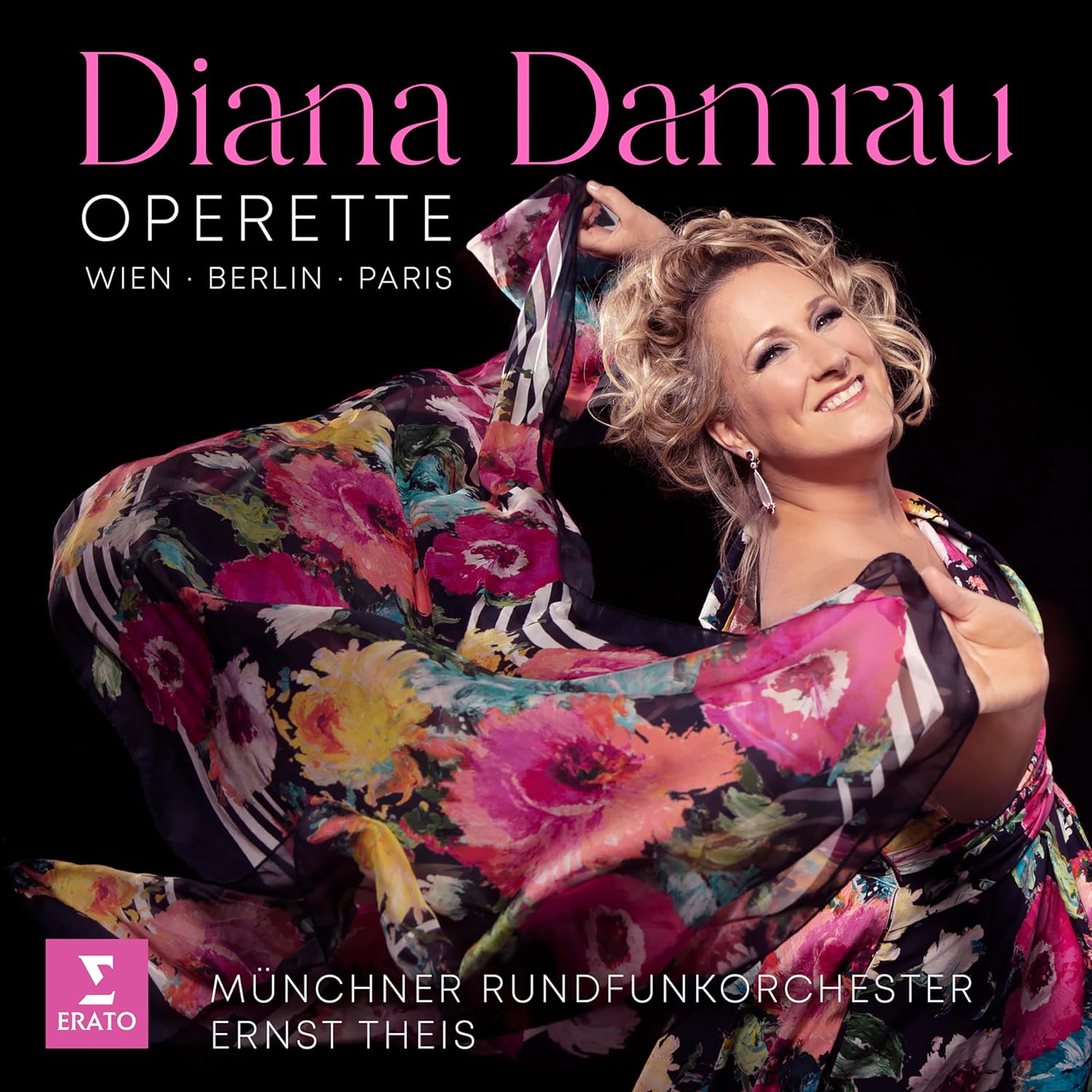
Diana Damrau sings Operetta Arias

81cnwhalnl._ac_sl1500_

Operetta is probably not as popular now as it was around the middle of the last century when amateur productions of popular operettas were ubiquitous. Indeed, back in the 1950s and 1960s my father was musical director of several local operatic societies, conducting a regular fare of Lehár, Strauss and Offenbach alongside American musicals by Rodgers and Hammerstein and the like. Nowadays you’d be more likely to encounter shows by Lloyd Webber or Schönberg & Boubil, or one of the now popular jukebox musicals. Even The Merry Widow and Die Fledermaus, once in the regular repertoire of our professional opera companies, are seldom performed, at least here in the UK.

Maybe the tradition is more alive in Germany and Austria because the Münchner Rundfunkorchester under Ernst Theis here put in splendidly stylish performances of all the chosen arias and duets, sounding totally idiomatic in a wide-ranging programme of music mostly from Vienna, but also taking in Berlin and Paris. There is also some wonderful solo violin playing from, I presume, the leader of the orchestra, notably in the aria from Lehár’s Zigeunerliebe, which exudes a fiery, gypsy passion.

The booklet notes take the form of a (slightly twee) conversation between Damrau and her childhood friend Elke Kottmair, who spent 12 years with the Dresden State Operetta and upon whose expertise and knowledge Damrau drew when compiling this collection. Kotke and mezzo-soprano Emily Sierra join Damrau for a trio from Johann Strauss’s little-known Das Spitzentuch der Königin, and she has also enlisted the support of Jonas Kaufmann for a duet from the same operetta, as well as duets from Stolz’s Im weißen Rössl and the famous Im chambre séparée from Heuberger’s Der Opernball, which some of you may know better as a soprano solo.

These help to add a bit of welcome variety to the programme and here I have to make something of a confession. I have never really liked Damrau’s voice, finding it rather hard and unrelenting. It has never been a particularly luscious instrument, but, to my ears, it is now sounding rather dry and, in the middle register, a little shrewish, where one really wants something more sensuous. Furthermore, when she tries to be charming, she can become excessively coy. Comparing her and Susan Graham in J’ai deux amants from Messager’s L’Amour Masqué, (included in her disc of French Operetta arias) it is to find Graham much warmer and more sexily playful.

When it comes to the Viennese items, you only have to listen to Elisabeth Schwarzkopf in Ich schenk’ mein Herz from Millöcker’s Die Dubarry or in Im chambre séparée to understand the real echt-Viennese style. I doubt there has ever been a finer recital of operetta arias ever recorded, though I also recall a lovely disc by Barbara Bonney, accompanied by solo piano, which is also well worth investigating.

For those who respond better to Damrau’s voice than I do, I have no doubt you will find much to enjoy. I did too. I just wish I had a more positive reaction to the singing.

A Merry Widow for all time

71fk6spvaml._sl1300_

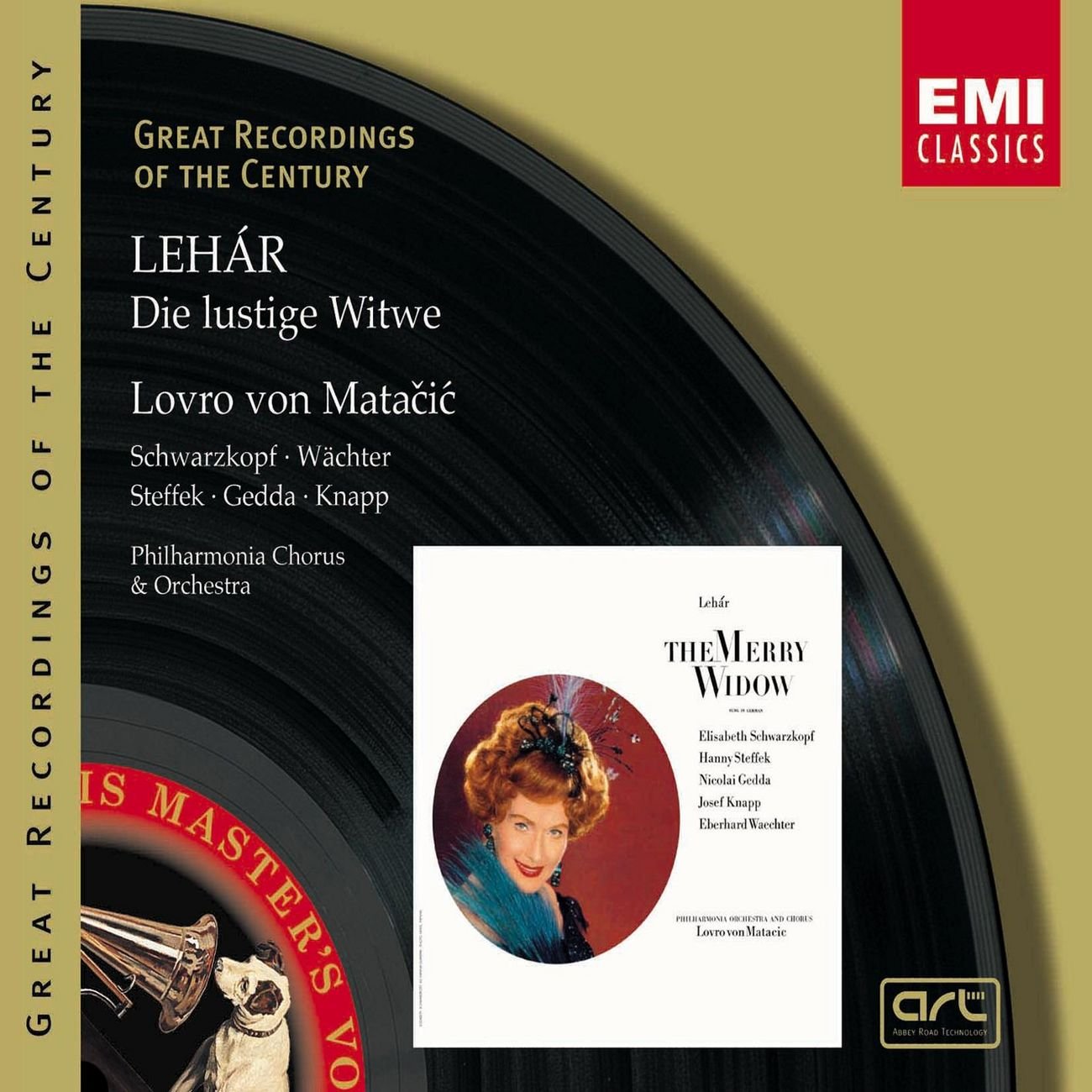
Oh what bliss! From the first moment of the orchestral introduction, which captures brilliantly that sense of expectation when sitting in a darkened theatre before the curtain rises, this famous recording is pure joy. Brilliantly cast and produced, it has a real whiff of the theatre, and yet you would be hard pressed to ever hear a performance of such class there. Principal among its delights is Schwarzkopf’s gloriously sung Hanna Glawari, singing with the same sort of care she lavishes on Mozart and Strauss. Indeed the moment she realises that Danilo is still in love with her (Allein liebt er mich, nur allein! ) in the finale of the second act is sung with such gloriously refulgent tone that it would hardly sound out of place in Strauss’s Der Rosenkavalier.

This was Schwarzkopf’s second recording of the opera, and, as in the first, Legge chooses a baritone for Danilo, rather than the usual tenor. However Wächter’s high baritone has no problems with the higher lying passages that Kunz (on the first recording) had to transpose down. Furthermore he sounds younger and more dashing. Gedda and Steffek make an excellent pair of lovers, the Pavillion duet in the second act a properly erotic affair, and the rest of the cast could hardly be bettererd with excellent contributions from Josef Knapp and Kurt Equiluz. Fabulous playing from the Philharmonia Orchestra under Lovro von Matacic.

Yes, there are fuller versions of the score around, but, frankly I couldn’t care less. I doubt this wonderfully stylish, fun packed recording will ever be bettered. Indeed only a couple of months ago, it was the reviewer’s top choice for the operetta on BBC Radio 3’s Building a Library porgramme and, having heard excerpts from all the other top contenders, I can but agree.