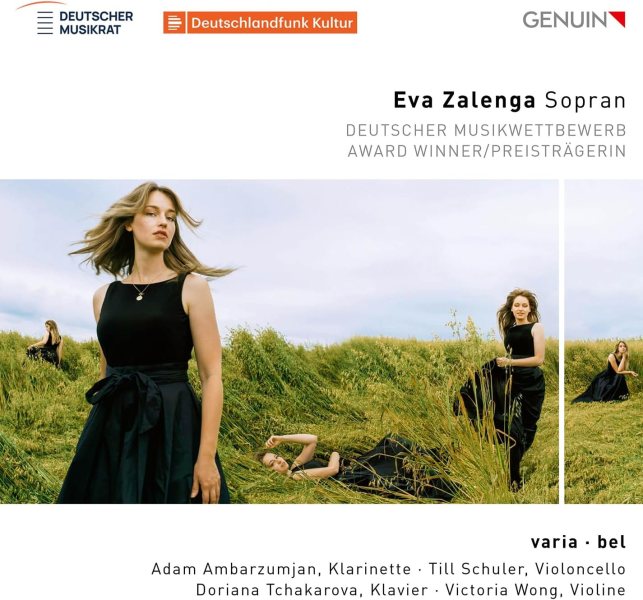
Eva Zalenga – Varia bel

Last month I was welcoming a disc of Lieder with various accompaniments by Fatma Said and here we have another for various forces, which, coincidentally, also includes Schubert’s Der Hirt auf dem Felsen.

In April 2024, I welcomed Zalenga’s debut recital on the Hänssler label, and this new recital on the Genuin label is, if anything, even more successful. Variety is the key note of the disc, in the variety of music (from the 18th to the 21st centuries), the variety of styles from the intimate to the more extrovert, and the variety of instruments accompanying the voice, that nonetheless add up to a convincing whole.

We start with a world premiere recording of Ignaz Lachner’s An die Entfernte (In die Ferne) for soprano, violoncello and piano, in which Zalenga charmingly intertwines with the cello of Till Schuler. We stay with the combination of cello and piano for Schubert’s Auf dem Strom. There is just the suspicion of strain in the upper reaches of the song here, a slight impurity that obtrudes on the silvery beauty of the sound, but it is fleeting, and soon evaporates during the next song, Meyerbeer’s haunting Des Schäfers Lied, in which the cello is swapped for Adam Ambarzumjan’s clarinet.

We stick with this combination for Schubert’s more famous Der Hirt auf dem Felsen, which, whilst not plumbing the deeper meanings of the text, as Said and Meyer do in their version, is nonetheless a delightful and charming performance.

In their earlier recital, Zalenga and Tchakarova championed women composers and it is good to see that they do so here too, first with a lovely song by Pauline Viardot-Garcia, in which we return to the combination of soprano, cello and piano, and then, jumping ahead around 100 years to Rebecca Clarke’s arrangement for soprano and violin of Three Irish Folk Songs. The tricky violin part is played by Victoria Wong. These are sung in English, and we stick with English for Arthur Bliss’s Two Nursery Rhymes, the first for soprano, clarinet and piano and the second for soprano and clarinet. Zalenga sings in perfectly accented English, and seems equally at home in French, which is the language of the next group of songs, four miniatures for soprano and violin by Darius Milhaud, Quatre Poèmes de Catulle.   

Finally all the forces come together for the last item, a new arrangement of contemporary composer Isabelle Aboulker’s Je t’aime, which Zalenga brings off with incredible wit, panache and style to bring this excellent recital to a riotous conclusion.

In all, Zalenga proves herself to be a most musical and intelligent singer and I look forward to seeing where her next enterprise will take us. Highly recommended.
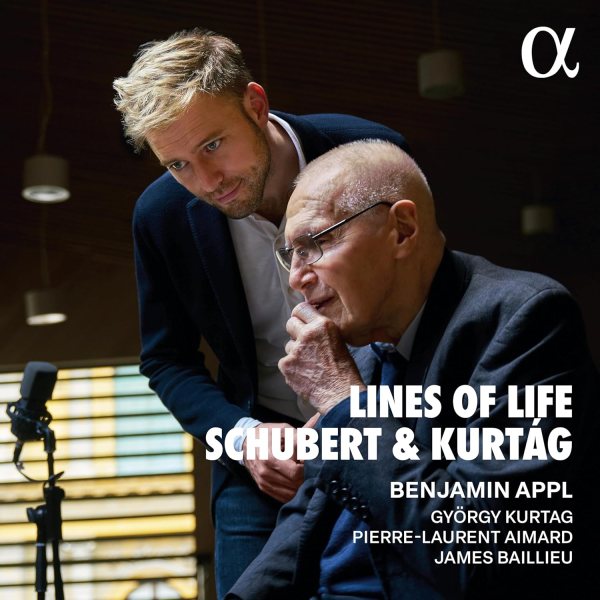
Lines of Life – Schubert and Kurtág


“I believe that Benjamin is currently the most authentic interpreter of my Hölderin Gesänge.” So writes György Kurtág in the notes accompanying this disc and, as he is also credited as recording producer, I think we can lay claim to their authenticity. Kurtág attended all the sessions, which took place in Budapest, apparently producing over 1,300 recording takes and countless repetitions.

The majority of the Kurtág songs on this disc are a capella. Their range, both vocal and emotional, is wide and they are brilliantly performed by Appl, whose range of expression and ability to meld the wide-ranging melismas in the vocal writing are superb. Indeed the very first song, Circumdederunt, which is in Latin and reminiscent of plainchant, homes in directly on the voice, a peculiarly expressive instrument, capable of harshness when required, as in the words et in trubulatione mea, returning to a beautiful, consoling richness for the remainder of the song. All but one of the Hölderin Gesänge are also unaccompanied and the one that isn’t, unusually has a sort of obligato accompaniment for trombone and tuba. The four Ulrike Schuster songs have an atonal piano accompaniment, which is played here by Pierre-Lauent Aimard.

As an interpreter of contemporary song, then, Appl proves himself to have few equals, but he is also a fine interpreter of Schubert and Brahms, as witness the beautiful versions of the Schubert and Brahms songs included on the disc. As befits a student of Fischer-Dieskau, expression is paramount, but never at the expense of a fine legato line and the beauty of the voce is well caught.

James Baillieu is the fine accompanist for most of the Schubert songs, but in the final two songs, Schubert’s Der Jüngling an der Quelle and Brahms’s Sonntag, Appl is touchingly accompanied by György Kurtág himself, though, it must be admitted, with rather too much pedal.

I found this disc an absorbing and challenging experience and would recommend it to anyone with an adventurous appetite.

The disc finishes with a fascinating eighteen-minute interview in German between Appl and Kurtág, for which an English translation is provided in the accompanying booklet.

.

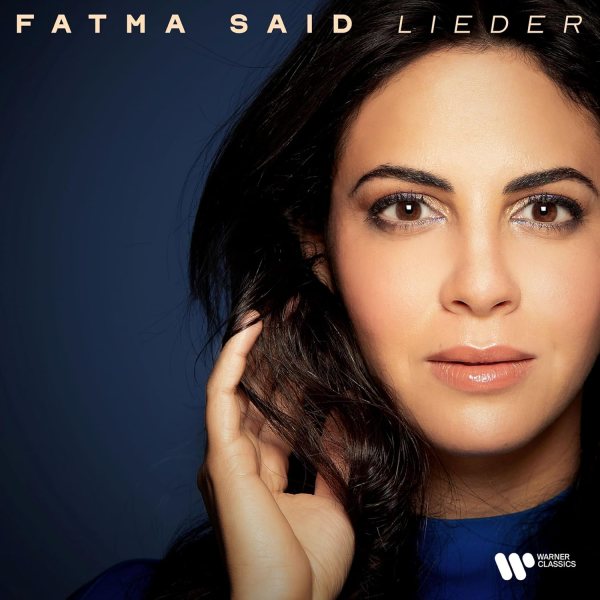
Fatma Said – Lieder

Fatma Said follows up her award winning debut recital, El Nour, and her equally successful second album, Kaleidoscope, with a more conventional album of German Lieder, except that with this gifted artist, it isn’t quite that simple. For a start, she has collaborated with an array of different musicians, bringing in clarinettist Sabine Meyer for Schubert’s Der Hirt auf dem Felsen, the men’s choir, Walhalla zum Seidlwirt, for his Ständchen, harpist Anneleen Lenaerts for four of the Brahms songs, the Quator Arod for Brahms’s Ophelia-Lieder, baritone Huw Montague Rendall for some duets and three different pianists in Malcolm Martineau, Yonathan Cohen and Joseph Middleton. In the notes accompanying the disc, Said says that all of these artists were friends or became friends during the sessions, and, in a positive way it would seem so, as there is a real sense of joy and discovery in the music making.

In a disc of so many delights, it is difficult to highlight specific performances, and for once I found myself not making comparisons with other singers, so compelling is the artistry on display here. Said has a surpassingly beautiful voice, but she uses it for expressive ends and is not afraid to make the occasional ugly sound, as in the vividly characterised Hexenlied by Mendlessohn, and in Schubert’s Der Zwerg. The nocturne Ständchen is delivered as a dramatic dialogue between Said and the men’s chorus, with a touch of breathless excitement, which perfectly captures the meaning of the words, and the words are evidently very important to Said. Her diction is excellent, and indeed, in the notes accompanying the disc, Said states that she wanted there to be a strong emphasis on the text. This she has achieved, whilst maintaining a lovely legato line.

The harp accompaniment brings a touch of delicacy to the Brahms songs and his Ophelia- Lieder are performed in Aribert Reimann’s arrangement for string quartet, which somehow contrives to make the songs sound more archaic. Sabine Meyer plays with great beauty of tone in Der Hirt auf dem Felsen, which here receives a performance of ineffable longing, which is totally dispelled in the joyful final measures.

I can’t close without mentioning the terrific contributions of her three pianists, Malcolm Martineau, Yonatan Cohen and Joseph Middleton, nor Huw Monatgue Rendall’s wonderful contribution to the duets, his voice blending beautifully with Said’s, particularly in the final song on the disc, Schumann’s In der Nacht, where his mellifluous tones blend beautifully with Said’s – a fitting end to a disc that had me spellbound throughout.

Highly recommended and, I know it’s early days yet, but likely to be one of my discs of the year.

Glen Cunningham’s Heart is in the Highlands

An interesting programme of Scottish inspired songs, but Cunningham’s tenor is a little too much on the dry side for my liking.

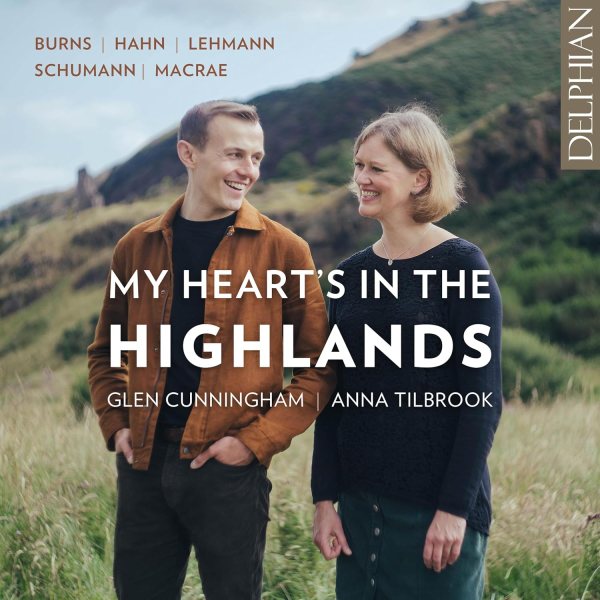
My Heart’s in the Highlands

Glen Cunningham (tenor)  Anna Tilbrook (piano)

The young tenor, Glen Cunningham, and his pianist, Anna Tilbrook, celebrate their Scottish heritage in a programme of music connected to Scotland, not only in the folk orientated songs of Robbie Burns, but also in settings of Burns by Schumann, and Robert Louis Stevenson by Liza Lehmann and Reynaldo Hahn. To these are added a completely new song cycle, also to texts by Robert Louis Stevenson, by the Scottish composer, Stuart MacRae.

It makes for an interesting programme, with the folk song settings framing the songs by Schumann, Lehmann, MacRae and Hahn. Thus, we start with a setting of Burns’s Ca’ the yowes to the knows in an arrangement by Claire Liddell, which segues into the eight songs from Schumann’s Myrthen, which set texts by Burns in German translation. They are possibly less well known than other songs from Myrthen, like Widmung or Der Nussbaum, and I doubt anyone would guess the Scottish provenance of these Schumann songs. Nor, I wager, would anyone guess that the  song Dem Roten Röslein Gleicht Mein Lieb from Schumann’s Opus 27 Lieder und Gesänge is actually a setting in German of the famous My love is like a red, red rosewhich follows it.

Liza Lehmann is less well represented in the catalogue than Schumann, though a selection of the songs from The Daisy-Chain have been recorded by mixed voices and are available on the Naxos label. Cunningham selects four of the five songs to texts by Robert Louis Stevenson. These are children’s songs to be performed by skilled adults, and the vocal writing is often taxing, Stars, for instance, requiring the sort of lyrical outpouring that Cunningham’s rather dry tenor is not quite capable of. Toby Spence manages it slightly better on the above Naxos recording, but it really needs a fuller voice than either of these two tenors can provide.

Two of the texts are also set by Reynaldo Hahn in his Five Little Songs, written while Hahn was a private in the French army during World War I, where he saw action on the front line. These too are settings of Robert Louis Stevenson, ‘children’s songs’, though it is unlikely that any child could sing or play them. They are quite charming, though, yet again, there is nothing particularly Scottish about them.

Not surprisingly, I suppose, the most Scottish sounding of the songs are those by Stuart MacRae, particularly For age an’ youth, which sets a Scots style vocal line against a sort of imitation bagpipe in the piano accompaniment. Cunningham is at his best in these songs, but even here I wanted more of tonal beauty. He compensates with the intelligence of his delivery, but throughout I’m afraid I found his vibrato intrusive and the sound he makes unpleasantly hard and uningratiating.

I should just mention that Anna Tilbrook is a most sensitive accompanist and adapts brilliantly to the style of each composer.

The recital ends with the title song, My heart’s in the Highlands, in an arrangement by Michael Barnett (and supplemented by Tilbrook) that was transcribed from a 1962 Kenneth McKellar recording. I just wish that Cunningham sang it with some of McKellar’s beauty of tone.

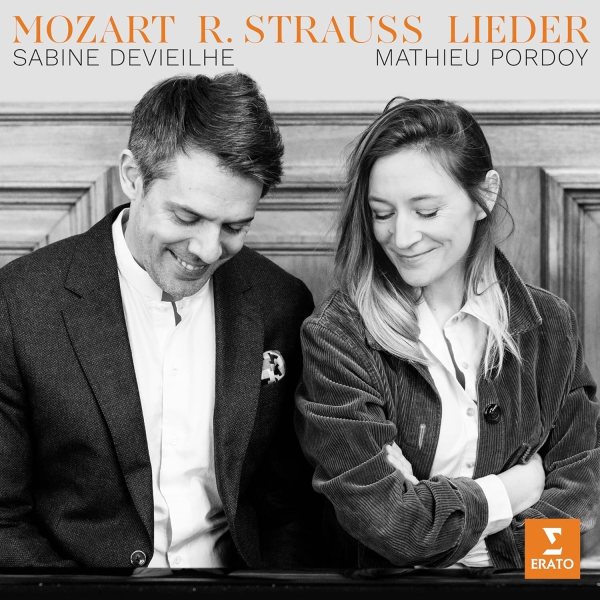
Sabine Devieilhe sings Mozart and Strauss Lieder

81rjnmb3ukl._ac_sl1500_

I listened to this recital quite a few times before setting down my thoughts, and, on each occasion, I reacted differently to it. I was looking forward to hearing it having hugely enjoyed Sabine Devieilhe in the theatre, as a wonderfully tomboyish Marie in Donizetti’s La fille du Régiment, but the recording made me aware of a problem with Devieilh’s vocal production, which I hadn’t noticed in the theatre, namely her tendency to use what I can only describe as a squeeze-box method of production which impedes a natural legato. It is particularly noticeable in songs like Strauss’s Die Nacht and Morgen, but once noticed, I found it hard to ignore. I listened to the recital several times and my impressions changed from one listening to the next. I am sure that there are those who will not be bothered by it at all, but, once noticed, it began to grate.

Which is a pity, because this is a well put together programme and for the most part well executed by Devieilh and her brilliant accompanist, Mathieu Pordoy.

For once we get no catchy title for this disc of Mozart and Strauss Lieder, and Devieilhe tells us in the notes that their two instruments are “pared back and at the service of illuminating the lieder of Mozart and Strauss.” So far so good, and it was a nice idea to intersperse the songs with each other rather than giving us a group of Mozart songs, followed by a group of Strauss. For the most part, the juxtapositions work well, but I did wonder why, at the beginning of the recital, Strauss’s Die Nacht was placed rather uncomfortably between Mozart’s Komm, Zither, komm and his Das Kinderspiel, on which Devieilhe’s son charmingly contributes a few lines in his boy soprano. If the Strauss exposes Devieilhe’s weakness, in the Mozart songs one notes the bright, forwardly placed tone and her communicative way with the text.

The next Strauss group plays to her strengths and weaknesses with both Nichts and Ständchen nicely done, but the following three songs require the kind of seamless legato she appears not to be capable of and where the squeeze is most noticeable.

We return to Mozart with a heartfelt performance of An die Einsamkeit. The voice is lovely, but, yet again, it needs a better legato, which we hear in performances by Barbara Hendricks and Elly Ameling. Still, she has bags of charm in Mozart’s Oiseaux, si tous les ans and bags of personality for Strauss’s Schlagendes Herzen, as well as being well up to the Zerbinetta-like demands of Strauss’s Amor, though her tone becomes a little pinched at the very top. I note that I am noticing less and less the peculiarities of her vocal production and concentrating more on the music. Maybe I am just getting used to it, or maybe it is becoming less pronounced.

Whatever the reason, I was able to relax and enjoy the music making more in the second part of the recital, whilst noting that Allerseelen really needs a richer tone than Devieilhe can muster and that there was a return to the squeeze-box in Das Velichen.

I should also commend the excellent pianist, Mathieu Pordoy, whose playing is pellucidly clear and who supports his soloist brilliantly in a true collaboration. If I have equivocal feelings about some of the singing, I am sure that others will find otherwise and will find this a thoroughly enjoyable and rewarding disc.

Elisabeth Schumann’s Swan Song

91ry4lbyuzl._ac_sl1500_

Born in 1888, Elisabeth Schumann’s first recordings were acoustics, made in 1915, although it is probably for her later, electrical recordings that she is better known. She had an illustrious operatic career, famous for such roles as Sophie in Der Rosenkavalier and Eva in Die Meisteringer, also excelling in Mozart with roles such as Pamina, Susanna, Zerlina and Blonde. She was a favourite of Richard Strauss, who even tried to persuade her to sing the role of Salome, creating an edition in which he reduced the size of the orchestra to accommodate her light, lyrical soprano, though she never took up the offer.

She was also highly regarded as a singer of Lieder and Lotte Lehmann, who was perhaps her greatest rival in the field, once said she represented the purest singing style of German Lieder. She has a large discography and many of her recordings, both acoustic and electrical were once issued in a six disc EMI box set, which now appears to be available as a Warner download.

The present recordings were made somewhat later in her home in Manhattan in 1950, when she would have been in her early sixties, and this appears to be the first time the sessions have been issued in their entirety. The accompanying notes are sketchy and inadequate. Included are brief biographies of Schumann herself and of George Schick and George Reeves, who I assume are the accompanists, but there is no indication as to which songs they play, nor which items are completely new to the catalogue.

Being late recordings, this is not a disc to which I would direct anyone interested in hearing “the purest singing style of German Lieder”. Though the bell-like purity of Schumann’s top notes remains more or less intact, quite frankly, in the middle and lower register, she sounds all of her sixty odd years. Certainly, the voice has aged less well than some other sopranos, who also made recordings into their sixties, such as her contemporary Maggie Teyte or, of more recent singers, Renée Fleming. Some of the Wolf songs now clearly stretch her to the limit and I find myself wondering if this is the reason they were not issued before. One should probably make allowances for the way these songs were recorded (probably on a 7.5ips home recorder, according to the notes) but to my ears  she sounds effortful and unsteady for much of the time.

She redeems herself in the final three bonus tracks, first in two acoustic Odeons of her singing Wolf’s Frage und Antwort and Straus’s Morgen (date and accompaniment unknown), followed by a later recording of her delivering in English a master class on Morgen, this time with Ernest Lush on the piano. No date is given, and I wonder if this was from one of her lecture tours of 1950 and 1951. If it was, then she sounds in much better voice here than she does on the home recordings.  and she gives invaluable advice on singing the song, recollecting working on it with Strauss himself.

I hate to be negative about a much-loved artist, but this disc, I would suggest, is for completists only. Anyone wanting to discover the voice and art of this great soprano, will be much better served by the six-disc set detailed above.

In Relations – Eva Zalenga and Doriana Tchakarova

0881488220506

The back page of the booklet that comes with this CD has a complicated diagram, which attempts to display and unravel the various connections between the composers and poets featured in this recital. We all know about the friendship that existed between Mendelssohn and Schumann, but did you know that Loewe, who also made music with Mendelssohn, taught the composer Emilie Mayer, who set poems by Heine, as of course did Loewe and Schumann? So did Meyerbeer, though his only connection with Mendelssohn and Schumann is that they both were vocal in disparaging his music.

The aim is evidently to bring some unity to what is essentially a recital of nineteenth century Romantic songs by both male and female composers, most of which are not exactly regular visitors to the concert platform. It’s a nice idea and it can be fun trying to trace the connections between the various personages represented in this recital, though certainly not necessary for the enjoyment of it.

We begin with Meyerbeer, who is better known for his large-scale operas, none of which have ever held much interest for me. The three songs we get here are rather charming and tuneful, though they don’t quite escape the epithet of parlour music. These are followed by a couple of songs by Loewe, the first a setting of Meine Ruh ist hin, a poem better known to us as Schubert’s Gretchen am Spinnrade. Loewe’s setting is less grippingly intense but it does tell the story well.. Loewe’s accompaniments are worth noting and they are brilliantly played by Doriana Tchakarova, who supports her soloist at every turn.

Mendelssohn’s Hexenlied is better known than the songs we have heard so far and it really calls for a little more variety of timbre than Zalenga has yet at her disposal.  On the other hand Zalenga’s bright, youthful soprano is perfectly apt for the Suleika songs that follow. The Schumann songs go well too, though I would have preferred a little more sense of breathless excitement in Aufträge, such as we hear in older versions by Elisabeth Schumann and Elisabeth Schwarzkopf.

For the rest we are given some rarities by women composers, both of whom were entirely new to me. Emilie Mayer, who died in 1883 (not 1833 as the booklet has it) was the first woman to have her symphonies performed all over Europe. The two songs included here no doubt had an eye on the popular publication market and, like the Meyerbeer, have more than a whiff of the salon about them. Nonetheless I was pleased to make their acquaintance. That said, I found the Heine settings of the English composer, Frances Illitsen, even more interesting. All three are worth investigating, in particular the setting of Heine’s Katherine, which is a glorious outpouring of lyrical melody.

This recital would appear to be the recording debut of the young soprano Eva Zalenga. She has a lovely, light soprano which faintly reminded me of the young Lucia Popp. I see from her website that her operatic roles are Papagena, Barbarina, Susanna, Ännchen, and also Sophie in Werther, all of which would seem right for her at the moment. I can also imagine her making an excellent Sophie in Der Rosenkavalier. As yet the voice doesn’t have a great range of colour at its disposal, but this does not mean she sings without feeling. Throughout she is a most musical singer and keenly responsive to the poetry. You really feel she connects with each of the songs

I wish Hänssler had vouchsafed us translations of the German texts, but, nonetheless, I thoroughly enjoyed this journey through some of the byways of nineteenth century Romantic song. An auspicious recording debut for Eva Zalenga.

Contents:

Giacomo Meyerbeer (1791-1864)

Komm

Meerestille

Suleika

Carl Loewe (1796 – 1869)

Meine Ruh’ ist hin, Op. 9, no. 2

Die verliebte Schläferin, Op. 9, no. 3

Ihr Spaziergang, Op. 9, no.4

Die Schneeflocke, Op. 63, no. 1

Felix Mendelssohn (1809-1847)

Hexenlied, Op 8, no. 8

Suleika, Op. 57, no.3

Suleika, Op. 34, no. 4

Die Nonne, Op. 9 no. 12

Robert Schumann (1810 – 1856)

Liebeslied, Op. 5, no. 5

Aufträge, Op. 77, no. 5

Viel Glück zur Reise, Schwalben! Op. 104, no. 2

Die letzten Blumen starben, Op. 104, no. 6

Aus den östlichen Rosen, Op. 25, no. 5

Singet nicht in Trauertönen, Op. 98a

Emilie Mayer (1812 – 1883)

Du bist wie eine Blume, Op. 71 no. 1

Das Schlüsselloch im Herzen

Frances Allitsen (1848 – 1912)

Katherine

Mag, da draußen Schnee sich thürmen

Die Botschaft

Love’s Lasting Power – Schubert Lieder

61suv-xl5ul._ac_sl1000_

The English soprano, Harriet Burns, still in her early 30s, has been getting some great reviews in the music press of late, some of them for this recital of Schubert Lieder, and indeed there is a great deal to celebrate here. She and her accompanist, Ian Tindale, were recent winners of the Contemporary Song Prize in the International Vocal Competition at ‘s-Hertogenbosch and this is their debut recital. They have put together a group of Schubert Lieder on the subject of love in all its guises, from, as the notes tell us, “many-splendoured and joyous to tragic and rejected.” Some of the songs will be familiar, some maybe less so, but it is a very well-considered and thoughtful programme.

First impressions are of the sheer beauty of Burns’ voice, which is a full, lyric soprano. Its creamy richness would no doubt be perfect for Strauss’s soaring soprano lines, and I see she is soon to add the Vier letzte Lieder to her repertoire, though initially in a recital with piano accompaniment. I would also highlight her musicality and her thoughtful response to the text, though here I would appreciate crisper diction. Sometimes the words are not clear enough. However, all in all, there is a great deal of pleasure to be derived from this recital and I thoroughly enjoyed it.

That said, when getting a little more specific in my listening, one or two doubts started to creep in. Take for example the longest song on the disc, Viola. This song, which is almost 13 minutes long, is in the nature of a mini-scena, its many  changes of attitude signposted by the accompaniment and masterfully managed by Tindale. These changes of mood cry out for a change of colour or attitude from the singer but Burns rarely responds accordingly and when one turns to the same song as sung by Anne-Sophie von Otter, it is to hear a much more specific response to the text and the accompaniment.

Comparisons are invidious, but perhaps inevitable, and it was the same story with most of the other songs I sampled in different performances. I would like more characterisation and personality in Die Männer sind méchant and that is what we get from, for instance, Lotte Lehmann and Janet Baker. There is also much more complexity to be found in Suleika I. Though the sounds of nature depicted in the poem are gentle and reassuring they don’t quell the anxiety in the poet’s heart in the absence of his lover. We hear this in the accompaniment, and we hear it in the voice of Janet Baker, but not in the voice of Burns.

I sampled a few more versions of one of the most well-known songs here Der Jüngling and der Quelle and it was to find that Elisabeth Schumann, Lottle Lehmann, Elisabeth Schwarzkopf, Elly Ameling and Lucia Popp are all more communicative with the text and much more specific in their response to it. Burns is beautiful, expressive, but more generalised and this is the only criticism I have of a recital which is, in all other respects, more than promising from an artist, who is no doubt still developing.

The final song is Seligkeit, one of those songs which is often taken much too fast, but for which she and Tindale find the perfect tempo here.  Burns is delightful, responding well to its note of blithely carefree happiness. A perfect way to end a highly enjoyable recital. Both soprano and accompanist are clearly ones to watch.

A fascinating arrangement of Schubert’s Winterreise for soloist, chorus and two accordions.

81r0f4d0yfl._ac_sl1425_

Now here’s something a little different. Rearrangements and re-imaginings of Schubert’s Song Cycles are not exactly unusual, but I think Meyer might be the only person to use a chorus and this is actually Gregor Meyer’s second arrangement of Schubert’s popular song cycle. The first was for baritone, chorus and piano and was recorded in 2017 by baritone Daniel Ochoa with Gregor Meyer conducting the Leipzig Vocalconsort and with Christian Peix on the piano. This one unusually substitutes two accordions for the piano. Given that the accordion wasn’t invented until around 1822 in Berlin, it is unlikely that Schubert ever got to see or hear one. However, it does not sound anachronistic and indeed captures the sound of the hurdy-gurdy in the final song even more atmospherically than the piano. The accordions can also add a jaunty, folk-like colour to songs like Frülingstraum. Interestingly, Meyer is not the only person to rearrange the cycle for an accordion. Oboist Normand Forget made a chamber version for accordion and wind quintet (including bass clarinet, oboe d’amore and baroque horn) and this has been recorded by tenor Christoph Prégardien, accordionist Joseph Petric and the Montréal ensemble Pentaèdre.

Meyer’s chorus first appears in the second stanza of the first song, Gute Nacht, almost imperceptibly creeping in on a wordless vocalise, which wonderfully conjures up a bleak, wintry scene. Thereafter they are a constant presence, sometimes joining in with the soloist, sometimes taking over the vocal lead or responding to him, sometimes still in wordless commentary, and sometimes, as in Der stürmische Morgen, taking over the whole song whilst the soloist remains silent. You might think the effect would be to distance us from the solitary traveller’s loneliness, but in fact it reinforces his utter desolation, the voices seeming part of an interior dialogue as the soloist struggles with his own inner demons.

In an arrangement such as this, the soloist’s function is perhaps somewhat different from normal, and Tobias Berndt fulfils his task admirably, knowing when the focus is on him, but realising when he needs to pull back and blend with the choir. He has a light, pleasing baritone which blends beautifully in the total sound picture. He may not make any startling revelations (those tend to come from the chorus and accordions) but nor is he bland or inexpressive.

The GewandhausChor under Gregor Meyer are absolutely splendid, and the two accordion players, Heidi and Uwe Steger, are superb accompanists.

Of course, this arrangement cannot replace the original version for voice and piano, and most people will have their favourites (mine are Fischer-Dieskau and Demus and Kaufmann and Deutsch) but this is a fascinating and rewarding re-thinking of Schubert’s great song cycle. I really enjoyed it and one listening quickly became two and then three. I know it’s only January, but this is very likely to be one of my discs of the year. Highly recommended.

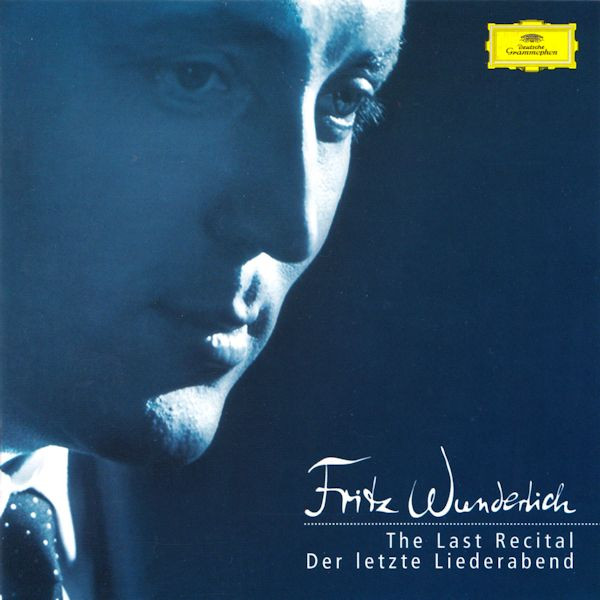
Fritz Wunderlich – The Last Recital

ns04mtk3lmpwzwc

This CD was released in 2003 and was, I think, the first time this Edinburgh recital was being released in toto. The only known extant recording of it was a BBC recording, a second or third generation mono copy and DG have attempted to correct the pitch which, in previous issues of parts of the concert, was too slow and fluctuated substantially. They were not able to eliminate wow and flutter, which was probably introduced in the first copying process. Nevertheless this is an important document of the last ime Wunderlich ever sang in public and, for anybody used to listening to historical live recordings, the sound won’t be an impediment to enjoyment.

We should of course be careful of attaching too much valedictory significance to this recital. We listen to the final recordings of such as Ferrier and Hunt Lieberson, with the added knowledge that they were aware of their mortality and knew that their time was limited. Wunderlich, on the other hand, was at the height of his powers and his international career was just taking off. He was a few months away from his Met debut as Don Ottavio, and he was finding the performance of Lieder recitals so fulfilling that he wanted to do more in that area. In fact, after this concert, he told Hubert Giesen that they should start working on Winterreise. He had absolutely no reason to think that his life would be prematurely cut short.

Wunderlich was apparently very happy with how the recital went, and Giesen told him after the concert that he thought he had achieved perfection. He had only recently turned to Lieder, making his first studio recordings of Lieder by Beethoven, Schubert and Schumann the previous year for DG, performances that have sometimes been criticised for lacking emotional depth. He evidently took these criticisms to heart for this recording of Dichterliebe is profoundly moving and in a different world of interpretation from his studio recording. It is now my preferred recording of the cycle.

The programme is similar to the one he sang in Sazlburg the previous year, but he is now a much more experienced Lieder singer and his singing now has much more significance and specificity. The first half of the recital consists of Lieder by Beethoven and Schubert, with Adelaide and Nachtstück showing of his superb legato line. His diction is well-nigh perfect throughout, showing that you don’t need to sacrifice verbal clarity to achieve a smoothly lyrical line. The second half, as in his Sazlburg recital of 1965, is taken up with the complete Dichterliebe. This is an extremely intense reading, with the young man  seeming much akin to Goethe’s Werther. True, we as listeners, knowing that he was only to live a couple more weeks, no doubt give some of he lyrics a significance that Wunderlich could not have intended. Nevertheless it adds to the appreciation of this performance.

The encores, as so often at a live recital, are when the performer relaxes most. Thus we get an ebulliently joyful Ungdeduld and a gorgeously sustained Ich trage meine Minne by Richard Strauss, which would surely have changed Strauss’s attitude towards the tenor  voice, though unfortuantely the BBC recording fades out just before the end of the song.

Finally, after a charming bit of banter with the audience, Wunderlich sings his heartfelt tribute An die Musik. Call me sentimental, but I find it impossible to listen to it without tears in the eyes. Though he didn’t know it and his audience didn’t know it, this was the last time the golden voice would  ever be heard in public.