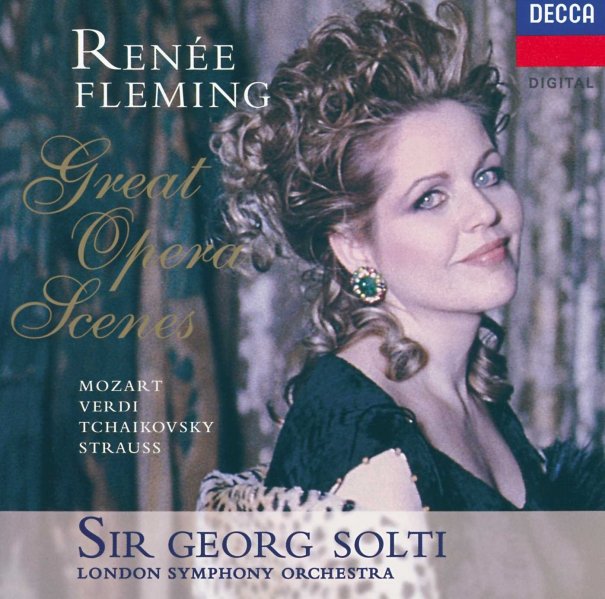
If we are to say goodbye to Renée Fleming the opera singer, then now might be a good time to be reminded of this, one of her most successful recital discs, recorded in 1996, when Fleming was at the height of her powers, and before the tendency to indulge in jazzy slides and swoops had become too pronounced.
All but one of the roles represented here were part of her stage repertoire at the time, and she would in fact go on to sing Strauss’s Daphne in 2005.
The programme is both varied and interesting. We start with both of Countess Almavivas arias from Le Nozze di Figaro, sung with ideal poise and beauty of tone, before plunging into the romantic imaginings of Tchaikovsky’s lovelorn Tatyana. Fleming plays the ardently impulsive young girl to the life. She yearns indwardly In Rusalka’s Song to the Moon, and I doubt I have ever heard Ellen’s Embroidery Aria from Peter Grimes sung with such superb control and feeling. Desdemona’s Willow Song and Ave Maria crops up on many recitals, but Fleming does not suffer at all by comparison with such well known interpreters as Rethberg, Ponselle or Tebaldi.
I suppose the two cornerstones of Fleming’s repertoire have been Mozart and Strauss, so it is fitting that, having started with Mozart, we should finish with Struass, a suitably ecsatic version of the closing scene from Daphne.
The recital is beautifully presented with Larissa Diadkova contributing as Filipyevna and Emilia and Jonathan Summers as Balstrode. The London Symphony Orchestra under Solti provide excellent support.
The voice itself is stunningly beautiful, but Fleming doesn’t rely solely on beauty of voice. Her interpretations are intelligent and musical, and she presents us with five very different characters. The only criticism I would have is that her diction is not always as good as it might be, but in all other respects this is a classic recital disc.
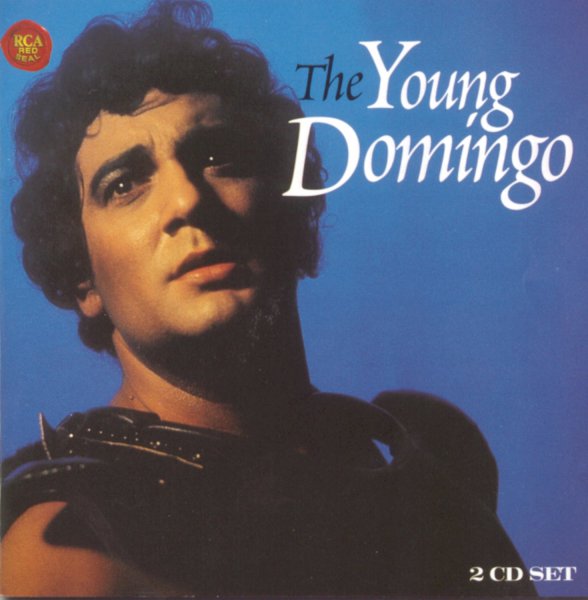
These days, with Domingo’s sometimes less successful forays into the baritone repertoire, it is easy to forget just how amazing his career was, not to mention how long it has lasted. This two disc set is a composite of three recitals made in 1968, 1971 and 1972 when Domingo (27 at the time of the first disc) was already an experienced artist, having first appeared on stage at the age of sixteen and singing his first major role (Alfredo) in 1961 at the age of 20.
The earliest of these recitals, which was given the title Romantic Arias heralded the arrival of a major artist, not only a tenor but a musician. The repertoire is wide ranging, taking in music from Handel to Mascagni and he sings in Italian, French, German and Russian. I can’t think of many tenors, even from the golden age of 78s, who could sing Puccini and Mascagni with so much passion and yet give us a wonderfully accomplished Il mio tesoro from Don Giovanni, the longest run sung cleanly and accurately and not only spun out in a single breath but phrased through into the next statement of the opening tune. The only other tenor I’ve come across who manages it as well is John McCormack. In all, whether it be in Lohengrin’s Narration or Lensky’s aria, sung in Russian, his singing is musical and immaginative. If we were to nitpick, it might be to note that, especially in the Italian items, there is a lack of excitement, of real intensity. Both are qualities he later added, along with his fine acting that served to make him the best Otello to be heard for many years. So he may not thrill in the manner of a Franco Corelli, but could Corelli have ever embraced such a wide range of differing music styles with such musicality and sensibility? I dount it very much. So let’s be grateful for what we have.
The second disc entitled Domingo sings Caruso is less wide ranging, most of the arias more well known, though it does include an aria for Marcello from Leoncavallo’s version of La Bohème, and the third La Voce d’Oro, an apt description of the golden tone that pours forth. Again one might note that his singing can be a little generic, but his musical sensibilities are always evident. Nor does he ever indulge in the vulgar mannerisms of some who preceded him. His singing is always tasteful, his musical manners impeccable.
To the three recitals, BMG have added two Leoncavallo arias (another from La Bohème and one from Chatterton) which were originally included as fill-ups for his recording of I Pagliacci under Nello Santi. Both are attractive pieces, wonderfully sung by Domingo.
Looking at Domingo’s website I see his calendar is still pretty full, with engagements, both singing and conducting, booked up to November next year. It is a remarkable achievement for a man approaching his eighties. There is no doubt the promise of these early recitals has been not only fulfilled but surpassed. Now that we have said goodbye to Domingo the tenor, now might be a good time to go backto these early recitals and remember just how good he was.
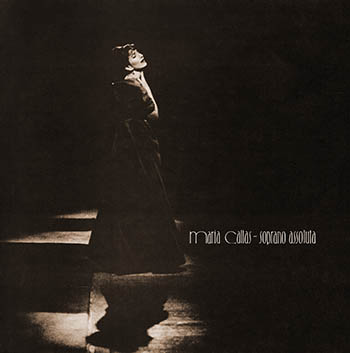
This is a superb compendium of recordings taken from live concerts given by Callas between 1949 and 1959. It is being offered as a FREE download (yes, you read that right, free) from Divina Records, so surely there can be no reason not to snap it up while you still can. The sound, while hardly state of the art, is not bad for the period, all of the performances having been taken from radio broadcasts. Taken from BJR LPs, transfers are up to Divina’s usual high standards and the download comes with an excellent pdf of the booklet which accompanied the original release.
The first track is actually her first 78 recording, made for Cetra in 1949, a beautiful performance of Casta diva and Ah bello a me ritorna, though without the opening and linking recitatives in which Callas always excelled. The aria is ideally floated, the scales and coloratura in the cabaletta stunning in their accuracy. We next turn to a radio concert recorded for Turin radio in 1952, with Oliviero de Fabritiis conducting. Callas was obviously out to demonstrate her versatility, and was also trying out for size a couple of roles she would sing later that year, Lady Macbeth and Lucia. To Lady Macbeth’s Letter Scene and the first part of Lucia’s Mad Scene, she adds Abigaille’s Ben io t’invenne from Nabucco and the Bell Song from Lakmé. She is in stupendous voice in all, the high E in the Bell Song ringing out here much more freely than it does in the 1954 recording. Not only is the singing technically stunning, but the contrasts she affords as she switches from the powerfully ambtious Lady Macbeth, to the sweet and maidenly Lucia, from the demonically triumphal Abigaille to the improvisatory story-telling of Lakmé are simply out of this world. You really don’t hear singing like this nowadays.
Next we move to a 1954 Milan concert, starting with her justly famous and technically brilliant recording of Constanze’s Martern aller Arten from Die Entführung aus dem Serail (sung here in Italian as Tutte le torture), her one Mozart stage role. Not only does she execute the difficulties with ease, she sounds properly defiant. It is a thrilling performance. Louise’s Depuis le jour (sung in French) suits her less well, and the performance is marred by occasional unsteadiness. Nonetheless it is hard to resist the quiet intensity of her intent. Armida’s D’amore al dolce impero from Rossini’s opera is, like the Mozart, stunningly accomplished, even if some of the more daring variations from the Florence complete performances have been trimmed down. The bravura of the singing is still unparalleled. The last item from this concert is Ombra leggiera from Meyerbeer’s Dinorah, a rather empty piece, which is hardy worth her trouble, though it improves on the studio recording with the addition of the opening recitative and the contribution of a chorus. Her singing is wonderfully accomplished, the echo effects brilliantly done, but it is not a piece I enjoy.
Another Milan concert, this time from 1956, brings us her best ever performance of Bel raggio lusinghier from Semiramide, though she adds little in the way of embellishment and the effect is less thrilling than her singing of the Armida aria. We get her first version of Ophélie’s Mad Scene from Hamlet (sung here in Italian rather than the original French of the studio recording), which is superb, it’s disparate elements brilliantly bound together. We also have a beautiful performance of Giulia’s Tu che invoco from La Vestale, which seques into a rousing performance of the cabaletta, and she revisits the role of Elvira in I Puritani with a lovely performance, with chorus and soloists, of Vieni al tempio.
From Athens in 1957, there is a dramatically exciting performance of Leonora’s Pace, Pace from La Forza del Destino, in which she manages the pitfalls of the piano top B on invan la pace better than you would expect for post diet Callas. Her performance of Isolde’s Liebestod (again in Italian) is very similar to the Cetra recording, warm and feminine, passionately yearning.
From the 1958 Paris Gala we have her minxish Una voce poco fa from Il Barbiere di Siviglia, with its explosive ma, as Rosina warns us she is not to be messed with. She sings in the mezzo key with added higher embellishments. This is followed by a couple of lesser known performances from a UK TV special, conducted by Sir Malcolm Sargent. Mimi’s Si mi chiamano Mimi is similar to the performance on the complete recording, charming and disarming, whilst Margarita’s L’altra notte from Mefistofele is a touch more vivid, a little less subtle than the studio recording.
Just one item from the 1957 rehearsal for the Dallas Opera inaugural concert, the Mad Scene from I Puritani. Though, by this time, Callas’s voice had been showing signs of deterioration, Bellini’s music still suits her admirably, and she sounds in easy, secure voice here up to a ringing top Eb at its close. The scale work is as supple as ever, and she executes its intricacies with ease even when singing at half voice.
To finish off we have the Mad Scene from the 1959 Carnegie Hall concert performance of Il Pirata. It had been a variable evening, with Callas’s colleagues hardly in her class, but here, left alone on the stage, Callas responds to the challenges of the final scene superbly, the cavatina, in which she spins out the cantilena to incredible lengths, becomes a moving lament to her son, and the dramatic cabaletta is then thrillingly flung out into the auditorium. The audience unsurprisingly go berserk.
How lucky we are to have these wonderful live performances preserved in sound, and how grateful we are to Divina Records for offering them to us free of charge. Nobody need hesitate.
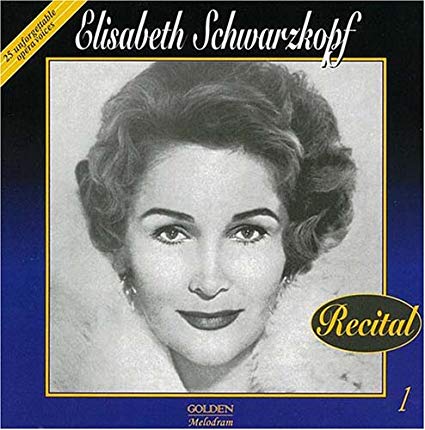
This is not a recital as such, but a collection of off the air recordings made by Schwarzkopf between the years 1941 and 1952. We get the opening of a Berlin Das Rheingold, conducted by Artur Rother (Schwarzkopf as Woglinde), Nie werd ich deine Hulde verkennen from a Vienna performance of Die Entführung aus dem Serail, conducted by Rudolf Moralt (with Emmy Loose, Anton Dermota, Peter Klein and Herbert Alsen), a duet from Weber’s Abu Hassan from 1942, with Michael Bohnen, and part of the Act II finale of Le Nozze di Figaro from La Scala in 1948, with Imrgard Seefried and W Hoefermeyer (who he?) under Karajan. We also get a couple of excerpts from the 1950 Salzburg Festival, both conducted by Furtwängler; Mi tradi from Don Giovanni (on which unusually she takes an unwritten upward ending, presumably sanctioned by Furtwängler though absent from all other versions by her) and Marzelline’s opening duet and aria from the famous performance of Fidelio at which Flagstad sang Leonore. In all Schwarzkopf displays her familiar virtues of pure, firm tone, excellent legato and elegant phrasing, the voice shot through with laughter in the lighter pieces. Marzelline’s aria is sung with a fuller tone than we often hear in this music, but captures perfectly her wistful charm. Ilia’s Zeffiretti lusinghieri is taken from a 1951 Turin Radio Mario Rossi broadcast, but it is not quite so accomplished as the one on her studio recital of the following year.
The rest is is given over to a Hamburg broadcast from 1952, beginning with a lovely performance of He shall feed his flock, from Handel’s Messiah (sung in German). The Act I monologue from Der Rosenkavalier is perhaps less detailed than the one on the complete set under Karajan and no doubt some might prefer it for that reason, though I wouldn’t necessarily be one of them. It’s a lovely performance nonetheless. Schwarzkopf’s Countess is also justly well known, and Porgi amor is sung with creamy tone and matchless legato, but the excerpts from Madama Butterfly (sung in German) don’t really work for her, and indeed Schwarzkopf herself, when she heard them in later years, thought them “rather screechy on top”. She did however approve the aria from Korngold’s Die tote Stadt (the soprano version of the duet Glück das mir verblieb) and rightly so, as this is without doubt the prize of the whole disc. I have never heard it sung better, not by Te Kanawa, not by Fleming, not even by Lehmann, who recorded the duet with Richard Tauber. The pianissimi on the top notes, the diminuendi, the way she fades the tone are absolutely miraculous, no other word for it. Everyone needs to hear this, but getting the recital on disc is quite difficult these days. Fortunately you can hear it on youtube.
The whole disc is a fitting repost to all those who think Schwarzkopf was a studio creation, catching her live and on the wing, but treasured mostly for that sensational and unfortunately unrepeated performance of the Korngold.
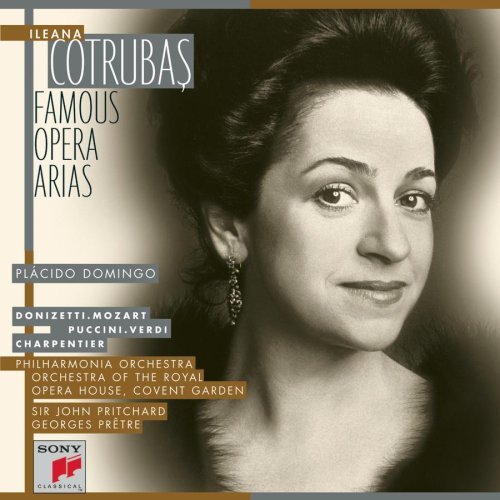
Recorded in 1976, when she was already 35, this was Ileana Cotrubas’s first and only recital disc. The playing time of the original disc being somewhat short, Sony have here added excerpts from the excellent complete recording of L’Elisir d’Amore also under Sir John Pritchard, Depuis le jour, from the complete Prêtre recording of Louise and O mio babino caro from Maazel’s Gianni Schicchi.
As Cotrubas herself says in the notes, Leonora’s Pace, pace was somewhat unexpected, a role that Cotrubas was never likely to sing on stage, and it really does need a fuller tone. I’m not sure if she ever sang Liu or Magda, but she could well have done and the other arias are all from her active repertoire.
It opens with a charming performance of Norina’s Quel gaurdo il cavaliere from Don Pasquale, a role she sang at Covent Garden at around the same time. She was a highly successful Susanna at Glyndebourne in 1973 (alongside Te Kanawa’s beautiful Countess and Freredica Von Stade’s radiantly ebullient Cherubino, performances which catapulted all three to stardom) and she is quite delightful in her Deh vieni.
The other side of her personality is captured in a deeply felt Ach ich fühl’s, and the natural morbidezza (an Italian word without any direct translation) which suited her to roles like Mimi and Violetta, is here displayed in her singing of the Puccini arias (Si, mi chiamano Mimi, Liu’s Tu, che di gel sei cinto, and Ch’il bel sogno di Doretta from La Rondine.) Though there is a hint of strain in the upper reaches of Gilda’s Caro nome, the aria also suits her well, and it here emerges as a dreamy reverie rather than the coloratura showpiece it often is.
The L’Elisir d’Amore excerpts are lovely in every way, as is Lauretta’s O mio babino caro, and Depuis le jour well captures Louise’s quiet intensity and mounting rapture.
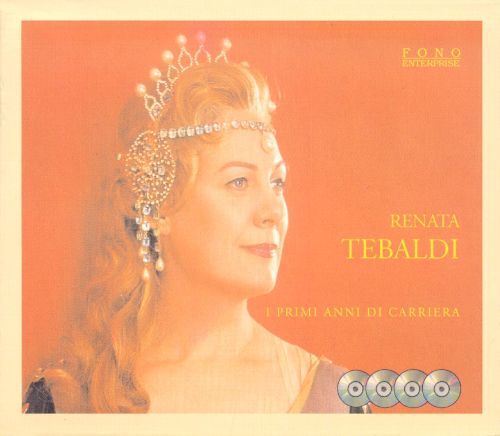
This four disc set is of recordings made in the 1940s and early 1950s, when Tebaldi was in her twenties. It is a mixture of live and studio recordings, so sound quality varies quite a bit. It is also a convenient grouping together of four different discs issued by Fonit Cetra in 2002, which no doubt explains why we get so many different performances of the same aria. Given that there is little difference between them, you may decide you don’t need to listen to four different performances of La mamma morta and of Desdemona’s Willow Song.
And of course the first thing we need to say is that it was an extraordnarily beautiful voice, even throughout its range, firm and rich, her diction admirably clear, though, even at the beginning the very top could sound strained and off pitch. The top C climax to her 1950 Cetra studio recording of Aida’s O patria mia is hard won and slightly under the note and the voice’s greatest beauty lies in the middle register, though many of today’s sopranos would also kill for the richness down below. Nor is she an unfeeling performer, though, at this stage in her career, it can tempt her into excess, especially when singing live, and she tends to sound lacrymose rather than truly moving. She goes way over the top in Desdemona’s Willow Song, and she is much more restrained, and consequently more moving, in the Decca Karajan recording. The other thing to say about Tebaldi is that, however beautiful the voice, however firm the delivery, however musical her singing, her performances rarely stay in the memory, nor does she ever really light up a phrase or a line the way others can. Performances of some of this same music, by such as Muzio, Callas, Caballé, De Los Angeles and Schwarzkopf resonate in my mind’s ear, and I can often recall individual details. With Tebaldi I never can. I can recall the sound of the voice, but little that is specific to the music she is singing. In these early performances, I found that she often over-characterises the music, introducing sobs and emphases which detract from the beauty of the sound, rather than make it more dramatic. It is somewhat akin to watching a hammy actor.
A few specifics then about the discs themselves. I got muddled and listened to them in reverse order. Disc 4 is entitled Gli Inediti, and is presumably of previously unissued recordings. In concert she sings the Countess’s Porgi amor but, though more suited to the character than she is to Susanna, who puts in an appearance on Disc 3, Mozart is not really her métier. The excerpts from a 1949 performance of Andrea Chénier wih Del Monaco are prime examples of that hamminess I alluded to, though all the singers go way over the top. The audience lap it up, so they no doubt give them what they want. A poised 1949 performance of the Ave Maria from Otello is ruined by a surfeit of little sobs, but she gives us a lovely performance of Louise’s Depuis le jour (in Italian). It lacks Callas’s quiet intensity and mounting rapture, but is much more securely sung and works well on its own terms. The disc closes with a small piece of history; a 1945 performance of the love duet from Otello, with the then almost sixty year old Francesco Merli, though recording here is at its dimmest. Nevertheless it affords us a glimpse of the great tenor in one of his most famous roles.
Disc 3 covers studio recordings made for Decca and Fonit Cetra in 1949 and 1950, arias from Aida, Madama Butterfly, Faust, Manon Lescaut, Tosca, Il Trovatore, La Traviata, Otello, La Boheme, Mefistofele, La Wally, Andrea Chénier and, most surprisingly Susanna’s Deh vieni from Le Nozze di Figaro, though she makes a very heavyweight Susanna, and this is the least successful item on the first disc. Recorded sound here is fine and there is no doubt that this is an extraordinary voice the like of which we don’t hear anymore, and perhaps haven’t since. Her legato is mostly superb as is her diction. On the other hand, as one aria follows another, we don’t really get a gallery of different characters. Her Aida isn’t really very different from her Butterfly, her Manon no different from her Mimi, and, in an attempt to be dramatic, she often over-emotes. The reading of the letter before Addio del passato is hopelessly melodramatic and she ends the aria forte rather than in the fil di voce Verdi asks for.
The prize of Disc 2, entitled La nascita d’una leggenda, is some extended excerpts from a 1951 concert performance of Verdi’s Giovanna d’Arco with Carlo Bergonzi and Rolando Panerai. Though she is taxed by some of the coloratura, and she tends to aspirate when the music asks her to move a little faster, the role suits her well. Also excellent are the two extracts from a 1950 performance of the Verdi Requiem under Toscanini, with Giacinto Pradelli, Cloe Elmo and Cesare Siepi. It is somewhat dimly recorded, but you can hear how fine she was in this work. Why Decca never recorded her in it is a mystery to me. A welcome surprise is Elisabeth’s Dich, teure Halle (in Italian) from Tannhäuser. It is also good to hear the young Di Stefano in a 1950 concert performance of the Act I duet from Madama Butterfly. The concert also included Margherita’s L’altra notte in fondo al mare from Mefistiofele. In both the aria and the duet, Tebaldi oversings and overacts and her singing as Butterfly is so powerful that she sounds more like a Tosca or Minnie to me. Many will respond to the beauty of the voice, but she doesn’t conjure up an image of Butterfly for me at least.
The first disc pits Tebaldi against her teacher, Carmen Melis. Excerpts from Tebaldi’s first recordings of La Boheme and Madama Butterfly under Alberto Erede and arias from Manon Lescaut and Tosca. Many will no doubt revel in the glory of that voice filling out Puccini’s wonderful melodies, but for me she too often oversings and the finale to La Boheme, which is given in its entirety has both Tebaldi and Giacinto Pradelli over-emoting like mad. The love duet from Madama Butterfly with Giuseppe Campora likewise has no sense of the young girl’s gradual awakening to love and sounds as if it could have been lifted from Tosca. Melis is caught in excerpts from Tosca and Massenet’s Manon. She is a singer who is new to me, and I must say I found her very impressive, though the top C at the line Io quella lama gli piantai nel cor is a little precarious, and she takes the upper option on the word cor. The Manon excerpt is Manon’s N’est-ce plus ma main (in Italian) from the duet with Des Grieux, and she is wonderfully seductive and persuasive.
Tebaldi is a central singer in that she demonstrates most of the virtues of good singing. The voice is a beautiful one, the line always firmly held, her legato generally excellent. Her only faults are a lack of a trill and clumsy execution of fast moving music (hardly necessary in most of the music she sang) and a slightly short top. (I remember that in her interview with Luca Rasponi for the book The Last of the Prima Donnas, she bemoans the ever rising pitch of modern orcehstras, which must have been a nightmare for her.) My preferences are well know, and I prefer singers who have something more specific to say about the music they assay, but the set is one I still enjoy dipping into from time to time.
Zaide: Ruhe sanft, mein holdes Leben
La finta giardinera: Crudeli fermate… A dal pianto
La clemenza di Tito: S’altro che lagrime
Cosí fan tutte: Ei parte…Senti… Per pietà
Il rè pastore: L’amerò,sarò costanze
Lucia Silla: Pupille amate
Idomeneo: Se il padre perdei
Die Zauberflöte: Ach ich fühl’s
Kiri Te Kanawa became known to the world when she sang Let the bright Seraphim at the wedding of Prince Charles and Lady Diana, but opera afficionados had known of her for at least ten years before that. I remember very clearly seeing a TV broadcast frm Glyndebourne of Le Nozze di Figaro, in which Te Kanawa played the Countess, Ileana Cotruas Susanna and Frederica Von Stade Cherubino. It effectively launched all three ladies’ international careers, and it was principally as a Mozart singer that Te Kanawa became known.
Later she sang roles by Verdi (the gentler heroines like Desdemona and Amelia in Simon Boccanegrea), Puccini (Mimi and Manon), Strauss (the Marschallin, Countess Madeleine and Arabella), as well as Gounod’s Margeurite, Tatyana and Barber’s Vanessa, but I still think of her chiefly as a Mozart specialist, and it is in this repertoire that I enjoy her most.
It is good to see so many arias taken from Mozart’s lesser known operas, but the recital tends to concentrate on gracefully flowing arias, and so there is little variety. Of course there is much pleasure to be gained from the beauty of Dame Kiri’s creamy soprano, and her technical command of the music, but she evinces little character and the recital tends to settle back comfortably into its frame. You could of course argue that the music demands no more than it is given, and, for most of the music you’d probably be right, but when it comes to the recitative and aria from Cosí fan tutte, my mind kept going back to a more sharply characterised, but no less scrupulously sung version by Elisabeth Schwarzkopf, and I couldn’t help but wonder what she would have made of a similar collection.
Still, we should be grateful for what we have. It is rare indeed to hear such accomplished singing (and orchestral playing) allied to such a glorious voice. The disc certainly plays to her strengths, that is a voice of creamy beauty, even throughout its range, and maybe it is better experienced piecemeal, rather than in one sitting, when you’d be less inclined to notice the lack of variety in the programme.
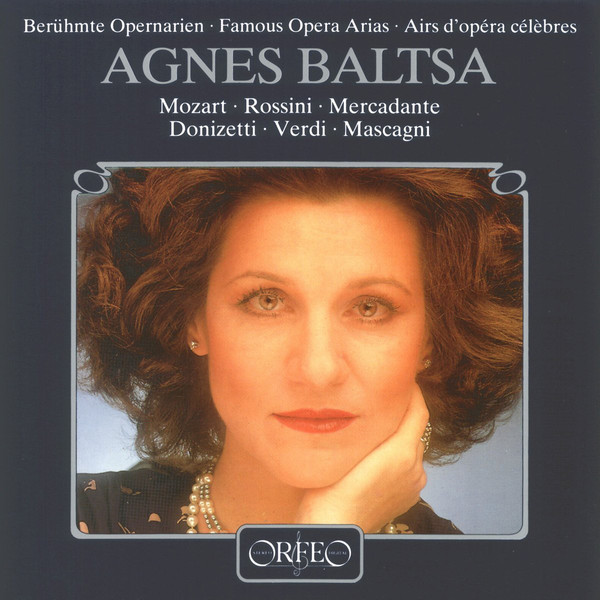
Good to be reminded of Baltsa’s pre-eminence as a lyric/dramatic mezzo at the beginning of the 1980s, when this recital was recorded.
The recital shows off to advantage her keen dramatic instinct, a tangily individual timbre, and a voice that was, at this time at least, absolutely seamless from top to bottom. Though she had already recorded Eboli and Amneris for Karajan, this recital concentrates for the most part on her work in the field of bel canto.
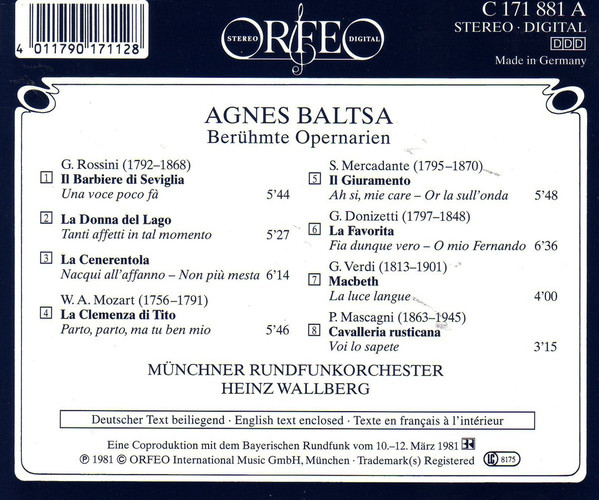
Baltsa was an exciting stage performer, as I can attest, having seen her live on many occasions and a great deal of that excitement comes through on disc, the climaxes of the arias from La Favorita and Il Giuamento being particularly thrilling. She has a strong vocal personality, which comes across stunningly on disc, and she realises the different demands of classical, Romantic and verismo music. If there is a limitation, it is that she rarely colours or weights the voice to suit the character she is playing, something more noticeable in a recital disc than it would be in a complete performance.
Stand out tracks for me were the aria from La Donna del Lago, where she gently caresses the opening cavatina, and the aforementioned arias from Il Giuramento and La Favorita. Indeed, on this showing it is a great pity that nobody thought to make a complete recording of the Donizetti opera with her, though preferably in the original French rather than Italian as it is here.
To sum up, this is a great memento of an important singer recorded when the voice was at its peak. I seem to remember that it was issued in the UK originally on EMI, but the recording was made by Orfeo, and it is that issue I have.
Before his untimely death at the age of 35, Fritz Wunderlich made a lot of recordings for both DG and EMI, mostly for the German market, hence the reason why all the excerpts from French, Italian and Russian opera are sung in German.
That said, regardless of language, Wunderlich’s gorgeous, lyric, golden-voiced tenor gives us a glimpse of a near ideal Rodolfo, Duke of Mantua, Lensky, Cavaradossi and Elvino.
This 5 disc set gives us 2 discs of operatic fare from Handel and Mozart to Verdi and Puccini, 2 discs of Lieder (complete recordings of Die schöne Müllerin and Dichterliebe and various other Lieder by Schubert, Schumann and Beethoven) and a final disc of popular Italian and German songs, such as Lara’s Granada and Sieczynski’s Wien, Wien, dur du allein.
One of the most disarming elements of Wunderlich’s singing is that sense of pure joy in the act of singing itself, and it’s a quality that is hard to resist. True, there have been deeper, more probing versions of the Schubert and Schumann cycles (even by Wunderlich himself, when captured in concert a year later), but few sung with such consistent beauty of tone.
Stand out tracks for me are the Mozart items (arias from the Böhm Die Zauberflöte, and the Jochum Die Entführung aus dem Serail, Lensky’s Kuda, kuda from Eugene Onegin. His opening lines in the Act IV duet for Rodolfo and Marcello from La Boheme (sung with Hermann Prey) are sung with a poetic beauty of such sorrowful radiance, that questions of language are totally forgotten, and this carries through to Cavaradossi’s great E lucevan le stelle from Tosca. As Elvino (a lovely Prendi, l’anel ti dono from La Sonnambulawith a somewhat quavery Erika Köth) he sings with a shy diffidence that is thoroughly charming, and what Gilda would not be conquered by the seductve tones of this Duke?
My once critcism would that be he occasionally aspirates fast moving moving music, most in evidence in the Lortzing excerpts, but in all he displays a strong personality, and, once heard, there is no mistaking him.
The popular items might not be to everyone’s taste, but it is here that his gift of communication is most in evidence, singing with sheer uninhibited pleasure. One of my favrourite tracks is his performance of Lara’s Granada. You get the feeling that he arrived in the studio feeling pretty good that day, and the golden outpouring of tone, right up to a couple of glorious top Cs, is infectiously enjoyable. It’s hard not to listen with a smile on your face.
In the grand scheme of things, Wunderlich would have gone on to have a great career, no doubt feted as one of the greatest tenors of his day, but it wasn’t to be and he was killed in an accident just a few weeks short of his 36th birthday. How lucky we are that these recordings exist to remind us of what the world lost.
Producer: Michel Glotz, Balance Engineer: Paul Vavaseur
It’s useful to take these three recitals together. They were recorded over a similar period, and Callas was using the sessions as a way of working on her voice after a long period of inactivity. Indeed in 1962 and 1963 she didn’t appear on stage once, giving only a few scattered concerts.
None of these discs could be considered essential, but the Verdi disc is the most recommendable. The most undemanding of the pieces (Desdemona’s Willow Song and Ave Maria) is predictably the one that causes her the least problems, and also yields the most vocal pleasure. As always the mistress of mood, she differentiates clearly between the conversational exchanges and Barbara’s song, her legato impeccable in the Ave Maria. The Aroldo arias are superbly intense and dramatic, as is Eboli’s O don fatale, the O mia regina section beautifully moulded, and benefiting from her deep legato. The top of the voice is no more pleasant here than it is elsewhere on these three discs, but the drama carries her forward and it is easier to forgive. There is not much to commend Elisabetta’s Non pianger mia compagna, and I often wonder why it was included.
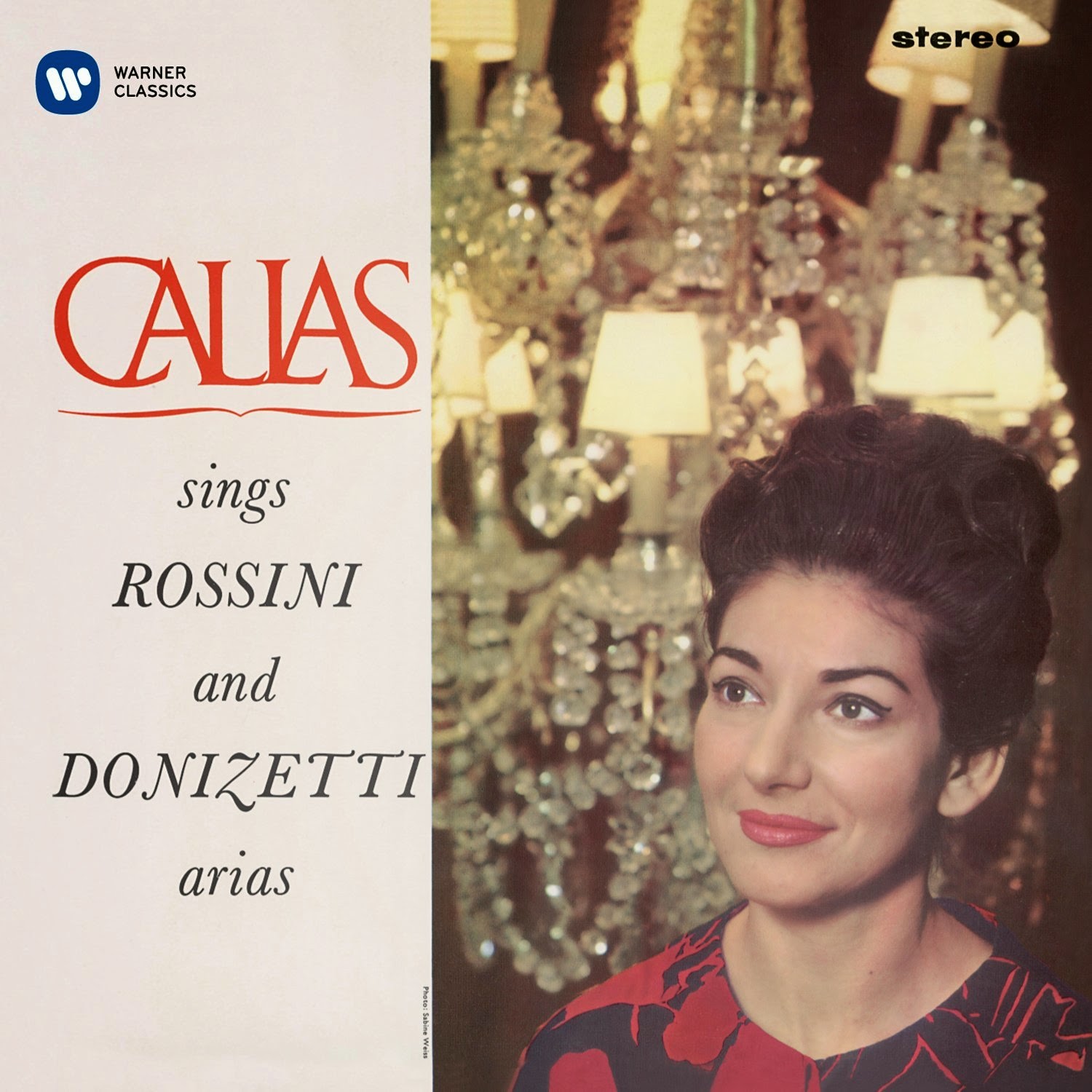
The Rossini and Donizetti fails to ignite her dramatic sensibilities quite so much, and there are plenty of uncomfortable moments. However there are still times, when we glimpse what Callas might have done with this music a few years before. Her Cenerentola lacks sparkle, but the scale passages are wonderfully supple and smooth. This is a serious Cenerentola, though, given what she suffers before singing this aria, such a reading is not entirely inapt. That said, there is a much better version of her singing this at a concert in London, where she finds a lightness of touch that eludes her here. Elsewhere, much of the singing sounds tentative, much more so than on the Verdi. Though she unerringly captures Mathilde’s sighing loneliness in the aria from Guglielmo Tell, there is a rather lifeless air about the recording, not helped by the omission of a chorus in some of the items. Nevertheless her sense of style never deserts her.
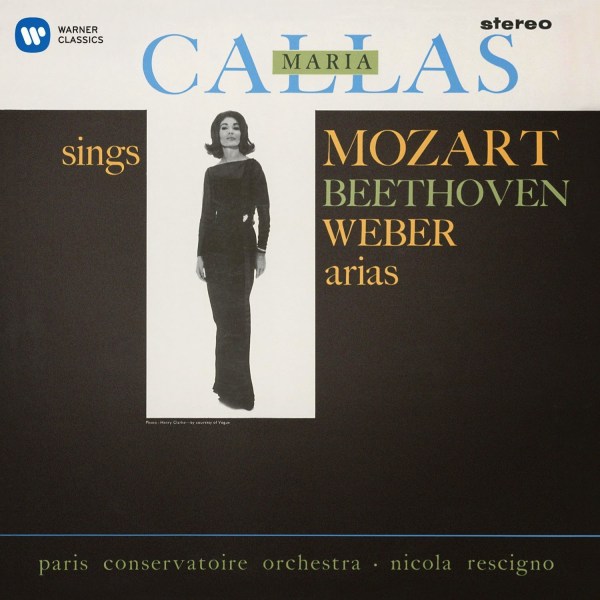
Mozart, Beethoven and Weber are not composers one would naturally associate with Callas. That she could be a great Mozartian is evidenced by her test recording of Donna Anna’s Non mi dir, and a couple of blazingly defiant concert versions of Costanze’s Martern aller Arten, sung in Italian as Tutte le torture. (It is a little known fact that Callas was actually La Scala’s first ever Costanze.) The less said about Porgi amor and Donna Anna’s arias on this album, though the better. Elvira’s Mi tradi goes a lot better, and the recitative, with its contrasting emotions, is superb. It’s mirror piece, Beethoven’s concert aria Ah perfido also goes well, and, as it lies somewhat lower, suits her much better. It is without doubt the most successful item on the recital. Ocean, thou mighty monster is also superbly dramatic, but her peculiarly accented English is somewhat bizarre, and again the climaxes are something of a trial.
I find my attitude to these late recitals can vary each time I listen to them. Sometimes I find the wobbles, the insecure and unsupported top voice, the acidulous tone difficult to take; others I barely notice it, so taken up am I by her musical instincts. The Verdi I would hate to be without, the other two for very occasional listening only.












 Philip's Assortment Box