Turandot from the Met with Nilsson and Corelli

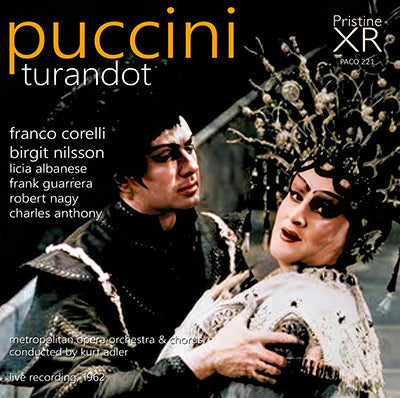
La principessa Turandot – Birgit Nilsson (soprano)
Calaf – Franco Corelli (tenor)
Liù – Licia Albanese (soprano)
Ping – Frank Guarrera (baritone)
Pang – Robert Nagy (tenor)
Pong – Charles Anthony (tenor)
Timur: Ezio Flagello (bass)
L’imperatore Altoum – Alessio De Paolis (tenor)
Un mandarino – Calvin Marsh (baritone)
Chorus and Orchestra of the Metropolitan Opera/Kurt Adler
rec. live radio broadcast, 24 February 1962, Metropolitan Opera House, New York City, USA

Well, let’s get this straight. This is an exciting performance of Puccini’s last opera, which puts you in a good seat at the old Metropolitan Opera House on a night when two of its greatest stars were singing two of their greatest roles. You can sense the excitement in the house from the moment the radio announcer, Milton Cross, introduces the opera with the words, “We’ll have the loud, crashing chords, then the curtain will open on the walls of the oriental Imperial palace of Peking.” Indeed the set is loudly applauded by the audience.

After the excitement of those opening chords and the chorus which follows, it is something of a disappointment to be confronted with the Liu of Licia Albanese, who was approaching 53, but quite frankly sounds even older. She compensates by loudly over-singing and over-emoting, and I derived very little pleasure from her performance. Her days at the Met were evidently numbered and she left the company in 1966, following a dispute with Sir Rudolf Bing.

For the rest, we have a sonorous Timur from Ezio Flagello, but the Ping, Pang and Pong tend to over-characterise their music and consequently I found their scenes irritating, as I often do.

However, the main reason for hearing this set remains the splendid singing of Nilsson and, especially Corelli. I am not one of those who think Corelli can do no wrong, but in the right role, and Calaf is undoubtedly the right role for him, he is unbeatable. First of all, there is the sheer splendour of that sound, the thrill of his top notes, which he can fine down to almost a whisper in places. He is absolutely thrilling and the audience go wild after Nessun dorma, with Adler abruptly stopping the orchestral postlude until the pandemonium has died down.

So too, of course, is Nilsson, throwing out those top notes like laser beams. The punishing tessitura holds no terrors for her at all and it is all very exciting, if not particularly subtle. Nor is the conducting of Kurt Adler, for that matter, but he certainly knows how to whip up the excitement.

According to Lee Denham in his exhaustive survey of the opera, there are, or have been, available seven other recordings featuring Nilsson, three of them with Corelli, so how necessary is this particular recording? I’m pleased to have heard it, but I’m not sure I’d want it as my one representation of Nilsson and Corelli in the opera. For that, I’d probably stick with the EMI recording under Molinari-Pradelli, which also has the benefit of including the Act III aria Del primo pianto, which is omitted from all Nilsson’s live accounts. It also has the benefit of the young Renata Scotto as Liu.

I would also not want to be without the Mehta recording with Sutherland, Pavarotti and Caballé, nor the Serafin with Callas, Fernandi and Schwarzkopf, but this one is a great reminder of a thrilling afternoon at the old Met.
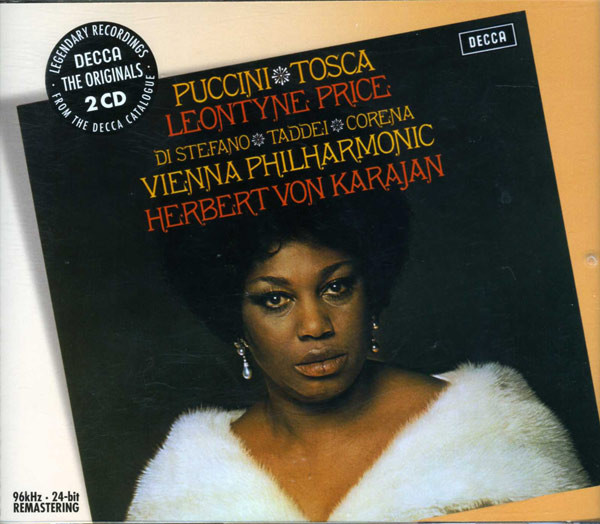
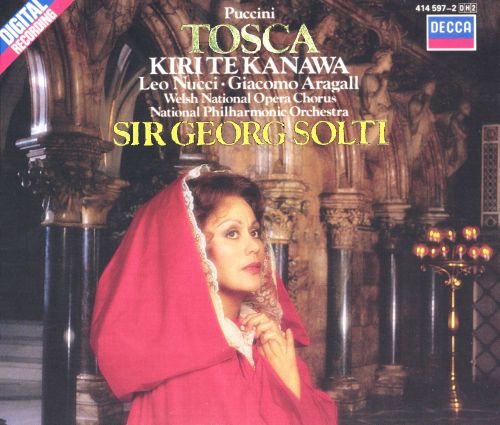
A clutch of Decca Toscas

For this comparison, I have chosen five different recordings of Tosca, all available from Decca Classics.

mi0001097995

First off I revisited the 1984 Solti Tosca but have to say I got bored before the end of Act I and then just tried various bits in the other two acts. The sound is great. Apart from that the best thing in it is Aragall, though I wouldn’t prefer him to Di Stefano, Domingo, Carreras or Bergonzi, all of whom appear on other more recommendable recordings. Nucci is a dead loss and Te Kanawa out of her depth as Tosca. Solti’s conducting has little to commend it either, too slow in places and too fast in others. It just doesn’t add up to a convincing whole, and considering it was all recorded piecemeal, that’s hardly a surprise. I remember this set was originally issued in a blaze of publicity, but it didn’t sell well and was quickly remaindered. A totally forgettable performance. 

330417296549

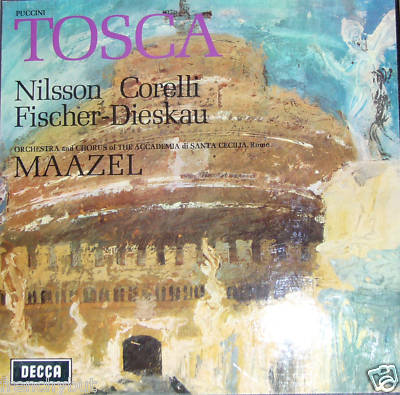
Where I found the Solti a bit of a bore, this 1966 set is quite interesting, but often for all the wrong reasons. First of all Maazel’s conducting is fussy beyond belief. He can hardly let a phrase go by without pulling around the tempo or trying to bring out some detail in the score. There is no lyrical flow or sweep and ultimately Puccini gets lost on the altar of Maazel’s ego.

Fischer-Dieskau’s Scarpia is, as you would expect, intelligently thought out, but it never sounds idiomatic. He is an artist I admire in the right repertoire but Puccini was not for him. Corelli is, well, Corelli. He is definitely the best of the three principals, but he emphasises the heroic at the expense of the seductive. Nonetheless, as always, there is much to enjoy in the sound of the voice itself.

Then there is Nilsson. Well the top notes are fabulous of course, but this isn’t really a good role for her. She often overdoes the histrionics, as in her first scene with Scarpia where she adds a surfeit of sobs. She can also be a little clumsy in the ligher sections and Non la sospiri la nostra casetta is clumsy and unpolished. Ultimately, like Fischer-Dieskau, she sounds as if she had strayed into the wrong opera.

For all that I found this more enjoyable than the Solti, which is just plain dull. At least all the singers here have a personality.

71lfkmbsq7l._sl1400_

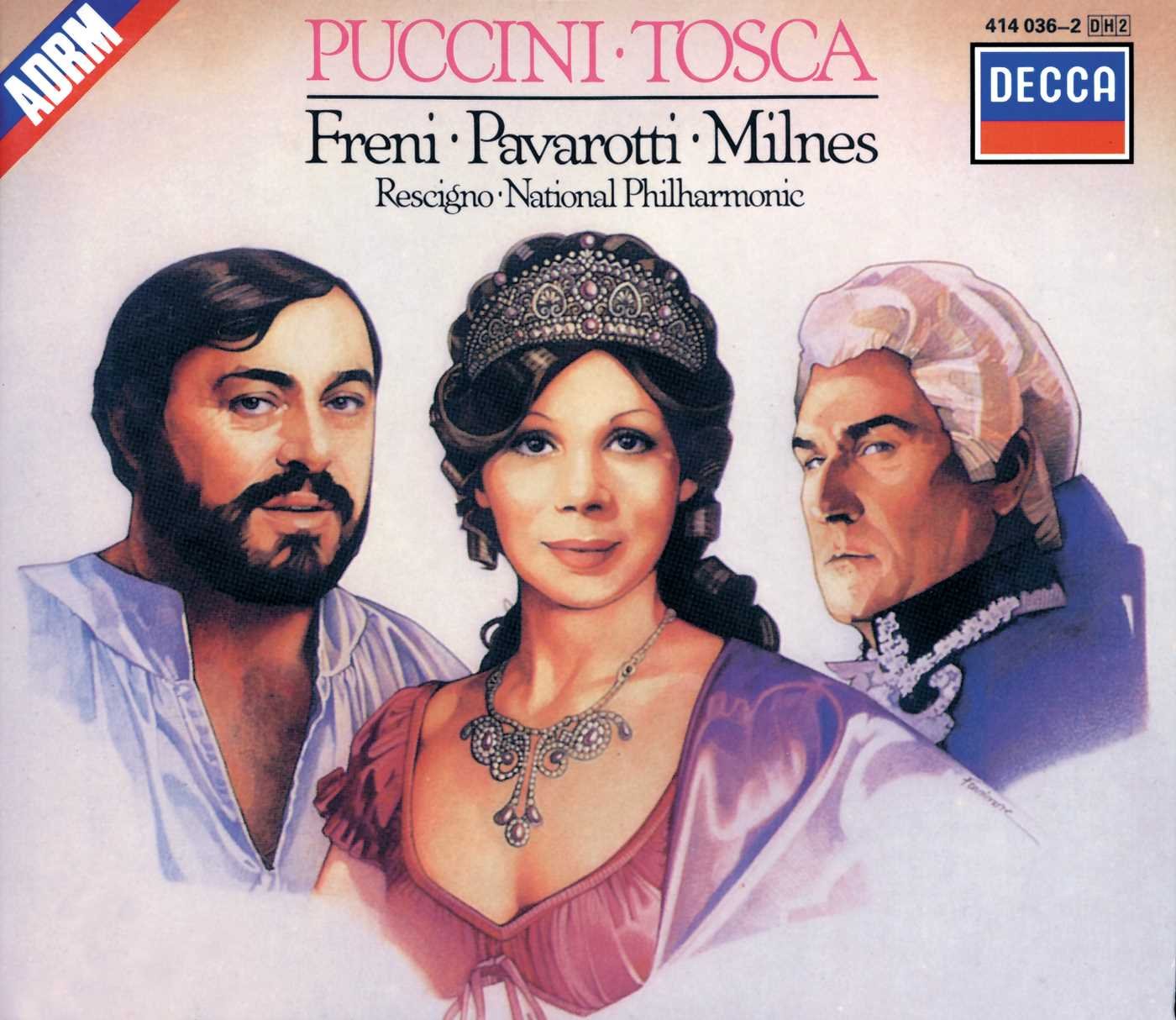
So I’ve moved on to the 1978 Rescigno in this mini challenge and there’s little here to detain us. In fact I’d be tempted to place this below the Maazel, which at least has interest value. Rescigno was a favourite of Callas’s, recording many of her recital albums and delivering at least one great performance in the live 1958 Covent Garden Traviata but his conducting here is just plain dull. Like Te Kanawa, Freni is completely out of her depth, the voice just too light even at this stage of her career. I expected Milnes to be more interesting, especially when you think of his Jack Rance, but for some reason his Scarpia just isn’t nasty enough. Which leaves Pavarotti, who sounds out of sorts vocally. The velvet has gone from his voice and he often sounds plain whiney. Not surprisingly his Vittoria! is very small scale when set beside Corelli’s. And small scale is what personifies the whole performance, but that’s not what Tosca needs.

71p8xumnjyl._sl1400_

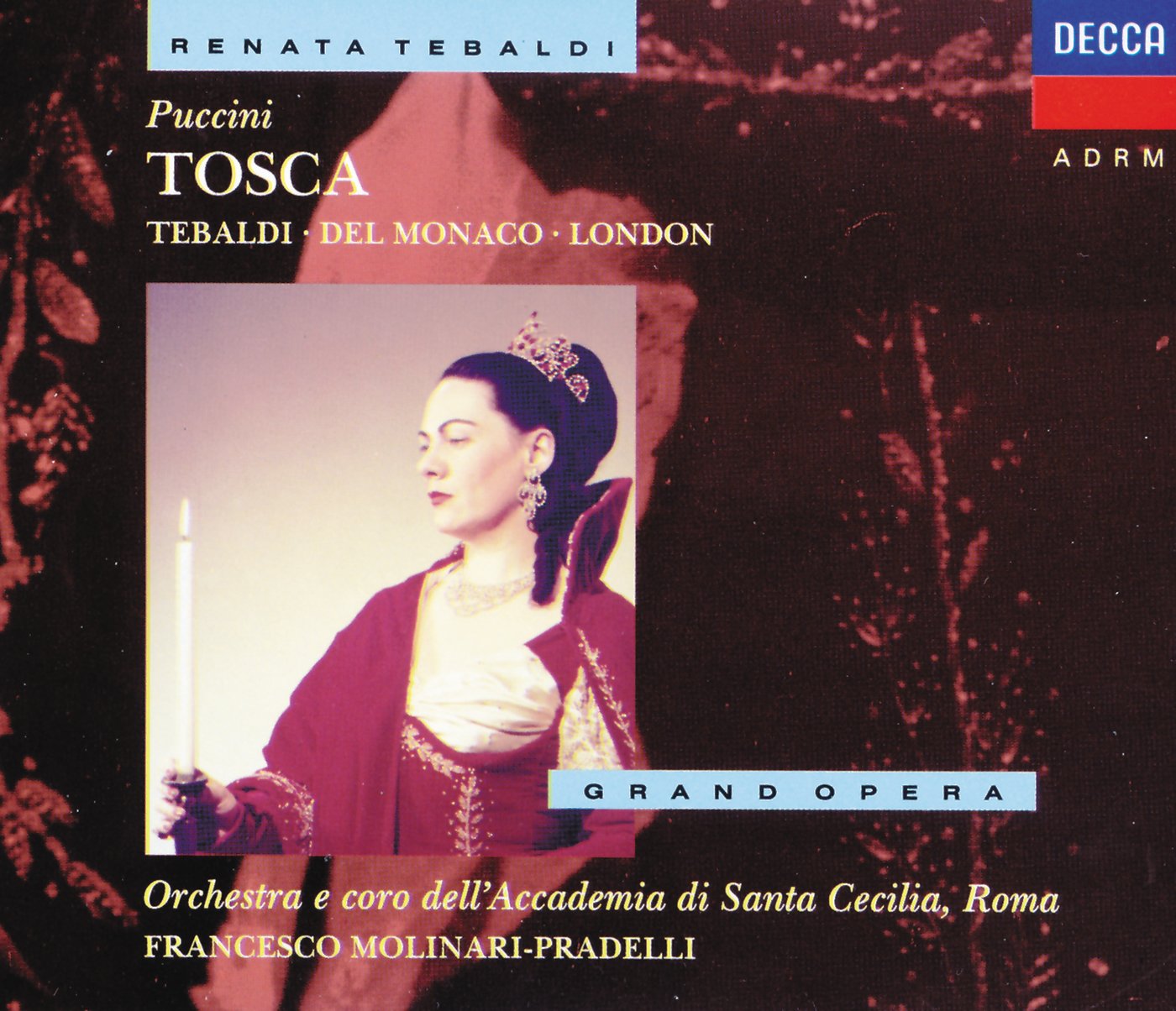
At last a real Tosca voice! Aside from at the very top of the voice when she can be a bit shrieky, Tebaldi fulfils almost all the demands the role asks of her. I say almost, because she doesn’t quite have Callas’s flexibility and lightness of touch in Non la sospiri la nostra casetta, but then few do. The beauty of the voice is well caught and she is a convincing Tosca. It’s not a particularly subtle performance, from any of the singers, but they do all have splendid voices of the requisite size and weight. Del Monaco is much better than I remembered, though he still bawls from time to time and his arias lack poetry. George London is the best of the Scarpias so far, his voice dark and threatening.

What lets this set down is the routine conducting of Molinari-Pradelli. He is a good accompanist, nothing more. Still, worth hearing for the three lead singers. The 1959 recording sounds good for its age.

r-4229151-1359147457-4134.jpeg

So I’ve come to the end of my mini Decca Tosca challenge and what a difference the conductor makes. This 1962 recording is in an altogether different class from the others and the chief reason for that is Karajan’s elastic conducting, which is incredibly controlled without being rigid. Where Maazel’s conducting draws attention to itself because of the way he fusses with the rhythms, Karajan’s rubato is entirely natural. He has at his disposal a cast as well nigh perfect as any other assembled on disc. Taddei’s Scarpia is the best I’ve heard since Gobbi, sounding equally dangerous but in a completely different way. You feel this man could lash out viciously at any second. Gobbi’s Scarpia would be unlikely to get his own hands dirty, but you feel Taddei’s not ony would but would enjoy doing so. Di Stefano is in slightly fresher voice for De Sabata but he is still an excellent Cavaradossi, and I actually prefer him to both Corelli and Del Monaco. He fulfils all aspects of the character, artist, lover and revolutionary, finding the poetry in his arias and an almost crazed fervour in his cries of Vittoria. He brings more “face” to his character than anyone. Truly this was one of his very best roles.

Which leaves us with Price and here I have a feeling I might be treading on controversial ground. The voice is, of course, absolutely gorgeous, her characterisation sensuous and feminine, and her singing is deeply felt (Vissi d’arte is really lovely). She is a good deal preferable to Nilsson, Freni or Te Kanawa, but I would still place Callas and Tebaldi ahead of her in the Tosca canon. The Callas/De Sabata I know so well that it tends to play in my mind’s ear whenever I hear the opera, but I had also just listened to Tebaldi in the role and she sounds more like a natural for it to me. It’s hard to put my finger on what is missing, but I’d no doubt be perfectly happy with her Tosca if I hadn’t heard Callas and Tebaldi in the role. Nonethless she is one of the best Toscas on record and in very good company.

So now having heard all five of these Decca recordings, my final ordering would be

1. (by a fair margin) Karajan
2. Molinari-Pradelli (the only other really worth hearing, mostly for Tebaldi’s Tosca and London’s Scarpia)
3. Maazel
4. Rescigno
5. Solti

The De Sabata would still be my ultimate first choice, but the Karajan has also stood the test of time and anyone wanting an audio Tosca would be happy with either. If stereo sound is a must, then Karajan is the obvious first choice.