Callas – Paris 1958

onesheet

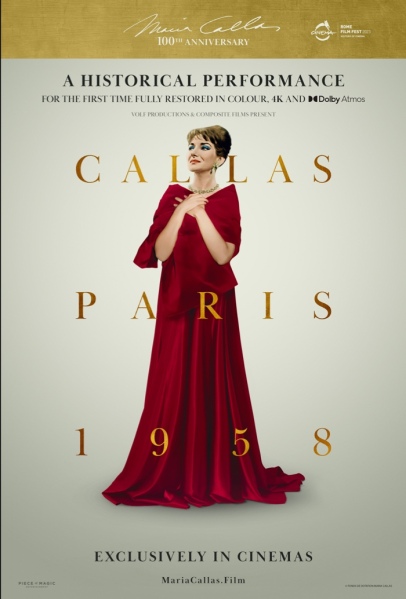
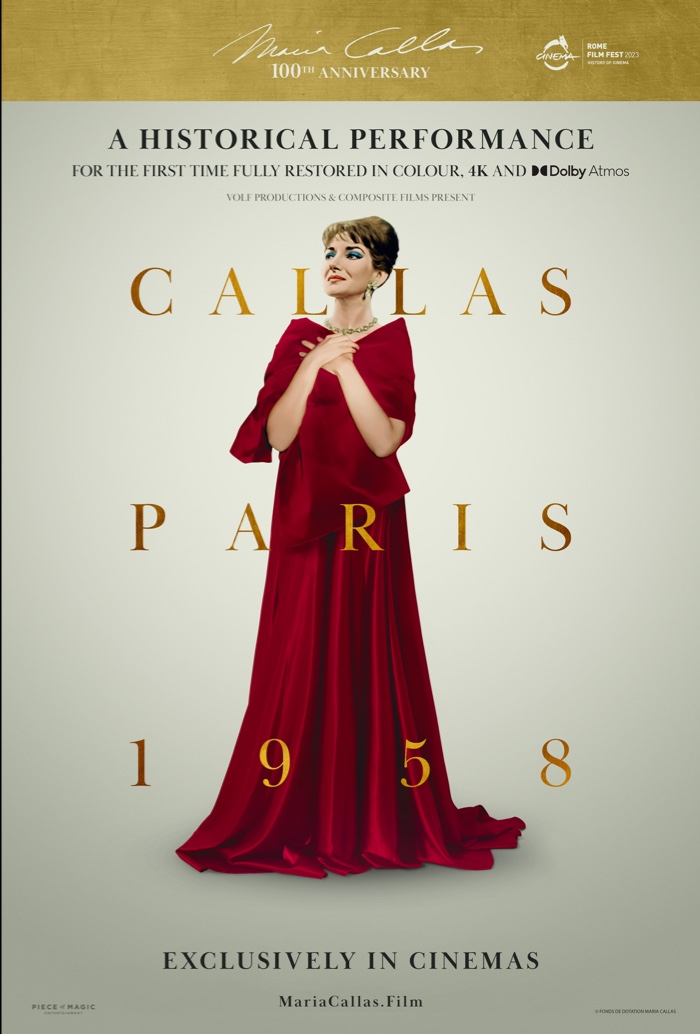
This newly restored film of the famous Paris Gala Concert is playing in cinemas around the world over the next couple of months and I caught up with at the weekend.

First a word about the provenance of the present release. In the words of the producer, Tom Volf,

the newly discovered 16 mm reels were those belonging to Callas herself, most probably brought by her & Meneghini from Paris; Having worked with the copies from INA (Institut national de l’audiovisuel) for Maria by Callas, when I found those reels (truly in a basement in Athens, kept for years by friends of Callas in boxes with other reels & tapes belonging to her – now all in Paris under the Callas Foundation) I immediately compared them to the INA versions, not believing myself that those ‘other’ 16 mm reels could be better than those preserved by INA, and to my astonishment they were indeed. Comparing the two sources side by side there was no doubt that the newly found ones were actually the original ones whilst those kept by INA were 16 mm copies, called in French “internégatif” a method commonly used in the late 50s and 60s before magnetic tapes. Therefore, what you will see in the upcoming film is as close as it gets to the original footage and the original performance. I have chosen to partner with the same team that undertook the colourisations for Maria by Callas, after I undertook myself for the newly found original reels to be digitised in 4K using the latest technologies available. The colorisation process took nearly two years as it was done frame by frame and based on all original colour photographs in our archives, plus first hand testimonies of people who had attended (some of them are still alive fortunately). The result intended was for the audiences of 2023 to be immersed in that unique evening and to see it with their own eyes as if they were there – and as we see in colour in real life, this was the reason for undertaking this challenging work, with, I believe, an astonishing result.

Certainly I am happy to report that it looks a lot better than any release I have seen up to this date. Long shots are still a little blurry but close-ups come up with a new clarity that has to be seen to be believed and it was quite a thrill to see Callas looking so fabulous up there on the big screen. The sound is astonishingly clear as well, though I’m willing to bet that some of her more piercing high notes were less so in the theatre. The colourisation was, for the most part, subtly and beautifully done, but I do question whether her eyeshadow would have been quite that shade of bright blue. What is remarkable to see in close-up is her concentration, her intensity and those eyes….! So expressive. At no point was she just a singer singing an aria. Whether in the concert of the first half or in the fully staged Tosca of the second part, she was always completely inside the character she was portraying.

In places you can tell that the concert was hastily put together and sketchily rehearsed. Apparently when Callas arrived at the first rehearsal, the scene was quite chaotic with nobody taking charge of proceedings. She quickly put Gobbi in charge and he basically directed the whole thing. Still, he couldn’t prevent a wong entry by the chorus in Casta diva, which Callas corrects herself with an imperious gesture of her right hand. She was not in her best voice and in the Trovatore the top notes are a little strained and tense. Still, this strikes me as  the most impressive section of this first half, her phrasing wonderfuly elastic and her sense of Verdian style unparalleled. She moves very little, but when she does, such as a sudden turn of her head when she hears the monks singing, she immediately arrests attention and her eyes are unforgettable.

This first half ends with a wonderfully characterful Rosina, singing Una voce poco from Il Barbiere di Siviglia. The explosive way she sings the single word ma and the expression that goes with it says more about the character than many a singer manages in the whole aria. This Rosina is sweet and gentle, but a real viper when crossed. She is more relaxed here too and her smile when she acknowledges the tumultuous reception at the end, positively radiant.

When it comes to the second act of Tosca, I will say straight away that I prefer the Covent Garden performance of 1964. She may be in better voice here in 1958, but the Covent Garden performance was from a thoroughly rehearsed and meticulously prepared production where this one was thrown together specifically for this event. Gobbi obviously did what he could to direct in the time available to them, but the acting and rapport between these two singers reaches even greater heights at Covent Garden. Vissi d’arte loses some of its impact by the fact that she starts it upstage and the camera doesn’t hone in on her as it does at Covent Garden. Though I thought she looked very beautiful in some of the close-ups, she is more becomingly costumed at Covent Garden too. Albert Lance is actually quite impressive vocally, as he is off stage in the Trovatore, but he overacts like mad.

The cinema, when I went, was depressingly empty and I was one of about a dozen in the auditorium, most, like me, sitting on their own and most of a similar age. I found that rather sad.

A friend of mine went to see it in a cinema near where she lives. She told me she has had had a fascination with Callas since childhood, though she had never seen the concert in any form before. She was totally knocked out so I guess you could say the film certainly makes its impact.

I assume it will come out on DVD or BluRay at some point, but if you can get to see it in the cinema, I would definitely go. It is a fitting tribute on her 100th birthday and we are lucky that it has now been made available to a wider public in much improved sound and vision.

What next? Dare we hope that there is a pristine copy of the Covent Garden Tosca Act II locked away in the vaults somewhere?

For showings, check out https://mariacallas.film/
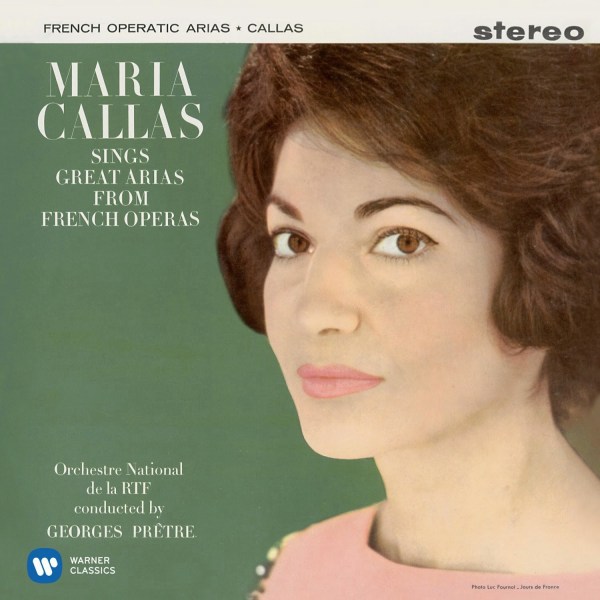
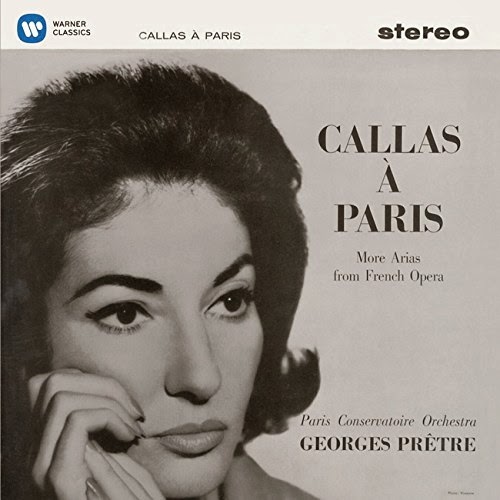
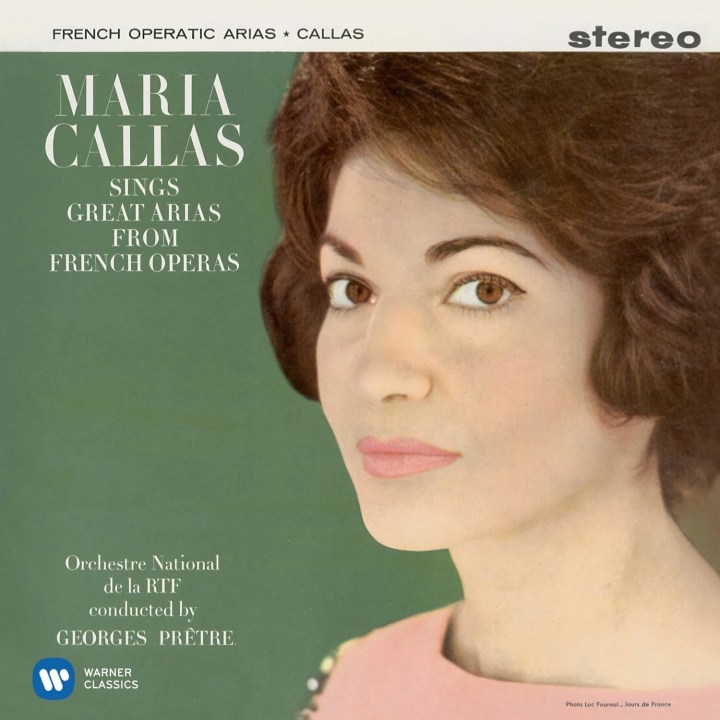
Callas a Paris

Callas never sang a role in French on stage, and only one complete role (Carmen) on record, but as can be heard on these two discs, she had a natural affinity for the language. She spoke it fluently (though tellingly refused the role of Carmen in the Beecham recording, “because my French isn’t good enough yet”) and of course made Paris her home in her last years. Previously she had sung only Ophelia’s Mad Scene in French on the Mad Scenes recital disc and Louise’s Depuis le jour in recital in 1954.

Two years separate the recording of these two discs, and it is alarming to hear the marked deterioration in Callas’s voice in such a short period of time, a voice that was already showing signs of stress in the first recital recorded in 1961. These were also the last records of hers to be produced by Walter Legge.

51nmk20cjwl

Recorded May 1963, Salle Wagram, Paris

Producer: Walter Legge, Balance Engineer: Francis Dillnutt

Despite her vocal problems, and despite the fact that she is evidently having to tread carefully, there are, however, still treasures on the second disc. She sounds strained to the limits by the Gluck, and it can make for uncomfortable listening. Even so her grasp of the classic style and her command of legato never falters. There are also signs of strain in Leila’s Comme autrefois, (though her phrasing is exemplary) and  Manon’s Je marche sur tous les chemins, shorn of the ensuing gavotte, ends somewhat inconclusively. Manon’s Adieu, notre petite table, though, is a different matter; maybe a tad too serious, but the sadness she gets into this little solo is most touching, and she makes the aria work supremely well out of its context.

For the rest, we are vouchsafed three great performances. Gounod’s Margeurite comes as a total surprise, Callas finding here a lightness of touch that one might have thought was beyond her by this time. In the Ballade she meticulously differentiates between Marguerite’s thoughts and the strophic song she sings, carefully placing Marguerite’s simplicity before us. Her innocent rapture when she opens the casket of jewels is brilliantly caught. There is charm here (a trait which often eluded her in the past) and femininity, the text clearly enunciated, the runs deftly executed. She is defeated only by a watery top B at the end, which detracts from, rather than caps, what had been a beautiful performance.

Berlioz’s Margeurite is superb. Alongside Janet Baker’s performance on the Prëtre recording, this is one of the greatest performances of the piece put down on record. At the beginning of the aria, Callas perfectly mirrors the tone of the cor anglais with her first words, then beautifully lightens her tone, putting a smile in the voice for Sa marche que j’admire (and note how we hear the separation of the duple quavers in de sa main, de sa main la caresse, without once disturbing her impeccable legato). Her mounting rapture at Je suis a ma fenetre, where she uses the rests brilliantly to illustrate the recollection of Margeurite’s breathless excitement at Faust’s arrival, finds its release in a cathartic O caresses de flamme, which she achieves again without once upsetting the long musical line. “Who would not wither in the flame of her genius?” asked the Berlioz scholar, David Cairns. Who indeed? I can only imagine what she might have done with the roles of Cassandre and Didon, and why not Les Nuits d’Ete too? Can you not imagine Callas singing the words O grands desirs inapaisees? If only Callas had sung more Berlioz. It was a natch made in heaven.

And finally I turn to Charlotte’s great Letter Scene, arguably the most dramatic piece on the album, which brings out the best in her. How brilliantly she differentiates between Charlotte’s thoughts and Werther’s own words, particularly noticeable when she repeats the phrase Ne m’accuse moi, pleure moi, as their significance dawns on her. Unerringly, she captures Charlotte’s mounting panic as she reads the letters. So vividly does she bring this scene to life, that I can now just read through the text, and Callas’s voice and inflections come to my mind’s ear. Like many of her performances, it spoils me for all others.

81slgnandkl-_sl1500_

Recorded March & April 1961, Salle Wagram, Paris

Producer: Walter Legge, Balance Engineer: Francis Dillnutt

Though there are still a few wild and insecure notes, the first disc is one of the classic recital discs of all time, and one I would never be without. Whole tomes could be written about Callas’s psychological insights, her realisation of the composer’s intentions; every aria is like a new discovery. There isn’t a single dud on the recital, though the rather empty coloratura of Philine’s Je suis Titania would hardly seem worth her effort. She manages it remarkably well, the filigree beautifully executed, with a lovely lightness of touch, magically lightening her tone. She sounds a different singer from the Carmen and Dalila, which precede it, but it’s still my least favourite piece on the disc.

Everything else is pure Callas Gold. The Gluck arias sung with passion, but retaining their classic contours, Orphee’s J’ai perdu mon Eurydice emerging as a true lament. Note the appeal in the voice at the words C’est ton epoux, ton epoux fidele, the blank, despairing tone at Mortel silence and the suffering that truly tears at the heart (dechire mon coeur). Alceste’s great entreaty to the gods is hardly less affecting. Though the top notes are driven here, they are not intrusive, and Callas again finds a wealth of colour for each intercession, for each recurring statement of Divinites du Styx, with a lovely softening of her tone at Mourir pur ce qu’on aime.

Carmen’s arias are best seen as a preparation for the complete set, but the Habanera is seductive and playful, and the Segeudille full of humour, lightly and playfully sung. Dallila’s arias are even better. When it comes to Printemps qui commence I can do no better than to quote Ronald Crichton in an issue of Covent Garden’s About The House.

Callas, in her matchlessly intelligent and instinctive record, is like an elegant young tigress stretching her limbs in the spring sunshine.

The danger lurking under that seductive surface is unleashed in Amour viens aider ma faiblesse, and then she gives us a real siren, when she sings the famous Mon coeur s’ouvre a ta voix. Incidentally, always a stickler for the composer’s intentions, Callas here sings exactly what Saint-Saens wrote, which is that Ah reponds a ma tendresse should be sung in one breath. Most singers add an extra Reponds, which gives them a chance to snatch an extra one. In the second statement, she does indeed take a (perfectly justifiable) breath at Verse moi, verse moi l’ivresse (there is a comma here after all), but this might have been the reason why she refused to allow the aria to be released when the record first came out. It wasn’t issued until the disc was reissued after her death. In any case I doubt any of these arias has ever been done better, and they are enough for Alan Blyth to name Callas as Dalila in his dream cast for Samson et Dalila in his comparative review in Opera on Record.

Juliette’s Waltz Song is a miracle of lightness and elegance. Though the tone is mature, Callas suggests better than anyone the joy of the young girl, but note too the change of colour, when a veil of sadness comes over her voice at Loin de l’hiver morose. Callas gets more meaning out of this seemingly innocent tune than any other singer I know. Chimene’s glorious Pleurez, mes yeux has a dark, tragic beauty, her chest tones uniquely telling, her legato superbly eloquent.

Finally we come to Louise’s apostrophe to love and life. There are some alarming flaps on high notes here, and we note that even in 1954 the aria never quite worked for her in toto, but the quiet intensity of her intent is never in doubt. Has any other singer, before or since, captured quite so unerringly Louise’s mounting rapture, or sung quite so erotically the words je tremble delicieusement? So her voice doesn’t always do quite what she asks of it. Who cares, when she realises the fundamental truth at the root of this aria, which is actually about a young girl’s sexual awakening? When this recital was first reissued, Richard Osborne wrote, “Records like this change people’s lives.” It certainly changed mine