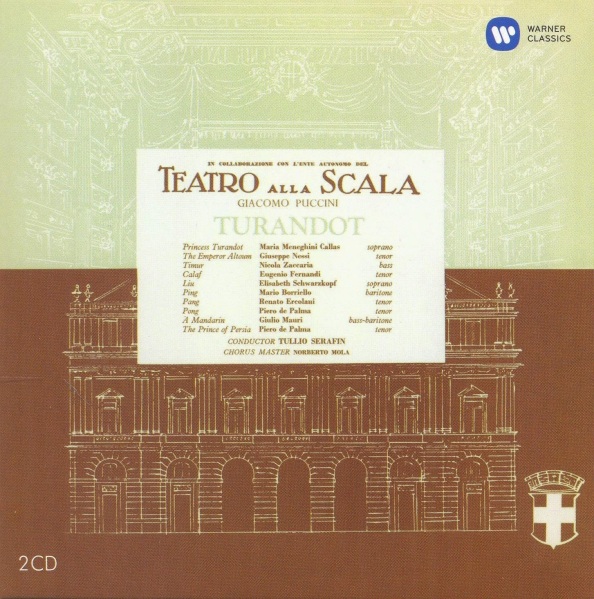
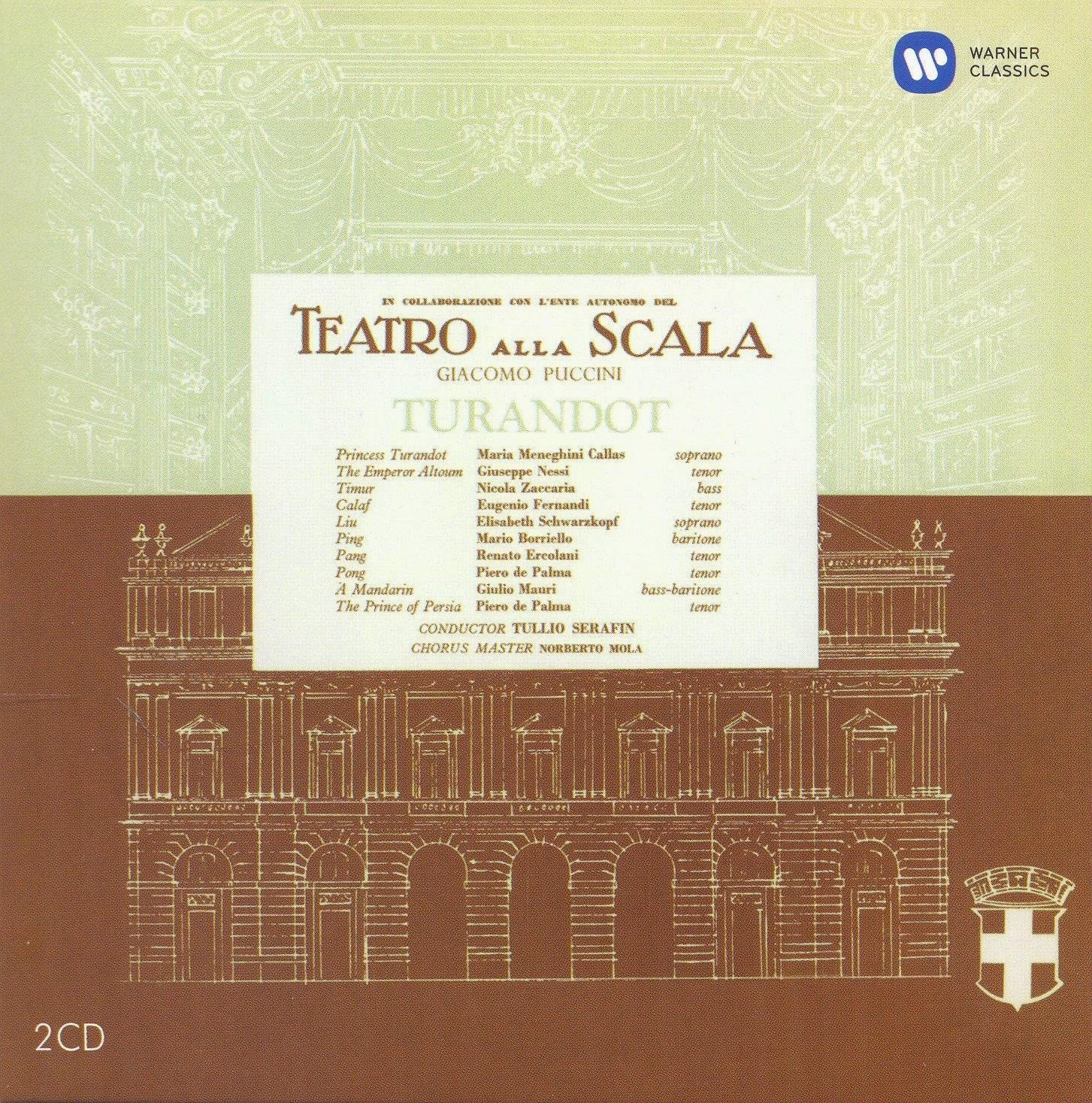
The Callas Turandot revisited

9172j0czwml-_sl1467_

A short while ago I listened to the Mehta and Karajan recordings of Puccini’s last opera, both of which have a great deal to commend them, though the Mehta is the most obvious recommendation, with a superb cast headed by Sutherland, who is surprisingly convincing in what is surely an uncharacteristic role. The Mehta is the recording I usually recommend to anyone wanting a single recording of Turandot.

I then decided to revisit the Callas recording, which I hadn’t listened to in quite some time. Now common opinion (and memory) tells us that Callas, having recorded the role of Turandot a little late in her career, is wobbly and vocally unstable, that Schwarzkopf is out of her element, Fernandi a complete non-entity, Serafin reliable but uninspired and the mono recording not up to the demands of this aurally spectacular opera.

Well memory, and therefore common opinion, turned out to be rather faulty on this occasion.

In one respect, that regarding the recording, memory was correct. The mono sound is boxy and this, of all operas, cries out for the kind of aural spectacular we get in the Mehta and Karajan performances. It is a great shame for the performance, led with a wonderfully natural sense of rhythm and balance by Serafin fully deserves a better aural soundscape. The lead up to the finale of the first act is particularly thrilling and Serafin even manages to make much more musical sense of Alfano’s ending, which becomes much less of an anti-climax than usual. However no amount of re-mastering can disguise the fact that the mono sound cannot contain the splendours of the performance.

So what about the singers?

Schwarzkopf might not sound quite Italianate, it is true, but her Liu is gorgeously sung and phrased right from the first moments when she sings that breathtaking piano top note on Perché un dì…nella reggia, mi hai sorriso. . Then in Signore, ascolta, she manages a perfect mesa di voce on the final note, as intrsucted in the score. Another highlight is the little mini aria before Tu che di gel sei cinta, again beautifuly shaded and shaped. It’s a performance full of veiled sighs and tears and I like it very much.

Fernandi, who appears to have done little else on disc, makes much more of an impression than I remembered, with a fine ring to his voice. His phrasing is occasionally a little four square, but, taken on his own terms, it is a thoroughly acceptable performance, if without the personality of a Bjoerling, Corelli or Pavarotti. Zaccaria is a sonorous, warmly sympathetic Timur.

As for Callas, well of course I might have wished that she’d recorded the role even three years earlier, when she sang a vocally resplendent In questa reggia on her Puccini Recital, and certainly there are times when the role is obviously stretching her to her limits, but her voice is a lot more secure than she is usually given credit for, and indeed we’ve heard much wider vibratos and more wobbly singing from many of the singers who have followed, especially from some of the ones who are around now. What we also get is the most psychologically penetrating traversal of Turandot’s psyche as you are likely to hear. This Turandot is not just a mythical creature with splendid top notes, she is a real person. We understand that it is Turandot’s insecurity and fear that make her so cruel. We also understand why so many princes could have fallen under her spell. One might argue that Turandot is after all just a fairy tale, and doesn’t require such a degree of psychological complexity, and it’s certainly a valid point. However I, for one, find the insights Callas brings to the role make it so much more interesting.

So, in all but matters of sound, I would call this a great Turandot.

If anyone is interested you can read my original review of the set here.
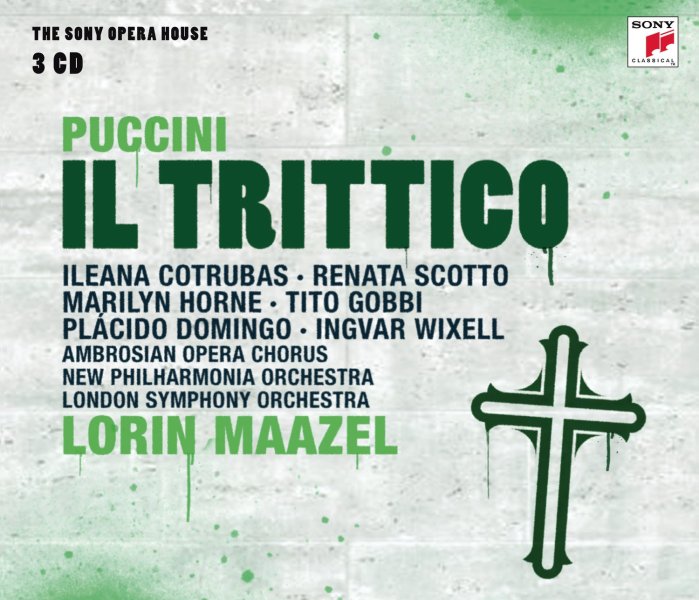
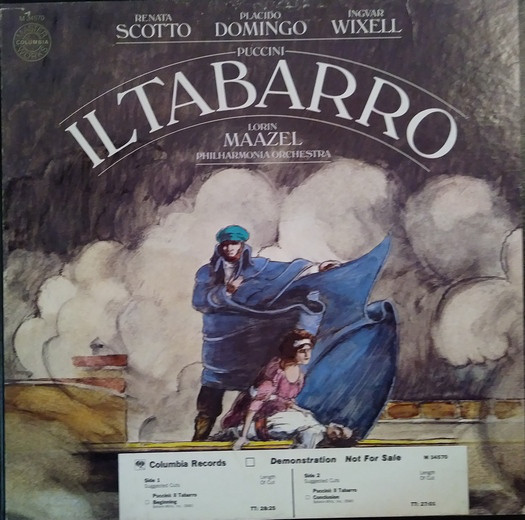
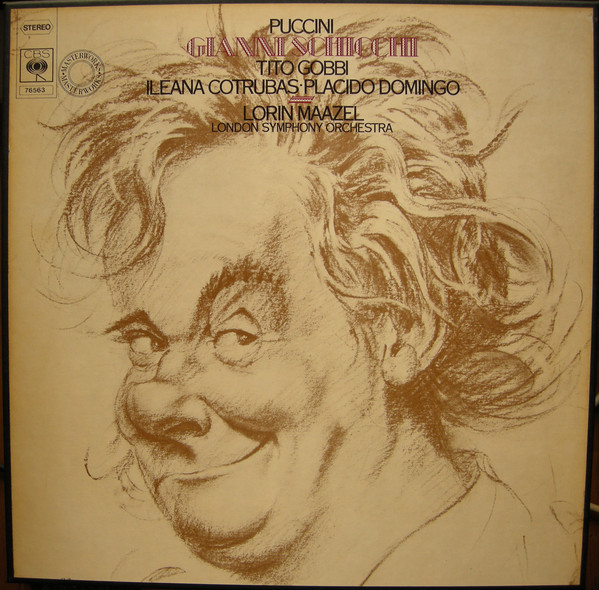
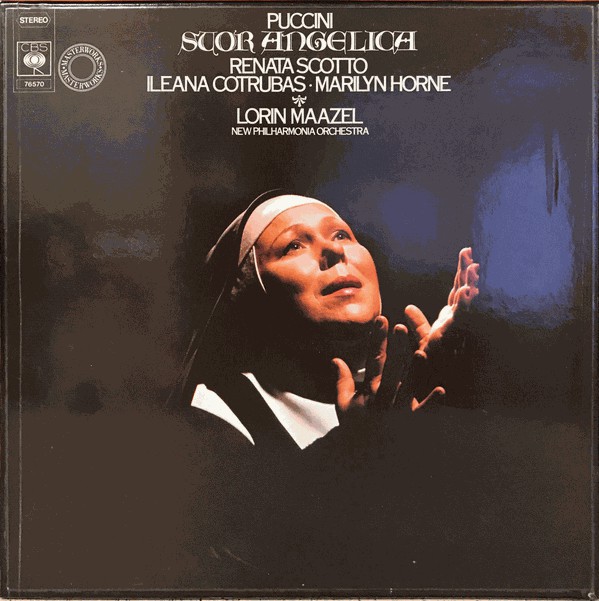
Lorin Maazel’s Il Trittico

Excellent performances of Puccini’s tryptich, though, of the three, only Suor Angelica would be my absolute top choice.

A word first about the presentation of this budget release. These days I suppose we have become used to not getting texts and translations, but documentation n this reissue is really of the minimum, and tracking of the CDs is a ludicrous; just one track for Il Tabarro, and two each for Suor Angelica and Gianni Schicchi.

Nothing really wrong with Maazel’s conducting. I sometimes find him a fussy conductor, who draws attenttion to himself rather than the music, but I enjoyed these performances. His conducting is spacious and warm throughout, though I’d have to admit he misses some of the high spirits of Gianni Schicchi.

r-13346789-1552503975-9282.jpeg

Despite the excellent performances of Scotto and Domingo in Il Tabarro, I still prefer the old mono recording conducted by Vincenzo Bellezza, which is dominated by Gobbi’s darkly menacing, but troubled Michele. It is one of his greatest achievements on disc, and, good though Wixell is, he doesn’t begin to match Gobbi in emotional range. Scotto and Domingo are far preferable to their counterparts on the older recording, but Gobbi is irreplaceable.

r-7947218-1457632772-2563.jpeg

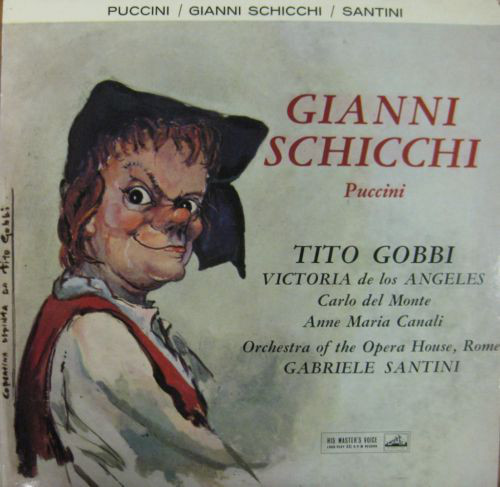
In Gianni Schicci, Gobbi is up against himself in an earlier recording, conducted by Gabriele Santini with a degree more urgency than we get here. Gobbi is as sharply characterful as ever, but the other soloists on that earlier recording are a tad more individual than those on this one, and it just generates a bit more fun and high spirits. Domingo, expertly lightening his voice, manages Rinuccio surprisingly well, but it’s still a bit like getting a sledgehammer to crack a nut, and Ileana Cotrubas is a charming Lauretta, if not quite eclipsing memories of Victoria De Los Angeles on the earlier recording.

r-5103789-1526059147-1145.gif

When it comes to Suor Angelica, I would have to admit that Scotto’s top notes can be afflicted with hardness and unsteadiness, but that she presents the most intense, most psycholgically penetrating traversal of the role I’ve heard. Between them Scotto and Maazel turn what is often a piece of quasi religioso sentimentality into a mini psychodrama about the effects of repression, almost echoing some of the themes in Powell and Pressburger’s darly intense movie Black Narcissus. Much as I like recordings featuring De Los Angeles and Ricciarelli, this one is much more gripping as drama. It’s defnitely the prize of the set.

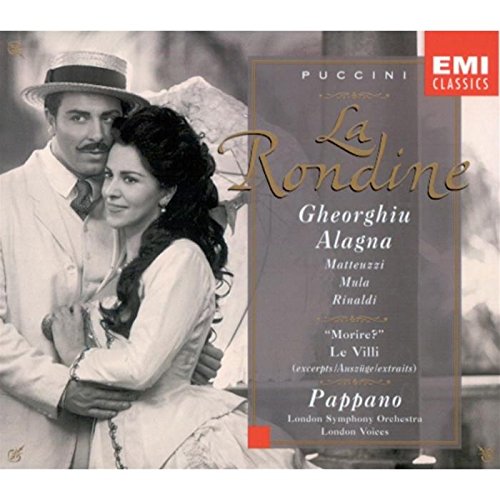
Pappano’s La Rondine

51eoeyy0cwl

Though Puccini’s attempt at Viennese operetta was a great success at its premiere in Monte Carlo, it failed to excite the Italian public, garnering disappointing reviews at its first Italian performance in Bologna and going down even less well with critics when it reached the Teatro dal Verme in Milan. Consequently it never quite achieved the popularity of La BohèmeToscaMadama Butterfly or Turandot, let alone Manon LescautLa Fanciulla del West or even Il Trittico, though this recording and the production which followed it at Covent Garden (with the same two leads) went a long way to changing that and it is performed much more often now than it once was.

Although there had been two previous recordings, one with Anna Moffo as Magda and another with Te Kanawa and Domingo in the two leading roles, both excellent in their own way, this one swept the board and won the prestigious Gramophone Record of the Year award, along with a plethora of others. What principally sets it apart from those previous recordings is the superb conducting of Antonio Pappano and the playing of the London Symphony Orchestra at the top of their form.

It also has both Gheorghiu and Alagna, at the height of their game, in roles which were ideal for them, much more specific in their responses to the text and drama than the somewhat generalised Domingo and Te Kanawa, more vocally glamorous than Moffo and Baroni. We also have a nicely contrasted secondary couple in Inva Mula and Wiliam Mateuzzi.

The recording also adds a new entrance aria for Ruggero, based on a song by Puccini (Morire?), which is included as an appendix. The opera being rather short, EMI also included excerpts from Puccini’s first opera Le Villi, which whet the appetite and only make you wish they’d recorded the whole thing.

It is a charming if slight work and this gorgeous recording definitely takes the palm as the best to be had. Highly recommended.

Mehta’s La Fanciulla del West

61ehjocihwl

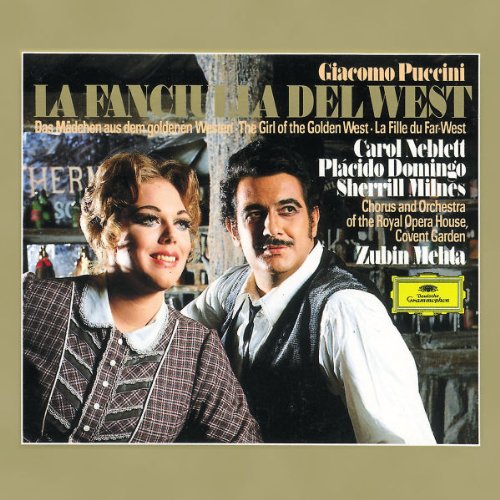
Zubin Mehta’s recording of Turandot with Sutherland, Pavarotti and Caballé is justly famous, but his recording of La Fanciulla del West is arguably just as good, and in fact won a tranche of awards when it was first released back in 1977.

It is based on performances of a spectacular new production at Covent Garden (which I saw in revival with the same two leads). The main difference in the recording from the stage performances is that Sherrill Milnes replaces Silvano Carroli as Jack Rance, presumably because he was a bigger name.

All three stars certainly acquit themselves admirably and Carol Neblett, who for a short time was the Minnie to see is just about perfect in the role, warmer voiced than Nilsson and securer on high than Tebaldi. Supporting roles are all well characterised, with a superb contribution from Gwynne Howell as Jake Wallace, and there is a great feeling of ensemble about the performance.

The score is surely one of Puccini’s finest, though I still find its setting somewhat incongruous. Still, this is a great recording of a very fine work and well worth anyone’s attention.

Il Trittico with Gobbi and De Los Angeles

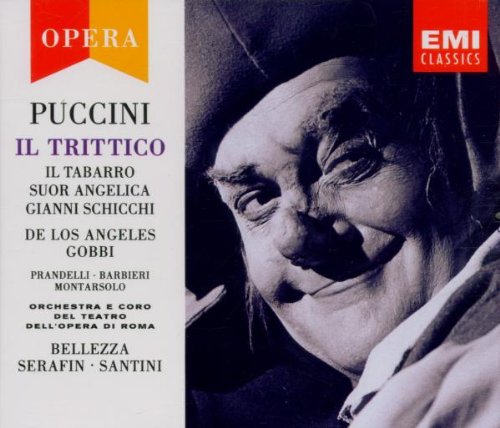
This isn’t a complete recording of Il Trittico. Admittedly all the operas use Rome forces, but each opera is led by a different conductor, and they were all originally issued at different times. The first two, released respectively in 1956 and 1958 are mono, but Gianni Schicchi, released in 1959 is stereo. The only unifying element is that De Los Angeles and Gobbi both appear in two out of the three operas. Still, it was useful and inevitable that the individual releases would eventually be grouped together and, as far as I’m aware, they have not been available singly since.

115770328

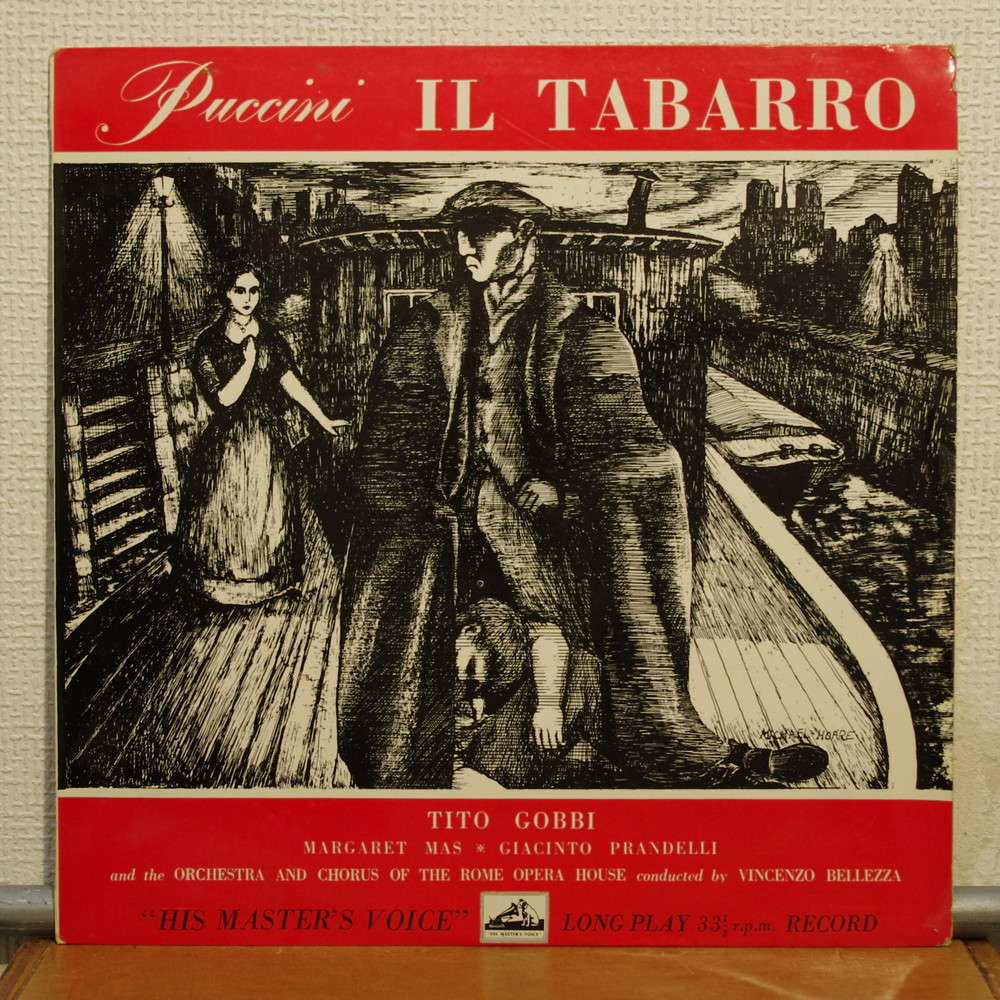
Bellezza’s conducting is efficient rather than inspired and the recording is a bit muddy, but this recording of Puccini’s terse piece of grand guignolIl Tabarro, has at its heart one towering performance in the Michele of Tito Gobbi, a characterisation fit to set next to his Scarpia and Rigoletto. Not only is the role powerfully sung, but we see deep into the man’s tortured soul, the violence bubbling beneath. In no other studio performance of the opera do we feel Michele’s pain with quite such terrifying immediacy.

None of the other singers is on his level, but they are apt enough for their roles. Margaret Mas, a singer who appears to have done nothing else on record, sounds a bit mature, but that suits the role of Giorgetta well enough, as does the slightly raw tone of Giacinto Prandelli’s Luigi. The smaller roles are all well characterised, but it is Gobbi who puts the seal on this recording.

r-15484063-1592553930-2863.jpeg

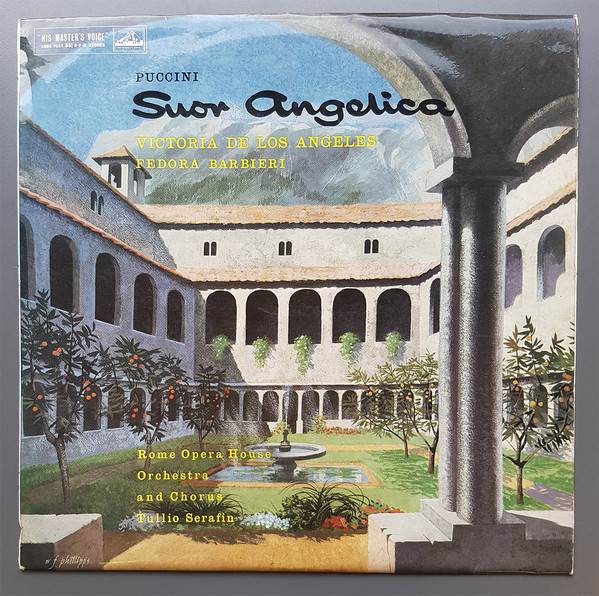
This has always been my least favourite of the triptych, as I find its over-sentimentalised quasi religiosity a bit too much for my taste. However it is difficult not to resist such generous hearted sincerity as we get here from the adorable Victoria De Los Angeles, superbly supported by the veteran Tullio Serafin, who doesn’t overdo the sentimentality. Fedora Barbieri presents a truly magisterial and implacable Zia Principessa, aristocratic, cold and dispassionate in her treatment of Angelica.

However even in a performance as committed as this, the ending stretches my suspension of disbelief just a bit too far and ultimately I prefer the sense of repressed passion and sexuality implied in the Scotto/Maazel version, which plays out almost like a scene from Powell and Pressburger’s Black Narcissus. In their hands, Angelica’s final vision comes across more as a drug-fueled hallucination, which helps to ameliorate my problems with the piece.

On the other hand I wouldn’t want to be without De Los Angeles’ beautifully sung and characterised Angelica. She is a little stretched by the highest reaches of the role, but in general the voice sounds absolutely lovely and her singing is as musical as ever.

r-3214102-1320768570.jpeg

Verdi had his Falstaff and Puccini had his Gianni Schicchi, though Puccini’s comedy is a lot blacker and more cruel than Verdi’s.

Gobbi was brilliant in both comic roles of course, but he presents two very different characters. His Falstaff was all genial bluster, a lovable rogue, where his Schicchi is a clever schemer, with more than a touch of the venal tempered by a genuine love and affection for his daughter.

This is probably one of the best things Santini did for the gramophone, and the performance is superbly paced, with wonderfully pointed characterisations from the supporting cast, the libretto so crisply delivered that you can all but taste the words. I find myself chuckling out loud quite a few times. Carlo Del Monte might seem a bit light of voice, but for once Rinuccio sounds like the young man he is supposed to be, and Victoria De Los Angeles is simply adorable as Lauretta – none better on disc.

Gobbi recorded the role again towards the end of his career (under Maazel, with Domingo as Rinuccio and Cotrubas as Lauretta), but this one, the only one of the operas in this set to be recorded in stereo, remains my first choice.

Callas’s 1953 Tosca Revisited

r-9324663-1542211156-9419.jpeg

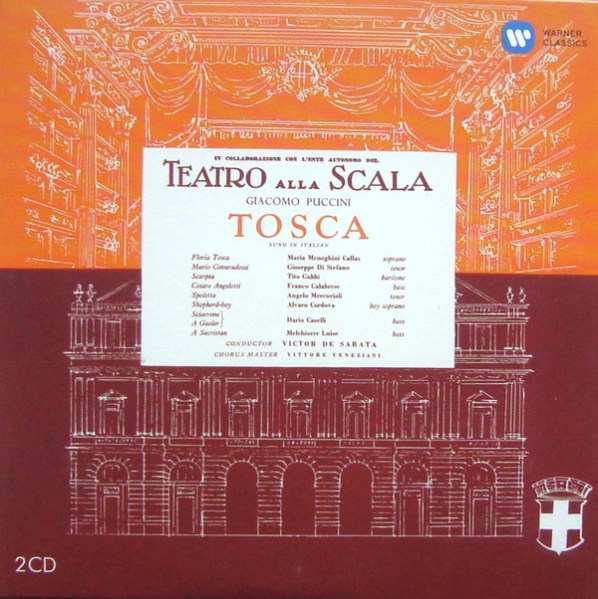
I first reviewed this set when it was reissued by Warner back in 2014 and posted it in my blog shortly after starting it on this platform. You can read that review here and add this review as a sort of codicil.

Though now considered one of the greatest opera recordings ever made, this justly famous recording of Tosca was not universally acclaimed when it was first issued, Alec Robertson comparing Callas’s assumption of the title role unfavourably to Tebaldi’s more dramatic performance. He died in 1982. I wonder if he ever ate his words. Dyneley Hussey made the strange observation that much of Callas’s singing was unrhythmical, which, given Callas’s legendary musical exactitude, now seems entirely incredible.

In all respects (conducting and singing) this Tosca is a more musical performance than the Tebaldi/Erede with which it was being compared, where dramatic effect is applied rather than arising from the music itself.

Despite the excellence of the three principals, the star of the recording for me is Victor De Sabata, who doesn’t so much conduct as mould the score, and consequently the real winner is Puccini, as it should be. Apparently Karajan had John Culshaw play sections of the De Sabata recording to him during sessions for his own equally famous recording of the opera with Leontyne Price. According to Culshaw, “One exceptionally tricky passage for the conductor is the entry of Tosca in act 3, where Puccini’s tempo directions can best be described as elastic. Karajan listened to de Sabata several times over during that passage and then said, ‘No, he’s right but I can’t do that. That’s his secret.'”

Of course De Sabata is immeasurably helped by his cast, who in turn are inspired to give of their best. How Alec Robertson could have thought Campora characterised Cavaradossi better than Di Stefano, who sings not only with his customary face but also with a degree of musical accuracy he didn’t always achieve, is beyond me. Gobbi was, is, and no doubt will always be a touchstone for the role of Scarpia,  a gentleman thug, smoothly reptilian and much more interesting than the conventional villain he is often portrayed. As for Callas, the objections meted out at the time not only seem churlish, but far off the mark. Infinitely feminine and vulnerable, her Tosca is a long way from the cane-touting, flamboyantly capricious character she was usually portrayed in those days, and maybe that was why AR found her less dramatic. She is in her best voice, with scalpel-like attack on the high notes, the voice wonderfully responsive and she brings a welcome bel canto approach to this verismo role.

66 years after it was recorded, it remains the best of all recorded Toscas, a fact brought home to me recently when I compared five of the recordings at present available on Decca. These were Te Kanawa/Solti, Nilsson/Maazel, Freni/Rescigno, Tebaldi/Molinari-Pradelli and Price/Karajan. You can see my conclusions here.

The Scotto/Barbirolli Madama Butterfly

r-6997709-1431339478-8972.jpeg

This has always been one of my three favourite recordings of Madama Butterfly (the others being Callas/Karajan and De Los Angeles/Gavazzeni), and listening to it again today has been a most moving experience.

Though Sir John Barbirolli conducted a good deal of opera during his career, this and the Otello with James McCracken are, I think, the only studio examples of his work in the field, and I’ve always thought of this recording as being as much his as Scotto’s, which is not quite the case with the two aforementioned Callas and De Los Angeles sets. Barbirolli’s love for the score is evident in every bar, and he reveals many incidental details that sometimes get lost in more opulent readings, whilst he never loses track of the score’s ebb and flow. The Rome orchestra, though not quite on the level of those in Vienna and Milan, nonetheless play brilliantly for him.

He has at his disposal a uniquely Italianate cast, who all sing wonderfully off the words. Scotto, 32 at the time (oddly enough about the same age as Callas and De Los Angeles at the time of their recordings) is a superb Butterfly and presents from start to finish a fully rounded character. The microphone placing doesn’t always flatter her, and, just occasionally, one is aware of the intellect behind the characterisation, but she is still one of the most pathetically moving Butterflies on disc, even if she lacks a little of De Los Angeles’s natural charm.

Bergonzi is an ardently lyrical Pinkerton, maybe not quite as charming as Di Stefano with De Los Angeles, but singing with glorious, golden tone, and less stiff than Bjoerling who sings Pinkerton on De Los Angeles’s second recording. Panerai, who was a late replacement for Peter Glossop, is a superbly inciteful and sympathetic Sharpless and there is terrific support from the likes of Anna Di Stasio as Suzuki, Paolo Montarsolo as the Bonze and Piero de Palma as Goro.

Ultimately my favourite recording would still be Callas/Karajan but I find it so emotionally, so intensely shattering, that I can only take it once in a while (rather like Vickers’s Tristan). On the other hand, sonically, the stereo sound here is a great improvement on the boxy mono of that recording, though, in turn, not quite on the level of the glorious sound afforded Karajan on his second Decca recording with Freni and Pavarotti, which remains a first choice for many, I know.

There are other superb recordings, not least the early one with Dal Monte and Gigli, Tebaldi with Serafin, and Gheorghiu with Pappano. The opera has certainly been very lucky on disc, but my top three remain unchallenged.

Leontyne Price – The Ultimate Collection

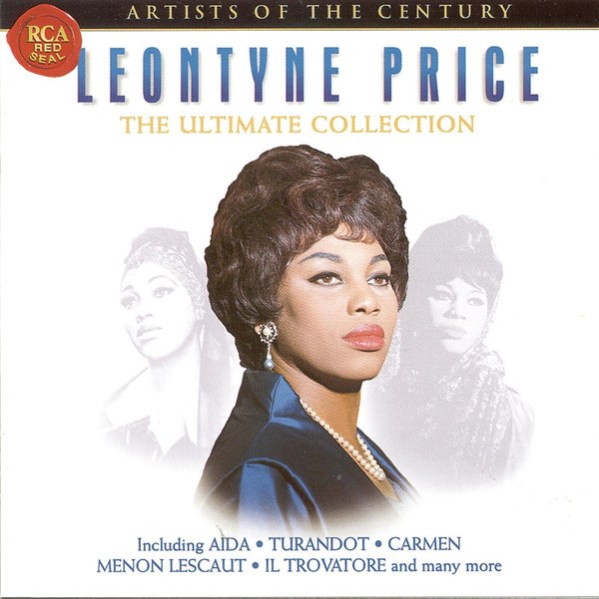
In many ways this is an infuriating compilation, not because of anything to do with Mme Price herself, but because of the shoddy presentation, which does her, and her colleagues on this disc, no service whatsoever. The skimpy booklet lists the arias on the discs, bit not one word about their provenance, who is conducting, what year the record was made or indeed anything at all to place them in context. Even Manon Lescaut is spelled wrongly on the front cover. All we get is a puff about her career and the unhelpful information on the back of the disc that the compilation was issued in 1999. Texts and translations are hardly to be expected these days, but I do like to at least know a bit about the date of the recording, the orchestra, conductor and other singers who appear.

There is a good chance of course that I am not the target audience. Maybe most people who buy the set are happy just to put the discs on, sit back and let the gorgeous voice pour out some familiar tunes, which, for the most part, is what we get, the least well known piece here being the excerpt from Barber’s Antony and Cleopatra.

At least the selection concentrates mostly on her strengths, so we get fine examples of her Aida, both the Leonoras, her Carmen and a liberal sprinkling of Puccini arias, which are beautifully sung if not particularly specific in character. The weakest items here are the Mozart arias and Dido’s Lament, regally voiced but impassively emotionless. However there are some very impressive performances here, particularly those taken, I assume, from complete performances of Il Trovatore, La Forza del Destino and Aida, roles for which she was well suited. The voice was certainly one of the glories of its age, with a dark plangency particularly suited to the melancholy of characters like Aida and Leonora.

That said, I would have to say that, personally, I find this hotchpotch kind of compilation, which concentrates on the singer rather than the music, completely unsatisfactory. As it happens, I am, at the moment, also working my way through the Janet Baker twenty disc Great Recordings box, which I suppose one could also legitimally call a hotchpotch. If I am finding this a much more rewarding listening experience, it presumably has something to do with the better, more logical programming, and also the greater specificity of Baker’s art.

Dipping in and extracting arias here and there from this set will proabably afford the most pleasure and maybe that is what one is supposed to do with a compilation like this.

Renata Scotto – Italian Opera Arias


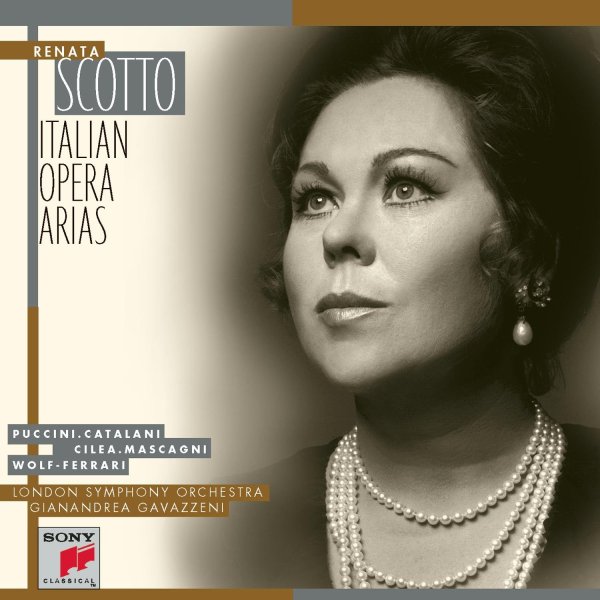
The majority of this disc is taken up with Scotto’s first recital for CBS, recorded in 1974, a recording that might be considered the one which spearheaded the second stage of her career, when she became a mainstay of the Metropolitan Opera in New York. Having been absent from the catalogues for some time, an intense recording schedule followed. There would be another recital (of Verdi arias) for CBS, and throughout the seventies and early eighties she features on many complete opera recordings for CBS, EMI and RCA, often alongside Domingo, with whom she also recorded a recital of duets.

Scotto’s voice always had a slight tang to it. Admirably clean, it would never charm with the full rich tones of a Caballé, a Moffo or a Te Kanawa. The top of the voice, even in her earliest recordings, could glare and it was never the most comfortable part of her range. Nor was it ever a sensual voice, though she could sound sensual enough if necessary (not the same thing), but her command of line, impeccable diction and range of colour are most attractive. She may not quite ravish the ear in the high lying phrases of, for instance, Ch’il bel sogno di Doretta from La Rondine as does Te Kanawa in the famous recording which was used for the movie of A Room with a View, but she shades the line most beautifully and her control of her pianissimo is quite gorgeous. She characterises well too, so that each of these verismo heroines emerge as quite different characters. Occasionally intellect gets in the way and the interpretations can sound too studied, as they never do with Callas, but it would be true to say that, though she has absorbed the lessons of her predecessor in some of this material, she never copies her. Her interpretations are all her own.

In the 1974 items she is wonderfully supported by the London Symphony Orchestra under Gianandrea Gavazzeni and it is good to have some less well known items such as the Mascagni arias and the aria from Le Villi, as it is to have the excerpts from the complete recording of Wolf-Ferrari’s Il segreto di Susanna and Puccini’s Edgar. Her Butterfly is better served by the Barbirolli recording and the duet with Obraztsova from Adrianna Lecouvreur makes very little sense out of context.

Nonetheless one of Scotto’s best recordings, and one that is worth returning to quite often.

Ljuba Welitsch – Complete Columbia Recordings

Ljuba Welitsch, for the short time her star was in the ascendant, was undoubtedly a star, glamorous both of voice and personality. Renowned the world over for her Salome, a role in which Strauss himself had coached her, she was also known for her Tosca and Donna Anna. Unfortunately she had developed nodules by 1953 and thereafter, though she didn’t retire completely, confined herself to character roles, like the Duenna in the Schwarzkopf/Karajan recording of Der Rosenkavalier.

This two disc set showcases her Salome, Donna Anna and Tosca, as well as Johann Strauss (the Czardas from Die Fledermaus and Saffi’s Gypsy Song from Der Zigeunerbaron). The rest is devoted to Lieder and songs by Brahms, Schubert, Schumann, Darogmizhsky, Mussorgsky, Marx, Mahler and Strauss, all with piano accompaniment, even the Vier letzte Lieder.

Whilst we get a good impression of the glamour and the silvery purity on high, the recordings do also rather show up her limitations. Best of the items is the 1949 recording of the Final Scene from Salome under Reiner, though, even here, I prefer the earlier performance she made under Lovro von Matacic in 1944, which, to my mind, has a greater degree of specificity. There is just the suspicion here that she had sung the role too many times; there is a touch of sloppiness in the delivery, which is complelely absent from the earlier recording.

She makes an appreciable Tosca, and something of her stage personality comes across here, but, I hear little of Callas’s detail or Price’s or Tebaldi’s vocal opulence and Tucker makes an unseductive Cavaradossi in the Act I Love Duet. A tendency to be careless of note values is even more evident in the Donna Anna excerpts, where we also become aware of an unwillingness to vary the volume or colour of her singing. She also has an annoying tendency to rush the beat. John Steane also had some misgivings in his book The Grand Tradition.

It is hard to think of a voice with a brighter shine to it, or of a singer with greater energy and more sense of joy in that sheer act of producing these glorious sounds. Even here, however, one notes that subtlety is hardly in question; there is little of the lithe seductiveness which Schwarzkopf and Güden bring to the [Fledermaus] Czardas, for instance. And this limits much of her best work, even the Salome in which she made such an exciting impression on her audiences.

We also note the complete absence of a trill in both Donna Anna’s Non mi dir and the Czardas from Die Fledermaus.

These limitations are even more evident in the songs with piano, and, though there is still much to enjoy in disc one, I found much of disc two something of a trial to listen to, the voice just too bright and unrelentingly mezza voce. The Strauss Vier letzte Lieder can work with piano, as witness a recording by Barbara Bonney, but here I just longed for the greater subtlety and range of expression of Schwarzkopf or Popp, of Norman or Fleming. The Mahler had me thinking of the shattering Lorraine Hunt Lieberson in the piano accompanied version, and the Schubert and Schumann songs hardly begin to challenge versions by a range of different sopranos from Welitsch’s time onwards.

If I were to choose but one representation of Welitsch’s art, it would absolutely be the 1949 live recording from the Met of Salome under Reiner, but, for a recital I’d go for EMI’s old LP and CD transfer of the 1944 Salome Final Scene, which also has on it a glorious version of Tatyana’s Letter Scene from Eugene Onegin, a disc I reviewed a couple of months back here. This present two disc set is, I’m afraid, a mite disappointing.