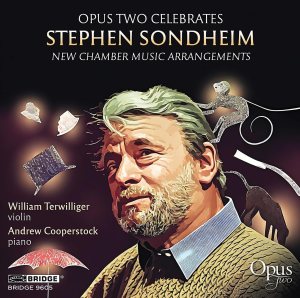
Opus Two celebrates Stephen Sondheim

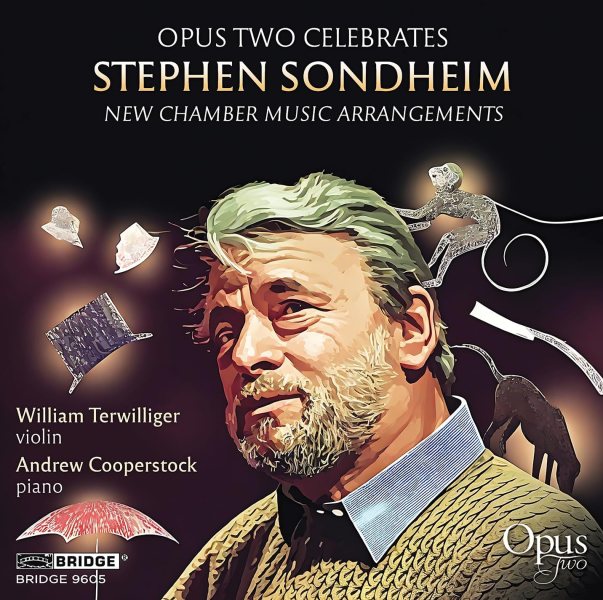
I’ve loved the music of Stephen Sondheim ever since I was introduced to the LP of the Broadway recording of A Little Night Music by an old friend, my musical mentor, back when I was in my early twenties. Though Sondheim is known for his lyrics, it was the swirlingly Romantic score that I first responded to, and it is fitting that the first piece  on this disc is the Suite from that musical, in an arrangement, like the other pieces on this disc, by Eric Stern, who worked closely with Sondheim on the 1984 revival of Pacific Overtures. Since then, Stern has conducted the second year of Sunday in the Park with George, and also worked on Into the Woods, several productions of Follies, a revival of Merrily We Roll Along at the Kennedy Centre, and many more concerts and birthday celebrations around the world. His last conversation with Sondheim was about the Little Night Music suite, which Sondheim enthusiastically endorsed, though unfortunately the rest were written after his passing.

Opus Two are violin and piano duo, William Terwilliger on the violin and Andrew Cooperstock on the piano. They are joined by soprano Elena Shaddow for I remember, from the TV musical Evening Primrose, and by baritone Andrew Garland for Finishing the Hat, from Sunday in the Park with George, though, truth to tell, neither performance eclipsed memories of other performances of these songs, and I wondered at their inclusion. On the other hand, the addition of Beth Vandeborgh’s cello to the arrangement of Every Day a Little Death from A Little Night Music adds a certain expressive depth to the song. I found it one of the most successful pieces on the disc.

For those who know and love Sondheim’s scores, I would suggest that this disc is self-recommending. The arrangements are brilliantly done, though there is just the whiff of Palm Court about them. I could imagine them being played at the Waldorf Hotel, whilst enjoying tea, not that there is anything wrong with that, of course, and I found the disc hugely enjoyable. In some cases, I know the lyrics so well I could sing along in my mind’s ear, which no doubt added to my enjoyment of them.

It has often been said that Sondheim’s lyrics take precedence over the music, but here, I think, we get the chance to concentrate on Sondheim the composer, and we find how lyrical, in the musical sense, his music is. The only piece I didn’t know was the main title from Alain Resnais’s 1974 film, Stavisky, a short evocative piece, but it too has a tune which lingers in the memory for some time afterwards.

Terwilliger shines in Sorry/Grateful from Company, which is here arranged for solo violin, whilst Cooperstock is given the jazzy Now You Know from Merrily We Roll Along as a piano solo. Then they come together again for the final work, the Fleet Street Suite, which combines themes from Sweeney Todd and closes the recital with the beautifully poetic Johanna, which, in the show, is a moment of calm and pure beauty amidst the turbulence of the rest.

Contents:

Suite from A little Night Music

Not while I’m around (from Sweeney Todd)

Broadway Baby (from Follies)

I remember (from Evening Primrose)

Main Title from Stavisky

Every Day a Little Death (from A little Night Music)

Sorry/Grateful (from Company)

Finishing the Hat (from Sunday in the Park with George)

Now You Know (from Merrily We Roll Along)

Fleet Street Suite (from Sweeney Todd)
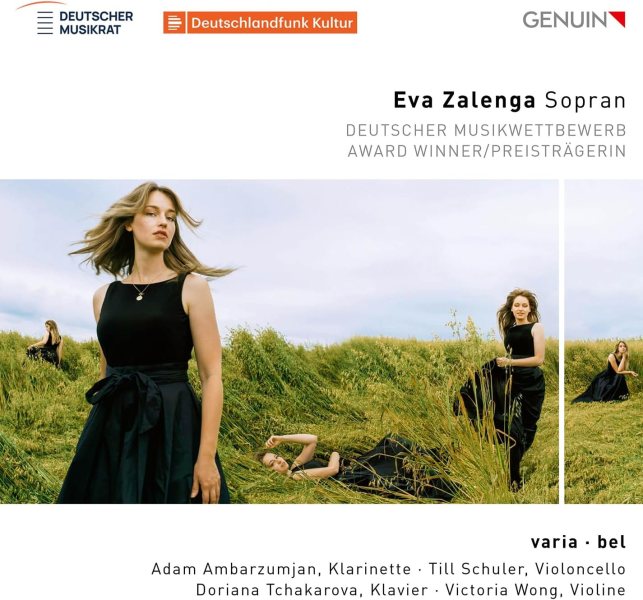
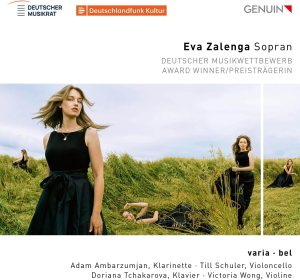
Eva Zalenga – Varia bel

Last month I was welcoming a disc of Lieder with various accompaniments by Fatma Said and here we have another for various forces, which, coincidentally, also includes Schubert’s Der Hirt auf dem Felsen.

In April 2024, I welcomed Zalenga’s debut recital on the Hänssler label, and this new recital on the Genuin label is, if anything, even more successful. Variety is the key note of the disc, in the variety of music (from the 18th to the 21st centuries), the variety of styles from the intimate to the more extrovert, and the variety of instruments accompanying the voice, that nonetheless add up to a convincing whole.

We start with a world premiere recording of Ignaz Lachner’s An die Entfernte (In die Ferne) for soprano, violoncello and piano, in which Zalenga charmingly intertwines with the cello of Till Schuler. We stay with the combination of cello and piano for Schubert’s Auf dem Strom. There is just the suspicion of strain in the upper reaches of the song here, a slight impurity that obtrudes on the silvery beauty of the sound, but it is fleeting, and soon evaporates during the next song, Meyerbeer’s haunting Des Schäfers Lied, in which the cello is swapped for Adam Ambarzumjan’s clarinet.

We stick with this combination for Schubert’s more famous Der Hirt auf dem Felsen, which, whilst not plumbing the deeper meanings of the text, as Said and Meyer do in their version, is nonetheless a delightful and charming performance.

In their earlier recital, Zalenga and Tchakarova championed women composers and it is good to see that they do so here too, first with a lovely song by Pauline Viardot-Garcia, in which we return to the combination of soprano, cello and piano, and then, jumping ahead around 100 years to Rebecca Clarke’s arrangement for soprano and violin of Three Irish Folk Songs. The tricky violin part is played by Victoria Wong. These are sung in English, and we stick with English for Arthur Bliss’s Two Nursery Rhymes, the first for soprano, clarinet and piano and the second for soprano and clarinet. Zalenga sings in perfectly accented English, and seems equally at home in French, which is the language of the next group of songs, four miniatures for soprano and violin by Darius Milhaud, Quatre Poèmes de Catulle.   

Finally all the forces come together for the last item, a new arrangement of contemporary composer Isabelle Aboulker’s Je t’aime, which Zalenga brings off with incredible wit, panache and style to bring this excellent recital to a riotous conclusion.

In all, Zalenga proves herself to be a most musical and intelligent singer and I look forward to seeing where her next enterprise will take us. Highly recommended.

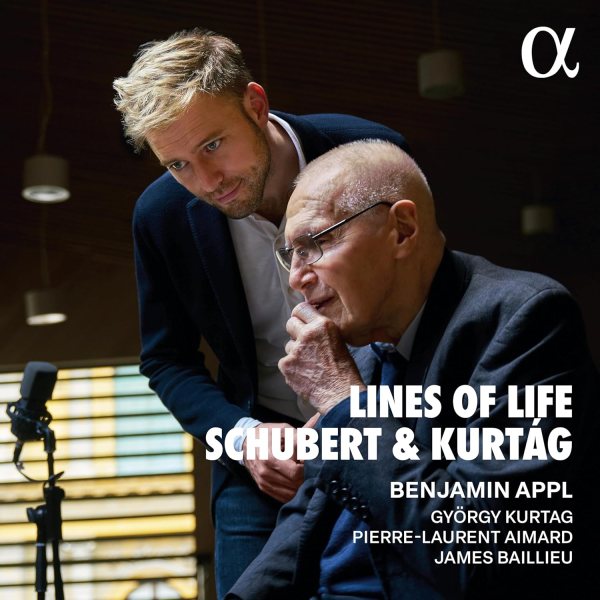
Lines of Life – Schubert and Kurtág


“I believe that Benjamin is currently the most authentic interpreter of my Hölderin Gesänge.” So writes György Kurtág in the notes accompanying this disc and, as he is also credited as recording producer, I think we can lay claim to their authenticity. Kurtág attended all the sessions, which took place in Budapest, apparently producing over 1,300 recording takes and countless repetitions.

The majority of the Kurtág songs on this disc are a capella. Their range, both vocal and emotional, is wide and they are brilliantly performed by Appl, whose range of expression and ability to meld the wide-ranging melismas in the vocal writing are superb. Indeed the very first song, Circumdederunt, which is in Latin and reminiscent of plainchant, homes in directly on the voice, a peculiarly expressive instrument, capable of harshness when required, as in the words et in trubulatione mea, returning to a beautiful, consoling richness for the remainder of the song. All but one of the Hölderin Gesänge are also unaccompanied and the one that isn’t, unusually has a sort of obligato accompaniment for trombone and tuba. The four Ulrike Schuster songs have an atonal piano accompaniment, which is played here by Pierre-Lauent Aimard.

As an interpreter of contemporary song, then, Appl proves himself to have few equals, but he is also a fine interpreter of Schubert and Brahms, as witness the beautiful versions of the Schubert and Brahms songs included on the disc. As befits a student of Fischer-Dieskau, expression is paramount, but never at the expense of a fine legato line and the beauty of the voce is well caught.

James Baillieu is the fine accompanist for most of the Schubert songs, but in the final two songs, Schubert’s Der Jüngling an der Quelle and Brahms’s Sonntag, Appl is touchingly accompanied by György Kurtág himself, though, it must be admitted, with rather too much pedal.

I found this disc an absorbing and challenging experience and would recommend it to anyone with an adventurous appetite.

The disc finishes with a fascinating eighteen-minute interview in German between Appl and Kurtág, for which an English translation is provided in the accompanying booklet.

.

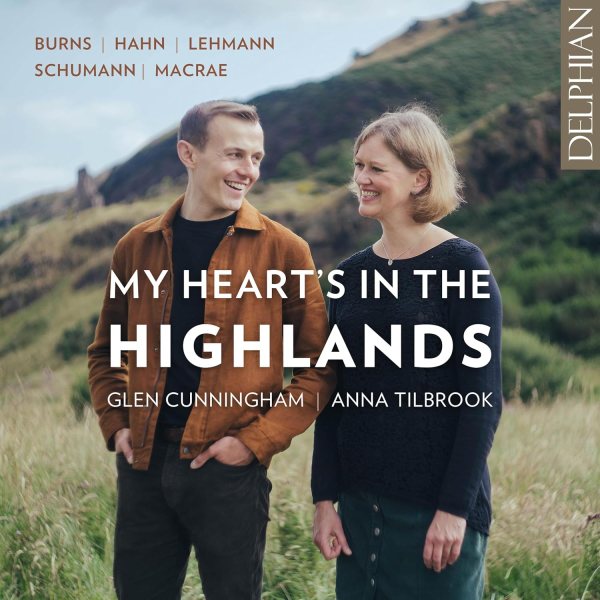
Glen Cunningham’s Heart is in the Highlands

An interesting programme of Scottish inspired songs, but Cunningham’s tenor is a little too much on the dry side for my liking.

My Heart’s in the Highlands

Glen Cunningham (tenor)  Anna Tilbrook (piano)

The young tenor, Glen Cunningham, and his pianist, Anna Tilbrook, celebrate their Scottish heritage in a programme of music connected to Scotland, not only in the folk orientated songs of Robbie Burns, but also in settings of Burns by Schumann, and Robert Louis Stevenson by Liza Lehmann and Reynaldo Hahn. To these are added a completely new song cycle, also to texts by Robert Louis Stevenson, by the Scottish composer, Stuart MacRae.

It makes for an interesting programme, with the folk song settings framing the songs by Schumann, Lehmann, MacRae and Hahn. Thus, we start with a setting of Burns’s Ca’ the yowes to the knows in an arrangement by Claire Liddell, which segues into the eight songs from Schumann’s Myrthen, which set texts by Burns in German translation. They are possibly less well known than other songs from Myrthen, like Widmung or Der Nussbaum, and I doubt anyone would guess the Scottish provenance of these Schumann songs. Nor, I wager, would anyone guess that the  song Dem Roten Röslein Gleicht Mein Lieb from Schumann’s Opus 27 Lieder und Gesänge is actually a setting in German of the famous My love is like a red, red rosewhich follows it.

Liza Lehmann is less well represented in the catalogue than Schumann, though a selection of the songs from The Daisy-Chain have been recorded by mixed voices and are available on the Naxos label. Cunningham selects four of the five songs to texts by Robert Louis Stevenson. These are children’s songs to be performed by skilled adults, and the vocal writing is often taxing, Stars, for instance, requiring the sort of lyrical outpouring that Cunningham’s rather dry tenor is not quite capable of. Toby Spence manages it slightly better on the above Naxos recording, but it really needs a fuller voice than either of these two tenors can provide.

Two of the texts are also set by Reynaldo Hahn in his Five Little Songs, written while Hahn was a private in the French army during World War I, where he saw action on the front line. These too are settings of Robert Louis Stevenson, ‘children’s songs’, though it is unlikely that any child could sing or play them. They are quite charming, though, yet again, there is nothing particularly Scottish about them.

Not surprisingly, I suppose, the most Scottish sounding of the songs are those by Stuart MacRae, particularly For age an’ youth, which sets a Scots style vocal line against a sort of imitation bagpipe in the piano accompaniment. Cunningham is at his best in these songs, but even here I wanted more of tonal beauty. He compensates with the intelligence of his delivery, but throughout I’m afraid I found his vibrato intrusive and the sound he makes unpleasantly hard and uningratiating.

I should just mention that Anna Tilbrook is a most sensitive accompanist and adapts brilliantly to the style of each composer.

The recital ends with the title song, My heart’s in the Highlands, in an arrangement by Michael Barnett (and supplemented by Tilbrook) that was transcribed from a 1962 Kenneth McKellar recording. I just wish that Cunningham sang it with some of McKellar’s beauty of tone.

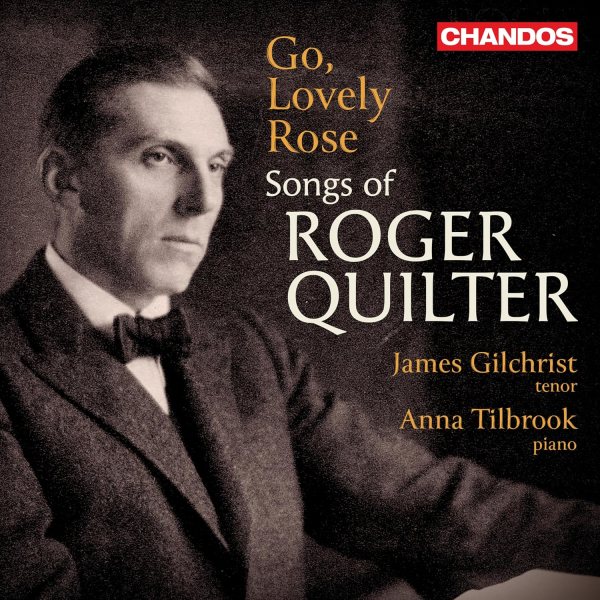
Go Lovely Rose – The songs of Roger Quilter

91aupp0ckgl._ac_sl1500_

James Gilchrist (tenor) Anna Tilbrook (piano)

The songs of Roger Quilter are not performed as often these days as they once were, which is a shame, because they are beautifully crafted and, though perhaps they don’t probe as deeply into the texts as those of Finzi, Delius and Warlock, they are very rewarding for performers and listeners alike. Quilter had a wonderful gift for melody, but it was always melody put at the service of the poetry and the text is sung more or less as if it were spoken. Having performed many of the songs myself in my youth, I can attest to the fact that they are a gift to the performer.

Rather than give us whole opus numbers, Gilchrist and Tilbrook have chosen songs from his complete oeuvre, with the songs grouped into themes. Thus, we have six Shakespeare songs, drawn from the Op. 6, Op. 23 and Op. 32 sets of Shakespeare settings, five songs associated with flowers (A Floral Tribute), four Folk Song settings (all taken from The Arnold Book of Old Songs), four songs associated with the graveside, and four Songs of Love. The only songs performed as a set are the early German songs, written when Quilter was studying in Frankfurt. These are charming, but slight and give little indication of Quilter’s later, more mature style.

Initially alienated by the rather gruff sound of Gilchrist’s voice in the opening robust Blow, blow, thou winter wind (we are at once aware that this is not the voice of a young man, and indeed Gilchrist was approaching sixty at the time of the recording), I was drawn in by his elegiac delivery of Come away, death, and thereafter, I was less aware of any failing resources. Indeed, in the more gently reflective songs, with which the disc proliferates, Gilchrist is often spellbindingly beautiful, spinning out some lovely pianissimi in such songs as Fear no more the heat of the sun, the famous Now sleeps the crimson petal and the song which gives the collection its name, Go lovely rose. He is admirably supported by Anna Tilbrook, who is an excellent accompanist.

I would not be doing my job as a reviewer if I didn’t point out that there is another similar collection of songs available on the Hyperion label. This was recorded in 1996 by the then much younger John Mark Ainsley with Malcolm Martineau at the piano. Some may prefer Ainsley’s much more forthright manner and fresher timbre, as indeed I occasionally do, especially in songs like Blow, blow, thou winter wind and the ebullient Love’s philosophy, but Gilchrist’s more reflective style has its own rewards, and this is a welcome addition to the Quilter discography

Contents
Shakespeare Songs
Blow, blow, though winter wind, from Three Shakespeare Songs (First Set) Op 6, No 3 (1905)
Come away, death, Op 6 No 1 from Three Shakespeare Songs (First Set) (1905, rev 1906)

Fear no more the heat o’ the sun. from Five Shakespeare Songs (Second Set) Op.23 No 1
Orpheus with his lute. from Two Shakespeare Songs (Fourth Set) Op.32 No 1(1919-20)
O mistress mine, from Three Shakespeare Songs (First Set) Op 6 No 2 (1905, rev 1906)

Under the greenwood tree, from Five Shakespeare Songs (Second Set) (1919)
A Floral Tribute
The Fuchsia Tree, Op.25 No.2 (1923)
Go, Lovely Rose, from Five English Love Lyrics Op.24 No.3 (1922)
A last year’s rose, Op 14 No.3 (1909-10)
Now sleeps the Crimson Petal, Op 3 No 2 91897)
To Daisies from To Julia, Op.8 No 3 (1905)
Folksongs
From The Arnold Book of Old Songs
Barbara Allen, No 13 (c 1921)
Drink to me only with thine eyes, No 1 (c 1921)
My Lady’s Garden, No 10 (c 1942)
The Ash Grove, No 16 (c 1942)
At the Graveside
Autumn Evening Op.14 No.1 (1909-10)
Dream Valley, from Three Songs of William Blake, Op.20 No.1 (1917)
Drooping Wings (1943)
Music, when soft voices die, from Six Songs, Op 25 No.5 (1926)
German Songs
Four Songs of Mirza Schaffy, Op 2 (bef. 1903, rev. 1911)
Songs of Love
Love’s Philosophy, from Three Songs, Op 3 No 1 (1905)
Julia’s Hair from To Julia Op 8, No 5 (1905)
The Maiden Blush from To Julia Op 8, No 2 (1905)
It was a lover and his lass, from Five Shakespeare Songs (Second Set), Op

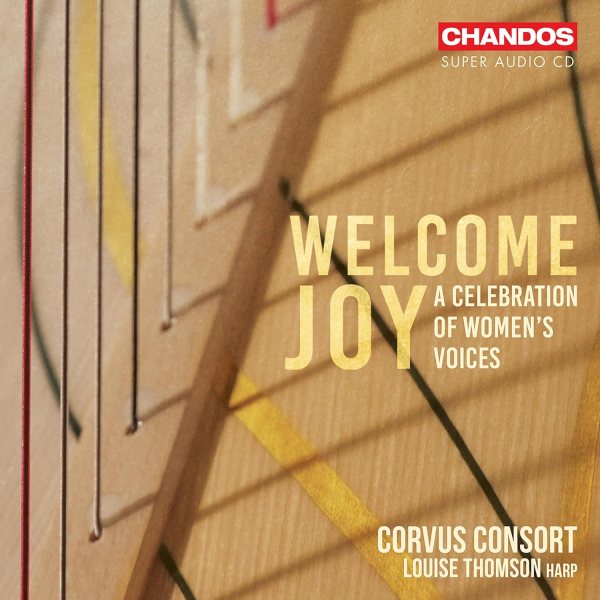
Welcome Joy – The Corvus Consort

81lspxvxnl._ac_sl1500_

The subtitle of this disc is A Celebration of Women’s Voices and a celebration it undoubtedly is, not just of the women’s voices who sing on the record, but of the voices of the women composers who make up the lion’s share of the music. Room is found for Gustav Holst, who was a champion of women’s voices and taught at several girls’ schools, most famously at St Paul’s Girls School, where he taught for almost thirty years.

Its centrepiece, and the longest work on the disc, is Elizabeth Poston’s An English Day-Book, which here receives its première recording of this edition. If it is reminiscent of Britten’s A Ceremony of Carols, then that is because it was conceived to complement it by providing a work suitable for use throughout the year. The Day-Book was unpublished at he time of Poston’s death in 1987, but has since been published by the Arts and Education charity, Multitude of Voyces, which specialises in publishing and promoting works by communities historically or currently underrepresented or marginalised. The charity also published the works here by Hilary Campbell, Olivia Sparkhall, Judith Weir and Gemma McGregor. I was particularly taken by Sparkhall’s Lux Aeterna, which is for two choruses, solo soprano and harp and McGregor’s Love was his meaning with its lovely falling harp introduction.

“Welcome Joy”, sing the Corvus Consort at the beginning of this recital and indeed what a joy it is. Imogen Holst’s commission for the 1951 Aldeburgh Festival is a setting of six poems by John Keats, described by Britten as ‘six little treasures’ when he first received them, and, in this joyful performance, it is easy to see why.

This piece, like most of the music on this CD was completely new to me, but I did know Gustav Holst’s Choral Hymns from the Rig Veda (Third Group) from Imogen Holst’s 1968 recording with the Purcell Singers and Ossian Ellis. I am bound to say that I found that recording a mite more atmospheric, especially in the opening Hymn to the Dawn, which has a mystery and magic that is not quite captured in the clearer, more analytical Chandos digital recording.

Nevertheless, I enjoyed this disc of choral music for women’s voices. The work of the Corvus Consort under their conductor, Freddie Crowley can hardly be faulted, with a superb contribution from harpist, Louise Thomson.

Full texts are provided, and the exemplary notes are extensive. A thoroughly enjoyable disc.

Contents

Imogen Holst (1907 – 1984)  Welcome Joy and Welcome Sorrow (1950)

Gustav Holst (1874 – 1934) Two Eastern Pictures (1911)

Choral Hymns from the Rig Veda (Third Group) (1910)

Dirge and Hymneal (1915)

Judith Weir (b.1954) We sekyn here rest (2019)

Hilary Campbell (b. 1983) Our Endless Day (2017)

Elizabeth Poston (1905 – 1987) An English Day-Book  (1966 – 67)

Olivia M. Sparkhall (b. 1976) Lux Aeterna (2018)

Gemma McGregor (b. 1965) Love was his meaning (2018)

Shruti Rajasekar (b. 1996) Ushãs – Goddess of Dawn (2024)

Priestess (2024)


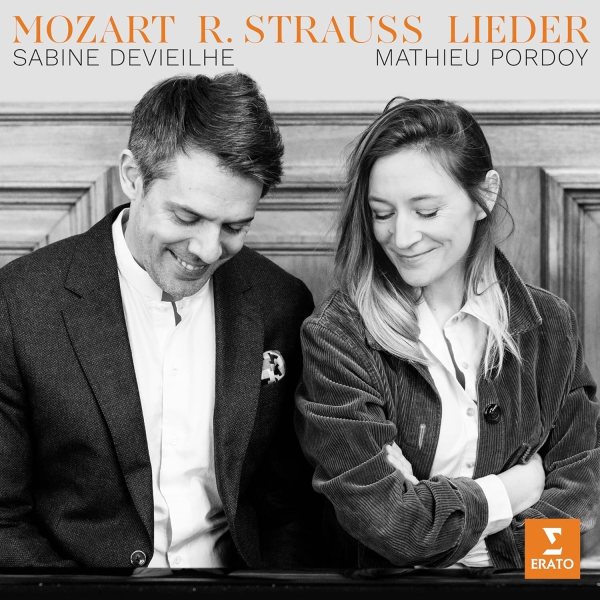
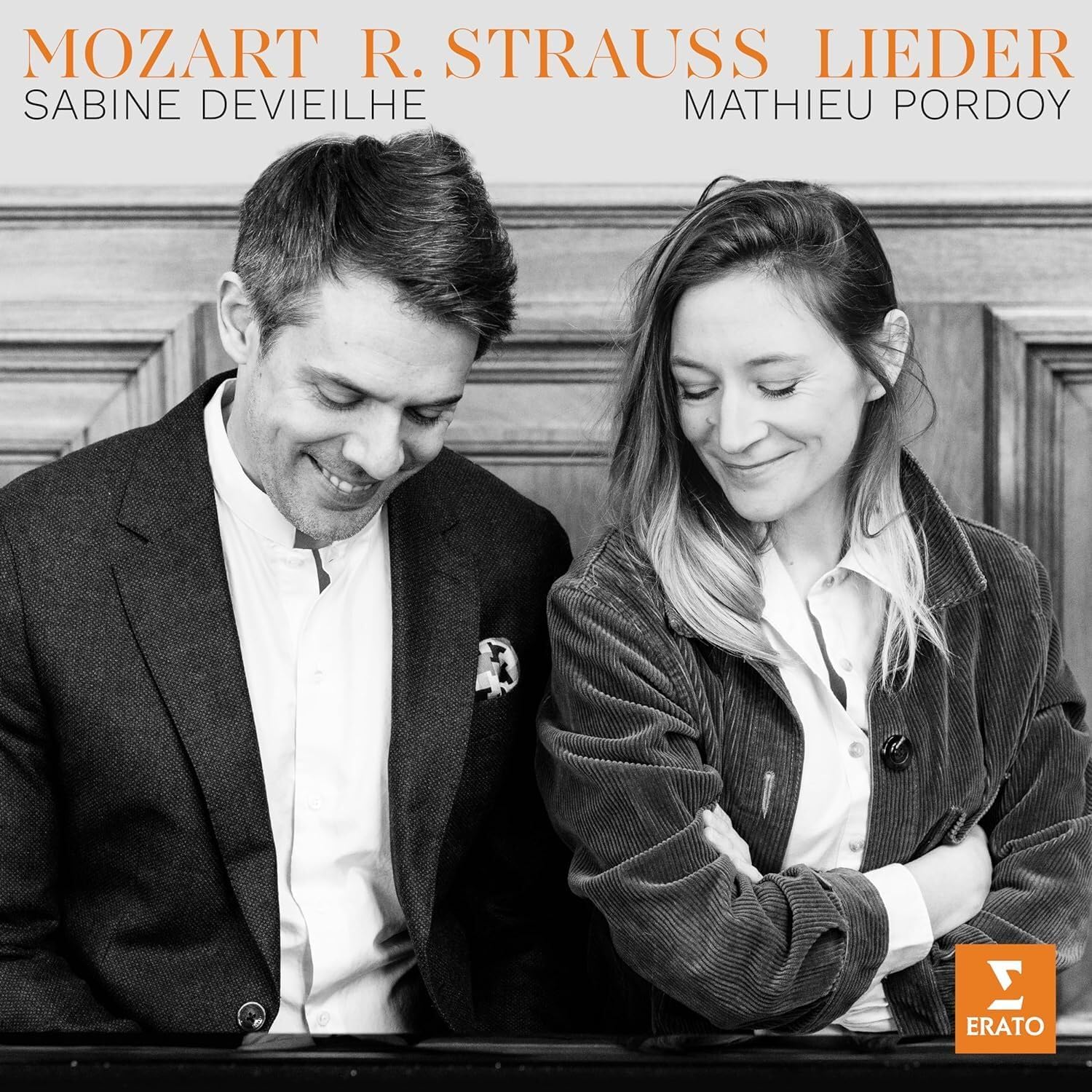
Sabine Devieilhe sings Mozart and Strauss Lieder

81rjnmb3ukl._ac_sl1500_

I listened to this recital quite a few times before setting down my thoughts, and, on each occasion, I reacted differently to it. I was looking forward to hearing it having hugely enjoyed Sabine Devieilhe in the theatre, as a wonderfully tomboyish Marie in Donizetti’s La fille du Régiment, but the recording made me aware of a problem with Devieilh’s vocal production, which I hadn’t noticed in the theatre, namely her tendency to use what I can only describe as a squeeze-box method of production which impedes a natural legato. It is particularly noticeable in songs like Strauss’s Die Nacht and Morgen, but once noticed, I found it hard to ignore. I listened to the recital several times and my impressions changed from one listening to the next. I am sure that there are those who will not be bothered by it at all, but, once noticed, it began to grate.

Which is a pity, because this is a well put together programme and for the most part well executed by Devieilh and her brilliant accompanist, Mathieu Pordoy.

For once we get no catchy title for this disc of Mozart and Strauss Lieder, and Devieilhe tells us in the notes that their two instruments are “pared back and at the service of illuminating the lieder of Mozart and Strauss.” So far so good, and it was a nice idea to intersperse the songs with each other rather than giving us a group of Mozart songs, followed by a group of Strauss. For the most part, the juxtapositions work well, but I did wonder why, at the beginning of the recital, Strauss’s Die Nacht was placed rather uncomfortably between Mozart’s Komm, Zither, komm and his Das Kinderspiel, on which Devieilhe’s son charmingly contributes a few lines in his boy soprano. If the Strauss exposes Devieilhe’s weakness, in the Mozart songs one notes the bright, forwardly placed tone and her communicative way with the text.

The next Strauss group plays to her strengths and weaknesses with both Nichts and Ständchen nicely done, but the following three songs require the kind of seamless legato she appears not to be capable of and where the squeeze is most noticeable.

We return to Mozart with a heartfelt performance of An die Einsamkeit. The voice is lovely, but, yet again, it needs a better legato, which we hear in performances by Barbara Hendricks and Elly Ameling. Still, she has bags of charm in Mozart’s Oiseaux, si tous les ans and bags of personality for Strauss’s Schlagendes Herzen, as well as being well up to the Zerbinetta-like demands of Strauss’s Amor, though her tone becomes a little pinched at the very top. I note that I am noticing less and less the peculiarities of her vocal production and concentrating more on the music. Maybe I am just getting used to it, or maybe it is becoming less pronounced.

Whatever the reason, I was able to relax and enjoy the music making more in the second part of the recital, whilst noting that Allerseelen really needs a richer tone than Devieilhe can muster and that there was a return to the squeeze-box in Das Velichen.

I should also commend the excellent pianist, Mathieu Pordoy, whose playing is pellucidly clear and who supports his soloist brilliantly in a true collaboration. If I have equivocal feelings about some of the singing, I am sure that others will find otherwise and will find this a thoroughly enjoyable and rewarding disc.

In Relations – Eva Zalenga and Doriana Tchakarova

0881488220506

The back page of the booklet that comes with this CD has a complicated diagram, which attempts to display and unravel the various connections between the composers and poets featured in this recital. We all know about the friendship that existed between Mendelssohn and Schumann, but did you know that Loewe, who also made music with Mendelssohn, taught the composer Emilie Mayer, who set poems by Heine, as of course did Loewe and Schumann? So did Meyerbeer, though his only connection with Mendelssohn and Schumann is that they both were vocal in disparaging his music.

The aim is evidently to bring some unity to what is essentially a recital of nineteenth century Romantic songs by both male and female composers, most of which are not exactly regular visitors to the concert platform. It’s a nice idea and it can be fun trying to trace the connections between the various personages represented in this recital, though certainly not necessary for the enjoyment of it.

We begin with Meyerbeer, who is better known for his large-scale operas, none of which have ever held much interest for me. The three songs we get here are rather charming and tuneful, though they don’t quite escape the epithet of parlour music. These are followed by a couple of songs by Loewe, the first a setting of Meine Ruh ist hin, a poem better known to us as Schubert’s Gretchen am Spinnrade. Loewe’s setting is less grippingly intense but it does tell the story well.. Loewe’s accompaniments are worth noting and they are brilliantly played by Doriana Tchakarova, who supports her soloist at every turn.

Mendelssohn’s Hexenlied is better known than the songs we have heard so far and it really calls for a little more variety of timbre than Zalenga has yet at her disposal.  On the other hand Zalenga’s bright, youthful soprano is perfectly apt for the Suleika songs that follow. The Schumann songs go well too, though I would have preferred a little more sense of breathless excitement in Aufträge, such as we hear in older versions by Elisabeth Schumann and Elisabeth Schwarzkopf.

For the rest we are given some rarities by women composers, both of whom were entirely new to me. Emilie Mayer, who died in 1883 (not 1833 as the booklet has it) was the first woman to have her symphonies performed all over Europe. The two songs included here no doubt had an eye on the popular publication market and, like the Meyerbeer, have more than a whiff of the salon about them. Nonetheless I was pleased to make their acquaintance. That said, I found the Heine settings of the English composer, Frances Illitsen, even more interesting. All three are worth investigating, in particular the setting of Heine’s Katherine, which is a glorious outpouring of lyrical melody.

This recital would appear to be the recording debut of the young soprano Eva Zalenga. She has a lovely, light soprano which faintly reminded me of the young Lucia Popp. I see from her website that her operatic roles are Papagena, Barbarina, Susanna, Ännchen, and also Sophie in Werther, all of which would seem right for her at the moment. I can also imagine her making an excellent Sophie in Der Rosenkavalier. As yet the voice doesn’t have a great range of colour at its disposal, but this does not mean she sings without feeling. Throughout she is a most musical singer and keenly responsive to the poetry. You really feel she connects with each of the songs

I wish Hänssler had vouchsafed us translations of the German texts, but, nonetheless, I thoroughly enjoyed this journey through some of the byways of nineteenth century Romantic song. An auspicious recording debut for Eva Zalenga.

Contents:

Giacomo Meyerbeer (1791-1864)

Komm

Meerestille

Suleika

Carl Loewe (1796 – 1869)

Meine Ruh’ ist hin, Op. 9, no. 2

Die verliebte Schläferin, Op. 9, no. 3

Ihr Spaziergang, Op. 9, no.4

Die Schneeflocke, Op. 63, no. 1

Felix Mendelssohn (1809-1847)

Hexenlied, Op 8, no. 8

Suleika, Op. 57, no.3

Suleika, Op. 34, no. 4

Die Nonne, Op. 9 no. 12

Robert Schumann (1810 – 1856)

Liebeslied, Op. 5, no. 5

Aufträge, Op. 77, no. 5

Viel Glück zur Reise, Schwalben! Op. 104, no. 2

Die letzten Blumen starben, Op. 104, no. 6

Aus den östlichen Rosen, Op. 25, no. 5

Singet nicht in Trauertönen, Op. 98a

Emilie Mayer (1812 – 1883)

Du bist wie eine Blume, Op. 71 no. 1

Das Schlüsselloch im Herzen

Frances Allitsen (1848 – 1912)

Katherine

Mag, da draußen Schnee sich thürmen

Die Botschaft

Sir Bryn Terfel – Sea Songs

91war9hkol._ac_sl1500_

It’s been a few years since Sir Bryn visited a recording studio and here he lets his hair down in a programme of sea songs, shanties and maritime folk songs. In the notes he explains that, as a North Wales farmer’s son, he has always been somewhat obsessed with the 360-mile coastline of northern Wales. However, his journey takes him much further than the shores of Wales, with songs originating from the Shetlands, New Zealand and the Bahamas (Sloop John B, which no doubt most people will probably know in the version recorded by The Beach Boys in the 1960s).

Along the way, Terfel is joined by friends and colleagues, Sir Simon Keenlyside, Sting, singer-songwriter Eve Goodman, the folk group Calan and the male vocal group Fisherman’s Friends from Cornwall. Arrangements are by Patrick Rimes, who also plays a variety of different instruments, from piano to fiddle to whistle. The whole disc has an atmosphere of companionship, as if a group of friends just got together to reminisce and make music, almost as if they’d gathered in a portside pub one evening, though I doubt one would ever come across quite such accomplished music making by chance. The songs range from the rumbustious to the gently nostalgic and, whether singing in Welsh, Breton, Norn or English, Terfel’s diction is so crisp you can all but taste the words. Terfel’s bass-baritone may have acquired a slightly rougher edge when singing out full voice, but in the quiet songs, he can still spin out a gently caressing legato line of great beauty, and, in any case, that touch of roughness is not out of place in songs like Whisky, Johnny and The Green Willow Tree on which he duets with Sting. A word of praise too for all the various musicians and backing singers not mentioned by name in the recording details above.

I suppose one would call this a crossover album, not a genre I particularly enjoy opera singers doing but, like Agnes Baltsa singing the songs of her native Greece, Terfel makes no concessions to the music and sings with a sincerity and a big open-hearted personality that I found thoroughly disarming. In some of the gentler songs, like Codi angor or the plaintive Unst Boat Song, this time accompanied simply by piano and melodeon, I found it hard to suppress a tear. Though this is not a disc I would probably have considered buying if I were not reviewing it, I was very pleasantly surprised and I enjoyed it immensely.

Surely a disc to be enjoyed by all but the most curmudgeonly, but beware. These songs are purposefully catchy. I had several ear worms rattling round in my head for days after just a couple of listens.

Eilika Wünsch – Romantic Songs

71okpmqmsql._ac_sl1425_

There are times when one wonders how a record came to be released.

According to the accompanying notes, the premise for this album would appear to be “a completely new approach to our lieder recital repertoire … in which voice and piano are enhanced by another melody instrument”. Whether this enhancement is either desirable or necessary is a moot point, but I suppose the idea of the cello taking over the second vocal line in the adaptation of duets is one solution to the non-availability of a second singer. The accompanying notes would also seem to suggest that these arrangements improve in some way on the originals, even of the two songs from Strauss’s Vier letzte Lieder, which of course were written for full orchestra.  I can assure you they do not.

However, the greatest impediment to enjoyment is not the arrangements themselves but the solo singer. According to the biographical notes, Eilika Wünsch has been active since around 2010, when she worked with Jörg Demus. She would appear to have a fairly extensive discography, though I can’t find a single review on the internet for any of her discs, or for any of her public appearances. We are also told that she has sung the roles of Butterfly, Konstanze, Donna Anna, Violetta, Gilda and the Queen of the Night, about all of which I am faintly incredulous.  The first few notes of the opening song, Nacht und Träume, are sung in a white, vibrato-less tone, but thereafter any single sustained note emerges unfocused and unsteady. She struggles so much with the execution of the notes that any attempt at interpretation is completely absent. The cover photo shows us an attractive young woman, but the sounds coming from the speakers are those of a (very) old soprano. I am sorry to be so negative, but I really can’t find anything positive to say about this recital. Listening all the way to the end proved quite a trial, but listen I did, right through to the final song, which is a vocalise arrangement of Schubert’s famous Impromptu, Op.90, no.3. The arrangement takes her well up above the stave, where the sound that emerges is somewhere between a whistle and a theremin and quite unpleasant – to my ears at least.

This is one of those cases where comparisons are irrelevant. One to be avoided, I’m afraid.

Contents, in case anyone is interested.

  1. Schubert: Nacht und Träume
  2. Brahms: Wie Melodien zieht es mir
  3. Reger: Nachts
  4. Schumann: Wenn ich ein Vöglein wär
  5. Brahms: Am Strande
  6. Schumann: In der Nacht
  7. Liszt: O komm im Traum
  8. R. Strauss: Im Abendnrot
  9. Reger: Abendlied
  10. R. Strauss: Beim Schlafengehen
  11. Schumann: Mondnacht
  12. Schubert: Auf dem Strom
  13. Impormpti, Op. 90 no. 3 (as Vocalise)