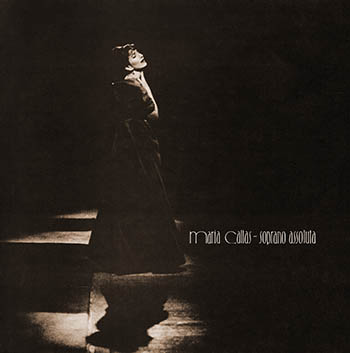
Maria Callas- Soprano Assoluta

bjr143_l

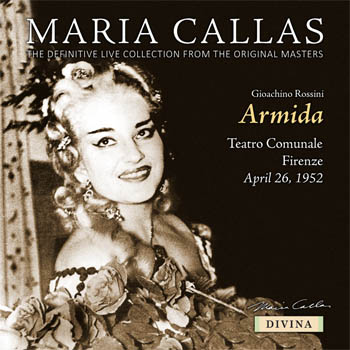
This is a superb compendium of recordings taken from live concerts given by Callas between 1949 and 1959. It is being offered as a FREE download (yes, you read that right, free) from Divina Records, so surely there can be no reason not to snap it up while you still can. The sound, while hardly state of the art, is not bad for the period, all of the performances having been taken from radio broadcasts. Taken from BJR LPs, transfers are up to Divina’s usual high standards and the download comes with an excellent pdf of the booklet which accompanied the original release.

The first track is actually her first 78 recording, made for Cetra in 1949, a beautiful performance of Casta diva and Ah bello a me ritorna, though without the opening and linking recitatives in which Callas always excelled. The aria is ideally floated, the scales and coloratura in the cabaletta stunning in their accuracy. We next turn to a radio concert recorded for Turin radio in 1952, with Oliviero de Fabritiis conducting. Callas was obviously out to demonstrate her versatility, and was also trying out for size a couple of roles she would sing later that year, Lady Macbeth and Lucia. To Lady Macbeth’s Letter Scene and the first part of Lucia’s Mad Scene, she adds Abigaille’s Ben io t’invenne from Nabucco and the Bell Song from Lakmé. She is in stupendous voice in all, the high E in the Bell Song ringing out here much more freely than it does in the 1954 recording. Not only is the singing technically stunning, but the contrasts she affords as she switches from the powerfully ambtious Lady Macbeth, to the sweet and maidenly Lucia, from the demonically triumphal Abigaille to the improvisatory story-telling of Lakmé are simply out of this world. You really don’t hear singing like this nowadays.

Next we move to a 1954 Milan concert, starting with her justly famous and technically brilliant recording of Constanze’s Martern aller Arten from Die Entführung aus dem Serail (sung here in Italian as Tutte le torture), her one Mozart stage role. Not only does she execute the difficulties with ease, she sounds properly defiant. It is a thrilling performance. Louise’s Depuis le jour (sung in French) suits her less well, and the performance is marred by occasional unsteadiness. Nonetheless it is hard to resist the quiet intensity of her intent. Armida’s D’amore al dolce impero from Rossini’s opera is, like the Mozart, stunningly accomplished, even if some of the more daring variations from the Florence complete performances have been trimmed down. The bravura of the singing is still unparalleled. The last item from this concert is Ombra leggiera from Meyerbeer’s Dinorah, a rather empty piece, which is hardy worth her trouble, though it improves on the studio recording with the addition of the opening recitative and the contribution of a chorus. Her singing is wonderfully accomplished, the echo effects brilliantly done, but it is not a piece I enjoy.

Another Milan concert, this time from 1956, brings us her best ever performance of Bel raggio lusinghier from Semiramide, though she adds little in the way of embellishment and the effect is less thrilling than her singing of the Armida aria. We get her first version of Ophélie’s Mad Scene from Hamlet (sung here in Italian rather than the original French of the studio recording), which is superb, it’s disparate elements brilliantly bound together. We also have a beautiful performance of Giulia’s Tu che invoco from La Vestale, which seques into a rousing performance of the cabaletta, and she revisits the role of Elvira in I Puritani with a lovely performance, with chorus and soloists, of Vieni al tempio.

From Athens in 1957, there is a dramatically exciting performance of Leonora’s Pace, Pace from La Forza del Destino, in which she manages the pitfalls of the piano top B on invan la pace better than you would expect for post diet Callas. Her performance of Isolde’s Liebestod (again in Italian) is very similar to the Cetra recording, warm and feminine, passionately yearning.

From the 1958 Paris Gala we have her minxish Una voce poco fa from Il Barbiere di Siviglia, with its explosive ma, as Rosina warns us she is not to be messed with. She sings in the mezzo key with added higher embellishments. This is followed by a couple of lesser known performances from a UK TV special, conducted by Sir Malcolm Sargent. Mimi’s Si mi chiamano Mimi is similar to the performance on the complete recording, charming and disarming, whilst Margarita’s L’altra notte from Mefistofele is a touch more vivid, a little less subtle than the studio recording.

Just one item from the 1957 rehearsal for the Dallas Opera inaugural concert, the Mad Scene from I Puritani. Though, by this time, Callas’s voice had been showing signs of deterioration, Bellini’s music still suits her admirably, and she sounds in easy, secure voice here up to a ringing top Eb at its close. The scale work is as supple as ever, and she executes its intricacies with ease even when singing at half voice.

To finish off we have the Mad Scene from the 1959 Carnegie Hall concert performance of Il Pirata. It had been a variable evening, with Callas’s colleagues hardly in her class, but here, left alone on the stage, Callas responds to the challenges of the final scene superbly, the cavatina, in which she spins out the cantilena to incredible lengths, becomes a moving lament to her son, and the dramatic cabaletta is then thrillingly flung out into the auditorium. The audience unsurprisingly go berserk.

How lucky we are to have these wonderful live performances preserved in sound, and how grateful we are to Divina Records for offering them to us free of charge. Nobody need hesitate.
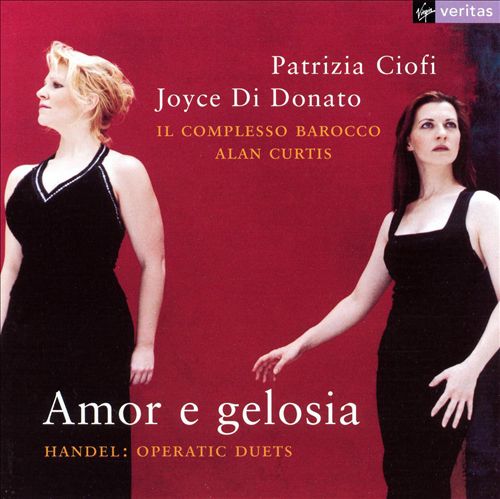


Amor e gelosia – Handel Operatic Duets

image

Looking through my collection I note that the majority of fairly recent recital acquisitions seem to be mostly of music of Handel and the baroque. I’m not sure whether this has more to do with a change in my taste, the general change in taste or the dearth of decent singers of Verdi, Wagner and nineteenth century muisc in general. Whatever the reason, I think it’s safe to say there are far more excellent Handel singers around these days than there used to and the performers on this disc are certainly fine examples.

Handel’s operatic duets are rare delights, usually either expressing sadness at lovers’ parting or delight in reunion, and there is a good cross-section of both types in this recital. That said, I am not a Handel specialist and I personally find less variety here than I would in a programme of duets from the bel canto period or Verdi. The programme is drawn from well-known works, such as Rinaldo, Serse and Rodelinda, as well as lesser known works like Silla and Teseo, with no less than five excerpts (including the Act III Sinfonia) from Poro, and certainly no fault can be found with the performances.

We hear two very fine voices in prime condition, DiDonato’s darker, straighter mezzo contrasting and blending nicely with Ciofi’s bright, clear soprano. Both are expressive artists with a fine legato and superb technical proficiency in the florid music. They also repond well to the dramatic elements in the music, and are superbly supported by Alan Curtis and Il Complesso Barocco. The disc can be recommended unreseverdly to all lovers of Handel and the baroque, even if on this occasion, and I realise this has no relevance to the present disc, I found myself wishing I was listening to, say, Caballé and Verrett in their disc of Romantic opera duets. Maybe my tastes haven’t changed that much.

Tito Schipa – Opera Arias

61gglfv2dfl

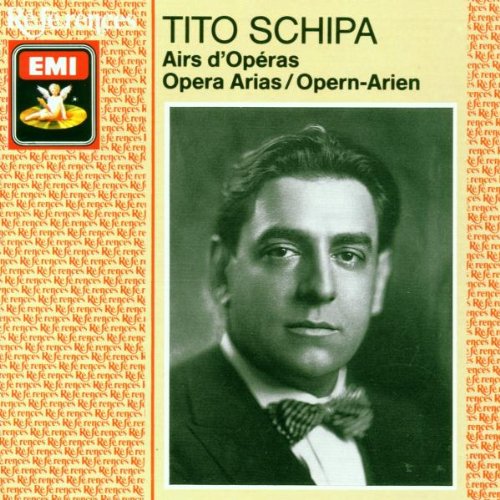
This EMI disc collects together recordings from Tito Schipa’s first recording sessions in 1913, recordings made in the 1920s and 1930s and one (Werther’s O, nature) recorded in 1942, when Schipa was 54.

The name of Schipa is most associated with style, elegance and grace (not for him the over-emotional sobbing excesses of Gigli), though the first aria included on the disc (Che faro from Orfeo ed Euridice) is hardly a model in that respect. The unstylish playing of the orchestra is certainly no help, but Schipa too has some lapses in style, with occasional aspiarates marring his legato.

The 1913 recordings tell a different story and reveal a surprising amount of power and squillo, not qualities one normally associates with the singing of Tito Schipa. They also offer so much more in the elegance of the phrasing, the firm line and his wonderful legato, as well as a proper appreciation of character and the dramatic situation. The prizes here are the Duke’s Ella mi fu rapita…Parmi veder le lagrime, from Rigoletto, Tu che a dio spiegasti l’ali from Lucia di Lammermoor and the Siciliana from Cavalleria Rusticana.

There are treasures too amongst some of the later recordings, even the 1942 Werther aria, which is wonderfully poetic, but the 1934 aria from Manon is also superb.

However I think I derived the most pleasure from the duets. WIth Toti Dal Monti we get a lovely Prendi l’anel to dono from La Sonnambula, and, even better, a gorgeous Tornami a dir from Don Pasquale, which is just about ideal in every way, the two singers blending thier voices and playing with the musical line in perfect synchronicity. Then, probably best of all is the famous Cherry Duet from Mascagani’s L’Amico Fritz, with the charming Mafalda Favero. Throughout he caresses and moulds the line and there is a moment of pure magic when he sings the words sei pur bella on a delciate thread of sound which perfectly expresses Fritz’s shy awakening to love. It is moments such as these which make us turn to these old recordings.

Callas in Armida – Florence 1952

1498830639973

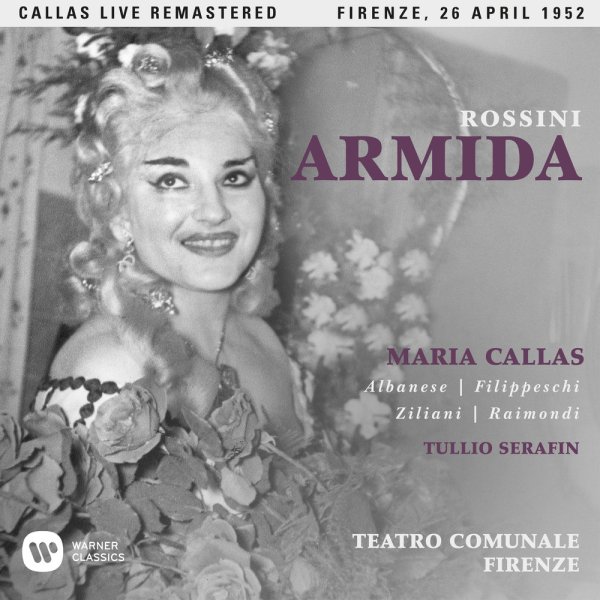
With this set, I was able to make a direct comparison between the new Warner transfer and that by Divina Records, and have to say I prefer Divina. Neither version can eliminate the overloading and distortion at tutti climaxes, but to my ears the voices are much more clearly captured in the Divina version. The Warner isn’t bad, but possibly in an attempt to provide a more comfortable listening experience, they have removed some of the presence of the voices. Other ears and other equipment may have a different reaction of course, but I quickly abandoned Warner and continued listening on Divina. Furthermore Divina includes about 12 minutes of music, omitted by Warner, where you can hear a speaking male voice overlaid onto the music. Though admittedly irritating, it means we lose some of Callas’s singing. Divina also includes fuller notes, fuller documentation, photos and a libretto. I suppose you might see it as the luxury compliment to Warner’s cheaper offering. Personally I prefer Divina’s warts and all approach. Divina is of course more expensive, and others may have different priorities, so choice will reside with the individual listener.

But choice must be made, for this has to be some of the most astonishing dramatic coloratura singing ever committed to disc, and it is a great shame that Callas never sang the role again, nor felt able to take on any more of the roles written specifically with Isabella Colbran in mind.

In 1952 Callas undertook a punishing schedule. In January she sang her final performance of Elena in I Vespri Siciliani in Milan, followed it with I Puritani in Florence, then her first Normas at La Scala. February saw more performances of Norma at La Scala, with a few concerts sandwiched between. In March she gave three performances of Violetta in Catania, whilst rehearsing for a new production of Il Ratto del Seraglio (the first ever at La Scala). This opened at the beginning of April, and this production of Armida on April 26th after a further performance of Norma at La Scala. Incredibly, though you’d never guess it from her confident delivery, she learned the role of Armida in 5 days!

Astonishing though the vocal pyrotechnics are, Callas not only sings the role with consummate ease, but makes musical sense of its difficulties, so it becomes much more than a vocal showcase. She is by turns, imperious, commanding, sensuous, elegant and powerful, cascading up and down two-octave chromatic scales with fluent ease. A critic of the Giornale delle Due Sicilie described Colbran’s singing of the aria D’amore al dolce impero thus.

She proves herself superior to any other singer in some variations in which she embellishes a delightful tune of Rossini’s with all the graces of the art of song, now running through chains of triplets of extraordinary and …insuperable difficulty, now giving a vocal imitation of the most difficult arpeggios of stringed instruments, and finally, with superb nonchalance, executing a formidable ascending and descending scale of two octaves.

The critic might well be talking of Callas’s performance, which is absolutely electrifying, as it is throughout the opera.

Unfortunately, none of the other singers is anywhere near her achievement and Serafin heavily cuts the opera, presumably to accommodate their deficiencies. All of the tenors have trouble with the florid writing, aspirating the runs in what’s left of it, and their singing is clumsy and effortful.

Essential listening, none the less, for Callas’s superbly commanding singing of the title role. There are of course more modern recordings out there, more textually accurate and more complete, but nowhere else will you hear such a thrilling portrayal of the title role, nor one so brilliantly sung. The cumulative power of the finale is simply staggering, where, with a voice of massive power, Callas peals forth vengeful coloratura flourishes with insouciant ease, capping it with a top Eb of huge proportions. You have to hear it to believe it, indeed, were it not for recorded evidence, you would not believe it possible.

dvn016_l

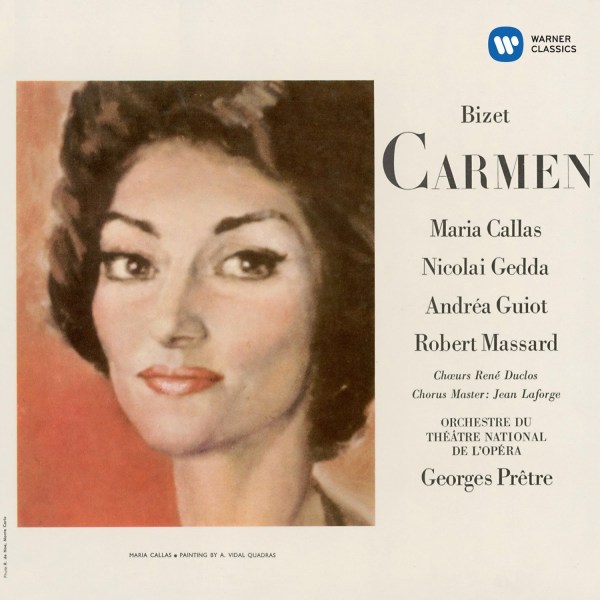
The Callas Carmen

81kl4jlqt0l-_sl1500_

Recorded July 1964, Salle Wagram, Paris

Producer: Michel Glotz, Recording Engineer: Paul Vavaseur

And so, still moving chronologically backwards through this set, we come to the last of the four roles Callas recorded without ever singing them on stage. This Carmen has always been controversial, the most controversial element being Callas herself, so, let me deal with the rest first.

The edition used wouldn’t bear scrutiny. We are of course back in the days of the old Guiraud recitatives, but there’s no point complaining about that. This is how everyone was doing Carmen back then. The sound is excellent early 1960s stereo and sounds better than ever in this new re-master.

This is a very French Carmen. Aside from Callas and Gedda, everyone else involved is French, and Gedda was, in any case, the best “French” tenor around in those days. Pretre’s conducting is swift, sometimes maybe too much so, and deliciously light in places, but his speeds make dramatic sense and it works very well. The orchestra and chorus, again French, sound idiomatically right to me. The Escamillo of Robert Massard sounds authentic too, if not so characterful as someone like Jose Van Dam. Andrea Guiot’s Micaela I like a lot. She does not display the creamy beauty of a Te Kanawa or a Sutherland, but she is much more convincing than them at playing the plucky, no-nonsense village girl. We must not think of Micaela as a wilting violet; she is actually quite a strong character. Not only is she able to hold her own with the soldiers in the first act, she has the strength to confront Carmen and the gypsies in the third act. Her voice is firm, clear and very French. She sounds just right to me.

Gedda of course had already recorded the role under Beecham with De Los Angeles. He does not have the heroic sound of a Domingo, a Vickers or a Corelli  but, as always he sounds totally at home in French opera. In any case, is a big heroic voice what is required? Don Jose is basically a nice young man, somewhat repressed, who gets caught up with the wrong woman. A young man, who, once his passions are aroused, does not know how to control them.  Gedda is superb at charting Jose’s gradual disintegration. He sings a beautifully judged Flower Song, with a lovely piano top Bb, is gently caring in his duet with Micaela, and suitably shamed when he meets her again. In the last act he is a man at the end of his tether, dangerous because he has nothing left to lose. As a performance I think it has been seriously underestimated. I find him entirely convincing, much more so than, say, Corelli, with his execrable French, in Karajan’s first recording of the opera.

And so we come to Callas. Many of the objections when the set first came out were not so much about her singing as about her characterisation, one critic opining that she was closer to Merimee than Meilhac and Halevy. But that’s an objection that makes no sense at all. Meilhac and Halevy may have watered down Carmen’s indiscretions with other men while still with Jose, but they still make it clear she is a free spirit, not to be tied down. In the 1960s, women were still fighting for equality (they still are). Much of the debate about the contraceptive pill in the 1960s centred around the fact that it would encourage promiscuity. People, especially men, were not comfortable with the idea of a sexually promiscuous woman, so Carmen’s character was often played down. The De Los Angeles recording with Beecham had been highly praised, but, love De Los Angeles though I do, can anyone really imagine her Carmen pulling a knife on a fellow worker in a cat fight? She is altogether to ladylike to even think of such a thing. But Callas is exactly what she is described in the text, dangereuse et belle, in Micaela’s words. This is a true free spirit. As she tells Jose in the last act, Libre elle est nee et libre elle moura! When she admits to her friends Je suis amoureuse, Callas gives the line an ironic twist, even more so on the following amoureuse a perdre l’esprit. We know absolutely, as her friends do, that this is the whim of the moment; the mood of the day, and that there will be others. Earlier her seduction of Jose is brilliantly charted too. Ou me conduirez-vous? she asks Jose, as he is about to take her to prison, and the little girl lost tone she uses is just what’s needed to draw him in. Later on when Jose comes to the inn and they end up arguing, some have found her rage too over the top, but there is justification for this too. When Jose tells her he has to go back to the barracks, that could be the moment she realises that maybe she is not in love with this milksop after all. Have a row, send him packing. That’s the best way to get rid of him. Only things don’t quite work out that way; her cry of Au diable le jaloux! is quite matter of fact. Finally she realises she is saddled with him, but is quite pragmatic. In fact, now that I think of it, the whole plot only works if you accept that Carmen was never in love with Jose in the first place; that he was first a challenge, then a convenience. Escamillo is much more up her street (for a while anyway); when he comes looking for her and Micaela comes looking for Jose, this is just the way out she is looking for. Unfortunately, Jose turns out to be even more unhinged than she had imagined, but defiant to the last, she refuses to give in to him, and staring death in the face, asserts her freedom from all men. No doubt this is what commentators found so disturbing. Some no doubt still do. It doesn’t make for comfortable listening.

Apart from a few squally top notes in the ensembles (which she didn’t need to sing anyway), her voice was absolutely right for the role at this stage in her career and the performance is full of miraculous detail. I notice something different in it each time I hear it.

When it was reissued, Richard Osborne in Gramophone wrote, “Her Carmen is one of those rare experiences, like Piaf singing La vie en rose, or Dietrich in The Blue Angel, which is inimitable, unforgettable, and on no account to be missed.”

I couldn’t have put it better myself.