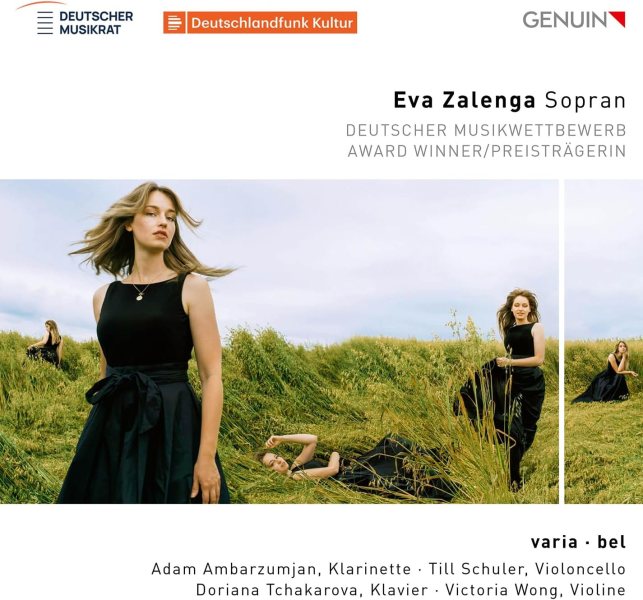
Eva Zalenga – Varia bel

Last month I was welcoming a disc of Lieder with various accompaniments by Fatma Said and here we have another for various forces, which, coincidentally, also includes Schubert’s Der Hirt auf dem Felsen.

In April 2024, I welcomed Zalenga’s debut recital on the Hänssler label, and this new recital on the Genuin label is, if anything, even more successful. Variety is the key note of the disc, in the variety of music (from the 18th to the 21st centuries), the variety of styles from the intimate to the more extrovert, and the variety of instruments accompanying the voice, that nonetheless add up to a convincing whole.

We start with a world premiere recording of Ignaz Lachner’s An die Entfernte (In die Ferne) for soprano, violoncello and piano, in which Zalenga charmingly intertwines with the cello of Till Schuler. We stay with the combination of cello and piano for Schubert’s Auf dem Strom. There is just the suspicion of strain in the upper reaches of the song here, a slight impurity that obtrudes on the silvery beauty of the sound, but it is fleeting, and soon evaporates during the next song, Meyerbeer’s haunting Des Schäfers Lied, in which the cello is swapped for Adam Ambarzumjan’s clarinet.

We stick with this combination for Schubert’s more famous Der Hirt auf dem Felsen, which, whilst not plumbing the deeper meanings of the text, as Said and Meyer do in their version, is nonetheless a delightful and charming performance.

In their earlier recital, Zalenga and Tchakarova championed women composers and it is good to see that they do so here too, first with a lovely song by Pauline Viardot-Garcia, in which we return to the combination of soprano, cello and piano, and then, jumping ahead around 100 years to Rebecca Clarke’s arrangement for soprano and violin of Three Irish Folk Songs. The tricky violin part is played by Victoria Wong. These are sung in English, and we stick with English for Arthur Bliss’s Two Nursery Rhymes, the first for soprano, clarinet and piano and the second for soprano and clarinet. Zalenga sings in perfectly accented English, and seems equally at home in French, which is the language of the next group of songs, four miniatures for soprano and violin by Darius Milhaud, Quatre Poèmes de Catulle.   

Finally all the forces come together for the last item, a new arrangement of contemporary composer Isabelle Aboulker’s Je t’aime, which Zalenga brings off with incredible wit, panache and style to bring this excellent recital to a riotous conclusion.

In all, Zalenga proves herself to be a most musical and intelligent singer and I look forward to seeing where her next enterprise will take us. Highly recommended.
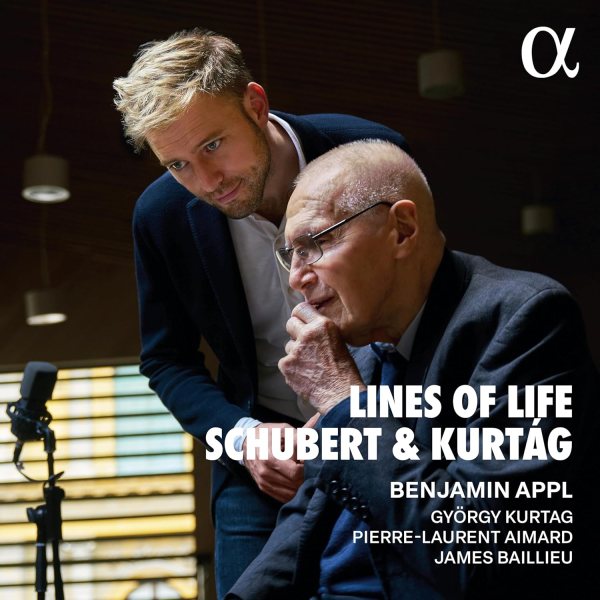
Lines of Life – Schubert and Kurtág


“I believe that Benjamin is currently the most authentic interpreter of my Hölderin Gesänge.” So writes György Kurtág in the notes accompanying this disc and, as he is also credited as recording producer, I think we can lay claim to their authenticity. Kurtág attended all the sessions, which took place in Budapest, apparently producing over 1,300 recording takes and countless repetitions.

The majority of the Kurtág songs on this disc are a capella. Their range, both vocal and emotional, is wide and they are brilliantly performed by Appl, whose range of expression and ability to meld the wide-ranging melismas in the vocal writing are superb. Indeed the very first song, Circumdederunt, which is in Latin and reminiscent of plainchant, homes in directly on the voice, a peculiarly expressive instrument, capable of harshness when required, as in the words et in trubulatione mea, returning to a beautiful, consoling richness for the remainder of the song. All but one of the Hölderin Gesänge are also unaccompanied and the one that isn’t, unusually has a sort of obligato accompaniment for trombone and tuba. The four Ulrike Schuster songs have an atonal piano accompaniment, which is played here by Pierre-Lauent Aimard.

As an interpreter of contemporary song, then, Appl proves himself to have few equals, but he is also a fine interpreter of Schubert and Brahms, as witness the beautiful versions of the Schubert and Brahms songs included on the disc. As befits a student of Fischer-Dieskau, expression is paramount, but never at the expense of a fine legato line and the beauty of the voce is well caught.

James Baillieu is the fine accompanist for most of the Schubert songs, but in the final two songs, Schubert’s Der Jüngling an der Quelle and Brahms’s Sonntag, Appl is touchingly accompanied by György Kurtág himself, though, it must be admitted, with rather too much pedal.

I found this disc an absorbing and challenging experience and would recommend it to anyone with an adventurous appetite.

The disc finishes with a fascinating eighteen-minute interview in German between Appl and Kurtág, for which an English translation is provided in the accompanying booklet.

.

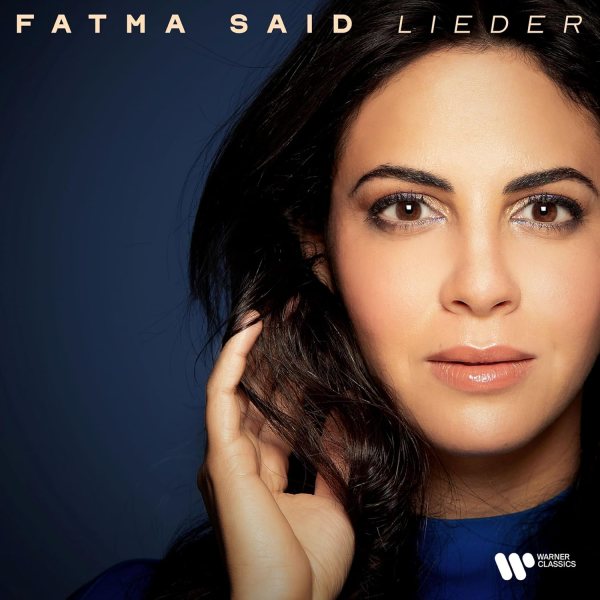
Fatma Said – Lieder

Fatma Said follows up her award winning debut recital, El Nour, and her equally successful second album, Kaleidoscope, with a more conventional album of German Lieder, except that with this gifted artist, it isn’t quite that simple. For a start, she has collaborated with an array of different musicians, bringing in clarinettist Sabine Meyer for Schubert’s Der Hirt auf dem Felsen, the men’s choir, Walhalla zum Seidlwirt, for his Ständchen, harpist Anneleen Lenaerts for four of the Brahms songs, the Quator Arod for Brahms’s Ophelia-Lieder, baritone Huw Montague Rendall for some duets and three different pianists in Malcolm Martineau, Yonathan Cohen and Joseph Middleton. In the notes accompanying the disc, Said says that all of these artists were friends or became friends during the sessions, and, in a positive way it would seem so, as there is a real sense of joy and discovery in the music making.

In a disc of so many delights, it is difficult to highlight specific performances, and for once I found myself not making comparisons with other singers, so compelling is the artistry on display here. Said has a surpassingly beautiful voice, but she uses it for expressive ends and is not afraid to make the occasional ugly sound, as in the vividly characterised Hexenlied by Mendlessohn, and in Schubert’s Der Zwerg. The nocturne Ständchen is delivered as a dramatic dialogue between Said and the men’s chorus, with a touch of breathless excitement, which perfectly captures the meaning of the words, and the words are evidently very important to Said. Her diction is excellent, and indeed, in the notes accompanying the disc, Said states that she wanted there to be a strong emphasis on the text. This she has achieved, whilst maintaining a lovely legato line.

The harp accompaniment brings a touch of delicacy to the Brahms songs and his Ophelia- Lieder are performed in Aribert Reimann’s arrangement for string quartet, which somehow contrives to make the songs sound more archaic. Sabine Meyer plays with great beauty of tone in Der Hirt auf dem Felsen, which here receives a performance of ineffable longing, which is totally dispelled in the joyful final measures.

I can’t close without mentioning the terrific contributions of her three pianists, Malcolm Martineau, Yonatan Cohen and Joseph Middleton, nor Huw Monatgue Rendall’s wonderful contribution to the duets, his voice blending beautifully with Said’s, particularly in the final song on the disc, Schumann’s In der Nacht, where his mellifluous tones blend beautifully with Said’s – a fitting end to a disc that had me spellbound throughout.

Highly recommended and, I know it’s early days yet, but likely to be one of my discs of the year.

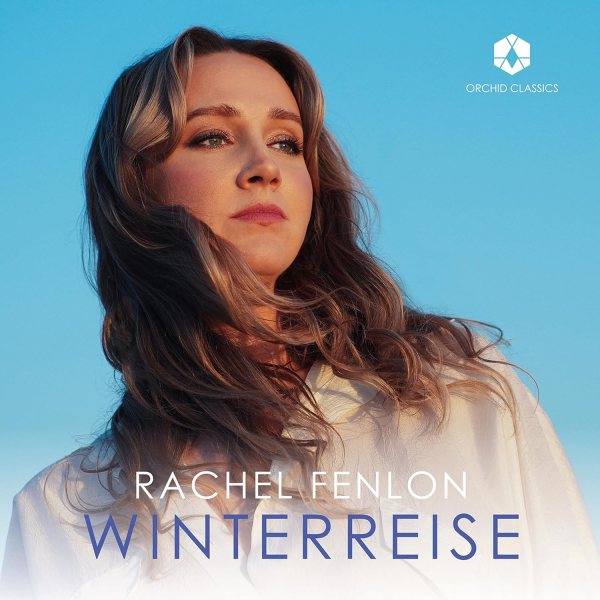
Rachel Fenlon sings and plays Schubert’s Winterreise

81ngosghckl._ac_sl1500_

Now here is an extraordinary recording debut. Recordings by female singers of Schubert’s most haunting cycle have been few and far between, those by Lotte Lehmann, Christa Ludwig and Brigitte Fassbaender being the most noteworthy. However, what sets this performance apart from all others is that Rachel Fenlon accompanies herself on the piano in what is surely the first self-accompanied version ever to be recorded.  

According to the notes accompanying this disc, Fenlon bought her first score of Winterreise in the Winter of 2020, when she was living alone in a house at the foot of a large forest outside of Berlin. This was during the dark days of lockdown. She  would often go days and weeks without seeing anyone and over the next two years she learned the work methodically, but also allowing its loneliness, solitude, passionate love and grief to permeate her very soul; and indeed what emerges is a very personal journey, a single-minded vision of the work, if you like, which is not strictly comparable to any other I’ve heard.

Initially, I felt the tempo of the opening Gute Nacht was a little fast (though at 5.38 it clocks in at exactly the same tempo as Fischer-Dieskau’s with Jörg Demus), but thereafter her tempi seemed just right to me. At 74’ Fenman’s is one of the slower recordings out there, though certainly not the slowest. In any case, I was little concerned with questions of tempo, as I became involved in her singular vision of the piece.

It is hard to pin down what makes it so different from any of the many two-handed performances available, but different it undoubtedly is. It is a young person’s interpretation, reminding me that the protagonist is indeed young, and that the pain and disillusionment at the heart of the cycle are those of a young man. Certainly, Fenlon piles on the intensity as the cycle progresses with a performance that is entirely compelling.

I can hear you asking, “Yes, but how does she sing? How does she play?” Well, the answer to that is very well indeed. The voice is naturally a light, bright soprano, but she is not afraid to darken the colour, with occasional plunges into a rasping chest voice and her playing is well up to the task, though it is difficult to separate the playing from the singing, the two being so intrinsically intertwined. I am not saying this is how I would always like to hear the cycle, but this is an impressive recording debut and much more than a gimmick.

What a great work this is and how fascinating it is that it can take such a wealth of different interpretations. In February last year I reviewed a very interesting version in an arrangement for baritone, choir and two accordions, and I recently reacquainted myself with Jonas Kaufmann’s harrowing version with Helmut Deutsch. Rachel Fenlon’s equally harrowing version is quite a different experience, but she is clearly someone to watch.

Eilika Wünsch – Romantic Songs

71okpmqmsql._ac_sl1425_

There are times when one wonders how a record came to be released.

According to the accompanying notes, the premise for this album would appear to be “a completely new approach to our lieder recital repertoire … in which voice and piano are enhanced by another melody instrument”. Whether this enhancement is either desirable or necessary is a moot point, but I suppose the idea of the cello taking over the second vocal line in the adaptation of duets is one solution to the non-availability of a second singer. The accompanying notes would also seem to suggest that these arrangements improve in some way on the originals, even of the two songs from Strauss’s Vier letzte Lieder, which of course were written for full orchestra.  I can assure you they do not.

However, the greatest impediment to enjoyment is not the arrangements themselves but the solo singer. According to the biographical notes, Eilika Wünsch has been active since around 2010, when she worked with Jörg Demus. She would appear to have a fairly extensive discography, though I can’t find a single review on the internet for any of her discs, or for any of her public appearances. We are also told that she has sung the roles of Butterfly, Konstanze, Donna Anna, Violetta, Gilda and the Queen of the Night, about all of which I am faintly incredulous.  The first few notes of the opening song, Nacht und Träume, are sung in a white, vibrato-less tone, but thereafter any single sustained note emerges unfocused and unsteady. She struggles so much with the execution of the notes that any attempt at interpretation is completely absent. The cover photo shows us an attractive young woman, but the sounds coming from the speakers are those of a (very) old soprano. I am sorry to be so negative, but I really can’t find anything positive to say about this recital. Listening all the way to the end proved quite a trial, but listen I did, right through to the final song, which is a vocalise arrangement of Schubert’s famous Impromptu, Op.90, no.3. The arrangement takes her well up above the stave, where the sound that emerges is somewhere between a whistle and a theremin and quite unpleasant – to my ears at least.

This is one of those cases where comparisons are irrelevant. One to be avoided, I’m afraid.

Contents, in case anyone is interested.

  1. Schubert: Nacht und Träume
  2. Brahms: Wie Melodien zieht es mir
  3. Reger: Nachts
  4. Schumann: Wenn ich ein Vöglein wär
  5. Brahms: Am Strande
  6. Schumann: In der Nacht
  7. Liszt: O komm im Traum
  8. R. Strauss: Im Abendnrot
  9. Reger: Abendlied
  10. R. Strauss: Beim Schlafengehen
  11. Schumann: Mondnacht
  12. Schubert: Auf dem Strom
  13. Impormpti, Op. 90 no. 3 (as Vocalise)

Love’s Lasting Power – Schubert Lieder

61suv-xl5ul._ac_sl1000_

The English soprano, Harriet Burns, still in her early 30s, has been getting some great reviews in the music press of late, some of them for this recital of Schubert Lieder, and indeed there is a great deal to celebrate here. She and her accompanist, Ian Tindale, were recent winners of the Contemporary Song Prize in the International Vocal Competition at ‘s-Hertogenbosch and this is their debut recital. They have put together a group of Schubert Lieder on the subject of love in all its guises, from, as the notes tell us, “many-splendoured and joyous to tragic and rejected.” Some of the songs will be familiar, some maybe less so, but it is a very well-considered and thoughtful programme.

First impressions are of the sheer beauty of Burns’ voice, which is a full, lyric soprano. Its creamy richness would no doubt be perfect for Strauss’s soaring soprano lines, and I see she is soon to add the Vier letzte Lieder to her repertoire, though initially in a recital with piano accompaniment. I would also highlight her musicality and her thoughtful response to the text, though here I would appreciate crisper diction. Sometimes the words are not clear enough. However, all in all, there is a great deal of pleasure to be derived from this recital and I thoroughly enjoyed it.

That said, when getting a little more specific in my listening, one or two doubts started to creep in. Take for example the longest song on the disc, Viola. This song, which is almost 13 minutes long, is in the nature of a mini-scena, its many  changes of attitude signposted by the accompaniment and masterfully managed by Tindale. These changes of mood cry out for a change of colour or attitude from the singer but Burns rarely responds accordingly and when one turns to the same song as sung by Anne-Sophie von Otter, it is to hear a much more specific response to the text and the accompaniment.

Comparisons are invidious, but perhaps inevitable, and it was the same story with most of the other songs I sampled in different performances. I would like more characterisation and personality in Die Männer sind méchant and that is what we get from, for instance, Lotte Lehmann and Janet Baker. There is also much more complexity to be found in Suleika I. Though the sounds of nature depicted in the poem are gentle and reassuring they don’t quell the anxiety in the poet’s heart in the absence of his lover. We hear this in the accompaniment, and we hear it in the voice of Janet Baker, but not in the voice of Burns.

I sampled a few more versions of one of the most well-known songs here Der Jüngling and der Quelle and it was to find that Elisabeth Schumann, Lottle Lehmann, Elisabeth Schwarzkopf, Elly Ameling and Lucia Popp are all more communicative with the text and much more specific in their response to it. Burns is beautiful, expressive, but more generalised and this is the only criticism I have of a recital which is, in all other respects, more than promising from an artist, who is no doubt still developing.

The final song is Seligkeit, one of those songs which is often taken much too fast, but for which she and Tindale find the perfect tempo here.  Burns is delightful, responding well to its note of blithely carefree happiness. A perfect way to end a highly enjoyable recital. Both soprano and accompanist are clearly ones to watch.

A fascinating arrangement of Schubert’s Winterreise for soloist, chorus and two accordions.

81r0f4d0yfl._ac_sl1425_

Now here’s something a little different. Rearrangements and re-imaginings of Schubert’s Song Cycles are not exactly unusual, but I think Meyer might be the only person to use a chorus and this is actually Gregor Meyer’s second arrangement of Schubert’s popular song cycle. The first was for baritone, chorus and piano and was recorded in 2017 by baritone Daniel Ochoa with Gregor Meyer conducting the Leipzig Vocalconsort and with Christian Peix on the piano. This one unusually substitutes two accordions for the piano. Given that the accordion wasn’t invented until around 1822 in Berlin, it is unlikely that Schubert ever got to see or hear one. However, it does not sound anachronistic and indeed captures the sound of the hurdy-gurdy in the final song even more atmospherically than the piano. The accordions can also add a jaunty, folk-like colour to songs like Frülingstraum. Interestingly, Meyer is not the only person to rearrange the cycle for an accordion. Oboist Normand Forget made a chamber version for accordion and wind quintet (including bass clarinet, oboe d’amore and baroque horn) and this has been recorded by tenor Christoph Prégardien, accordionist Joseph Petric and the Montréal ensemble Pentaèdre.

Meyer’s chorus first appears in the second stanza of the first song, Gute Nacht, almost imperceptibly creeping in on a wordless vocalise, which wonderfully conjures up a bleak, wintry scene. Thereafter they are a constant presence, sometimes joining in with the soloist, sometimes taking over the vocal lead or responding to him, sometimes still in wordless commentary, and sometimes, as in Der stürmische Morgen, taking over the whole song whilst the soloist remains silent. You might think the effect would be to distance us from the solitary traveller’s loneliness, but in fact it reinforces his utter desolation, the voices seeming part of an interior dialogue as the soloist struggles with his own inner demons.

In an arrangement such as this, the soloist’s function is perhaps somewhat different from normal, and Tobias Berndt fulfils his task admirably, knowing when the focus is on him, but realising when he needs to pull back and blend with the choir. He has a light, pleasing baritone which blends beautifully in the total sound picture. He may not make any startling revelations (those tend to come from the chorus and accordions) but nor is he bland or inexpressive.

The GewandhausChor under Gregor Meyer are absolutely splendid, and the two accordion players, Heidi and Uwe Steger, are superb accompanists.

Of course, this arrangement cannot replace the original version for voice and piano, and most people will have their favourites (mine are Fischer-Dieskau and Demus and Kaufmann and Deutsch) but this is a fascinating and rewarding re-thinking of Schubert’s great song cycle. I really enjoyed it and one listening quickly became two and then three. I know it’s only January, but this is very likely to be one of my discs of the year. Highly recommended.

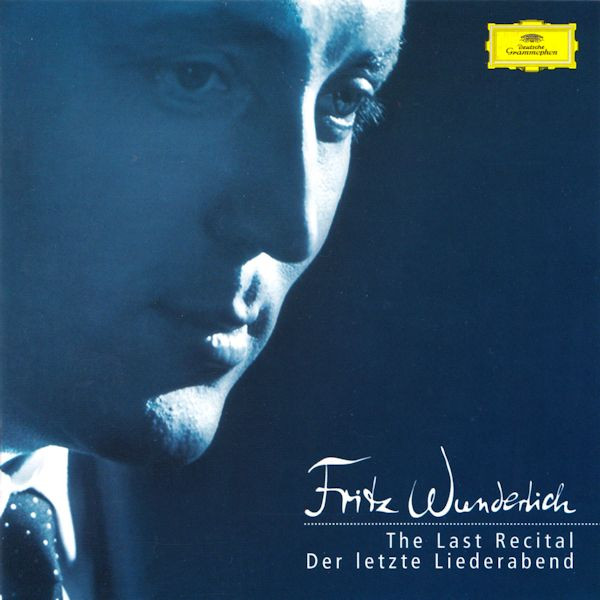
Fritz Wunderlich – The Last Recital

ns04mtk3lmpwzwc

This CD was released in 2003 and was, I think, the first time this Edinburgh recital was being released in toto. The only known extant recording of it was a BBC recording, a second or third generation mono copy and DG have attempted to correct the pitch which, in previous issues of parts of the concert, was too slow and fluctuated substantially. They were not able to eliminate wow and flutter, which was probably introduced in the first copying process. Nevertheless this is an important document of the last ime Wunderlich ever sang in public and, for anybody used to listening to historical live recordings, the sound won’t be an impediment to enjoyment.

We should of course be careful of attaching too much valedictory significance to this recital. We listen to the final recordings of such as Ferrier and Hunt Lieberson, with the added knowledge that they were aware of their mortality and knew that their time was limited. Wunderlich, on the other hand, was at the height of his powers and his international career was just taking off. He was a few months away from his Met debut as Don Ottavio, and he was finding the performance of Lieder recitals so fulfilling that he wanted to do more in that area. In fact, after this concert, he told Hubert Giesen that they should start working on Winterreise. He had absolutely no reason to think that his life would be prematurely cut short.

Wunderlich was apparently very happy with how the recital went, and Giesen told him after the concert that he thought he had achieved perfection. He had only recently turned to Lieder, making his first studio recordings of Lieder by Beethoven, Schubert and Schumann the previous year for DG, performances that have sometimes been criticised for lacking emotional depth. He evidently took these criticisms to heart for this recording of Dichterliebe is profoundly moving and in a different world of interpretation from his studio recording. It is now my preferred recording of the cycle.

The programme is similar to the one he sang in Sazlburg the previous year, but he is now a much more experienced Lieder singer and his singing now has much more significance and specificity. The first half of the recital consists of Lieder by Beethoven and Schubert, with Adelaide and Nachtstück showing of his superb legato line. His diction is well-nigh perfect throughout, showing that you don’t need to sacrifice verbal clarity to achieve a smoothly lyrical line. The second half, as in his Sazlburg recital of 1965, is taken up with the complete Dichterliebe. This is an extremely intense reading, with the young man  seeming much akin to Goethe’s Werther. True, we as listeners, knowing that he was only to live a couple more weeks, no doubt give some of he lyrics a significance that Wunderlich could not have intended. Nevertheless it adds to the appreciation of this performance.

The encores, as so often at a live recital, are when the performer relaxes most. Thus we get an ebulliently joyful Ungdeduld and a gorgeously sustained Ich trage meine Minne by Richard Strauss, which would surely have changed Strauss’s attitude towards the tenor  voice, though unfortuantely the BBC recording fades out just before the end of the song.

Finally, after a charming bit of banter with the audience, Wunderlich sings his heartfelt tribute An die Musik. Call me sentimental, but I find it impossible to listen to it without tears in the eyes. Though he didn’t know it and his audience didn’t know it, this was the last time the golden voice would  ever be heard in public.

Fritz Wunderlich – Opera Arias and Songs

image

I doubt this two disc set is available any longer, but it offers some interesting live performances and unusual repertoire spanning twelve years of Wunderlich’s career, the earliest performance being from 1954, when he would have been just 23 and the last from his final concert in Edinburgh in 1966, recorded shortly before the accident which claimed his life. The insert is missing in my copy and the track listing on the back isn’t quite accurate, for instance it credits Hilde Güden as the Violetta in the excerpts from the 1965 Munich La Traviata under Patané, when the role was actually taken by Teresa Stratas. (I have the complete performance on the Orfeo label.)

Disc 1 starts off with Handel. First we have a couple of excerpts from a 1959 performance of Messiah in German. Comfort ye is nicely done, but a tendency to aspirate his runs is notable in the ensuing Every valley. He must have been aware of this fault, because by the time he sings in Judas Maccabeus, conducted by Rafael Kubelik in 1963, that tendency has virtually vanished. Although this is also sung in German, he is now a much more confident singer and his rendition of Sound an alarm is absolutely stunning. Next we have a couple of excerpts from a 1965 radio performance of Iphigénie en Tauride (also in German) again under Kubelik, with brief contributions from Hermann Prey and Sena Jurinac. More and more of the assured artist is emerging.

Next comes Mozart, and we again go back in time, first to some delightful excerpts from Zaïde from 1956, followed by a performance of the short concert aria Con ossequio, con rispetto. The listing gives no indication of the date, but a little digging reveals that it was probably from 1963 and, again, the mature artist is beginning to emerge. This is followed by six extracts from a 1959 performance of Schubert’s Fierrabras. The other soloists were unknown to me. They are all competent enough but Wunderlich’s superior voice and musicianship are immediately apparent. The disc finishes with three songs from his final concert in Edinburgh in 1966, to which I will return at the end of this review.

Another rarity begins the second disc; Cherubini’s comic opera Les deux journées, sung in German and given the title Der Wasserträger. Wunderlich sings two duets with Hildegard Hillebrecht. The music reminds me rather of Weber’s Abu Hassan, charming and lightweight and Wunderlich is perfectly attuned to its style. Next he makes a perfect Alfredo in the 1965 performance of La Traviata, mentioned above. All Wunderlich’s recordings of Italian opera excerpts were in German and it is amazing how he can still make the music sound italilanate even in the wrong language. Here in the right language, his legato is superb and he is the ardent young Alfredo to the life. He is not quite so impressive in a 1960 performance of Verdi’s Requiem. He tends to slightly oversing, maybe in what he thought was the Italianate method. There is the merest hint of a sob and the occasional aspirate, but I do wonder what he might have made of the part had he been engaged for the 1964 Giulini recording with Schwarzkopf. With Legge and Giulini to guide him, he might just have been the perfect tenor for that enterprise, however good Gedda is in it.

A 1959 exceprt from Strauss’s Die schweigsame Frau would surely have reconciled Strauss to the tenor voice. Strauss’s tenor writing can sound quite torturous, but Wunderlich sings with great beauty, soaring over the orchestra. Unexpected items follow with an exceprt from The Cunning Little Vixen (in German), one from Pfitzner’s Von Deutscher Seele and a short extract from Franz Schmidt’s Das Buch mit Sieben Sieglen, conducted by Dimitri Mitropoulos in 1959, both pieces completely new to me.

The final item is a 1954 recording of hin singing an aria from Robert Stolz’s Venus in Seide. Wunderlich would have been just 23 and, though a little diffident, the golden voice is imediately recognisable. It is instructive, then, to return to the final items on the first disc, the last recordings we have of Wunderlich’s voice, made at a concert in Edinburgh shortly before his untimely death. Before a live audience, he sings Schumann’s Die Lotusblume and Schubert’s Ungeduld with greater senisitivity and freedom than he does on his DG Studio recitals, recorded the previous year, and when it comes to his final encore, Schubert’s An die Musik, he delivers a beautiful, heartfelt rendering, vastly superior to the rather stiff one we hear in the studio. Nobody knew it at the time of course, but this touching tribute to music was the last song he ever sang in public. Two weeks later he tripped on loosely tied shoelaces and fell down the stone staircase at a friend’s hunting lodge in Oberderdingen. He had been due to make his Metropolitan Opera debut in Don Giovanni a few weeks later.

Wunderlich left behind a vast catalogue of studio recordings, of operetta, of opera and of Lieder. He was obviously still developing as an artist. How sad to think that he was only really beginning his international career.

Dame Janet Baker sings Mozart, Beethoven and Schubert

51exmgqxv1l

Essential listening, I’d venture to suggest, even for those who already have the Philips Originals box set I reviewed here. Here we have the whole of Baker’s 1977 Beethoven and Schubert recital, of which three items appear on the Philips box, coupled to the Mozart items from her 1974 Mozart and Haydn recital, none of which do.

The prize of this CD is Dame Janet’s superb rendering of Sesto’s arias from La Clemenza di Tito. Not only is it a technical tour de force, the rapid triplet figures at the end of Parto, parto tossed off with breathtaking ease, but the range of expression is extraordinary and personal. I have never heard another singer differentiate so much between the repeated cries of Guardami!; in the first she pleads almost angrily, but in the second her tone changes completely, becoming meltingly beseeching, as if Sesto realises he has gone too far. Furthermore she has the ability to get to the emotional core of the music without ever disrupting its Classical style. Pure genius.

Elsewhere she is in enviable form in a programme that ranges wide, including rarities like Beethoven’s No, non turbati and arias from Schubert’s Lazarus and Alfonso und Estrella. Leppard’s accompaniments, whether conducting the English Chamber Orchestra or on the piano or harpsichord are discreet rather than revelatory, perhaps happy, with such a patrician artist, to let his soloist take the lead.

The recordings, originally made for Philips in quadrophonic sound, are here issued in SACD, though I was listening in simple stereo. They are wonderfully clear and lucid.

Highly recommended.