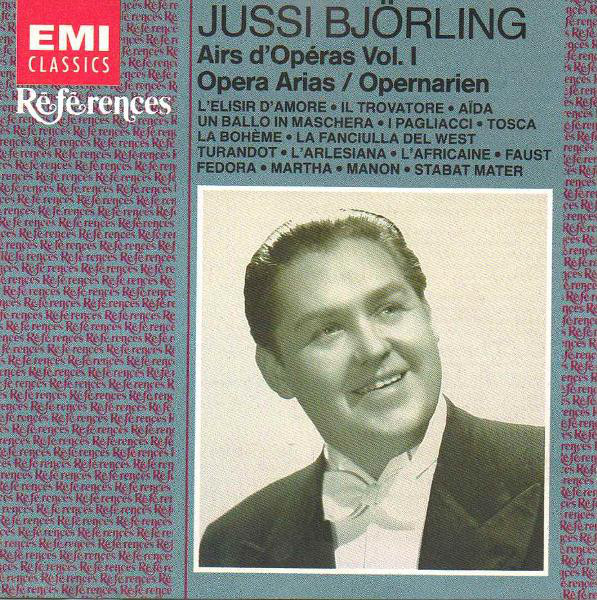
Jussi Björling – A collection of Swedish 78s.

These two CDs gather together most of the 78s the young Björling made in his native Sweden between 1933 and 1949, the earliest made when he was a budding tenor of twenty-two.

Most are vocal gems, but one or two (the rather loud and penny plain Je crois entendre encore, and the unpoetic duet from La Boheme with Anna- Lisa Björling on the second disc, for instance) are less than great.

The voice itself was a magnificent one, no doubt about it, with a silvery purity throughout its range, the high notes free and easy; just listen to his joyfully ebullient 1938 performance of Offenbach’s Au mont Ida from La belle Hélène, sung in Swedish, but with terrific swagger, the top notes flying out like lasers. From a few years ealier we have a plaintively sensitive performance of Valdimir’s Cavatina from Borodin’s Prince Igor, the legato line beautifully held, his mezza voce finely spun out. Also from 1938 we have a thrilling performance of the Cujus animam from Rossini’s Stabat mater, with a free and easy top D flat at the end, and it is prinicpall for Italian and French opera that Bjørling will be remembered and there are plenty of examples here of his wonderfully musical performances in that genre.

We find him ideal in Verdi, Donizetti and Puccini alike, in Myerbeer, in Massenet and in Gounod (a glorious rendering of Faust’s Salut, demeure). Some regret the absence of a true Italianate tone in the Italian items, but he will never resort to sobs and aspirates to express emotion, and, personally, I find his comparative restraint very attractive. It is true, he is not always imaginative with his phrasing, and nowhere will you get the kind of psychological introspection you would hear in a performance by someone like Vickers, but his singing is always musical, and of course there is a great deal of pleasure to be had from the voice itself, which Italianate or not, is a thing of great beauty.

Some of the very best of these 78 recordings are included on Volume 1, stand out items for me being the aforementioned Faust aria, his wonderfully musical and sensitive Ah si, ben mio from Il Ttovatore, and his poetic, but thrilling version of Nessun dorma from Turandot.  There is also plenty to treasure in Volume 2, which includes the Offenbach and Borodin, but also a sensitvely prayerful  Ingemisco from the Verdi Requiem, Des Grieux’s lovely Dream from Manon sung with liquid, honeyed tone (his ardent Ah, fuyez is on the first disc), and his  poetic Cielo e mar, from La Gioconda.

The second disc finishes with a couple of unexpected examples of his work in Lieder, a gorgeously lyrical Beethoven Adelaide, and a beautifully restrained and rapt account of Strauss’s Morgen.

Anyone who loves the tenor voice and gloriously musical and sensitive singing (not always the same thing) should have these recordings in their collections.

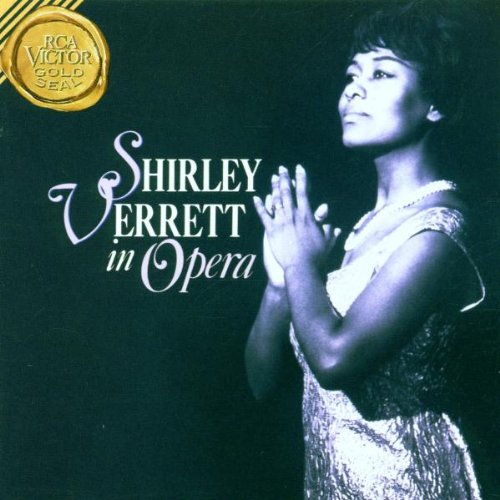
Shirley Verrett In Opera

51ajzxt2szl51wmswrrusl

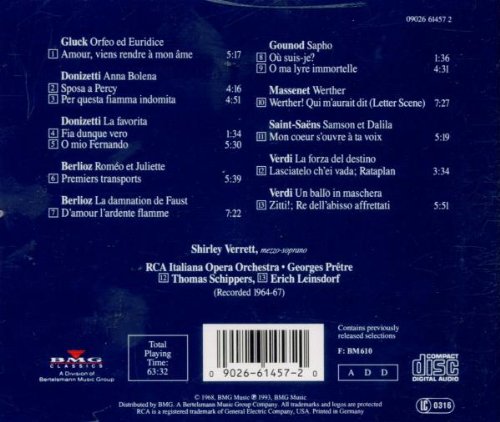
This is a wonderful recital disc and a great example of the art of Shirley Verrett, dating from 1967, before she ventured into soprano territory.

It starts with a stunningly virtuosic rendering of Orphée’s Amour, viens rendre à mon âme from the Berlioz edition of Gluck’s Orfeo ed Euridice. Verrett maintains a true appreciation of the classical style, the chest voice used more sparingly than in Verdi, vibrato kept to a minimum. She also gives the piece a properly heroic dimension. Orpheus is after all srengthening his resolve at this point.

The two Donizetti items showcase her facility in bel canto, though with so many French items in the recital, it’s a shame she sings the aria from La Favorite in Italian. The short scene between Giovanna and Enrico from Anna Bolena gives us the chance to hear her engagement with the text in recitative, her legato line in the cavatina and her felxibility in the cabaletta. The aria from La Favorita also goes well, again displaying her deep legato in O mio Fernando, and her thrilling dramatic thrust in the cabaletta.

She is even better in the French items, giving us a beautifully restrained performance of Premiers transports from Berlioz’s Roméo et Juliette, and one of the best versions I have heard of Margeurite’s D’amour l’ardente flamme, one of the composers greatest inspirations. Verrett’s responses to the text are just that bit more vivid than those of Von Stade, whose eary French recital I listened to recently, with a much greater range of colour. Only Callas surpasses her in creating an atmosphere of utter forlorness and longing, though it has to be admitted that by the time she recorded it her actual tone couldl sound somewhat frayed and thin, where Verrett is firm and rich throughout.

She is grandly eloquent in the aria from Sapho, and wonderfully alive to the many changes of emoton in the Letter Scene from Werther, briliantly charting Charlotte’s mounting anxiety. This too is one of the greatest performances you will ever hear of the scene, and it is a great pity she never recorded the complete role.

It is also nothing short of tragic that she never recorded the role of Dalila, one of her greatest stage successes, and her beautiful reading of the famous Mon coeur s’ouvre à ta voix closes the recital proper. Disappointingly she follows regular performance practice, by splitting the phrase in Ah, réponds à ma tendresse in order to snatch an extra breath. It is so much more effective when sung, as Saint-Saëns indicated, in one long breath, though Callas is one of the only singers to do it that way. Aside from that one slight cavil, her comparative restraint is welcome and all the more seductive for letting the music speak for itself.

The Verdi pieces at the end are taken from complete recordings of the two operas. She is wonderfully vivid as Preziosilla and darkly commanding as Ulrica.

In all Verrett’s superb musicality is evident, and I often wonder why she recorded comparatively little, given the flurry of opera recordings made in the 1970s. That her superb Carmen was never committed to disc is little short of criminal.

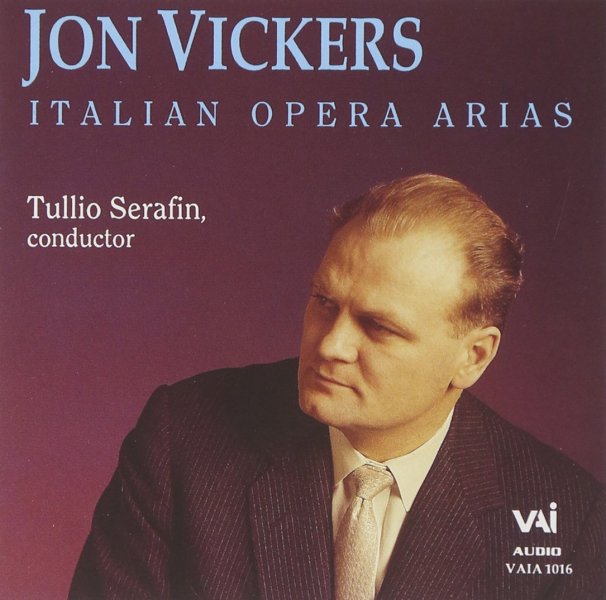
Jon Vickers – Italian Opera Arias

713njx42iel._sl1085_

Now this is great singing.

In the 1993 notes that accompany this re-issue of the one recital record Jon Vickers ever made, Vickers says,

At the time of the Italian Arias recording the field of opera was a totally different world than today. One sought to prove oneself worthy of association with the opera houses, general administartors, conductors, producers and singers one admired – even was in awe of. There was a humbling consciousness of the great history of places like the Metropolitan Opera, the Royal Opera House, Covent Garden, La Scala, Bayreuth, Vienna and Salzburg. Emphasis was upon delving as deeply as possible into the psychological depths of the text illuminated by the genius of the composer’s music. To dare to indulge any particular personal ability was to invite derision from colleagues and thunderous disapproval by public and press alike as being in bad taste and imposing of oneself upon a great work of art.

To be honest, I’ve listened to plenty of live performances from those days when bad taste and personal indulgence brings the house down, but his statement does give you a snapshot into the way the man worked, of his seriousness and dedication to his art.

This recital disc was recorded at the same time as his first recording of Otello under Tullio Serafin, when his only Wagnerian role was Siegmund, and you were more likely to hear him as Riccardo in Un Ballo in Maschera, Radames, Canio or Don Carlo. Later of course he want on to tackle Tristan and Parsifal, though he never sang Siegfried, and he dropped out of scheduled performances of Tannhäuser at Covent Garden, due to his religious scruples, saying he could not empathise with the character and that, in any case, the opera was blasphemous in character.

First impressions when listening to this disc are of the sheer size of the voice, and the power – a power that can be reined back to a merest pianissimo, then unleashed at will, like an organist pulling out all the stops. The other is intensity. Whether singing gently or loudly, there is a concentration and intensity that makes each short aria into a mini monodrama, and an ability to focus in on the meaning of each word and note. Nothing is taken for granted, nothing thrown away.

From a purely vocal point of view, it was still a very beautiful instrument back in 1961, and an aria like Cielo e mar is sung not only with golden tone, but with a true sense of wonder, and a way of pulling in and out of full voice that never destroys the long legato line.

Where many Italian tenors will add extraneous sobs and aspirates to indicate emotion, particularly in an aria like Federico’s Lament from L’Arlesiana, Vickers achieves an even deeper vein of emotion by never straying from the written notes, but simply (as if it was simple) intensifying his sound. In this he ressembles Callas, whom he revered so much having been Giasone to her Medea on many occasions.

One of the stand out tracks on this recital for me is Chénier’s Un di all’azzurro spazio delivered with mounting passion, but also somehow giving us a sense of the intellectual in the man. Canio suffers like no other, and yet he doesn’t have to break down in sobs at the end to make us feel it. His Otello developed into one of the towering creations of his, or any other, age, but even here, with the arias taken out of context, he conveys all the man’s pain and suffering.

Listening to this recital today at a distance of some years has been a peculiarly emotional experience. Jon Vickers was, and remains, unique, and we are unlikely to hear his ilk again.

Ljuba Welitsch – Salome closing scene and other arias

117506465

Tchaikovsky; Eugene Onegin – Tatiana’s Letter Scene
Verdi: Aida – Ritorna vincitor
Puccini: Tosca Vissi d’arte
Puccini: La Boheme – Quando m’en vo
Weber: Der Freschütz – Wie nahthe mir der Schlummer – Leise, leise
Strauss: Salome – Closing Scene

Ljuba Welitsch shot through the operatic firmament like a comet in the late 1940s and early 1950s. Unfortunately she developed nodules on her chords by 1953 and her international career was over almost before it started. In that brief time her Salome at least became the stuff of legend, and to this day is considered one of the greatest of all times, though a prodjected complete recording with Reiner conducting never materialised. There are two live perforances from the Met, from 1949 and 1952. The latter has the best all round cast, but she is in fresher voice in the former.

These recordings all date from the 1940s when her voice was at its silvery best, and the final scene from Salome, conducted by Lovro von Matacic dates from 1944, when Strauss himself chose her to sing the role at the Vienna Opera in a production, which was to celebrate his eightieth birthday. They worked on the piece for six weeks, with Strauss himself attending the rehearsals, so, from that point of view at least, we should consider her performance here as authentic. Indeed this must be exactly the voice Strauss had had in mind. It remains silvery, youthful and light, and yet cuts through the heavy orchestral textures with no apparent effort. Not only that, but her word painting and identification with the role is so vivid that at the end of the scene one literally feels Herod’s distaste when he commands his soldiers to kill her. This scene alone is indispensable, whether one has one of the complete live recordings or not.

The other arias were all recorded between 1947 and 1949, when the voice was still in fine shape, but they do expose some of her weaknesses. The best of them is Tatiana’s Letter Scene from Eugene Onegin, here sung in German, which teems with girlish impulsiveness and teen-angst longing. There is no sense of strain and the high notes ring out gloriously. Please also take note of the wonderful horn playing of Dennis Brain. This scene ranks as highly as the Strauss in the Welitsch discography.

Musetta’s Waltz makes its effect well, with loads of personality, but she misses the anguish and contrasts in Aida’s Ritorna vincitor, and her Vissi d’arte is rather penny plain. Neither scene really registers anything at all and she has a tendency to rush the beat, which can be quite annoying. The Weber is better, but she still lacks the poise and control evinced by such singers as Elisabeth Grümmer and Elisabeth Schwarzkopf.

When the voice started to let her down, she did not retire, but moved to character roles, most famously singing the Duenna in Karajan’s first recording of Der Rosenkavalier. As late as 1972, she played the role of the Duchess of Crakentorp in a Fille du Régiment at the Met.

Not a recital in the true sense of the word, as all these performances were recorded for 78s, this compilaton is essential none the less for the Strauss and Tchaikovsky at least.

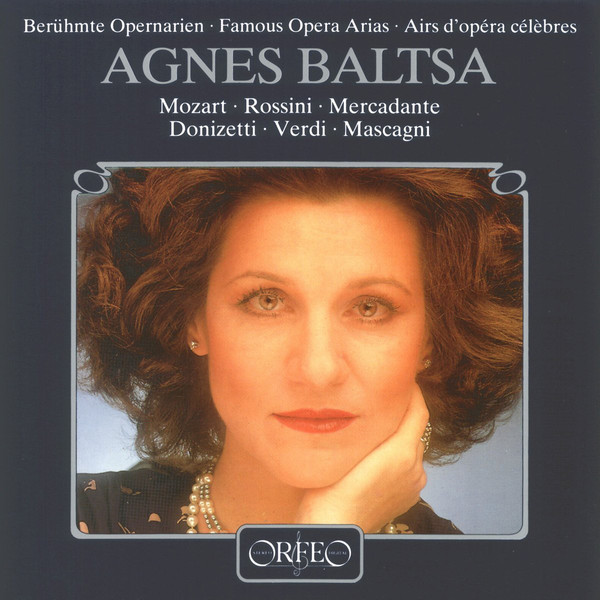
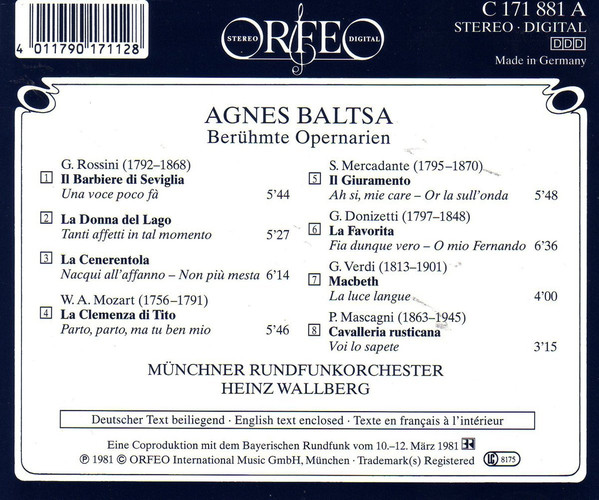
Agnes Baltsa – Famous Opera Arias

r-10771805-1504032686-5609.jpegr-10771805-1504032692-5381.jpeg

Good to be reminded of Baltsa’s pre-eminence as a lyric/dramatic mezzo at the beginning of the 1980s, when this recital was recorded.

The recital shows off to advantage her keen dramatic instinct, a tangily individual timbre, and a voice that was, at this time at least, absolutely seamless from top to bottom. Though she had already recorded Eboli and Amneris for Karajan, this recital concentrates for the most part on her work in the field of bel canto.

Baltsa was an exciting stage performer, as I can attest, having seen her live on many occasions and a great deal of that excitement comes through on disc, the climaxes of the arias from La Favorita and Il Giuamento being particularly thrilling. She has a strong vocal personality, which comes across stunningly on disc, and she realises the different demands of classical, Romantic and verismo music. If there is a limitation, it is that she rarely colours or weights the voice to suit the character she is playing, something more noticeable in a recital disc than it would be in a complete performance.

Stand out tracks for me were the aria from La Donna del Lago, where she gently caresses the opening cavatina, and the aforementioned arias from Il Giuramento and La Favorita. Indeed, on this showing it is a great pity that nobody thought to make a complete recording of the Donizetti opera with her, though preferably in the original French rather than Italian as it is here.

To sum up, this is a great memento of an important singer recorded when the voice was at its peak. I seem to remember that it was issued in the UK originally on EMI, but the recording was made by Orfeo, and it is that issue I have.

Callas in La Traviata – Lisbon 1958

d81fp3y4vqbl-_sl1500_

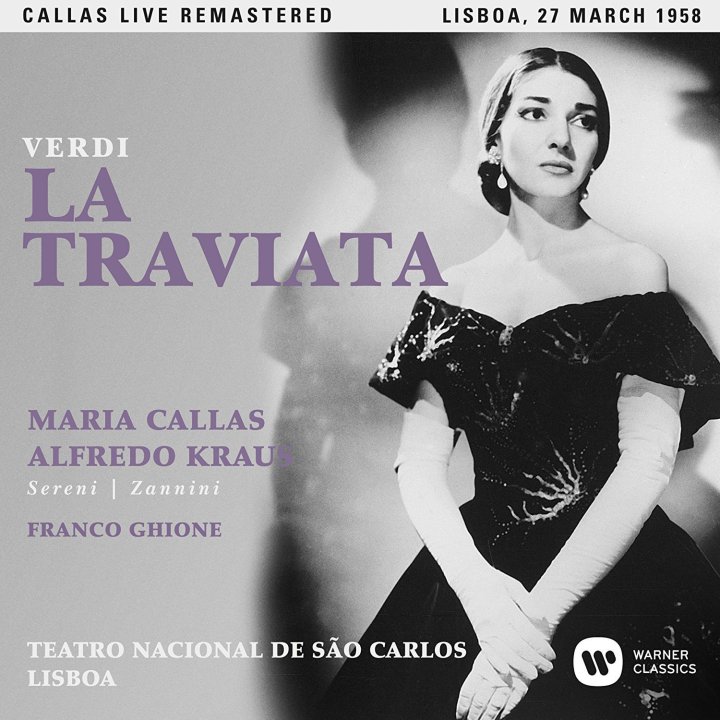
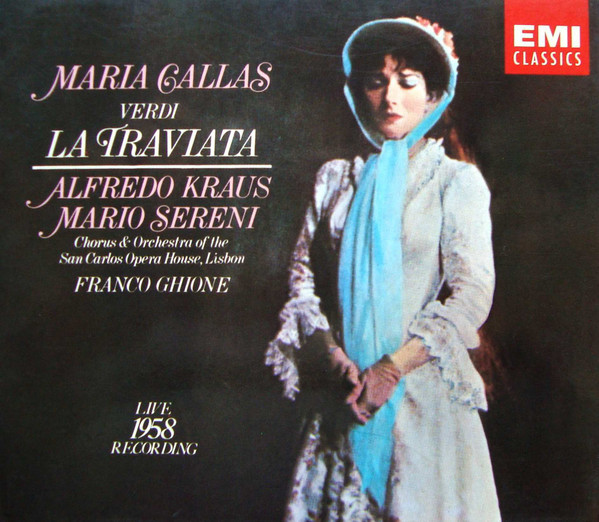
First issued in 1980 by EMI, this performance was once considered the holy grail of Callas performances. Rumours always persisted about its existence, but, until its EMI release, nobody had been able to track it down. Terrence McNally even wrote a play called The Lisbon Traviata, in which it symbolises the unattainable and the quest to find it.

So how does it stand up to all the other Callas recorded performances of La Traviata? Well, I’d say it’s one of the best, if not quite the best, an epithet I would reserve for the Covent Garden performance of just a few months later and which I reviewed a few months back.

Callas’s Covent Garden Traviata

She is in marginally fresher voice in Lisbon, but the Covent Garden performance has a veracity and insight that is absolutely overwhelming, and I rather wish Warner had chosen that performance instead.

Presumably, given that Warner now own all EMI’s back catalogue, it was simpler to just go for Lisbon and unfortunately this seems to be a remaster of the awful 1997 Callas edition version, which renders the voices harsh and wiry. I have the 1987 remaster, done, I believe, by Keith Hardwicke, which is much warmer, so I won’t be throwing it away. As it was originally a full price issue, it also comes with full notes, texts and translations, although that reminds me that EMI’s mid-price Callas issues also came with notes, texts and translations. Warner are to be admonished for not even including them on a separate CD, as they did for the studio recordings. Some of the material in the Live box set is quite obscure and it can be difficult to find libretti elsewhere.

But back to the virtues of this Lisbon performance, and they are many. Of all the roles in Callas’s repertoire, it was Violetta which went through the greatest transformation, from those early, vocally resplendent performances in the early 1950s, through the famous La Scala/Visconti/Giulini production  of 1955 to the Covent Garden performances of 1958, her penultimate performances of the opera before Zeffirelli’s Dallas production also in 1958, which marked her farewell to the role, though she still entertained thoughts of singing it again as late as 1969.

As I said, Callas is in marginally fresher  voice here than in London a few months later, though the top Eb at the end of Sempre libera, a note she could easily and justifiably have omitted, is no more secure here than it was there. On the other hand the scale passages and duple descending quavers are wonderfully supple, and note how she differentiates between the two. As always, the singing is full of tiny details, overlooked by most singers, and yet there is never anything fussy about it. She always ensures that a lyrical line is maintained, and, though a great deal of thought and preparation has gone into her portrayal, it always sounds spontaneous, not in the least studied.

Much of her singing is similar to that in Covent Garden, of which I made a far more detailed assessment, when I reviewed it last year. If I continue to prefer that performance, it is mostly because Rescigno, inspired to give of his best, conducts a more flowingly lyrical version of the score than the sometimes pedestrian Ghione. Kraus’s Alfredo is a bonus in Lisbon, but the Schipa taught Valletti in London is at least his equal, and Zanasi slightly preferable to Sereni in Lisbon, good though he is.

Everyone should have at least one Callas Traviata in their collection, and it is a great shame that Legge didn’t wait a year or two for Callas to be free of her contractual obligations to Cetra, before recording it for his La Scala collection. Stella proved to be a poor substitute, and the recording never sold.

I have four Callas recordings in my collection, top of the list being the 1958 Covent Garden performance, recorded on one of those rare nights where everything comes together to create something very special. Second on my list would be the 1955 La Scala/Giulini performance, one of Callas’s greatest nights in the theatre, and one which changed for ever attitudes to Italian opera. The Lisbon performance comes in third for me, with the Cetra studio recording, in which her voice is at its freshest, coming in fourth.

Whichever recording you go for, I have no hesitation in crowning Callas the greatest Violetta we have on disc.

CallasTraviataLisbon

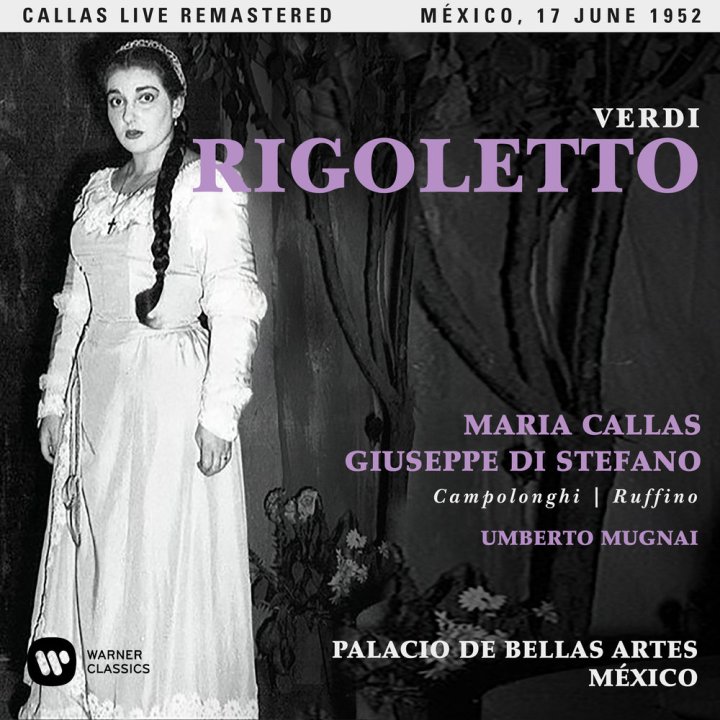
Callas sings Gilda in Rigoletto – Mexico 1952

1498838629118

This is actually the first time I’d heard this performance complete. Previously I’d only heard excerpts in wretched sound, which hadn’t encouraged me to investigate further, especially given the excellence of Callas’s studio recording with Gobbi and Di Stefano and Serafin at the podium.

Well the first thing to say is that the sound is actually quite good, the voices well caught and much clearer than anything I’d heard before. Unfortunately the performance itself, save for Callas’s miraculous Gilda, is something of a mess, and I wonder why Warner decided to include it, especially as they omitted the superb live La Scala Un Ballo in Maschera of 1957.

One should also note that the prompter is a palpable presence, shouting rather than whispering the lines to the soloists. Oddly enough he disappears completely at the beginning of Tutte le feste and Callas muffs her first lines.

So let’s get the problems, and there are plenty of them, out of the way first. Umberto Mugnai doesn’t appear to have any control over his resources whatsoever, and frequently coordination between pit and stage falls apart completely. The score is also cut to ribbons, far more than was traditional at the time. It is notable that when things go awry, it is usually Callas, who presumably couldn’t even see the conductor, who brings things back on track. Even in such chaotic surroundings, her innate musicality shines through.

The last act is the biggest mess of all, and all the singers go out of sync with the orchestra in the storm ensemble, despite Callas’s best efforts to bring everything back under control. The quartet isn’t much better, and ends with all the singers, save Callas, out of tune, not that it bothers the audience who give it a rapturous reception. Nor does it concern them that just before that Di Stefano had ended La donna e mobile seriously flat. Forced to encore the aria, his second attempt isn’t much better.

Piero Campolonghi, who plays Rigoletto, has a fine enough voice, but, oh dear, what a ham! He delights in holding onto notes longer than he has to, adding extraneous sobs whilst others are singing and shamelessly playing up to the audience, who, it has to be said, lap it all up with enthusiasm. He has absolutely no idea who or what Rigoletto is. Oh how I missed Gobbi.

Di Stefano does at least have the measure of the Duke. He has charm in abundance, and we can understand why Gilda could be taken in by such a man, but, without a strong hand at the helm, he can be careless of note values and rhythm, and he too plays shamelessly to the gallery. The rest of the cast is decidedly provincial.

That Callas’s Gilda, a role she was singing for the first time, should emerge virtually unscathed from this shambles of a performance is a miracle indeed. She makes a couple of decisions she would later regret, such as taking an upward ending in Caro nome, which allows her to finish on a secure, but unpoetic top Eb in alt, rather than Verdi’s written rapturous trill on the lower E  (something she does to brilliant effect in the studio recording). She also ends the Quartet on a powerful (and unwritten) top Db (but then, with all the singers belting out their lines, the written quiet ending would have been out of the question).

Aside from these miscalculations, made to appease the Mexican audience’s love for high notes, her Gilda is one of her most exacting characterisations, and it is a great pity that she was never tempted to sing the role on stage again. Had she done so, we might well have completely rethought the role, much as we did that of Lucia.

Her voice is in superb condition, infinitely responsive and wonderfully limpid, the tone wondrously lightened to dispel any associations with Abigaille, Kundry, Elena, Aida and Armida, the roles we have heard her sing so far in this live set. Furthermore her Gilda is a character of real flesh and blood, with a fullness of heart in her duets with her father that prepares us for the sacrifice she makes later; a closeted romantic dreamer suddenly propelled into a world far beyond anything in her experience. Not only is her characterisation of the role a revelation, but her singing qua singing is exquisitely realised, her musical instincts unfailingly right, and ultimately her Gilda rises like a phoenix from the ashes of its crude surroundings.

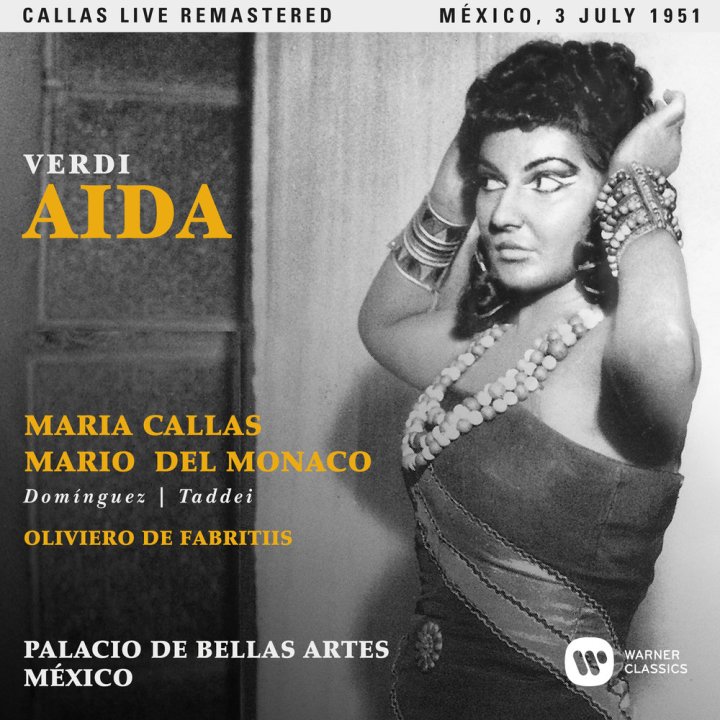
Callas in Aida – Mexico City 1951

1498817188915

A few months ago, I reviewed this performance HERE as part of a comparative review of five different Aida recordings, so I don’t propose to go into too much detail, as you can read that review by clicking on the above link.

As for the sound, this Warner re-master is a good deal better than the old Virtuoso version I owned before, which was almost unlistenable, but, yet again, in conversation with other Callas fans on the net, I am told that there are better versions than Warner out there, not least Ars Vocalis. The problem with this is that these can be difficult to come by (only available for a short time on ebay) and the Warners are readily and cheaply available from Amazon and the like. As such, this Warner re-master is not at all bad, and easily more listenable than what I had before, the voices coming through much more clearly.

To reiterate what I said back in March, this is a performance in primary colours, which befits its surroundings. The audience is a palpable presence, and when Callas hurls out that magnificent top Eb in the Triumphal Scene, they almost tear the place apart. Subtlety, from any of the singers, is not to be expected, though Callas of course sings with her customary musical intelligence. She is in superb voice throughout, though the top C climax to O patria mia, a firm but not exactly dolce note, is not ideal. She recovers quickly to sing a seethingly dramatic Nile Scene with Giuseppe Taddei’s excellent, implacable and forceful Amonasro. My yardstick for this duet has always been the Callas/Gobbi confrontation on the studio set, but this one is almost its equal. What it lacks is Serafin’s superbly sympathetic conducting (I know of no other conductor who makes the violins weep the way he does in those repeated figures as Aida sings about how much her country costs her). In any case, no other soprano digs as deeply into the words as she does at O patria, patria, quanto mi costi. On this occasion, unusually for her, she adds some extraneous sobs, which she will eschew in both the performance under Barbirolli at Covent Garden in 1953, and for the studio recording of 1955 (the last time she sang the role).

Del Monaco tends to sing everything forte, but the voice itself is in spendid shape. The local girl, Oralia Dominguez, in her role debut, and Giuseppe Taddei both display voices in full bloom and are thoroughly involved in the drama. All in all it isn’t the most subtle of performances you will hear but it is full of thrills and undenyably exciting and I can only imagine what it would have been like in the audience.

Back in March, when I reviewed this alongside the live Barbirolli from Covent Garden, the studio recording, Karajan’s second recording of the opera and the latest one from Pappano, I ultimately came down in favour if the 1955 Callas studio recording, and, though in somewhat leaner voice, there are still moments I prefer the greater subtlety she brings to her performance there. However, by 1955 Aida was no longer in her repertoire. This one gives us a better idea of how thrilling her Aida must have been in the theatre. A character who can sometimes seem no more than a cypher, the archetype of the woman torn between love and duty, becomes a real, passionate flesh and blood woman. Even taking into consideration the distinctly lo-fi sound, this would be my favourite performance of the opera.


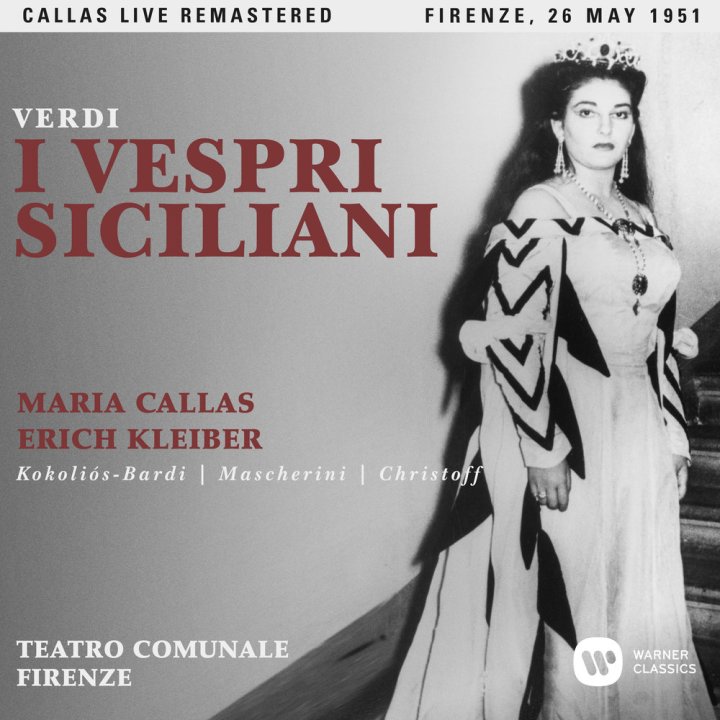
Callas in I Vespri Siciliani – Florence 1951

1498830100011

Florence and the Maggio Musicale, Fiorentino played a great part in Callas’s early career. It was at Florence’s Teatro Comunale that she debuted Norma, Violetta and Medea all of which were to become quintessential Callas roles. Other roles she sang there were Elvira in I PuritaniArmida (in which she had a spectacular success, though she never sang the role again), Lucia di Lammermoor (around the time of her first complete recording, which also used Florence resources),  and her first Elena in I Vespri Siciliani, under Erich Kleiber. That year she also undertook the role of Euridice in Haydn’s Orfeo ed Euridice (its first ever performance, given at the tiny Teatro della Pergola, also under Kleieber).

The success of this production of I Vespri Siciliani finally made Antonio Ghiringhelli, the Sovrintendete of La Scala, Milan, who had for some reason taken an instant dislike to Callas, offer her her first season at La Scala. Later that year she would open the La Scala season in the same opera, I Vespri Siciliani, though this time under the baton of Victor De Sabata. For that same season she was also engaged for Norma and the role of Costanze in Die Entführung aus dem Serail, its first ever performance at La Scala. The opera was sung in Italian, and this was to be the only Mozart opera Callas ever sang. La Scala became her artistic, and geographical, home for the next seven years, and it became a period of extrordinary artistic achievement, allowing Callas to work with directors like Luchino Visconti, Franco Zeffirelli, Margarita Wallmann, Carl Ebert and Herbert Graf; conductors like Herbert von Karajan, Leonard Bernstein, Victor De Sabata and Carlo Maria Giulini. Most of her recordings were also made under the imprimatur of La Scala too, and she is to this day indelibly associated with the theatre.

No recording exists of the La Scala I Vespri Siciliani, so we are fortunate indeed that we have this recording from Florence. Like most of her live recordings from Florence, the sound has never been good, though in 2007 Testament issued a clearer transfer from tapes made for Walter Legge, who was using them to audition Callas. This Warner issue would appear to be a clone of the Testament transfer, with the overture, which wasn’t recorded for Legge, tacked on from another source. As such, I found it no better nor worse than the Testament issue, but, though the sound distorts and overloads quite a bit, it is worth persevering for Callas is in superb voice, in a wide-ranging role that takes her from a low F# in Arrigo, ah parli a un core to a top E in the Siciliana in Act V.

Lord Harewood was in the audience for one of the rehearsals of the Florence production  and recalls precisely the effect of her entrance aria,

Act I of Vespri begins slowly; rival parties of occupying French and downtrodden Sicilians take up their positions on either side of the stage and glare at each other. The French have been boasting for some time of the privileges which belong by right to an army of occupation, when a female figure – the Sicilian Duchess Elena – is seen slowly crossing the square. Doubtless the music and the production helped to spotlight Elena, but, though Callas had not yet sung and was not even wearing her costume, one was straight away impressed by the natural dignity of her carriage, the air of quiet, innate authority which went with every movement. The French order her to sing for their entertainment, and mezza voce she starts a song, a slow cantabile melody; there is as complete control over the music as there had been over the stage. The song is a ballad, but it ends with the words “Il vostro fato è in vostra man” (Your fate is in your hand), delivered with concentrated meaning. The phrase is repeated with even more intensity, and suddenly the music becomes a cabaletta of electrifying force, the singer peals forth arpeggios and top notes and the French only wake up to the fact that they have permitted a patriotic demonstration under their very noses once it is under way. It was a completely convincing operatic moment, and Callas held the listeners in the palm of her hand to produce a tension that was almost unbearable until exhilaratingly released in the cabaletta.

Though we cannot see the impression she made, her very first words, Si canteró exude calm authority, with an undercurrent that suggests that, though she has agreed to sing, the French will not necessarily like what they hear. She starts almost mystically, gradually as Harewood describes, suffusing her tone with more pointed meaning at the words Il vostro fato è in vostro man. She then launches the cabaletta, Coraggio, su coraggio, almost sotto voce, building the tension as she starts to sing out with more force, her command of the wide leaps and coloratura staggering in its ease, the top of her voice gleaming and powerful. It is, as Lord Harewood suggests, a masterclass in how to use music to dramatic ends.

There is a good deal more to her Elena than that, though. She can be meltingly lyrical in the love music, such as in the beautiful mini aria Arrigo, ah parli a un core (though she only touches the low F# in its cadenza) and blithely suave and elegent in the Act V Siciliana, Merce, dilette amiche, notable for its light, breezy runs and an interpolated high E at its close. Few singers before or since can have so easily encompassed its vocal demands, whilst creating a character both sympathetic and imposing. There is never any doubt, from first note to last, that this Elena is an aristocrat; there are parallels here with Callas’s superb Leonora in Il Trovatore.

Of the supporting cast, Christoff, who also played the role at La Scala is a vocally resplendent and authoratative Procida, Mascherini a not particularly interesting Monforte. Giorgio Kokolios-Bardi, who sings the role of Arrigo, was a Greek tenor, whom Callas no doubt knew from her Athens Opera days. Occasionaly he phrases with a real sense of line, but just as often his singing lacks distinction. He was replaced by Eugene Conley at La Scala.

Erich Kleiber makes quite a few cuts in the sprawling score, but has a sure sense of its dramatic shape. There is a story that, at one point in rehearsals, he shouted out to Callas, “Maria, watch me,” to which she replied, “No, maestro, your eye sight is better than mine. You watch me.” Whatever the truth of this, they seem entirely at one in the performance, though I did wonder if Kleiber took the aforementioned Arrigo, ah parli a un core a tad to fast.

As I mentioned earlier in this review, I didn’t detect much improvement in the sound from the Testament issue of the performance, which in turn was quite a bit better than any heard before it was released. Nevertheless, this is essential Callas, and I wouldn’t want to be without it.


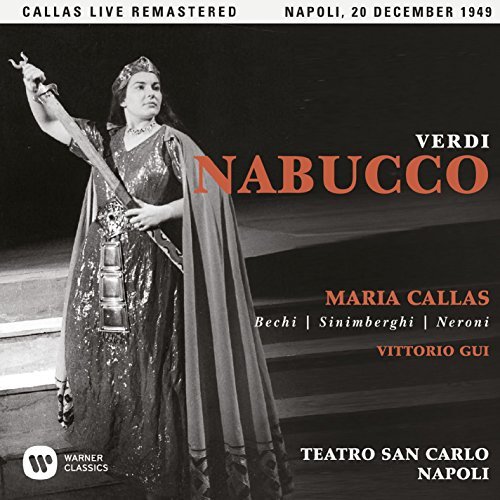
Callas in Nabucco – Naples 1949

51ek3ptyfil-_ss500

One might think Abigaille a Callas role par excellence, but in fact she only ever sang the role at this series of performance in Naples in 1949, though she often programmed Anch’io dischiuso into her concert programmes. She is on record as calling the role a voice wrecker and advised Caballé against singing it. “It would be like putting a precious Baccarat glass in a box and shaking it. It would shatter,” she told her. Caballé heeded the advice and never sang the role. Callas’s words may seem a surprising statement, given Callas’s astounding assurance and brilliant execution of the role’s difficulties, but maybe she was right. After all, Giusppina Strepponi, the role’s creator and eventually Verdi’s second wife, retired practically voiceless at the age of 31, only a couple of years after she had such a success in it. Elena Souliotis forged her career in the role and had burned herself out in less than five years.

In terms of sound, this is one of the worst extant Callas broadcasts, and no amount of tweaking by the engineers is going to disguise that. It is at its worst in the last act, but, as Abigaille has so little to do in the last act, this affects Callas the least. That said, the Warner issue is clearer than any I’d heard before, though I’m told the one on Ars Vocalis is even better, if you can get your hands on it.

It is worth persevering with the sound, though, for this is the most thrilling performance of the role of Abigaille you are ever likely to hear. The young Callas ( she was 26 at the time) is in full command of the role’s many difficulties, tossing off the coloratura with demonic force as if it were the easiest thing in the world, the top of her voice rock solid and gleaming. She even exacerbates the role’s difficulties by interpolating a free and ringing high Eb in the Act III duet with Nabucco.

However there is much more than just power and ferocity to Callas’s Abigaille, and it is full of lovely details often overlooked by other singers. Note, after her barnstorming entrance, the way she softens her tone at the words Io t’amava, with a suggestion that she loves Ismaele still. The recitative Ben io t’invenni is thrillingly powerful, but she spins out the ensuing aria Anch’io dischiuso with Bellinian grace, tracing its filigree to heavenly lengths. In the duet with Nabucco she is exultantly triumphant, but this gives way to her most meltingly moving tones in the death scene, which unfortunately loses some of its effect due to the crackly recording. All in all, Callas’s Abigaille is a considerable achievement, and it is incredible that she can sing with such power, but with such needle fine accuracy in the coloratura.

Vittorio Gui conducts a tautly dramatic performance, but something strange happens during the chorus Va, pensiero, the end of which is drowned out by a cacophony of boos. He reprises the chorus and this time the audience go berserk cheering. This is presumably what going to the opera in Italy in those days was like.

Gino Bechi, a well-known baritone at the time, is an effective Nabucco, but not in Callas’s class, and no match for such as Gobbi, who recorded the role for Decca late in his career. The rest of the cast is perfectly adequate without being outstanding, but the recording, dreadful sound or not, is a must for Callas’s superb, vocally resplendent Abigaille.