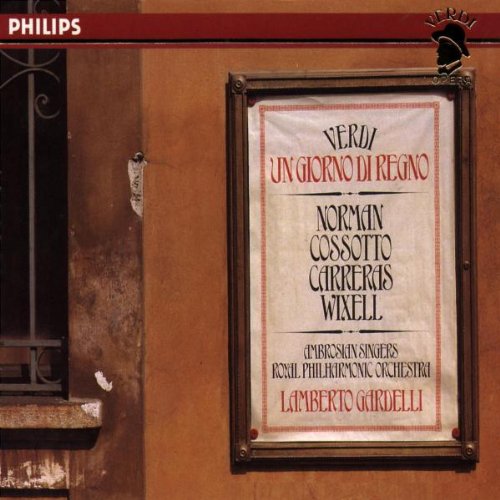
Verdi’s Un Giorno di Regno – 2 recordings

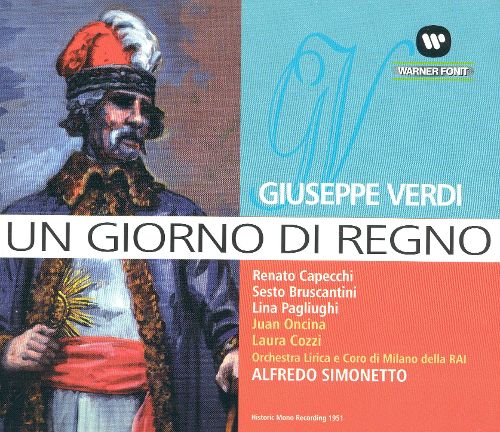
The reason I ended up with two recordings of Verdi’s early, unsuccessful comedy, is that one day I was browsing in Gramex in Lower Marsh, Waterloo – a haven for those of us still attached to CDs. Amongst the stash of CDs I was buying that day was the RCA recording of Verdi’s I Vespri Siciliani, which led Roger, the owner to ask me if I was a Verdi fan. I answered that indeed I was, whereupon Roger thrust the Simonetto recording of Un Giorno di Regno at me, telling me I must have it. I said that I already had the Philips recording, but he insisted that I took it away and wouldn’t accept any payment.

Verdi’s second opera was not a success at its premiere at La Scala, though five years later (as Il Finto Stanislao) it was something of a triumph at the Teatro San Benedetto in Venice, a theatre with a strong tradition in comedy and opera buffa.

Whilst not according it the same merit as Donizetti’s great comedy L’Elisir d’Amore, which was clearly Verdi’s model, it is brim full of lively tunes and very enjoyable in its own right. It may never become a repertory opera, but it is definitely worth the occasional revival.

51rxymb5syl

The Philips recording is of course in excellent 1970s stereo sound, has the Ambrosian Singers and the Royal Philharmonic Orchestra in splendid form under the experienced hand of Lamberto Gardelli, and a starry cast, and I must say I was very happy with it, but, after hearing the Simonetto, it now all sounds a bit dull and heavy, and the women at least are, I think, miscast.

Cossotto, a dramatic mezzo, doesn’t sound in the least bit comfortable with the light soprano role of the Marchesa. She tries to lighten her tone and style, but she doesn’t have the charm and clear voiced mastery of Lina Pagliughi, who is pure delight on the Cetra. Jessye Norman, who sings the mezzo role of Giovanna, also sounds a mite too heavy, and, though a soprano, her voice too sounds heavier than Laura Cozzi on the Cetra. The two buffo roles, sung here by Vincenzo Sardinero and Wladimiro Ganzarolli are also a trifle heavy handed when set beside the experienced buffos Sesto Bruscantini and Christiano Dalamangas on the Cetra. Renato Capecchi also sounds more naturally right as Belfiore than Ingvar Wixell.

The one role I prefer on the Philips is that of Edoardo, sung by the young Jose Carreras with honeyed tone and youthful charm, not that he totally eclipses Juan Oncina on the Cetra, but his tone is definitely more ingratiating.

Simonetto conducts with a sure sense of Italian opera buffa style, and the whole set comes to life in a way that the Philips doesn’t quite. The Cetra is a totally joyful experience , fizzing and popping like a good prosecco. His orchestra and chorus, the Orchestra Lirica e Coro di Milano della RAI, may not be as accomplished as their British counterparts, but they play with enthusiasm and dash at Simonetto’s more jaunty tempi.

Admittedly there are cuts, and the Cetra plays about 10 minutes shorter than the Gardelli. Well, this isn’t Falstaff, and losing a few notes doesn’t bother me that much, so I would have no hesitation in granting the palm to the 1951 Simonetto recording, despite ancient sound.

mi0001063159

Verdi’s Don Carlos – a comparison of three different recordings

Don Carlo, or more properly Don Carlos, to use its French title, that great, sprawling, flawed masterpiece, is one of my favourite Verdi operas, maybe even my favourite. Admittedly it doesn’t have the coherence of Aida or Otello, or even Rigoletto, but enshrined in it is some of Verdi’s greatest music, and I believe that Act IV, Scene i is one of the greatest scenes in all Verdi. Starting with that mournful cello introduction to Philip’s despairing Elle ne m’aime pas, through the magnificent duet (more a duel )between the two bass voices of Philip and the Grand Inquisitor, on to the superb quartet for Philip, Rodrigue, Elisabeth and Eboli, to Eboli’s thrilling O don fatal, Verdi doesn’t put a foot wrong. As pure theatre and drama, it can hardly be bettered. It also enjoys some of the most complex characterisation in all Verdi. The tenor Carlos, is really an anti-hero, a rather pathetic character, desperate for the recognition of a cold, distant father, who wishes his son were more like his friend and confidant Rodrigue, the only really noble character in the opera. Philippe is also a weak character. He strives to be a strong leader, but mistakes intransigence for strength, and, ultimately, is putty in the hands of the church. He does not think for one moment about the effect of his decision to marry Elisabeth himself instead of Carlos, an act of pure selfishness. Elisabeth, disappointed in love, treated appallingly by Philippe, is both regal and compassionate, and Eboli is flighty, hot tempered, and ultimately remorseful.

Over the years I’ve seen the opera a few times and acquired three recordings, though what I actually have is recordings of three different operas. Giulini in 1971 goes for the five act version, in Italian translation, which restored the Fontainebleau Act, and puts Carlo’s Io la vidi back where it belongs in the Fontainebleau act; Karajan in 1979 chooses Verdi’s four Act version (also in Italian, in which Verdi deleted the whole of the first act, transferring Carlo’s Io la vidi to the Monastery Scene, which now becomes Act I, Scene i; Abbado in 1983 conducts the original five act version in French, and adds an appendix of music cut from the first performance, excised from the 1882-83 four act version, or recomposed in that revision. Yes, I know. Complicated, isn’t it?

Don Carlo(s) is a long opera, and I listened to my three recordings over a period of several days, starting with the Giulini, going on to Karajan and finishing with Abbado.

verdi-don-carlo-giulini-domingo-caballe-sls-956-emi-4-lp-vinyl-re-281317552411

The Giulini has acquired something of a classic status, and though probably not quite on the level as the same conductor’s Don Giovanni, it does a great deal to justify its high regard. First of all, Giulini has just about the best cast that could have been assembled at the time. That said, Domingo is not yet the artist he was to become. His singing is never less than musical, and he sings with commitment, but there is something slightly generalised about his performance, with nothing much to distinguish Carlo from any other Verdi tenor hero. Milnes sings a noble, forthright Rodrigo, my favourite of the three on these recordings. Raimondi is a little light voiced as Fillipo, a role that really cries out for the dark, buttery tones of a Pinza or a Christoff, but he is suitably tortured and his voice contrasts well with the black voiced Inquisitor of Giovanni Foiani.

Caballé’s voice was at its most beautiful at this time, and, though she too can be a little generalised, she is never less than involved and involving. Her soft singing, as you might expect, is exquisite.

Verrett is, quite simply, magnificent, and without doubt one of the best Ebolis on disc. Recorded before she started moving up to the soprano repertoire, her voice is in thrillingly exciting shape.

Giulini had of course conducted the opera a few years previously at Covent Garden, in a production by Visconti which went a long way to restoring the opera to its rightful place in the Verdi canon, It starred Jon Vickers, Tito Gobbi, Boris Christoff, Gré Brouwenstijn and Fedora Barbieri, and it served Covent Garden very well over the years. I even saw Christoff myself in the opera in one of his last operatic appearances. Giulini’s credentials as a Verdian are never in doubt. His tempi can be on the spacious side, but he has a sure sense of the work’s structure. The 1971 analogue recording is wonderfully natural, the voices beautifully caught, and still sounds good on CD.

115539216

The first thing that strikes me, and annoys me, about the Karajan recording is the sound. In an acoustic that is impossibly wide ranging, the voices, lighter and more lyrical than was often the case, are so far recessed that it is often difficult to hear them. One of the worst instances of this is the beginning of the scene in the Queen’s Garden at night. With the sound turned up to a comfortable level for Karajan’s beautiful evocation of a heady summer night, Carreras is all but inaudible at his first entry. I turn up the sound in order to hear him better, only to be blasted out of my seat at the next orchestral tutti. This is but one example, but it happens all the time, and is, in my opinion, a serious blot on what is actually a rather good performance.

Karajan, who also had a great deal of experience in this opera, is also spacious, but the performance still bristles with drama. I just wish he didn’t constantly push the orchestra forward at the expense of the singers, who are often submerged in the orchestral textures.

I liked Carreras’s Carlo very much. His legato isn’t as good as Domingo’s, but he is better at suggesting the character’s unhinged nature. Cappuccilli is good, without being distinctive. He has a good legato, and superb breath control, but he is a little anonymous, and this performance is not generally at the same high standard of his Boccanegra and Macbeth for Abbado. Ghiaurov is Filippo, but his voice was already showing signs of wear by this time, and I find him less interesting than Raimondi in the same role, who is now the Inquisitor, and a mite too light of voice for that role.

This was Freni’s first excursion into heavier repertoire, and she makes a very appealing Elisabeth. As always her singing is unfailingly musical, but lacks the grandeur Caballé brings to Tu che le vanita. Baltsa is just as exciting as Verrett, her voice, at this time in her career, seamless from top to bottom. I saw her in the role at Covent Garden a few years after this recording was made and she brought the house down, generating the kind of excitement that is all too rare in the opera house today. I really couldn’t choose between her and Verrett. Both are fantastic.

mi0000977681

And so on to Abbado, which I find operates on an altogether lower voltage.

Having taken the decision to perform the opera in French, it would seem somewhat perverse to use singers who have little or no (Domingo excepted) proficiency in the language, and it is Domingo who is the standout performance in this set. Paradoxically, ten years after making the Giulini recording, the top of his voice sounds much more free, and he is much more inside the character than he was  before, a highly strung and nervous portrayal.

Nucci is a four-square, dry old stick of a Rodrigue. Raimondi is back to playing Philippe, but his voice has lost some of its bloom, and Ghiaurov is sounding increasingly grey voiced as the Inquisitor.

Ricciarelli I have equivocal feelings about. She is the definitely the most affecting of the three Elisabeths, but also the most fallible vocally. However it’s a performance I’ve come to admire more over the years. Valentini-Terrani is much too light voiced for Eboli, and O don fatal taxes her to, and beyond, her limits. She is definitely no match for either Verrett or Baltsa.

Though it is the newest, and digitally recorded, the sound is unaccountably murky, nowhere near as clear, or as natural, as the Giulini, and Abbado’s conducting lacks energy and authority. He doesn’t have the same structural control he evinces in his recordings of both Simon Boccanegra and Macbeth.

My conclusion is, then, that Giulini retains its place at the top of the field, though I will on occasion want to listen to Karajan and Abbado, for some of the individually excellent performances.

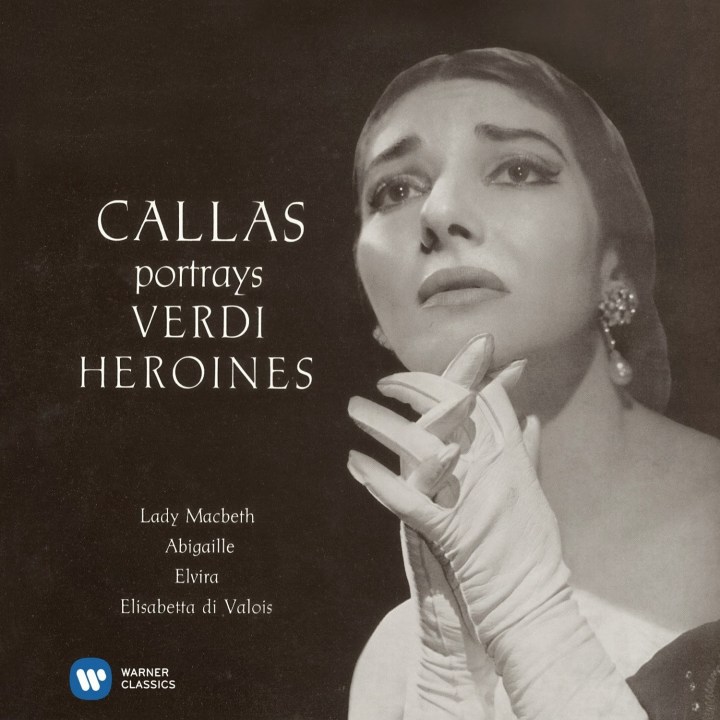
As a codicil to this, I would mention that my introduction to the opera was Callas’s magnificent recording of Tu che le vanita, an aria she obviously had a great deal of affection for, as she regularly programmed it into her concert repertoire. Callas only sang the role of Elisabeth once, at La Scala in 1954, and unfortunately none of the performances were recorded, but she makes more of the scene than anyone. It is grandly voiced, her breath control prodigious, but she effectively binds together its disparate elements. It is, in Lord Harewood’s words, a performance of utmost delicacy and beauty and I would recommend it to anyone who loves this opera.

81hy7szp5vl-_sl1500_


Callas’s Two Recordings of Un Ballo in Maschera

Amelia is a role that should probably have figured more in Callas’s career. She sang excerpts as a student, almost got to sing it at La Scala under Toscanini, but actually didn’t tackle the whole role until the recording she made under Antonino Votto in 1956, and after singing it in a lavish new production at La Scala the following year, never sang it again, though she returned to Amelia’s two big solos in the studio in the mid to late 1960s.

We are fortunate that the La Scala live performance was captured in sound, and, though sonically it is not as clear as that on the studio recording, it is one of the best preserved La Scala broadcasts. Common to both the studio and live sets are the La Scala forces, Eugenia Ratti’s Oscar, Callas and Di Stefano. Everything else is different, so which is best?

8f825371ac535bc78eff94d1e53e830c

First off we note that Gianandrea Gavazzeni on the live set is a much more positive presence than the somewhat prosaic Anotonino Votto. It is testament to his soloists that the Votto recording remains one of the most recommendable of studio sets 60 odd years after its release, but Gavazzeni’s performance is definitely more alive to the drama, and, from that point of view at least, the live performance is preferable. One should also note that the audience is a palpable (and vocal) presence, which some may find distracting. Personally I find it all part of the fun. Though one of the best of Callas’s La Scala broadcasts, it still tends to overload at climaxes. The studio set is in good mono sound.

2bc503e04787e8c5dbe1effaa7e42991

Let’s now take the other differences. What I miss most on the live recording is Gobbi’s Renato. Bastianini on the live set was a fine singer, and probably had what we consider more of a Verdi baritone sound, but he is not nearly as imaginative as Gobbi. Bastianini has the more beautiful voice. Gobbi creates the more interesting character. When Gobbi sings the single word “Amelia” at the moment his wife is revealed to be the Duke’s paramour, he invests it with a wealth of conflicting emotions far beyond the scope of the more forthright Bastianini, so, in this respect at least the studio version is preferable. The conspirators on the studio set are also slightly better at vocal word painting than their live counterparts, but the difference is marginal.

Both the Ulricas are excellent, and if I prefer the magnificent Simionato on the live set, my preference is again only marginal. Barbieri is also excellent on the studio set. Eugenia Ratti is a trifle shrill for my liking on both the studio and live sets.

As for Callas and Di Stefano, I’d find it hard to choose between their performances, as they are both in terrific voice on both sets. Di Stefano is not the most aristocratic of Riccardos, but he has bags of personality. In the live set, he can be guilty of playing to the gallery somewhat, but the audience give him a rapturous reception, so who can blame him?

Callas is in magnificent form on both sets, her singing full of incidental details most singers miss, her command of the role’s difficulties staggering. I often wonder why her voice sounds so much fuller and richer in this role than it does on the studio Aida, which was recorded in 1955, the year before the studio set and two years before the live version. Possibly because Amelia is a transitional role, requiring a full compliment of trills and vocal graces of which Callas was a mistress. However it also requires quite a large voice, which is why the vocal niceties of the role are usually glossed over or ignored. Listen to Callas sing in her first scene the arching phrase Consentimi o signore with a pure legato and refulgent tone, whilst perfectly executing the little turn at the end of the phrase that signifies Amelia’s nervous state. Note also that when Amelia mirrors Oscar’s trills in the Oath Scene, it is Callas, not Ratti, who demonstrates perfect trills. It is moments such as these that make Callas stand out from all others.

callas_amelia

A month after the La Scala prima, she was to sing Norma at the Rome Opera at a gala attended by the Italian president. She was unwell and tried to cancel, but, against her better instincts allowed herself to be persuaded by the management to do the performance, as, incredibly, they had not bothered to engage an understudy. During the performance, she felt her voice slipping away from her, and refused to carry on after Act I. This created one of the biggest scandals of her career. The Rome Opera refused to make any announcement on her behalf, and then compounded the problem by cancelling the rest of her contract, even though she had representations from doctors confirming her illness. The press had a field day, even fabricating footage of her supposedly rehearsing in good voice, though the footage was actually from a radio broadcast in 1955. She eventually sued the Rome Opera, a case that was settled entirely in her favour, but the case dragged on for years, and by the time she won the case, the damage done to her personally was irrevocable.

When she returned to La Scala later that year in a revival of Anna Bolena, the La Scala audience greeted her with icy silence, though, as was her wont, by the end of the first performance, she had scored a personal triumph even greater than at the prima the previous year. Unfortunately, when she returned to her villa with Meneghini, it was to find the walls and gates covered and daubed with dog excrement. Is it any wonder she began to doubt whether devoting her life to her art was really worth the trouble? Is it any wonder that the world of the glitterati, empty though it would turn out to be, should suddenly seem so attractive?

After the live La Scala Un Ballo in Maschera, there are of course some stupendous performances to come, the Dallas Medea, the London and Lisbon La Traviatas for instance, but we rarely hear her sing again with such security, and ease. Pure conjecture on my part of course, but I often wonder if that Rome cancellation, and the fall out from it, was when the pressure of performing, of always having to be the best really started to get to her.

Verdi’s Aida – a comparative review of 5 different recordings

I’m not quite sure how I’ve ended up with five different recordings of Verdi’s Aida. It’s not my favourite Verdi opera by a long chalk. Though it has magnificent music, the characters always seem more like human archetypes than flesh and blood people and I admire it rather than love it. Three of my recordings feature Callas, and, though I never think of Aida as a Callas role, she brings more meaning to it than most. Two of the Callas recordings (the ones that find her in the best voice) are live, but the sound on both is, at best tolerable, so the studio one is also a necessity, though the 1955 mono sound on that can’t hope to compare with the fabulous sound accorded the new Pappano set that was recorded in 2015.

Aida is of course the quintessential grand opera, famed throughout the world for extravagant stagings at the Arena di Verona, but actually, aside from the great Triumphal Scene, many of its scenes are played out in private, behind closed doors.

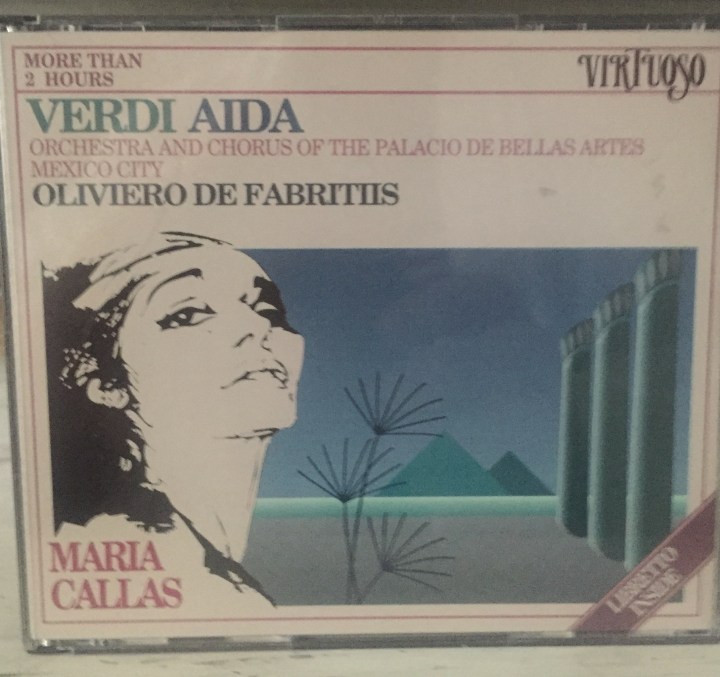
I started my journey with the famous live 1951 performance from Mexico, with Callas, Del Monaco, Dominguez and Taddei, conducted by Oliviero de Fabritiis.
20170209_120338515_iOS

Well let’s get over the caveats. The sound is pretty atrocious; it crumbles and distorts and the balances are all over the place. The voices come through reasonably well, but you do have to listen through the sound, as it were. But what a performance! And a memento of what was undoubtedly a thrilling evening in the theatre.

Callas is in superb voice throughout, and makes more of the somewhat placid character of Aida than any other singer I have come across. The power she was able to summon at this point in her career has to be heard to be believed, a power that goes right up to that unwritten, but absolutely stunning top Eb in alt in the Triumphal Scene, a phenomenal sound, that excites the Mexicans so much you can almost hear them rip the seats apart. Ritorna vincitor is absolutely thrilling, the duet with Dominguez’s Amneris also superb, but, as always with Callas, it is the Nile Scene that provokes her most moving singing.

O patria mia is not her best moment. She seems momentarily preoccupied with the exposed top C at the end, a solid if not exactly dolce as marked note, but once past the aria, she is on more congenial ground, and, with Taddei a worthy partner, alternately stentorian, implacable, insinuating and relentless, runs the gamut of emotions in an exciting Nile Scene. In the ensuing duet with Radames, she finds a wealth of colour as she seduces and cajoles him.

Del Monaco, as usual, is not particularly subtle, but there is the clarion compensation of the voice itself, and, like all the Radames Callas sings with in the three recordings, makes a better hero than lover.

Dominguez is very impressive. This was her debut in the role, and occasionally she overplays her hand, but her singing is very exciting and the Mexicans give her a rousing reception.

De Fabritiis conducts a dramatic, but not particularly subtle, version of the score. Nowhere does he find the delicacy of Karajan or Pappano, or even Serafin, but subtlety is not really what this performance is about.

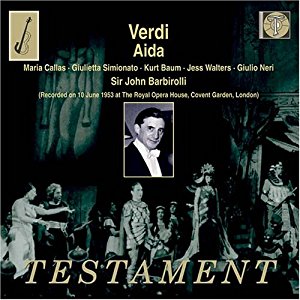
I next moved onto another live Callas performance; this one from Covent Garden in 1953, with Kurt Baum, Giulietta Simionato and Jess Walters, conducted by Sir John Barbirolli.
51M08G0ND7L._SY300_

Unfortunately Barbirolli turned out to be something of a disappointment. More subtle than De Fabritiis in Mexico admittedly, the performance lacks excitement and many of his tempi are unaccountably slow. Maybe his approach was more suited to the reserved Londoners than the excitable Mexicans, but the latter has a thrilling vitality completely missing in London.

There is no thrilling Eb in the Triumphal Scene, but Callas is still in superb voice. However Barbirolli’s slow tempi vitiate against some of her more dramatic moments. The I sacri numi section of Ritorna vincitor lacks the bite Callas usually brings to it, though she is able to spin out the final Numi pieta to even more heavenly lengths at Barbirolli’s slower tempo.

Baum is not quite as bad as his reputation, but he hardly ever phrases with distinction and he sobs and aspirates in what he evidently thought was the Italian manner. He also has a tendency to hold on to every top note as if his life depended on it, so that his duets, both with Callas and Simionato, become somewhat combative. That Callas manages to sing the final duet with the grace and delicacy she does is little short of miraculous, given Baum’s determination to bawl his way to his death.

Simionato, a more experienced Amneris than Dominguez, is magnificent and Barbirolli does finally wake up for her final scene, though you sense Simionato propelling the music forward and they almost become unstuck. Am I being picky, though, when I wonder if a little too much of Azucena creeps into Simionato’s interpretation? Amneris is after all a young princess, but more on that subject later.

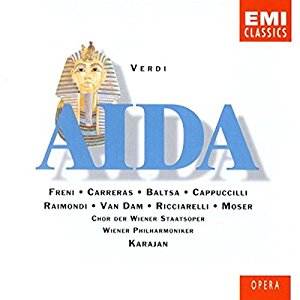
Somewhat disappointed with Barbirolli, I moved on to the second Karajan recording, recorded in Vienna with Mirella Freni, Jose Carreras, Agnes Baltsa and Piero Cappuccilli.
41V5vkkW6hL._SY300_

Karajan’s speeds in this, his second recording, of the opera are also spacious but much more vital. I’ve always found his first effort, with Tebaldi and Bergonzi, a little too self-consciously beautiful. This one is far more alive to the drama. It goes without saying that the Vienna Philharmonic Orchestra play superbly and the sound is excellent analogue stereo, though the voices are a little too recessed for my liking, and are often submerged by the orchestra. Given that Karajan uses lighter, more lyrical voices than we have become used to, this does seem a somewhat perverse decision.

If singers of  Radames tend to break down into the heroic and poetic, Carreras is more in the latter camp. His voice is doubtless a notch too small for the part, but it was still a beautiful instrument at that time, and his is the most attractive Celeste Aida we have heard so far, though he doesn’t manage the pianissimo top B at the end. He is at his best in the final duet, his piano singing a welcome relief from the overloud Del Monaco and Baum.

Freni is very attractive, if a little lacking in personality. Her voice might also be considered a little light for the role, but she never forces and sings within her means, phrasing sensitively and singing cleanly off the text. She does nothing wrong, but set next to Callas, she just isn’t that interesting.

The best of the soloists is, without doubt, Agnes Baltsa. Here at last we have a believably young, spoiled princess, a plausible rival for Aida. Seductively sexy and driven to distraction by jealousy, she is convincingly remorseful at the end of the opera, nor does she sound like an Azucena in disguise. She is superbly effective in her duets with Radames and Aida, and gorgeous in the first scene of Act II. She is my favourite of all the Amnerises.

Cappuccilli I find efficient rather than inspired. He doesn’t stamp his authority on the role of Amonasro the way Taddei and Gobbi do, though, as usual, his breath control is exemplary. In a star studded cast, both Ramfis and the King (Ruggero Raimondi and Jose Van Dam) are excellent and we even get the silken voiced Katia Ricciarelli in the role of the Priestess.

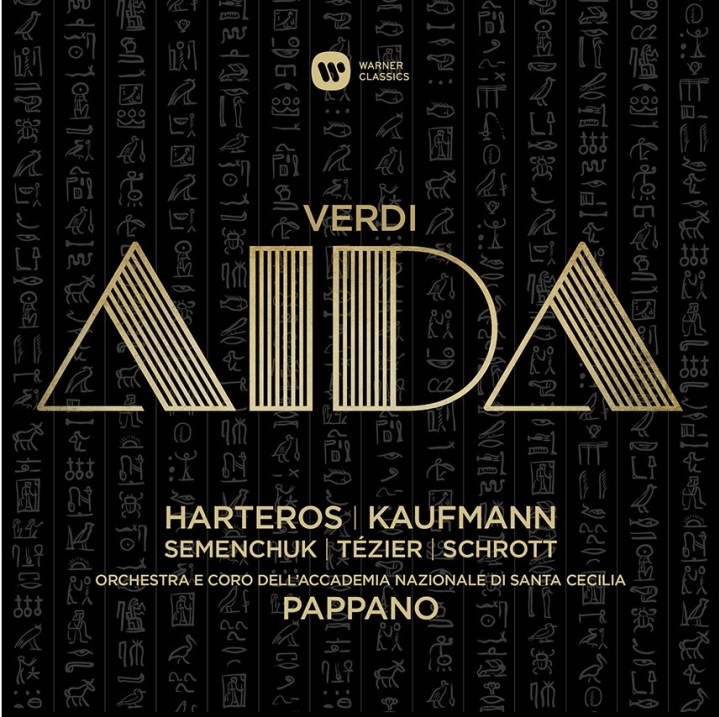
From Karajan I turned to the latest addition to the Aida discography. Recorded in the studio, a rarity for opera recordings these days, it is conducted by Antonio Pappano, and stars Anya Harteros, Jonas Kaufmann, Ekaterina Semenchuk and Ludovic Tezier with Orchestra and Chorus of the Saint Cecilia Academy.
cd-ver_kauf_pappano_2

As one might expect, the sound in this new digital recording is superb, much more naturally balanced than the Karajan, with the voices coming through beautifully. Pappano exerts a superb grip on the opera, and his might just be the best conducted version of the lot, in the best lyric Italian tradition of conductors like Serafin, more of whom below.

Best of the soloists is definitely Jonas Kaufmann, who might just be the best Radames ever to be recorded. He has both the heroics and the poetry (a deliciously ppp close to Celeste Aida) and is vocally the equal of all that Verdi throws at him. Throughout he phrases with sensitivity and imagination, and achieves miracles of grace in the final duet, with some genuine dolce singing. This is a great performance.

Harteros is in the Freni mould, vocally not quite as secure, but a little more interesting. She goes for a dolce top C in O patria mia, but it is a little shaky. She does not erase memories of Caballe (on the Muti recording) in the same music, but hers is nevertheless an attractive performance.

Semenchuk I don’t like at all. She has a typically vibrant Eastern European voice, with a tendency to be squally. She reminded me most of Elena Obrasztsova and sounds a good deal older than she looks in the photographs accompanying the recording. All the other Amnerises under consideration bring something more specific to the role, where she is more generalised, and consequently the big Act IV scene lacks tension.

If not quite in the Gobbi or Taddei class, when it comes to verbal acuity, Ludovic Tezier is a fine Amonasro and together he and Harteros, with Pappano’s inestimable help, deliver a fine Nile Duet. The basses are not quite in the same class as those on Karajan and Serafin.

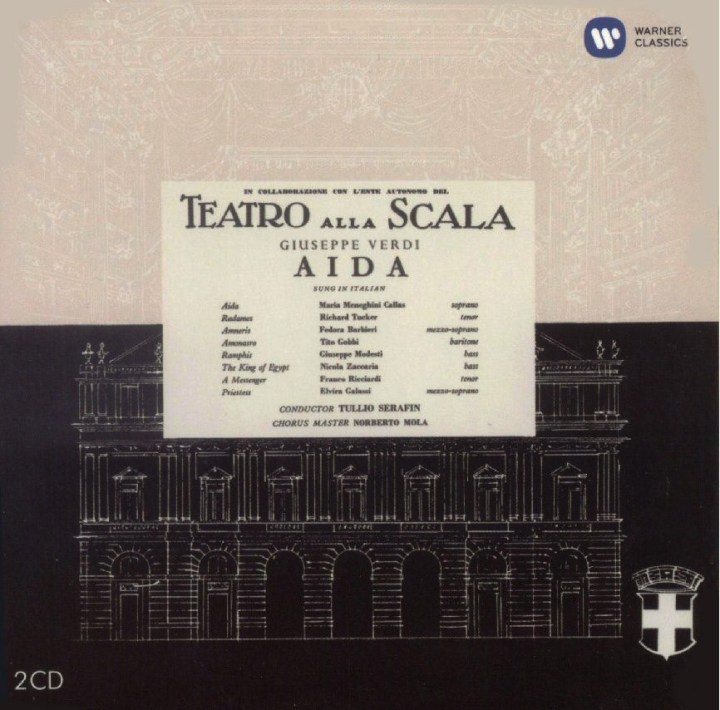
Which brings me to Serafin and Callas’s studio recording of the opera.
cd_callas_aida_1_1

By the time this recording was made in 1955, Callas had given up the role of Aida, singing her last performances in Verona just a few months after the 1953 Covent Garden performances under Barbirolli.

Callas’s voice has thinned out quite a bit, and she sings a much more refined performance of the role, perhaps more in line with conventional interpretations, except of course that Callas can never be conventional. When Tebaldi sings Numi pieta at the end of Ritorna vincitor, she sings a pure lyrical line and it’s very pretty, but Callas reminds us that she is asking the Gods to take pity on her suffering. Time and time again she will illuminate a phrase here, a word there. The duet with Amneris abounds with contrast as the two women play off against each other, but it is the duet with Amonasro in the Nile Scene that holds the heart of this performance, the scene where Aida must choose country before love. Gobbi is at his incisive best as Amonasro, and I doubt I will ever hear this duet done better. Note too how eloquently Serafin makes the strings weep when Aida finally gives in, first with the climbing phrase on the cellos and then in the way he accentuates those stabbing violin figures, when Callas sings O patria, patria quanto mi costi. This is the real stuff of drama.

Tucker isn’t in Callas and Gobbi’s class I’m afraid. He has the right sound for the role, virile and forthright, but for every phrase delivered with just the right degree of slancio, there is another ruined by his tendency to aspirate and sob.

Barbieri is very fine, in the Simionato mould, and, with Serafin letting go a veritable storm in the orchestra, produces a thrillingly dramatic Act IV scena.

Both basses (Giuseppe Modesti as Ramfis, and especially Nicola Zaccaria as the King) are splendid, and Serafin, as you might have gathered, conducts a wonderfully dramatic version of the score, in the best Italian tradition.

So conclusions then. No doubt there will be some wondering why I didn’t include Solti and Muti. Well, Solti I’ve never taken to. I just can’t stand his bombastic, un-Italianate, unlyrical conducting, good though his cast is (though I’ve never quite joined in the general enthusiasm for Gorr’s Amneris). I know the Muti but don’t own it. Until Pappano came along I usually used to recommend it as the safest bet, and Caballe gives one of her finest performances as Aida, and it is still, if memory serves me correctly, worth considering.

From the five under consideration then, I’d say De Fabritiis in Mexico is essential listening, if only as a memento of a historical occasion and a truly thrilling evening in the theatre. It could never be a library version though because of the intransigent sound. From the point of view of a library choice, then the new Pappano would probably be the safest bet, even though it has the weakest Amneris. Forced to choose but one recording, though, I’d go for Serafin, with a rather regretful glance over my shoulder towards Baltsa’s Amneris. The mono sound is sometimes a bit boxy and not a patch on either Karajan or Pappano, but its studio acoustic is a good deal better than either De Fabritiis or Barbirolli, who, in any case, surprisingly trails in last place in this survey, despite the presence of both Callas and Simionato.

Callas’s vocal splendour is best caught in Mexico in 1951, but, the sound is a problem, so it’s Serafin for me, if only for the Amonasro/Aida Nile duet, the most thrilling on all these sets.



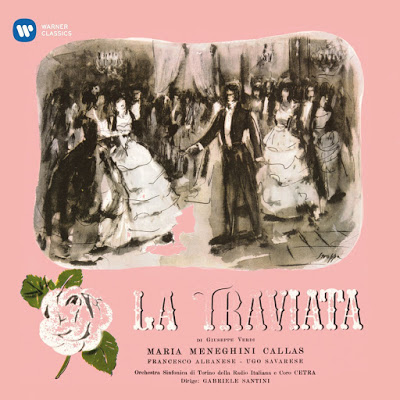
Callas’s Studio La Traviata

81bx7aswvql-_sl1500_

Recorded September 1953, Auditorium RAI, Turin

Producer & Balance Engineer: Unknown

In one sense it’s a shame this Cetra recording of La Traviata was ever made. Had it not been, Callas would have been the Violetta on the Serafin La Scala recording with Di Stefano and Gobbi instead of Stella. Her contract stipulated that she could not re-record the role for 5 years. Legge presumably felt he couldn’t wait any longer to add a recording of such a central Italian classic to his catalogue.

Whatever the reasons, Callas was furious with Legge for engaging Stella and with Serafin for conducting it without her. For a while she and Serafin didn’t speak and he is notably absent from her recording schedule for the following year, 1956.

In retrospect maybe Legge should have waited till Callas was free to record Violetta again in 1958, the year of Callas’s most searchingly complex stage performances in the role (Lisbon and London). Had he done so EMI would no doubt have had the best-selling La Traviata of all time. As it is, the Stella recording was never a big seller, and only received a CD issue, when Testament unearthed it some years ago. Bad call, Walter.

Of all the roles in Callas’s repertoire, it was Violetta that went through the greatest transformation from her debut in the role in 1950, through the famous Visconti production at La Scala in 1955 to those last, movingly poetic performances in 1958 in Lisbon and London. It was the role she sang most often after Norma, and the role she most often considered for a comeback. There were discussions of a recording for EMI even as late as 1969, when, vocally, it would have been out of the question. Callas considered it very much her role, that of the woman who gave up everything for love. Maybe there was a parallel here with her own life. Didn’t she give up everything for love?

This recording of La Traviata was the first one I owned and the first of her Violettas I heard. It wasn’t that easy to get hold of, and my copy was a reissue on Pye Ember. I had no idea of the existence of any of the live recordings, and, had I never heard any of them, I would no doubt have been happy enough with her Violetta, as recorded here, though not necessarily with its surroundings. Compared to her EMI releases, this is a decidedly provincial affair. Santini’s conducting is leaden and neither Albanese as Alfredo nor Savarese as Germont are in the first rank. But at least we have Callas, and, if not as subtle or as heart-rending as she was to become, she is still a great Violetta, and still better than anyone else in the role.

The demands of the first act are more easily encompassed here than they were to become in later performances, though the top Cs in Sempre libera seem slightly tense, as does the concluding Eb. Still it’s freer and more open here than it is in any of the later sets and scale passages are wonderfully fluid. She is tremendously affecting in the duet with Germont, and fails here only in comparison to her later self. Other than this, her traversal of the role is not as complete as it is later to become. There are plenty of affecting moments to be sure, some in the duet with Germont, (the desperation with which she sings Non sapete, for instance) and especially the farewell to Alfredo with the lead up to Amami, Alfredo which seethes with that intensity so peculiar to her. In the second scene the great arching phrase, Che fia? Morir mi sento is too much of an outward sentiment as is Alfredo, Alfredo, di questo core, beautifully though they are sung.

Act III has its moments too. Addio del passato ends on a much more secure pianissimo high A than we get at Covent Garden, but how much more moving is that thread of tone with which she ends the aria in London. Parigi o cara is saddled with  Santini’s leaden conducting, but Gran Dio morir si giovane strikes the right note of despair and Prendi quest’e l’immagine is eloquently moving, if not so eloquent as it was to become.

In short, if no other recording of Callas as Violetta existed, this would be my first choice for the opera. But the fact of the matter is that by 1958, she had refined her interpretation so much that this 1953 performance seems unfinished beside it, almost like a rehearsal for the main event.

Furthermore, in both Lisbon and London, she has a better supporting cast and conductors, and the sound, in London at least, is excellent. I was pleased to hear this performance again, and delighted to have it once more in my collection. Callas’s Violetta, in any of its incarnations is a major achievement after all, but I know it is still to Covent Garden that I will most often return.

I might just add that Warner have done wonders with the sound compared to what I remember of my rather muddy Pye Ember LP version.

Callas in La Forza del Destino

813aggbmzzl-_sl1500_

Recorded 19-21, 23-25, 27 August 1954, Teatro alla Scala, Milan

Producer: Walter Legge, Balance Engineer: Robert Beckett

Oh my, oh my, oh my! Having spent an afternoon with this recording, I emerged thinking it was the greatest, most moving of Verdi’s operas, that this was its greatest recording, and that Leonora was Callas’s greatest Verdi role, to paraphrase the late John Steane’s review of the Callas Madama Butterfly.

Having now slightly recovered from its emotional impact, I am of course reminded of Callas’s Violetta, the Trovatore Leonora and Amelia, but, I would still place this recording very high in the Callas canon.

Leonora was actually Callas’s first Verdi role. She sang it in 1948 in Trieste, then in Ravenna in 1954 a few months before making this recording, but no more after that.

Verdi’s two Leonoras have some marked similarities and a singer who is successful in one will often be successful in the other (Leontyne Price springs to mind). On the other hand, the Forza role lies quite a bit lower, which is no doubt why Tebaldi is more comfortable in it than she is in Il Trovatore, which she never sang on stage, only on record. If the Trovatore Leonora’s bel canto roots are often glossed over, they are usually completely ignored in La Forza Del Destino, particularly in Act I, which requires a lot more vocal dexterity than it usually gets.

Listen to the aria Me pellegrina ed orfana and note how Callas marks the semi-quaver rests at Ti lascia ahime whilst still maintaining her impeccable legato, observing the downward portamento on the word sorte, the whole phrase sung in a single sweep. As usual the music is rendered with uncanny accuracy, as it is when she brilliantly articulates dotted notes in the cabaletta of the following duet with Alvaro (only too noticeable when Tucker comes galumphing after her, aspirating and puffing in an attempt to keep up).

But, as usual with Callas, she goes beyond accurate observation of the score to reveal the meaning behind the notes. Her very first words (oh angosica) tell us of the conflict in Leonora’s heart, her voice suffused with melancholy. Other sopranos may have given us a more beautifully poised sustained pianissimo top Bb in Pace pace, or drawn a firmer line in La vergine degli angeli, and those for whom such vocal niceties are paramount should probably look elsewhere, but that would be a pity for they would miss, according to Lord Harewood in Opera on Record,

an unparalleled musical sensibility and imagination, subtle changes of tonal weight through the wonderfully shaped set-pieces, and a grasp of the musico-dramatic picture which is unique.

Central to the role, and the opera, is the monastery scene, starting with the glorious Madre, pietosa vergine and finishing with La vergine degli angeli. This whole section, with Rossi-Lemeni a wonderfully sympathetic, if woolly-voiced Padre Guardiano, is a locus classicus of Callas’s art, her voice responsive to every conflicting emotion in Leonora’s heart, her darkly plangent tone absolutely perfect for the character. I doubt you will ever hear it more movingly or truthfully conveyed.

For the rest, Tucker is a strong, virile presence, but often mars his singing with unstylish aspirates and sobs, as if he is trying to do an impression of an Italian tenor. Tagliabue was in his late 50s and sounds it, but Capecchi makes an excellent Melitone and Clabassi a firm voiced (far firmer than Rossi-Lemeni) Calatrava. Elena Nicolai makes little of the somewhat thankless character of Preziosilla, but she is at least more than adequate.

And Serafin is at his very best, dramatically incisive (just listen to those stabbing chords when Leonora is mortally wounded in the last act) and sweepingly lyrical in the best Italian tradition.

The Warner reissue sounds very good to me, and gains on my previous version in containing the whole of Acts I and II on the first disc, which means there is no break in Leonora’s great Act II scena, leaving Act III and IV with a disc each.

A superb set, and one of Callas’s greatest recordings. Too bad she never sang the role again.

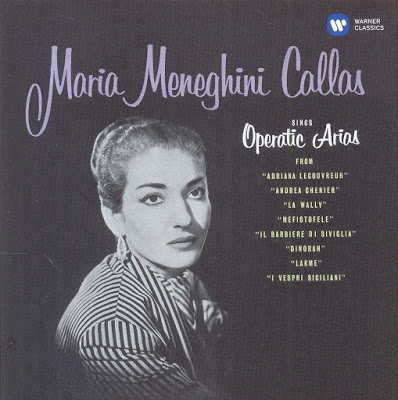
Maria Meneghini Callas Sings Operatic Arias

91epg5zapfl-_sl1465_

Recorded 17-18, 20-21 September 1954, Watford Town Hall, London

Producer: Walter Legge, Balance Engineer: Robert Beckett

This recital, the second Callas recorded for EMI, was designed to show off her versatility, so we get one side of verismo, and one of coloratura, with Boito’s L’altra notte from Mefistofele bridging the gap. It caused quite a stir at the time. The coloratura side was of material more associated with singers like Galli-Curci and Pagliughi; the verismo items more likely to be the preserve of Ponselle and Muzio, or Callas’s contemporary, Tebaldi. There is no doubt that Tebaldi could not have attempted any of the coloratura items on the disc and the gauntlet was effectively laid down. The range too is phenomenal, and takes her up to a high E natural (in the Vespri aria, and the Bell Song), a note unthinkable from a soprano who could bring the power she does to an aria like La mamma morta.

Of the operas represented, Callas had only sung Mefistofele and I Vespri Siciliani on stage at that time, though she would go on to sing Rosina in Il Barbiere di Siviglia (and make a very successful studio recording) and Maddalena in Andrea Chenier. But, as is her wont, even in isolation, Callas is able to enter fully into the character and sound world of each character that she is singing.

She starts with two of Adrianna’s solos from Adrianna Lecouvreur, a role that would no doubt have suited her dramatic gifts down to the ground, though, truth to tell, the opera is pretty tawdry stuff. I have the recording with Scotto and Domingo, who make the very best case for it, but I still have little time for it. That said, Callas is brilliant at conveying Adrianna’s humility in the first aria, her pain and sadness in the second. Her recording of La mamma morta is well known, and became quite a hit after it was featured in the Tom Hanks Oscar winning movie Philadelphia. Notable is the way Callas’s tone colour matches that of the cello in the opening bars, and the way she carefully charts its mounting rapture. Some may prefer a richer, fuller sound. None have sung it with such intensity.

Ebben ne andro lontana, a glorious performances, is full of aching loneliness, its climax solid as a rock, but the prize of this first side is without doubt the crepuscular beauty of Margherita’s L’altra notte from Boito’s Mefistofele, a sort of mini mad scene, which Callas fills with a wealth of colour and imagination. One notes the blank, colourless tone at L’aura e fredda, even more drained and hopeless on its repeat, the baleful sound of her chest voice on E la mesta anima mia; and does any other singer so accurately encompass those coloratura flights of fancy as her soul takes wing on Vola, vola? This is the stuff of genius.

The second side also has its attractions. Rosina’s Una voce poco fa is a mite slower than it was to become in the studio set, but Callas’s ideas on the character are perfectly formed, and she already uses that explosive Ma to underline Rosina’s less than docile temperament. Her runs, scales and fioriture are as elastic as ever, and the little turns on the final faro giocar have to be heard to be believed.

The Dinorah aria is a rather empty piece and I sometimes wonder why she even bothered with it. There are some magical echo effects and her singing is wonderfully fleet and accurate, but it’s not a favourite of mine. I’m not a big fan of the Bell Song either, to be honest. Callas lavishes possibly more attention on it than it’s worth, but in so doing at least makes it a little more interesting than the birdlike warblings we usually get. The opening has a mesmeric , almost improvisational air about it, and the bell imitations are clear and true. I remember once playing this track at a friend’s place one summer evening, the window open, while a bird (I have no idea what it was) sang for all its worth on a branch just outside.  It was as if the bird was singing in response. The high E she sings at its climax is clean as a whistle, but it does sound like the very extreme of her range. Best of all the coloratura items is her breezy, elegantly sung Merce, dilette amiche from Verdi’s I Vespri Siciliani, which is lovely in every way and ends on another epic high E.

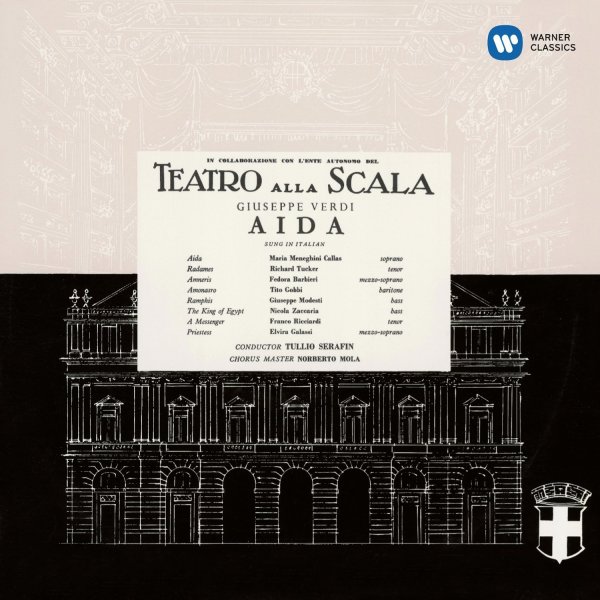
Callas’s Studio Aida

81eycwhmfol-_sl1500_

Recorded 10-12, 16-20, 23-24 August 1955, Teatro alla Scala, Milan

Producer: Walter Legge, Balance Engineer: Robert Beckett

I’m going to make a confession. Aida is not my favourite Verdi opera. I find it hard to identify with any of the characters, and they usually emerge as representatives rather than real people. It is full of great music, but I have to admit I admire it rather than love it. Nor would the role of Aida be considered a natural for Callas, though she sang it, with a great deal of success, quite often between her debut in the role in 1948 and her last stage appearances in it in 1953, this 1955 recording being the last time she would ever sing the complete role, though she returned to the aria Ritorna vincitor and the Nile duet with Radames (with Corelli) late in her career in the mid 1960s. Interestingly enough, though one doesn’t think of Aida as a Callas role, when the now defunct International Opera Collector magazine conducted a poll of its readers to assemble the ideal Aida cast, Callas was one of the favourites, alongside such famous Aidas as Ponselle and Leontyne Price.

The reason for this can only be that she brings the rather placid character of Aida to life like no other. Though she may not have the sweetness of timbre one might ideally want from an Aida, there are plenty of other rewards. She takes a little while to settle down in the first trio, but Ritorna vincitor is alive with meaning and contrast. Just listen to the way she spits out her hatred for del egizii coorti, the power with which she exhorts her compatriots to destroy the legions, with particular emphasis on the word struggete, the complete change of colour at Ah! Sventurata che dissi, the tenderness with which she sings of her love for Radames and the pain and desperation in her voice at Da piu crudeli angosce un core affranto; the last imprecation to the Gods sung with her tone drenched in sorrow, her legato as usual impeccable. Aida’s cruel predicament is set before us in this one aria with a psychological penetration second to none.

There are wondrous little details in the ensuing duet with Amneris too, like the touch of pride that enters her tone at Mia rivale! Ebben sia pure, quickly withdrawn when she realises she could easily give away her true identity.

But it is the Nile Scene that makes the greatest impression in this set. It starts with Aida’s O patria mia, which some commentators have found to be the weak link in her portrayal, but she yearns most wistfully, floating the tone wonderfully at O freschi valli. She always had problems with the ascent to top C, but it is a lot more solid here than she is often given credit for. It may not be dolce as marked by Verdi, but I don’t hear the wobble that so many commentators claim to have problems with. The following duet is magnificent music and magnificently sung by both Callas and Gobbi, and the finest realisation of it on disc. I doubt any singers have come close to them in the way they create drama in sound, and Serafin is at his very best in this scene too. I found it impossible to hold back the tears as Callas launched into that glorious tune at O patria, patria, quanto mi costi, and how brilliantly Serafin makes the violins weep with her.

The duet with Radames is hardly less fine, though Tucker can be a bit graceless at times. Yet again, Callas brings out a wealth of detail, like the insinuating way she sings Pur, se tu m’ami with that slight portamento on the word m’ami. She plays Radames brilliantly here, wonderfully seductive when she sings La tra foreste vergini. This is operatic singing on the highest level. In the last act too, she has something to offer, singing with grace and accuracy the difficult fioriture of Vedi? Di morte l’angelo.

As already mentioned Gobbi is superb as the implacable Amonasro, masculine and forthright of tone,  though still able to inject some tenderness into his duet with Aida. Tucker has the right heroic timbre for the role of Radames, but he can be a bit lachrymose, and tends to aspirate and sob, as if mimicking the mannerisms of a true Italian tenor. Barbieri is more subtle than I remember her, and provides a barnstorming Amneris, though I have come to prefer Baltsa on Karajan’s second recording, who reminds us that Amneris is a young princess and a valid rival for Aida.

Serafin is on top form, conducting in the best Italian tradition, lyrical and dramatic in equal measure. There may not be any great surprises or revelations, but his deep understanding of the music and its style is its own reward.

All in all, it was a great surprise to re-discover this set, to enjoy the opera more than I thought I would, and to find myself appreciating Callas’s very individual take on the role

Callas and Gobbi in Rigoletto

91km0olq4ul-_sl1466_

Recorded 3-16 September, 1955, Teatro alla Scala, Milan

Producer: Walter Legge, Balance Engineer: Robert Beckett

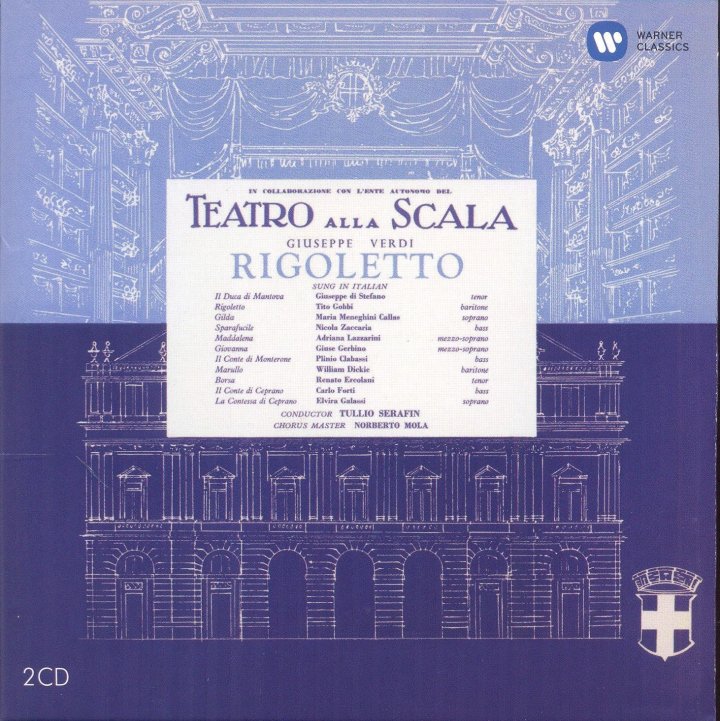
Gilda is another role one would not readily associate with Callas. She did sing it on stage for two performances in Mexico in 1952, but, unhappy with her performance, never sang it again except for this recording made in 1955. The Mexico performances are a bit of a mess and sound under-rehearsed, but Callas is superb, and one notes how it is often she who keeps the ensemble together, even though she was so blind on stage she could never see the conductor. It is actually something of a tragedy that she didn’t sing the role more often. If she had, then people may have rethought the role of Gilda, as they did that of Lucia. It is usually sung by a light voiced lyric coloratura, who manages Caro nome well enough, but can’t really muster the power to dominate the ensembles in the last two acts, as she should. It’s something I’ve noticed myself. Not so long ago I saw the opera at Covent Garden with Aleksandra Kurzak as Gilda. She looked ideal, convincingly acted the ingénue, sang a wonderful Caro nome, but tended to be drowned out in the final act, especially in the storm scene.

No problem there for Callas of course, but the miracle is not that she can sing out with a but more power when needed, but that she remains in vocal character when she does. She doesn’t suddenly sound like Norma or Tosca, but continues to think upwards in a voice somehow cleansed of all those heavier associations.

I often think it odd that when people talk about Verdi sopranos, it is the voices of Tebaldi and Leontyne Price they have in mind, but could either of those sopranos have sung Gilda, or Lady Macbeth, or any of Verdi’s early roles? Tebaldi may have sung Violetta, but it wasn’t a natural for her, the coloratura in Sempre libera smudged (and transposed down in live performances). Nor did Tebaldi sing the Trovatore Leonora on stage, as the role lay too high for her. Price did of course, and she was an appreciable Leonora, though she doesn’t sing with the same degree of accuracy as Callas. Callas, on the other hand, sang with equal success Gilda and Lady Macbeth, Abigaille and Elisabeth de Valois, Elena and Aida, both Leonoras, Amelia and Violetta, all on stage not just in the studio, and one regrets that she didn’t get the chance to sing more of Verdi’s early operas. What a superb Luisa Miller she might have made, or Odabella in Attila, Griselda in I Lombardi, or virtually any of those early Verdi heroines. Maybe, after all, it is Callas who is the ideal Verdi soprano.

But back to this Rigoletto, in which Callas yet again completely inhabits an uncharacteristic role. In the first two acts, she presents a shy, innocent young girl, with a touch of wilfulness that explains her disobedience to her father. In the duet with Rigoletto, we feel the warmth of her love for him, and in the one with the Duke, the shy young girl awakening to passion. You can almost see her blushes when the Duke first appears to her. She was asked once why the single word uscitene resounded with such a strange colour. “Because Gilda says go, but wants to say stay,” was her simple answer. Actors might be used to such psychoogical distinctions but it is rare indeed to find it in singers. Caro nome is not just a coloratura showpiece, but a dreamy reverie, and ends on a perfect rapturous trill as she exits the stage. In Act III her voice takes on more colour (Ah, l’onta, padre mio) and it is Tutte le feste that becomes the focal point of her performance, her voice rising with power to the climax (nell’ansia piu crudel) as  she describes the horror of what happened, and note how at the opening she matches her tone to that of the cor anglais introduction. She has the power to ride the orchestra in the storm scene in the last act, and the final duet with Gobbi is unbelievably touching. As usual her legato is superb, phrases prodigious in length, shaped and spun out like a master violinist. It is a great pity she didn’t sing Gilda more often, for it is a considerable achievement.

There are other reasons to treasure this performance of course, chief among them being Gobbi’s superbly characterful, endlessly fascinating and heartrending performance of the title role. Gobbi and Callas always had a striking empathy, and the three duets for father and daughter in this opera, gave that relationship full rein. Some have remarked that Gobbi’s voice was not a true Verdi baritone (whatever that means), but, like Callas, he was successful in a range of different Verdi baritone roles, his most famous probably being Rigoletto. Who has ever matched Gobbi in tonal variety and vocal colour, and psychological complexity? None that I can think of. Pari siamo is superbly introspective and then in Cortigiani! he lashes out like a wounded animal, before breaking down in accents that are pathetically heartrending. To those who say he could not sing with beauty of tone, I would say there are plenty of moments in the score which refute that assertion,  the Piangi section of the Act II duet, where he spins out a pure legato which is both musical and shatteringly moving, being a case in point.

Di Stefano may not be quite in their class, and there are certainly more elegant Dukes on record, but he sings with enormous face and charm. One can imagine why Gilda would be captivated by this Duke. He can be musically inexact (some of the tricky rhythms in Act I go a bit awry), but his voice is in fine shape, and he sounds both charming and sexy, which is as it should be. Nor does he play down the casual cruelty that lies at the heart of his character. I’d say it’s one of his best recordings.

Serafin’s conducting is in the best Italian tradition, both lyrical and dramatically incisive. He is totally at one with Callas and Gobbi in the duets, giving them ample time to make their dramatic points, but whips up quite a storm in the finale to Act II.

The sound is truthful and clear, the voices wonderfully present, and, as in all the Warner sets so far, sounds excellent on my system.

Years ago I remember an acquaintance, not really a voice fan (or a major opera fan, for that matter), asking me which recording of Rigoletto I recommended. He had the Giulini, and quite enjoyed it, but thought there was something missing. I warned him that some were allergic to Callas’s voice, but lent him my set anyway. A couple of days later he excitedly returned it to me, having ordered the recording for himself. “Fantastic,” he said, “Exactly what I was looking for. Suddenly the whole opera came to life.” Well you can’t ask for much more than that.

The Callas Karajan Il Trovatore

91l6fuq3isl-_sl1500_

Recorded 3-4, 6-9 August 1956, Teatro alla Scala, Milan

Producer: Walter Legge, Balance Engineer: Robert Beckett

Though Callas, even in her early days, often courted controversy, there was very little disagreement about her Leonora, which seems to have been universally acclaimed from day one. Schwarzkopf called it “a miracle”, Bjoerling “perfection” and Lauri- Volpi “glorious”. Il Trovatore was of course a staple of the repertoire, but years of lazy singing by less technically accomplished sopranos had removed much of Leonora’s filigree. When Callas sang the role, critics said it was as if an old master had lovingly been restored to its original glory. Writing of her performance of the role in London in 1953, Cecil Smith in Opera wrote,

For once we heard the trills fully executed the scales and arpeggios tonally full-bodied but rhythmically bouncing and alert, the portamentos and long-breathed phrases fully supported and exquisitely inflected.

Used to enlisting Serafin’s support with a new role, she had had to prepare it alone for her first Leonoras in Mexico,  as she would be singing it under a different conductor (Guido Picco). A recording of that performance in 1950 shows that most of Callas’s ideas on the role were her own, and her singing is wonderfully accomplished, though she would eschew some of the interpolated high notes in later performances of the opera. She subsequently sang the role in Naples (under Serafin), at La Scala, in London, in Verona, in Rome and in Chicago (with Bjoerling), and finally for this recording in 1956.

By 1956 Callas’s voice is not what it was even in 1953, when she sang the role at La Scala, and high notes can be strident, but her voice in the middle and lower registers still has a dark beauty absolutely apt for the role. Her breath control is prodigious, her legato superb and throughout she phrases like a violinist rather than a vocalist.  Not only are the trills, scales and arpeggios fully executed, as Cecil Smith points out, but they are bound into the vocal line, becoming expression marks rather than just trills or scales. Even with a great singer, like Ponselle, the cadenza at the end of D’amor sul’ali rosee can seem as if it is just tacked on. With Callas, it becomes the natural conclusion of the aria, a musical expression of Leonora’s voice flying out to Manrico. In this recording we are also vouchsafed the cabaletta after the Miserere, (Tu vedrai) which was usually cut before then, presumably because most lyric-dramatic sopranos would find it beyond their capabilities. Callas is magnificent. Musically, I have no doubt that Leonora was one of her greatest achievements.

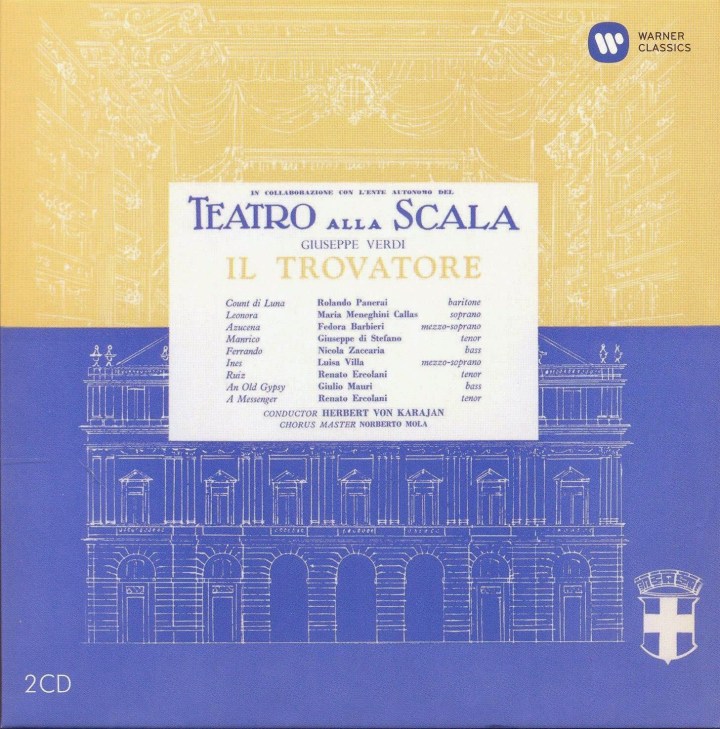
The rest of the cast are probably as good as could be assembled at the time. Di Stefano almost convinces his voice is right for the role, though, truth to tell, it’s a notch too small. He doesn’t really have the heroics for Di quella pira, but he is always alive to the drama, always sings off the words. Barbieri is a terrific Azucena, Panerai an intensely obsessive Di Luna, and Zaccaria a sonorous Ferrando.

But if Callas is the star vocalist, then Karajan is the second star of the recording. I’d even go so far as to say this is one of his very best opera recordings. His conducting is thrilling and one is constantly amazed at the many felicities he brings out in the orchestral colour, like the sighing two note violin phrases in Condotta ell’era in ceppi, or the beautifully elegant string tune that underscores Ferrando’s questioning of Azucena in Act III, cleverly noting its kinship with Condotta ell’era in ceppi. His pacing is brilliant, rhythms always alert and beautifully sprung, but suitably spacious and long-breathed in Leonora’s glorious arias. Nor does he shy away from the score’s occasional rude vigour. It is a considerable achievement.

My LP pressing was in the fake stereo re-issue, and I had the 1997 Callas Edition on CD. This Warner re-mastering sounds a good deal better than both, with plenty of space round the voices and plenty of detail coming through from the orchestra.

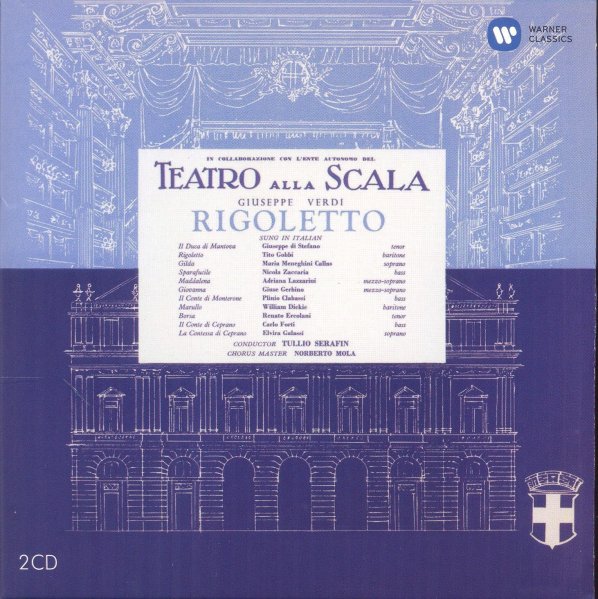
A classic Il Trovatore then, which has stood the test of time, and has held its place amongst the best. In all but recorded sound, I would prefer it to both the Mehta with Leontyne Price and Domingo and the Giulini with Plowright and Domingo again, though Giulini does have possibly the most interesting Azucena of them all in Brigitte Fassbaender. Callas and Karajan, on those rare occasions they worked together, are a hard act to follow.