José Carreras – Canciones españolas

r-10366837-1583783292-8089.jpeg

Falla: Siete canciones populares españolas
Mompou: Combat deil somni
Ginastera: Canción al árbol del olvido
Guastavino: La rosa y el sauce
Guastavino: Se equivicó la paloma
Obradors: Corazón, porqué pásáis
Obradors: Del cabello más sutil
Turnina: Poema en forma de canciónes

It certainly makes a change to hear Falla’s Siete canciones populares españolas sung by a man, and why not? It is not so unusual to have a father sing a lullaby to his son, and drovers are usually men, aren’t they? Though I might ultimately prefer to hear the cycle sung by Victoria De Los Angeles or Conchita Supervia, I rather enjoyed Carreras’s sensitive performance.

The Mompou cycle, also a favourite of De Los Angeles, also goes well and I especially enjoyed his gently melancholic version of the lovely Damunt de tu nomes los flors. Elsewhere he can be caressingly sensitive or ebulliently passionate, as in the Turina Poema, which brings the recital to a splendidly forthright close.

He is miked fairly close and his diction so precise you can almost taste the words. Martin Katz makes a terrific collaborator rather than accompanist, some of the piano parts being quite fiendishly difficult.

A really enjoyable disc.

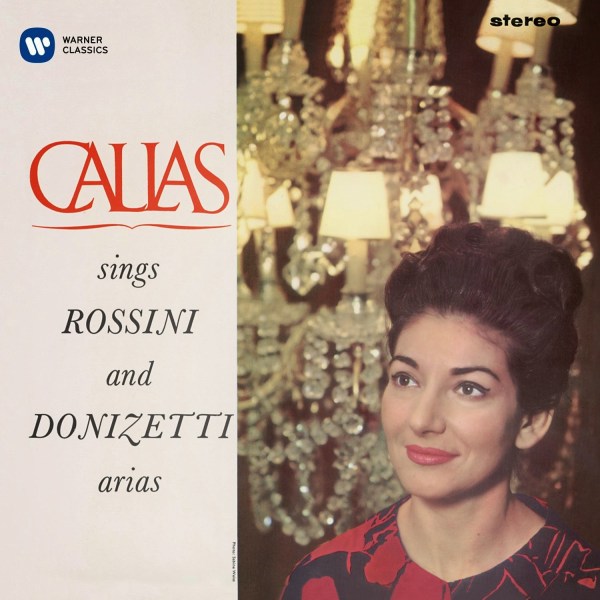
Callas sings Rossini & Donizetti – Revisited

81mslzncryl-_sl1500_

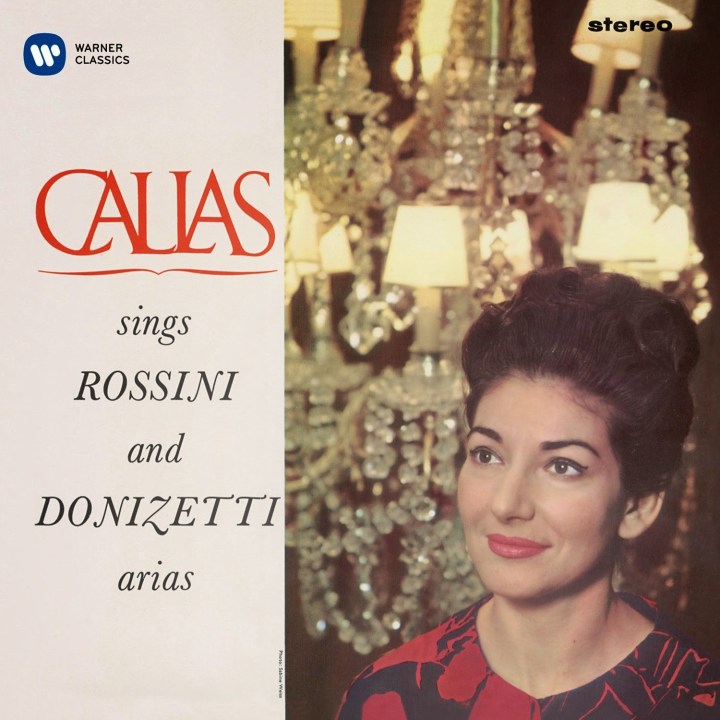
I confess that when it comes to some of these late Callas recitals I have equivocal feelings and my reactions to them can vary from one listen to another.

On the one hand it cannot be denied that this is a voice under stress. Notes above the stave often emerge stridently, or she will tread so carefully that they seem just touched in rather than sung with confidence. This diffidence is more evident here than in the contemporaneous Verdi recital I reviewed a couple of months ago, possibly because Rossini’s and Donizetti’s orchestra offers her less solid support than Verdi’s. Whatever the reason there is a pervading air of caution throughout this short disc. She is more comfortable in her middle and lower range, though even here vowels are sometimes discoloured. There is a world of difference between her defiantly triumphant singing of Rossini’s Armida in 1952 and what we hear in these discs, though only thirteen years separates them.

Taking all these problems into consideration, what is left? Well, her superb musicality, her unparalled sense of style and her ability to get to the heart of all these various arias, not least the way she finds a different voice character for each one, though she never sang any of these roles on stage.

The recital starts with Cenerentola’s final aria, which suits her quite well, the tessitura being a little bit lower. Aside from a couple of strident top notes at the end, it is also vocally quite fine, the scale passages sung smoothly and accurately (no sign of an aspirate here). Though the aria is the summation of the subtitle of the opera (la bonta in trionfo), Callas does not let us forget she was born to “sorrow and weeping”. Is is just my imagination that I hear in her figlia, sorella, amica, tutto trovate in me a reproof to her sisters at the way they treated her.? Those who like their Cenerentolas to be more charming and coquettish might find her wanting, but there is sound dramatic justification for Callas’s more serious interpretation.

There are more pronounced vocal problems in Matilde’s Selva opaca, which follows (what a pity she didn’t sing it in French), but the recitative is brillianty done and she captures a sort of sighing loneliness that is most attractive. I can’t really imagine Callas as the tomboyish Marie in La Fille du Régiment (again I wish she had sung this in French), but convien partir has a lovely, gentle sadness about it. The tessitura bothers her more here, but again her phrasing is exemplary.

Semiramide is a role Callas should probably have sung when she was in her prime and she is suitably imperious and grand from the start of Bel raggio. What is lacking here is the dazzling freedom we hear from Sutherland (especially in her version from The Art of the Prima Donna album) and indeed from Callas herself when she sang Armida. Ornamentaion is altogether too chastely applied and one misses the addition of a cadenza between the two verses of dolce pensiero.

Lucrezia is another role that would have suited her well a few years earlier and, yet again she can’t hide the strain in high lying passages, but the aria has a poignancy and poetry heard in few others. According to Max Loppert in Opera on Record 3, despite her vocal difficulties,

she manages to explore, in the lingering, legato shaping of the semiquaver tracery, a vein of expression, a range of timbres, unknown to other recorded Lucrezias.

The final piece is Adina’s Prendi, per me sei libero from L’Elisir d’Amore,an aria she sings without artifice, her manner direct, simple and charming.

Ultimately, I feel, I am prepared to put up with the parlous state of the voice at this time in her career for the undimmed musical immagination and interpretive detail, but I accept that this will not be true for many and I would advise those people to steer clear.

R.I.P. Mirella Freni

1581277321-mirella-freni

The renowned soprano Mirella Freni has died at the age of 84. She had a long and illustrious career spanning around 50 years.

In her early career her chosen roles were Mimi, Susanna in Le nozze di Figaro, Nanetta, Micaëla, Margeurite in Faust and Juliette, for which her charming stage presence were well suited. However the turning point in her career was perhaps her assumption of the role of Desdemona for Karajan in Salzburg in 1970. This led to her taking on other dramatic Verdi roles, like Amelia in Simon Boccanegra, Elisabetta in Don Carlo, Aida and Leonora in La Forza del Destino. She also added Puccini’s Manon Lescaut to her repertoire, though both Tosca and Butterfly were only confined to disc. She once said in an interview in Opera News in 1987

I am generous in many ways, but not when I think it will destroy my voice. Some singers think they are gods who can do everything. But I have always been honest with myself and my possibilities.

No doubt this pragmatic attitude was the reason her career lasted so long. She resisted Karajan’s request for her to sing Leonora in Il Trovatore, and though she recorded Butterfly for him, and appeared in his film of the opera, she resisted all requests to sing the role on stage.

I only once saw her on stage, as Fedora at Covent Garden rather late in her career, but I did see the films of her as a sparkily sexy Susanna and a charmingly diffident Mimi. I also have recordings of her singing Amelia in Simon Boccanegra, Elisabetta in Don Carlo and Aida. Some say the voice lost quality when she took on these heavier roles, but I don’t really agree and she never sounds to me as if she is forcing her naturally lovely sound. The only thing that I miss is that last degree of individuality. Though beautifully sung her performances are not always particularly memorable.

None the less, she was a major artist of the latter half of the twentieth century and she will be missed.

Let us now see Freni as Susanna singing Deh vieni in Jean-Pierre Ponnelle’s production of Le nozze di Figaro under Karl Böhm. 

Victoria De Los Angeles sings Chants D’Auvergne


Many of my generation will no doubt have got to know Canteloube’s gorgeous arrangements of Auvergne folk songs through the recordings of Victoria De Los Angeles. On LP I only had the first album recorded in 1969, which had a selection of songs on one side and her recording of Chausson’s Poème de l’amour et de la mer on the other, but this reissue couples only the Canteloube songs to the second all Canteloube album entitled Pastorale and recorded in 1974. Some might also remember that famous Dubonnet advert which used an arrangement of the gorgeous Baïlèro, lazily and yearningly sensuous in the performance under review. I can’t now think of this song without the De Los Angeles version coming into my mind’s ear.

De Los Angeles is in many ways the songs’ ideal interpreter, steering a sort of midway course between the more abrasive style of Madeleine Grey and the senusality of Anna Moffo. She has great fun with the colourful language and folk elements, exuding the bright eyed charm for which she is famous, but is also wonderfully expressive in the more melancholy songs, and the Lamoureux Orchestra under Jean-Pierre Jacquillat provide excellent support, all bathed in a warm acoustic.

There are now a lot of recordings of these songs out there (when the first album was released, I’m pretty sure there were only the early recordings of the aforementioned Madeleine Grey, a small selection by Anna Moffo and a couple of discs on the Vanguard label by Netania Davrath) and there are now a lot more sets out there by the likes of Kiri Te Kanawa, Jill Gomez, Dawn Upshaw, Véroniqe Gens, Frederica Von Stade and others, and all of them have their attractions, but these performances by De Los Angeles will always have a special place in my heart.

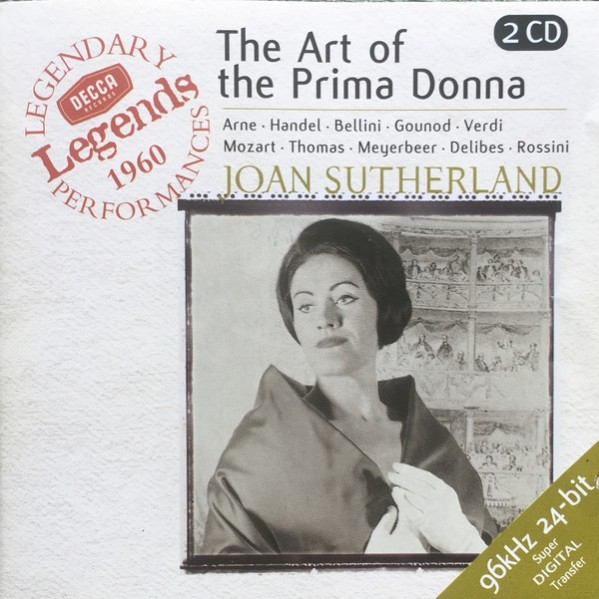
Joan Sutherland – The Art of the Prima Donna

r-10886939-1505963132-9869.jpeg

So what more can one say about this famous two disc recital? It was recorded in 1960, not long after Dame Joan had enjoyed a spectacular success in Lucia di Lammermoor, in 1959, at the Royal Opera House, Covent Garden. She was already 33 and had been a member of the company since 1952, when she had sung Clotilde to Callas’s Norma and the Priestess in Aida. She had sung a wide number of roles there, including Agathe, the Countess, Gilda, Pamina, Eva and even Lady Rich in Gloriana and Jennifer in Tippett’s The Midsummer Marriage, but none of these undertakings had prepared anyone for the spectacular success she would have as Lucia, with Serafin, Callas’s mentor, in the pit. The role became her calling card and shortly afterwards she sang it in Paris, at La Scala and at the Met, performances that put her firmly on the map and paved the way for the direction her career would take. Thereafter she concentrated almost exclusively on the bel canto repertoire and many operas were resurrected specifically for her.

Let us try and listen now with fresh ears, as if, for instance, this was the work of a singer new to us today. First impressions would be of the beauty of the voice, the fullness of tone, the ease on high and the way those top notes ring out with brilliance but without a hint of shrillness. We would also notice the rocketing virtuosity and the stunningly accurate coloratura. She also sings with feeling, but the first impressions are definitely vocal. This is an exceptional instrument used with great technical accomplishment. What I don’t think we quite get is a true impression of the size of the voice, which, according to all who heard her in the theatre, was quite exceptional.

Some of the arias (particularly the opening track, Arne’s The soldier tir’d, Handel’s Let the bright Seraphim and Semiramide’s Bel raggio) have become yardsticks against which all subsequent comers might be judged, and almost all the others would no doubt be considered amongst the best versions available. Vocally she has few limitations, though these might include a relative weakness in the lower register. Nor is she ever likely to suddenly throw into relief a word or a phrase and her diction, though a lot better than it was later to become is not particularly clear. We might also note that characterisation is not her strong point. As one aria follows another there is little to distinguish one character from another. We do not get a gallery of different people, as one would with a Callas or a Schwarzkopf.

For many these reservations will not be a problem and of course there is a great deal of pleasure to be had from the purely visceral experience of hearing such a beautiful voice in full bloom tackling with accomplishment a wide range of music. For others, and I would count myself among them, that certain sameness of interpretaion will be a problem and I for one prefer to listen to the recital piecemeal rather than all in one sitting. When listening in sequence, I start out being stunned by the singing but, after a while, my mind starts to wander as one interpretation emerges much the same as the one before. The best arias are, as I intimated above, those in which Sutherland can display her amazing vocal dexterity.

Going back to first impressions, though. There is, as far as I’m aware, nobody singing today who can even approach the accomplishment of what Sutherland achieves here. This two disc set stands as testament to her greatness, before the mannerisms (the poor diction, the mushy middle voice, the droopy partamenti) became apparent and should be in the collection of all those interested in singers and singing.

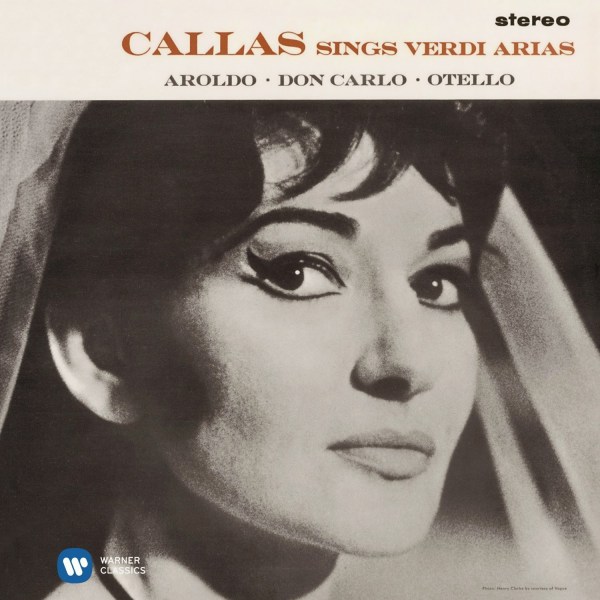
Callas sings Verdi Arias (Revisited)


By 1964 Callas had all but retired from musical life. In 1961 she recorded her first disc of French arias, sang in performances of Medea at Epidaurus in Greece and at La Scala and made a single concert appearance in London. In 1962, she did even less; a short concert tour, taking in London and cities in Germany, plus a couple of arias for a BBC TV appearance. 1963 saw more concerts in Berlin, Dusseldorf, Stuttgart, London, Copenhagen and Paris, plus more recording sessions of French arias at the beginning of the year. At the end of the year and at the beginning of 1964 she embarked on more intensive recording activity, possibly in preparation for her upcoming return to the operatic stage in Tosca and Norma. Three discs were issued in 1964, one of classical arias by Mozart, Beethoven and Weber, one of arias by Rossini and Donizetti, and one of Verdi arias, with more of the Verdi sessions being released in 1972, shortly after she emerged from self-imposed exile to teach a series of masterclasses at the Juilliard School in New York. Though more of these sessions, plus some made in 1969, were eventually released after her death, these were the only ones she agreed to.

Though all three of the discs issued in 1964 revealed some pronounced vocal problems, the Verdi disc is by far the most successful. She seems less preoccupied with her vocal problems, more engaged with the material and consequently the singing has a freedom that is lacking in the other two discs, though this does mean we also get quite a few squally notes above the stave.

Desdemona’s Willow Song and Ave Maria might be considered an uncharacteristic piece for Callas, but she is alive to every shift of mood. As it rarely strays above the stave it also presents her with the least problems vocally. It is a great pity EMI didn’t think to employ someone to sing Emilia’s lines, but Callas skillfully uses a different tone for the comments to Emilia from the one she uses for Barbara’s song. Throughout one feels Desdemona’s anxiety, which erupts with a sudden passionate outburst when she bids Emilia goodbye. The Ave Maria profits from her deep legato, the final Ab spun out in the best tradition.

Both of the Aroldo arias are thrilling, especially Mina’s Act III solo, a superb piece which Callas fills with drama and significance, bringing the cabaletta to a rousing conclusion.

Elisabetta’s Non pianger mia compagna from Don Carlo doesn’t really come off. Though her legato is still excellent, she sounds strained here and she can’t float the climactic phrases as she should. Eboli’s O don fatale, though, is another matter entirely. The whole aria brims with contrast and drama, and one registers each change of expression. She vehemently launches into the opening section, spitting out the words ti maledico, but then moulds rather than sings the o mia regina section, her legato line superb, her rich lower register digging deep into its melancholy. Finally as she realises she still has time to save Carlo, she brings the aria to an ecstatic close. OK, so there are a couple of off centre high notes, but they fade into insignifance next to the thrilling commitment of the singing.

When I reviewed all three of these 1963 recitals here back in January 2017, I mentioned that my wobble tolerance could vary from listen to listen. Sometimes I find the acidulous tone and stridency hard to take; on others I barely notice them as I get wrapped up in the musical imagination. It’s safe to say that on this occasion the latter reaction was in play.

Montserrat Caballé – Rossini, Donizetti and Verdi Rarities

r-14007043-1565960472-8916.jpeg

Rossini: Arias from La Donna Del Lago, Otello, Stabat Mater, Armida, Tancredi and L’assedio di Corinto
Donizetti: Arias from Belisario, Parisina d’Este. Torquato Tasso, Gemma di Vergy
Verdi: Arias from Un Giorno di Regno, I Lombardi, I due Foscari, Alzira, Attila, Il Corsaro and Aroldo

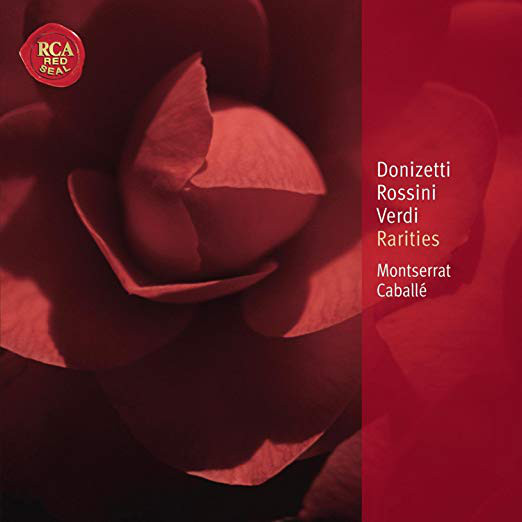
These two discs bring together the three LPs of bel canto Rarities Montserrat Caballé recorded shortly after she rocketed to stardom singing Lucrezia in Lucrezia Borgia at Carnegie Hall in 1965, a last minute replacement for an ailing Marilyn Horne. Each record was devoted to a different composer. The first two, Rossini and early Verdi, were recorded in Italy in 1967 with the RCA Italiana Chorus and Orchestra and the Donizetti with the London Symphony Orchestra and Ambrosian Opera Chorus in 1969. Carlo Felice Cillario was the conductor for the Rossini and Donizetti, Anton Guadagno for the Verdi and the luxury presentation included other singers in the various comprimario roles.

The material was even rarer back then than it is now as vary few of the works represented had ever been recorded, Caballé herself being one of the singers who spearheaded the bel canto revival that occurred after Callas had opened the doors to this repertoire in the previous decade.

These were the years of Caballé’s absolute peak and the voice is in superb condition, without a trace of the hardness that coud afflict her loud high notes in later years. Her breath control is prodigious, but she doesn’t over-exploit her fabulous high pianissimi, which she tended to do in later years, and her singing has an energy and attack which you might find surprising if you only know her from her later recordings, when she tended to slow everything down until it practically came to a halt. If she has a fault, it is that her trills are a little sketchy and occasionally one hears the slight suspicion of an aspirate, but the singing is surpassingly beautiful throughout its range, her legato excellent and the voice even from top to bottom. Characterisation might not be her strong point, but she is always alive to the dramatic situation and her singing is both involved and involving.

The arias on each disc are well chosen and the whole enterprise exudes class. I really can’t think of any singer today who could match her in this repertoire, maybe DiDonato in the Rossini and Donizetti, though she lacks Caballé’s arrestingly beautiful sound. As for Verdi, well we do seem to be experiencing a dearth of good Verdi singers today.

These two discs are a superb memento of a great singer at the height of her powers and should be in the collection of any vocal connoisseur. This particular release comes with full notes, texts and translations which are hardly to be taken for granted these days. Highly recommended.


Maggie Teyte – The Singers

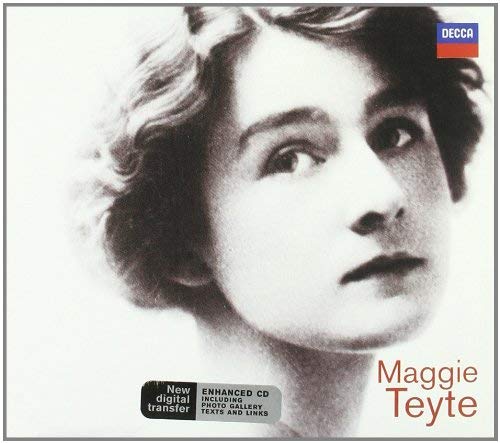
These recordings were all made in the 1930s and so pre-date the two disc set of French song I reviewed a few months ago here, with the second part of the disc being taken from a 1937 radio broadcast. One of the songs (Armstrong Gibbs’ The fields are full of summer still) was newly discovered in 2001 and first published on this CD.

We start with one of Dame Maggie’s most famous performances, that of Périchole’s Tu n’es pas beau, sung with great affection, a twinkle in the eye and with that wonderful dip into her inimitably glorious chest voice. Though a light soprano with pure, firm top notes, Teyte’s lower register was admirably rich and full in a manner we rarely hear today, more’s the pity. The orchestra here sounds like a palm court orchestra at a tea dance, but the singing is another matter entirely and alone well worth the price of the disc. The two excerpts from Messager’s Véronique, which follow are almost as good.

Teyte was particularly renowned for her interpretations of French song, but we are vouchsafed only two (very well known) songs from that field, Fauré’s Après un rêve and Hahn’s Si mes vers avaient des ailes. The Fauré is much better than the one on the French song disc mentioned above, where I felt she fussed with the song too much making it lose its natural flow, and the Hahn is as lovely as the later recording with Gerald Moore. These are followed by two Dvorak songs, Christina’s Lament, which turns out to be his Humoresque arranged for voice and piano, and the ubiquitous Songs my mother taught me, both beautifully sung.

These are followed by a group of songs from light musicals, mementoes of her days spent in British Music Hall. They may be musically slight, but Deep in my heart, dear from Romberg’s The Student Prince was actually one of Dame Maggie’s favourite recordings. It crests with a high B, which she thought the most beautiful note she had ever recorded. Certainly the note rings out clear and clean as a bell.

The lion’s share of the disc, however, is given over to a 1937 BBC broadcast recital, which couples popular songs by Schumann and Brahms to a group of English songs by turn of the century composers Quilter, Bridge, Delius, Armstrong Gibbs and (completely new to me) Amherst Webber and Graham Peel. As ever, the voice is bright and pure, her manner direct and disarming, her diction and intonation well-nigh perfect. Admittedly, there are aspects of her singing which some might find quaint and old fashioned today, but her technique is superb and her voice remained firm and clear well into her sixties.

Perhaps because of some of the material, this is not quite so recommendable as the EMI two disc set of French songs, but I would never want to be without it, if only for the wonderful aria from La Périchole.

Barbara Bonney – Diamonds in the Snow

Barbara Bonney, though American, was once married to the Swedish baritone Hakan Hagegard and is a member of the Royal Swedish Academy of Music, so it is not at all surprising to find her recording a disc of Scandinavian song, though of the composers represented here, only Stenhammar, Alfven and Sjöberg are Swedish, Grieg and Sibelius taking up the lion’s share of the recital.

The recording was made in 1999, by which time Bonney would have been 43, and though the voice retains its springlike freshness and purity, maturity has brought with a new richness and depth that perhaps would not have been available to her a few years earlier. Not only is it a beautiful instrument per se, but it is also beautifully expressive and she easily fills all the requirements of this varied group of songs.

Some of the Grieg songs are well known, but I am guessing that most of the others will be unfamiliar, and whilst there is nothing here to challenge the greatness of song writers like Schubert, Schumann or Wolf, there is plenty to enjoy. The emotional range is wide too and Bonney seizes every opportunity for expression afforded to her.

Pappano, unlike many conductors who have a go at piano accompaniment, offers superb support and the whole disc feels like a wonderful collaboration between two artists totally at one with their vision.

A lovely disc and one of the most enjoyable recitals in my collection. Like Bonney’s disc of early English song, which I reviewed a few months back, this comes with the highest recommendation.

Dawn Upshaw – I Wish It So

r-6310834-1416165621-3533.jpeg

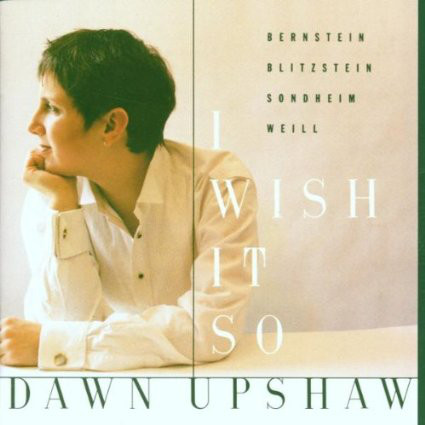
This collection of Broadway songs by Bernstein, Blitztein, Sondheim and Weil is an absolute delight from beginning to end.

Aside from Bernstein’s I feel pretty and, to a lesser extent, his Glitter and be gay none of the items here could be considered well-known and the choice of this particular quartet of composers, all of whom are connected in some way, is felicitous. Furthermore Upshaw’s clear, bright soprano and natural, unforced diction make her the ideal interpreter.

It is rare indeed for classical singers to embrace the idiom of Broadway without sounding self-conscious, but if you didn’t know better, (and I mean this in a positive way) you would never know that Upshaw was also an operatic artist of the first order. Many opera singers have tackled Bernstein’s Glitter and be gay, but none have ever, to my mind, challenged the original performer Barbara Cook, who not only manages to get round the notes, but really puts across the humour in the lyrics; none, that is, except Dawn Upshaw, who actually manages the coloratura with greater ease and beauty, but also points the lyrics with such ironic brilliance.

It is just one of the highlights in an album of sheer delights and I’d be hard pressed to find a favourite but there were many wonderful discoveries, among them Sondheim’s The girls of summer (1956) and the opening track, sung to just piano, Blitztein’s I wish it so from Juno (1959).

Only Glitter and be gay uses the original orchestration, but all the other arrangements are well done and the orchestra play excellently under Eric Stern, who himself was responsible for some of the orchestrations and provides the solo piano accompaniment on I wish it so.

I can’t recommend this disc too highly.

Modify message