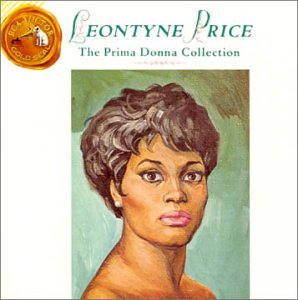
Leontyne Price – The Prima Donna Collection


This four disc set gathers together the five recital albums Leontyne Price made under the title Prima Donna. Each one followed a similar pattern, starting with an aria from the Baroque and finishing with something from the twentieth century. Volumes one, two three and five are presented in the order they were originally released, but, inexplicably, volume four is broken up and its contents scattered randomly amongst the others.  The LPs were recorded in 1966 (volumes one and two), 1970 (volume three), 1978 (volume four) and 1980 (volume five), by which time Price would have been fifty-three. The voice changed quite a bit over this fourteen year period, and the first three discs make for much more comfortable listening than the last two, by which time the voice had thickened, with the middle range more occluded, diction smudged and top notes beginning to sound strained. Having so many of the arias from volume four placed side by side with arias from the first three only serves to accentuate this fact. Having a strained performance of Turandot’s In questa reggia from 1978 follow hot on the heels of her 1966 recording of Depuis le jour, which is lovely, if not particularly idiomatic, only goes to empahasise the point.

It goes without saying that there is some glorious singing in this set. At its peak, which is when the first three volumes were made, the voice was an absolutely gorgeous instrument, secure throughout its range and flexible in fast moving music. The selection of music is also interesting, with well known arias rubbing shoulders with some heard less often, especially in recital.

Price once said,

It’s terrible but you know I just love the sound of my own voice. Sometimes I simply move myself to tears. I suppose I must be my own best fan. I don’t care if that sounds immodest – l feel that all singers must enjoy the sound they make if they’re to have others enjoy it too.

Well it’s an interesting point. Callas famously was the opposite. She hated listening to her own records, because she could only hear the faults. She was always striving for the impossible. Price, on the other hand, sometimes gives the impression that she went into the studio, poured out the glorious sounds, declared herself satisfied and left it at that. There is little that is specific to the music she is singing. Though the musical range is vast the interpretive range is not. There isn’t really that much difference between the way she approaches Purcell and Puccini, Handel and Verdi. This is even more pronounced in the final volume, which is, in any case, the least recommendable of the five. Gilda’s Caro nome is placed next to Isolde’s Liebestod, but Caro nome is laboured with no sense of the young girl’s first awakening to love and the Liebstod has no transfiguring rapture. They have the same voice character and just sound as if the singer had strayed into the wrong repetoire, which indeed she had. This final volume also has on it an ill-advised Casta diva, an aria which, in isolation, she might have made a good stab at in 1966, but which, by 1980, is beyond her. The most successful, and surprising, item on volume five is Queen Elizabeth’s Act I Scene and Prayer from Britten’s Gloriana, on which Price certainly has the requisite regal grandeur, but there is nothing else on volume 5, that I would really care to listen to again.

The first three volumes are a different matter and, if few of the performances are particularly revelatory, there is much to admire in both the singing and the voice we hear here, with volume three to my mind being the most successful.

Highlights would include Selika’s Sur mes genoux, fils du soleil from Meyerbeer’s L’Africaine and Do not  utter a word from Barber’s Vanessa from volume 1, Paolo, datemi pace from Zandonai’s Francesca da Rimini and La mamma morta from Andrea Chénier from volume 2, Se vano il pregare from I Lombardi, Dis-moi que je suis belle from Thaïs and Mes filles, voilà s’achève fom Les Dialogues des Carmélites, from volume 3.

Though she was known for her Fiordiligi and Donna Anna, Mozart fares less well. Or sai chi l’onore certainly brims with outrage and drama, but, though Non mi dir is beautifully poised, the fast section is laboured and the voice, even in 1970 sounds an unwiledly instrument for this music. Elettra’s D’Oreste d’Ajace, from volume 4 recorded in 1978, suffers even more from a lack of mobility.

Still, we should be thankful for what we have. The first three discs showcase one of the most ravishing voices to have ever graced the operatic age. I used to own volume 3 on LP, which had always been one of my favourite opera recitals, and I was very excited to hear the complete set. If my expectations were not quite fulfilled, I am nonetheless happy to have it in my collection.
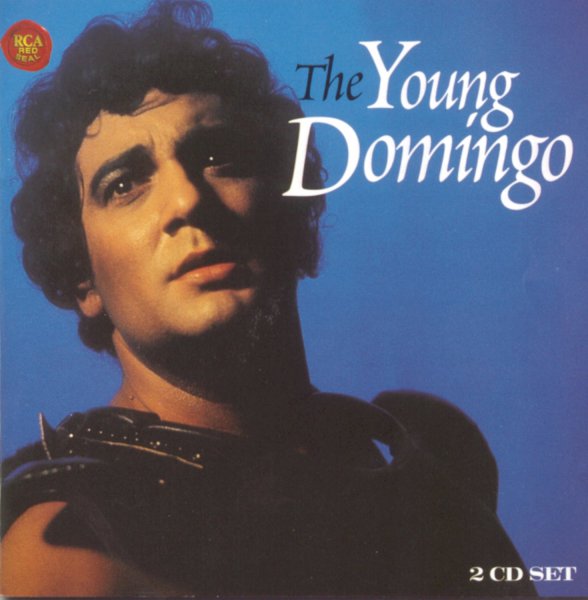
 

The Young Domingo


These days, with Domingo’s sometimes less successful forays into the baritone repertoire, it is easy to forget just how amazing his career was, not to mention how long it has lasted. This two disc set is a composite of three recitals made in 1968, 1971 and 1972 when Domingo (27 at the time of the first disc) was already an experienced artist, having first appeared on stage at the age of sixteen and singing his first major role (Alfredo) in 1961 at the age of 20.

The earliest of these recitals, which was given the title Romantic Arias heralded the arrival of a major artist, not only a tenor but a musician. The repertoire is wide ranging, taking in music from Handel to Mascagni and he sings in Italian, French, German and Russian. I can’t think of many tenors, even from the golden age of 78s, who could sing Puccini and Mascagni with so much passion and yet give us a wonderfully accomplished Il mio tesoro from Don Giovanni, the longest run sung cleanly and accurately and not only spun out in a single breath but phrased through into the next statement of the opening tune. The only other tenor I’ve come across who manages it as well is John McCormack. In all, whether it be in Lohengrin’s Narration or Lensky’s aria, sung in Russian, his singing is musical and immaginative. If we were to nitpick, it might be to note that, especially in the Italian items, there is a lack of excitement, of real intensity. Both are qualities he later added, along with his fine acting that served to make him the best Otello to be heard for many years. So he may not thrill in the manner of a Franco Corelli, but could Corelli have ever embraced such a wide range of differing music styles with such musicality and sensibility? I dount it very much. So let’s be grateful for what we have.

The second disc entitled Domingo sings Caruso is less wide ranging, most of the arias more well known, though it does include an aria for Marcello from Leoncavallo’s version of La Bohème, and the third La Voce d’Oro, an apt description of the golden tone that pours forth. Again one might note that his singing can be a little generic, but his musical sensibilities are always evident. Nor does he ever indulge in the vulgar mannerisms of some who preceded him. His singing is always tasteful, his musical manners impeccable.

To the three recitals, BMG have added two Leoncavallo arias (another from La Bohème and one from Chatterton) which were originally included as fill-ups for his recording of I Pagliacci under Nello Santi. Both are attractive pieces, wonderfully sung by Domingo.

Looking at Domingo’s website I see his calendar is still pretty full, with engagements, both singing and conducting, booked up to November next year. It is a remarkable achievement for a man approaching his eighties. There is no doubt the promise of these early recitals has been not only fulfilled but surpassed. Now that we have said goodbye to Domingo the tenor, now might be a good time to go backto these early recitals and remember just how good he was.

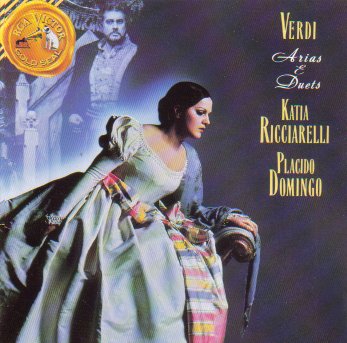
Katia Ricciarelli – Verdi Arias & Duets

51gj2be3g2b-l

This was Katia Ricciarelli’s debut recital, released in 1972 when she would have been 26. For this 1991 CD release, BMG added two items from a duet recital with Domingo, made at the same time.

Ricciarelli had an illustrious career and prolific recording career, but, it always seems to me, has never enjoyed the acclaim of her slightly older Italian contemporaries, Mirella Freni and Renata Scotto. She perhaps asked a little more of her essentially lyrical voice than it would deliver but, unlike singers like Sass and Souliotis, she was intelligent enough to later drop some of her dramatic roles in favour of more lyric fare. Her Turandot might have been ill advised but, like Sutherland’s, it was confined to the studio.

This Verdi disc catches her at her peak singing, for the most part, a selection of unfamiliar arias from Giovanna d’Arco, I Masnadieri, Jérusalem, Il Corsaro and I Vespri Siciliani as well as arias from Otello, Il Trovatore and Don Carlo, plus duets from Un Ballo in Maschera and Otello with Domingo.

The voice is a beautiful one and she is an imaginative singer, responsive to mood and text, but there are occasions when her legato is not as good as one might wish. If one were to compare her performance here of Medora’s Non so le tetre immagini with a late one by Callas, made in 1969, it is to find that, despite Callas’s by this time waning resources, the long line is maintained, the wide intervals bound more closely together, where Ricciarelli can be a little angular. Nor is Ricciarelli’s coloratura technique as clean as Callas’s. One is grateful for the beauty of the tone and her dramatic involvement, nonetheless.

Ricciarelli is a singer I have come to appreciate more with the passing of the years. I heard her live a few times, on the last occasion at a concert at the Barbican when her voice was probably past its best. The programe consisted mainly of bel canto arias, and I remember well her outstanding singing of Giulietta’s Oh quante volte, so good that it held the audience in rapt silence. She was forced to repeat the aria as an encore at the end of the night.

She is always musical, always alert to the drama, always imaginative and this Verdi disc is a good reminder of her excellence in the field. There are very few sopranos singing today who could touch her in this repertoire.

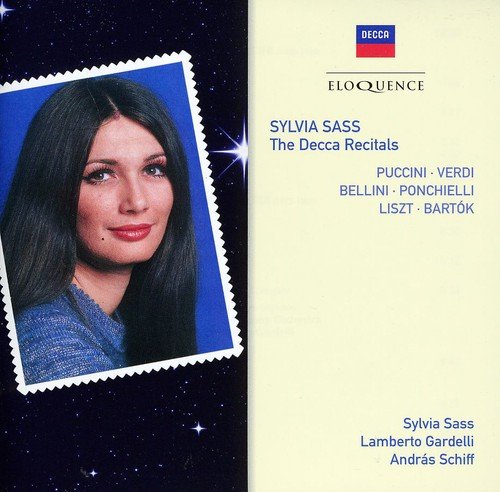
Sylvia Sass – The Decca Recitals


Sylvia Sass shot to stardom at the age of 25 after singing the role of Griselda in a 1975 Covent Garden production of Verdi’s I Lombardi which also starred José Carreras. Decca were quick to sign her up and her first recital LP (one side of Puccini, one of Verdi) followed in 1977. A further opera recital followed in 1979 and finally in 1981 a recital of songs by Liszt and Bartók, in which she got to sing in her native Hungarian. She also appeared on Solti’s recordings of Don Giovanni (as Donna Elvira) and Bluebeard’s Castle and on the Philips recording of Stiffelio. She was hailed as the new Callas and, like others saddled with the epithet before her, her international stardom was short-lived, though she continued to sing in opera (though mostly in Hungary) until 1995 and made many records for Hungaraton.

From the very first notes of Turandot’s In questa reggia it is clear that this is a singer with a personality, always aware of the dramatic possibilities of the music. The voice can caress, but equally it has bite and power and the top can glare when singing at full tilt. The four Puccini heroines given here (Turandot, Tosca, Manon and Butterfly) emerge as distintinctively different characters, which isn’t always the case in a Puccini recital. There is also much that is fine in the Verdi items, the Sleepwalking Scene from Macbeth being particularly good, but here we notice a tendency, also evident in the Puccini items, for there to be too great a gap between her loud and soft singing, where the loud singing can take on a strident, squally edge that contrasts too greatly with the almost disembodied purity of her soft singing.

By the time of the second recital this tendency to veer from ultra soft to ultra loud has become more pronounced, even more noticeable when singing live. I remember seeing her as Norma at Covent Garden in 1980 and you could hardly hear her when she was singing quietly. Not that the second recital doesn’t have its attractions. Lady Macbeth continues to be impressive, and there are some lovely moments in the Il Trovatore aria, with its spectacularly floated high D.

The 1981recital of Liszt and Bartók songs, with András Schiff at the piano, is rather impressive. Sass brings vivid personality to and drama to a song like Liszt’s Die Loreley, as well as a beautiful, comforting quality to Kling leise, mein Lied. She also makes musical sense of Bartók’s sometimes angular vocal lines, brilliantly supported by Schiff’s superb playing of the difficult piano accompaniments.

It is a great shame Sass never really fulfilled the promise of her early successes, but these discs serve to remind us why people found her so exciting when she first burst onto the scene and receive a qualified recommendation from me.

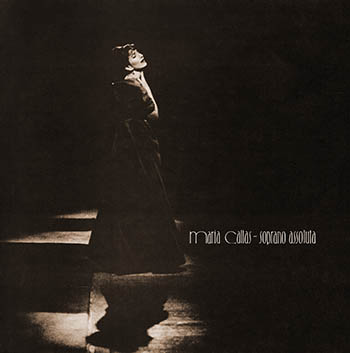
Maria Callas- Soprano Assoluta

bjr143_l

This is a superb compendium of recordings taken from live concerts given by Callas between 1949 and 1959. It is being offered as a FREE download (yes, you read that right, free) from Divina Records, so surely there can be no reason not to snap it up while you still can. The sound, while hardly state of the art, is not bad for the period, all of the performances having been taken from radio broadcasts. Taken from BJR LPs, transfers are up to Divina’s usual high standards and the download comes with an excellent pdf of the booklet which accompanied the original release.

The first track is actually her first 78 recording, made for Cetra in 1949, a beautiful performance of Casta diva and Ah bello a me ritorna, though without the opening and linking recitatives in which Callas always excelled. The aria is ideally floated, the scales and coloratura in the cabaletta stunning in their accuracy. We next turn to a radio concert recorded for Turin radio in 1952, with Oliviero de Fabritiis conducting. Callas was obviously out to demonstrate her versatility, and was also trying out for size a couple of roles she would sing later that year, Lady Macbeth and Lucia. To Lady Macbeth’s Letter Scene and the first part of Lucia’s Mad Scene, she adds Abigaille’s Ben io t’invenne from Nabucco and the Bell Song from Lakmé. She is in stupendous voice in all, the high E in the Bell Song ringing out here much more freely than it does in the 1954 recording. Not only is the singing technically stunning, but the contrasts she affords as she switches from the powerfully ambtious Lady Macbeth, to the sweet and maidenly Lucia, from the demonically triumphal Abigaille to the improvisatory story-telling of Lakmé are simply out of this world. You really don’t hear singing like this nowadays.

Next we move to a 1954 Milan concert, starting with her justly famous and technically brilliant recording of Constanze’s Martern aller Arten from Die Entführung aus dem Serail (sung here in Italian as Tutte le torture), her one Mozart stage role. Not only does she execute the difficulties with ease, she sounds properly defiant. It is a thrilling performance. Louise’s Depuis le jour (sung in French) suits her less well, and the performance is marred by occasional unsteadiness. Nonetheless it is hard to resist the quiet intensity of her intent. Armida’s D’amore al dolce impero from Rossini’s opera is, like the Mozart, stunningly accomplished, even if some of the more daring variations from the Florence complete performances have been trimmed down. The bravura of the singing is still unparalleled. The last item from this concert is Ombra leggiera from Meyerbeer’s Dinorah, a rather empty piece, which is hardy worth her trouble, though it improves on the studio recording with the addition of the opening recitative and the contribution of a chorus. Her singing is wonderfully accomplished, the echo effects brilliantly done, but it is not a piece I enjoy.

Another Milan concert, this time from 1956, brings us her best ever performance of Bel raggio lusinghier from Semiramide, though she adds little in the way of embellishment and the effect is less thrilling than her singing of the Armida aria. We get her first version of Ophélie’s Mad Scene from Hamlet (sung here in Italian rather than the original French of the studio recording), which is superb, it’s disparate elements brilliantly bound together. We also have a beautiful performance of Giulia’s Tu che invoco from La Vestale, which seques into a rousing performance of the cabaletta, and she revisits the role of Elvira in I Puritani with a lovely performance, with chorus and soloists, of Vieni al tempio.

From Athens in 1957, there is a dramatically exciting performance of Leonora’s Pace, Pace from La Forza del Destino, in which she manages the pitfalls of the piano top B on invan la pace better than you would expect for post diet Callas. Her performance of Isolde’s Liebestod (again in Italian) is very similar to the Cetra recording, warm and feminine, passionately yearning.

From the 1958 Paris Gala we have her minxish Una voce poco fa from Il Barbiere di Siviglia, with its explosive ma, as Rosina warns us she is not to be messed with. She sings in the mezzo key with added higher embellishments. This is followed by a couple of lesser known performances from a UK TV special, conducted by Sir Malcolm Sargent. Mimi’s Si mi chiamano Mimi is similar to the performance on the complete recording, charming and disarming, whilst Margarita’s L’altra notte from Mefistofele is a touch more vivid, a little less subtle than the studio recording.

Just one item from the 1957 rehearsal for the Dallas Opera inaugural concert, the Mad Scene from I Puritani. Though, by this time, Callas’s voice had been showing signs of deterioration, Bellini’s music still suits her admirably, and she sounds in easy, secure voice here up to a ringing top Eb at its close. The scale work is as supple as ever, and she executes its intricacies with ease even when singing at half voice.

To finish off we have the Mad Scene from the 1959 Carnegie Hall concert performance of Il Pirata. It had been a variable evening, with Callas’s colleagues hardly in her class, but here, left alone on the stage, Callas responds to the challenges of the final scene superbly, the cavatina, in which she spins out the cantilena to incredible lengths, becomes a moving lament to her son, and the dramatic cabaletta is then thrillingly flung out into the auditorium. The audience unsurprisingly go berserk.

How lucky we are to have these wonderful live performances preserved in sound, and how grateful we are to Divina Records for offering them to us free of charge. Nobody need hesitate.


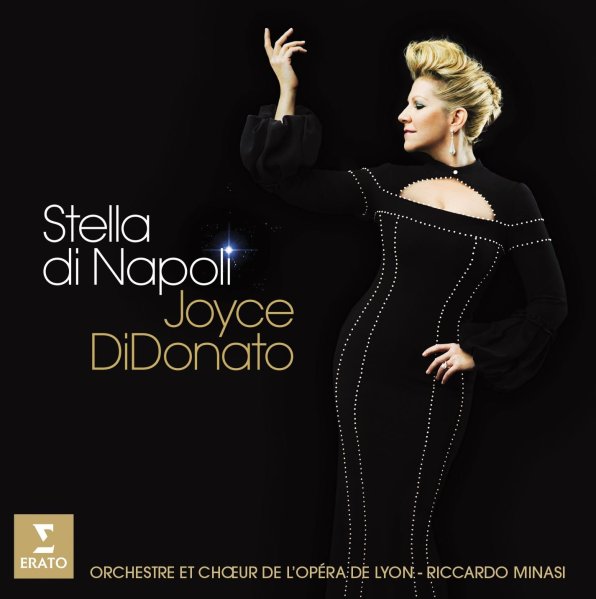
Joyce DiDonato – Stella di Napoli


Joyce DiDonato gives us here a collection of largely little known bel canto arias, some by composers such as Pacini, Mercadante, Valentini and Carafa who are hardly household names. It doesn’t get off to the best of starts as the heroine of Pacini’s Stella di Napoli sings a jolly little ditty, in which the heroine berates her lover for not being there to hear her dying breath. It is the sort of aria that gives bel canto opera a bad name and is exactly the thing Gilbert and Sullivan took such delight in parodying.

Happily we are on much stronger ground with the next item, a lovely elegiac piece from Bellini’s Adelson e Salvini, and thereafter things greatly improve, though it is safe to say the best items are those by the more well-known triumvirate of Rossini, Donizetti and Bellini, even if the final item, a fourteen minute excerpt from Pacini’s Saffo does much to exonerate him.

DiDonato’s singing is supremly accomplished with a mastery of coloratura, scales, trills and legato which is second to none. Added to her technical accomplishments, she has a wonderful grasp of the dramatic situations presented and there is no doubt that she is pre-eminent in the field today. If I were nit-picking, I would say that her singing doesn’t quite have the sheer personality of some of her predecessors in this music, and the preghiera from Maria Stuarda doesn’t quite erase memories of Montserrat Caballé or Janet Baker in the same piece. But, that would be unfair and we should be grateful for what we have, which is a great deal; a singer at the height of her powers with a beautiful voice, technically proficient, put at the service of the music.

She is excellently supported by the Orchestre ey Choer de l’Opéra de Lyon under Riccardo Minasi and the disc comes with notes, texts and translations, though a little more information about the dramatic situations would have been welcome. Warmly recommended.

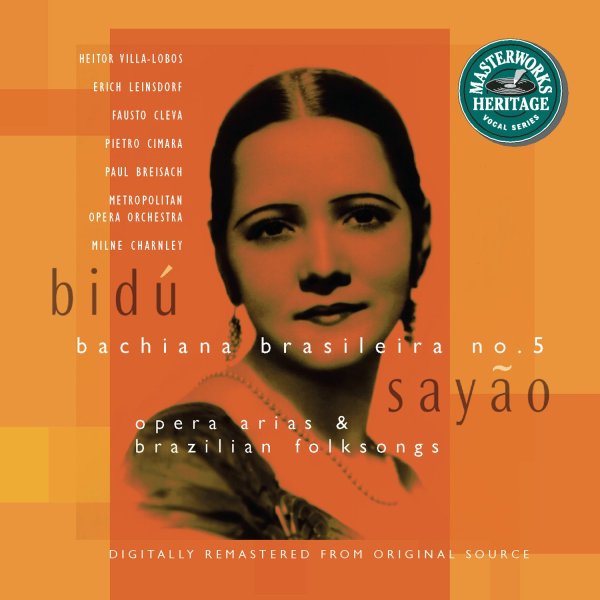
Bidu Sayão – Opera Arias and Songs

71lqwx7yubl._sl1500_

Born at the beginning of the last century, the Brazilian soprano Bidu Sayão, a pupil of the tenor Jean de Reszke, first made her career in Europe as a coloratura, singing such roles as Lucia, Elvira, Amina and Zerbinetta. She made her US debut in 1935, and was soon after engaged by Toscanini for a performance of Debussy’s La damoiselle élue, making her Met debut in 1937 in the role of Manon. Thereafter she became a great favourite and sang regularly there until 1952, when she retired from the stage, retiring completely from public performance in 1957. In 1959 she made her final recording, of Villa-Lobos’s Forest of the Amazon, with the composer conducting, and it is the Aria from Bachianas-brasilieras, no. 5, also conducted by the composer which opens this disc. Of the many recordings that exist of this popular piece, this one is certainly one of the best, and might even be considered definitive.

From there we turn to French opera and we note her perfect diction and facility in the language. Juliette’s Waltz Song is all youthful charm and lightness, the voice clear and bright with none of the acidity often associated with coloratura sopranos of the time (though one imagines the voice was quite small and certainly not capable of singing the big Act IV aria, which indeed is cut in the live recording of the opera with Bjørling as Roméo). Charm and grace also characterise her Marguerite and Manon, but she is able to find a deeper vein of feeling for an Adieu notre petite table, which is close to the ideal.

We next hear a group of French songs, both with orchestra and piano. Hahn’s Si mes vers avaient des ailes suffers somewhat from an awful (and not particularly well-played) orchestral arrangement, but Duparc’s Chanson triste is quite lovely, even if the orchestra isn’t much better. Her peformance of L’année en vain chasse l’année from Debussy’s L’enfant prodigue rivals that of Victoria De Los Angeles, and we also hear a charming performance, with piano accompaniment, of Ravel’s Toi, le coeur de la rose, excised from his L’enfant et les sortilèges, which works remarkably well out of context.

A selection of Folk Songs of Brazil, arranged by Ernani Braga, bring this lovely disc to a fitting close. The disc is beautifully presented with plenty of photos and articles in English, German and French, though, regrettably, no texts or translations, and is a fitting memorial to a charming and lovely soprano.

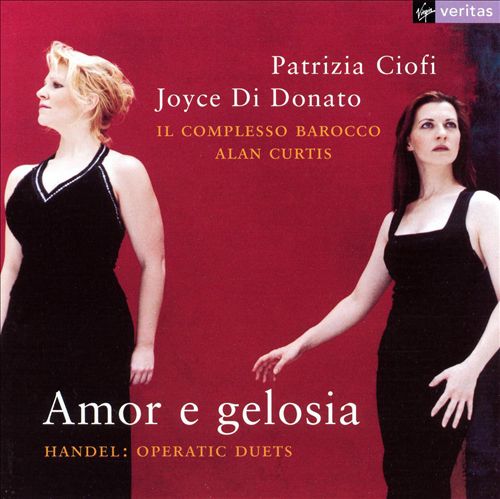
Amor e gelosia – Handel Operatic Duets

image

Looking through my collection I note that the majority of fairly recent recital acquisitions seem to be mostly of music of Handel and the baroque. I’m not sure whether this has more to do with a change in my taste, the general change in taste or the dearth of decent singers of Verdi, Wagner and nineteenth century muisc in general. Whatever the reason, I think it’s safe to say there are far more excellent Handel singers around these days than there used to and the performers on this disc are certainly fine examples.

Handel’s operatic duets are rare delights, usually either expressing sadness at lovers’ parting or delight in reunion, and there is a good cross-section of both types in this recital. That said, I am not a Handel specialist and I personally find less variety here than I would in a programme of duets from the bel canto period or Verdi. The programme is drawn from well-known works, such as Rinaldo, Serse and Rodelinda, as well as lesser known works like Silla and Teseo, with no less than five excerpts (including the Act III Sinfonia) from Poro, and certainly no fault can be found with the performances.

We hear two very fine voices in prime condition, DiDonato’s darker, straighter mezzo contrasting and blending nicely with Ciofi’s bright, clear soprano. Both are expressive artists with a fine legato and superb technical proficiency in the florid music. They also repond well to the dramatic elements in the music, and are superbly supported by Alan Curtis and Il Complesso Barocco. The disc can be recommended unreseverdly to all lovers of Handel and the baroque, even if on this occasion, and I realise this has no relevance to the present disc, I found myself wishing I was listening to, say, Caballé and Verrett in their disc of Romantic opera duets. Maybe my tastes haven’t changed that much.

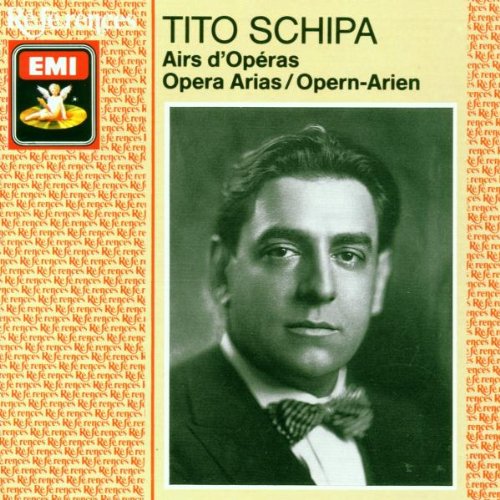
Tito Schipa – Opera Arias

61gglfv2dfl

This EMI disc collects together recordings from Tito Schipa’s first recording sessions in 1913, recordings made in the 1920s and 1930s and one (Werther’s O, nature) recorded in 1942, when Schipa was 54.

The name of Schipa is most associated with style, elegance and grace (not for him the over-emotional sobbing excesses of Gigli), though the first aria included on the disc (Che faro from Orfeo ed Euridice) is hardly a model in that respect. The unstylish playing of the orchestra is certainly no help, but Schipa too has some lapses in style, with occasional aspiarates marring his legato.

The 1913 recordings tell a different story and reveal a surprising amount of power and squillo, not qualities one normally associates with the singing of Tito Schipa. They also offer so much more in the elegance of the phrasing, the firm line and his wonderful legato, as well as a proper appreciation of character and the dramatic situation. The prizes here are the Duke’s Ella mi fu rapita…Parmi veder le lagrime, from Rigoletto, Tu che a dio spiegasti l’ali from Lucia di Lammermoor and the Siciliana from Cavalleria Rusticana.

There are treasures too amongst some of the later recordings, even the 1942 Werther aria, which is wonderfully poetic, but the 1934 aria from Manon is also superb.

However I think I derived the most pleasure from the duets. WIth Toti Dal Monti we get a lovely Prendi l’anel to dono from La Sonnambula, and, even better, a gorgeous Tornami a dir from Don Pasquale, which is just about ideal in every way, the two singers blending thier voices and playing with the musical line in perfect synchronicity. Then, probably best of all is the famous Cherry Duet from Mascagani’s L’Amico Fritz, with the charming Mafalda Favero. Throughout he caresses and moulds the line and there is a moment of pure magic when he sings the words sei pur bella on a delciate thread of sound which perfectly expresses Fritz’s shy awakening to love. It is moments such as these which make us turn to these old recordings.

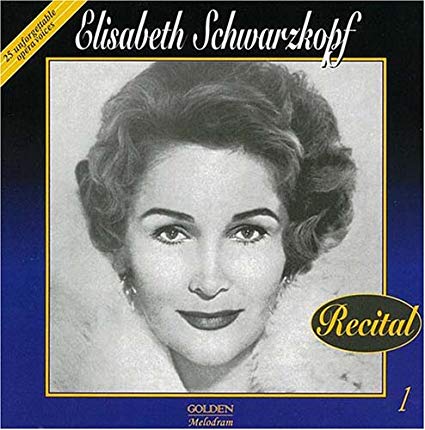
Elisabeth Schwarzkopf – Live broadcasts

517hffpxcml._sx425_

This is not a recital as such, but a collection of off the air recordings made by Schwarzkopf between the years 1941 and 1952. We get the opening of a Berlin Das Rheingold, conducted by Artur Rother (Schwarzkopf as Woglinde), Nie werd ich deine Hulde verkennen from a Vienna performance of Die Entführung aus dem Serail, conducted by Rudolf Moralt (with Emmy Loose, Anton Dermota, Peter Klein and Herbert Alsen), a duet from Weber’s Abu Hassan from 1942, with Michael Bohnen, and part of the Act II finale of Le Nozze di Figaro from La Scala in 1948, with Imrgard Seefried and W Hoefermeyer (who he?) under Karajan. We also get a couple of excerpts from the 1950 Salzburg Festival, both conducted by Furtwängler; Mi tradi from Don Giovanni (on which unusually she takes an unwritten upward ending, presumably sanctioned by Furtwängler though absent from all other versions by her) and Marzelline’s opening duet and aria from the famous performance of Fidelio at which Flagstad sang Leonore. In all Schwarzkopf displays her familiar virtues of pure, firm tone, excellent legato and elegant phrasing, the voice shot through with laughter in the lighter pieces. Marzelline’s aria is sung with a fuller tone than we often hear in this music, but captures perfectly her wistful charm. Ilia’s Zeffiretti lusinghieri is taken from a 1951 Turin Radio Mario Rossi broadcast, but it is not quite so accomplished as the one on her studio recital of the following year.

The rest is is given over to a Hamburg broadcast from 1952, beginning with a lovely performance of He shall feed his flock, from Handel’s Messiah (sung in German). The Act I monologue from Der Rosenkavalier is perhaps less detailed than the one on the complete set under Karajan and no doubt some might prefer it for that reason, though I wouldn’t necessarily be one of them. It’s a lovely performance nonetheless. Schwarzkopf’s Countess is also justly well known, and Porgi amor is sung with creamy tone and matchless legato, but the excerpts from Madama Butterfly (sung in German) don’t really work for her, and indeed Schwarzkopf herself, when she heard them in later years, thought them “rather screechy on top”. She did however approve the aria from Korngold’s Die tote Stadt (the soprano version of the duet Glück das mir verblieb) and rightly so, as this is without doubt the prize of the whole disc. I have never heard it sung better, not by Te Kanawa, not by Fleming, not even by Lehmann, who recorded the duet with Richard Tauber. The pianissimi on the top notes, the diminuendi, the way she fades the tone are absolutely miraculous, no other word for it. Everyone needs to hear this, but getting the recital on disc is quite difficult these days. Fortunately you can hear it on youtube.

The whole disc is a fitting repost to all those who think Schwarzkopf was a studio creation, catching her live and on the wing, but treasured mostly for that sensational and unfortunately unrepeated performance of the Korngold.