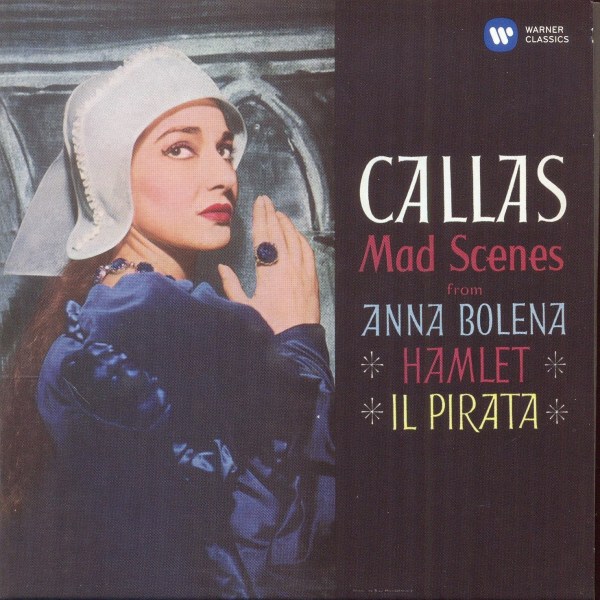
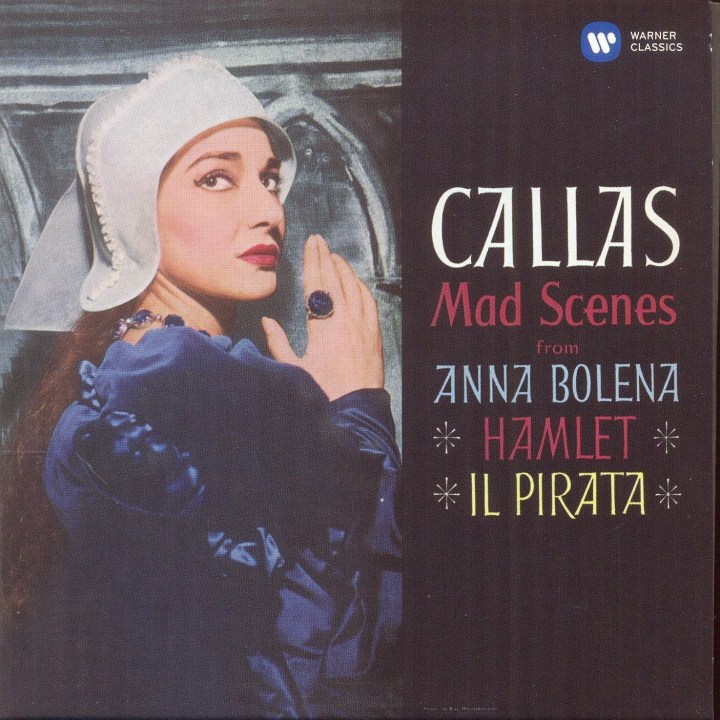
Callas Mad Scenes

917ij8qd0vl-_sl1500_

Recorded 24-25 September 1958, Kingsway Hall, London

Producer: Walter Legge, Balance Engineer: Harold Davidson

I’m going to stick my neck out and say that this is the best recital record Callas ever recorded, and by default one of the classic recital discs of all time. The 1954 Puccini disc and Lyric and Coloratura will find her in better voice, but this one sums up more than any other her greatness, her ability to bring alive music that can seem formulaic, and even plain dull in the hands of lesser artists.

I know I’ve said this elsewhere, but her singing has an improvisatory air about it, almost as if she is extemporising on the spot; how she achieves this whilst closely adhering to what is on the printed page is a mystery beyond solving. In the Anna Bolena finale, the recitative alone provides a lesson in how to bind together disparate thoughts and ideas. She brilliantly conveys Anna’s drifting mental state, whilst still making musical sense of the phrases and the long line. We can only imagine what she might have achieved in Monteverdi’s recitativo cantavo.

Once into the first aria, Al dolce guidami, her voice takes on a disembodied sound, as if the singing is coming from the far recesses of her soul. Her legato is as usual superb, her breath control stupendous, those final melismas spun out to the most heavenly lengths.  In the cabaletta Coppia iniqua, her voice takes on a majestic power, and she manages the rising set of trills with more force than anyone (Suliotis doesn’t even attempt them).

In the magnificent Final Scene from Il Pirata, she traces a long Bellinian line second to none; spinning out the delicate tracery of the decorations from Digli ah digli che respiri  onwards with magical fluency. A complete contrast is afforded when she rears back with the words Qual suono ferale, before launching into the thrillingly exciting cabaletta.

Ophelia’s scene from Hamlet is quite different. There is no formal recitative, aria, recitative, cabaletta construction. The scene is more a series of arioso segments interspersed with recitative and can often sound disjointed as a result. Callas binds together its disparate elements with masterly ease. Her voice is lighter here than in either the Bellini or Donizetti, and though the very upper reaches tax her somewhat, she sings with delicacy and consummate skill. The switch from Italian to French causes her no problems at all, her enunciation of the French text admirably clear. Yet again every fleeting expression, every change of thought is mirrored in her voice.

A listening companion of the eminent vocal critic John Steane once said to him regarding Callas, “Of course you had to see her,” to which he replied, “Oh, but I can, and I do.” This was her genius, amply displayed in this recital; the ability to make us see as well as hear.

I did try to make sound comparisons with my other CD issues of this recital, but, as usual, I had little sympathy for the task. Callas drew me in and all I wanted to do was listen. Without making direct comparisons then, I can only state that the sound here is very satisfactory, with plenty of space round the voice.

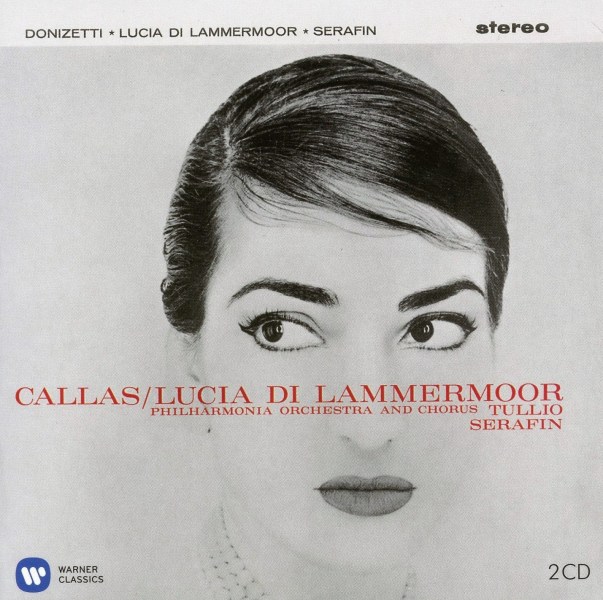
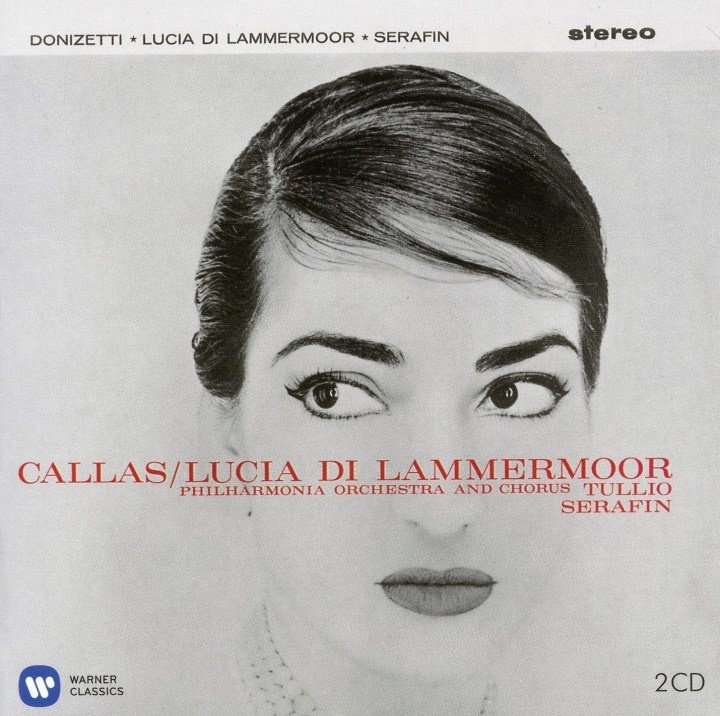
Callas’s 1959 Studio Lucia di Lammermoor

9145da2b4z5l-_sl1500_

Recorded 16-21 March 1959, Kingsway Hall, London

Producer: Walter Legge, Balance Engineer: Christopher Parker

Popular opinion holds that Callas’s Lucia is best represented by her earlier commercial recording made in 1953, and by the live Karajan performance from Berlin.

So why would anyone bother with this remake, made in 1959? Surely, apart from much better sound, it can’t have much to commend it, given the problems Callas was beginning to have with her voice, especially in the upper register, in the late 1950s. In addition the other soloists on both the 1953 studio and live Karajan are much better than the ones we get here. Cappuccilli is nowhere near as menacing as either Gobbi or Panerai, and consequently there is a loss of drama in the first act and in his confrontation with Lucia. Tagliavini may have seemed like a good idea at the time, a lyric tenor in the old style, but by 1959, even though only 45, he was beginning to sound old. One misses Di Stefano’s youthful ardour, even if Tagliavini is more stylish. As for Bernard Ladysz, just why? As far as I’m aware, the only other recording he made was of Penderecki’s  The Devils of Loudon. Who on earth thought he might be any good in Donizetti? He is no match for either Arie on the earlier recording or Zaccaria in Berlin.You might therefore think that this set is  only for the die-hards, only I’m not so sure it’s that simple.

Listening to it again for the first time in a few years, I was actually astonished at just how good she sounds, and it reminded me that in fact I first really got to know Callas’s voice from post weight- loss records.  This set was my first exposure to Lucia di Lammermoor, and I don’t remember the state of Callas’s voice bothering me too much back then. I was just overwhelmed by the truth of the interpretation, and the beauty, yes beauty, of much of her singing. Ok, the top Ebs are not exactly things of beauty, and she shortens the cadenza in the Mad Scene substantially, but the filigree of the role is stunningly executed. If she is strained by its upper reaches, then it seems a pity the bel canto revival hadn’t moved on enough for her to be able to record the version Caballe recorded, in generally higher keys, but without the stratospheric top notes. It might well have suited the Callas of 1959 a lot better.

There is no doubt this Warner re-master is a vast improvement on the Callas Edition CDs. Most of the shrillness on high seems to have faded away. In some ways, and though she sounds no more secure, the voice in general falls far more easily on the ear, and she has peered even deeper now into Lucia’s psyche. From the word go, this Lucia is highly strung, a romantically inclined dreamer, completely lost in the cruelty of a man’s world. There is desperation in her Ah, no…rimanga nel silenzio sepolto per or l’arcano affetto. Already she sounds slightly unhinged. It is not difficult to understand that it would take very little to tip her over the edge. Later in the scene with Enrico, Ahi. La folgore piombo pierces one’s very soul, and the ensuing Soffriva nel panto is sung with heart-wrenching sorrow.

In the Wedding Scene, she sounds almost in a trance, and even in the few solo lines she has, she manages to convey Lucia’s utter despair. As an assault on women, Lucia di Lammermoor must be one of the cruellest operas in the repertory. As for her singing, her legato line is as usual superb, the coloratura has a lovely finish and in the Mad Scene, her singing has almost an improvisatory air about it. This is surely the art that conceals art.

I have a fondness for it. It was not recorded at La Scala, but at Kingsway Hall with the superb Philharmonia orchestra, and the sound is very good indeed. The 1955 Berlin performance would still be my desert island choice, the sound much better than most of her live recordings, but both studio recordings also have a lot to commend them, and, as I’ve already pointed out, this one does enjoy much improved sound.

Callas’s 1959 La Gioconda

916inj1sfwl-_sl1500_

Recorded 4-11 September 1959, Teatro alla Scala, Milan

Producers: Walter Legge and Walter Jellinek, Balance Engineer: Harold Davidson

Suicidio! (in the earlier Cetra performance) was one of the first Callas arias I ever heard. It knocked me for six. I had no idea a human voice, an operatic soprano at that, could have such expressive power, and from then on Callas cast her spell on me.  This recording of La Gioconda was the second, and best, of the four Callas stereo remakes, and also the first complete opera she recorded (on the aforementioned Cetra set). The first pressing I owned was an American HMV Seraphim import, and I can’t in all honesty say much about how the sound on that compares with this. What I mostly remember is that one LP developed an annoying scratch in the scene after she gives Laura the vial in Act III, so annoying that it took me ages to relax and realise it wouldn’t be there when I listened on CD.

When I began listening to the Warner pressing I had the best intention  of comparing the sound with my original CDs (the 1987 digital remaster). First of all I compared the orchestral introduction. There was very little difference to my ears, but the new master did seem slightly clearer, as if the 1987 one had a slight fuzz on it. I then tried the Angele Dei at the end of Act I. Again, I found very little difference, but the voices on the Warner seemed a bit more finely focused, Callas’s voice at first blending with the male chorus, then soaring out over it. But I soon lost patience for making comparisons. The performance drew me in and I just wanted to get on with listening.

Recorded in September 1959, this Gioconda finds Callas in firmer voice than at any time since, say, the Dallas Medea of 1958, her top, right up to a solid top C in the last act, more focused and in control than it had been of late. She was in the process of separating from Meneghini, so maybe work came as a necessary distraction.

Callas only sang 12 performances of the role of Gioconda on stage (in Verona in 1947 and 1952 and at La Scala also in 1952), but she has become peculiarly identified with the role due to the success of her two recordings. Neither recording can boast the best supporting cast, but the second brings extra refinement from Callas, if less animal power, much improved recording and better orchestral playing from the La Scala orchestra.

The supporting cast is an interesting one. Cappuccilli had recorded Enrico in Callas’s second Lucia, as well as Masetto in the Giulini Don Giovanni and Antonio in his Figaro. He was still at the beginning of his career and his Barnaba lacks a certain authority. So too does Cossotto’s Laura, which is no match for Barbieri’s on the early Cetra set, beautifully though she sings. Ferraro can be an exciting singer at times, but it has always seemed an odd casting choice to me. He sings Gualtiero in the live Callas Carnegie Hall performance of Il Pirata, but appears to have done little else. Why on earth not Corelli, who only a year later was to sing Pollione on the second Callas Norma, and with whom she had sung on many occasions? Still, he is a great deal better than the wholly inadequate Poggi on the Cetra set. Vinco is no more than adequate as Alvise, Companeez rather better as La Cieca.

However, if we don’t get the six greatest singers the world could offer at the time, we do get the one greatest, and this is the reason the Callas La Gioconda remains the most recommendable recording of the work. Phrase after phrase is etched into the memory. Her very first entry brings a thrill of recognition, her legato digging deeply into the consoling phrases with which she comforts her mother. The score abounds with contrasts, and the first comes straight after this scene when she is confronted by Barnaba, spitting out the line Al diavol vanne colla tua chitarra, her voice dripping with loathing.

There is something so intrinsically right about her every utterance that it is impossible to imagine any other singer matching her achievement. She fails only on the pianissimo top B at Enzo adorato! Ah come t’amo! a phrase beloved of singers like Milanov and Caballe. If anything it is more in control here than it was in 1949, but where Caballe reaches to heaven, Callas is earthbound. That said if the performance of a whole opera can be ruined for you by one note, then I rather take pity on you. Callas’s singing was never about individual moments. A role had to be seen as a totality.

Interestingly, when Tebaldi came to record the opera quite late in her career, her recording producer suggested she listen to the Milanov recording, but when he went to visit her, he found her listening to Callas. “But why didn’t you tell me Maria’s was the best?” So much for rivalry.

Callas famously said of the last act of this set, “It’s all there for anyone who wishes to know what I was all about.” Looking back we can almost now see this as a valedictory statement, as she was never again to sing with such ease and security.

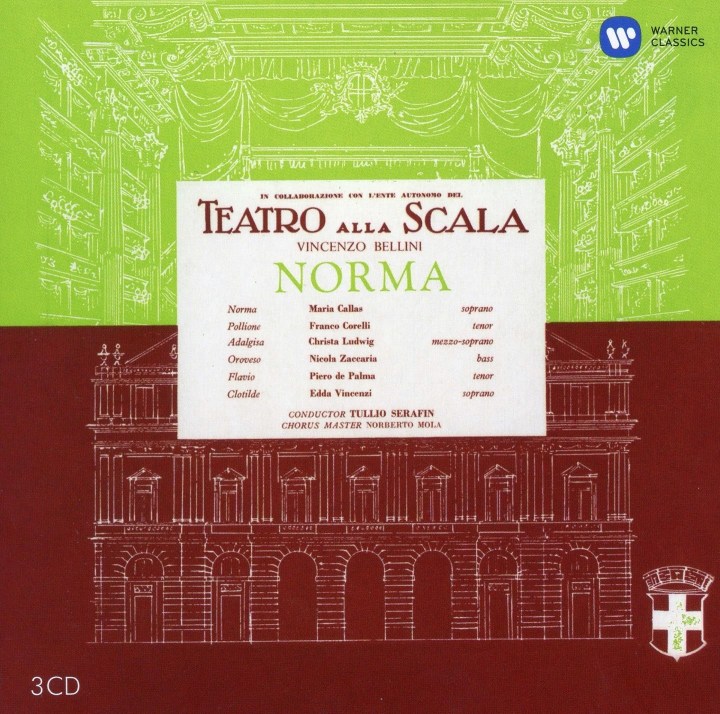
Callas’s 1960 Studio Norma

91pj158binl-_sl1500_

Recorded 5-12 September 1960, Teatra alla Scala, Milan

Producers: Walter Legge & Walter Jellineck, Balance Engineer: Robert Gooch

This was actually the first opera set I ever owned, and, so it comes with a host of memories. I was only 18. Why Norma for a first opera, you might ask. Well I had recently discovered Callas, and at that time very little of her recorded repertoire was available. I knew that Norma was considered her greatest role, so I thought it would be a good place to start. Collecting opera was expensive in those days, and my older brother, who was working by this time, bought the set for me for Christmas. I was unbelievably excited, my excitement only slightly tempered by the discovery that no libretto was included, only a synopsis, and that I would have to send off for it, not of course that I waited for its arrival before sampling the set.

It being my one and only opera set for a good few months, I got to know the opera pretty well, and of course Callas’s unique inflections will for ever be part of that knowledge. Since then of course, I have heard a fair amount of other Normas, Sutherland, Caballe, Eaglen, Bartoli (please, never again), Sass live at Covent Garden (disastrous) and plenty more by Callas herself; the live 1952 Covent Garden, the 1954 studio, the 1955 Rome broadcast and, best of all, the live 1955 La Scala, as well as excerpts from many others, right up to her final performances in the role in Paris in 1964.

So how does it hold up? Well, pretty well actually. True, notes above the stave have taken on a metallic edge, and they don’t always fall easily on the ear, but the middle and lower timbres have a new found beauty, and a characterisation that was always complex and multi-faceted has taken on an even greater depth, parts of it voiced more movingly here than anywhere else.

There are other gains too. The cast here is a vast improvement on the earlier studio one, Corelli in particular being a shining presence. Fillipeschi was a liability on the earlier set, but, whilst not quite a paragon, and chary of some of the coloratura in his role (Serafin making a further cut in the great In mia man duet to accommodate his lack of flexibility), Corelli’s is a noble presence, and his clarion voice is ample compensation. Zaccaria may be less authoritative than the woolly voiced Rossi-Lemeni, but his tones are distinctly more buttery. Ludwig is an unexpected piece of casting, but she too is an improvement on Stignani, who, great singer though she was, was beginning to sound a bit over the hill by the time of the first Callas recording (she was 50 to Callas’s 30). Ludwig sounds, as she should, like the younger woman. Her coloratura isn’t always as accurate as one would like, certainly no match for Callas, but she sings most sympathetically in duet with her older colleague, and Mira o Norma is, for me, one of the greatest performances on disc. After Ludwig states the main theme, Callas comes in quietly almost imperceptibly and at a slightly slower tempo with an unbearably moving Ah perche, perche, her voice taking on a disembodied pathetic beauty. When Ludwig joins her for the section in thirds, she perfectly matches Callas’s tone on her first note, before Callas joins her in harmony, a real example of artists listening to each other in a sense of true collaboration.

One should I suppose mention the losses from the earlier recording. Yes, some of Callas’s top notes are shrill, and we lose some of the barnstorming heroics that were a part of Callas’s Norma right up to 1955. This Norma is more feminine, more vulnerable, if you like. How much this had to do with interpretive development, and how much with declining vocal resources is a moot point, but there is no doubt Callas is still a great singer, doing the best she can with what she has. Some sections are more moving here than in any of her other performances. I’ve already singled out Mira o Norma but the earlier duet is its equal, Callas wistfully recalling her own awakening to first love.

The beginning of Act II always brought out the best in her, and here she is sublime. Dormono entrambi is an unusual piece which alternates passages of recitative with arioso, rather like Rigoletto’s Pari siamo. Callas draws on all the colours in her palette to express Norma’s contrasting emotions. You can almost feel the chill that comes over her at un gel me prende e in fronte si solleva il crin followed by the choked emotion of I figli uccidi! The arioso of Teneri figli is couched in a tone of infinite, poignant sadness, but then her tone hardens with her resolve at Di Pollion son figli, before, with a cry she drops the knife (and we can almost hear the precise moment), crying out Ah no, son miei figli! Operatic singing and acting on the highest level.

Serafin’s conducting is much as it was in the first set. He has the virtue of not conducting the opera as if it were Verdi, as so many do. Sometimes I’d like him to get a move on a bit, but his pacing of the final two duets (one in public, one in private) is superb, and he perfectly judges the climaxes in the Grand Finale, one of the greatest in all opera.

I’ve always found it difficult to choose between Callas’s studio recordings of Norma. I wouldn’t want to be without either. Nor would I want to be without her 1955 live La Scala account, with Del Monaco and Simionato, which is where voice and art find their greatest equilibrium. One thing is for sure, Callas remains the quintessential Norma. No singer has yet challenged her hegemony in the role.

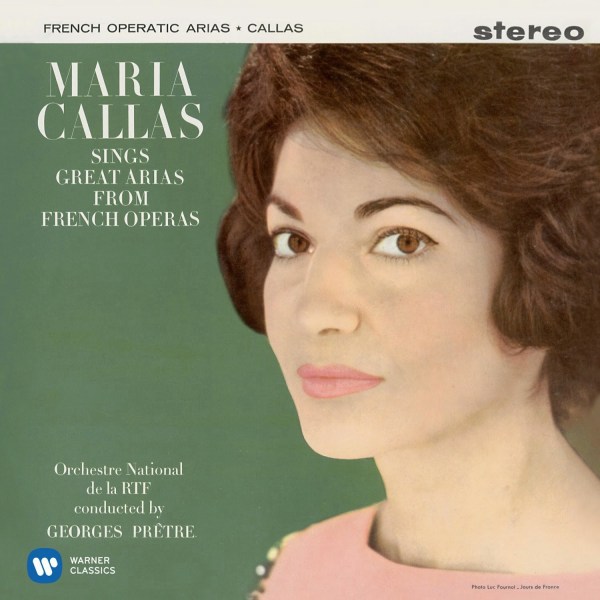
Callas a Paris

Callas never sang a role in French on stage, and only one complete role (Carmen) on record, but as can be heard on these two discs, she had a natural affinity for the language. She spoke it fluently (though tellingly refused the role of Carmen in the Beecham recording, “because my French isn’t good enough yet”) and of course made Paris her home in her last years. Previously she had sung only Ophelia’s Mad Scene in French on the Mad Scenes recital disc and Louise’s Depuis le jour in recital in 1954.

Two years separate the recording of these two discs, and it is alarming to hear the marked deterioration in Callas’s voice in such a short period of time, a voice that was already showing signs of stress in the first recital recorded in 1961. These were also the last records of hers to be produced by Walter Legge.
51nmk20cjwl

Recorded May 1963, Salle Wagram, Paris

Producer: Walter Legge, Balance Engineer: Francis Dillnutt

Despite her vocal problems, and despite the fact that she is evidently having to tread carefully, there are, however, still treasures on the second disc. She sounds strained to the limits by the Gluck, and it can make for uncomfortable listening. Even so her grasp of the classic style and her command of legato never falters. There are also signs of strain in Leila’s Comme autrefois, (though her phrasing is exemplary) and  Manon’s Je marche sur tous les chemins, shorn of the ensuing gavotte, ends somewhat inconclusively. Manon’s Adieu, notre petite table, though, is a different matter; maybe a tad too serious, but the sadness she gets into this little solo is most touching, and she makes the aria work supremely well out of its context.

For the rest, we are vouchsafed three great performances. Gounod’s Margeurite comes as a total surprise, Callas finding here a lightness of touch that one might have thought was beyond her by this time. In the Ballade she meticulously differentiates between Marguerite’s thoughts and the strophic song she sings, carefully placing Marguerite’s simplicity before us. Her innocent rapture when she opens the casket of jewels is brilliantly caught. There is charm here (a trait which often eluded her in the past) and femininity, the text clearly enunciated, the runs deftly executed. She is defeated only by a watery top B at the end, which detracts from, rather than caps, what had been a beautiful performance.

Berlioz’s Margeurite is superb. Alongside Janet Baker’s performance on the Prëtre recording, this is one of the greatest performances of the piece put down on record. At the beginning of the aria, Callas perfectly mirrors the tone of the cor anglais with her first words, then beautifully lightens her tone, putting a smile in the voice for Sa marche que j’admire (and note how we hear the separation of the duple quavers in de sa main, de sa main la caresse, without once disturbing her impeccable legato). Her mounting rapture at Je suis a ma fenetre, where she uses the rests brilliantly to illustrate the recollection of Margeurite’s breathless excitement at Faust’s arrival, finds its release in a cathartic O caresses de flamme, which she achieves again without once upsetting the long musical line. “Who would not wither in the flame of her genius?” asked the Berlioz scholar, David Cairns. Who indeed? I can only imagine what she might have done with the roles of Cassandre and Didon, and why not Les Nuits d’Ete too? Can you not imagine Callas singing the words O grands desirs inapaisees? If only Callas had sung more Berlioz. It was a natch made in heaven.

And finally I turn to Charlotte’s great Letter Scene, arguably the most dramatic piece on the album, which brings out the best in her. How brilliantly she differentiates between Charlotte’s thoughts and Werther’s own words, particularly noticeable when she repeats the phrase Ne m’accuse moi, pleure moi, as their significance dawns on her. Unerringly, she captures Charlotte’s mounting panic as she reads the letters. So vividly does she bring this scene to life, that I can now just read through the text, and Callas’s voice and inflections come to my mind’s ear. Like many of her performances, it spoils me for all others.
81slgnandkl-_sl1500_

Recorded March & April 1961, Salle Wagram, Paris

Producer: Walter Legge, Balance Engineer: Francis Dillnutt

Though there are still a few wild and insecure notes, the first disc is one of the classic recital discs of all time, and one I would never be without. Whole tomes could be written about Callas’s psychological insights, her realisation of the composer’s intentions; every aria is like a new discovery. There isn’t a single dud on the recital, though the rather empty coloratura of Philine’s Je suis Titania would hardly seem worth her effort. She manages it remarkably well, the filigree beautifully executed, with a lovely lightness of touch, magically lightening her tone. She sounds a different singer from the Carmen and Dalila, which precede it, but it’s still my least favourite piece on the disc.

Everything else is pure Callas Gold. The Gluck arias sung with passion, but retaining their classic contours, Orphee’s J’ai perdu mon Eurydice emerging as a true lament. Note the appeal in the voice at the words C’est ton epoux, ton epoux fidele, the blank, despairing tone at Mortel silence and the suffering that truly tears at the heart (dechire mon coeur). Alceste’s great entreaty to the gods is hardly less affecting. Though the top notes are driven here, they are not intrusive, and Callas again finds a wealth of colour for each intercession, for each recurring statement of Divinites du Styx, with a lovely softening of her tone at Mourir pur ce qu’on aime.

Carmen’s arias are best seen as a preparation for the complete set, but the Habanera is seductive and playful, and the Segeudille full of humour, lightly and playfully sung. Dallila’s arias are even better. When it comes to Printemps qui commence I can do no better than to quote Ronald Crichton in an issue of Covent Garden’s About The House.

Callas, in her matchlessly intelligent and instinctive record, is like an elegant young tigress stretching her limbs in the spring sunshine.

The danger lurking under that seductive surface is unleashed in Amour viens aider ma faiblesse, and then she gives us a real siren, when she sings the famous Mon coeur s’ouvre a ta voix. Incidentally, always a stickler for the composer’s intentions, Callas here sings exactly what Saint-Saens wrote, which is that Ah reponds a ma tendresse should be sung in one breath. Most singers add an extra Reponds, which gives them a chance to snatch an extra one. In the second statement, she does indeed take a (perfectly justifiable) breath at Verse moi, verse moi l’ivresse (there is a comma here after all), but this might have been the reason why she refused to allow the aria to be released when the record first came out. It wasn’t issued until the disc was reissued after her death. In any case I doubt any of these arias has ever been done better, and they are enough for Alan Blyth to name Callas as Dalila in his dream cast for Samson et Dalila in his comparative review in Opera on Record.

Juliette’s Waltz Song is a miracle of lightness and elegance. Though the tone is mature, Callas suggests better than anyone the joy of the young girl, but note too the change of colour, when a veil of sadness comes over her voice at Loin de l’hiver morose. Callas gets more meaning out of this seemingly innocent tune than any other singer I know. Chimene’s glorious Pleurez, mes yeux has a dark, tragic beauty, her chest tones uniquely telling, her legato superbly eloquent.

Finally we come to Louise’s apostrophe to love and life. There are some alarming flaps on high notes here, and we note that even in 1954 the aria never quite worked for her in toto, but the quiet intensity of her intent is never in doubt. Has any other singer, before or since, captured quite so unerringly Louise’s mounting rapture, or sung quite so erotically the words je tremble delicieusement? So her voice doesn’t always do quite what she asks of it. Who cares, when she realises the fundamental truth at the root of this aria, which is actually about a young girl’s sexual awakening? When this recital was first reissued, Richard Osborne wrote, “Records like this change people’s lives.” It certainly changed mine
Late Callas Recitals

Recorded 1963 and 1964, Salle Wagram, Paros

Producer: Michel Glotz, Balance Engineer: Paul Vavaseur

It’s useful to take these three recitals together. They were recorded over a similar period, and Callas was using the sessions as a way of working on her voice after a long period of inactivity. Indeed in 1962 and 1963 she didn’t appear on stage once, giving only a few scattered concerts.

81unw2ww5cl-_sl1500_

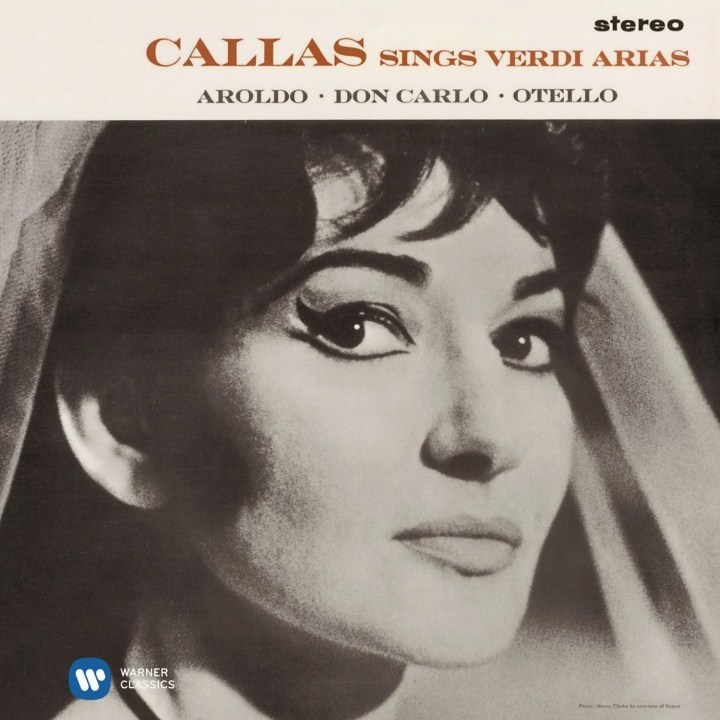
None of these discs could be considered essential, but the Verdi disc is the most recommendable. The most undemanding of the pieces (Desdemona’s Willow Song and Ave Maria) is predictably the one that causes her the least problems, and also yields the most vocal pleasure. As always the mistress of mood, she differentiates clearly between the conversational exchanges and Barbara’s song, her legato impeccable in the Ave Maria. The Aroldo arias are superbly intense and dramatic, as is Eboli’s O don fatale, the O mia regina section beautifully moulded, and benefiting from her deep legato. The top of the voice is no more pleasant here than it is elsewhere on these three discs, but the drama carries her forward and it is easier to forgive. There is not much to commend Elisabetta’s Non pianger mia compagna, and I often wonder why it was included.

81mslzncryl-_sl1500_


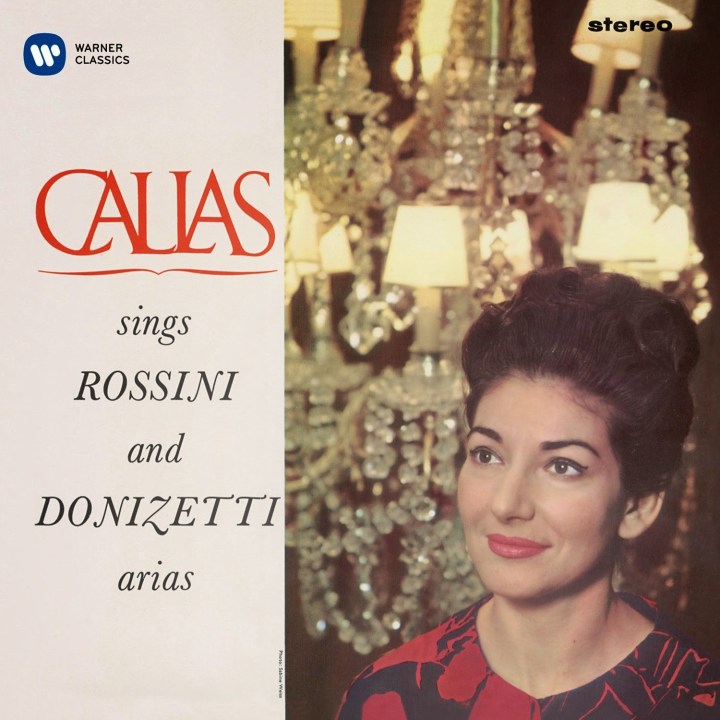
The Rossini and Donizetti fails to ignite her dramatic sensibilities quite so much, and there are plenty of uncomfortable moments. However there are still times, when we glimpse what Callas might have done with this music a few years before. Her Cenerentola lacks sparkle, but the scale passages are wonderfully supple and smooth. This is a serious Cenerentola, though, given what she suffers before singing this aria, such a reading is not entirely inapt. That said, there is a much better version of her singing this at a concert in London, where she finds a lightness of touch that eludes her here. Elsewhere, much of the singing sounds tentative, much more so than on the Verdi. Though she unerringly captures Mathilde’s sighing loneliness in the aria from Guglielmo Tell, there is a rather lifeless air about the recording, not helped by the omission of a chorus in some of the items. Nevertheless her sense of style never deserts her.

81jmshecyul-_sl1500_

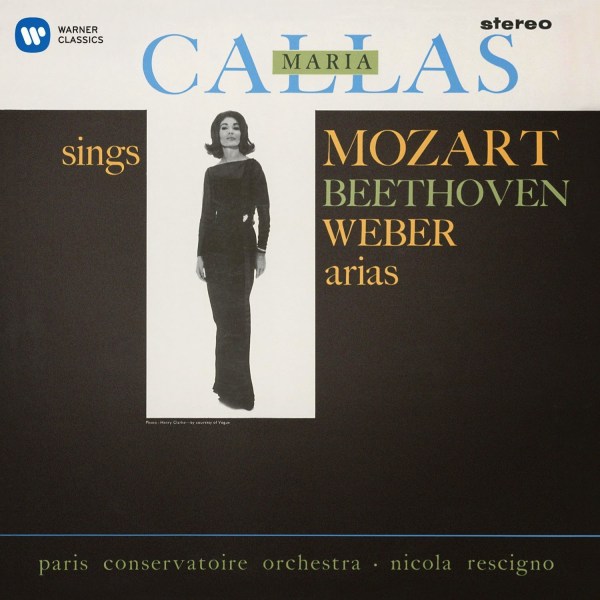
Mozart, Beethoven and Weber are not composers one would naturally associate with Callas. That she could be a great Mozartian is evidenced by her test recording of Donna Anna’s Non mi dir, and a couple of blazingly defiant concert versions of Costanze’s Martern aller Arten, sung in Italian as Tutte le torture. (It is a little known fact that Callas was actually La Scala’s first ever Costanze.) The less said about Porgi amor and Donna Anna’s arias on this album, though the better. Elvira’s Mi tradi goes a lot better, and the recitative, with its contrasting emotions, is superb. It’s mirror piece, Beethoven’s concert aria Ah perfido also goes well, and, as it lies somewhat lower, suits her much better. It is without doubt the most successful item on the recital. Ocean, thou mighty monster is also superbly dramatic, but her peculiarly accented English is somewhat bizarre, and again the climaxes are something of a trial.

I find my attitude to these late recitals can vary each time I listen to them. Sometimes I find the wobbles, the insecure and unsupported top voice, the acidulous tone difficult to take; others I barely notice it, so taken up am I by her musical instincts. The Verdi I would hate to be without, the other two for very occasional listening only.

The Callas Carmen

81kl4jlqt0l-_sl1500_

Recorded July 1964, Salle Wagram, Paris

Producer: Michel Glotz, Recording Engineer: Paul Vavaseur

And so, still moving chronologically backwards through this set, we come to the last of the four roles Callas recorded without ever singing them on stage. This Carmen has always been controversial, the most controversial element being Callas herself, so, let me deal with the rest first.

The edition used wouldn’t bear scrutiny. We are of course back in the days of the old Guiraud recitatives, but there’s no point complaining about that. This is how everyone was doing Carmen back then. The sound is excellent early 1960s stereo and sounds better than ever in this new re-master.

This is a very French Carmen. Aside from Callas and Gedda, everyone else involved is French, and Gedda was, in any case, the best “French” tenor around in those days. Pretre’s conducting is swift, sometimes maybe too much so, and deliciously light in places, but his speeds make dramatic sense and it works very well. The orchestra and chorus, again French, sound idiomatically right to me. The Escamillo of Robert Massard sounds authentic too, if not so characterful as someone like Jose Van Dam. Andrea Guiot’s Micaela I like a lot. She does not display the creamy beauty of a Te Kanawa or a Sutherland, but she is much more convincing than them at playing the plucky, no-nonsense village girl. We must not think of Micaela as a wilting violet; she is actually quite a strong character. Not only is she able to hold her own with the soldiers in the first act, she has the strength to confront Carmen and the gypsies in the third act. Her voice is firm, clear and very French. She sounds just right to me.

Gedda of course had already recorded the role under Beecham with De Los Angeles. He does not have the heroic sound of a Domingo, a Vickers or a Corelli  but, as always he sounds totally at home in French opera. In any case, is a big heroic voice what is required? Don Jose is basically a nice young man, somewhat repressed, who gets caught up with the wrong woman. A young man, who, once his passions are aroused, does not know how to control them.  Gedda is superb at charting Jose’s gradual disintegration. He sings a beautifully judged Flower Song, with a lovely piano top Bb, is gently caring in his duet with Micaela, and suitably shamed when he meets her again. In the last act he is a man at the end of his tether, dangerous because he has nothing left to lose. As a performance I think it has been seriously underestimated. I find him entirely convincing, much more so than, say, Corelli, with his execrable French, in Karajan’s first recording of the opera.

And so we come to Callas. Many of the objections when the set first came out were not so much about her singing as about her characterisation, one critic opining that she was closer to Merimee than Meilhac and Halevy. But that’s an objection that makes no sense at all. Meilhac and Halevy may have watered down Carmen’s indiscretions with other men while still with Jose, but they still make it clear she is a free spirit, not to be tied down. In the 1960s, women were still fighting for equality (they still are). Much of the debate about the contraceptive pill in the 1960s centred around the fact that it would encourage promiscuity. People, especially men, were not comfortable with the idea of a sexually promiscuous woman, so Carmen’s character was often played down. The De Los Angeles recording with Beecham had been highly praised, but, love De Los Angeles though I do, can anyone really imagine her Carmen pulling a knife on a fellow worker in a cat fight? She is altogether to ladylike to even think of such a thing. But Callas is exactly what she is described in the text, dangereuse et belle, in Micaela’s words. This is a true free spirit. As she tells Jose in the last act, Libre elle est nee et libre elle moura! When she admits to her friends Je suis amoureuse, Callas gives the line an ironic twist, even more so on the following amoureuse a perdre l’esprit. We know absolutely, as her friends do, that this is the whim of the moment; the mood of the day, and that there will be others. Earlier her seduction of Jose is brilliantly charted too. Ou me conduirez-vous? she asks Jose, as he is about to take her to prison, and the little girl lost tone she uses is just what’s needed to draw him in. Later on when Jose comes to the inn and they end up arguing, some have found her rage too over the top, but there is justification for this too. When Jose tells her he has to go back to the barracks, that could be the moment she realises that maybe she is not in love with this milksop after all. Have a row, send him packing. That’s the best way to get rid of him. Only things don’t quite work out that way; her cry of Au diable le jaloux! is quite matter of fact. Finally she realises she is saddled with him, but is quite pragmatic. In fact, now that I think of it, the whole plot only works if you accept that Carmen was never in love with Jose in the first place; that he was first a challenge, then a convenience. Escamillo is much more up her street (for a while anyway); when he comes looking for her and Micaela comes looking for Jose, this is just the way out she is looking for. Unfortunately, Jose turns out to be even more unhinged than she had imagined, but defiant to the last, she refuses to give in to him, and staring death in the face, asserts her freedom from all men. No doubt this is what commentators found so disturbing. Some no doubt still do. It doesn’t make for comfortable listening.

Apart from a few squally top notes in the ensembles (which she didn’t need to sing anyway), her voice was absolutely right for the role at this stage in her career and the performance is full of miraculous detail. I notice something different in it each time I hear it.

When it was reissued, Richard Osborne in Gramophone wrote, “Her Carmen is one of those rare experiences, like Piaf singing La vie en rose, or Dietrich in The Blue Angel, which is inimitable, unforgettable, and on no account to be missed.”

I couldn’t have put it better myself.

Callas’s 1964 studio Tosca

91idlbhid5l-_sl1500_

Recored July 1964 and January 1965, Salle Wagram, Paris.

Producer: Michel Glotz, Balance Engineer: Paul Vavaseur


I hadn’t heard this set in maybe 20 years. It was actually one of the first complete opera sets I owned, the renowned 1953 De Sabata recording being unavailable when I first started collecting in the late 1960s. According to Zeffirelli, the recording was originally intended to be the soundtrack of a film, a project that unfortunately fell through, but, in any case, EMI obviously wanted to cash in on the success of Callas and Gobbi’s performances together in 1964 and 1965 in London, Paris and New York. Considering how closely they are associated with their respective roles, it is a surprise to find that before the Zeffirelli production at Covent Garden, they had only once before played opposite each other in the opera, and then only in a performance of Act II at a Paris Opera Gala, and yet they cast their shadows over the opera as no others do.

Let’s first get the caveats out of the way. Pretre doesn’t have De Sabata’s grip on the score, but he has his moments, and the torture scene is particularly thrilling; Callas’s voice is considerably trimmed down from the first recording and some of the top Cs are closer to screams than actual notes, though, in this new pressing, they don’t seem anywhere near as bad as I remember them; Gobbi too has lost some of his vocal sheen, but is as authoritative as ever.

However, we should remember that this recording was made at about the same time as Callas and Gobbi were appearing on stage. Even without seeing them, you sense their deep rapport. The producer John Copley was Zeffirelli’s assistant on the Covent Garden production, and he once told me that rehearsing with Callas and Gobbi was not like rehearsing with opera singers at all. Zeffirelli would let them run a whole scene, improvising their moves as you would with actors. They would then sit down and discuss what had worked, what hadn’t and go back over the scene incorporating any new ideas that came up. In all his career, he said, he has never come across such complete actor-singers. This ability to play off each other comes across in all their scenes on disc.

I do miss Callas’s ability to soar and swell the tone at a line such as Egli vedi ch’io piango, but their are compensations. When she cries Non posso piu in Act II, this is literally the sound of a woman at the end of her tether, and her chest tones in son io che cosi torturata rend the heart. In the last act, her recounting of the murder lacks the power of the De Sabata, though she manages Io quella lama gli piantai nel cor better than expected with an exciting plunge into chest voice. Here too the top C sounds better than I remember; I assume this must be something to do with the improved sound picture. Her Tosca on this set is more feminine, more vulnerable, if you like, with dozens of lovely touches in the love duets, if not the ability to ride the orchestra that she had in the first recording.

Gobbi still sounds superb. I doubt I will ever hear another Scarpia to rival him. His Scarpia is a gentleman and a thug and more interesting because of that. A man of impeccable manners, who never gets his hands dirty, making sure he has minions to do his dirty work for him. His performance, too is full of detail. From the unconcerned way he sings La povera mia cena fu interrotta, cruelly feigning surprise at Tosca’s distress, to the ironic tone he adopts at violenza non ti faro, this is a man completely in control.

Cavaradossi? Well Bergonzi sings beautifully, but I missed Di Stefano’s ardour, his winning personality, and he is in especially good voice in the De Sabata recording. Beside him Bergonzi sounds a bit anonymous.

The orchestra play well for Pretre, but they are not the equal of the La Scala players, and of course this set will never replace the classic De Sabata Tosca, which is considered one of the classic opera recordings of all time. This one isn’t entirely without merit, though, and Callas completists will definitely want to have it in their collection.

Callas sings Verdi Arias III

91sppqa2pml-_sl1500_

There never actually was a Verdi Arias Vol III, though one had been planned. Warner here use the cover of an album issued in 1972, of material which had been sitting around in the vaults, and which Callas eventually agreed to have issued. The original album coupled  the Act I Scena from Il Pirata (now on Rarities) with Amelia’s Act Il Scena from Un Ballo in Maschera, O madre dal cielo from I Lombardi, Arrigo, ah parli a un core from I Vespri Siciliani, Liberamente or piangi from Attila and Aida’s Ritorna vincitor. The Il Corsaro arias, Amelia’s Morro, ma prima in grazia and Leonora’s Tacea la notte placida appeared on a later album called The Legend, coupled to some unissued 1955 arias from La Sonnambula, none of which were cleared for release by Callas.

That 1972 album was actually one of the first Callas LPs I owned. It seems unbelievable now, but in the early 1970s, most of Callas’s back catalogue had been deleted by EMI, who presumably thought that the advent of stereo rendered it obsolete. At that time I had only heard a few of her recordings and I remember sampling a couple of arias from this disc in Windows, the local classical music store in Newcastle-upon-Tyne. Initially alienated by the harsh sounds I heard coming from the listening booth, I left the shop without buying the disc. However somehow those tones carried on resonating in my mind’s ear, and eventually I went back and bought the LP. It was a decision I never regretted, as I learned to listen not just to the voice itself, but what she was doing with it. It also introduced me to some Verdi I’d never heard before, namely the arias from I Lombardi, Attila and I Vespri Siciliani. I knew absolutely then that Verdi was to become one of my favourite composers.

Taking first the arias not on that original LP, we find the arias from Il Corasaro recorded in 1969, really remarkably good. Her legato line is better than both Caballe and Norman on the Philips studio recording of the opera, and she unerringly captures the mood of each aria. The Trovatore has some magical moments, but at no place challenges her superb recording with Karajan. Amelia’s Morro, ma prima in grazia is very good indeed, with a superb, firm top B leading into a perfectly shaped final cadenza.

Swings and roundabouts on the rest. The tone at the beginning of the I Lombardi aria (the first track I listened to in the record shop) is indeed somewhat uningratiating, but once past the opening statement, she is in securer form, and moulds the line beautifully. Both the Attila and I Vespri Siciilani arias go well, the legato line beautifully held, and with Rescigno conjuring up some gorgeous sounds from the orchestra for the Sospendi o rive section of the Attila aria. I’d certainly sooner hear this version than Deutekom’s pallidly voiced one on the Philips complete recording. Amelia’s grand Act II Scena is full of passion, drama and fantasy. Though the ascent to top C is hard won, she grandly phrases on and through the note, so that it does not become the focal point of the aria. Still this does not challenge her performance on the complete set of 1956, nor the superb live performance from 1957.

The one incontrovertibly great performance on the disc is Aida’s Ritorna vincitor. This was not originally planned, but sessions had been getting a bit tense and Callas and the orchestra took a break. During the break Michel Glotz, the recording producer played a performance of Crespin singing the aria, which had been recorded the previous day. Callas was incensed, finding the performance completely antithetical to her sensibilities, lugubrious and slow. “I could hardly get the words out, when I did this with Maestro Serafin.” On learning that the parts were still there, she said, “Come on, Nicola, let’s do it!” and this is what they did – in one take! As always Callas loved a challenge, and this was as if someone had laid down the gauntlet. Somehow she recovers much of her old security, and the aria is brim full of drama and passion. Just listen to the anguish she pours out in Ah! non fu in terra mai da più crudeli angosce un core affranto, the desperation of Ah, sventurata che dissi?, with the final plea to the Gods heart wrenchingly poignant. This is Callas at her best.

The Callas Rarities

912yodnhq2bl-_sl1500_

The Callas Rarities covers recordings made for EMI between 1953 and 1969. Apart from the mono version of the Sleepwalking Scene from Macbeth and the Scena from Il Pirata, none of these items were approved for release by Callas, so it is important to remember that when listening.

We start with two test recordings of Donna Anna’s Non mi dir made in Florence before her first complete opera recording for EMI (Lucia di Lammermoor), and so that Legge and the engineers could get a feel for her voice. She sails through the aria as if it’s the easiest thing in the world (it isn’t), but the second take is noticeably more relaxed than the first. Though the recordings were simply in the nature of a “run-through”, Callas is incapable of being dull. She reminds us that this aria is an appeal to Don Ottavio, caressing the phrases. Her breath control is astounding and there is a moment of pure magic as she phrases through into the second statement of Non mi dir, the voice almost suspended in mid air.

We move onto the Sleepwalking Scene from Macbeth, one of Callas’s most psychologically complex pieces of singing, which most of us will know better from the stereo version. This one has the added advantage of hearing Callas disappear into the distance as she sings her last melismata up to the top Db, and as is part of the stage instructions.

The Tonini sessions of 1961 and 1962 form the largest body of unreleased material, and were made primarily as “working” sessions for Callas to retrain her voice after the vocal problems that started to beset her at the end of the 1950s. One thing I immediately noticed, listening to these and the older recordings that follow, is that the voice is much more comfortable to listen to in these new re-masters. I didn’t make direct comparisons, but I remember the sound generally being much more harsh before. Both orchestra and voice seem to have more space around them. None of this material is without interest, but there is an unfinished air, about them, which is hardly surprising, given their provenance. Her voice is generally, but not always, fresher sounding than on the ones that were finally issued (conducted by Rescigno). She adopts a suitably imperious tone as Semiramide, but she chooses not to add a cadenza, nor add much ornament, leaving it all sounding a bit dry. It is no match for Sutherland’s brilliantly decorated version on her early Art of the Prima Donna recital. That said, as in all this material, Callas’s  phrasing is wonderfully musical.

The biggest surprises for me came with the later material, recorded in 1964, 1965 and 1969. The Aida duet sounds much better here than in its previous incarnation, the miking more flattering, Callas and Corelli responding brilliantly to each other. Corelli adored Callas. Too bad he isn’t on her complete recording of Aida, and why not on the EMI La Gioconda recorded just before Norma? A mystery indeed.

The 1969 sessions too sound much better than I remember them, the performance of Elena’s Arrigo, ah parli much more beautiful than my recollection of it, the final chromatic scale with its plunge down to a low F# quite breath-taking.

Of course all these late performances expose marked vocal problems, but I was amazed at just how beautiful much of the singing is. Her musical instincts are never in doubt, and we still hear this amazing ability she had to capture the mood of an aria in just a few notes, how she could match the timbre of her voice to the orchestral introduction. The sighing loneliness she brings to Mathilde’s Selva opaca, from Rossini’s Guglielmo Tell being a perfect example. It may be a voice in crisis, but it remains the voice of a great artist.