Rossini’s Elisabetta Regina d’Inghilterra in Wildbad

818f5oblspl._ac_sl1500_

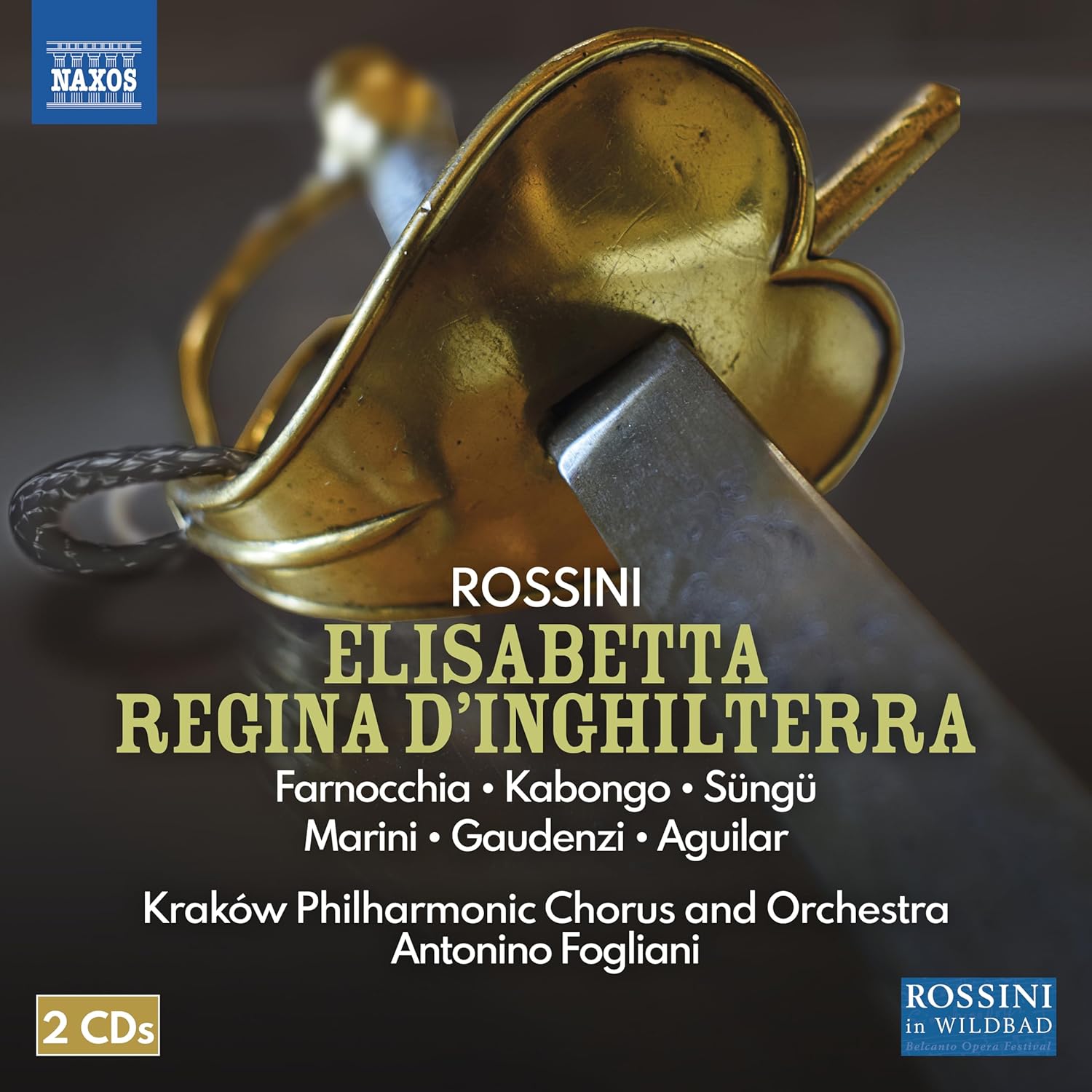
Premiered in 1815, Elisabetta, Regina d’Inghilterra was the first of nine operas Rossini wrote for the San Carlo, Naples. It is based on a play by Carlo Federice, which in turn had been based on a novel by Sophia Lee, called The Recess. Dealing with Elisabeth’s leniency in forgiving Leicester and his secret wife Matilde, it is highly probable that its subject was also meant to celebrate Ferdinand IV, who had recently returned from exile and his ‘leniency’ in not carrying out reprisals against his renegade subjects. At the premiere the roles of Elisabetta and Leicester were sung by Isabella Colbran and Andrea Nozzari, with the role of the villainous Norfolc (sic) going to Manuel Garcia, who would later go on to create the role of Lindoro in Il Barbiere di Siviglia. As is usual with Rossini, there were a lot of self-borrowings in the score. Much of it is from Sigismondo and some from Aureliano in Palmira, including the overture, which would eventually find it’s permanent home as the overture to Il Barbiere di Siviglia. Rosina’s Una voce poco fa in that opera is also a re-working of Elisabetta’s entrance aria.

The opera was a huge success at the time, but, like most of Rossini’s serious operas, fell out of the repertoire until the bel canto revival of the second half of the last century precipitated a spate of revivals.  The present set derives from performances in 2021 in Kraków, Poland and at the Wildbad Rossini festival in Bad Wildbad. However much a rarity on stage, the opera is well represented in the catalogue. We have a 1976 Philips recording, featuring Montserrat Caballé and José Carreras, which was based on performances at the Aix-en-Provence festival and there is also a recording on Opera Rara, with Jennifer Larmore and Bruce Ford, a performance which is absolutely note-complete, though in fact only runs a few minutes longer than the Philips. I haven’t heard the Opera Rara set, nor a live one featuring Leyla Gencer, but I used to own the Philips set on LP and re-listened to some of it on Spotify before writing this review.

Unfortunately, this Naxos set is nothing to write home about. The Kraków Philharmonic Orchestra & Chorus can’t compare to the Ambrosian Singers and the London Symphony Orchestra and Antonio Fogliani whizzes through the score, as if he can’t wait to get it over with. Given what we hear on stage, one can hardly blame him. There is very little of tonal beauty or real vocal accomplishment to be heard. At no point do any of the soloists rival those on the Philips set, where Caballé is in fine voice and has all the grandeur the role of Elisabetta requires. She is in a completely different class from the efficient, but dull Serena Farnocchia, who plays Elisabetta on Naxos. Then on Philips we have the young Carreras. He may not get round the notes quite as easily as Patrick Kabongo, but there is the compensation of the sheer beauty of his voice at that time. Kabongo’s voice becomes thin and wiry as he goes above the stave. That said, Kabongo’s Leicester is at least acceptable but Mert Süngü’s  Norfolc is not. I know the character is extremely unpleasant, but I’m not sure he needs to sound so awful. Ugo Benelli on Philips is much better.

 As Matilde, Philips have the lovely Valerie Masterson, who had played the role in Aix, her bright, light, lyric soprano contrasting well with Caballé’s richer more refulgent tones. You could never mistake one for the other, whereas the voices of Farnocchia and Veronica Marini, who plays Matilde on the Naxos set, aren’t particularly dissimilar.

The tepid applause, which occasionally reminds us that this is a live performance, sounds more dutiful than enthusiastic. One wonders why Naxos decided to issue it unless it were just to complete the Rossini Wildbad series. Unless you absolutely must have CDs, then the old Philips recording, now available as a download and warmly reviewed by Ralph Moore in his Rossini survey, is far preferable.

Karajan’s Second Studio Carmen

r-12243334-1531591154-5519.jpeg

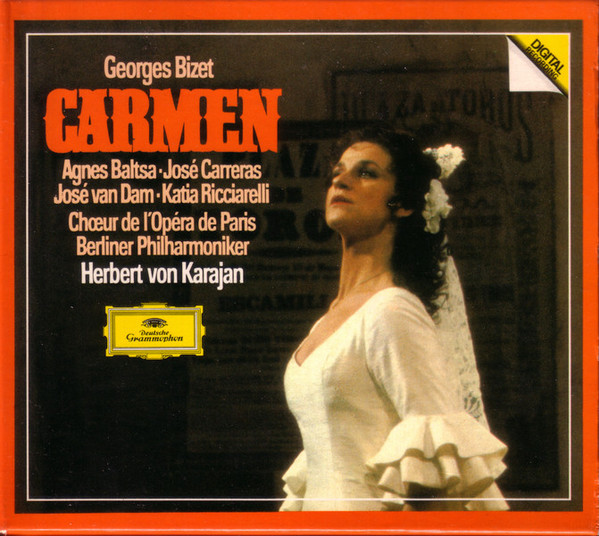
I saw Baltsa and Carreras in Carmen at Covent Garden shortly before this set was issued, and it remains one of the most thrilling performances (of anything) I’ve ever seen. Consequently I was very excited when this set was issued and snapped it up immediately.

Unfortunately, it proved something of a disappointment, the fault for which must lie squarely on Karajan’s shoulders. By this time measured tempi were becoming the norm for him, and it is evident how much he loves this score, but he rather loves it to death. For all the beautiful playing of the Berlin Philharmonic Orchestra, it lacks completely the wit and elegance of Beecham, or the swift visceral excitement of Prêtre.

Having taken the decision to record the version with spoken dialogue, it seems totally perverse to then use actors to speak it. They sound nothing like their singing counterparts and are recorded in a totally different acoustic, which makes it hard to become involved when the differences are so profound. It’s like listening to two different productions at the same time, and does the most harm to Baltsa and Carreras, who were so involving and communicative live at Covent Garden. Indeed neither of them really settles down to a real performance until the final duet, which is thrillingly powerful, as it should be.

What on earth prompted Karajan to think that Ricciarelli, a singer I often admire could be perfect as both Micaëla and Turandot, which she also recorded with him? She is suited to neither, whereas Barbara Hendricks, who had a particular affinity for French music, and who sings a wonderful Liu on that Turandot he recorded the previous year would have been perfect.

Van Dam is a fine Escamillo, as he was for Solti and there are some good performances among the supporting roles, but it just doesn’t add up to a convincing whole.

I keep the recording for the contributions of Baltsa and Carreras, and often listen to the final duet, but listening to the whole recording is a curiously frustrating experience, and I mostly longed to be back chez Callas, Gedda and Prêtre, which remains my favourite recording of the opera, for all that it uses the now discredited Guiraud recitatives.

José Carreras – Canciones españolas

r-10366837-1583783292-8089.jpeg

Falla: Siete canciones populares españolas
Mompou: Combat deil somni
Ginastera: Canción al árbol del olvido
Guastavino: La rosa y el sauce
Guastavino: Se equivicó la paloma
Obradors: Corazón, porqué pásáis
Obradors: Del cabello más sutil
Turnina: Poema en forma de canciónes

It certainly makes a change to hear Falla’s Siete canciones populares españolas sung by a man, and why not? It is not so unusual to have a father sing a lullaby to his son, and drovers are usually men, aren’t they? Though I might ultimately prefer to hear the cycle sung by Victoria De Los Angeles or Conchita Supervia, I rather enjoyed Carreras’s sensitive performance.

The Mompou cycle, also a favourite of De Los Angeles, also goes well and I especially enjoyed his gently melancholic version of the lovely Damunt de tu nomes los flors. Elsewhere he can be caressingly sensitive or ebulliently passionate, as in the Turina Poema, which brings the recital to a splendidly forthright close.

He is miked fairly close and his diction so precise you can almost taste the words. Martin Katz makes a terrific collaborator rather than accompanist, some of the piano parts being quite fiendishly difficult.

A really enjoyable disc.

Karajan’s second recording of Aida

41v5vkkw6hl

Karajan’s second recording of Aida was recorded, like the first one, in Vienna in 1979 exactly twenty years later. For some reason, it is usually passed over in favour of the first, which starred the more obvious Aida cast of Tebaldi, Bergonzi, Simionato and MacNeil. Personally, I’ve always preferred this later one with a cast which, on paper, might seem lightweight, but actually works in practice very well.

Roughly contemporaneous with Karajan’s Berlin recording of Don Carlo this Vienna recording, though still wide ranging, is much better, more natural, putting the voices in a more natural acoustic, and Karajan in so many places brings out the beauty and lyricism of the score. He paces the score brilliantly and is most attentive to his singers. Not that this is an undramatic reading. Far from it. Though tempi can be measured, Karajan is an experienced Verdian and still infuses them with energy. The orchestral climaxes are stunning and all the singers relish the text and sing off the words. It hardly needs be said that the Vienna Philharmonic play magnificently.

Freni is a little taxed in places, nor does she command the sheer beauty of sound Caballé does on the Muti recording, but what pleasure it is to hear the text so well enunciated, so clearly communicated. Her Aida is lyrically vulnerable and I actually prefer it to many whom one might consider more vocally entitled. Carreras is likewise a lyrical Radames, and his voice was still very beautiful at this phase of his career. He too sings well off the text. I like, for instance, the reflective way he sings Se quel guerrier io fossi, becoming more forceful in the second part of the recitative when he sings about the applause of all Memphis, before softening his tone again when he sings about Aida. How much of this is Carreras, how much Karajan I don’t know, but it makes for a more thoughtful reading than we often get.

Baltsa was also at her absolute vocal peak, though she is no barnstorming Amneris. She reminds us that Amneris is a young spoiled princess, used to getting her own way but also vulnerably feminine and a vaild rival for Aida. It is a very convincing portrayal and she is absolutely thrilling in the judgement scene. Cappuccilli is maybe not so implacable an Amonasro as Gobbi, but he also sings well off the words, and Raimondi and Van Dam are nicely contrasted as Ramfis and the King. The silken voiced Ricciarelli is luxury casting as the Priestess.

An excellent set, well worth investigating and, in my opinion, much more dramatically alive than the 1959 set, which has always seemed a little too self-consciously beautiful for my taste.

José Carreras – My Barcelona

Well this is something of a hotch potch, no doubt explained by its provenance – music included in the 1991 documentary film made after his recovery from leukemia My Barcelona, a celebration of the unique relationship between the man and the city of his birth.

What we get is a mixture of operatic arias, popular song and excerpts from Ramirez’s Navidad Nuestra and Misa Criola, which, surprisingly perhaps, makes for a pleasantly varied disc.

No great revelations, I suppose. Carreras is at his honeyed best in Cavaradossi’s E lucevan le stelle from the 1976 Davis recording of Tosca, a performance of poetic beauty, made before some of the heavier repertoire he essayed took a toll on his essentially lyric tenor, but most of the selections give pleasure. I particularly enjoy his version with piano of Mompou’s haunting Damunt de tu només los flors and the Ramirez pieces are also great fun.

An undemanding but enjoyable disc.

Verdi’s Un Giorno di Regno – 2 recordings

The reason I ended up with two recordings of Verdi’s early, unsuccessful comedy, is that one day I was browsing in Gramex in Lower Marsh, Waterloo – a haven for those of us still attached to CDs. Amongst the stash of CDs I was buying that day was the RCA recording of Verdi’s I Vespri Siciliani, which led Roger, the owner to ask me if I was a Verdi fan. I answered that indeed I was, whereupon Roger thrust the Simonetto recording of Un Giorno di Regno at me, telling me I must have it. I said that I already had the Philips recording, but he insisted that I took it away and wouldn’t accept any payment.

Verdi’s second opera was not a success at its premiere at La Scala, though five years later (as Il Finto Stanislao) it was something of a triumph at the Teatro San Benedetto in Venice, a theatre with a strong tradition in comedy and opera buffa.

Whilst not according it the same merit as Donizetti’s great comedy L’Elisir d’Amore, which was clearly Verdi’s model, it is brim full of lively tunes and very enjoyable in its own right. It may never become a repertory opera, but it is definitely worth the occasional revival.

51rxymb5syl

The Philips recording is of course in excellent 1970s stereo sound, has the Ambrosian Singers and the Royal Philharmonic Orchestra in splendid form under the experienced hand of Lamberto Gardelli, and a starry cast, and I must say I was very happy with it, but, after hearing the Simonetto, it now all sounds a bit dull and heavy, and the women at least are, I think, miscast.

Cossotto, a dramatic mezzo, doesn’t sound in the least bit comfortable with the light soprano role of the Marchesa. She tries to lighten her tone and style, but she doesn’t have the charm and clear voiced mastery of Lina Pagliughi, who is pure delight on the Cetra. Jessye Norman, who sings the mezzo role of Giovanna, also sounds a mite too heavy, and, though a soprano, her voice too sounds heavier than Laura Cozzi on the Cetra. The two buffo roles, sung here by Vincenzo Sardinero and Wladimiro Ganzarolli are also a trifle heavy handed when set beside the experienced buffos Sesto Bruscantini and Christiano Dalamangas on the Cetra. Renato Capecchi also sounds more naturally right as Belfiore than Ingvar Wixell.

The one role I prefer on the Philips is that of Edoardo, sung by the young Jose Carreras with honeyed tone and youthful charm, not that he totally eclipses Juan Oncina on the Cetra, but his tone is definitely more ingratiating.

Simonetto conducts with a sure sense of Italian opera buffa style, and the whole set comes to life in a way that the Philips doesn’t quite. The Cetra is a totally joyful experience , fizzing and popping like a good prosecco. His orchestra and chorus, the Orchestra Lirica e Coro di Milano della RAI, may not be as accomplished as their British counterparts, but they play with enthusiasm and dash at Simonetto’s more jaunty tempi.

Admittedly there are cuts, and the Cetra plays about 10 minutes shorter than the Gardelli. Well, this isn’t Falstaff, and losing a few notes doesn’t bother me that much, so I would have no hesitation in granting the palm to the 1951 Simonetto recording, despite ancient sound.

mi0001063159

Verdi’s Don Carlos – a comparison of three different recordings

Don Carlo, or more properly Don Carlos, to use its French title, that great, sprawling, flawed masterpiece, is one of my favourite Verdi operas, maybe even my favourite. Admittedly it doesn’t have the coherence of Aida or Otello, or even Rigoletto, but enshrined in it is some of Verdi’s greatest music, and I believe that Act IV, Scene i is one of the greatest scenes in all Verdi. Starting with that mournful cello introduction to Philip’s despairing Elle ne m’aime pas, through the magnificent duet (more a duel )between the two bass voices of Philip and the Grand Inquisitor, on to the superb quartet for Philip, Rodrigue, Elisabeth and Eboli, to Eboli’s thrilling O don fatal, Verdi doesn’t put a foot wrong. As pure theatre and drama, it can hardly be bettered. It also enjoys some of the most complex characterisation in all Verdi. The tenor Carlos, is really an anti-hero, a rather pathetic character, desperate for the recognition of a cold, distant father, who wishes his son were more like his friend and confidant Rodrigue, the only really noble character in the opera. Philippe is also a weak character. He strives to be a strong leader, but mistakes intransigence for strength, and, ultimately, is putty in the hands of the church. He does not think for one moment about the effect of his decision to marry Elisabeth himself instead of Carlos, an act of pure selfishness. Elisabeth, disappointed in love, treated appallingly by Philippe, is both regal and compassionate, and Eboli is flighty, hot tempered, and ultimately remorseful.

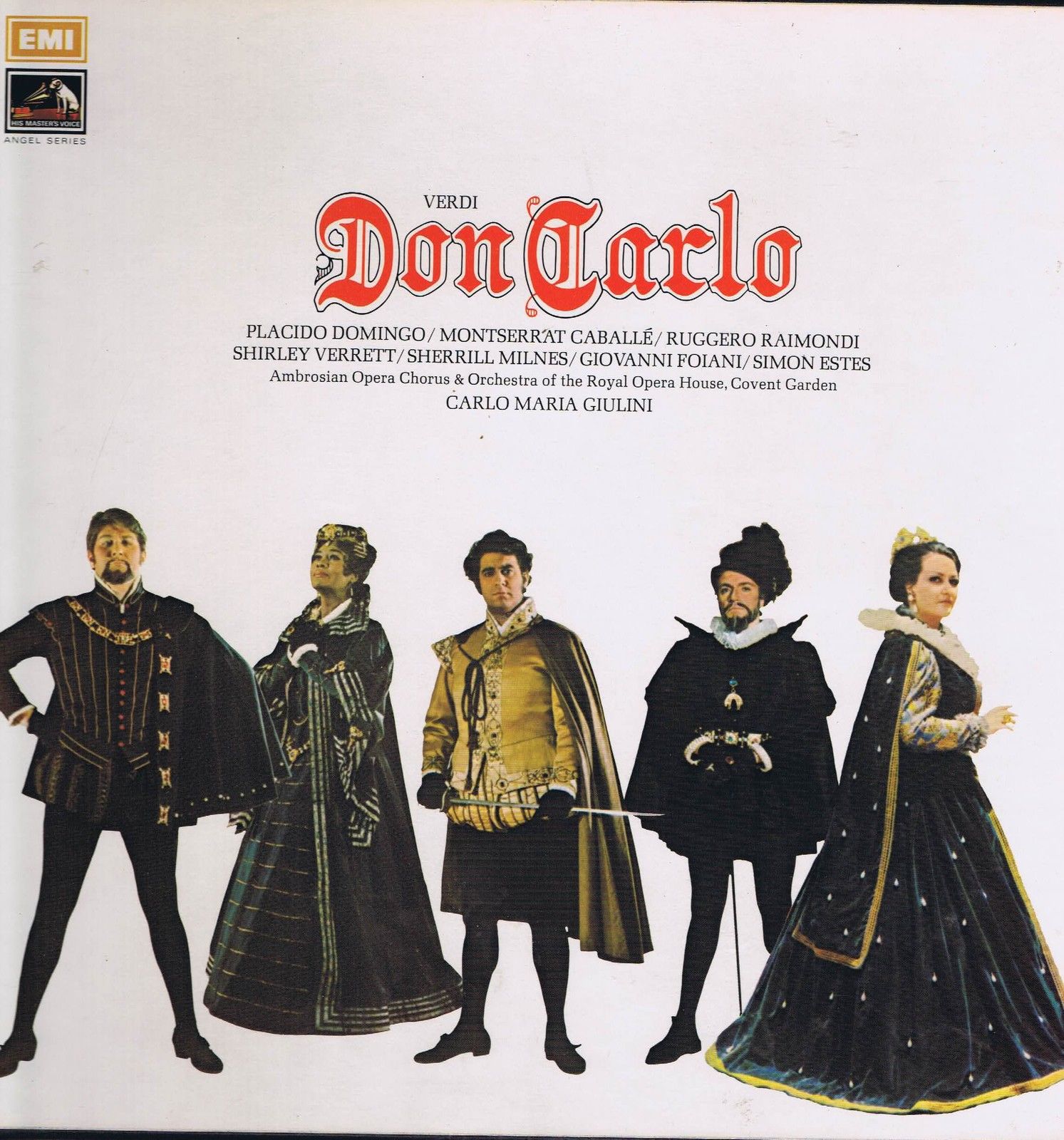
Over the years I’ve seen the opera a few times and acquired three recordings, though what I actually have is recordings of three different operas. Giulini in 1971 goes for the five act version, in Italian translation, which restored the Fontainebleau Act, and puts Carlo’s Io la vidi back where it belongs in the Fontainebleau act; Karajan in 1979 chooses Verdi’s four Act version (also in Italian, in which Verdi deleted the whole of the first act, transferring Carlo’s Io la vidi to the Monastery Scene, which now becomes Act I, Scene i; Abbado in 1983 conducts the original five act version in French, and adds an appendix of music cut from the first performance, excised from the 1882-83 four act version, or recomposed in that revision. Yes, I know. Complicated, isn’t it?

Don Carlo(s) is a long opera, and I listened to my three recordings over a period of several days, starting with the Giulini, going on to Karajan and finishing with Abbado.
verdi-don-carlo-giulini-domingo-caballe-sls-956-emi-4-lp-vinyl-re-281317552411

The Giulini has acquired something of a classic status, and though probably not quite on the level as the same conductor’s Don Giovanni, it does a great deal to justify its high regard. First of all, Giulini has just about the best cast that could have been assembled at the time. That said, Domingo is not yet the artist he was to become. His singing is never less than musical, and he sings with commitment, but there is something slightly generalised about his performance, with nothing much to distinguish Carlo from any other Verdi tenor hero. Milnes sings a noble, forthright Rodrigo, my favourite of the three on these recordings. Raimondi is a little light voiced as Fillipo, a role that really cries out for the dark, buttery tones of a Pinza or a Christoff, but he is suitably tortured and his voice contrasts well with the black voiced Inquisitor of Giovanni Foiani.

Caballé’s voice was at its most beautiful at this time, and, though she too can be a little generalised, she is never less than involved and involving. Her soft singing, as you might expect, is exquisite.

Verrett is, quite simply, magnificent, and without doubt one of the best Ebolis on disc. Recorded before she started moving up to the soprano repertoire, her voice is in thrillingly exciting shape.

Giulini had of course conducted the opera a few years previously at Covent Garden, in a production by Visconti which went a long way to restoring the opera to its rightful place in the Verdi canon, It starred Jon Vickers, Tito Gobbi, Boris Christoff, Gré Brouwenstijn and Fedora Barbieri, and it served Covent Garden very well over the years. I even saw Christoff myself in the opera in one of his last operatic appearances. Giulini’s credentials as a Verdian are never in doubt. His tempi can be on the spacious side, but he has a sure sense of the work’s structure. The 1971 analogue recording is wonderfully natural, the voices beautifully caught, and still sounds good on CD.

115539216

The first thing that strikes me, and annoys me, about the Karajan recording is the sound. In an acoustic that is impossibly wide ranging, the voices, lighter and more lyrical than was often the case, are so far recessed that it is often difficult to hear them. One of the worst instances of this is the beginning of the scene in the Queen’s Garden at night. With the sound turned up to a comfortable level for Karajan’s beautiful evocation of a heady summer night, Carreras is all but inaudible at his first entry. I turn up the sound in order to hear him better, only to be blasted out of my seat at the next orchestral tutti. This is but one example, but it happens all the time, and is, in my opinion, a serious blot on what is actually a rather good performance.

Karajan, who also had a great deal of experience in this opera, is also spacious, but the performance still bristles with drama. I just wish he didn’t constantly push the orchestra forward at the expense of the singers, who are often submerged in the orchestral textures.

I liked Carreras’s Carlo very much. His legato isn’t as good as Domingo’s, but he is better at suggesting the character’s unhinged nature. Cappuccilli is good, without being distinctive. He has a good legato, and superb breath control, but he is a little anonymous, and this performance is not generally at the same high standard of his Boccanegra and Macbeth for Abbado. Ghiaurov is Filippo, but his voice was already showing signs of wear by this time, and I find him less interesting than Raimondi in the same role, who is now the Inquisitor, and a mite too light of voice for that role.

This was Freni’s first excursion into heavier repertoire, and she makes a very appealing Elisabeth. As always her singing is unfailingly musical, but lacks the grandeur Caballé brings to Tu che le vanita. Baltsa is just as exciting as Verrett, her voice, at this time in her career, seamless from top to bottom. I saw her in the role at Covent Garden a few years after this recording was made and she brought the house down, generating the kind of excitement that is all too rare in the opera house today. I really couldn’t choose between her and Verrett. Both are fantastic.

mi0000977681

And so on to Abbado, which I find operates on an altogether lower voltage.

Having taken the decision to perform the opera in French, it would seem somewhat perverse to use singers who have little or no (Domingo excepted) proficiency in the language, and it is Domingo who is the standout performance in this set. Paradoxically, ten years after making the Giulini recording, the top of his voice sounds much more free, and he is much more inside the character than he was  before, a highly strung and nervous portrayal.

Nucci is a four-square, dry old stick of a Rodrigue. Raimondi is back to playing Philippe, but his voice has lost some of its bloom, and Ghiaurov is sounding increasingly grey voiced as the Inquisitor.

Ricciarelli I have equivocal feelings about. She is the definitely the most affecting of the three Elisabeths, but also the most fallible vocally. However it’s a performance I’ve come to admire more over the years. Valentini-Terrani is much too light voiced for Eboli, and O don fatal taxes her to, and beyond, her limits. She is definitely no match for either Verrett or Baltsa.

Though it is the newest, and digitally recorded, the sound is unaccountably murky, nowhere near as clear, or as natural, as the Giulini, and Abbado’s conducting lacks energy and authority. He doesn’t have the same structural control he evinces in his recordings of both Simon Boccanegra and Macbeth.

My conclusion is, then, that Giulini retains its place at the top of the field, though I will on occasion want to listen to Karajan and Abbado, for some of the individually excellent performances.

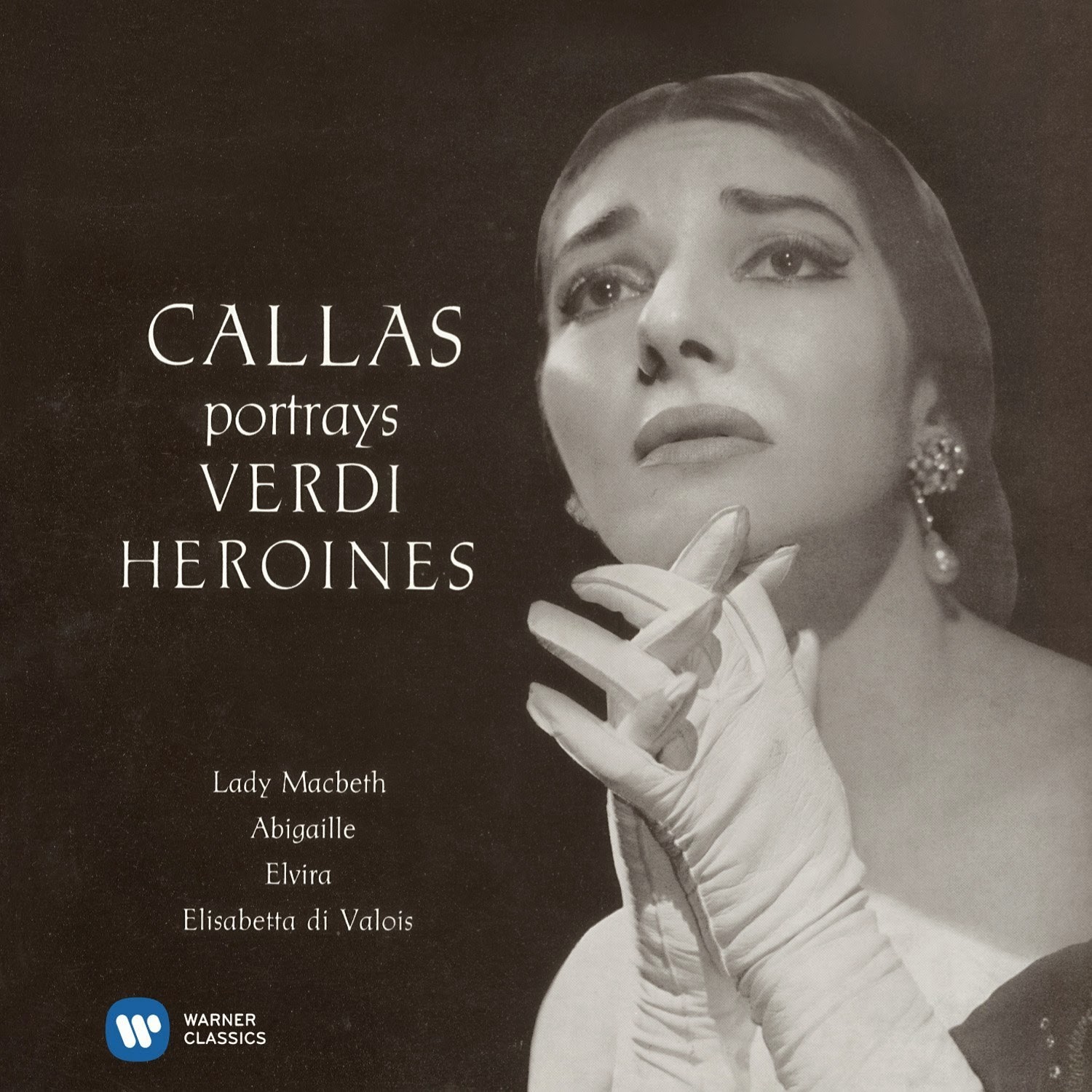
As a codicil to this, I would mention that my introduction to the opera was Callas’s magnificent recording of Tu che le vanita, an aria she obviously had a great deal of affection for, as she regularly programmed it into her concert repertoire. Callas only sang the role of Elisabeth once, at La Scala in 1954, and unfortunately none of the performances were recorded, but she makes more of the scene than anyone. It is grandly voiced, her breath control prodigious, but she effectively binds together its disparate elements. It is, in Lord Harewood’s words, a performance of utmost delicacy and beauty and I would recommend it to anyone who loves this opera.
81hy7szp5vl-_sl1500_