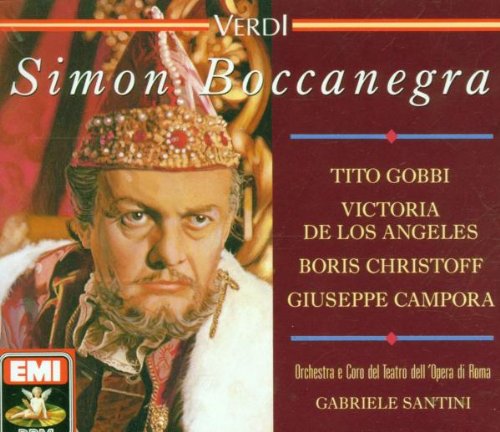
Gobbi as Simon Boccanegra

51hq2bkp62dl

Abbado’s superb La Scala recording of Verdi’s great masterpiece pretty much sweeps aside all others, but this one, despite less than brilliant mono sound with an orchestra and chorus dimly recorded, despite Santini’s ploddingly prosaic conducting, demands to be heard, due to three distinguished, transforming performances.

Gobbi was in prime vocal form when the set was recorded, and though he does not quite have the vocal reserves of Cappuccilli, he creates the most rounded, most movingly tortured Doge you are ever likely to hear. Christoff, too, could hardly be bettered, brilliantly charting the change from implacable revenge to conciliation in the final scene with Gobbi’s Doge. To make our cup runneth over, we have De Los Angeles in one of her rare excursions into Verdi, singing with total communication, commitment and of course beauty of tone, particularly in the middle register, where most of the role lies. The downward runs in the final ensemble are absolutely exquisite. Campora may not be quite on their level (and Carreras on Abbado’s set is almost ideal) but he isn’t bad at all.

All three principals, I’d take (just) over their DG counterparts, but that recording benefits from Abbado’s superb pacing of the score, the wonderful playing of the La Scala orchestra, and warm, beautifully balanced stereo sound. So, for the opera itself, I’d take Abbado, one of the classic opera recordings, but for three superbly characterful performances, I choose Santini.
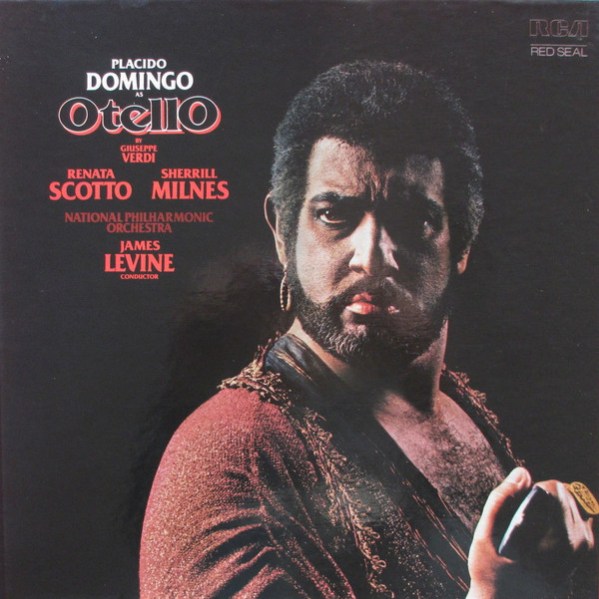
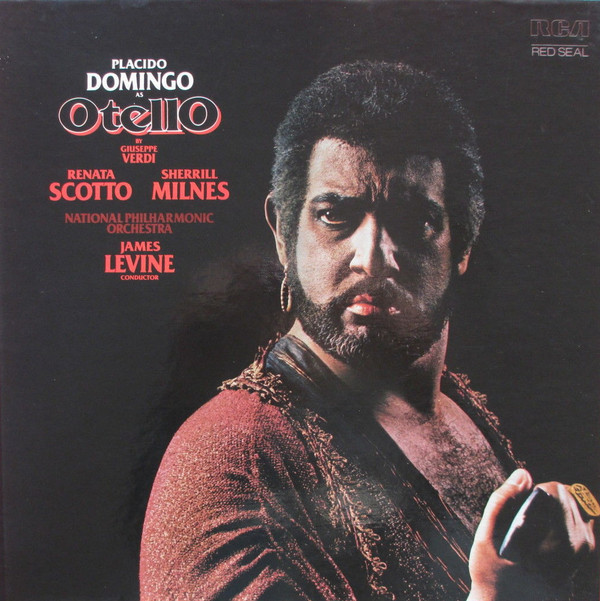
Domingo’s first recording of Otello

r-7473810-1513790477-2803.jpeg

Quite aside from the recent sexual misconduct revelations, Domingo seems to come in for a lot of flak these days, but it is salutary to remember that this, his first recording of a role he became particularly associated with, was made over forty years ago. Towards the end of his career he turned to baritone roles (with qualified success, admittedly), but, by any standards, the man has had a long and illustrious career.

He made two further studio recordings of the role (one of them used for the soundtrack to the Zeffirelli film), and their are at least three official videos of him performing the role on stage, and a number of unofficial live accounts. This recording finds him early in his conquest of this signature role, but it is already well sung in. Records cannot of course capture his superb acting and powerful stage presence, but his Otello is still, even at this early stage of his career, a great performance. Some, and I am probably one of them, would prefer a voice with a bit more squillo on top. My favourite Otello remains Vickers, who has musicality, dramatic intensity and squillo, but I prefer Domingo to Del Monaco, whose singing can indeed be thrilling, but who tends to let volume compensate for a lack of real dramatic awareness.

There are other reasons to enjoy this recording. Levine’s conductiing, which derives from long stage acquaintance with the opera, is definitely one of his best Verdi recordings (though the recording itself is a tad congested in the climaxes) and Milnes is also caught at something close to his best, a suave, guileful and conniving Iago. Scotto, though she may not have Tebaldi’s beauty of tone, is a much more communicative and moving Desdemona, and this is one of her most succesful performances on disc. The voice occasionally spreads on top when under pressure, but her pianissimo singing is exquisite and her phrasing wonderfully musical.

Despite reservations about Rysanek’s Desdemona, the Serafin set with Vickers and Gobbi remains my favourite studio recording. That said, I would always want one of Domingo’s studio recordings as well. Though Domingo himself may be even more moving in his later two recordings and many, I know, would go for his last recording under Chung, with Studer and Leiferkus, I still prefer this early one. I’ve never been a big fan of Studer and Leiferkus sounds unidiomatic to me, for all his intelligence and dramatic acumen. The Maazel is let down by some weird recording balances and Diaz’s well sung but anonymous Iago, though Ricciarelli is also an affectingly touching Desdemona. So the Levine emerges as the winner for me.

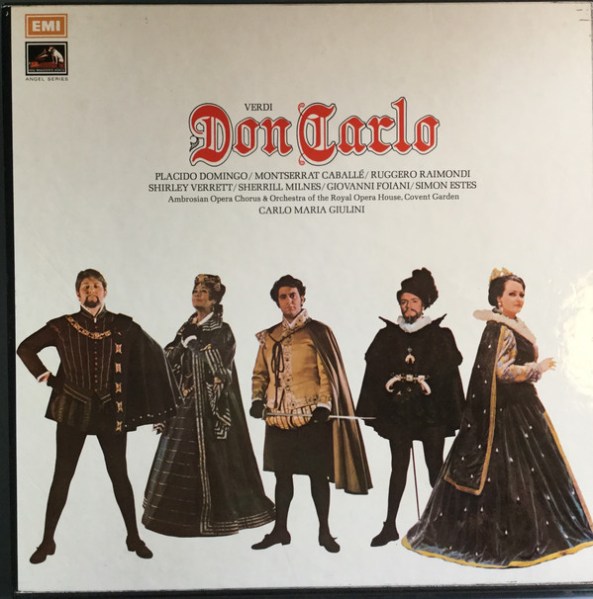
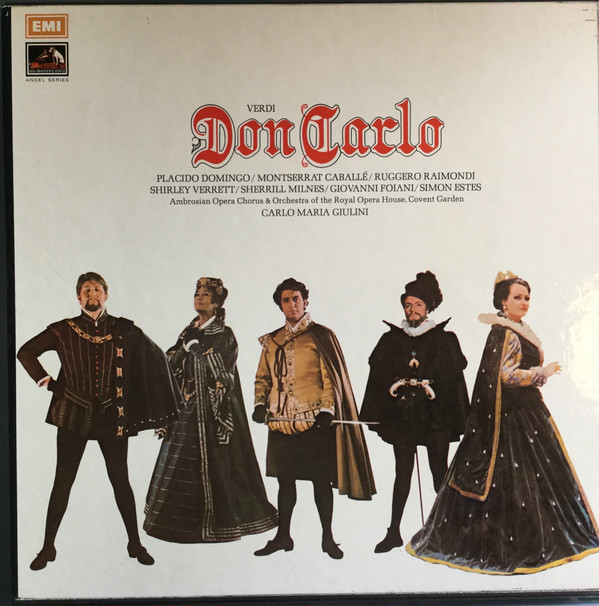
Giulini’s Studio Don Carlos

r-7809186-1492090586-6586.jpeg

Don Carlos has always been one of my favourite Verdi operas. It’s a flawed masterpiece no doubt, but the characters are so beautifully drawn and the music displays Verdi at his most humane.

This Giulini recording can now be considered a classic, and remains, on balance, the best recording available. Not that it’s that simple of course, for Don Carlos exists (and has been recorded) in a bewildering varierty of different editions. The Giulini represents Verdi’s final revision, in Italian, of the five act version. I have three different recordings of the opera, all of different versions. In addition to this one, I have Karajan’s four act Italian version and Abbado’s five act French version, with appendices of music either cut or added for different performances.

Giulini’s conducting is by turns magisterial and warmly sympathetic to his singers, though occasionally perhaps a tad too spacious. I’d have preferred a more propulsive tempo for Eboli’s O don fatale, for instance, but all in all his is one of the best conducted sets you wil hear. The sound is excellent analogue stereo too.

His cast is excellent, Domingo at his golden toned best is more involved, less generic than was often the case in the many recordings he made in the 1970s, though he is even more inside the role by the time he recorded it in French with Abbado. I also slightly prefer Carreras on the Karajan in one of his very best recordings. Carlo is one of Verdi’s most complex tenor roles, a weak young man with a distant father, forever in the shadow of his friend Posa and Carreras is better at expressing the slightly unhinged character of the man. Caballé is in gloriously rich voice for Elisabetta and is also caught at her career best. There is no better Elisabetta on any of the studio recordings. Verrett is thrillingly vibrant as Eboli, that smoky lower register of hers used to great effect. Milnes is also at his best as the inherently noble Posa, but Raimondi is a little light of voice for the King, a role which really requires a darker, deeper bass sound. Still he contrasts nicely with the black-voiced Inquiistor of Giovanni Foiani. Simon Estes makes a strong impression as the Monk.

What a great opera this is, and how lucky we are to have this wonderful performance on disc.

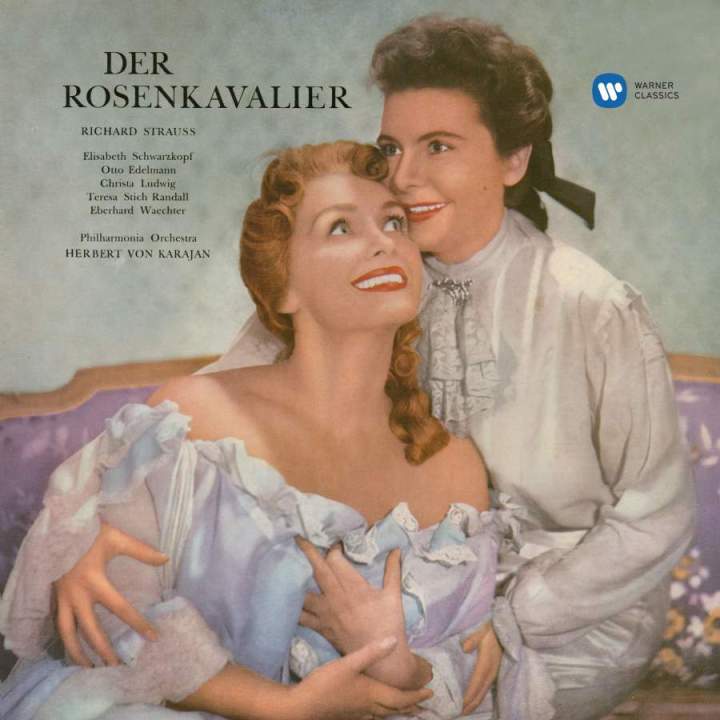
The Schwarzkopf/Karajan Rosenkavalier

190295771560

This recent re-mastering of Karajan’s famous 1956 recording of Der Rosenkavalier, overseen by the producer of the original stereo version, Christopher Parker, really is the best you are ever likely to hear. Parker has slightly adjusted the balance in the big trio and it really makes a big difference, Stich-Randall now not so shrill and blending better with Schwarzkopf and Ludwig.

What a performance it is, with a cast that could hardly be bettered anywhere, Schwarzkopf’s warmly feminine, noble Marschallin dominating the opera, as she should. Her singing is wonderfully detailed, Hofmannsthal’s text superbly brought to life, and at this point it is good to remember the excellence of the libretto, which could almost stand as a straight play. Though the opera is filled with gorgeously soaring melodies, it is also quite wordy in places and it is important that the text is understood. Schwarzkopf is everything a Marschallin should be, tenderly playful with Octavian in the opening scene and philosophically reflective at the end of the act. In the last act, she is respectfully authoratative with the Police Commisioner, imperiously commanding in her dealings with Ochs, all tender solicitude with Sophie and magnanimously forgiving with Octacvian. Even just listening to her you can see every fleeting facial expression, and I smply cannot understand those who bandy about the usual criticisms of over-artfulness and mannerism, especially when the lyrical moments are also filled with such gloriously refulgent tone. This might just be Schwarzkopf’s greatest achievement on disc and is one of the greatest operatic characterisations ever committed to disc.

Ludwig’s ardently impetuous Octavian is the perfect foil for this Marschallin, and if she doesn’t have quite the same matchless control over her resources as Schwarzkopf, the extroverted outpouring of tone suits the character of Octavian to a nicety. Stich-Randall is a  slightly white-voiced Sophie, suitably innocent and naïve, sailing up to those stratospheric notes with a silvery purity second to none, and Edelmann remembers that Ochs may be a boor, but that he is also a nobleman and he too is excellent at putting across the text.

Wonderful support from the likes of Gedda as the Italian tenor, Wächter, a wonderfully fussy Faninal and Welitsch as the Duenna, with a plethora of well known names amongst the supporting cast.

Karajan’s direction is just right in every phrase, beautifully managing the dance elements of the score, whilst giving the many lyrical moments their due. He always knows just how to build to the climaxes and his sense of the structure of the opera is spot on, his pacing both quicksilver and expansive. Just to make our cup runneth over we have the Philharmonia on top form.

The recording may have been made in 1956, but sounds absolutely splendid in this latest remastering. My top recommendation for the opera, as it was for Richard Osborne on a fairly recent BBC Building a Library episode, and I don’t see that changing any time soon.

Janet Baker as Monteverdi’s Poppea

71ermepfpfl._sl1200_

One wouldn’t do Monteverdi like this now of course, but one has to remember that it was Raymond Leppard’s realisations of these pieces that largely put Monteverdi, and other operas of the period on the map. Leppard also changed the pitch of some of the roles, so we get a tenor Nero, a baritone Ottone, a female alto Arnalta and a tenor Page to Ottavia (the excellent John Brecknock, whose diction is so perfect you can hear every single word).

Remembering all that, this is an excellent performance and well worth investigating if you can get past the use of a modern orchestra and Leppard’s romanticised orchestrations. The opera is sung in (very clear) English. Would that more of today’s singers could sing with such natural, unforced diction. One hardly needs to follow along with the libretto, which is provided (yet another rarity these days).

It might come as a surprise to find the great Dame Janet Baker as Poppea rather than Ottavia, but she is wonderfully scheming, kittenish and manipulative, the voice character she creates a million miles away from the suffering Ottavia she sings in recorded extracts.

Unsurprisingly none of the other singers is quite on her level of inspiration, but all are expressive and more than adequate. Would that the ENO could provide such a cast nowadays.

My favourite recording of the opera is the quite recent la Venexiana recording of the Naples version under Claudio Cavina, but this Live ENO performances is worth listening to, both as a reminiscence of a bygone age and for the inestimable singing of Dame Janet Baker.

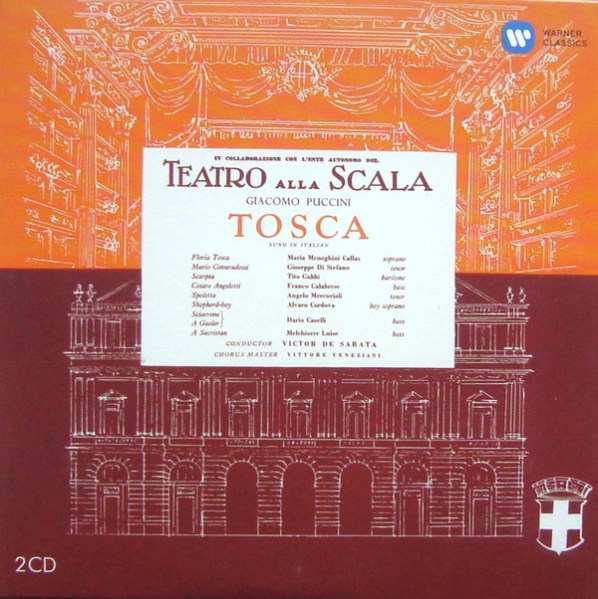
Callas’s 1953 Tosca Revisited

r-9324663-1542211156-9419.jpeg

I first reviewed this set when it was reissued by Warner back in 2014 and posted it in my blog shortly after starting it on this platform. You can read that review here and add this review as a sort of codicil.

Though now considered one of the greatest opera recordings ever made, this justly famous recording of Tosca was not universally acclaimed when it was first issued, Alec Robertson comparing Callas’s assumption of the title role unfavourably to Tebaldi’s more dramatic performance. He died in 1982. I wonder if he ever ate his words. Dyneley Hussey made the strange observation that much of Callas’s singing was unrhythmical, which, given Callas’s legendary musical exactitude, now seems entirely incredible.

In all respects (conducting and singing) this Tosca is a more musical performance than the Tebaldi/Erede with which it was being compared, where dramatic effect is applied rather than arising from the music itself.

Despite the excellence of the three principals, the star of the recording for me is Victor De Sabata, who doesn’t so much conduct as mould the score, and consequently the real winner is Puccini, as it should be. Apparently Karajan had John Culshaw play sections of the De Sabata recording to him during sessions for his own equally famous recording of the opera with Leontyne Price. According to Culshaw, “One exceptionally tricky passage for the conductor is the entry of Tosca in act 3, where Puccini’s tempo directions can best be described as elastic. Karajan listened to de Sabata several times over during that passage and then said, ‘No, he’s right but I can’t do that. That’s his secret.'”

Of course De Sabata is immeasurably helped by his cast, who in turn are inspired to give of their best. How Alec Robertson could have thought Campora characterised Cavaradossi better than Di Stefano, who sings not only with his customary face but also with a degree of musical accuracy he didn’t always achieve, is beyond me. Gobbi was, is, and no doubt will always be a touchstone for the role of Scarpia,  a gentleman thug, smoothly reptilian and much more interesting than the conventional villain he is often portrayed. As for Callas, the objections meted out at the time not only seem churlish, but far off the mark. Infinitely feminine and vulnerable, her Tosca is a long way from the cane-touting, flamboyantly capricious character she was usually portrayed in those days, and maybe that was why AR found her less dramatic. She is in her best voice, with scalpel-like attack on the high notes, the voice wonderfully responsive and she brings a welcome bel canto approach to this verismo role.

66 years after it was recorded, it remains the best of all recorded Toscas, a fact brought home to me recently when I compared five of the recordings at present available on Decca. These were Te Kanawa/Solti, Nilsson/Maazel, Freni/Rescigno, Tebaldi/Molinari-Pradelli and Price/Karajan. You can see my conclusions here.

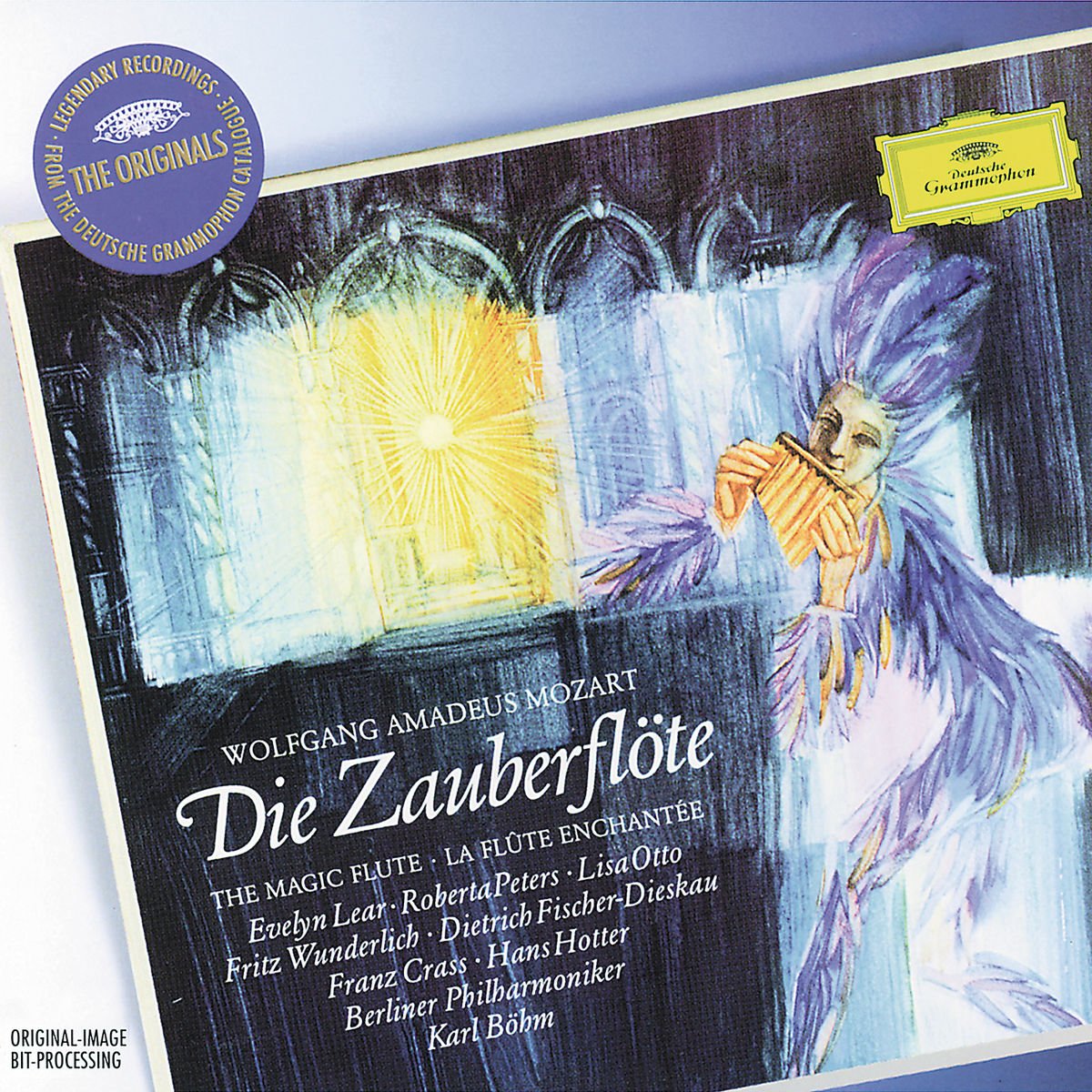
Wunderlich/Böhm Zauberflöte

81qhieybdcl._sl1200_

No doubt these days some might find Böhm’s approach somewhat too portentous, and there is no denying his seriousness from the first few bars of the overture, but I like it, whilst admitting that it’s not always how I would like to hear the opera.

His cast is stronger on the male side than the female, lead by Wunderlich’s peerless Tamino, a treasurable example of him in a complete opera. Not always as stylish as Simoneau, he brings an approproately heroic dimension to the character, with the added advantage of the sheer beauty of that voice. There really is none better on disc. Franz Crass’s sonorous Sarastro is another asset, as are the Armed Men of James King and Marti Talvela. Hotter is an authoratative Speaker, but his voice is beginning to show signs of age. Fischer-Dieskau may not be a natural for Papageno, and I think I’m right in saying it wasn’t one of his stage roles. Admittedly he misses some of the wide-eyed charm of the best interpreters of the role, but his singing qua singing gives a lot of pleasure and in Bei Männern he gives Evelyn Lear a lesson in pure legato singing.

Which brings me to the women. Lear can be shrill on high, and hardly ever phrases with distinction, her legato leaving something to be desired. No patch, certainly, on the likes of Janowitz, Popp, Margaret Price, Lemnitz, Te Kanawa or even Rosa Mannion, who sings the role on William Christie’s highly recommendable HIP version. Roberta Peters, on the other hand, is a lot better than I remembered, and she does at least sound dangerous, her coloratura glitteringly precise. Lisa Otto is a pert Papagena.

So, still a worthy Die Zauberflöte, and one I woud not want to be without, for Wunderlich’s Tamino at least.

The Scotto/Barbirolli Madama Butterfly

r-6997709-1431339478-8972.jpeg

This has always been one of my three favourite recordings of Madama Butterfly (the others being Callas/Karajan and De Los Angeles/Gavazzeni), and listening to it again today has been a most moving experience.

Though Sir John Barbirolli conducted a good deal of opera during his career, this and the Otello with James McCracken are, I think, the only studio examples of his work in the field, and I’ve always thought of this recording as being as much his as Scotto’s, which is not quite the case with the two aforementioned Callas and De Los Angeles sets. Barbirolli’s love for the score is evident in every bar, and he reveals many incidental details that sometimes get lost in more opulent readings, whilst he never loses track of the score’s ebb and flow. The Rome orchestra, though not quite on the level of those in Vienna and Milan, nonetheless play brilliantly for him.

He has at his disposal a uniquely Italianate cast, who all sing wonderfully off the words. Scotto, 32 at the time (oddly enough about the same age as Callas and De Los Angeles at the time of their recordings) is a superb Butterfly and presents from start to finish a fully rounded character. The microphone placing doesn’t always flatter her, and, just occasionally, one is aware of the intellect behind the characterisation, but she is still one of the most pathetically moving Butterflies on disc, even if she lacks a little of De Los Angeles’s natural charm.

Bergonzi is an ardently lyrical Pinkerton, maybe not quite as charming as Di Stefano with De Los Angeles, but singing with glorious, golden tone, and less stiff than Bjoerling who sings Pinkerton on De Los Angeles’s second recording. Panerai, who was a late replacement for Peter Glossop, is a superbly inciteful and sympathetic Sharpless and there is terrific support from the likes of Anna Di Stasio as Suzuki, Paolo Montarsolo as the Bonze and Piero de Palma as Goro.

Ultimately my favourite recording would still be Callas/Karajan but I find it so emotionally, so intensely shattering, that I can only take it once in a while (rather like Vickers’s Tristan). On the other hand, sonically, the stereo sound here is a great improvement on the boxy mono of that recording, though, in turn, not quite on the level of the glorious sound afforded Karajan on his second Decca recording with Freni and Pavarotti, which remains a first choice for many, I know.

There are other superb recordings, not least the early one with Dal Monte and Gigli, Tebaldi with Serafin, and Gheorghiu with Pappano. The opera has certainly been very lucky on disc, but my top three remain unchallenged.

Wunderlich in La Traviata

91b3-3eyhsl._ss500_

This recording was taped at a performance in Munich in March 1965. It was a new production by August Everding, and, judging by the audience reaction, it was a tremendous success.

Teresa Stratas’s shattering Violetta  is of course well known from the Zeffirelli film, brilliantly acted, if vocally stressed. Here she is  just a few months short of her twenty-seventh birthday and making her debut in the role, and, if the photos in the booklet are anything to go by, she looked absolutely stunning. Vocally though, and divorced from her powerful stage presence, she has her problems, especially in the first act. She has to transpose down Sempre libera and, even then, it taxes her to the limit. There are other places too where her voice doesn’t quite do what she wants it to, though, in intention at least, it has the seeds of a great performance. For instance the moments leading up to Violetta’s outpouring of love at Amami, Alfredo are urgently and sincerely felt, though she can’t quite swell the tone at Amami, Alfredo itself. In the last act she delivers a telling letter reading and a moving Addio del passato, but the performance doesn’t yet add up to a complete whole.

No challenge then for Callas, whose Violetta is hors councours, and whose 1958 Covent Garden performance remains my all time favourite. In Zeffirelli’s film, though vocally not much more comfortable, Stratas surpasses what she does here, where we are also able to see her touchingly vulnerable acting.

Hermann Prey, 36 at the time and only a year older than Wunderlich, sounds too young and tends to oversing, possibly in an attempt to sound more Italianate. Though there is pleasure to be derived from the voice itself, I don’t get any sense of a real character.

No, the chief reason for hearing this set is the chance to hear Wunderlich sing a complete role in Italian. The language suits him well and he is an ardently lyrical Alfredo, singing with honeyed tone, but with plenty of heft in the outburst at Flora’s party. Very very occasionally he overplays his hand (mostly in recitative) but there is much that is treasurable; Dei miei bollenti spiriti has a lovely lilt and he and Stratas make a wonderfully touching moment out of their brief moment of happiness in the last act,  Parigi, o cara. Later perhaps he would have played down slightly the histrionics in his contribution to Gran Dio, morir si giovane, but it is already a treasurable performance and reason enough to hear this live recording.

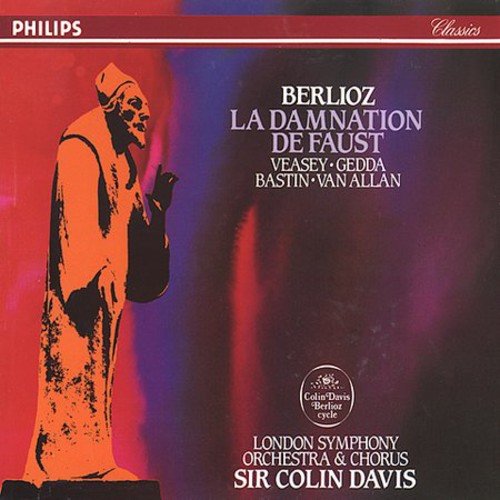
Colin Davis conducts La Damnation de Faust

51uqyihlall

Davis’s classic Philips recording of La Damnation de Faust, better cast I think than his later LSO Live version, is still one of the most recommendable versions of Berlioz’s non-opera. This tragédie-lyrique was never intended to be staged and therefore is particularly well suited to the gramophone, which leaves one’s imagination clear to fill in the stage set and scenery.

Gedda is a great Faust. He may have been just a little past his vocal best but he still manages a gorgeous pianissimo top C sharp in the duet with Marguerite, which no other Faust can quite pull off, added to which his singing is always stylish and intelligently thought through. There are better Margeurite’s on disc than Veasey (Baker, Von Stade and Von Otter come to mind); the difficult Roi de Thulé doesn’t quite come off, but she is better in the duet and sings a fine Romance. Bastin makes a superb Méphistophélès, mercurial, sardonic and ultimately evil and Richard Van Allan puts in one of his best recorded performances as Brander.

Davis, as so often in Berlioz, has a wonderful sense of structure and paces the score just right, and the LSO play brilliantly for him, the brass powerful, woodwind and strings deliciously light in the Menuet des Follets, plus some wonderfully sensitive cor anglais playing in the introduction to D’amour l’ardente flamme.

Every time I listen to this piece, I am struck by its originality. Berlioz was and is unique, with an unmistakable voice. No other composer is remotely like him.