Janet Baker – Chausson, Berlioz and Schoenberg

r-9879493-1487856491-9833.jpeg

These are all live performances of material Baker recorded in the studio (twice in the case of Les Nuits d’Eté, so one might wonder if they are really essential listening.

Well, though Baker was a superb recording artist, who never really made a bad record, she was also a great communicator and collaborator and these performances, all with different conductors from the studio ones, bring with them the added frisson that comes with a live event, and the sound, though not as clear as in her studio performances, is more than acceptable.

It starts with a 1975 performance of Chausson’s almost Wagnerian Poème del’amour et de la mer, which she recorded two years later under André Previn. This one has, somehwat suprisingly you might think, Evgeni Svetlanov at the helm, who takes great care over dynamics and shapes the work beautifully. Baker’s range of expression, her concenration, her breath control and command of the long line are exemplary, filling its pages with rapt expression. A marvelous performance.

Baker’s recording of Les Nuits d’Eté with Barbirolli, recorded in 1967 is justly famous and has hardly been out of the catalogue. She recorded it again under Richard Hickox in 1990, but by this time her voice was beginning to show signs of wear (more noticeable in a recording than when I heard them perform the work together in concert at around the same time) and the second recording has never enjoyed the acclaim of the first. This performance under Giulini was taped at the Royal Festival Hall a month after the Chausson and it is good to hear how Baker’s interpretation changed depending on whom she was singing with. Giulini’s speeds are expansive (Le spectre de la rose at 8’29” must be one of the slowest on disc) and would tax most singers beyond their limits, but here they never flag and Baker luxuriates in the extra room she is given to make her interpretive points. As in the Chausson, her breath control is astonishing and the range of expression wide. My notes are peppered with words like searing, delicate, passionate abandon, yearning. Though it doesn’t entirely supplant the Barbirolli in my affections, it is nonetheless a performance I would never want to be without.

The earliest performance here is a 1963 recording of the Song of the Wood Dove from Schoenberg’s Gurrelieder, a work she recorded five years later under Janos Ferencsik. Baker was not yet 30 when she gave this performance and, superbly supported by Norman Del Mar, her singing is urgently free and impassioned, even better than that on the Ferencsik.

Essential listening then? Absolutely and unequivocally, yes.
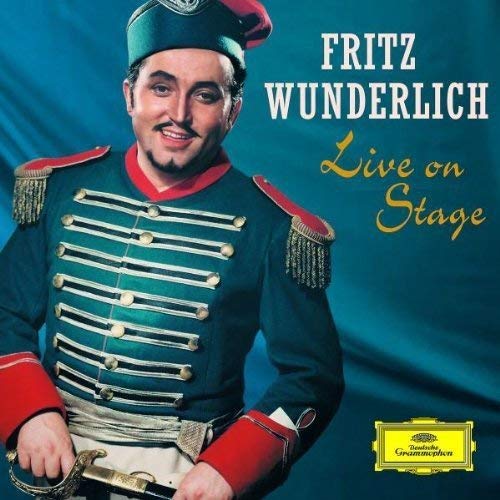
Fritz Wunderlich -Live on Stage

51o63rchccl._ac_

This issue passed me by when it was first released in 2010, but what a treasure it is. Always a pleasure to hear Wunderlich’s glorious tenor, here we have the added frisson of hearing him live in the opera house.

His Tamino is well known from the Böhm recording. These excerpts are taken from a 1964 Munich performance, where he is joined by Anneliese Rothenberger as Pamina and Karl-Christian Kohn as Sarastro under the baton of Fritz Reiger. As on the Böhm recording, he is an ardently lyrical but also heroic Tamino and remains my touchstone for the role. Don Ottavio’s two arias from a performance of Don Giovanni, conducted by Karajan in 1963 are also superb and Ottavio emerges as a more positive character than he often does, benefiting from Wunderlich’s golden tone, his superb breath control and ease of movement. Not surprisingly his singing of Il mio tesoro is given a fabulous reception. As in the Jochum recording he is also an ideal Belmonte in Die Entführung aus dem Serail.

The excerpts from Il Barbiere di Siviglia, with Eberhard Wächter as Figaro, are unfortunately sung in German, but the language does not impede Wunderlich’s superb legato, nor the warmth of his tone, and we get to hear his wonderfully light touch in comedy. He is notably more fluid in fast moving music than Wächter, but the two singers play well off each other.

For me, though, the Strauss items are the biggest eye opener. I feel sure that, had Strauss heard them, it would have reconciled him to the sound of the tenor voice. The duet for the Italian Singers in Capriccio (with Lucia Popp, no less) has probably never sounded more gloriously, well, italianate, so beautiful that it elicits a spontaneous round of applause from the Vienna audience. The same could be said for his singing of Di rigori armato from Der Rosenkavalier, which is sung with burnished tone. I doubt any Italian tenor could sing it better. So too, in the excerpts from Daphne and Die schweigsame Frau his liquid legato stays in tact, however tough the going. Did Wunderlich ever make an ugly sound? Somehow I doubt it. Truly he was a prince among tenors.

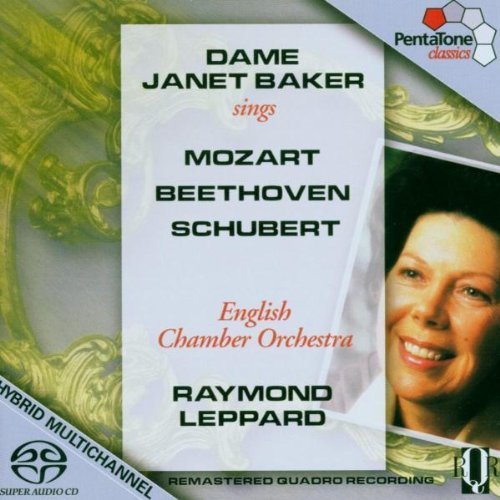
Dame Janet Baker sings Mozart, Beethoven and Schubert

51exmgqxv1l

Essential listening, I’d venture to suggest, even for those who already have the Philips Originals box set I reviewed here. Here we have the whole of Baker’s 1977 Beethoven and Schubert recital, of which three items appear on the Philips box, coupled to the Mozart items from her 1974 Mozart and Haydn recital, none of which do.

The prize of this CD is Dame Janet’s superb rendering of Sesto’s arias from La Clemenza di Tito. Not only is it a technical tour de force, the rapid triplet figures at the end of Parto, parto tossed off with breathtaking ease, but the range of expression is extraordinary and personal. I have never heard another singer differentiate so much between the repeated cries of Guardami!; in the first she pleads almost angrily, but in the second her tone changes completely, becoming meltingly beseeching, as if Sesto realises he has gone too far. Furthermore she has the ability to get to the emotional core of the music without ever disrupting its Classical style. Pure genius.

Elsewhere she is in enviable form in a programme that ranges wide, including rarities like Beethoven’s No, non turbati and arias from Schubert’s Lazarus and Alfonso und Estrella. Leppard’s accompaniments, whether conducting the English Chamber Orchestra or on the piano or harpsichord are discreet rather than revelatory, perhaps happy, with such a patrician artist, to let his soloist take the lead.

The recordings, originally made for Philips in quadrophonic sound, are here issued in SACD, though I was listening in simple stereo. They are wonderfully clear and lucid.

Highly recommended.

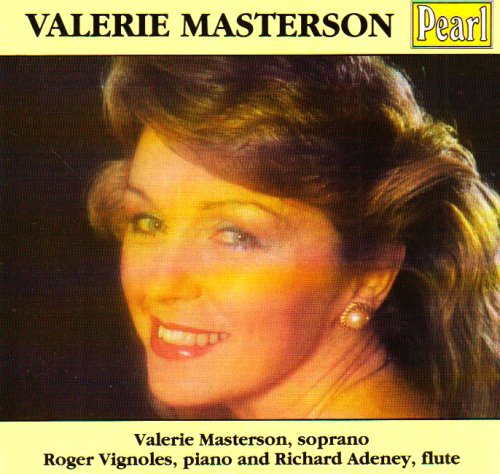
Valerie Masterson – Song Recital

51vle4ved5l

  1. Arne – O ravishing delight
  2. Arne – Under the greenwood tree
  3. Arne – The soldier tir’d
  4. Handel – Nel dolce del’oblio
  5. Bishop – Lo! Here the gentle lark
  6. Gounod – Le premier jour de mai
  7. Gounod – L’absent
  8. Gounod – Sérénade
  9. Bizet – Vieille chanson
  10. Bizet – Pastel
  11. Bizet – Tarantelle
  12. 12 – Satie – La diva de l’empire

The English soprano Valerie Masterson was a mainstay of my early opera going life and I saw her on stage quite a few times. A light lyric soprano with great flexibility and an immediately recognisable voice, she was also much admired in France, having made her French debut in Toulouse in the role of Manon. The following year she created quite a stir at the Aix-en-Provence Festival singing the role of Matilde in Rossini’s Elisabetta, Regina d’Inghilterra opposite Montserrat Caballé. She was an arrestingly beautiful woman with a charming stage presence and I well remember her Semele at Covent Garden which was both vocally and visually stunning. Unfortunately I didn’t get to see her ravishing Cleopatra in ENO’s production of Handel’s Julius Caesar (sung of course in English) with Janet Baker, but at least it was filmed. I did however see her as Manon, Juliette, Margeurite, the Governess in Britten’s Turn of the Screw and as the Marschallin, a role she took into her repertoire quite late in her career, having had enormous success as Sophie when she was younger.

Recorded in 1986 when Masterson was approaching 50, this recital probably catches her just past her best. There is just the suspicion that the lovely voice is thinning out, a trace of a slight taint on its silvery purity. Nevertheless the recital is something of a treasure, especially considering Masterson was so little recorded.

With piano accompaniment provided by Roger Vignoles, it splits neatly into two halves, the first being of music from the baroque era (Arne, Handel and Thomas Bishop), where she is joined by Richard Adeney on the flute, and the second of songs by Gounod, Bizet and Satie. The baroque items display her neat and deft coloratura as well as her ability to shape the long line. When she sings O ravishing delight in Arne’s song, the words mirror exactly the sounds coming from the speakers. It is good also to have the Handel cantata, reminding us of her many successes in his works.

The French items are all fairly light. They are a sung with elegance and style but a little more variety in the material might have been welcome here. She finishes with a delightful performance of Satie’s La Diva de l’Empire which captures a coquettish smile in the voice.

A lovely reminder of a lovely singer.

Karita Mattila – German Romantic Arias


The programme is an interesting one, though including Beethoven in a recital called German Romantic Arias might be thought to be stretching the definition a bit, and it’s good to see some rarer items are included amongst the well-known. Accompaniments are in the safe hands of the Staatskapelle Dresden under Sir Colin Davis and Mattilla might be considered to be at her mid-career peak when the disc was recorded in 2001, eighteen years after she was the first winner of the Cardiff Singer of the World at the age of 23.

Unfortunately the recital doesn’t really satisfy. I enjoyed most the scene from Euryanthe and Mendelssohn’s concert aria Infelice!, but this might have more to do with their unfamiliarity than anything else as I had little else to compare them to . In the more familiar items I found myself constantly thinking of versions by other artists. One or two moments of smudged coloratura apart, Mattila gets round the notes easily enough, but her singing can be a bit rigid and lacking in colour and her legato is not always perfect, nor does she ever illuminate a phrase or bring something personal to the piece she is singing in the way the greatest of the past have done. There is no sense of desperation in Leonore’s Abscheulicher! or radiance in the Komm, Hoffnung section, no real appreciation of the contrasting emotions in Ah perfido!. Agathe fares no better. There is no real poise and serenity, such as that achieved by Schwarzkopf, Grümmer or Janowitz. When Schwarzkopf sings Er ist’s in Leise, leise we register the change of expression, the quickening of the pulse, where here the moment passes almost unnoticed.

Commendably she sings Rezia’s Ocean, though mighty monster in English. It is more comfortably vocalised than Callas’s late recording, also in English, but Callas fills its pages with significance where Mattila just sings the notes. She conquers its tehcnical challenges, but makes little impression dramatically.

Something of a disappointment then and a disc that is probably making for the jettison pile

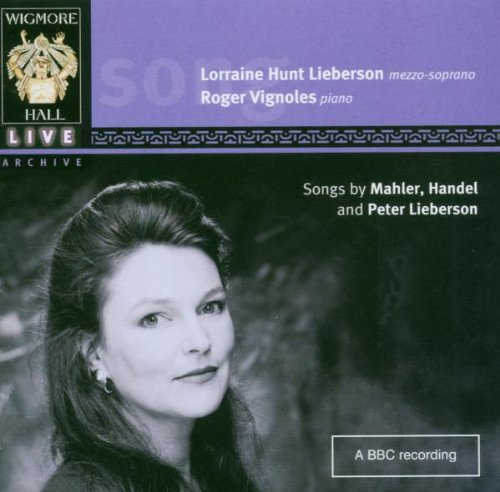
Lorraine Hunt Lieberson – Songs by Mahler, Handel and Peter Lieberson


There are some singers whose emotional connection to the music they are singing is so complete, so all-embracing that such minor details as vocal technique and beauty of voice are completely forgotten. Not that either of those two qualities are in the least bit lacking here, but they don’t really register, so intense, so all-enveloping is the experience of listening.

Lorraine Hunt Lieberson was one such artist and, more than once during the course of this marvelous recital, she managed to reduce me to tears. In her voice, the act of singing becomes as natural as the act of speaking. There is no artifice, no show, just total commitment to the music and that rare gift of communication.

The disc starts with a highly personal and emotionally shattering performance of Mahler’s Rückert Lieder. I prefer Mahler’s orchestral version of these wonderful songs but even with piano accompaniment (wonderfully realised by Roger Vignoles here) I would place this performance with Janet Baker’s of the orchestral versions under Barbirolli as the pinnacle of Mahler interpretation. Indeed the desolation of Um MItternacht is utterly overwhelming and the performance of all the songs totally gripping, with the audience sitting in rapt silence.

The Handel items, though more theatrical, more outwardly dramatic, are no less sincere. She makes musical sense of the vocal leaps in Scherza infida and pours calming balm on the ears in As with rosy steps from Theodora, a reminder of her devastating Glyndeboure performances of Irene.

She married Peter Lieberson the year after this recital and she sings here two of his Rilke settings, written specifically for her as well as an aria from his opera Ashoka’s Dream, which she performed in Santa Fe the previous year. The lovely Rilke songs were recorded complete at the Ravenna Festival in 2004 but it is good to have this tantalising extract from Lieberson’s opera.

To close we have two encores, a stunningly heartfelt performance of the spiritual Deep River which became something of a Hunt Lieberon speciality and a radiantly ecstatic performance of Brahms’s Unbewegte laue Luft.

Hunt Lieberson died at the age of 52 when she was at the absolute height of her career, which makes every recording she made, most of them from live performances, absolutely essential. This one is no exception

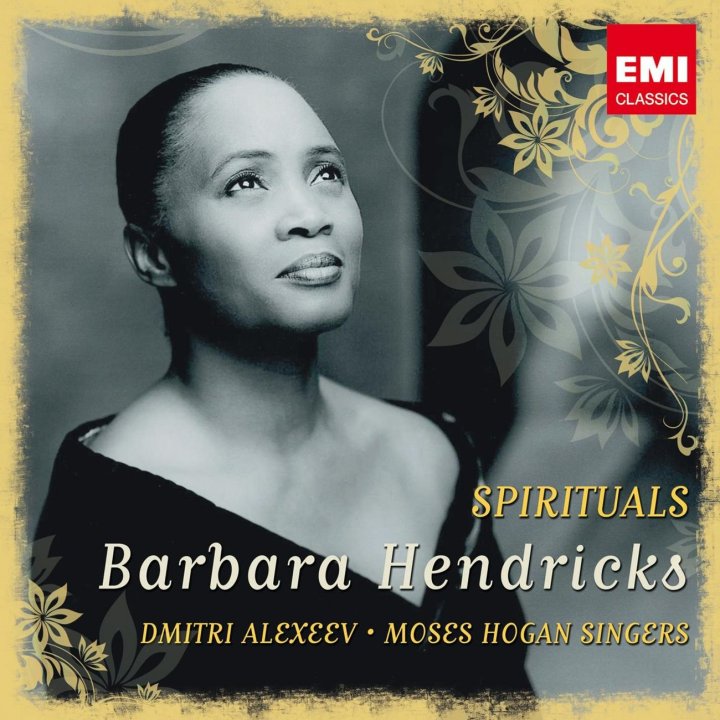
Barbara Hendricks – Spirituals

71ryumiuudl._sl1300_

Fifteen years separates these two discs of Spirituals by Barbara Hendricks and the intervening years have done little to tarnish the voice’s beauty. I suppose if one listens carefully and with a highly critical ear, a slight wear on the top register is detectable, a little of the gloriously rich bloom has gone but, for the most part, the consistency is remarkable.

However the two discs differ quite a lot in other ways. The first one might be seen to have a more sophisticated approach, treating the spirituals more as art song with piano accompaniments beautifully realised by classical pianist and winner of the Leeds Piano Competition in 1975, Dmitri Alexeev, whilst the second adopts what one would consider a more traditional approach with the contribution of the Moses Hogan Singers. You might think, therefore that the second would be the more satisfying, but I prefer the approach of the first, which brings more concentration on the songs and Miss Hendricks’s glorious singing. More than once the second disc, though beautifully executed, has a whiff of Hollywood, and it is the first disc I listen to most often. You might have different preferences.

The first disc has a good cross section of slow and up tempo songs, of the not so well known and favourites like Swing low. sweet chariot and Nobody knows de trouble I’ve seen. Hendricks gorgeous voice is in prime condition here, velvety and rich in the lower and middle registers and opening out into that gleamingly individual top register. Her diction is superb too and she makes no concessions to the music, singing with a burning conviction that suits the material well. Her exhortation of The lord loves a sinner in Roundabout da mountain would convince any sinner to repent whilst her beautifully lulling Swing slow, sweet chariot would rock any baby to sleep. She also has the voice for joy in such songs as Ev’ry time I feel de spirit. A wonderful disc and on its own well worth the price of the two disc set, which closes a disc guaranteed to lift the spirits.

The second disc provides variety by including songs for unaccompanied solo voice and for just the choir, but, for my money, there is more musical variety in the first one.

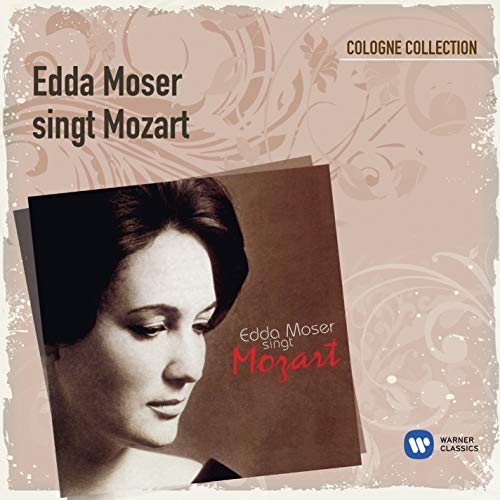
Edda Moser sings Mozart

Edda Moser, who was active on the operatic stage during the 1970s and early 1980s, should probably be better known than she is, though many will no doubt remember her from the Joseph Losey film of Don Giovanni in which she played Donna Anna.

Not strictly a recital, this is a collection of excerpts from various Mozart recordings Edda Moser made during the 1970s. Many would no doubt pick Moser for their favourite Queen of the Night, a role she sings on the patchy Sawallish recording, and indeed one notes that most of the music chosen here is for Mozart’s fierier characters.

It starts appropriately enough with the Queen of the Night’s arias and they really are splendid. First of all the coloratura flourishes and high notes are tossed off with ease and yet she also chracterises the music brilliantly. There is authority in her O zittre nicht, rage in her Der hölle Rache. Where many coloraturas sound merely pretty, Moser sounds regal and dangerous.

Next comes Konstanze’s Martern aller Arten which is properly defiant, the coloratura not only accurately executed but filled with affronted contempt. Donna Anna’s Non mi dir displays Moser’s fine legato and she also has the technique to do justice to the coloratura section.

The qualities that make her an excellent Queen of the Night and Konstanze stand her in good stead for Elettra, which she sang on Hans Schmidt-Isserstedt’s recording and she embraces both the lyricism of Idol mio and the fury of D’Oreste, d’Ajace.

The range is exceptional too and during the course of this disc, Moser not only has to sing a low G in Vitellia’s Non piu di fiori but a G in alt in the concert aria Popoli di Tessaglia, an aria Moser herself describes as “Unperformable, written without intelligence, not one beautiful note”. Well I might not go that far, but the high lying flights make impossible demands on the singer, which Moser manages incredibly well. On the other hand the low lying phrases in Vitellia’s aria tax her more and the notes below the stave emerge colourless, almost as if from a different singer.

To finish up we have a couple of examples of her contributions to some of Mozart’s sacred music, which showcase her deep legato and firm line. The voice may not have the creamy beautfy of a Te Kanawa or a Fleming, but it is still a very attractive instrument and she is more responsive to the emotional core of the music than Te Kanawa at least.

This is, without doubt, one of the best Mozart vocal compilations I have come across and is definitely worth hearing.


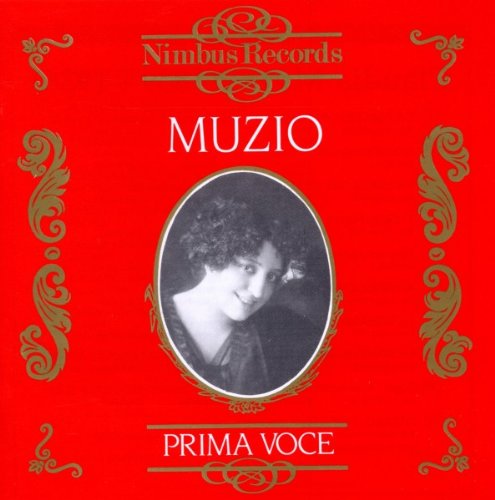
Claudia Muzio – Arias

Claudia Muzio had a patchy recording career. She made her first recordings in 1911 when she was around 21 (there is some doubt as to her year of birth), an aria and a duet, then from 1917 to 1918 she recorded plentifully for Pathé. In the early 1920s she made recordngs for Edison, but then there was nothing between 1924 and 1934 when she made what are her most famous recordings for Columbia. It would seem that the years of her greatest glory were probably when she was performing in Chicago in the early 1930s, and this is precisely the time she was silent to the gramophone. The Columbias were made a couple of years before her early death from an unspecified illness in 1936, when she was not in the best of health or in very happy circumstances.

Save for the 1911 recording of Si, mi chiamano Mimi (the first recording made by Muzio) this issue concentrates on the recordings on the Columbias. Occasionally we are aware this is not a voice in perfect health, of a shortness of breath and the inability to swell the tone at climaxes, but the voice is still unfailingly lovely and, in any case, what really singles her out is her interpretive ability. She brings something personal to all that she does. One sees the face and every fleeting change of expression. These are the qualities that make Muzio special.

Even in that very first recording of Mimi’s Si mi chiamano Mimi, though the artistry is still unformed, one registers a change of expression when she sings the phrase ma quando vien lo sgelo. Already she is doing more than simply singing the notes. That said, coming, as it does, at the end of all the later recordings, one also notes how much she developed in the interim, as we actually have a direct comparison with her 1935 version of the aria, an altogether more detailed and moving rendition.

Lauri-Volpi described her voice as one “made of tears and sighs and restrained inner fire” and certainly some of the most famous tracks here are the tearfully emotional ones, like her Addio del passato, the letter reading almost unbearably moving, the aria almost more felt than sung, though, as noted by Callasinanaplus below, a little too much of the verismo soprano’s emphasis on external declamation, creeps into her delivery. A true bel canto soprano, like Callas, creates as great an effect by working within the musical framework.

Predictably then it, is the tragic verismo arias that make the greatest effect, but she could also smile and charm, as she proves in the the delightful Bonjour, Suzon and Les filles de Cadiz. But hardly a track passes without some distinction. I only wish room had been found for Donaudy’s O del mio amato ben, a Muzio speciality, sung without sentimentality or mawkishness, but beautfully shaded and phrased so that the song emerges as a mini masterpiece.

If you don’t know Muzio’s work, I urge you to right that wrong.

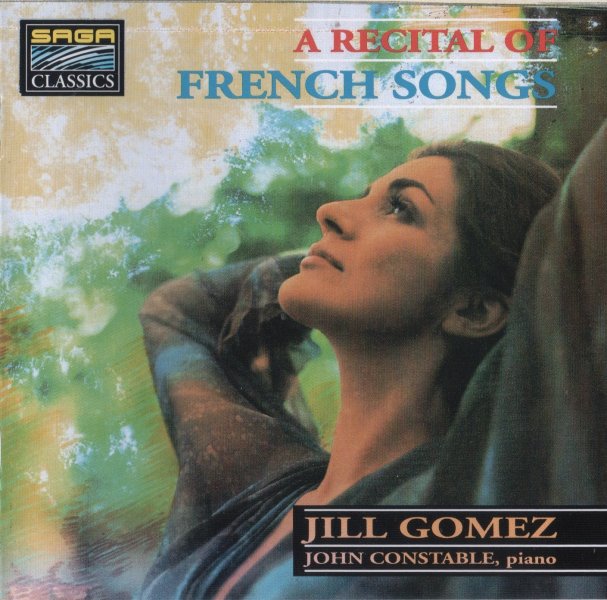
Jill Gomez – A Recital of French Songs

The Trinidadian/British soprano Jill Gomez was a mainstay of my early opera going life, and I heard her on more than one occasion. I particularly remember seeing her as the Countess in Le Nozze di Figaro and Elizabeth in Henze’s Elegy for Young Lovers with Scottish Opera, as Ilia in Idomeneo and the Governess in the The Turn of the Screw with English Opera Group and as Tytania in A Midsummer Night’s Dream at the Royal Opera House, Covent Garden. The voice was not large, but she was a strikingly good looking woman with a great stage presence and also a good actress. She is probably best known for creating the role of Duchess of Argyll in Thomas Adès’s Powder Her Face and singing the title role in William Alwyn’s Miss Julie.

I have known and loved this recital since I bought the original LP soon after it was first released in 1974, and was delighted to find that it had been reissued on CD. The programme is attractive and Gomez has a lovely voice, which she uses imaginatively and musically. Indeed one wonders why such accomplished singing has received so little attention.

We start with a group of songs by Bizet, possibly of slight musical value but direct and charming in their appeal. Gomez is delectably light and airy but also delivers a deliciously sensuous and coquettish Adieux de l’hôtesse arabe, which is probably the most well known of the group. The Berlioz items, especially La belle voyageuse, are also sung with distinction and charm.

The Debussy Proses lyriques are not performed as often as some Debussy songs, and they are quite hard to bring off. Gomez is fascinating and vividly personal, superbly seconded by John Constable’s realisation of the tricky piano part. In many places I was reminded of Mélisande’s music in Pelléas et Mélisande. A superbly characterised Noël des enfants qui non plus de maisons brings this excellent recital to a close.

Gomez brings something personal to all that she does and John Constable provides estimable support throughout. Highly recommended if you can get hold of a copy.