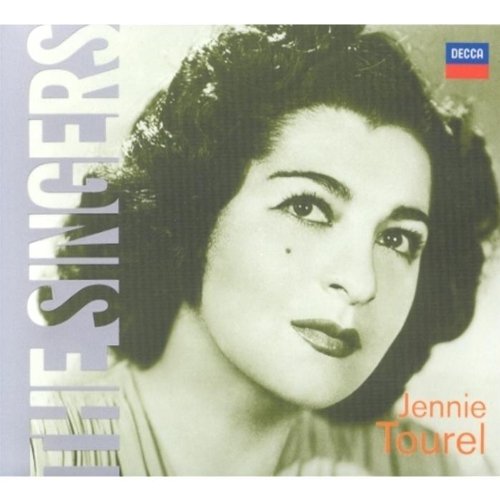
Jennie Tourel – The Singers

Jennie Tourel was born in Russia in 1900 of Jewish parents, but she and her family left just after the Revolution, temporarly settling in Danzig before moving to Paris. She fled to Lisbon just before the Nazis occupied France and from there to the USA, becoming a naturalised Amercian in 1946.

She had an illustrious career both in the opera house and on the recital stage, and was the creator of the role of Baba the Turk in Stravinsky’s The Rake’s Progress. She was still active when death ended her career in 1973, in fact in the middle of performances of Donizetti’s La Fille du Régiment in Chicago. The longevity of her career is testament to her sound technique, but if the years were kind to her voice, she was also careful never to overtax it. She knew what suited her and stuck to it.

The dates of the recordings on this disc are unknown, but the Italian and French items are stereo, which would place them at least from the early to mid 1950s. Her voice is still admirably firm, with no trace of wobble or excessive vibrato. Her legato isn’t always perfect, and her runs can be lightly aspirated, which mars her performance of the Rossini items, and also of Bizet’s Adieux de l’hotesse arabe, though she sings it with more personality and drama than many.

Berlioz’s Absence is sung with piano, and is notable for the firmness of the line, though personally I prefer a more inward display of longing. Tourel is too loud in places and she rushes the pharse la fleur de ma vie. Much better are Poulenc’s Violon and Liszt’s Oh! Quand je dors and I particularly enjoyed Ravel’s Kaddish, which exploits her rich lower register.

The Russian items are all worth hearing, beginning with a mournful Tchaikovsky None but the lonley heart, the cello obligato adding to the pervading sense of melancholia. As befits the general mood of the Russian items, she uses a bigger, more dramatic sound, but she can also be lightly high-spirited in a song like Dargomizhsky’s Look darling girls. In all she displays a strong personality and superb musicianship.

Song texts and translations are provided on the disc itself, which doubles as a CD-ROM, though, annoyingy, if you want to read them at the same time as listening to the disc, you will have to print them out before playing the disc on a CD player.
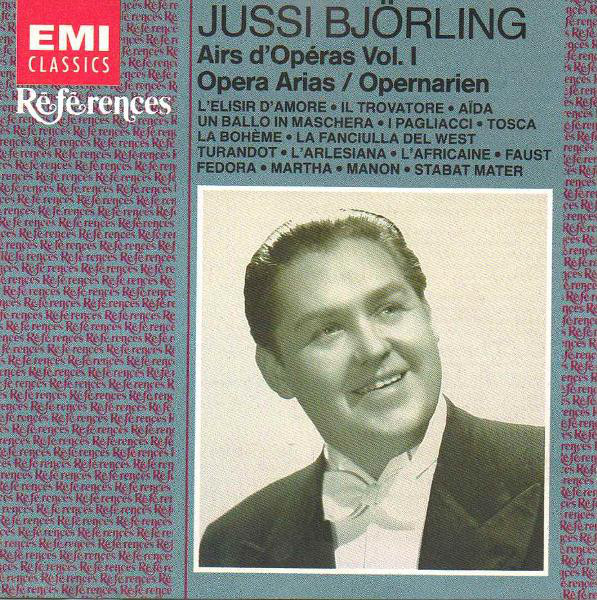
 

Jussi Björling – A collection of Swedish 78s.

These two CDs gather together most of the 78s the young Björling made in his native Sweden between 1933 and 1949, the earliest made when he was a budding tenor of twenty-two.

Most are vocal gems, but one or two (the rather loud and penny plain Je crois entendre encore, and the unpoetic duet from La Boheme with Anna- Lisa Björling on the second disc, for instance) are less than great.

The voice itself was a magnificent one, no doubt about it, with a silvery purity throughout its range, the high notes free and easy; just listen to his joyfully ebullient 1938 performance of Offenbach’s Au mont Ida from La belle Hélène, sung in Swedish, but with terrific swagger, the top notes flying out like lasers. From a few years ealier we have a plaintively sensitive performance of Valdimir’s Cavatina from Borodin’s Prince Igor, the legato line beautifully held, his mezza voce finely spun out. Also from 1938 we have a thrilling performance of the Cujus animam from Rossini’s Stabat mater, with a free and easy top D flat at the end, and it is prinicpall for Italian and French opera that Bjørling will be remembered and there are plenty of examples here of his wonderfully musical performances in that genre.

We find him ideal in Verdi, Donizetti and Puccini alike, in Myerbeer, in Massenet and in Gounod (a glorious rendering of Faust’s Salut, demeure). Some regret the absence of a true Italianate tone in the Italian items, but he will never resort to sobs and aspirates to express emotion, and, personally, I find his comparative restraint very attractive. It is true, he is not always imaginative with his phrasing, and nowhere will you get the kind of psychological introspection you would hear in a performance by someone like Vickers, but his singing is always musical, and of course there is a great deal of pleasure to be had from the voice itself, which Italianate or not, is a thing of great beauty.

Some of the very best of these 78 recordings are included on Volume 1, stand out items for me being the aforementioned Faust aria, his wonderfully musical and sensitive Ah si, ben mio from Il Ttovatore, and his poetic, but thrilling version of Nessun dorma from Turandot.  There is also plenty to treasure in Volume 2, which includes the Offenbach and Borodin, but also a sensitvely prayerful  Ingemisco from the Verdi Requiem, Des Grieux’s lovely Dream from Manon sung with liquid, honeyed tone (his ardent Ah, fuyez is on the first disc), and his  poetic Cielo e mar, from La Gioconda.

The second disc finishes with a couple of unexpected examples of his work in Lieder, a gorgeously lyrical Beethoven Adelaide, and a beautifully restrained and rapt account of Strauss’s Morgen.

Anyone who loves the tenor voice and gloriously musical and sensitive singing (not always the same thing) should have these recordings in their collections.

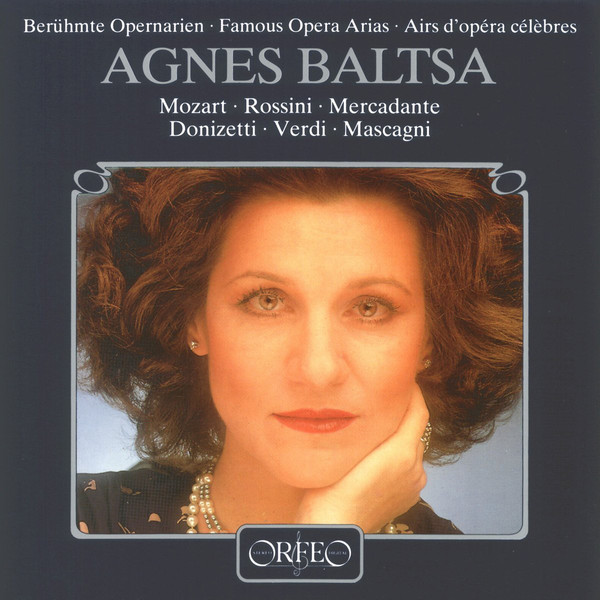
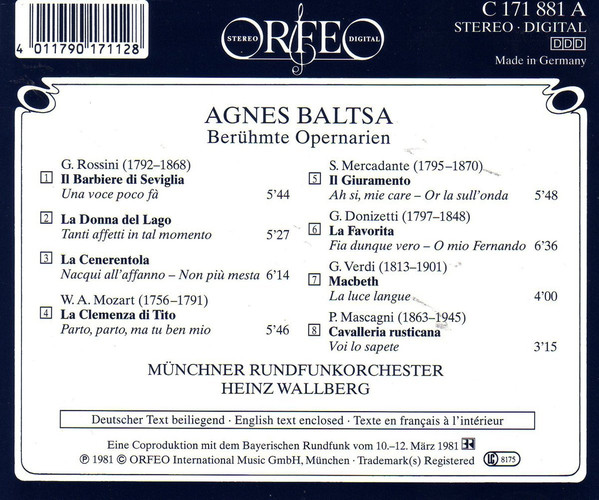
Agnes Baltsa – Famous Opera Arias

r-10771805-1504032686-5609.jpegr-10771805-1504032692-5381.jpeg

Good to be reminded of Baltsa’s pre-eminence as a lyric/dramatic mezzo at the beginning of the 1980s, when this recital was recorded.

The recital shows off to advantage her keen dramatic instinct, a tangily individual timbre, and a voice that was, at this time at least, absolutely seamless from top to bottom. Though she had already recorded Eboli and Amneris for Karajan, this recital concentrates for the most part on her work in the field of bel canto.

Baltsa was an exciting stage performer, as I can attest, having seen her live on many occasions and a great deal of that excitement comes through on disc, the climaxes of the arias from La Favorita and Il Giuamento being particularly thrilling. She has a strong vocal personality, which comes across stunningly on disc, and she realises the different demands of classical, Romantic and verismo music. If there is a limitation, it is that she rarely colours or weights the voice to suit the character she is playing, something more noticeable in a recital disc than it would be in a complete performance.

Stand out tracks for me were the aria from La Donna del Lago, where she gently caresses the opening cavatina, and the aforementioned arias from Il Giuramento and La Favorita. Indeed, on this showing it is a great pity that nobody thought to make a complete recording of the Donizetti opera with her, though preferably in the original French rather than Italian as it is here.

To sum up, this is a great memento of an important singer recorded when the voice was at its peak. I seem to remember that it was issued in the UK originally on EMI, but the recording was made by Orfeo, and it is that issue I have.

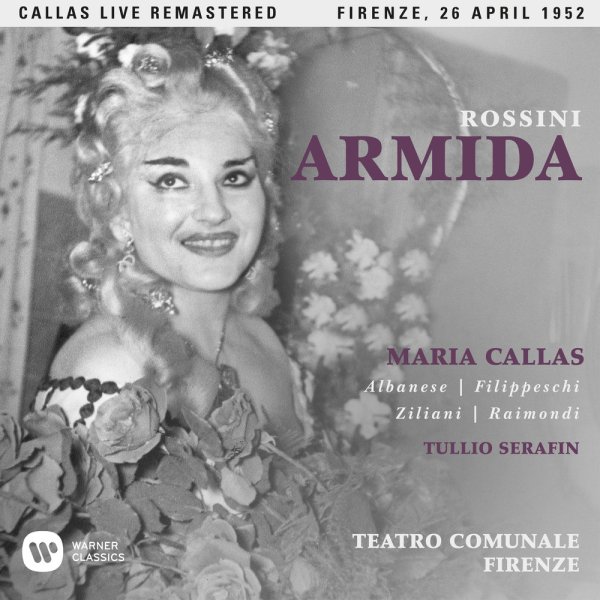
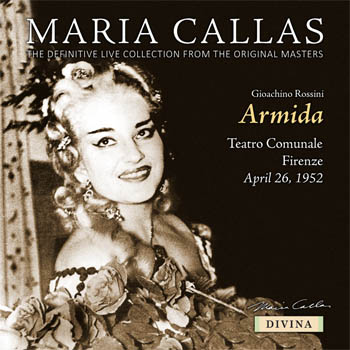
Callas in Armida – Florence 1952

1498830639973

With this set, I was able to make a direct comparison between the new Warner transfer and that by Divina Records, and have to say I prefer Divina. Neither version can eliminate the overloading and distortion at tutti climaxes, but to my ears the voices are much more clearly captured in the Divina version. The Warner isn’t bad, but possibly in an attempt to provide a more comfortable listening experience, they have removed some of the presence of the voices. Other ears and other equipment may have a different reaction of course, but I quickly abandoned Warner and continued listening on Divina. Furthermore Divina includes about 12 minutes of music, omitted by Warner, where you can hear a speaking male voice overlaid onto the music. Though admittedly irritating, it means we lose some of Callas’s singing. Divina also includes fuller notes, fuller documentation, photos and a libretto. I suppose you might see it as the luxury compliment to Warner’s cheaper offering. Personally I prefer Divina’s warts and all approach. Divina is of course more expensive, and others may have different priorities, so choice will reside with the individual listener.

But choice must be made, for this has to be some of the most astonishing dramatic coloratura singing ever committed to disc, and it is a great shame that Callas never sang the role again, nor felt able to take on any more of the roles written specifically with Isabella Colbran in mind.

In 1952 Callas undertook a punishing schedule. In January she sang her final performance of Elena in I Vespri Siciliani in Milan, followed it with I Puritani in Florence, then her first Normas at La Scala. February saw more performances of Norma at La Scala, with a few concerts sandwiched between. In March she gave three performances of Violetta in Catania, whilst rehearsing for a new production of Il Ratto del Seraglio (the first ever at La Scala). This opened at the beginning of April, and this production of Armida on April 26th after a further performance of Norma at La Scala. Incredibly, though you’d never guess it from her confident delivery, she learned the role of Armida in 5 days!

Astonishing though the vocal pyrotechnics are, Callas not only sings the role with consummate ease, but makes musical sense of its difficulties, so it becomes much more than a vocal showcase. She is by turns, imperious, commanding, sensuous, elegant and powerful, cascading up and down two-octave chromatic scales with fluent ease. A critic of the Giornale delle Due Sicilie described Colbran’s singing of the aria D’amore al dolce impero thus.

She proves herself superior to any other singer in some variations in which she embellishes a delightful tune of Rossini’s with all the graces of the art of song, now running through chains of triplets of extraordinary and …insuperable difficulty, now giving a vocal imitation of the most difficult arpeggios of stringed instruments, and finally, with superb nonchalance, executing a formidable ascending and descending scale of two octaves.

The critic might well be talking of Callas’s performance, which is absolutely electrifying, as it is throughout the opera.

Unfortunately, none of the other singers is anywhere near her achievement and Serafin heavily cuts the opera, presumably to accommodate their deficiencies. All of the tenors have trouble with the florid writing, aspirating the runs in what’s left of it, and their singing is clumsy and effortful.

Essential listening, none the less, for Callas’s superbly commanding singing of the title role. There are of course more modern recordings out there, more textually accurate and more complete, but nowhere else will you hear such a thrilling portrayal of the title role, nor one so brilliantly sung. The cumulative power of the finale is simply staggering, where, with a voice of massive power, Callas peals forth vengeful coloratura flourishes with insouciant ease, capping it with a top Eb of huge proportions. You have to hear it to believe it, indeed, were it not for recorded evidence, you would not believe it possible.

dvn016_l

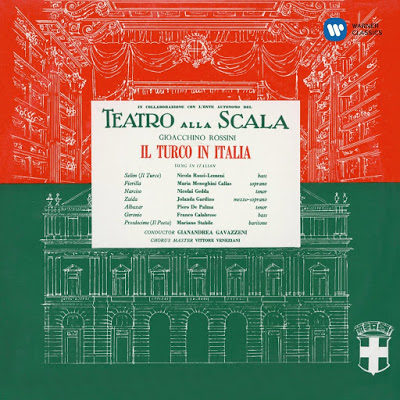
Callas in Il Turco in Italia

81ts9wichpl-_sl1500_

Recorded 31 August – 8 September 1954, Teatro alla Scala, Milan

Producers: Walter Legge & Walter Jellinek, Balance Engineer: Francis Dillnutt

Given Legge’s musical conservatism, it always surprises me Il Turco in Italia was recorded at all; after all, it was not one of Rossini’s better known works. We should be grateful that it was, though, for this set is pure joy from beginning to end. It might not take any prizes for textual accuracy now, and cuts abound, but objections fade away in a performance of such sparkle and wit.

Callas had sung the role of Fiorilla in a production at the tiny Teatro Elisea in Rome in 1950 and would go on to sing it again in Milan in 1955 in a new production by Zeffirelli. Gavazzeni was in the pit on every occasion.

Callas’s only other excursion into comedy was the role of Rosina in Il Barbiere di Siviglia, and, though the studio recording made in London was an outstanding success, her appearance in the role at La Scala was, by all accounts, one of the few low points in her career. No such caveats attach themselves to her Fiorilla, which seems to have been a success from day one. According to the critic Bebeducci, who was there at the opening night of the Rome production, it was “extremely difficult to believe that she can be the perfect interpreter of both Turandot and Isolde,” which was the reputation she had at that time. However, these performances could be seen to be a turning point in her career.

After singing Kundry in concert the following month, she never again sang a Wagner role. The opera also introduced her to Luchino Visconti, who, with his friends of the Anfiparnasso intellectual circle, mounted the production, and who was to become a seminal influence on her in the years to come.

Unlike so many of the operas she sang, and like most of Rossini’s comedies, Il Turco in Italia is an ensemble piece, and Callas is very much part of that ensemble. She has only one aria, Non si da follia maggiore which she sings with masterful ease, and a wonderful sense of the ironic, almost a vocal equivalent of an arched eyebrow. Indeed throughout so vivid is her verbal painting that you feel you can see every fleeting facial expression.

One of the high points is her duet with her husband Geronio, sung with quite the right hangdog tones by Franco Calabrese. At first haughty, then contrite as she attempts to assuage his indignation (No mia vita), then angrily rounding on him, her voice lashing out on Ed osate minacciarmi like a verbal slap, she is the mistress of every comedic turn.

She is surrounded by an excellent cast;  the aforementioned Calabrese, the veteran Stabile, dry voiced but full of personality as the Poet, Rossi-Lemeni an ever vascillating Turk, Gedda a lyrical Narciso, and Gardino as Zaida, the gypsy girl with claws only a mite less sharp than Callas’s; but it has to be said that only Callas has the dexterity, the flexibility and the ease in coloratura to do full justice to Rossini’s florid writing.

Gavazzeni conducts a sparkling version of the score. To get the opera in something like its original text you will have to turn to the Chailly recording with Bartoli. A deeper authenticity, however, lies in this version with Callas. One senses the performers had as much fun making it as we do listening.

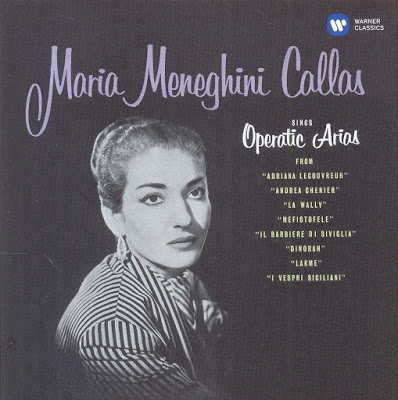
Maria Meneghini Callas Sings Operatic Arias

91epg5zapfl-_sl1465_

Recorded 17-18, 20-21 September 1954, Watford Town Hall, London

Producer: Walter Legge, Balance Engineer: Robert Beckett

This recital, the second Callas recorded for EMI, was designed to show off her versatility, so we get one side of verismo, and one of coloratura, with Boito’s L’altra notte from Mefistofele bridging the gap. It caused quite a stir at the time. The coloratura side was of material more associated with singers like Galli-Curci and Pagliughi; the verismo items more likely to be the preserve of Ponselle and Muzio, or Callas’s contemporary, Tebaldi. There is no doubt that Tebaldi could not have attempted any of the coloratura items on the disc and the gauntlet was effectively laid down. The range too is phenomenal, and takes her up to a high E natural (in the Vespri aria, and the Bell Song), a note unthinkable from a soprano who could bring the power she does to an aria like La mamma morta.

Of the operas represented, Callas had only sung Mefistofele and I Vespri Siciliani on stage at that time, though she would go on to sing Rosina in Il Barbiere di Siviglia (and make a very successful studio recording) and Maddalena in Andrea Chenier. But, as is her wont, even in isolation, Callas is able to enter fully into the character and sound world of each character that she is singing.

She starts with two of Adrianna’s solos from Adrianna Lecouvreur, a role that would no doubt have suited her dramatic gifts down to the ground, though, truth to tell, the opera is pretty tawdry stuff. I have the recording with Scotto and Domingo, who make the very best case for it, but I still have little time for it. That said, Callas is brilliant at conveying Adrianna’s humility in the first aria, her pain and sadness in the second. Her recording of La mamma morta is well known, and became quite a hit after it was featured in the Tom Hanks Oscar winning movie Philadelphia. Notable is the way Callas’s tone colour matches that of the cello in the opening bars, and the way she carefully charts its mounting rapture. Some may prefer a richer, fuller sound. None have sung it with such intensity.

Ebben ne andro lontana, a glorious performances, is full of aching loneliness, its climax solid as a rock, but the prize of this first side is without doubt the crepuscular beauty of Margherita’s L’altra notte from Boito’s Mefistofele, a sort of mini mad scene, which Callas fills with a wealth of colour and imagination. One notes the blank, colourless tone at L’aura e fredda, even more drained and hopeless on its repeat, the baleful sound of her chest voice on E la mesta anima mia; and does any other singer so accurately encompass those coloratura flights of fancy as her soul takes wing on Vola, vola? This is the stuff of genius.

The second side also has its attractions. Rosina’s Una voce poco fa is a mite slower than it was to become in the studio set, but Callas’s ideas on the character are perfectly formed, and she already uses that explosive Ma to underline Rosina’s less than docile temperament. Her runs, scales and fioriture are as elastic as ever, and the little turns on the final faro giocar have to be heard to be believed.

The Dinorah aria is a rather empty piece and I sometimes wonder why she even bothered with it. There are some magical echo effects and her singing is wonderfully fleet and accurate, but it’s not a favourite of mine. I’m not a big fan of the Bell Song either, to be honest. Callas lavishes possibly more attention on it than it’s worth, but in so doing at least makes it a little more interesting than the birdlike warblings we usually get. The opening has a mesmeric , almost improvisational air about it, and the bell imitations are clear and true. I remember once playing this track at a friend’s place one summer evening, the window open, while a bird (I have no idea what it was) sang for all its worth on a branch just outside.  It was as if the bird was singing in response. The high E she sings at its climax is clean as a whistle, but it does sound like the very extreme of her range. Best of all the coloratura items is her breezy, elegantly sung Merce, dilette amiche from Verdi’s I Vespri Siciliani, which is lovely in every way and ends on another epic high E.

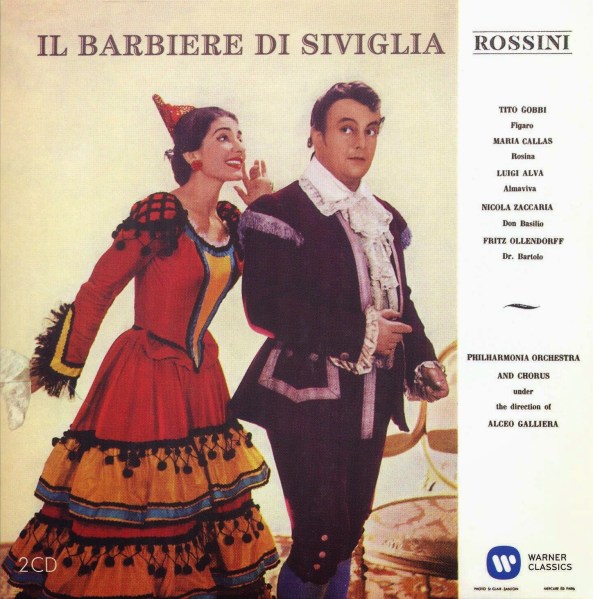
Callas’s Studio Il Barbiere di Siviglia

91be3bm7phl-_sl1465_

Recorded 7-14 February 1957, Kingsway Hall, London

Producer: Walter Legge, Balance Engineer: Robert Gooch

Callas only once sang Rosina on stage, in 1956 in an antiquated production at La Scala, which was, by all accounts, the one big flop of her career. People opined that comedy was obviously not her metier, though they must have had short memories and forgotten all about her success in the Zefirelli production of Il Turco in Italia the previous year, an opera she had originally sung back in 1950 and also recorded.

Giulini, who conducted the La Scala production, recalls the production as the worst memory of his life in the theatre.

I don’t feel it was a fiasco for Maria alone, but for all of us concerned with the performance. It was an artistic mistake, utterly routine, thrown together, with nothing given deep study or preparation.

It was also the last time Giulini ever conducted an opera at La Scala, and in fact he rarely conducted opera at all after that.

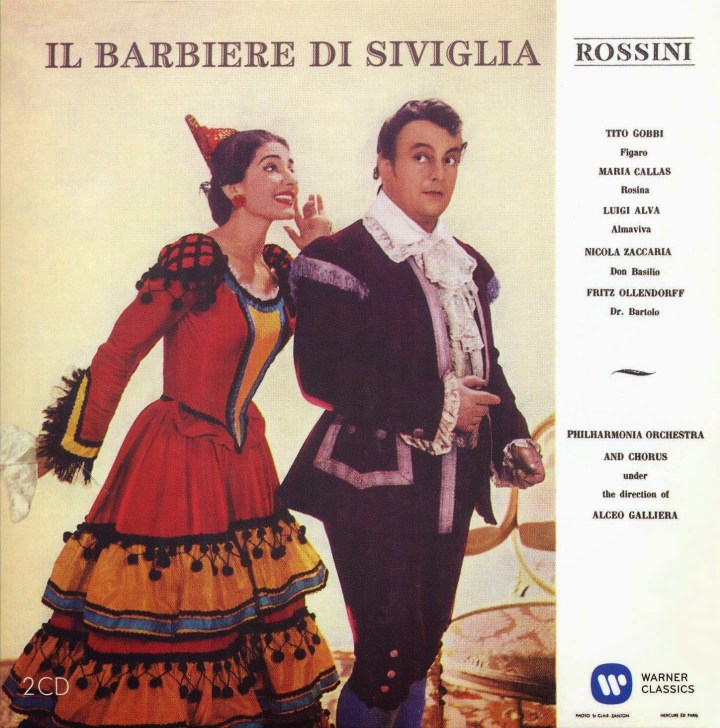
Whatever the problems at La Scala, though, the studio recording made the following year in London, with Gobbi and Alva joining Callas from the La Scala cast, is a joyous affair, and still one of the most recommendable recordings of Il Barbiere di Siviglia in the catalogue. The edition used wouldn’t bear scrutiny today, but at least Callas sings in the mezzo keys, though she does sing upward derivatives when the line takes her too low, interpolating a secure top D at the end of her duet with Figaro.

I am reminded that when an opera producer friend of mine was asked to produce the opera in Russia, he acquired a modern recording of the opera, no doubt in some urtext edition, but found the whole thing completely dispiriting. Having very little enthusiasm for his task, he was about to cancel, when he decided he would have a listen to the Callas recording. His ideas were absolutely transformed. Swept away by the sheer exuberance of the recording, he set about his assignment with renewed enthusiasm.

Callas’s Rosina is a mettlesome minx, defiant with Bartolo, flirtatious and seductive with Almaviva, and playfully scheming with Figaro. The whole character is laid out for us in her singing of Una voce poco fa, sweet docile and gentle, but (and just listen to the explosive way she sings that one word ma) a little devil when crossed. Some find her Rosina lacks charm. Well maybe she misses a touch of the coquettish, but, one thing’s for sure, this Rosina would be a lot of fun. Her technical proficiency in the role’s florid writing is little short of staggering, her voice infinitely responsive.

However Callas is no prima donna in this opera, and is very much part of a team, and one of the delights of this recording is in the many duets and ensembles with which the score abounds. You sense that this team of singers really enjoyed working together; there is a real sense of ensemble about it. Individually, they are an excellent bunch, led by Gobbi’s jovial Figaro. Alva is on more than one recording of Il Barbiere di Siviglia and he too works wonderfully well in duet with Gobbi, and also sings with some of the grace one associates with singers of an earlier generation. Zaccaria and Ollendorff are also well in the picture, and don’t overdo the slapstick. The Buona sera ensemble had me chuckling out loud. Gabriella Carturan contributes a nice cameo as Berta too. Alceo Galliera is an unexpected choice of conductor. Known mostly for his role as an accompanist, he conducts a sprightly, fleet and sparkling version of the score.

For all its textual inaccuracies, this Barbiere has held its place as one of the best recordings around, its sense of fun and ensemble almost unrivalled. A joyfully theatrical set, so full of character, that one hardly needs visual aid, so vivid is its storytelling, it fizzes and sparkles like a good champagne.

Late Callas Recitals

Recorded 1963 and 1964, Salle Wagram, Paros

Producer: Michel Glotz, Balance Engineer: Paul Vavaseur

It’s useful to take these three recitals together. They were recorded over a similar period, and Callas was using the sessions as a way of working on her voice after a long period of inactivity. Indeed in 1962 and 1963 she didn’t appear on stage once, giving only a few scattered concerts.

81unw2ww5cl-_sl1500_

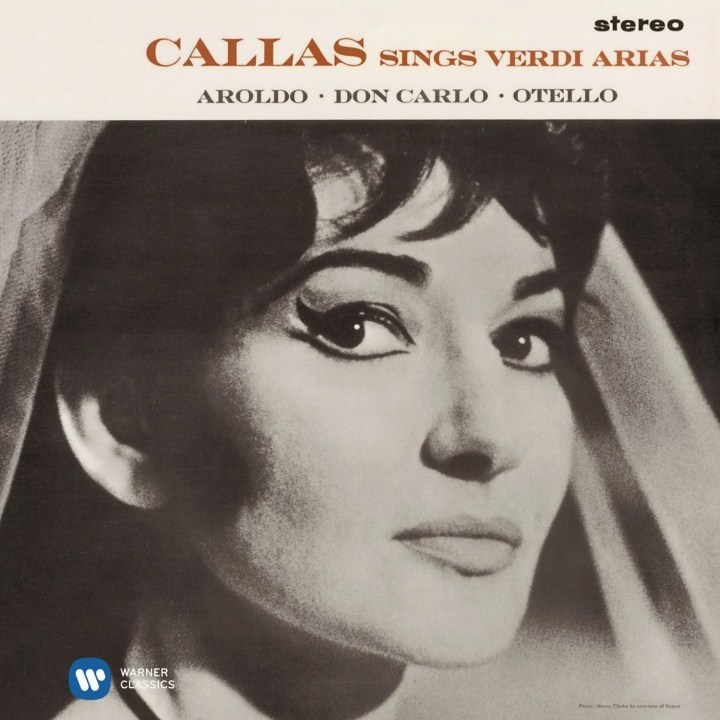
None of these discs could be considered essential, but the Verdi disc is the most recommendable. The most undemanding of the pieces (Desdemona’s Willow Song and Ave Maria) is predictably the one that causes her the least problems, and also yields the most vocal pleasure. As always the mistress of mood, she differentiates clearly between the conversational exchanges and Barbara’s song, her legato impeccable in the Ave Maria. The Aroldo arias are superbly intense and dramatic, as is Eboli’s O don fatale, the O mia regina section beautifully moulded, and benefiting from her deep legato. The top of the voice is no more pleasant here than it is elsewhere on these three discs, but the drama carries her forward and it is easier to forgive. There is not much to commend Elisabetta’s Non pianger mia compagna, and I often wonder why it was included.

81mslzncryl-_sl1500_


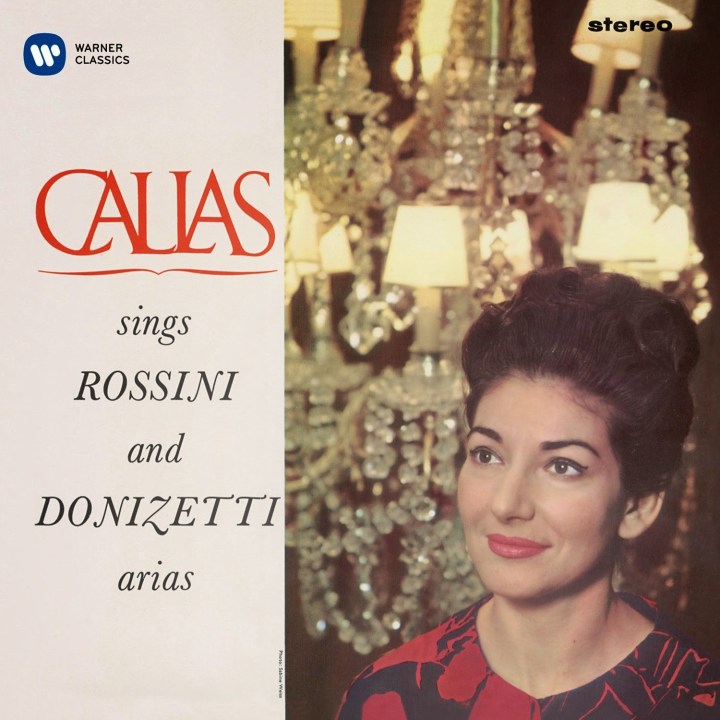
The Rossini and Donizetti fails to ignite her dramatic sensibilities quite so much, and there are plenty of uncomfortable moments. However there are still times, when we glimpse what Callas might have done with this music a few years before. Her Cenerentola lacks sparkle, but the scale passages are wonderfully supple and smooth. This is a serious Cenerentola, though, given what she suffers before singing this aria, such a reading is not entirely inapt. That said, there is a much better version of her singing this at a concert in London, where she finds a lightness of touch that eludes her here. Elsewhere, much of the singing sounds tentative, much more so than on the Verdi. Though she unerringly captures Mathilde’s sighing loneliness in the aria from Guglielmo Tell, there is a rather lifeless air about the recording, not helped by the omission of a chorus in some of the items. Nevertheless her sense of style never deserts her.

81jmshecyul-_sl1500_

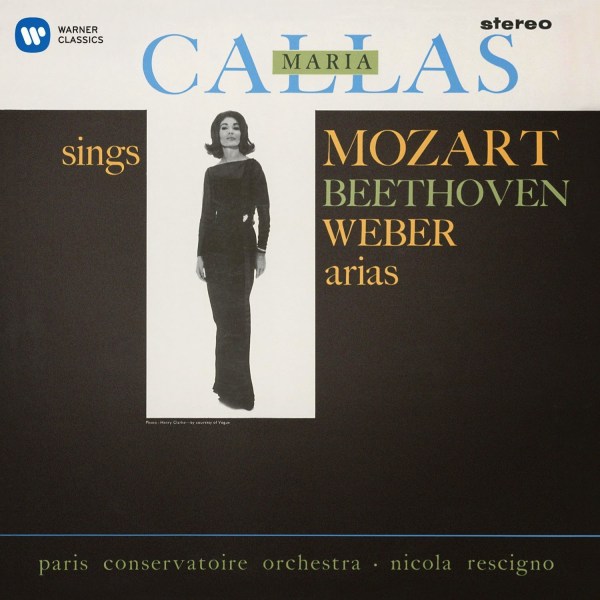
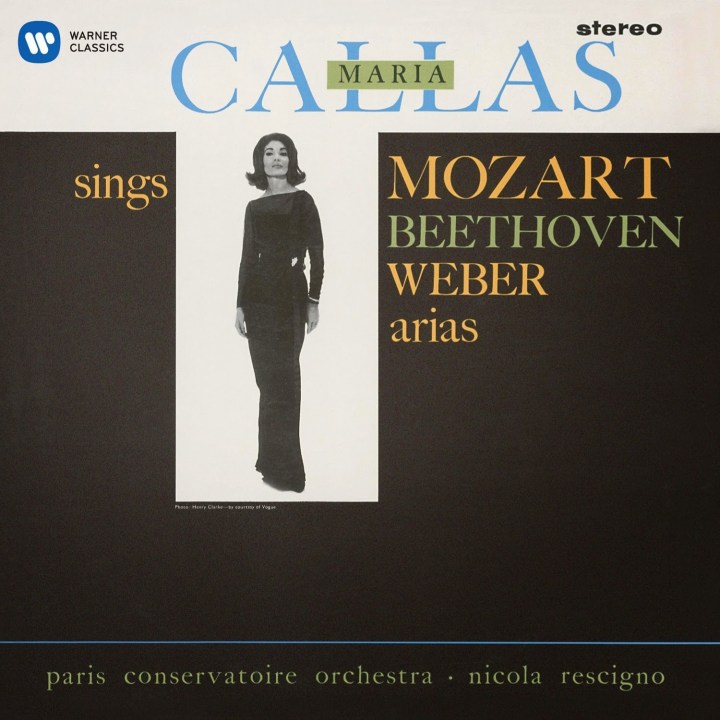
Mozart, Beethoven and Weber are not composers one would naturally associate with Callas. That she could be a great Mozartian is evidenced by her test recording of Donna Anna’s Non mi dir, and a couple of blazingly defiant concert versions of Costanze’s Martern aller Arten, sung in Italian as Tutte le torture. (It is a little known fact that Callas was actually La Scala’s first ever Costanze.) The less said about Porgi amor and Donna Anna’s arias on this album, though the better. Elvira’s Mi tradi goes a lot better, and the recitative, with its contrasting emotions, is superb. It’s mirror piece, Beethoven’s concert aria Ah perfido also goes well, and, as it lies somewhat lower, suits her much better. It is without doubt the most successful item on the recital. Ocean, thou mighty monster is also superbly dramatic, but her peculiarly accented English is somewhat bizarre, and again the climaxes are something of a trial.

I find my attitude to these late recitals can vary each time I listen to them. Sometimes I find the wobbles, the insecure and unsupported top voice, the acidulous tone difficult to take; others I barely notice it, so taken up am I by her musical instincts. The Verdi I would hate to be without, the other two for very occasional listening only.