Callas’s Studio Un Ballo in Maschera

91l5b71tlcl-_sl1453_

Recorded 4-9 September, Teatro alla Scala, Milan

Producer: Walter Jellinek, Balance Engineer: Robert Beckett

It may come as a surprise to find that this 1956 recording of Un Ballo in Maschera was the first time Callas was singing the role of Amelia complete, and that she would not sing it on stage until the following year at La Scala in a lavish new production by Margarita Wallman, her only stage performances of the role. As is her wont, she completely inhabits the role and so deep is her identification with it that one would assume she had been singing it for years.

Amelia is a transitional role in Verdi’s canon, looking forward to Verdi’s later style, but still with a requirement for many of the vocal graces one expects from a bel canto singer, most of them glossed over or ignored by technically less accomplished sopranos. Callas’s voice and technique were well suited to it, her dark timbre uniquely telling, filling out its phrases with true spinto tone. Amelia’s very first phrases are sung with breadth and a deep legato, and yet she executes the little turns Verdi adds to indicate Amelia’s nervous state of mind nimbly and with accuracy, and how beautifully she spins out the arch of the great melody at Consentimi, o Signore.

Act II finds her at her very best, first in the great scena that opens the act, including a secure top C at its close. But note how she phrases onwards and through the top note, so that the final cadenza and its quiet close become the focal point of the aria. Note also how she observes the sforzando markings at Deh mi reggi, whilst at the same time maintaining her impeccable legato. The ensuing duet with Riccardo (one of Verdi’s greatest inspirations) has an erotic charge not heard in any other version, save possibly the live one from the following year; who but Callas can invest the line Ebben si t’amo with so many conflicting emotions? Throughout this recording her voice, rich and dark hued, is more responsive than that of Eugenia’s Ratti’s light voiced soubrette. In the ensemble at the end of the first scene of Act III, it is Callas, not Ratti, who demonstrates perfect trills, and hear in the Oath Quartet just before, how she whips through a series of triplets which take her from a sustained top Bb to D and Eb at the bottom of the stave with dazzling accuracy. This is Callas at her best, both vocally and dramatically.

The rest of the cast could hardly be bettered. Di Stefano may not be the most aristocratic of Riccardos, but it is still one of his best roles, sung with his own brand of slancio and lashings of charm. Gobbi is superb as Renato. Others may better him in the cantabile of Alla vita che t’arride, but few have expressed so eloquently the anguish and conflicts at the heart of Eri tu. Barbieri is a formidable Ulrica, and Ratti a pert, if occasionally too bright-voiced, Oscar. We also get a nicely ironic pair of conspirators in Maionica and Zaccaria.

Votto is, well, a good accompanist, and nowhere near as propulsive as Gavazzeni at La Scala the following year. Serafin would have been the better conductor for the job, but Callas was in a funk with him for agreeing to record La Traviata with Stella instead of her.

This was one of the few La Scala recordings not produced by Walter Legge, though the La Boheme which preceded it was. I have no idea why this should have been the case.  I originally owned the first UK reissue of the set on LP, and later the 1987 EMI Angel CD issue. Callas always sounded well on this set, but it is Ratti who sounds less shrill on the Warner than she did on the previous CD incarnation. Either that or my ears have become more forgiving.

I would never want to be without the live Un Ballo in Maschera from the following year, possibly the last time we hear Callas singing with such power and freedom, but this recording remains one of the most recommendable studio sets around, despite its mono sound. The opera was recently the subject of Radio3’s Building a Library programme. Final choice was eventually narrowed down to Muti with Domingo and Arroyo and this Callas set. If Roger Parker eventually plumped for Muti, that was because of the better, more modern sound and the greater refinement of Domingo’s Riccardo. However he comforted himself by making the Callas recording his historical choice, leaving him the best of both worlds.

Callas Verdi Heroines

81hy7szp5vl-_sl1500_

Recorded 19-21, 24 September 1958, No. 1 Studio, Abbey Road, London

Producer: Walter Legge, Balance Engineer: Harold Davidson

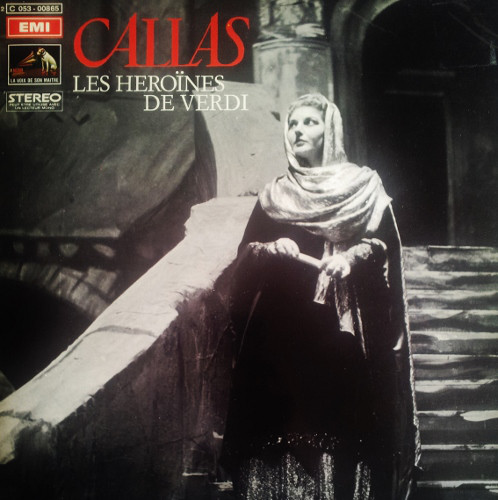
If Mad Scenes is my favourite Callas recital disc, this one comes a very close second. Never before (or since, let me add) have Lady Macbeth’s arias been sung with such ferocity, such verbal acuity, such a wealth of understanding and psychological penetration, except perhaps by Callas herself when she sang the role on stage at La Scala in 1952. Listening to these three arias, text in hand, is to come face to face with Lady Macbeth the way Verdi had no doubt intended her to be. Furthermore Callas’s realisation of the score and Verdi’s detailed instructions sounds utterly spontaneous. This is truly Dramma per musica. That Walter Legge never had the foresight to record the complete opera with Callas as Lady Macbeth and Gobbi as her husband remains one of the greatest causes for regret in recording history.

Callas herself recalls that when she came to record the Sleepwalking Scene, she felt quite pleased with herself when she stepped down to listen to the playback. “That was, I think, some good singing,” she said to Walter Legge. “Oh extraordinary,” he said, “but now you will hear it and understand that you have to do it again.” She was a bit taken aback, but listened of course, and immediately knew exactly what he had meant. “It was perfect vocally, but the main idea of this Sleepwalking Scene was not underlined. In other words, she is in a nightmare-sleepwalking state. She has to convey all these odd thoughts which go through her head – evil, fearsome terrifying.  So I had done a masterpiece of vocal singing, but I had not done my job as an interpreter. Immediately, as soon as I heard it, I said, ‘Well you are right, now I understand,’ and I went in and performed it. Her detailed analysis of the scene is reproduced in John Ardoin and Gerald Fitzgerald’s superb book, Callas, and makes edifying reading.

This Warner pressing seems to me the best I’ve heard since the original LP, which I had in a French voix de son maitre pressing. There is a lot more space round the voice, top notes less apt to glare. This is particularly noticeable in the scene from Nabucco, where even the final recalcitrant top C sounds less unpleasant than in its last outing on CD. The Bellinian cantilena of Anch’io dischiuso finds Callas spinning out its long lines to heavenly lengths, before, all thoughts of love cast aside, she strengthens her resolve in the fiery cabaletta. Prepared to flinch before the top Cs, I was pleasantly surprised to find that, in this new pressing, they fall far more easily on the ear. The final top C is still an unlovely note, but it sounds far less like a shriek. That said, this performance is no match for the blazingly intense, diamond-bright accuracy of her singing in Naples in 1949.

She never sang in Ernani on stage, but Elvira’s Ernani involami figured fairly regularly in her concert programmes. As usual, she brings a wealth of colour to the recitative (just listen to the change of colour from Questo odiato veglio to col favellar d’amore to how lovingly she caresses Ernani’s name in the opening strains of the aria). Her top register is no more pleasant here than elsewhere, but she moulds the phrases beautifully, singing with grace and style, managing perfectly the aria’s wide intervals. She once told a student she would learn much from listening to Ponselle sing the aria. Ponselle does of course sing the aria very beautifully, but the student would learn a great deal more from Callas’s elegance and suavity.

She only once sang Elisabetta on stage (at La Scala in 1954), but her Tu che le vanita is a justly famous interpretation, and one that she sang in concert on many occasions.“A performance of the utmost delicacy and beauty” Lord Harewood calls it in Opera on Record, which indeed it is, though we also get the baleful sounds of Callas’s unique chest voice in la pace dell’ avel; note also how wistfully she longs for her homeland in the Francia section.

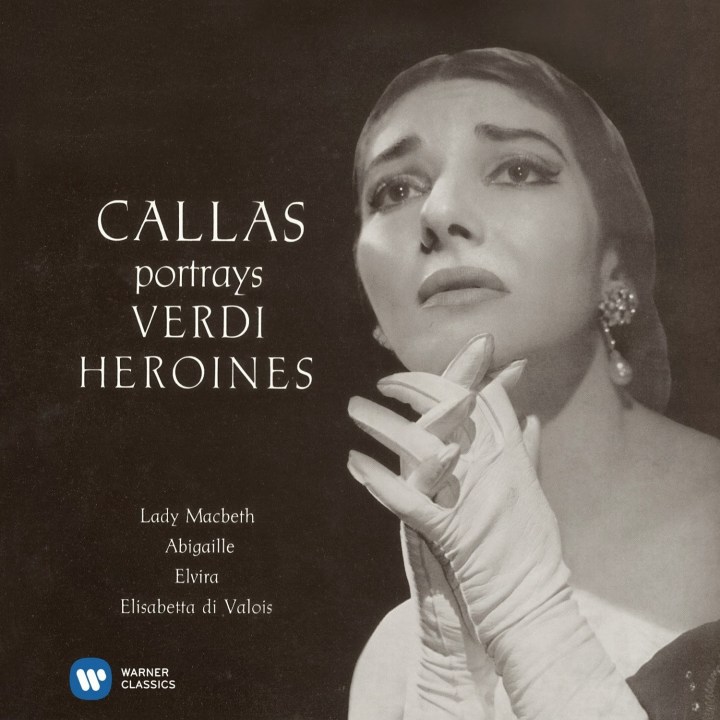
My one regret is that Legge didn’t see fit to add the contributions of chorus and comprimarii as he does on the Mad Scenes disc. A chorus would no doubt have enlivened the Nabucco and Ernani arias, and one misses the contributions of the doctor and lady-in-waiting in the Macbeth Sleepwalking Scene. I also wonder why the original sleeve, here reproduced by Warner, used a picture of Callas as Violetta, which, though one of Callas’s most famous roles, is not represented here. The French edition more fittingly used a photo of Callas as Lady Macbeth, as shown below.

r-4861045-1377783197-9534.jpeg

No matter, listening to this great record has been a moving experience. I must have heard dozens of different performances of the arias on this disc, all with their own merits, but none have ever affected me so deeply. Callas’s gift was and remains unique.

Late Callas Recitals

Recorded 1963 and 1964, Salle Wagram, Paros

Producer: Michel Glotz, Balance Engineer: Paul Vavaseur

It’s useful to take these three recitals together. They were recorded over a similar period, and Callas was using the sessions as a way of working on her voice after a long period of inactivity. Indeed in 1962 and 1963 she didn’t appear on stage once, giving only a few scattered concerts.

81unw2ww5cl-_sl1500_

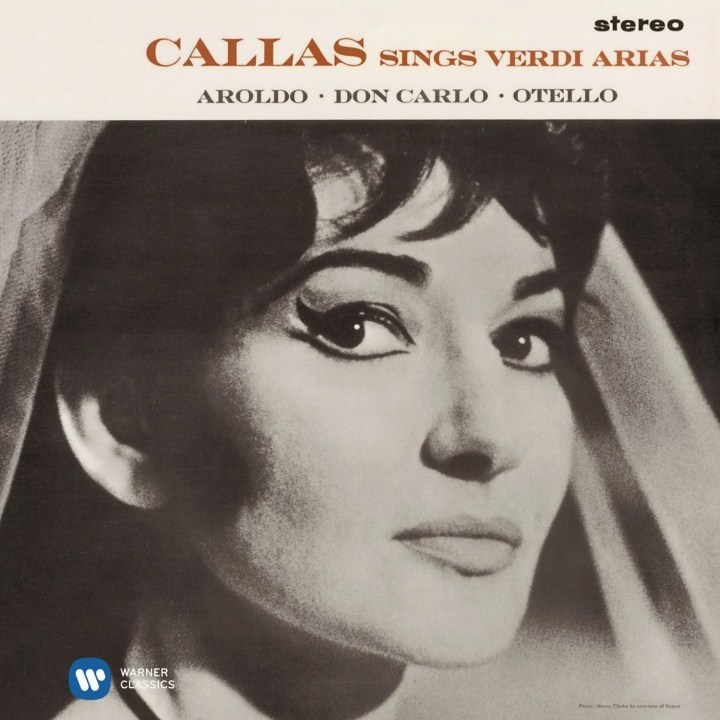
None of these discs could be considered essential, but the Verdi disc is the most recommendable. The most undemanding of the pieces (Desdemona’s Willow Song and Ave Maria) is predictably the one that causes her the least problems, and also yields the most vocal pleasure. As always the mistress of mood, she differentiates clearly between the conversational exchanges and Barbara’s song, her legato impeccable in the Ave Maria. The Aroldo arias are superbly intense and dramatic, as is Eboli’s O don fatale, the O mia regina section beautifully moulded, and benefiting from her deep legato. The top of the voice is no more pleasant here than it is elsewhere on these three discs, but the drama carries her forward and it is easier to forgive. There is not much to commend Elisabetta’s Non pianger mia compagna, and I often wonder why it was included.

81mslzncryl-_sl1500_


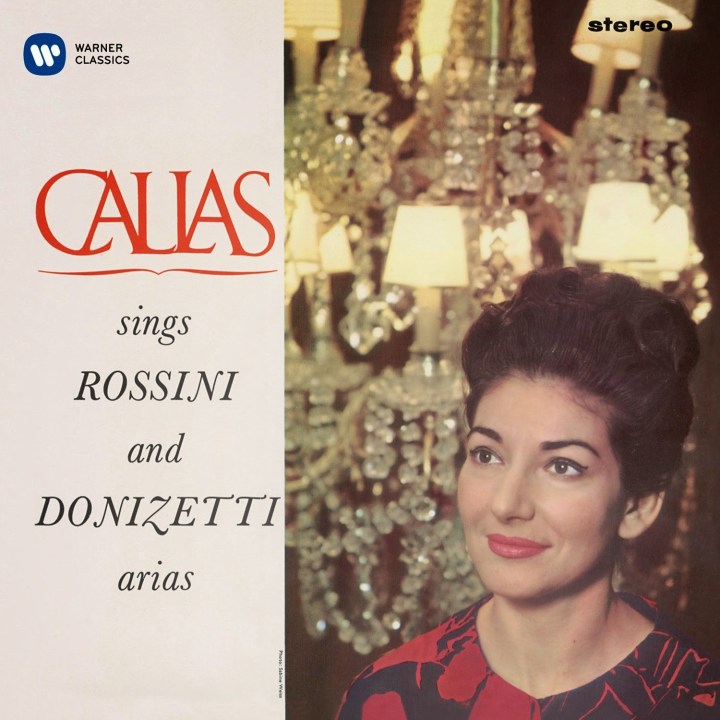
The Rossini and Donizetti fails to ignite her dramatic sensibilities quite so much, and there are plenty of uncomfortable moments. However there are still times, when we glimpse what Callas might have done with this music a few years before. Her Cenerentola lacks sparkle, but the scale passages are wonderfully supple and smooth. This is a serious Cenerentola, though, given what she suffers before singing this aria, such a reading is not entirely inapt. That said, there is a much better version of her singing this at a concert in London, where she finds a lightness of touch that eludes her here. Elsewhere, much of the singing sounds tentative, much more so than on the Verdi. Though she unerringly captures Mathilde’s sighing loneliness in the aria from Guglielmo Tell, there is a rather lifeless air about the recording, not helped by the omission of a chorus in some of the items. Nevertheless her sense of style never deserts her.

81jmshecyul-_sl1500_

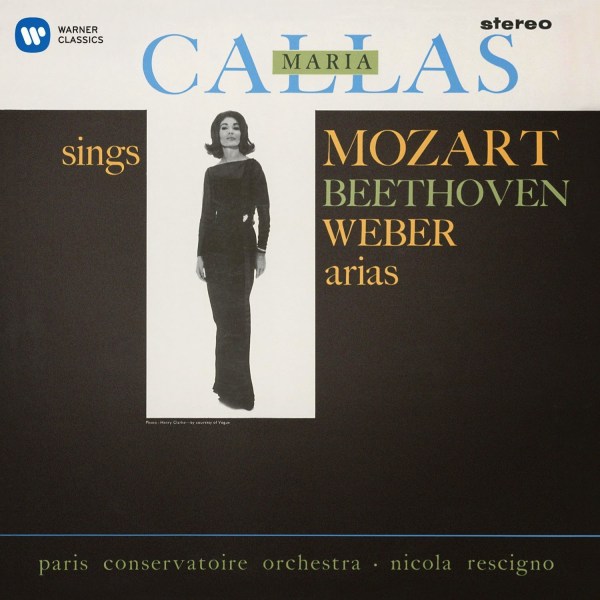
Mozart, Beethoven and Weber are not composers one would naturally associate with Callas. That she could be a great Mozartian is evidenced by her test recording of Donna Anna’s Non mi dir, and a couple of blazingly defiant concert versions of Costanze’s Martern aller Arten, sung in Italian as Tutte le torture. (It is a little known fact that Callas was actually La Scala’s first ever Costanze.) The less said about Porgi amor and Donna Anna’s arias on this album, though the better. Elvira’s Mi tradi goes a lot better, and the recitative, with its contrasting emotions, is superb. It’s mirror piece, Beethoven’s concert aria Ah perfido also goes well, and, as it lies somewhat lower, suits her much better. It is without doubt the most successful item on the recital. Ocean, thou mighty monster is also superbly dramatic, but her peculiarly accented English is somewhat bizarre, and again the climaxes are something of a trial.

I find my attitude to these late recitals can vary each time I listen to them. Sometimes I find the wobbles, the insecure and unsupported top voice, the acidulous tone difficult to take; others I barely notice it, so taken up am I by her musical instincts. The Verdi I would hate to be without, the other two for very occasional listening only.

Callas sings Verdi Arias III

91sppqa2pml-_sl1500_

There never actually was a Verdi Arias Vol III, though one had been planned. Warner here use the cover of an album issued in 1972, of material which had been sitting around in the vaults, and which Callas eventually agreed to have issued. The original album coupled  the Act I Scena from Il Pirata (now on Rarities) with Amelia’s Act Il Scena from Un Ballo in Maschera, O madre dal cielo from I Lombardi, Arrigo, ah parli a un core from I Vespri Siciliani, Liberamente or piangi from Attila and Aida’s Ritorna vincitor. The Il Corsaro arias, Amelia’s Morro, ma prima in grazia and Leonora’s Tacea la notte placida appeared on a later album called The Legend, coupled to some unissued 1955 arias from La Sonnambula, none of which were cleared for release by Callas.

That 1972 album was actually one of the first Callas LPs I owned. It seems unbelievable now, but in the early 1970s, most of Callas’s back catalogue had been deleted by EMI, who presumably thought that the advent of stereo rendered it obsolete. At that time I had only heard a few of her recordings and I remember sampling a couple of arias from this disc in Windows, the local classical music store in Newcastle-upon-Tyne. Initially alienated by the harsh sounds I heard coming from the listening booth, I left the shop without buying the disc. However somehow those tones carried on resonating in my mind’s ear, and eventually I went back and bought the LP. It was a decision I never regretted, as I learned to listen not just to the voice itself, but what she was doing with it. It also introduced me to some Verdi I’d never heard before, namely the arias from I Lombardi, Attila and I Vespri Siciliani. I knew absolutely then that Verdi was to become one of my favourite composers.

Taking first the arias not on that original LP, we find the arias from Il Corasaro recorded in 1969, really remarkably good. Her legato line is better than both Caballe and Norman on the Philips studio recording of the opera, and she unerringly captures the mood of each aria. The Trovatore has some magical moments, but at no place challenges her superb recording with Karajan. Amelia’s Morro, ma prima in grazia is very good indeed, with a superb, firm top B leading into a perfectly shaped final cadenza.

Swings and roundabouts on the rest. The tone at the beginning of the I Lombardi aria (the first track I listened to in the record shop) is indeed somewhat uningratiating, but once past the opening statement, she is in securer form, and moulds the line beautifully. Both the Attila and I Vespri Siciilani arias go well, the legato line beautifully held, and with Rescigno conjuring up some gorgeous sounds from the orchestra for the Sospendi o rive section of the Attila aria. I’d certainly sooner hear this version than Deutekom’s pallidly voiced one on the Philips complete recording. Amelia’s grand Act II Scena is full of passion, drama and fantasy. Though the ascent to top C is hard won, she grandly phrases on and through the note, so that it does not become the focal point of the aria. Still this does not challenge her performance on the complete set of 1956, nor the superb live performance from 1957.

The one incontrovertibly great performance on the disc is Aida’s Ritorna vincitor. This was not originally planned, but sessions had been getting a bit tense and Callas and the orchestra took a break. During the break Michel Glotz, the recording producer played a performance of Crespin singing the aria, which had been recorded the previous day. Callas was incensed, finding the performance completely antithetical to her sensibilities, lugubrious and slow. “I could hardly get the words out, when I did this with Maestro Serafin.” On learning that the parts were still there, she said, “Come on, Nicola, let’s do it!” and this is what they did – in one take! As always Callas loved a challenge, and this was as if someone had laid down the gauntlet. Somehow she recovers much of her old security, and the aria is brim full of drama and passion. Just listen to the anguish she pours out in Ah! non fu in terra mai da più crudeli angosce un core affranto, the desperation of Ah, sventurata che dissi?, with the final plea to the Gods heart wrenchingly poignant. This is Callas at her best.