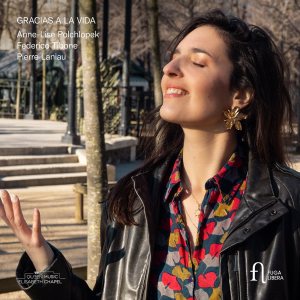
Gracias a la vida – Anne-Lise Polchlopek

It seems not a month goes by without a new recital record from a young artist making an impression. Recently I’ve welcomed recital records from Benjamin Appl, Fatma Said, Harriet Burns, Rachel Fenton and Eva Zalenga , and July saw a recommendation for Julieth Lozano-Rolong’s new disc from Dominy Clements. To this list can now be added the name of French mezzo-soprano, Anne-Lise Polchlopek, a winner of several song competitions, and now an associate artist of the Queen Elizabeth Music Chapel, where this recording was made.

This recital may at first glance appear to be a hotchpotch of different styles, embracing classical Lied, folk and popular music, but Polchlopek somehow integrates these different musical styles into a satisfying whole, and the recital benefits from being listened to at one sitting. It doesn’t get off to the best of starts with her somewhat over-articulated and over-acted singing of Bernstein’s Old Lady Tango (I am easily assimilated) from Candide, but she then sings a beautiful version of Strauss’s Wiegenlied, with a lovely legato line, her mellifluous mezzo wrapping the child in its warm embrace.

From Germany we travel to Spain and France, where we stay for the remainder of the recital. Toldrá is followed by Chaminade, then we switch to guitar accompaniment for Hubert Giraud’s La tendresse, staying with the guitar for an extremely effective performance of Falla’s Nana, from his Siete canciones populares españolas.

We go back to the piano for Fauré’s Les berceaux, in which she builds nicely to the climax, and then we have Messiaen’s early Trois melodies, where she captures to perfection the ecstasy of the writing, especially in the final song, la fiancée perdue.

 These are followed by three songs in a lighter vein by Chaminade, Pauline Viardot and Gerónimo Giménez, all wonderfully characterised. Perhaps incongruously (but somehow it works) Voi che sapete from Mozart’s Le nozze di Figaro acts as a bridge to Michel Polnareff’s Mes regrets, a beautiful song about lost love, which is followed by Fauré’s Toujours.

This in turn is followed by Gérard Jouannest’s La chanson des vieux aimants, with lyrics by Jacques Brel, a song I had previously only known in a version by Judy Collins. Suffice it to say that Polchlopek’s intensely moving performance put any thoughts of Collins out of my mind completely.

Throughout the piano accompaniments of Federico Tibone contribute wonderfully to the success of the disc, as do the guitar accompaniments of Pierre Laniau, who accompanies her on Tamás Méndez’s charming Cucurrucucu paloma, which I seem to remember was a favourite of Nana Mouskouri. He also accompanies her on the Habanera from Bizet’s Carmen and Satie’s La diva de l’empire, though I did feel the Bizet was slightly out of place here, coming, as it did, after the piano accompanied Poulenc Les métamorphoses and before the Satie.

We return to piano accompaniment for Montsalvatge’s Canto negro, which she sings with charm and spirit, relishing the yambambós, as Victoria De Los Angeles did before her.

All three participants come together for the final song, Violetta Parra’s Gracias a la vida, a fitting end to a journey on which Anne-Lise Polchlopek has proved to be a most musical guide. Throughout she clearly and meaningfully enunciates the text, and it is clear she has a rare gift for communication that makes her an ideal recitalist.

Unfortunately, though the notes accompanying the disc are in English, the online texts are only in the original language, French, Spanish, German, or in the case of the Bernstein, English, and translations would have helped for a total appreciation of Polchlopek’s art. However, I thoroughly enjoyed this disc, and I look forward to hearing more of Anne-Lise Polchlopek.

A Most Marvellous Party

81wftltatgl._ac_sl1450_

This highly entertaining programme is the sort of thing that would go down well at a country house or in a small hall, and indeed I see that these artists performed it at the Leeds Conservatoire in March this year, shortly before making this recording. Mary Bevan should not be confused with her sister, Sophie, also a soprano with quite a career herself, nor Nicky Spence with tenor Toby Spence, to whom he is not related. Both singers are active on the operatic stage as well as on the concert platform and here let their hair down in some lighter music.

The “party” seeks to place Noel Coward among other contemporary composers, all of whom have a connection with Coward, however slight. Thus, the other guests turn out to be Ned Rorem, who claimed to have once had a one-night stand with Coward, Poulenc for whom Coward once did the narration on a recording of his Babar, the elephant and Stravinsky, who apparently once asked Coward to collaborate with him. Gershwin’s music Coward had known for some time and even played snatches of it on stage in the first production of his play, The Vortex. The connections with Satie, Messager, Britten and Walton would seem to be a little more tenuous, but I’m nonetheless delighted that they came along. It’s also good to encounter some songs by Roger Quilter and Liza Lehmann, especially given Bevan’s rapturous account of Lehmann’s gorgeous Love, If You Knew The Light, and Spence’s lovely singing of Quilter’s famous setting of Tennyson’s Now Sleeps The Crimson Petal, which is nicely contrasted to Ned Rorem’s sparer, but equally valid setting of the same poem sung by Bevan, a song that was new to me. It slightly reminded me of Britten’s version, which he eventually cut from the Serenade for Tenor, Horn and Strings.

Both Bevan and Spence are rather better in the more lyrical songs by Coward than they are at the patter songs, and there are a couple of misses in the sequence. Spence can’t resist the temptation to overplay the comedy in Don’t Put Your Daughter on The Stage, Mrs Worthington and I have a feeling this rendition would become rather triresome on repeated listening. One only has to compare the Master, with his brilliantly understated and clipped delivery to hear how it should be done. Nor can Bevan quite cast off the slightly jolly-hockey-sticks quality she has adopted in the opening Coward medley when she turns to Kurt Weill’s Complainte de la Seine, a song which is absolutely harrowing when sung by Teresa Stratas. I also rather wish that Spence, rather than Bevan, had been allowed to sing Mad About The Boy, given that we now know the song was written by Coward about a man he had fallen in love with. However, Spence does get to sing If Love Were All, a song that was originally written for the character of Manon in Coward’s operetta Bitter Sweet, but which Coward himself later made very much his own.

Britten is represented by two early W, H, Auden settings, one of which, As it is, plenty, sounded strangely like something by Stephen Sondheim, though it was written only a few years after Sondheim was born. I wonder if he knew it. I rather wish room had been found for Bevan to sing Coward’s Zigeuner from Bitter Sweet and that perhaps it would have been better to close the recital with the gently wistful The party’s over now rather than the slightly over-rumbustious I went to a marvellous party, but apart from these and a few other minor reservations expressed above, the two singers acquit themselves very well and the pianist, Joseph Middleton is a wonderful collaborator, both as accompanist and when playing solo in pieces by Poulenc, Satie, Stravinsky and Gershwin.

All in all, this is a highly enjoyable disc and one which I will definitely be returning to from time to time.

Full programme

  1. Coward Medley (all three artists)
  2. Coward: Mad about the boy (Bevan)
  3. Rorem: Early in the morning (Spence)
  4. Rorem: For Poulenc (Spence)
  5. Poulenc: Pastorale calme et mystérieux (Middleton)
  6. Poulenc: Hotel (Bevan)
  7. Coward: Parisian Pierrot (Spence)
  8. Weill: Complainte de la Seine (Bevan)
  9. Messager: De ci, de là (Bevan and Spence)
  10. Satie: Gnossiene No. 1 (Middleton)
  11. Coward: Any little fish ((spence and Bevan)
  12. Stravinsky: Valse pour les enfants (Middleton)
  13. Coward: Something to do with Spring (Spence and Bevan)
  14. Quilter: Love calls through the summer night (Bevan and Spence)
  15. Quilter: Now sleeps the crimson petal (Spence)
  16. Rorem: Now sleeps the crimson petal (Bevan)
  17. Coward: World weary/Twentieth century blues (Bevan and Spence)
  18. Gershwin: The man I love (Middleton)
  19. Coward: If love were all (Spence)
  20. Gershwin: By Strauss (Bevan)
  21. Coward: Don’t put your daughter on the stage, Mrs Worthington (Spence)
  22. Britten: When you’re feeling like expressing your affection (Bevan)
  23. Walton: Popular Song (Spence)
  24. Britten: As it is, plenty (Bevan)
  25. Lehmann: Love, if you knew the light (Bevan)
  26. Coward: The party’s over now (Bevan and Spence)
  27. I went to a marvellous party (Bevan and Spence)

A list of my preferred opera recordings

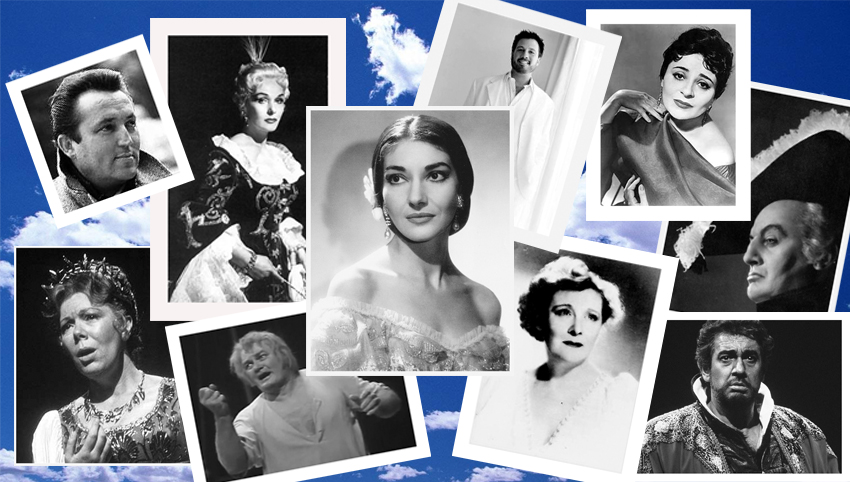
I hesitate to call this a list of recommended opera recordings, because people’s tastes are so different, but it is a list of my preferred recordings and, as such, it is obviously influenced by my liking for certain artists. It is also derived from over 50 years of listening to and collecting opera recordings and includes recordings that are or were once available on LP and CD, because, despite the current trend for everything to be downloaded onto a computer, I still prefer to listen to CDs. In some cases I have included more than one recording of a piece, usually because I can’t decide which one I like best. I’m also pretty sure that, with a couple of exceptions. all my chosen recordings date from the LP era onwards.

A word about Wagner. I am not really a Wagnerite. I enjoy Wagner from time to time, but I find that, more than with other composers, the sound of the orchestra takes precedence for me, which is why all the recordings I have chosen are studio recordings in decent stereo sound, which thererore excludes the names of many great Wagnerians of the past, such as Flagstad, Leider, Melchior, Furtwängler etc.

No doubt many of my readers will disagree with some of my choices, but I think it’s a pretty sound list. Peruse at your leisure.

Barber: Vanessa – Steber, Elias, Resnik, Gedda, Tozzi; Mitropoulos

Bartók: Bluebeard’s Castle – Ludwig, Berry; Kertesz

Beethoven: Fidelio Dernesch, Donath, Vickers, Kéléman, Ridderbusch; Karajan

Bellini: I Capuleti e I Montecchi – Sills, Baker, Gedda, Herincx, Lloyd; Patané

Bellini: NormaCallas, Simionato, Del Monaco, Zaccaria; Votto La Scala 1955 (live) or Callas. Ludwig, Corelli, Zaccaria; Serafin (studio)

Bellini: Il PirataCallas, Ferraro, Ego; Rescigno New York 1959 (live) -or- Caballé, Martí, Cappuccili; Gavazzeni (studio)

Bellini: I PuritaniCallas, Di Stefano, Panerai, Rossi-Lemeni; Serafin

Bellini: La SonnambulaCallas, Valletti, Modesti; Bernstein la Scala 1955 (live) or Callas, Monti, Zaccaria; Votto/Cologne 1957 (live) or Callas, Monti, Zaccaria; Votto (studio)

Berlioz: Béatrice et Bénedict – Eda-Pierre, Baker, Watts, Tear, Allen, Lloyd, Bastin; Davis

Berlioz: Benvenuto Cellini – Eda-Pierre, Berbié, Gedda, Massard, Bastin, Soyer; Davis

Berlioz: La damnation de FaustVeasey, Gedda, Bastin, Van Allan; Davis

Berlioz: Les Troyens – Lindholm, Veasey, Vickers, Glossop; Davis

Bizet: CarmenCallas, Guiot, Gedda, Massard; Prêtre

Bizet: Les pêcheurs de perles – Cotrubas, Vanzo, Sarabia; Prêtre

Britten: Billy Budd – Langridge, Keenlyside, Tomlinson; Hickox

Britten: Gloriana – Barstow, Kenny, Jones, Langridge, Opie, Summers; Mackerras

Britten: A Midsummer Night’s Dream – Watson, Gomez, Jones, Bowman, Hall, Herford, Maxwell; Hickox

Britten: Peter Grimes – Watson, Pears, Pease; Britten and Harper, Vickers, Summers; Davis

Britten: The Rape of Lucretia – Harper, Baker, Pears, Drake, Luxon, Shirley-Quirk; Britten

Britten: The Turn of the Screw – Vyvyan, Cross, Pears, Mardikian; Britten

Charpentier: Louise – Cotrubas, Berbié, Domingo, Bacquier; Prêtre and Vallin, Lecouvreur, Thill, Pernet; Bigot (abridged)

Chausson: Le roi Arthus – Zylis-Gara, Winbergh, Quilico; Jordan

Cherubini: MedeaCallas, Carron, Berganza, Vickers, Zaccaria; Rescigno, Dallas 1958 (live) or- Callas, Nache, Barbieri, Penno, Modesti; Bernstein, La Scala 1953 (live). If studio/stereo is a must then Callas, Scotto, Pirazzini, Picchi, Modesti; Serafin

Cilea: Adriana Lecouvreur – Scotto, Obrasztsova, Domingo, Milnes; Levine

Debussy: Pelléas et Mélisande – Joachim, Cernay, Jansen, Etchverry, Cabanet; Désormiére (mono) and Von Stade, Denize, Stilwell, Van Dam, Raimondi; Karajan (stereo)

Délibes: Lakmé – Mesplé, Burles, Soyer; Lombard

Delius: A Village Romeo and Juliet – Field, Davies, Hampson; Mackerras

Donizetti: Anna BolenaCallas. Simionato, Raimondi, Rossi-Lemeni; Gavazzeni, La Scala 1957 (live) (Divina transfer, avoid Warner and EMI) It’s cut of course, but no other performance satisfies me.

Donizetti: Don Pasquale – Saraceni, Schipa, Poli, Badini; Sabajno (mono). If stereo is a must then Freni, Winbergh, Nucci; Bruscantini; Muti

Donizetti: L’Elisir d’amore – Cotrubas, Domingo, Wixell, Evans; Pritchard

Donizetti: La fille du régimentSutherland, Sinclair, Pavarotti, Malas; Bonynge

Donizetti: Lucia di LammermoorCallas. Di Stefano, Panerai, Zaccaria; Karajan, Berlin 1955 (live) and Callas, Tagliavini, Cappuccilli, Ladysz; Serafin (studio stereo/Pristine remaster).

Donizetti: Lucrezia Borgia – Caballé, Berbié, Vanzo, Paskalis; Perlea, New York 1965 (live) No studio recording.

Donizetti: Maria StuardaTinsley, Baker, Erwen, Garrard, Du Plessis; Mackerras, ENO 1973 (live in English) or Caballé, Verrett, Garaventa, Arié, Fioravanti; Cillario, La Scala 1971 (live). No studio recording.

Donizetti: Roberto Devereux – Caballé, Marsee, Carreras, Sardinero, Furlanetto; Rudel, Aix-en-Provence, 1977 (live)

Dvořák: Rusalka – Fleming, Zajick, Heppner, Havlata; Mackerras

Enescu: Oedipe – Hendricks, Lipovšek, Gedda, Van Dam; Foster

Fauré: Pénélope – Norman, Taillon, Vanzo, Huttenlocher, Van Dam; Dutoit

Giordano: Andrea Chenier – Scotto, Domingo, Milnes; Levine

Gluck: Orfeo – Baker, Speiser, Gale; Leppard

Gounod: Faust – De Los Angeles, Gorr, Gedda, Blanc, Christoff; Cluytens 1958 (stereo)

Gounod: Roméo et JulietteGheorghiu, Alagna, Keenlyside, Van Dam, Fondary; Plasson

Handel: Hercules – Dawson, Otter, Daniels, Croft, Saks: Minkowski

Handel: Giulio Cesare – Masterson, Baker, Jones, Walker, Bowman, Tomlinson: Mackerras (in English)

Handel: Rinaldo – Organasova, Bartoli, Fink, Daniels, Taylor, Finley; Hogwood

Handel: Theodora – Upshaw, Hunt Lieberson, Daniels, Croft: Christie

Humperdinck: Hänsel und Gretel – Schwarzkopf. Grümmer, Von Islovay, Schürhoff, Metternich: Karajan

Janáček: The Cunning Little Vixen – Popp, Randova, Jedlicka; Mackerras

Janáček: Jenůfa, – Söderström, Popp, Randova, Ochmann, Dvorsky; Mackerras

Janáček: Kat’a Kabanova – Söderström, Kniplova, Dvorsky; Mackerras

Janáček: Vĕc Makropulos – Söderström, Dvorsky, Blachut; Mackerras

Korngold; Die tote Stadt – Neblett, Kollo, Prey, Luxon; Leinsdorf

Lehár: Das Land des Lächelns – Schwarzkopf, Loose, Gedda, Kunz: Ackermann

Lehár: Die lustige Witwe Schwarzkopf, Steffek, Gedda, Wächter, Knapp; von Matačić

Leoncavallo: PagliacciCallas, Di Stefano, Monti, Gobbi, Panerai; Serafin

Mascagni: L’Amico Fritz – Freni, Pavarotti, Sardinero; Gavazzeni

Mascagni: Cavalleria RusticanaCallas, Di Stefano, Panerai; Serafin

Massenet: Cendrillon – Welting, Von Stade, Berbié,  Gedda, Bastin; Rudel

Massenet: ManonDe Los Angeles, Legay, Dens; Monteux

Massenet: Thaîs – Fleming, Sabbatini, Hampson; Abel

Massenet: Werther – Gheorghiu, Pétibon, Alagna, Hampson; Pappano or Von Stade, Buchanan, Carreras, Allen; Davis and Vallin, Féraldy, Thill, Rogue; Cohen

Motemezzi: L’Amore Dei Tre Re – Moffo, Domingo, Elvira. Siepi; Santi

Monteverdi: L’incoronazione di Poppea – Galli, Meijer, Marmeli; Cavina

Monteverdi: L’Orfeo – Cioffi, Gens, Dessay, Bostridge; Haîm

Mozart: La Clemenza di Tito – Baker, Popp, Minton, Von Stade, Burrows; Davis

Mozart: Cosi fan TutteSchwarzkopf, Steffek, Ludwig, Kraus, Taddei, Berry; Böhm

Mozart; Don Giovanni – Sutherland, Schwarzkopf, Sciutti, Alva, Wächter, Taddei, Cappuccilli, Frick; Giulini

Mozart: Die Entführung aus dem Serail – Köth. Schädle, Wunderlich, Lenz, Böhme; Jochum

Mozart: Le Nozze di Figaro – Schwarzkopf, Moffo, Cossotto, Taddei, Wächter, Cappucilli; Giulini

Mozart: Die ZauberfloteLear, Peters, Wunderlich, Fischer-Dieskau, Crass; Böhm or for HIP – Mannion, Dessay, Blochwitz, Scharinger, Hagen; Christie

Mussorgsky: Boris Godunov – Borodina, Vaneev, Galouzine; Gergiev

Offenbach: Les Contes D’Hoffman – Sutherland, Tourangeau, Domingo, Bacquier; Bonynge (studio) or Malfitano, Murray, Domingo, Van Dam; Levine (live)

Offenbach: Orphée aux Enfers – Mesplé, Rhodes, Sénéchal, Burles, Trempont; Plasson

Offenbach: La vie Parisienne – Mesplé, Crespin, Sénéchal, Bénoit, Trempont; Plasson

Ponchielli: La Gioconda Callas, Barbieri, Amadini, Poggi, Silveri, Neri: Votto (mono) or Callas, Cossotto, Companeez, Ferraro, Cappuccilli, Vinco: Votto (stereo)

Poulenc: Dialogues des Carmélites – Duval, Crespin, Berton. Scharley, Gorr, Depraz, Finel; Dervaux

Puccini: La Boheme – De Los Angeles, Amara, Björling, Merrill, Tozzi: Beecham or Callas, Moffo, Di Stefano, Panerai, Zaccaria: Votto

Puccini: La Fanciulla del WestNeblett, Domngo, Milnes; Mehta

Puccini: Gianni Schicchi De Los Angeles, Del Monte, Gobbi: Santini

Puccini: Madama Butterfly Callas, Danieli, Gedda, Borriello; Karajan or De Los Angeles, Canali, Di Stefano, Gobbi: Gavazzeni or Scotto, Di Stasio, Bergonzi, Panerai: Barbirolli

Puccini: Manon Lescaut Callas, Di Stefano, Fioravanti: Serafin

Puccini: La Rondine Gheorghiu, Mula, Alagna, Mateuzzi, Rinaldi: Pappano

Puccini: Suor Angelica De Los Angeles, Marimpietri, Barbieri: Serafin or Scotto, Cotrubas, Horne; Maazel

Puccini: Il Tabarro Mas, Prevedi, Gobbi: Bellezza

Puccini: Tosca Callas, Di Stefano, Gobbi: De Sabata

Puccini: Turandot Callas, Schwarzkopf, Fernandi, Zaccaria: Serafin (mono) or Sutherland, Caballé, Pavarotti, Ghiaurov: Mehta (stereo)

Purcell: Dido and Aeneas – Clark, Baker, Sinclair, Herincx; Lewis

Ravel: L’enfant et les sortileges –  Ogéas, Gilma, Collard, Berbié, Sénéchal, Rehfuss, Maurane; Maazel

Ravel: L’heure espahnole – Berbié, Sénéchal, Gireaudeau, Bacquier, Van Dam; Maazel

Rossini: Armida Callas, Filippeschi, Albanese, Raimondi; Serafin (in atrocious sound, but essential for some of the most incredible dramatic coloratura singing you will ever hear)

Rossini: Il Barbiere di Siviglia Callas, Alva, Gobbi, Ollendorff, Zaccaria: Galliera

Rossini: La Cenerentola – Baltsa, Araiza, Alaimo, Raimondi; Marriner

Rossini: Le comte Ory – Barabas, Sinclair, Oncina, Wallace: Gui

Rossini: Elisabetta, Regina, d’Inghilterra – Caballé, Masterson, Carreras, Benelli: Masini

Rossini: Guillaume Tell – Caballé, Mesplé, Taillon, Gedda, Cassinelli, Bacquier, Howell, Kovats; Gardelli

Rossini: L’Italiana in Algeri – Pace, Baltsa, Lopardo, Corbelli, Dara, Raimondi; Abbado

Rossini: Semiramide – Penda, Pizzolato, Osborne, Regazzo: Fogliani (complete) or Sutherland, Horne, Serge, Malas; Bonynge (abridged)

Rossini: Il Turco in Italia – Callas, Gardino, Gedda, Stabile, Calabrese, Rossi-Lemeni; Gavazzeni

Saint-Saens: Samson et Dalila – Baltsa, Carreras, Summers, Estes, Burchaladze; Davis

Shostakovich: Lady Macbeth of Mtsensk – Vishnevskaya, Gedda, Petkov; Rostropovich

J Strauss: Die FledermausSchwarzkopf, Streich, Gedda, Krebs, Christ, Kunz; Dönch; Karajan

J Strauss: Eine Nacht in Venedig – Schwarzkopf, Loose, Gedda, Kunz; Ackermann

J Strauss: Wiener Blut – Schwarzkopf, Köth, Loose, Gedda, Kunz; Ackermann

J Strauss: Der Zigeunerbaron – Schwarzkopf, Köth, Burgsthaler-Schuster, Gedda, Prey, Kunz: Ackermann

R Strauss: Arabella Varady, Donath, Dallapozza, Fischer-Dieskau; Sawallisch and Schwarzkopf, Felbermeyer, Gedda, Metternich; von Matacic (highlights)

R Strauss: Ariadne auf NaxosSchwarzkopf, Streich, Seefried, Schock; Karajan

R Strauss: Capriccio Schwarzkopf, Ludwig, Gedda, Wächter, Fischer-Dieskau, Hotter; Sawallisch

R Strauss: Elektra – Marton, Studer, Lipovsek, Winkler, Weikl; Sawallisch

R. Strauss: Die Frau ohne Schatten – Studer, Vintzing, Schwarz, Kollo, Muff: Sawallisch

R Strauss: Der Rosenkavalier – Schwarzkopf, Stich-Randall, Ludwig Wächter, Edelmann; Karajan

R Strauss: Salome – Welitsch, Thorborg, Jagel, Janssen; Reiner (live mono) and Behrens, Baltsa, Schmitt-Walter, Van Dam; Karajan (studio stereo)

Szymanowski: Król Roger – Szmytka, Langridge, Hampson; Rattle

Tchaikovsky: Eugene OneginVishnevskaya, Avdeyeva, Lemeshev, Belov, Petrov; Khaikin

Tchaikovsky: Mazeppa – Gorchakova, Dyadkova, Larin, Leiferkus, Kotcherga; Järvi

Tchaikovsky: Queen of Spades – Guleghina, Borodina, Arkhipova, Grigorian, Chernov, Putilin; Gergiev

Verdi: AidaCallas, Dominguez, Del Monaco, Taddei; de Fabritiis (live) and Callas, Barbieri, Tucker, Gobbi; Serafin (studio mono) or Caballé, Cossotto, Domingo, Cappuccilli; Muti (studio stereo) or Freni, Baltsa, Carreras, Cappuccilli; Karajan (studio stereo)

Verdi: Alzira – Cotrubas, Araiza, Bruson; Gardelli

Verdi: Aroldo – Caballé, Cecchele, Pons, Lebherz; Queler

Verdi: Attila – Deutekom, Bergonzi, Milnes, Raimondi; Gardelli

Verdi: Un Ballo in Maschera Callas, Barbieri, Di Stefano, Gobbi; Votto (studio) and Callas, Simionato, Di Stefano, Bastianini; Gavazzeni (live)

Verdi: La Battaglia di Legnano – Ricciarelli, Carreras, Manuguerra, Ghiuselev; Gardelli

Verdi: Il Corsaro – Caballé, Norman, Carreras, Mastremei; Gardelli

Verdi: Don Carlo Freni, Baltsa, Carreras, Cappuciolli, Ghiaurov, Raimondi; Karajan (4 acts in Italian), Caballé, Verrett, Domingo, Milnes, Raimondi, Giaotti; Giulini (5 acts in Italian) and Ricciarelli, Valentini-Terrani, Domingo, Nucci, Raimondi, Ghiaurov; Abbado (5 acts in French)

Verdi: I due Foscari – Ricciarelli, Carreras, Cappuccilli, Ramey; Gardelli

Verdi: Ernani – Price, Bergonzi, Sereni, Flagello; Schipeers

Verdi: Falstaff – Schwarzkopf, Moffo, Merriman, Barbieri, Alva, Panerai, Gobbi; Zaccaria; Karajan

Verdi: La Forza del Destino Callas, Nicolai, Tucker, Tagliabue, Rossi-Lemeni; Serafin

Verdi: Un Giorno di Regno Pagliughi, Cozzi, Oncina, Bruscantini, Capecchi, Dalmangas; Simonetto

Verdi: Giovanna d’Arco – Caballé, Domingo, Milnes; Levine

Verdi: I Lombardi – Sass, Lamberti, Di Cesare, Kovats; Gardelli

Verdi: Luisa Miller – Moffo, Verrett, Bergonzi, MacNeil, Tozzi, Flagello; Cleva or Caballé, Reynolds, Pavarotti, Milnes, Giaotti, Van Allan; Maag or Ricciarelli, Obraztsova, Domingo, Bruson, Howell, Ganzarolli; Maazel

Verdi; Macbeth Callas, Penno, Mascherini, Tajo; De Sabata (live) and Verrett, Domingo, Cappuccilli, Ghiurov; Abbado (studio)

Verdi: I Masnadiert – Caballé, Bergonzi, Cappucilli, Raimondi; Gardelli

Verdi; Nabucco – Souliotis, Carral, Prevedi, Gobbi, Cava; Gardelli and (essential supplement, but awful sound) Callas, Pini, Sinimbergi, Bechi, Neroni; Gui

Verdi: Otello – Rysanek, Vickers, Gobbi; Serafin and Scotto, Domingo, Milnes; Levine

Verdi: Rigoletto Callas, Lazzarini, di Stefano, Gobbi, Zaccaria; Serafin

Verdi: Simon Boccanegra – Freni, Carreras, Cappucilli, Ghiaurov, Van Dam; Abbado and De Los Angeles, Campora, Gobbi, Christoff, Monachesi; Santini

Verdi: Stiffelio – Sass, Carreras, Manugeurra, Ganzarolli; Gardelli

Verdi; La Traviata Callas, Valletti, Zanasi; Rescigno, Covent Garden 1958 (live) and Cotrubas, Domingo, Milnes; Kleiber (istereo studio)

Verdi: Il Trovatore – Callas, Barbieri, Di Stefano, Panerai, Zaccaria; Karajan

Verdi: I Vespri Siciliani – Callas, Kokolis-Bardi, Mascherini, Christoff; Kleiber (live) and Arroyo, Domingo, Milnes, Raimondi; Levine

Wagner: Der Fliegende Holländer – Silja, Kozub, Unger, Adam, Talvela; Klemperer or Schech, Schock, Wunderlich, Fischer-Dieskau; Konwitschny

Wagner: Lohengrin – Grümmer, Ludwig, Thomas, Fischer-Dieskau, Frick; Kempe

Wagner: Die Meistersinger von Nürnberg – Janowitz, Fassbänder, Konya, Unger, Stewart, Hemsley, Crass; Kubelik

Wagner: Parsifal – Vejzovic, Hoffmann, Nimsgern, Van Dam, Moll; Karajan

Wagner: Der Ring des Nibelungen – Crespin, Dernesch, Janowitz, Veasey, Ludwig, Dominguez, Stolze, Vickers, Stewart, Brilioth, Fischer-Dieskau, Stewart, Kéeléman, Ridderbusch, Talvela; Karajan

Wagner: Tannhäuser – Dernesch, Ludwig, Kollo, Braun, Sotin; Solti

Wagner: Tristan und Isolde – Dernesch, Ludwig, Vickers, Berry, Ridderbusch; Karajan and Gray, Wilkens, Mitchinson, Joll, Howell; Goodall

Weber: Der Freischutz – Grümmer, Otto, Schock, Prey, Kohn, Frick; Keilberth

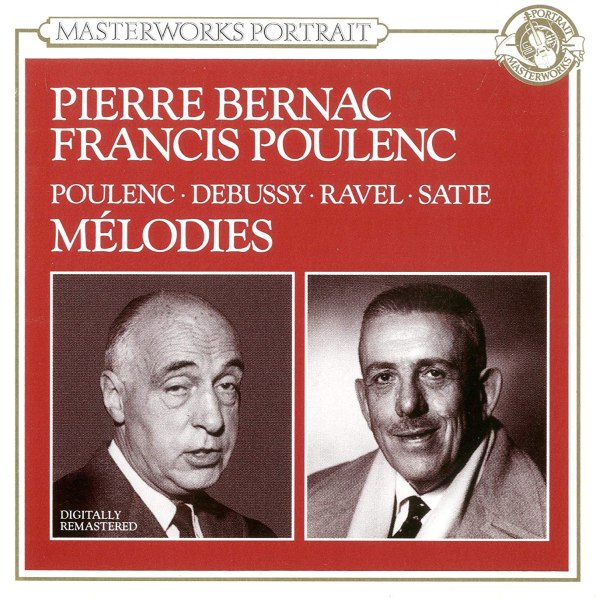
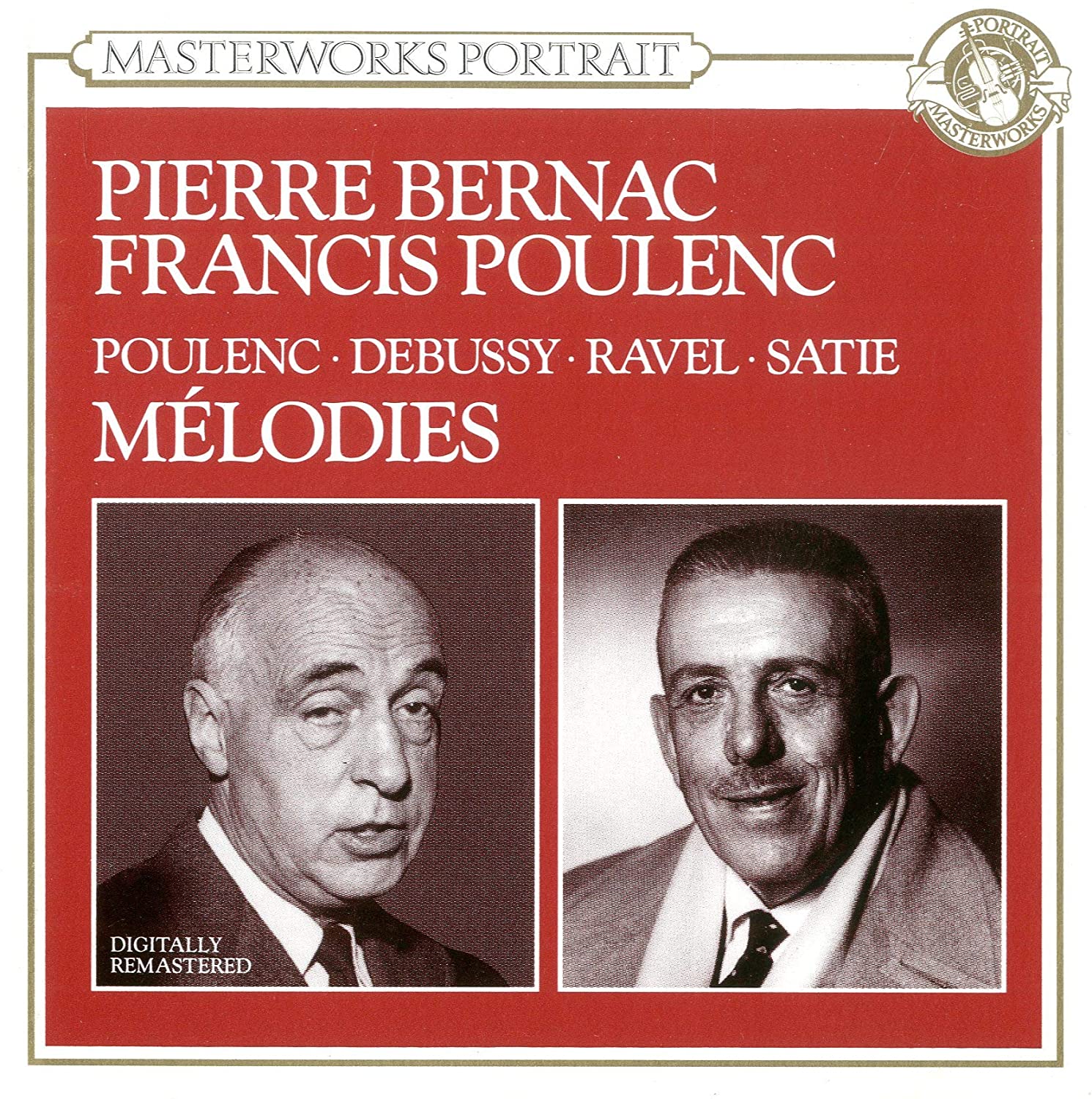
Pierre Bernac & Francis Poulenc – Mélodies

91khamjrtvl._sl1500_

Poulenc:
Banalités
Chansons villageoises
Quatre poèmes de Guillaume Apollinaire
Tu vois le feu du soir
Main dominée par le coeur

Debussy:
Beau soir
L’écheonnement des haies
Le Promenoir des deux amantes

Ravel:
Histoires naturelles
Mélodies hébraïques

Satie:
Trois mélodies

Pierre Bernac and Francis Poulenc had a long and fruitful working relationship, going back to 1926 when Bernac gave the first performance of Poulenc’s Chansons gaillardes (not included on this disc). They first appeared in recital together in 1934 and continued to do so until Bernac retired from public performing in 1960. In fact the majority of Poulenc’s songs were written for Bernac and I suppose one could say that they enjoyed a similar relationship to that of Britten and Pears, without the emotional attachment, apparently always using the polite ‘vous’ with each other at all times.

Bernac’s voice was evidently not large but he had an enormously varied tonal palette which enabled him to capture every shift in mood, every emotion, implied or overt, in each song. Though the voice was not of itself of great natural beauty, its range was wide and Poulenc exploited this to great effect. Bernac was also a great teacher, numbering Gérard Souzay, Elly Ameling and Jessye Norman among his pupils, and he wrote with great insight about the art of singing. His The Interpretation of French Song is an absolute must for anyone interested in performing this repertoire.

Bernac and Poulenc left behind quite a legacy of recordings, most of them recorded for EMI and RCA in 1947. However these Columbia sessions took place in 1950. The Poulenc selection is self recommending, but he is equally at home in the songs of Debussy, Ravel and Satie, embracing the lyricism of Debussy’s Beau soir, the slightly detached irony of Ravel’s Histoires naturelles or the parodic wit of the Satie songs.

Anyone who enjoys the subtle art of French song should definitely hear them.

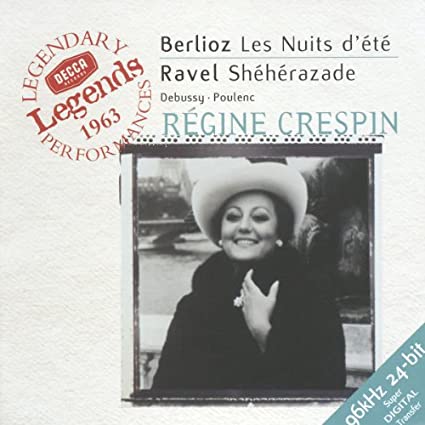
Crespin’s Shéhérazade

513oqn2fqcl._sx425_

Crespin’s recording with Ansermet of Ravel’s Shéhérazade and Berlioz’s Les Nuits d’été is now so famous, so universally acclaimed that there can surely be no more to say about it. Even today, almost 60 years since they were recorded, the performances are still cited by many as a first choice in both works and for many they were no doubt their first exposure to the works, so maybe that is all that needs to be said about them, but is it really so simple?

Both Shéhérazade and, especially, Les nuits d’été are great favourites of mine and I now have ten different recordings of the Berlioz, six of the Ravel. Let us then start with the Ravel. From the thrice repeated call of Asie at the beginning, the third sung with the equivalent of a flirtatiously arched eyebrow, we are in her thrall. She makes a bewitching storyteller, drawing us in with her thrillingly colourful descriptions of the Orient. As I often feel with Crespin, there is a slight air of detachment but here it suits the narrative superbly. She is suitably languid in La flûte enchantée and deliciously ambiguous in L’indifférent. There have been finer versions of the orchestral score (not least the New Philharmonia under Barbirolli for Janet Baker), but Crespin at her best is still a prime recommendation. There is something just so inevitably right about her singing and it places her (just) ahead of the other versions I own, (Teyte, Baker, De Los Angeles, Berganza and Hendricks).

That air of detachment I mentioned also makes her an ideal interpreter of the songs of Poulenc and also Debussy’s Trois chansons de Bilitis with John Wustman on the piano, from a 1967 recording, which are here included as a makeweight, and very welcome they are too. However it works against her in the Berlioz, which requires a degree of involvement and passion that I find lacking in Crespin’s delivery. However musical and tasteful her singing, however elegant her phrasing, she remains aloof and uninvolved. There is no sense of mounting rapture at the arrival of the rose from paradise, no sense of longing in Absence. She is at her best in the final song, L’île inconnue which is blithely insouciant and responds better to her air of suave sophistication. I have no idea why she decided to place Sur les lagunes after Absence but it upsets the balance of the work too.

No, for the Berlioz my prime recommendations would be Baker either with Barbirolli or live with Giulini, Hunt Lieberson with McGegan, Steber with Mitropoulos or De Los Angeles with Munch, Crespin trailing quite a way in their wake.

Essential I would say for Shéhérazade and the Debussy and Poulenc, but look elsewhere for the Berlioz.

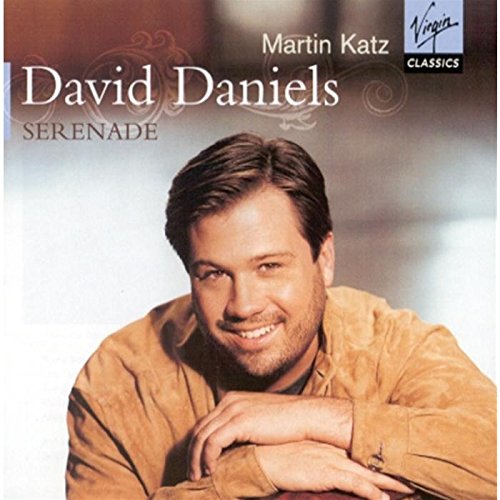
David Daniels – Serenade

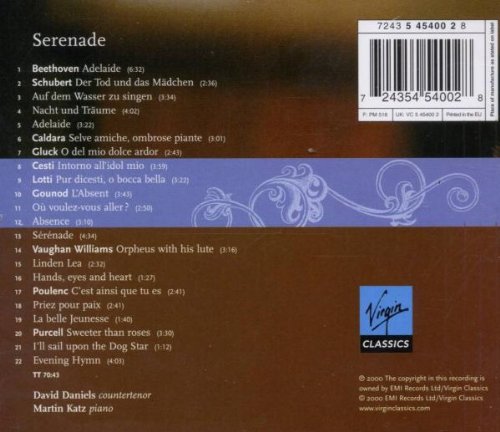
Quite aside from David Daniels’s pre-eminence as a Handel singer, he could also be credited with treading where few countertenors dare to go. In this mixed recital he adds to the more usual countertenor repertoire of seventeenth and eighteenth century song, Lieder by Beethoven and Schubert, French chanson by Gounod and Poulenc and English song by Vaughan Williams. Other recitals will see him venturing out into American song and Broadway, and he even made a recording of Berlioz’s Les Nuits d’Eté. He has never been one to cofine himself to the usual areas of countertenor repertory.

To all he brings great beauty of voice, a superb legato and a fullness of tone rare in countertenors, and an innate musicality. This fullness of tone is not a mere fabrication of the gramophone as I saw him live on many occasions and can attest that the voice rang out freely in all the venues I heard him. In addition he has a winning personality with a rare gift of communication, which comes across in all his discs.

Many of the songs here are concerned with night (the disc, after all is called Serenade) and the pervading atmosphere is therefore one of quiet reflection, but gaiety puts in an appearance too, and we note the singers facility in fast moving music, without a hint of an aspirate. We also note how the singer’s expression changes from one song to another, making us feel we can see as well as hear.

We start with a group of Lieder framed by Beethoven’s and Schubert’s setting of Adelaide, both beautifully sung. He gives the girl’s voice a suitable urgency and death a darker more consolatory tone in Der Tod und das Mädchen, but the prize of this group is his wonderful performance of Nacht und Träume, his legato impeccable , the long line firmly held. This is beautifully ccomplished singing and absolutely no allowances need to be made for the limitations of the countertenor voice.

From here we move to a group of songs by Caldara, Gluck, Cesti and Lotti, the more usual repertoire for this type of voice. Caldara’s Selve amiche soothes the soul, whilst Lotti’s Pur dicesti, o bocca bella is irresistibly light and charming. The Gounod and Poulenc items are all superb, the Vaughan Williams beautifully characterised, finishing with a movingly heartfelt Hands, eyes and heart.

The final items bring us back to more familiar countertenor territory, with joyful performances of Sweeter than roses and I’ll sail upon the Dog Star, followed by an eloquently comforting Evening Hymn, which brings to a close an eminently satisfying recital. Martin Katz is throughout a worthy partner.

As I said earlier, I saw Daniels live on many occasion, and this recital replicates to perfection what it was like to hear him in the concert hall. There was never any difficulty hearing him and he had the rare ability of drawing the audience in, of making each person feel he was singing just for them.

Jennie Tourel – The Singers

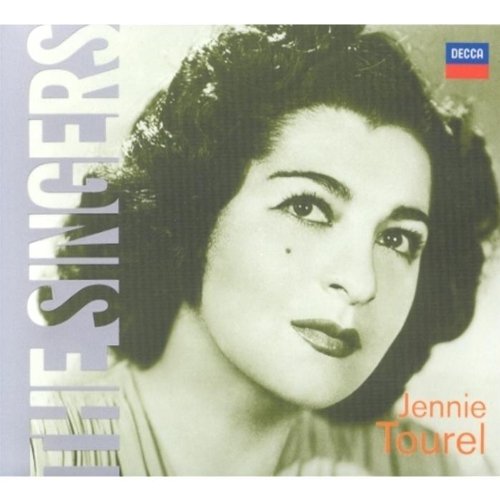
Jennie Tourel was born in Russia in 1900 of Jewish parents, but she and her family left just after the Revolution, temporarly settling in Danzig before moving to Paris. She fled to Lisbon just before the Nazis occupied France and from there to the USA, becoming a naturalised Amercian in 1946.

She had an illustrious career both in the opera house and on the recital stage, and was the creator of the role of Baba the Turk in Stravinsky’s The Rake’s Progress. She was still active when death ended her career in 1973, in fact in the middle of performances of Donizetti’s La Fille du Régiment in Chicago. The longevity of her career is testament to her sound technique, but if the years were kind to her voice, she was also careful never to overtax it. She knew what suited her and stuck to it.

The dates of the recordings on this disc are unknown, but the Italian and French items are stereo, which would place them at least from the early to mid 1950s. Her voice is still admirably firm, with no trace of wobble or excessive vibrato. Her legato isn’t always perfect, and her runs can be lightly aspirated, which mars her performance of the Rossini items, and also of Bizet’s Adieux de l’hotesse arabe, though she sings it with more personality and drama than many.

Berlioz’s Absence is sung with piano, and is notable for the firmness of the line, though personally I prefer a more inward display of longing. Tourel is too loud in places and she rushes the pharse la fleur de ma vie. Much better are Poulenc’s Violon and Liszt’s Oh! Quand je dors and I particularly enjoyed Ravel’s Kaddish, which exploits her rich lower register.

The Russian items are all worth hearing, beginning with a mournful Tchaikovsky None but the lonley heart, the cello obligato adding to the pervading sense of melancholia. As befits the general mood of the Russian items, she uses a bigger, more dramatic sound, but she can also be lightly high-spirited in a song like Dargomizhsky’s Look darling girls. In all she displays a strong personality and superb musicianship.

Song texts and translations are provided on the disc itself, which doubles as a CD-ROM, though, annoyingy, if you want to read them at the same time as listening to the disc, you will have to print them out before playing the disc on a CD player.